Architectural Record
search
cart
facebook twitter linkedin youtube
  • Sign In
  • Subscribe
  • Sign Out
  • My Account
Architectural Record
  • NEWS
    • Latest News
    • Awards
    • Interviews
    • Obituaries
    • Podcasts
      • Design:Ed Podcast
      • Sponsored Podcasts
  • OPINION
    • Book Reviews / Excerpts
    • Exhibition Reviews
    • Forum
  • EXCLUSIVES
    • Videos
    • Design Vanguard
    • Top 300 Firms
    • Sponsored Content
    • Sponsored eBooks
    • From the Archives
  • CONTINUING ED
    • Editorial Continuing Ed
    • CE Center
    • CE Academies
  • PROJECTS
    • Buildings By Type
    • Reuse & Renovation
    • Museums & Arts Centers
    • Colleges & Universities
    • Multifamily Housing
    • Interiors
    • Lighting
    • Kitchen & Bath
  • HOUSES
    • Record Houses
    • House of the Month
    • Featured Houses
  • PRODUCTS
    • Products by Category
    • Record Products of the Year
    • Latest Products
  • EVENTS
    • Dates & Events
    • Record on the Road
    • Innovation Conference
    • Sustainability in Practice
    • Women In Architecture
    • Webinars
    • Ad Excellence Awards
    • Submit an Event
  • CONNECT
    • Ask RECORD AI
    • Newsletters
    • Contact
    • Advertise
    • Editorial Calendar
    • Store
    • Customer Service
  • SUBMIT
    • Submission Guidelines
    • RECORD Competitions
  • MAGAZINE
    • Subscribe
    • My Account
    • Digital Edition
    • Current Issue
    • Firm Pass
    • Historic Archive
Projects

Lina Bo Bardi: Architect for the ages

A lifelong quest for an inherently Brazilian architecture produced a diverse career and a body of work that was ahead of its time.
By Hattie Hartman
Lina Bo Bardi
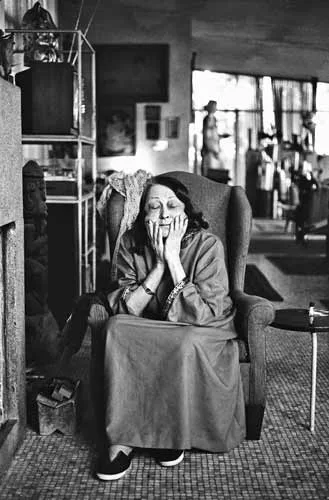
Lina Bo Bardi in the living room of her São Paulo home, Casa de Vidro, in 1991.
 
Photo © Nelson Kon
Lina Bo Bardi
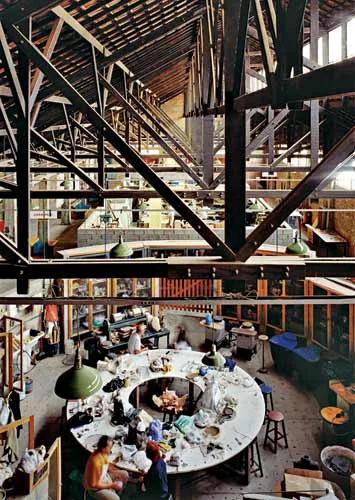
Art workshops in S'o Paulo's SESC Pompeia Leisure Center occupy former industrial sheds.
 
Photo © Nelson Kon
Lina Bo Bardi
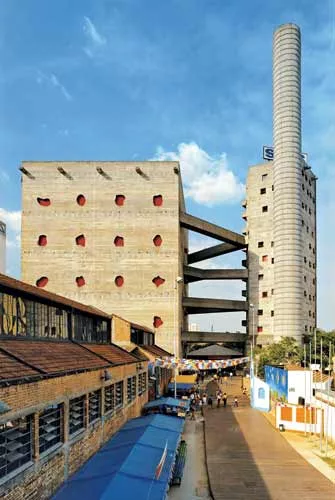
In 1986, Bo Bardi transformed a 1920s-era steel-barrel factory into the SESC Pompeia Leisure Center in São Paulo.
 
Photo © Nelson Kon
Lina Bo Bardi
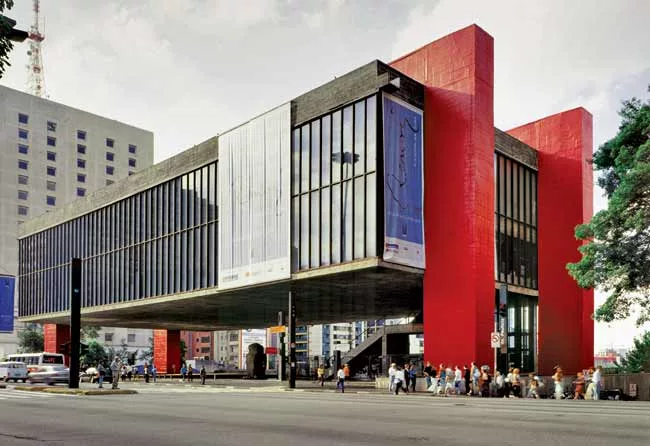
The Museu de Arte de São Paulo, completed in 1968, comprises a 245-foot-long span above a public plaza along Avenida Paulista.
 
Photo © Nelson Kon
Lina Bo Bardi
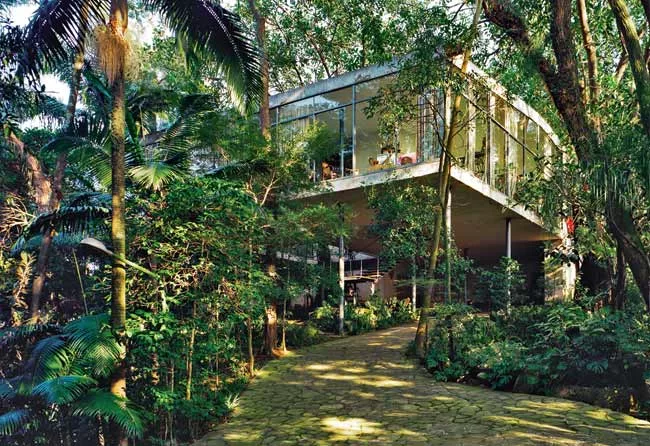
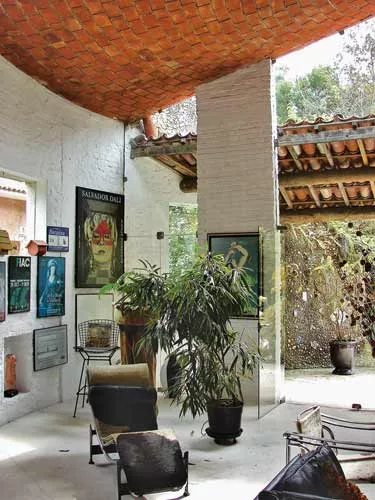
Bo Bardi completed Casa de Vidro—the architect’s first built work—for herself and her husband in 1952. Located in São Paulo’s Morumbi neighborhood, the house rests on 10 columns and surrounds a courtyard.
 
Photo © Nelson Kon
Lina Bo Bardi
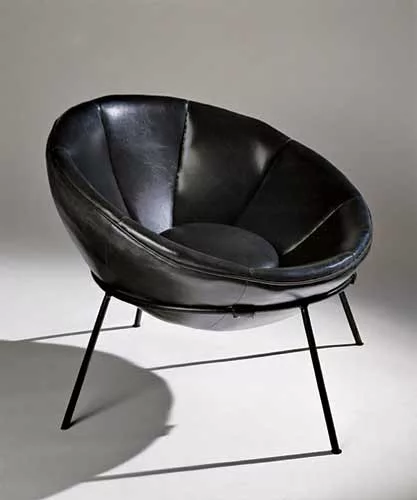
The Italian manufacturer Arper reissued Bo Bardi’s 1951 Bowl Chair late last year.
 
Photo © Nelson Kon
Lina Bo Bardi
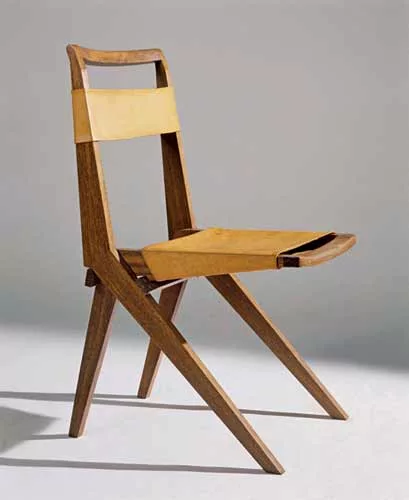
Bo Bardi, who refused to furnish with sofas, designed a wood and canvas foldable chair in 1948.
 
Photo © Nelson Kon
Lina Bo Bardi
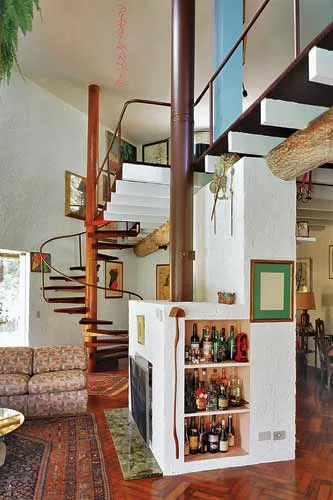
Completed in 1958, the Valéria P. Cirell House in São Paulo (a short walk from Bo Bardi’s own home) consists of two connected volumes surrounded by verandas. Inside, a tree trunk acts as a beam to support a mezzanine level, accessible by a spiral stair.
 
Photo © Nelson Kon
Lina Bo Bardi
A cylindrical guesthouse, La Torracia, was completed in 1964.
 
Photo © Nelson Kon
Lina Bo Bardi
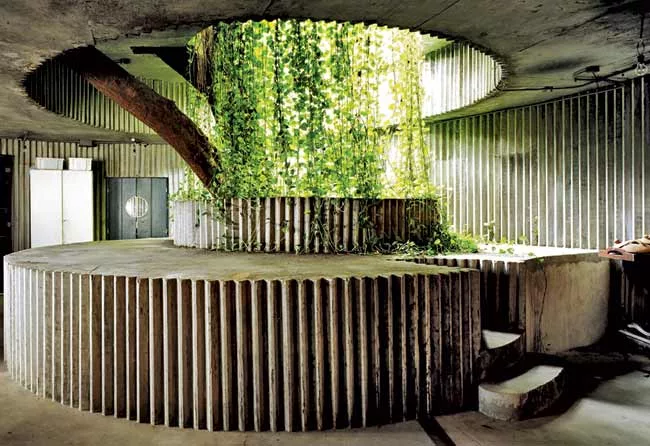
In 1987, the city of Salvador commissioned Bo Bardi to revitalize a cluster of derelict buildings along a hillside. She maintained some of the existing structures and adapted them to create the Ladeira da Misericórdia Housing and Commercial Complex. The development included the Coati Restaurant, with its ribbed concrete motif.
 
Photo © Nelson Kon
Lina Bo Bardi
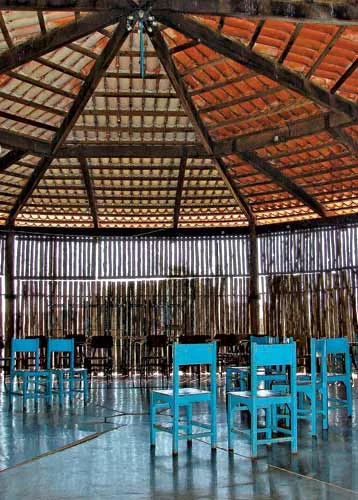
Bo Bardi completed another project, Cerrado Church, in the state of Minas Gerais, in 1982. Rather than design a single structure, the architect created three separate volumes to house a chapel, clergy house, and community hall.
 
Photo © Zeuler R. M. DE A. Lima
Lina Bo Bardi
Lina Bo Bardi
Lina Bo Bardi
Lina Bo Bardi
Lina Bo Bardi
Lina Bo Bardi
Lina Bo Bardi
Lina Bo Bardi
Lina Bo Bardi
Lina Bo Bardi
Lina Bo Bardi
May 16, 2014

Architects & Firms

Lina Bo Bardi
With the centenary of her birth this year, Italian-born Brazilian architect Lina Bo Bardi (1914–1992) is finally receiving the overdue international recognition she deserves. A European traveling exhibition, two new books in English, and the reissue of her 1951 Bowl Chair signal a growing swell of appreciation of Bo Bardi—or Lina, as she is affectionately known in Brazil—and a deeper understanding of her professional life. Her remarkable and versatile career included stints as an editor, graphic designer, scenographer, curator, educator, and— foremost—as an astonishing architect with a varied output. Her work drew on influences as diverse as industrial São Paulo's Eurocentric art milieu and Salvador's rich Portuguese colonial and African heritage in northeastern Brazil.
Lina Bo Bardi in the living room of her São Paulo home, Casa de Vidro, in 1991.

Along with the customary attention that accompanies a centenary, several events have converged to make a revisit of Bo Bardi's legacy timely and significant. The Brazilian economic boom in the first decade of this century has attracted international starchitects to Rio de Janeiro and São Paulo for the first time since Le Corbusier traveled to Rio to work on the Ministry of Education and Health building in 1936. This, coupled with Brazil's preparations for the World Cup to be played in 12 cities next month and the Olympic Games in 2016, has precipitated urban redevelopment and infrastructure investment and focused international interest on the rich legacy of Brazilian Modernism (and the country's emerging generation of architects) to a degree not seen since the inauguration of Brasília in 1960. Finally, the death of Oscar Niemeyer at the age of 104 in 2012 has permitted other strands of Brazilian architecture to emerge from his long shadow, which dominated the country's design culture for almost three generations.

Born Achillina Bo in Rome in 1914, the architect's formative years were spent near the nerve center of the political crosscurrents of Fascist Italy. Her education at the University of Rome combined a steeping in the city's ancient monuments with the rationalist principles that were taking hold in 1930s Italy. Drawn to Milan's more progressive and cosmopolitan architectural circles, Bo Bardi moved north in 1940 and spent the war years as an editor and graphic designer, working with Gio Ponti, among others. It was in Milan that she met Pietro Maria Bardi, an art dealer and journalist 14 years her senior. Soon, however, Bardi, confronted with the reality of Italy's postwar devastation and seeking to escape association with his Fascist alliances before the war, looked to South America as a new place to develop his artistic and curatorial activities. A 1943 exhibition at New York's Museum of Modern Art, Brazil Builds, had highlighted developments in Brazilian Modernism and brought the country to the Bardis' attention. The possibility of curating three art shows in Rio de Janeiro in 1946—including one in the recently completed Ministry of Education and Health building—was enough to entice the two Italians to plan an extended stay in Brazil. They married before departing.

Bo Bardi later wrote that arriving in Brazil, she had reached “an unimaginable country where everything was possible. I felt happy, and Brazil had no ruins.” That did not mean that the place was devoid of its own political undertow. The government was already unofficially promoting the work of Lúcio Costa and Oscar Niemeyer as the architectural language of choice for the rapidly developing nation. Though it took her some years to fully appreciate the implications of this architectural hegemony, Bo Bardi's subtle Modernism with hints of regional vernacular (developed to its full expression in later decades during her multiple sojourns in the city of Salvador) could not compete with the self-confident form-making of Niemeyer and his colleagues. This helps explain why her work has been so little appreciated outside of Brazil until recently.

Amongst Bo Bardi's 20 completed works, three São Paulo projects—separated by almost a decade from each other—stand out: the Casa de Vidro (1949–52), MASP (Museu de Arte de São Paulo, 1957–68), and the SESC Pompeia Leisure Center (1977–86). Designed for herself and her husband, Casa de Vidro was Bo Bardi's first built work, yet it revealed the seeds of her later hybrid design philosophy. Perched on 10 slender columns, a glazed volume contains the public part of the house and encloses a courtyard with a tree in its middle. Behind, a long masonry wing with timber shutters houses the bedroom and service areas and echoes the materials of Brazil's rural architecture. Subsequent stays in Salvador reinforced Bo Bardi's passion for Brazilian popular art and architecture, with their traditional materials, rough finishes, and embrace of nature.

The architect's commission for MASP came through her husband's dealings in the São Paulo art world. Today, 50 years after its construction, the startling Brutalist building, whose suspended galleries span 245 feet over a public plaza on the city's busy Avenida Paulista, remains one of the city's few real civic spaces.

But the defining project of Bo Bardi's career was the SESC Pompeia Leisure Center where, with the support of an enlightened public-sector client, she was able to synthesize her humanitarian approach to design in a community facility at a neighborhood scale. The project involved the transformation of some 19 industrial sheds from an abandoned 1930s steel-barrel factory into a community center. For this, the architect designed two new concrete towers, which house sports facilities and form an urban landmark at the site's northeast perimeter. At SESC Pompeia, she challenged the austerity of the prevailing Brazilian Brutalism, softening it with lyrical window forms and handcrafted materials. Some of Bo Bardi's dedicated former associates who worked with her on SESC Pompeia continue to thrive in Brazil today, most notably Brasil Arquitetura and André Vainer Arquitetos.

For the reader who would like to dig further, Zeuler R. M. de A. Lima's Lina Bo Bardi (Yale University Press, 2013) is an excellent reference. The culmination of 10 years of research, Lima's readable biography cum monograph skillfully elucidates Bo Bardi's life and career starting with her early years in Rome. Both the era of Brazilian optimism that formed the backdrop to MASP and the dark turmoil of the military dictatorship that lasted until 1985, during which Bo Bardi realized the dramatic and emblematic SESC Pompeia complex, are explored in depth. In addition, Catherine Veikos's Lina Bo Bardi: The Theory of Architectural Practice (Routledge, 2013) contains the first English translation of a 1957 seminal text by Bo Bardi.

The principles that drove Lina Bo Bardi's passions remain just as pertinent today as they were at the peak of her career over three decades ago: an architecture that favors humanism over iconic form, a desire to breathe new life into historic buildings, a fascination with local materials and craft, and a profound commitment to the belief in the architect as an agent of social change. Noemi Blager, curator of the exhibition Lina Bo Bardi: Together (due to tour the U.S. in 2015), cites the architect's attitude as her greatest legacy. She was ahead of her time, promoting cultural sustainability in the broadest sense. In the face of increasingly globalized architectural idioms, Bo Bardi's lifelong quest for an intrinsically Brazilian architecture remains ever more critical as the country's cities rush to transform themselves for their turn on the world stage.

Hattie Hartman is an editor at The Architects’ Journal, London.

KEYWORDS: Brazil

Share This Story

Looking for a reprint of this article?
From high-res PDFs to custom plaques, order your copy today!
Post a comment to this article

Report Abusive Comment

Subscription Center
  • Create an Account
  • Start a Subscription
  • Manage My Account
  • Sign Up for Newsletters
  • Visit Customer Service
  • Update Preferences

More Videos

Sponsored Content

Sponsored Content is a special paid section where industry companies provide high quality, objective, non-commercial content around topics of interest to the Architectural Record audience. All Sponsored Content is supplied by the advertising company and any opinions expressed in this article are those of the author and not necessarily reflect the views of Architectural Record or its parent company, BNP Media. Interested in participating in our Sponsored Content section? Contact your local rep!

close
  • TAMLYN XtremeTrim Exterior Trim
    Sponsored byTamlyn

    Designing Cleaner Panel Facades: Why Exterior Trim Details Matter

  • Building with Vapor Barriers
    Sponsored byReef Industries, Inc.

    Vapor Barriers Help Control Moisture in Tighter Building Designs

  • Duct Interior with Prodeq System
    Sponsored byHenry, a Carlisle Company

    Designing Resilient Water Containment Systems

DESIGN:ED Podcast
Listen to Architectural Record’s DESIGN:ED Podcast

Events

June 16, 2026

Focus on the Façade: Exploring Steel, Timber & Fire-Rated Curtain Walls and Channel Glass Systems

Credits: 1 AIA LU/HSW; 1 AIBD P-CE; 0.1 ICC CEU

Explore modern façade and glazing systems that enhance daylighting, fire safety, and thermal performance while expanding architectural design possibilities.

June 18, 2026

Rebooting the Aging Office Building

Credits: 1 AIA LU/HSW; 1 AIBD P-CE; 0.1 ICC CEU; 1 PDH

Explore façade retrofit strategies and award-winning design concepts that can transform aging office buildings into healthier, higher-performing workplaces for today’s hybrid workforce.

View All Submit An Event

Products

2026 Architect's Square Foot Costbook

2026 Architect's Square Foot Costbook

See More Products

Popular Stories

SanDiegoAirport

Top 300 Architecture Firms of 2026

Coronado Bridge

The Architect’s Guide to San Diego

Crane Cove, ONO

Design Vanguard 2026 Winners

House on a Hill

Design Vanguard 2026: Forma

House A on a Hill

Design Vanguard 2026: Santiago Valdivieso

Focus on the Facade - Free Webinar - June 16, 2026

Related Articles

  • Lina Bo Bardi Exhibition Still, SESC Pompéia

    In Philadelphia, Isaac Julien Reimagines the Life and Legacy of Lina Bo Bardi Through Moving Images

    See More
  • Lina Bo Bardi

    See More
  • Exhibition Review: Lina Bo Bardi: Together

    See More

Related Products

See More Products
  • bni book

    2026 Architect's Square Foot Costbook

See More Products
×

The latest news and information

#1 Source for Architectural Design, News and Products

SUBSCRIBE
  • RESOURCES
    • Advertise
    • Contact Us
    • Submit
    • Store
  • ACCOUNT CENTER
    • Create an Account
    • Start a Subscription
    • Manage My Account
    • Sign Up for Newsletters
    • Visit Customer Service
    • Update Preferences
  • PRIVACY
    • PRIVACY POLICY
    • TERMS & CONDITIONS
    • DO NOT SELL MY PERSONAL INFORMATION
    • PRIVACY REQUEST
    • ACCESSIBILITY
  • SERVICES
    • Marketing Services
    • Reprints
    • Market Research
    • List Rental
    • Survey/Respondent Access
  • STAY CONNECTED
    • Linkedin
    • Facebook
    • Instagram
    • YouTube
    • X (Twitter)

Copyright ©2026. All Rights Reserved BNP Media, Inc. and BNP Media II, LLC.

Design, CMS, Hosting & Web Development :: ePublishing