Architectural Record
search
cart
facebook twitter linkedin youtube
  • Sign In
  • Subscribe
  • Sign Out
  • My Account
Architectural Record
  • NEWS
    • Latest News
    • Awards
    • Interviews
    • Obituaries
    • Podcasts
      • Design:Ed Podcast
      • Sponsored Podcasts
  • OPINION
    • Book Reviews / Excerpts
    • Exhibition Reviews
    • Forum
  • EXCLUSIVES
    • Videos
    • Design Vanguard
    • Top 300 Firms
    • Sponsored Content
    • Sponsored eBooks
    • From the Archives
  • CONTINUING ED
    • Editorial Continuing Ed
    • CE Center
    • CE Academies
  • PROJECTS
    • Buildings By Type
    • Reuse & Renovation
    • Museums & Arts Centers
    • Colleges & Universities
    • Multifamily Housing
    • Interiors
    • Lighting
    • Kitchen & Bath
  • HOUSES
    • Record Houses
    • House of the Month
    • Featured Houses
  • PRODUCTS
    • Products by Category
    • Record Products of the Year
    • Latest Products
  • EVENTS
    • Dates & Events
    • Record on the Road
    • Innovation Conference
    • Sustainability in Practice
    • Women In Architecture
    • Webinars
    • Ad Excellence Awards
    • Submit an Event
  • CONNECT
    • Ask RECORD AI
    • Newsletters
    • Contact
    • Advertise
    • Editorial Calendar
    • Store
    • Customer Service
  • SUBMIT
    • Submission Guidelines
    • RECORD Competitions
  • MAGAZINE
    • Subscribe
    • My Account
    • Digital Edition
    • Current Issue
    • Firm Pass
    • Historic Archive
InterviewsOpinion

Filmmaker Sam Wainwright Douglas on 'Citizen Architect' Samuel Mockbee of Rural Studio

By Donna Paul
January 16, 2011

Architects & Firms

Rural Studio

Sam Wainwright Douglas was eight years old when he met architect Samuel Mockbee. The impression Mockbee made on Douglas was indelible.

Director Sam Wainwright Douglas stands in front of the house built by the Rural Studio for Music Man (Jimmie Lee Matthews) and featured in the film. Photo © Donna Paul

Mockbee, affectionately called Sambo, was an iconoclastic figure in the field of architecture, best known for the Rural Studio, which he founded in 1993 in Hale County, Alabama — one of the state’s most impoverished areas.

Today, Douglas, 34, is a filmmaker whose recent documentary, Citizen Architect: Samuel Mockbee and the Spirit of the Rural Studio, has gotten favorable reviews for its candid portrayal of Mockbee’s commitment to the people of Hale County. The 60-minute film highlights the humanitarian role of architecture in education, communities, and social change.


How is it that you came to make a film about Samuel Mockbee and the Rural Studio?

My father was an architect, and Sambo would come from Mississippi to our house in Houston to see him when I was a kid. I got to spend time with Mockbee and we connected.

What did you think was so special about Sambo?

He had these sketchbooks that he would show me. They had magical creatures and fantastical-looking buildings that he had drawn. He was playful and clever, and he would encourage me to look at those books. I thought a lot about them.

You are now married to Sambo’s daughter, Sarah Ann. How did that happen? Did he have a hand in that, too?

Yes, he did. He was very intuitive. One day when I was still living in New York, Sambo called me and said, “You dating anybody? My daughter’s up there. Take down her number.” That was in 2001. We got married in 2007.

This is your second film as a director, and your first about architecture. How did it come about?

In 1996 I went down to the Rural Studio, which Sambo had started a few years earlier. Seeing the architecture in that setting blew me away. The students working on projects there were so charged and confident, and the architecture was so beautiful. Plus I knew what a great guy he was, and I thought, this could make a really moving documentary.

Looking for quick answers on architecture and design topics?
Try Ask RECORD, our new smart AI search tool.
Ask RECORD →

How did this independent film come to fruition?

I was in film school at New York University, and I kept thinking about the idea, and so in 1999 I interviewed Mockbee. He sat under his painting studio shed roof and just talked. I wasn’t a very good cameraman in those days, but I shot three hours of film. That is all I ever got of him.

What happened?

When Sambo died in 2001, I was just starting out in the film world, and I wasn’t anywhere with the project.

Yet I felt motivated to do it. At his funeral I met Jay Sanders, an architect who was mentored by Sambo at the Rural Studio. We said right there, we gotta do this film for Sambo.

Given that you had lost the central character of your film, how did you proceed?

First I was incredibly grief-stricken: He had introduced me to his daughter only three months earlier. When I got back around to thinking about the film, I felt that the three-hour interview was substantial enough to give a sense of his presence. It would be a way to have him explain his motivation and tell his story in his own words.

In the film, you focus on the building of the house for Music Man [Jimmie Lee Matthews]. Why did you choose that house?

During filming, in 2002 and 2003, Jay Sanders’s class was working on this project. And yes, Music Man is an affable, generous, and charismatic guy with an extremely engaging presence on film. I knew he’d be great to be work with, and I could tell that a bond between him and the students was quickly forming. It was a perfect combo.

What did you hope that people who know little about architecture, and nothing about the Rural Studio, would take away from your film?

Many people who see the film have nothing to do with architecture, but they leave inspired. I hope they think about how they can affect their community or solve a social problem with their gifts and talents. That’s what really attracted me to making this film in the first place: I was inspired by an architect who, in the face of seemingly overwhelming problems that challenge our world, found a place where he could use his skills and talents to do something about it in the best way he could.


Citizen Architect will be shown on March 17 at the National Building Museum in Washington, D.C. The filmmaker will be present for a Q&A.

KEYWORDS: Alabama architecture education film review

Share This Story

Looking for a reprint of this article?
From high-res PDFs to custom plaques, order your copy today!
Post a comment to this article

Report Abusive Comment

Subscription Center
  • Create an Account
  • Start a Subscription
  • Manage My Account
  • Sign Up for Newsletters
  • Visit Customer Service
  • Update Preferences

More Videos

Sponsored Content

Sponsored Content is a special paid section where industry companies provide high quality, objective, non-commercial content around topics of interest to the Architectural Record audience. All Sponsored Content is supplied by the advertising company and any opinions expressed in this article are those of the author and not necessarily reflect the views of Architectural Record or its parent company, BNP Media. Interested in participating in our Sponsored Content section? Contact your local rep!

close
  • TAMLYN XtremeTrim Exterior Trim
    Sponsored byTamlyn

    Designing Cleaner Panel Facades: Why Exterior Trim Details Matter

  • Building with Vapor Barriers
    Sponsored byReef Industries, Inc.

    Vapor Barriers Help Control Moisture in Tighter Building Designs

  • Duct Interior with Prodeq System
    Sponsored byHenry, a Carlisle Company

    Designing Resilient Water Containment Systems

DESIGN:ED Podcast
Listen to Architectural Record’s DESIGN:ED Podcast

Events

June 16, 2026

Focus on the Façade: Exploring Steel, Timber & Fire-Rated Curtain Walls and Channel Glass Systems

Credits: 1 AIA LU/HSW; 1 AIBD P-CE; 0.1 ICC CEU

Explore modern façade and glazing systems that enhance daylighting, fire safety, and thermal performance while expanding architectural design possibilities.

June 18, 2026

Rebooting the Aging Office Building

Credits: 1 AIA LU/HSW; 1 AIBD P-CE; 0.1 ICC CEU; 1 PDH

Explore façade retrofit strategies and award-winning design concepts that can transform aging office buildings into healthier, higher-performing workplaces for today’s hybrid workforce.

View All Submit An Event

Products

2026 Architect's Square Foot Costbook

2026 Architect's Square Foot Costbook

See More Products

Popular Stories

SanDiegoAirport

Top 300 Architecture Firms of 2026

Coronado Bridge

The Architect’s Guide to San Diego

House A on a Hill

Design Vanguard 2026: Santiago Valdivieso

Dusk House

Design Vanguard 2026: ONO

Crystal Bridges Museum of American Art expansion

Safdie Architects Returns to the Crystal Bridges Museum of American Art for Major Expansion

Focus on the Facade - Free Webinar - June 16, 2026

Related Articles

  • County Fare

    Four Food-Related Projects by Rural Studio

    See More
  • Architectural Record, June 2004

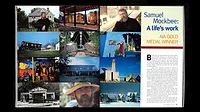
    From the RECORD Archives: 'Samuel Mockbee: A Life’s Work – AIA Gold Medal Winner’

    See More
  • Newbern Library

    Newbern Library by Rural Studio

    See More

Related Products

See More Products
  • bni book

    2026 Architect's Square Foot Costbook

See More Products
×

The latest news and information

#1 Source for Architectural Design, News and Products

SUBSCRIBE
  • RESOURCES
    • Advertise
    • Contact Us
    • Submit
    • Store
  • ACCOUNT CENTER
    • Create an Account
    • Start a Subscription
    • Manage My Account
    • Sign Up for Newsletters
    • Visit Customer Service
    • Update Preferences
  • PRIVACY
    • PRIVACY POLICY
    • TERMS & CONDITIONS
    • DO NOT SELL MY PERSONAL INFORMATION
    • PRIVACY REQUEST
    • ACCESSIBILITY
  • SERVICES
    • Marketing Services
    • Reprints
    • Market Research
    • List Rental
    • Survey/Respondent Access
  • STAY CONNECTED
    • Linkedin
    • Facebook
    • Instagram
    • YouTube
    • X (Twitter)

Copyright ©2026. All Rights Reserved BNP Media, Inc. and BNP Media II, LLC.

Design, CMS, Hosting & Web Development :: ePublishing