Architectural Record
search
cart
facebook twitter linkedin youtube
  • Sign In
  • Subscribe
  • Sign Out
  • My Account
Architectural Record
  • NEWS
    • Latest News
    • Awards
    • Interviews
    • Obituaries
    • Podcasts
      • Design:Ed Podcast
      • Sponsored Podcasts
  • OPINION
    • Book Reviews / Excerpts
    • Exhibition Reviews
    • Forum
  • EXCLUSIVES
    • Videos
    • Design Vanguard
    • Top 300 Firms
    • Sponsored Content
    • Sponsored eBooks
    • From the Archives
  • CONTINUING ED
    • Editorial Continuing Ed
    • CE Center
    • CE Academies
  • PROJECTS
    • Buildings By Type
    • Reuse & Renovation
    • Museums & Arts Centers
    • Colleges & Universities
    • Multifamily Housing
    • Interiors
    • Lighting
    • Kitchen & Bath
  • HOUSES
    • Record Houses
    • House of the Month
    • Featured Houses
  • PRODUCTS
    • Products by Category
    • Record Products of the Year
    • Latest Products
  • EVENTS
    • Dates & Events
    • Record on the Road
    • Innovation Conference
    • Sustainability in Practice
    • Women In Architecture
    • Webinars
    • Ad Excellence Awards
    • Submit an Event
  • CONNECT
    • Ask RECORD AI
    • Newsletters
    • Contact
    • Advertise
    • Editorial Calendar
    • Store
    • Customer Service
  • SUBMIT
    • Submission Guidelines
    • RECORD Competitions
  • MAGAZINE
    • Subscribe
    • My Account
    • Digital Edition
    • Current Issue
    • Firm Pass
    • Historic Archive
Commentary & Criticism

All in the Family: Architectural DNA
By Laura Raskin
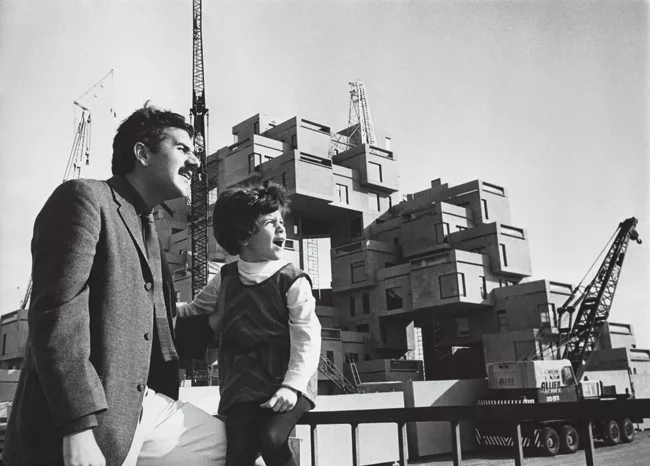
Moshe Safdie and his daughter Taal observe the construction of Moshe’s Habitat 67 in Montreal. Taal, now an architect, lived in the apartment complex.
All in the Family: Architectural DNA
Moshe Safdie and his daughter Taal observe the construction of Moshe’s Habitat 67 in Montreal. Taal, now an architect, lived in the apartment complex.
Photo courtesy Taal Safdie
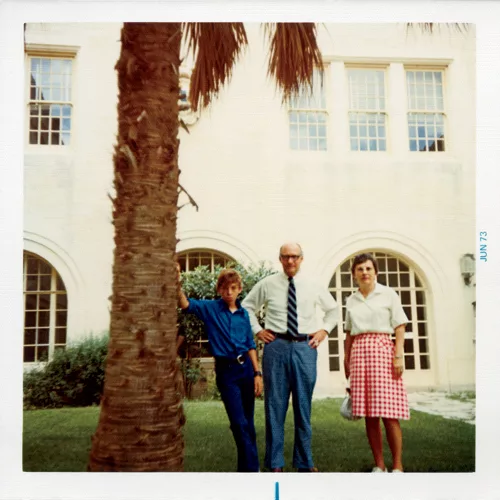
Rob Rogers strikes a cool pose with his architect parents during a visit to the University of Texas School of Architecture in June 1973.
All in the Family: Architectural DNA
Rob Rogers strikes a cool pose with his architect parents during a visit to the University of Texas School of Architecture in June 1973.
Photo courtesy Rob Rogers
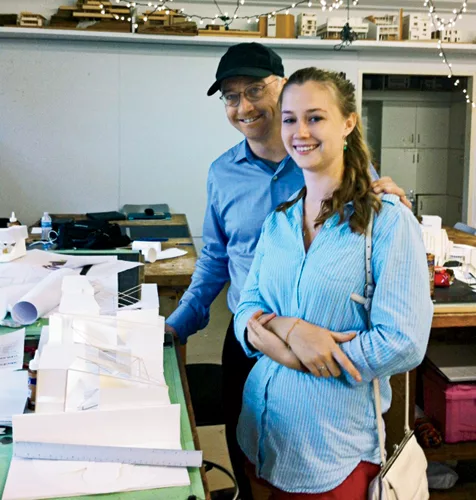
Andrea Bucher Rogers, 19, Rogers’s daughter (right), is studying architecture.
All in the Family: Architectural DNA
Andrea Bucher Rogers, 19, Rogers’s daughter (right), is studying architecture.
Photo courtesy Rob Rogers
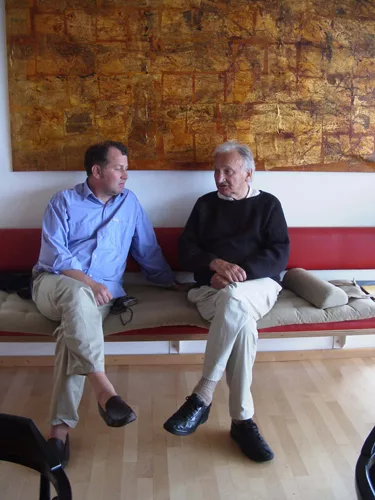
Stefan Behnisch, principal of Behnisch Architekten, and his father, architect G'nter Behnisch.
All in the Family: Architectural DNA
Stefan Behnisch, principal of Behnisch Architekten, and his father, architect G'nter Behnisch.
Photo courtesy Stefan Behnisch
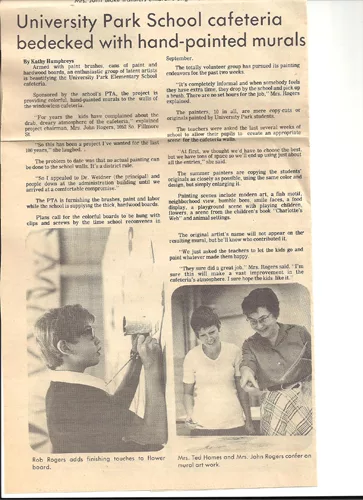
Rob Rogers, now principal of Rogers Marvel Architects, paints a mural at the University Park Elementary School cafeteria in Denver, Colorado. His mother appears in the bottom right photo. Rogers&rsquo
All in the Family: Architectural DNA
Rob Rogers, now principal of Rogers Marvel Architects, paints a mural at the University Park Elementary School cafeteria in Denver, Colorado. His mother appears in the bottom right photo. Rogers’s mother and father were architects.
Photo courtesy Rob Rogers
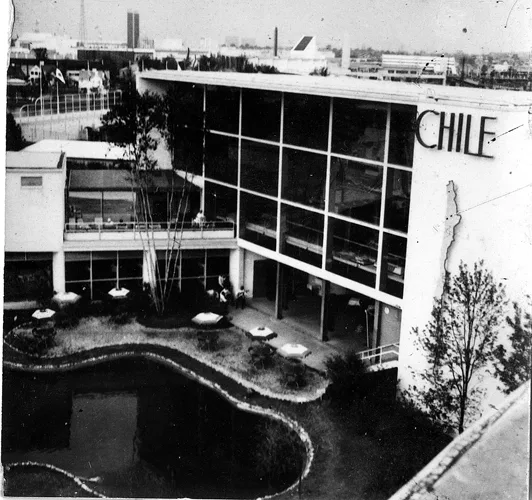
Theodore Smith-Miller and Mary Elizabeth Houck (Smith-Miller) designed the Chilean Pavilion for the 1939 World’s Fair in New York City. Mary was the third woman to graduate from Columbia Univers
All in the Family: Architectural DNA
Theodore Smith-Miller and Mary Elizabeth Houck (Smith-Miller) designed the Chilean Pavilion for the 1939 World’s Fair in New York City. Mary was the third woman to graduate from Columbia University’s School of Architecture. Their son, Henry Smith-Miller, is partner — with his wife Laurie Hawkinson — of Smith-Miller and Hawkinson Architects.
Photo courtesy Henry Smith-Miller
Moshe Safdie and his daughter Taal observe the construction of Moshe’s Habitat 67 in Montreal. Taal, now an architect, lived in the apartment complex.
Rob Rogers strikes a cool pose with his architect parents during a visit to the University of Texas School of Architecture in June 1973.
Andrea Bucher Rogers, 19, Rogers’s daughter (right), is studying architecture.
Stefan Behnisch, principal of Behnisch Architekten, and his father, architect G'nter Behnisch.
Rob Rogers, now principal of Rogers Marvel Architects, paints a mural at the University Park Elementary School cafeteria in Denver, Colorado. His mother appears in the bottom right photo. Rogers&rsquo
Theodore Smith-Miller and Mary Elizabeth Houck (Smith-Miller) designed the Chilean Pavilion for the 1939 World’s Fair in New York City. Mary was the third woman to graduate from Columbia Univers
May 16, 2012

Where there’s an architect, there are probably a few more—from the same gene pool.

Architects beget architects, so it seems. Eliel Saarinen had Eero Saarinen. Two of Frank Lloyd Wright’s sons, Lloyd and John, became architects. Walter Gropius’s father was an architect. And if not begotten, then nearly so: Maya Lin’s architect aunt, Lin Huiyin, helped conduct the first comprehensive study of architecture in China. Charles Eames was the nephew of architect William Eames. Henry Smith-Miller, of Smith-Miller + Hawkinson Architects, could (and perhaps should) write a book about his family of architects, which stretches back, with baroque twists and turns, to Silas Smith, an engineer and carpenter who left for Chile after the Civil War. Smith-Miller discovered this history after his architect father’s death. “My father was extremely progressive. He thought family history was totally unimportant,” he says.

Moshe Safdie and his daughter Taal observe the construction of Moshe’s Habitat 67 in Montreal. Taal, now an architect, lived in the apartment complex. 

While joining the family trade isn’t unique to architects, their proliferation raises the question: Is architecture in your blood? Lee Silver, a molecular biologist and professor at Princeton University, doubts we’ll ever be able to fully answer that. “It’s a very complicated network of genes that influence personality and behavior,” he says. “It’s clear to geneticists that there is no such unified entity as creativity or intelligence.” That said, there is a genetic context for talent, but it’s taboo to talk about it. “It’s part of the American educational system to say, 'You can do anything you want if you just try hard enough!’ It turns out, that’s not true,” says Silver. “Most people are pretty disappointed about what they accomplish in life.”

Annabelle Selldorf is relieved not to count herself one of them, given that she “wanted to do pretty much anything but become an architect.” The German-born principal of her eponymous New York City firm overheard her architect father Herbert Selldorf’s conversations with clients and contractors and thought, “That must not be fun.” When her best friend suggested they become interior designers, Herbert told his daughter that architecture would be more practical. She acquiesced.

Selldorf now understands that she wanted to please her parents and relate to them more than she acknowledged—her mother, Dorrit Selldorf, was an interior designer, and her grandmother founded the interior design studio Vica in the 1950s. “I think there’s the conscious and the unconscious,” she says. “The conscious side said, 'Way too much work, way too little pay,’ and the unconscious part knew that’s what I really wanted to do.” Besides, architecture was inseparable from her life.

Silver believes that environment, perhaps even more so than genetics, is responsible for success in a chosen career: “I am sure there are kids born every day around the world who could have been brilliant architects, if they only had the right mentors and had gone to the right schools. But their talent was never expressed.”

Taal Safdie, daughter of Moshe, was “breathing architecture”—a heady mix of job sites, client dinners, and office flurry—from a very young age. She spent part of her childhood living in Habitat 67, the Montreal apartment complex designed by her father. She didn’t realize then how special it was, irritated instead by its distance from her friends’ houses. “But when I go back there now, and show our kids, I think, 'I cannot believe this was built then,’ ” she says. Safdie and her husband, Ricardo Rabines (whose parents were not architects), had already established San Diego'based Safdie Rabines Architects when she and her father collaborated on the design of Eleanor Roosevelt College at the University of California, San Diego. She enjoyed that experience. “But I didn’t want to go work for him,” she says. “I took some pretty conscious steps to find my own way.”

Victorian scientist Francis Galton, Charles Darwin’s cousin, was the first to study whether genius could be inherited—he coined the term “nature versus nurture.” After examining families of renowned scientists, he determined that creative genius was innate. Scientist Alphonse de Candolle refuted his claim almost immediately: Genius was the product of one’s environment. Renowned psychologist Dean Keith Simonton recounts the history of this lasting debate in his 2008 article “Scientific Talent, Training, and Performance: Intellect, Personality, and Genetic Endowment” in the Review of General Psychology. Simonton, who studies the concepts of genius and talent, asserts that every human variation, from eye color to personality, is attributable to genetic influence, and concludes that there must be some genetic foundation for talent.

He adds that there is reason to believe that artistic talent is more heritable than scientific talent. So if architectural talent is an unusual mix of science and art, then children of architects may be more likely to be architects—but that’s just his guess.

Rob Rogers’s daughter Andrea Bucher Rogers, an architecture student at Rice University, could be an example of this special inheritance. Her father says she didn’t show an interest in the subject until he and his wife, Alissa Bucher, an architect, talked to a friend of Andrea’s about their jobs. Rogers says Andrea then asked, “Why don’t you ever talk to me that way?” But from an early age, she exhibited a unique spatial awareness. “That’s the classic distinction of architectural thinking and other kinds of problem solving, that spatial and temporal understanding of places. For sure, she’s got it,” says Rogers, partner of Rogers Marvel Architects (partner Jonathan Marvel’s father is an architect). Rogers’s parents were architects, but he wanted to be a lawyer until a high school art teacher “threw a fit” about his intentions and told him to consider his parents’ profession. Like Taal Safdie, he purposely never worked in his father’s Colorado firm. “I think the distance let us be closer in other ways,” he says.

Ah, fathers. Or, “the father problem,” as Stefan Behnisch calls it. “It’s a heavy burden on the children of architects because they always feel they have to please the father or compete with the father. But I never had that,” says Behnisch. His father, the architect G'nter Behnisch, was a German submarine commander captured by the British during WWII. A fellow prisoner of war suggested G'nter study architecture in Stuttgart when he was released. He later designed the Olympic Park (completed in 1972) in Munich and helped Stefan get his start by allowing him to open a branch of the firm in 1989, which became independent two years later. “One of the reasons why it worked with us was that there was not too much affection,” says Behnisch. “But we shared the same humanistic ideals, which are the basis of architecture.”

The reasons for a child’s proclivity for his parents’ profession may never be fully unpacked. The mystery, in the meantime, is a delight. “I think that architecture is as much a choice of a lifestyle as it is a profession,” says Rogers. “My father died a little over a year ago. He was at the office Friday and he died Sunday. He loved what he did, even as his role changed. Believing that the love of life and place was one’s personal and professional responsibility—I think that’s instilled in you.”

Share This Story

Looking for a reprint of this article?
From high-res PDFs to custom plaques, order your copy today!


Lr
Laura Raskin, a former RECORD editor, writes about architecture. She recently moved with her family from Brooklyn, New York, to the Green Mountains of Vermont.

Post a comment to this article

Report Abusive Comment

Subscription Center
  • Create an Account
  • Start a Subscription
  • Manage My Account
  • Sign Up for Newsletters
  • Visit Customer Service
  • Update Preferences

More Videos

Sponsored Content

Sponsored Content is a special paid section where industry companies provide high quality, objective, non-commercial content around topics of interest to the Architectural Record audience. All Sponsored Content is supplied by the advertising company and any opinions expressed in this article are those of the author and not necessarily reflect the views of Architectural Record or its parent company, BNP Media. Interested in participating in our Sponsored Content section? Contact your local rep!

close
  • TAMLYN XtremeTrim Exterior Trim
    Sponsored byTamlyn

    Designing Cleaner Panel Facades: Why Exterior Trim Details Matter

  • Building with Vapor Barriers
    Sponsored byReef Industries, Inc.

    Vapor Barriers Help Control Moisture in Tighter Building Designs

  • Duct Interior with Prodeq System
    Sponsored byHenry, a Carlisle Company

    Designing Resilient Water Containment Systems

DESIGN:ED Podcast
Listen to Architectural Record’s DESIGN:ED Podcast

Events

June 10, 2026

Rethinking Stormwater – The Power of Porous Paving

Credits: 1 AIA LU/HSW; 1 AIBD P-CE; 0.1 ICC CEU

Learn how porous paving systems support stormwater management, reduce heat island effects, and enhance sustainable site design performance.

June 11, 2026

Very Early Warning Fire Detection for Mission-Critical Facilities

Credits: 1 AIA LU/HSW; 1 AIBD P-CE; 0.1 ICC CEU

Examine advanced fire detection strategies that support uptime and enhance safety in data centers and other mission-critical facilities.

View All Submit An Event

Products

2026 Architect's Square Foot Costbook

2026 Architect's Square Foot Costbook

See More Products

Popular Stories

Practice Matters illustration

What’s in a (Firm’s) Name? Thinking About Succession and Legacy

Practice Matters illustration

By the Numbers: Counting America's Architects

Riverdale House by Studio Lau

Riverdale House by Studio Lau

House on a Hill

Design Vanguard 2026: Forma

Crane Cove, ONO

Design Vanguard 2026 Winners

Broader Sustainability of CMU - Free Webinar - May 21, 2026

Related Articles

  • Cathleen McGuigan

    All in a Day's Work

    See More
  • Feiner Goes All-In as Las Vegas Sands' New Chief Architect

    See More
  • Urbanized Surveys Global Cities, in All Their Squalor and Glory

    See More

Related Products

See More Products
  • GlobalData_logo_blue_header.png

    Construction in the US - Key Trends and Opportunities to 2023

  • drawingfrommodel.jpg

    Drawing from the Model: Fundamentals of Digital Drawing, 3D Modeling, and Visual Programming in Architectural Design

See More Products
×

The latest news and information

#1 Source for Architectural Design, News and Products

SUBSCRIBE
  • RESOURCES
    • Advertise
    • Contact Us
    • Submit
    • Store
  • ACCOUNT CENTER
    • Create an Account
    • Start a Subscription
    • Manage My Account
    • Sign Up for Newsletters
    • Visit Customer Service
    • Update Preferences
  • PRIVACY
    • PRIVACY POLICY
    • TERMS & CONDITIONS
    • DO NOT SELL MY PERSONAL INFORMATION
    • PRIVACY REQUEST
    • ACCESSIBILITY
  • SERVICES
    • Marketing Services
    • Reprints
    • Market Research
    • List Rental
    • Survey/Respondent Access
  • STAY CONNECTED
    • Linkedin
    • Facebook
    • Instagram
    • YouTube
    • X (Twitter)

Copyright ©2026. All Rights Reserved BNP Media, Inc. and BNP Media II, LLC.

Design, CMS, Hosting & Web Development :: ePublishing
