Architectural Record
search
cart
facebook twitter linkedin youtube
  • Sign In
  • Subscribe
  • Sign Out
  • My Account
Architectural Record
  • NEWS
    • Latest News
    • Awards
    • Interviews
    • Obituaries
    • Podcasts
      • Design:Ed Podcast
      • Sponsored Podcasts
  • OPINION
    • Book Reviews / Excerpts
    • Exhibition Reviews
    • Forum
  • EXCLUSIVES
    • Videos
    • Design Vanguard
    • Top 300 Firms
    • Sponsored Content
    • Sponsored eBooks
    • From the Archives
  • CONTINUING ED
    • Editorial Continuing Ed
    • CE Center
    • CE Academies
  • PROJECTS
    • Buildings By Type
    • Reuse & Renovation
    • Museums & Arts Centers
    • Colleges & Universities
    • Multifamily Housing
    • Interiors
    • Lighting
    • Kitchen & Bath
  • HOUSES
    • Record Houses
    • House of the Month
    • Featured Houses
  • PRODUCTS
    • Products by Category
    • Record Products of the Year
    • Latest Products
  • EVENTS
    • Dates & Events
    • Record on the Road
    • Innovation Conference
    • Sustainability in Practice
    • Women In Architecture
    • Webinars
    • Ad Excellence Awards
    • Submit an Event
  • CONNECT
    • Ask RECORD AI
    • Newsletters
    • Contact
    • Advertise
    • Editorial Calendar
    • Store
    • Customer Service
  • SUBMIT
    • Submission Guidelines
    • RECORD Competitions
  • MAGAZINE
    • Subscribe
    • My Account
    • Digital Edition
    • Current Issue
    • Firm Pass
    • Historic Archive
Commentary & Criticism

Material Man

By Chris Foges
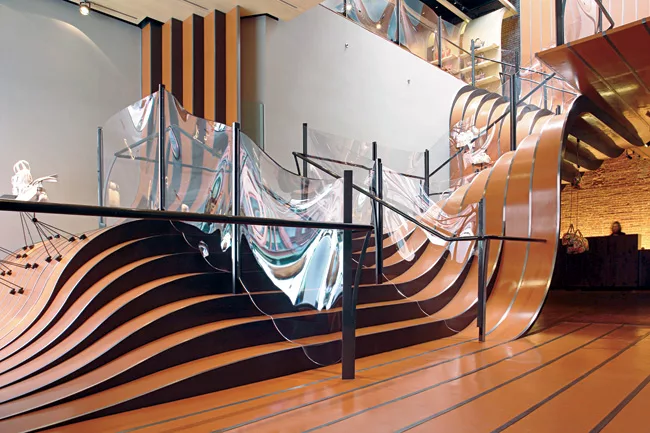
For a New York City Longchamp store, Heatherwick created a series of curving, thermoplastic balustrades.
Material Man
For a New York City Longchamp store, Heatherwick created a series of curving, thermoplastic balustrades.
Photo courtesy Heatherwick Studio
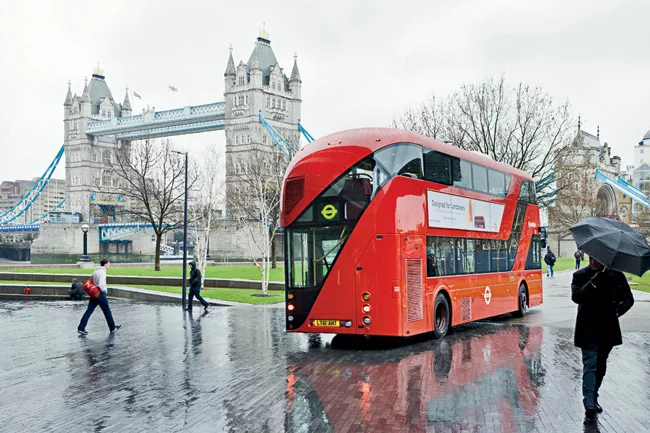
Heatherwick Studio’s sleek remake of London’s iconic double-decker coach, the Routemaster, made its debut in February.
Material Man
Heatherwick Studio’s sleek remake of London’s iconic double-decker coach, the Routemaster, made its debut in February.
Photo © Iwan Baan
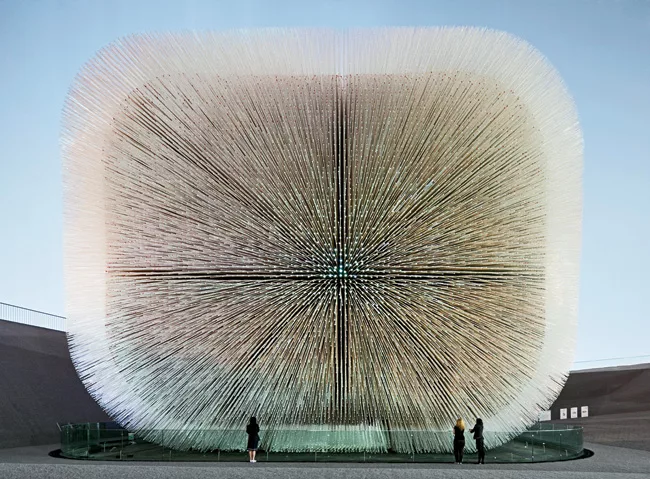
Heatherwick’s design for the UK Pavilion at the 2010 World Expo in Shanghai was enthusiastically received; thousands of acrylic, fiber-optic rods created a biomoprhic, sea anemone'like form.
Material Man
Heatherwick’s design for the UK Pavilion at the 2010 World Expo in Shanghai was enthusiastically received; thousands of acrylic, fiber-optic rods created a biomoprhic, sea anemone'like form.
Photo courtesy Heatherwick Studio
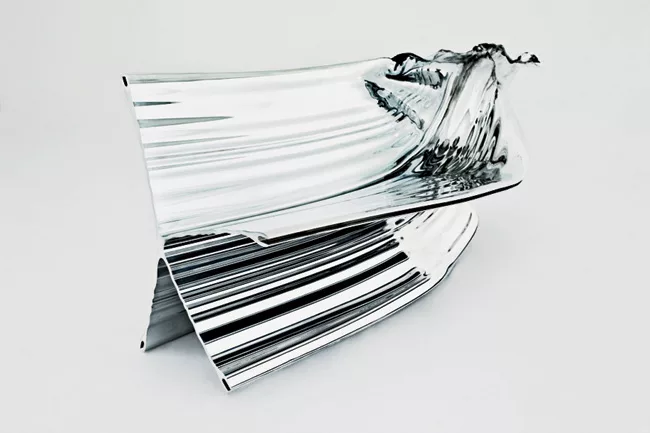
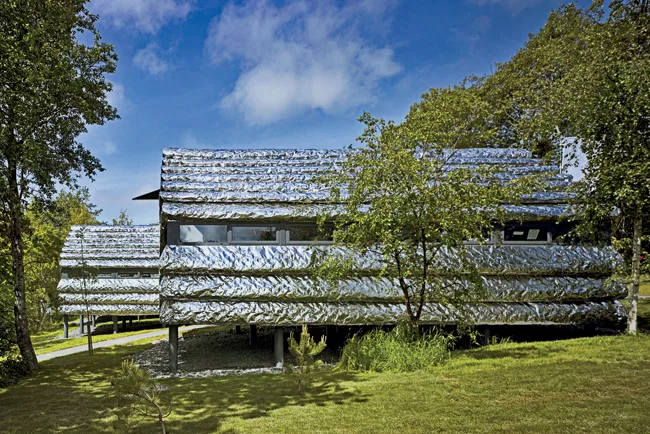
The Studio’s designs for an extruded aluminum bench (Shown left), writers’ cabins (Slide #5), and the facade of a hospital in London (Slide #6) are similarly organic, seeming more elementa
Material Man
The Studio’s designs for an extruded aluminum bench (Shown left), writers’ cabins (Slide #5), and the facade of a hospital in London (Slide #6) are similarly organic, seeming more elemental than man-made.
Photo courtesy Heatherwick Studio
The Studio’s designs for an extruded aluminum bench (Slide #4), writers’ cabins (Shown left), and the facade of a hospital in London (Slide #6) are similarly organic, seeming more elementa
Material Man
The Studio’s designs for an extruded aluminum bench (Slide #4), writers’ cabins (Shown left), and the facade of a hospital in London (Slide #6) are similarly organic, seeming more elemental than man-made.
Photo © Edmund Sumner
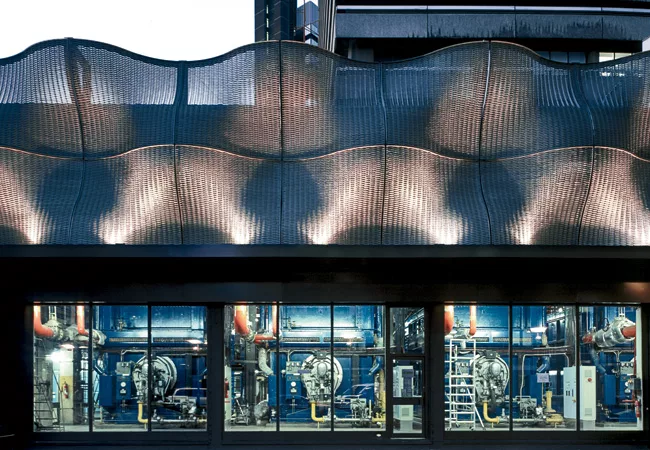
The Studio’s designs for an extruded aluminum bench (Slide #4), writers’ cabins (slide #5), and the facade of a hospital in London (shown left) are similarly organic, seeming more elementa
Material Man
The Studio’s designs for an extruded aluminum bench (Slide #4), writers’ cabins (slide #5), and the facade of a hospital in London (shown left) are similarly organic, seeming more elemental than man-made.
Photo © Edmund Sumner
For a New York City Longchamp store, Heatherwick created a series of curving, thermoplastic balustrades.
Heatherwick Studio’s sleek remake of London’s iconic double-decker coach, the Routemaster, made its debut in February.
Heatherwick’s design for the UK Pavilion at the 2010 World Expo in Shanghai was enthusiastically received; thousands of acrylic, fiber-optic rods created a biomoprhic, sea anemone'like form.
The Studio’s designs for an extruded aluminum bench (Shown left), writers’ cabins (Slide #5), and the facade of a hospital in London (Slide #6) are similarly organic, seeming more elementa
The Studio’s designs for an extruded aluminum bench (Slide #4), writers’ cabins (Shown left), and the facade of a hospital in London (Slide #6) are similarly organic, seeming more elementa
The Studio’s designs for an extruded aluminum bench (Slide #4), writers’ cabins (slide #5), and the facade of a hospital in London (shown left) are similarly organic, seeming more elementa
June 16, 2012

Thomas Heatherwick’s unconventional approach flouts design orthodoxy.

A visit to Thomas Heatherwick’s London studio is like stepping into a Renaissance cabinet of curiosities—one of those idiosyncratic efforts to capture the wondrous variety of the natural and man-made worlds. Strange objects crowd the shelves and floor, indeterminate forms that might be product prototypes, scale models, or sculpture, hinting at the fertile imagination of a designer who transcends any narrow job description.

For a New York City Longchamp store, Heatherwick created a series of curving, thermoplastic balustrades. 

Heatherwick set up his studio in 1994 fresh out of college, and he employs 80 designers and architects to make furniture, vehicles, artworks, and, increasingly, buildings. His projects have no consistent style, but are usually characterized by a big idea that subverts the way we think about function or materials. A purse formed entirely from a single spiraling zipper unfastens to double its volume; a footbridge rolls up like a graceful caterpillar to let boats pass.

Lateral thinking is easier outside the straitjacket of specialization, suggests Heatherwick. “People ask, ‘Are you an artist or an architect?’” he says. “Actually, we’re just developing ideas that solve problems.” He calls himself a three-dimensional designer, which is what he trained to be. He had considered architecture school but was turned off by its “party games”—projects for houses on the moon and such—that seemed too abstract to be useful in the work he wanted to do: “There’s something wrong if the world around us doesn’t hold enough potential for imaginative thinking.”

Ideas and the ability to realize them are equally important to the studio. Heatherwick’s first book, a 600-page doorstop whose publication at the end of May coincides with a major retrospective of his work at London’s Victoria & Albert Museum, is entitled Making. It aims to show that the creative process relies more on experimentation and analysis than flashes of inspiration. Chapter titles are framed as questions: “How do you make customers go up staircases?” is answered by the inviting cascade of steps leading to the second floor of the Longchamp store in Manhattan that he designed in 2006. “We have a methodical process, which is the same whatever scale we are working on,” he explains. “It’s almost like solving a crime—we’re hunting out the solution, scraping away all the things that something shouldn’t be, until we are left with a clear idea.”

For some, the notion that the design of a building and a bench might be approached in the same way is heresy. As a student, Heatherwick had his first brush with the disciplinary border patrol. In defiance of teachers who thought he should be making furniture, he proposed a small pavilion of intersecting curves in wood and acrylic. When he showed his plans to architecture professors he was told “this is not architecture,” and learned that the status accorded to buildings depends on who designs them as much as their inherent qualities. “OK, it’s a big cabinet for people,” he said, and built it anyway.This determination is combined with great sensitivity to clients’ wishes, says Jane Wood, for whom Heatherwick built a restaurant in Littlehampton, England: “Part of his genius is the lengths to which he goes to find out what you want.”

Clients might not know what to expect, but they can be confident that his focus is on their brief, not his own agenda. Despite that reassurance, invention involves risk. This was made painfully evident when his public sculpture made of steel in Manchester, England, was dismantled after developing structural faults. But technical problems usually can be solved; the real risk is creative compromise. “I recently found myself in a new shop that, on paper, is great: high ceilings, good stone. But it’s utterly generic, utterly bland, and I’ll never go back. We are motivated by a strong sense of the risk of building things that are not perceived as worthwhile,” he says. “I find it interesting that people regard being different as a risk; our argument is that it is often the safest thing you can do.”

Heatherwick made the same case when designing the UK pavilion at the 2010 World Expo in Shanghai. How do you ensure that a building will stand out in an architectural zoo? By daring to do something calm. Against a sharply folded landscape he placed a 20-meter-high building, whose soft exterior form comprised 60,000 acrylic optical rods waving in the breeze. In the cavelike interior, 60,000 bright spots of daylight shone from behind seeds cast into the end of each rod. All the exhibits drew big crowds, and at the Seed Cathedral people stood in line for hours simply to experience the building.

It is arguable that what is appropriate for attention-grabbing expo pavilions might not be desirable in the ordinary buildings that constitute the city. One of Heatherwick’s current projects, a string of apartment towers for a property developer in Malaysia, suggests that he thinks otherwise. Their tapering bases are not an empty formal gesture, however, but respond to commercial and environmental conditions, putting real estate up high where it is most valuable, and returning large parts of the site to landscape. The real threat to good urban order is not the odd flamboyant building, he argues, but rather the insidious global spread of “best practice” urban design and polite good taste. In any case, spectacular form is no guarantee of an extraordinary building. The Bilbao Guggenheim was extraordinary as much for the freshness of the idea as for its architecture. Attempts to replicate the project have made the idea commonplace, he says, “so even if you get the world’s best architect to design an incredible gallery, it can be ordinary.” In contrast, the special quality of a place can derive from its particular brand of the quotidian. When Heatherwick’s replacement for London’s double-decker buses hit the streets, the designer was dismayed to hear talk about possible export sales: “I don’t want Hamburg and Abu Dhabi to have the same buses as London.”

Places that inspire affection are often those whose difference is embedded in their bones, Heatherwick observes—one reason he’s now keen to look at how infrastructure might be used in unexpected ways to create distinctive characters for whole cities. It is another jump in scale, but the same fundamental principles apply, he says: “What people respond to are good ideas, whether that’s in products, artworks, or buildings. In a way, that’s what defines human beings; humans invent.”

Chris Foges is the editor of the London-based design journal Architecture Today.

Share This Story

Looking for a reprint of this article?
From high-res PDFs to custom plaques, order your copy today!

Chris Foges is a writer and editor working in architecture and the built environment, based in London. He is contributing editor at the RIBA Journal and was formerly editor of Architecture Today magazine. His books include Imagination and The City Works.

Post a comment to this article

Report Abusive Comment

Subscription Center
  • Create an Account
  • Start a Subscription
  • Manage My Account
  • Sign Up for Newsletters
  • Visit Customer Service
  • Update Preferences

More Videos

Sponsored Content

Sponsored Content is a special paid section where industry companies provide high quality, objective, non-commercial content around topics of interest to the Architectural Record audience. All Sponsored Content is supplied by the advertising company and any opinions expressed in this article are those of the author and not necessarily reflect the views of Architectural Record or its parent company, BNP Media. Interested in participating in our Sponsored Content section? Contact your local rep!

close
  • TAMLYN XtremeTrim Exterior Trim
    Sponsored byTamlyn

    Designing Cleaner Panel Facades: Why Exterior Trim Details Matter

  • Building with Vapor Barriers
    Sponsored byReef Industries, Inc.

    Vapor Barriers Help Control Moisture in Tighter Building Designs

  • Duct Interior with Prodeq System
    Sponsored byHenry, a Carlisle Company

    Designing Resilient Water Containment Systems

DESIGN:ED Podcast
Listen to Architectural Record’s DESIGN:ED Podcast

Events

June 18, 2026

Rebooting the Aging Office Building

Credits: 1 AIA LU/HSW; 1 AIBD P-CE; 0.1 ICC CEU; 1 PDH

Explore façade retrofit strategies and award-winning design concepts that can transform aging office buildings into healthier, higher-performing workplaces for today’s hybrid workforce.

June 23, 2026

Enhancing Fire Resistance with Advanced PVC Solutions

Credits: 1 AIA LU/HSW; 1 AIBD P-CE; 0.1 ICC CEU; 1 IIBEC CEH

Evaluate advanced PVC solutions that improve fire resistance, support WUI compliance, and enhance resilience in residential and commercial building design.

View All Submit An Event

Products

2026 Architect's Square Foot Costbook

2026 Architect's Square Foot Costbook

See More Products

Popular Stories

SanDiegoAirport

Top 300 Architecture Firms of 2026

Coronado Bridge

The Architect’s Guide to San Diego

Lorcan O' Herilhy

California Architect Lorcan O’Herlihy Has Died, Age 66

CCA, Studio Gang

The Winners of the AIA’s 2026 Architecture Award Range from Collegiate Rowing Hubs to Housing for the Homeless

Dusk House

Design Vanguard 2026: ONO

Rebooting the Aging Office Building - Free Webinar - June 18, 2026

Related Articles

  • Italcementi i.Lab

    See More
  • Stone Sculpture Museum

    See More
  • Renewed Promise

    See More

Related Products

See More Products
  • Architectural Record - August 2025

    Architectural Record August 2025 Issue

See More Products

Events

View AllSubmit An Event
  • December 11, 2025

    Building Better Washrooms: Shower Material Selection Strategies

    NOW ON DEMANDCredits: 1 AIA LU/HSW; 1 AIBD P-CE; 0.1 ICC CEU; 0.1 IACET CEU; 1 IDCEC CEU/HSWDiscover how choosing the right washroom materials enhances durability, performance, and user experience while reducing maintenance in high-use environments.
  • July 22, 2025

    Improving Building Efficiency and Reducing Operational Carbon with Phase Change Material

    NOW ON DEMANDCredits: 1 AIA LU/HSW; 1 AIBD P-CE; 0.1 ICC CEU; 0.1 IACET CEUAttendees will learn how integrating phase change materials (PCMs) improves energy efficiency, reduces costs, and enhances occupant comfort.
View AllSubmit An Event
×

The latest news and information

#1 Source for Architectural Design, News and Products

SUBSCRIBE
  • RESOURCES
    • Advertise
    • Contact Us
    • Submit
    • Store
  • ACCOUNT CENTER
    • Create an Account
    • Start a Subscription
    • Manage My Account
    • Sign Up for Newsletters
    • Visit Customer Service
    • Update Preferences
  • PRIVACY
    • PRIVACY POLICY
    • TERMS & CONDITIONS
    • DO NOT SELL MY PERSONAL INFORMATION
    • PRIVACY REQUEST
    • ACCESSIBILITY
  • SERVICES
    • Marketing Services
    • Reprints
    • Market Research
    • List Rental
    • Survey/Respondent Access
  • STAY CONNECTED
    • Linkedin
    • Facebook
    • Instagram
    • YouTube
    • X (Twitter)

Copyright ©2026. All Rights Reserved BNP Media, Inc. and BNP Media II, LLC.

Design, CMS, Hosting & Web Development :: ePublishing