Architectural Record
search
cart
facebook twitter linkedin youtube
  • Sign In
  • Subscribe
  • Sign Out
  • My Account
Architectural Record
  • NEWS
    • Latest News
    • Awards
    • Interviews
    • Obituaries
    • Podcasts
      • Design:Ed Podcast
      • Sponsored Podcasts
  • OPINION
    • Book Reviews / Excerpts
    • Exhibition Reviews
    • Forum
  • EXCLUSIVES
    • Videos
    • Design Vanguard
    • Top 300 Firms
    • Sponsored Content
    • Sponsored eBooks
    • From the Archives
  • CONTINUING ED
    • Editorial Continuing Ed
    • CE Center
    • CE Academies
  • PROJECTS
    • Buildings By Type
    • Reuse & Renovation
    • Museums & Arts Centers
    • Colleges & Universities
    • Multifamily Housing
    • Interiors
    • Lighting
    • Kitchen & Bath
  • HOUSES
    • Record Houses
    • House of the Month
    • Featured Houses
  • PRODUCTS
    • Products by Category
    • Record Products of the Year
    • Latest Products
  • EVENTS
    • Dates & Events
    • Record on the Road
    • Innovation Conference
    • Sustainability in Practice
    • Women In Architecture
    • Webinars
    • Ad Excellence Awards
    • Submit an Event
  • CONNECT
    • Ask RECORD AI
    • Newsletters
    • Contact
    • Advertise
    • Editorial Calendar
    • Store
    • Customer Service
  • SUBMIT
    • Submission Guidelines
    • RECORD Competitions
  • MAGAZINE
    • Subscribe
    • My Account
    • Digital Edition
    • Current Issue
    • Firm Pass
    • Historic Archive
ProjectsBuildings by TypeWorkplace Design

Italcementi i.Lab

Material Witness: Richard Meier & Partners' elegant solution for an Italian cement company makes inventive use of concrete.

By Chris Foges
A white photocatalytic “smog-eating” concrete clads the east facade.
Italcementi i.Lab
Richard Meier & Partners
Milan
A white photocatalytic “smog-eating” concrete clads the east facade.
Photo © Scott Frances/OTTO
A white photocatalytic 'smog-eating' concrete is also used for precast louvers on the north facade and for mullions.
Italcementi i.Lab
Richard Meier & Partners
Milan
A white photocatalytic 'smog-eating' concrete is also used for precast louvers on the north facade and for mullions.
Photo © Scott Frances/OTTO
Sixty percent of the envelope is high-performance triple-glazing, allowing light into offices and the entrance hall.
Italcementi i.Lab
Richard Meier & Partners
Milan
Sixty percent of the envelope is high-performance triple-glazing, allowing light into offices and the entrance hall.
Photo © Scott Frances/OTTO
Sixty percent of the envelope is high-performance triple-glazing, allowing light into offices and the entrance hall.
Italcementi i.Lab
Richard Meier & Partners
Milan
Sixty percent of the envelope is high-performance triple-glazing, allowing light into offices and the entrance hall.
Photo © Scott Frances/OTTO
The louvered screen masks the view of the Milan-to-Venice expressway with sculptural élan.
Italcementi i.Lab
Richard Meier & Partners
Milan
The louvered screen masks the view of the Milan-to-Venice expressway with sculptural élan.
Photo © Scott Frances/OTTO
Skylights draw daylight inside and share roof space with an array of photovoltaic and solar thermal panels. Geothermal wells extending 330 feet underground reduce energy demand for cooling by 25 perce
Italcementi i.Lab
Richard Meier & Partners
Milan
Skylights draw daylight inside and share roof space with an array of photovoltaic and solar thermal panels. Geothermal wells extending 330 feet underground reduce energy demand for cooling by 25 percent, and for heating by half.
Photo © Scott Frances/OTTO
Italcementi i.Lab
Italcementi i.Lab
Richard Meier & Partners
Milan
Image courtesy Richard Meier & Partners Architects LLP
Italcementi i.Lab
Italcementi i.Lab
Richard Meier & Partners
Milan
Image courtesy Richard Meier & Partners Architects LLP
A white photocatalytic “smog-eating” concrete clads the east facade.
A white photocatalytic 'smog-eating' concrete is also used for precast louvers on the north facade and for mullions.
Sixty percent of the envelope is high-performance triple-glazing, allowing light into offices and the entrance hall.
The louvered screen masks the view of the Milan-to-Venice expressway with sculptural élan.
Skylights draw daylight inside and share roof space with an array of photovoltaic and solar thermal panels. Geothermal wells extending 330 feet underground reduce energy demand for cooling by 25 perce
Italcementi i.Lab
Italcementi i.Lab
August 16, 2013

Architects & Firms

Richard Meier & Partners Architects

Milan

Laboratory buildings are often the graveyard of architects' good intentions, as stringent technical requirements leave little room for environmental and aesthetic concerns. Richard Meier & Partners' i.lab is an exception: the LEED Platinum–accredited research center near Milan provides flexible climate-controlled chemistry labs and material-testing facilities for cement company Italcementi. Its secondary role as a place for meetings and public events means it also demanded an appropriately expressive architecture.

The richness of that expression is exemplified by the projecting bladelike roof that shades the curtain-walled entrance hall at the tip of the building's V-shaped plan. The steel-trussed structure is clad with precast panels of white self-cleaning concrete also used for window mullions and louvers. It serves simultaneously as a demonstration of Italcementi's technical capabilities, a welcoming gesture, and a reference to the 150-year-old company's birthplace in neighboring Bergamo, Italy, to which it points like an arrow.

The structure also makes an elegant conclusion to the Jean Nouvel–designed Kilometro Rosso, a red metal wall placed alongside a busy highway to identify the fledgling science park within which the i.lab is located, amidst a landscape of farms and commercial sheds. The 33-foot-tall wall established a maximum height for the laboratory building—three of whose four stories are below ground level—but Meier otherwise relied on distant views and manipulated terrain to root the building.

To the south, a space between its wings has been partially excavated to create a third daylit story at basement level and access to mechanicals and parking below. Terraces overlook an extensive garden of hornbeam hedges, fruit trees, and endangered local fauna that tie the building specifically to the region.

The larger of the two wings, aligned with the highway, places offices above two floors of labs, while the smaller contains a coolly luxurious multipurpose auditorium and a cantilevered skylit boardroom that juts into the volume of the hall. The “public” and “private” halves of the building hinge on a double-height entrance foyer, within which a long ramp allows leisurely progress between floors. Circulation space in the work areas—where glass-walled labs and offices are pulled back from the roadside edge to create a broad route along the perimeter—is also designed to encourage chance encounters. “The idea of promenade is there in all of our projects,” explains Meier. “It creates a kind of interaction between people that is good for the company.” The space also forms an acoustic buffer, so that from desks and lab benches the busy highway registers only as a silent, somewhat hypnotic moving picture.

The building's defining quality is daylight, which spills in everywhere, flooding elevator shafts though roof windows and drawn into basement labs via sunken courtyards. Sunlight is also bounced by pools of water onto the sloping concrete soffit of the foyer. It lends variety and animation to the white interior. (“White is not a color,” remarks Meier. “It is a spectrum of possibilities depending on light.”) And the control of daylight, filtered by discreet shading devices to mitigate glare and heat gain, reveals the building's technical intelligence.

Italcementi's deputy director of innovation, Enrico Scalchi, admits to having been initially alarmed by “the white and the light, both of which are huge,” though adjustment came easily for him. Scalchi also adjusted to reduced privacy in individual work areas and the increased informal cooperation fostered by shared spaces. The lab, he says, embodies the emergent strands of Italcementi's “DNA”–innovation and sustainability, predictably enough, but also tradition, local roots, and “love of architecture.” It is a building whose apparent simplicity belies a delicate handling of both form and content.

Size: 248,000 square feet

Cost: $51.8 million

Completion date: April 2012

Architect:
Richard Meier & Partners Architects LLP
475 Tenth Avenue
New York, NY 10018
212 967 6060
212 967 3207

People

Owner: Italcementi Group

Architect:
Richard Meier & Partners Architects LLP
475 Tenth Avenue
New York, NY 10018
212 967 6060
212 967 3207

Personnel in architect's firm who should receive special credit:
Design Principals:
Richard Meier, FAIA
Dukho Yeon, AIA

Project Manager:
Vivian Lee, AIA

Project Architects:
Vivian Lee, AIA
Simone Ferracina

Team:
Roberto Mancinelli
Dongkyu Lee
Amalia Rusconi-Clerici
Robert Kim
Cedric M. Cornu
Wen-Yu Tu
Guillermo Murcia
Luca Aliverti
Tetsuhito Abe

Associate architect(s):
Studio Sonzogni
Studio Fiumana

Engineer(s):
Structural:
Ing. Gennaro Guala, Italcementi CTG
Studio Marco Verdina

MEP: Serving s.r.l

Consultant(s):
Landscape: Giardini Paesaggio Territorio (GPT)

Lighting:
Lighting Design Workshop
Rossi Bianchi Lighting Design

Acoustical: Biobyte

LEED: Viridian Energy & Environmental, LLC

AV: Sangio Sound snc

Construction Specifications: Aaron Pine

LEED Commissioning: Tekne Ingegneria

Pool: FM Studio

General contractor:
Impresa Pandini

CAD system, project management, or other software used:
Microstation (CAD)
Microsoft Office


Products

Structural system
Concrete construction (cast in place and precast)
Steel truss beam and post-tension cables at roof overhang concrete beams
Steel framing for East and West hanging walls

Exterior cladding
Metal/glass curtain wall: Schueco (extrusions), Guardian (glass), MetalSer S.r.l.(fabricator)

Precast concrete: Styl-Comp S.p.A.

Precast concrete curtain wall: Styl-Comp S.p.A (precast), Guardian (glass), MetalSer S.r.l.(fabricator)

Windows
Metal frame: Schueco

Glazing
Glass: Guardian

Skylights: Guardian

Doors
Entrances: Schueco

Revolving Door: Boon Edam

Metal doors: Domoferm

Wood doors: Domoferm

Office Partitions doors: Gemino

Ventilated doors grilles: Orsogril

Hardware
All hardware: Schueco

Roller Shades: Silent Gliss

Interior finishes
Stone floors: Remuzzi

Metal Ceilings: Pancaldi

Cabinetwork and custom woodwork: Poltrona Frau Contract

Floor and wall tile (cite where used): Ceramiche Signorelli (bathrooms, first basement)

Carpet: Interface

Hardwood floor: Ceramiche Signorelli

Special interior finishes unique to this project:
i.light (transparent concrete panels, manufactured by Italcementi)
white precast concrete (fiberglass formwork, manufactured by Styl-Comp)

Furnishings
Office furniture: Porro

Lab furniture and systems: Burdinola

Reception, Auditorium, Board Room Custom furniture: Poltrona Frau Contract

Auditorium fixed seating: Poltrona Frau Contract

Wood Panels: Poltrona Frau Contract

Lighting
Downlights: iGuzzini
Exterior: iGuzzini

Conveyance
Elevators/Escalators: Baglini Ascensori (custom design, fabricator)

 
KEYWORDS: Italy Milan

Share This Story

Looking for a reprint of this article?
From high-res PDFs to custom plaques, order your copy today!

Chris Foges is a writer and editor working in architecture and the built environment, based in London. He is contributing editor at the RIBA Journal and was formerly editor of Architecture Today magazine. His books include Imagination and The City Works.

Post a comment to this article

Report Abusive Comment

Subscription Center
  • Create an Account
  • Start a Subscription
  • Manage My Account
  • Sign Up for Newsletters
  • Visit Customer Service
  • Update Preferences

More Videos

Sponsored Content

Sponsored Content is a special paid section where industry companies provide high quality, objective, non-commercial content around topics of interest to the Architectural Record audience. All Sponsored Content is supplied by the advertising company and any opinions expressed in this article are those of the author and not necessarily reflect the views of Architectural Record or its parent company, BNP Media. Interested in participating in our Sponsored Content section? Contact your local rep!

close
  • TAMLYN XtremeTrim Exterior Trim
    Sponsored byTamlyn

    Designing Cleaner Panel Facades: Why Exterior Trim Details Matter

  • Building with Vapor Barriers
    Sponsored byReef Industries, Inc.

    Vapor Barriers Help Control Moisture in Tighter Building Designs

  • Duct Interior with Prodeq System
    Sponsored byHenry, a Carlisle Company

    Designing Resilient Water Containment Systems

DESIGN:ED Podcast
Listen to Architectural Record’s DESIGN:ED Podcast

Events

June 10, 2026

Rethinking Stormwater – The Power of Porous Paving

Credits: 1 AIA LU/HSW; 1 AIBD P-CE; 0.1 ICC CEU

Learn how porous paving systems support stormwater management, reduce heat island effects, and enhance sustainable site design performance.

June 11, 2026

Very Early Warning Fire Detection for Mission-Critical Facilities

Credits: 1 AIA LU/HSW; 1 AIBD P-CE; 0.1 ICC CEU

Examine advanced fire detection strategies that support uptime and enhance safety in data centers and other mission-critical facilities.

View All Submit An Event

Products

2026 Architect's Square Foot Costbook

2026 Architect's Square Foot Costbook

See More Products

Popular Stories

Practice Matters illustration

What’s in a (Firm’s) Name? Thinking About Succession and Legacy

Practice Matters illustration

By the Numbers: Counting America's Architects

House on a Hill

Design Vanguard 2026: Forma

Crane Cove, ONO

Design Vanguard 2026 Winners

KRESA by DLR

In Kalamazoo, DLR Group Completes a Mass-Timber Hub for Career and Technical Education Programs

Broader Sustainability of CMU - Free Webinar - May 21, 2026

Related Articles

  • GL Events Headquarters

    See More
  • London Design District.

    Design District Opens in London

    See More
  • Oi Mari by Manca Studio

    Oi Marì by Manca Studio

    See More

Related Products

See More Products
  • 3dthinking.jpg

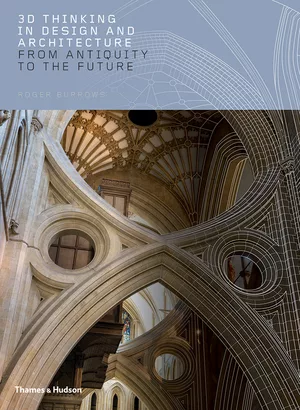
    3D Thinking in Design and Architecture: From Antiquity to the Future

  • american arch.jpg

    American Architecture: An Illustrated Encyclopedia

  • manual

    2026 National Building Cost Manual

See More Products
×

The latest news and information

#1 Source for Architectural Design, News and Products

SUBSCRIBE
  • RESOURCES
    • Advertise
    • Contact Us
    • Submit
    • Store
  • ACCOUNT CENTER
    • Create an Account
    • Start a Subscription
    • Manage My Account
    • Sign Up for Newsletters
    • Visit Customer Service
    • Update Preferences
  • PRIVACY
    • PRIVACY POLICY
    • TERMS & CONDITIONS
    • DO NOT SELL MY PERSONAL INFORMATION
    • PRIVACY REQUEST
    • ACCESSIBILITY
  • SERVICES
    • Marketing Services
    • Reprints
    • Market Research
    • List Rental
    • Survey/Respondent Access
  • STAY CONNECTED
    • Linkedin
    • Facebook
    • Instagram
    • YouTube
    • X (Twitter)

Copyright ©2026. All Rights Reserved BNP Media, Inc. and BNP Media II, LLC.

Design, CMS, Hosting & Web Development :: ePublishing