Architectural Record
search
cart
facebook twitter linkedin youtube
  • Sign In
  • Subscribe
  • Sign Out
  • My Account
Architectural Record
  • NEWS
    • Latest News
    • Awards
    • Interviews
    • Obituaries
    • Podcasts
      • Design:Ed Podcast
      • Sponsored Podcasts
  • OPINION
    • Book Reviews / Excerpts
    • Exhibition Reviews
    • Forum
  • EXCLUSIVES
    • Videos
    • Design Vanguard
    • Top 300 Firms
    • Sponsored Content
    • Sponsored eBooks
    • From the Archives
  • CONTINUING ED
    • Editorial Continuing Ed
    • CE Center
    • CE Academies
  • PROJECTS
    • Buildings By Type
    • Reuse & Renovation
    • Museums & Arts Centers
    • Colleges & Universities
    • Multifamily Housing
    • Interiors
    • Lighting
    • Kitchen & Bath
  • HOUSES
    • Record Houses
    • House of the Month
    • Featured Houses
  • PRODUCTS
    • Products by Category
    • Record Products of the Year
    • Latest Products
  • EVENTS
    • Dates & Events
    • Record on the Road
    • Innovation Conference
    • Sustainability in Practice
    • Women In Architecture
    • Webinars
    • Ad Excellence Awards
    • Submit an Event
  • CONNECT
    • Ask RECORD AI
    • Newsletters
    • Contact
    • Advertise
    • Editorial Calendar
    • Store
    • Customer Service
  • SUBMIT
    • Submission Guidelines
    • RECORD Competitions
  • MAGAZINE
    • Subscribe
    • My Account
    • Digital Edition
    • Current Issue
    • Firm Pass
    • Historic Archive
Commentary & Criticism

Last Call at Tokyo's Hotel Okura
By Naomi Pollock, FAIA
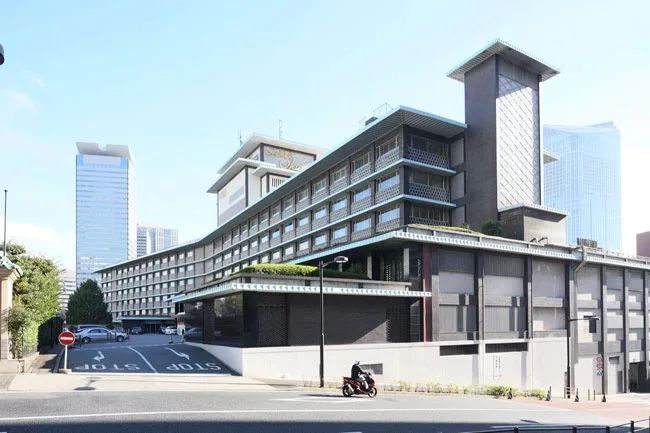
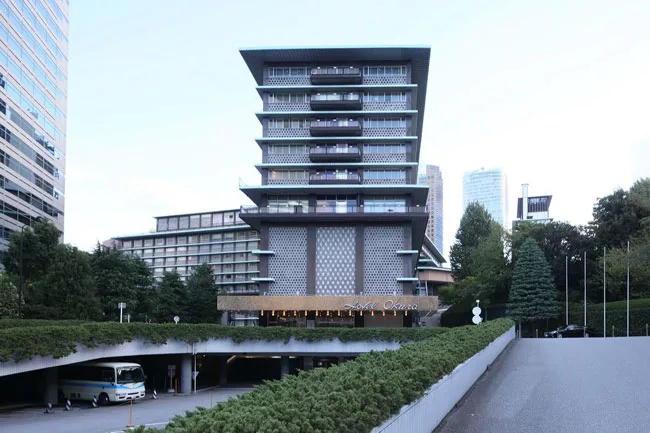
Located in the Akasaka area, near the U.S. embassy, the hotel opened in 1962 and was designed by Yoshiro Taniguchi and Hideo Kosaka. Its use of decorative <em>namako</em> wall tiling on the exterior b
Hotel Okura
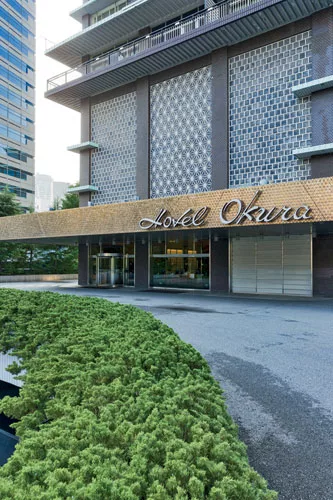
Located in the Akasaka area, near the U.S. embassy, the hotel opened in 1962 and was designed by Yoshiro Taniguchi and Hideo Kosaka. Its use of decorative namako wall tiling on the exterior blends modern and traditional themes..
Photo © Iwan Baan
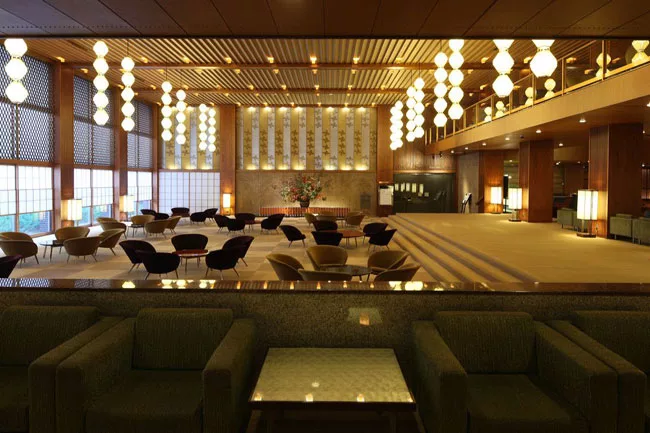
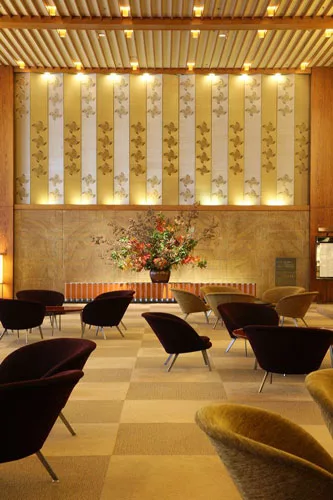
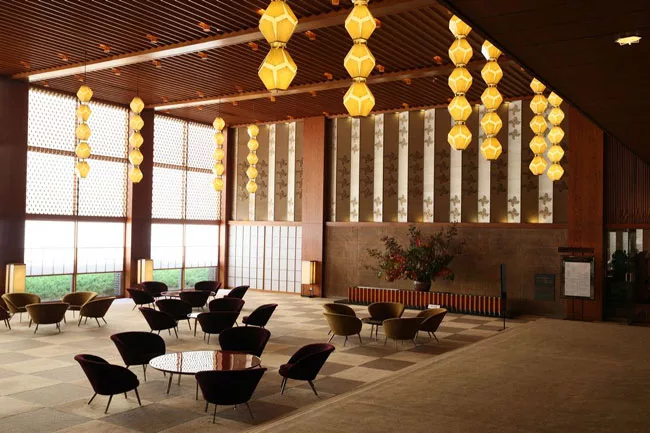
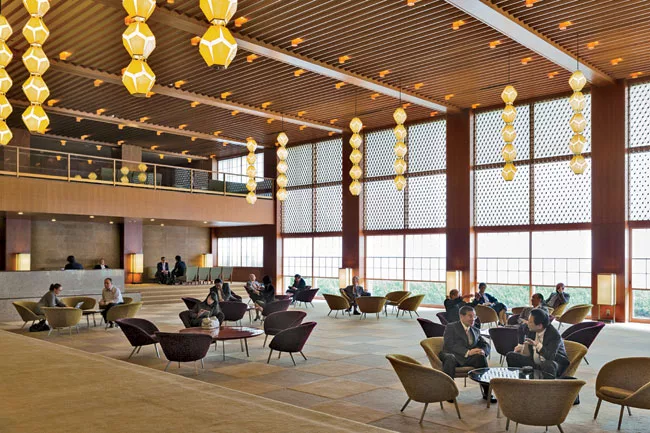
Light fixtures reminiscent of paper lanterns in the main lobby blends modern and traditional themes.
Hotel Okura
Light fixtures reminiscent of paper lanterns in the main lobby blends modern and traditional themes.
Photo © Iwan Baan
Hotel exterior.
Hotel Okura
Hotel exterior.
Photo © Iwan Baan
Hotel exterior.
Hotel Okura
Hotel exterior.
Photo © Iwan Baan
Hotel lobby.
Hotel Okura
Hotel lobby.
Photo © Iwan Baan
Hotel lobby.
Hotel Okura
Hotel lobby.
Photo © Iwan Baan
Hotel lobby.
Hotel Okura
Hotel lobby.
Photo © Iwan Baan
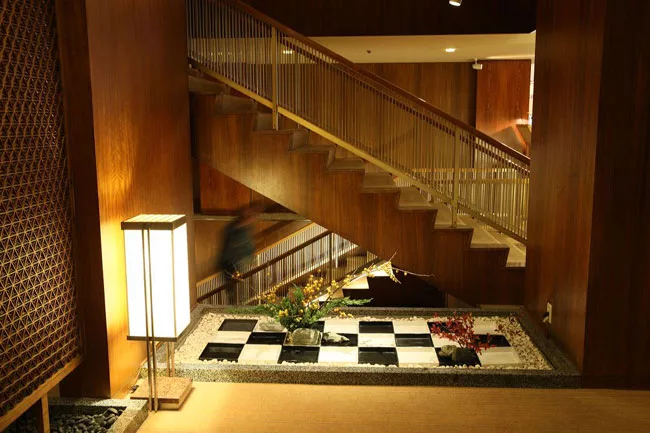
Stairway
Hotel Okura
Stairway
Photo © Iwan Baan
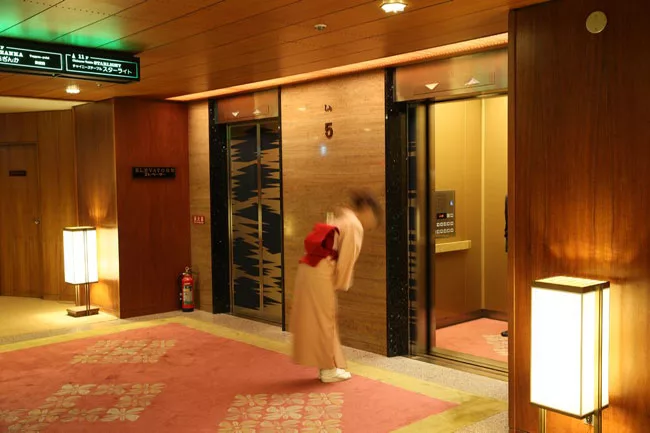
Elevator operator.
Hotel Okura
Elevator operator.
Photo © Iwan Baan
Located in the Akasaka area, near the U.S. embassy, the hotel opened in 1962 and was designed by Yoshiro Taniguchi and Hideo Kosaka. Its use of decorative <em>namako</em> wall tiling on the exterior b
Light fixtures reminiscent of paper lanterns in the main lobby blends modern and traditional themes.
Hotel exterior.
Hotel exterior.
Hotel lobby.
Hotel lobby.
Hotel lobby.
Stairway
Elevator operator.
August 16, 2015

When the Hotel Okura in Tokyo shuts its doors at the end of August, legions of former guests and architecture aficionados worldwide will mourn—myself included. It was here that I stayed on my very first visit to Japan in 1982. The uniformed bellmen with their pillbox hats were my first encounter with Japanese hospitality. Breakfast in the Orchid Room was my first taste of Japanese produce—white peaches painstakingly peeled to perfection. And the building itself was my first experience of the country's magnificent architecture. A masterpiece of Midcentury Modernism with traditional Japanese overtones, the Hotel Okura is in a class of its own.

Completed in 1962, the hotel implicitly heralded the end of Japan's post'World War II reconstruction and the start of its growing role in global affairs. Designed under the aegis of the architect Yoshiro Taniguchi—the father of Yoshio Taniguchi, who renovated the lobby a few years ago—it was intended for the growing number of international visitors.

The building's Y-shaped plan guaranteed views from each of its 550 guest rooms and an exquisite palette of exterior materials, such as decorative namako wall tiling, with its puffy plaster grout patterned in traditional motifs, quoted directly from Japan's architectural heritage. Continuing that theme inside, the lobby evoked the spirit of old Japan but in a fresh way—with lighting fixtures reminiscent of paper lanterns, windows partially clad with shoji screens, and a generous use of wood.

Amazingly, that space has stood the test of time and remains one of the very best lobbies in town. But, over the years, much of the hotel's interior, including its guest rooms, has been renovated with little more than a polite nod to the past. Ditto many of its restaurants. And although well detailed, the cavernous, subterranean function halls never were all that enticing. In light of these circumstances, how much of the building truly warrants saving? Is it a truly significant work of architecture?

Perhaps the sadness over the hotel's imminent demise is being compounded by nostalgia. On the surface, the hotel is a charming throwback to an earlier time. Undoubtedly the loss of that sense of history is difficult to bear. But let's consider that in context: where 20th-century buildings are concerned, nostalgia, or even the yearning for a connection to the past, is very un-Japanese. Mitsuyo Katayama's iconic 1964 Olympic Stadium, a more populist symbol of Japan's postwar rebirth, is a case in point. Last summer, prior to the start of its dismantling, a 'sayonara ceremony' was held, after which the country was expected to pick up and move on. Zaha Hadid had been selected to design the replacement stadium, but the Japanese government announced on July 17 that it would find a new architect for that project.

Though it is very hard to see beloved buildings go, Tokyo's organic brand of urban renewal is one explanation for the city's vitality. Tokyo thrives on an endless cycle of replacing the old with the new, bit by bit. Here demolition is practically inevitable, and rebuilding is a way of life. In part, this is due to Japan's appetite for the new and, in part, because of the city's limited buildable area. In concrete terms, there is simply no room for nostalgia.

Fortunately, the son of the hotel's original designer is spearheading the building's redevelopment. While images of the new hotel have yet to be revealed, it seems probable that Taniguchi the younger will respect the legacy of his father's masterpiece. Furthermore, he is the author of some of the most elegant architecture in Japan today. Many of these works blend contemporary design with Japanese aesthetics even more effectively than those of his father. Crossing my fingers, I would like to think that the new Okura is in good hands.

Don't get me wrong: I am deeply saddened by the loss of Tokyo's iconic hotel. But, for better or for worse, hanging on to it just isn't the Japanese way.

KEYWORDS: modernism Tokyo

Share This Story

Looking for a reprint of this article?
From high-res PDFs to custom plaques, order your copy today!

Contributing Editor Naomi Pollock, FAIA, is the author of Japanese Design Since 1945: A Complete Sourcebook and the forthcoming Vanishing Japan: Modern Architecture Gone But Not Forgotten,

Post a comment to this article

Report Abusive Comment

Subscription Center
  • Create an Account
  • Start a Subscription
  • Manage My Account
  • Sign Up for Newsletters
  • Visit Customer Service
  • Update Preferences

More Videos

Sponsored Content

Sponsored Content is a special paid section where industry companies provide high quality, objective, non-commercial content around topics of interest to the Architectural Record audience. All Sponsored Content is supplied by the advertising company and any opinions expressed in this article are those of the author and not necessarily reflect the views of Architectural Record or its parent company, BNP Media. Interested in participating in our Sponsored Content section? Contact your local rep!

close
  • TAMLYN XtremeTrim Exterior Trim
    Sponsored byTamlyn

    Designing Cleaner Panel Facades: Why Exterior Trim Details Matter

  • Building with Vapor Barriers
    Sponsored byReef Industries, Inc.

    Vapor Barriers Help Control Moisture in Tighter Building Designs

  • Duct Interior with Prodeq System
    Sponsored byHenry, a Carlisle Company

    Designing Resilient Water Containment Systems

DESIGN:ED Podcast
Listen to Architectural Record’s DESIGN:ED Podcast

Events

June 10, 2026

Rethinking Stormwater – The Power of Porous Paving

Credits: 1 AIA LU/HSW; 1 AIBD P-CE; 0.1 ICC CEU

Learn how porous paving systems support stormwater management, reduce heat island effects, and enhance sustainable site design performance.

June 11, 2026

Very Early Warning Fire Detection for Mission-Critical Facilities

Credits: 1 AIA LU/HSW; 1 AIBD P-CE; 0.1 ICC CEU

Examine advanced fire detection strategies that support uptime and enhance safety in data centers and other mission-critical facilities.

View All Submit An Event

Products

2026 Architect's Square Foot Costbook

2026 Architect's Square Foot Costbook

See More Products

Popular Stories

Practice Matters illustration

What’s in a (Firm’s) Name? Thinking About Succession and Legacy

Practice Matters illustration

By the Numbers: Counting America's Architects

House on a Hill

Design Vanguard 2026: Forma

Crane Cove, ONO

Design Vanguard 2026 Winners

House A on a Hill

Design Vanguard 2026: Santiago Valdivieso

Broader Sustainability of CMU - Free Webinar - May 21, 2026

Related Articles

  • Cathleen McGuigan

    Last Call for a Modernist Landmark

    See More
  • Pritzker Prize Ceremony

    RCR Arquitectes Receives 2017 Pritzker Prize at Ceremony in Tokyo

    See More
  • Kyoto Hyoto

    An Elaborate Array of Wood and Aluminum-Mesh Panels Fills a Soaring Eatery in Osaka

    See More
×

The latest news and information

#1 Source for Architectural Design, News and Products

SUBSCRIBE
  • RESOURCES
    • Advertise
    • Contact Us
    • Submit
    • Store
  • ACCOUNT CENTER
    • Create an Account
    • Start a Subscription
    • Manage My Account
    • Sign Up for Newsletters
    • Visit Customer Service
    • Update Preferences
  • PRIVACY
    • PRIVACY POLICY
    • TERMS & CONDITIONS
    • DO NOT SELL MY PERSONAL INFORMATION
    • PRIVACY REQUEST
    • ACCESSIBILITY
  • SERVICES
    • Marketing Services
    • Reprints
    • Market Research
    • List Rental
    • Survey/Respondent Access
  • STAY CONNECTED
    • Linkedin
    • Facebook
    • Instagram
    • YouTube
    • X (Twitter)

Copyright ©2026. All Rights Reserved BNP Media, Inc. and BNP Media II, LLC.

Design, CMS, Hosting & Web Development :: ePublishing