Architectural Record
search
cart
facebook twitter linkedin youtube
  • Sign In
  • Subscribe
  • Sign Out
  • My Account
Architectural Record
  • NEWS
    • Latest News
    • Awards
    • Interviews
    • Obituaries
    • Podcasts
      • Design:Ed Podcast
      • Sponsored Podcasts
  • OPINION
    • Book Reviews / Excerpts
    • Exhibition Reviews
    • Forum
  • EXCLUSIVES
    • Videos
    • Design Vanguard
    • Top 300 Firms
    • Sponsored Content
    • Sponsored eBooks
    • From the Archives
  • CONTINUING ED
    • Editorial Continuing Ed
    • CE Center
    • CE Academies
  • PROJECTS
    • Buildings By Type
    • Reuse & Renovation
    • Museums & Arts Centers
    • Colleges & Universities
    • Multifamily Housing
    • Interiors
    • Lighting
    • Kitchen & Bath
  • HOUSES
    • Record Houses
    • House of the Month
    • Featured Houses
  • PRODUCTS
    • Products by Category
    • Record Products of the Year
    • Latest Products
  • EVENTS
    • Dates & Events
    • Record on the Road
    • Innovation Conference
    • Sustainability in Practice
    • Women In Architecture
    • Webinars
    • Ad Excellence Awards
    • Submit an Event
  • CONNECT
    • Ask RECORD AI
    • Newsletters
    • Contact
    • Advertise
    • Editorial Calendar
    • Store
    • Customer Service
  • SUBMIT
    • Submission Guidelines
    • RECORD Competitions
  • MAGAZINE
    • Subscribe
    • My Account
    • Digital Edition
    • Current Issue
    • Firm Pass
    • Historic Archive
Commentary & CriticismOpinion

University Planning and Architecture: The Search for Perfection

By Jayne Merkel
November 15, 2011
By Jonathan Coulson, Paul Roberts, and Isabelle Taylor. Routledge, 2010, 264 pages, $125

This ambitious history chronicles campus design from the founding of the first European universities in the 11th century until last year. Although buildings for higher education are often among the most significant ones we build, surprisingly few good studies of them exist. There are numerous books on individual campuses, some good ones on architects who design college buildings (such as Robert A. M. Stern on Campus), and plenty of guides for facilities managers (even this one has a chapter on how to plan a campus). But only a few solid general histories have been written. The best, Paul Venable Turner’s Campus: An American Planning Tradition, was published in 1984 and has been out of print for decades, so Coulson, Roberts, and Taylor’s richly illustrated volume is very welcome.

University Planning and Architecture: The Search for Perfection

Its range—throughout time and around the world—means that no campus can be described in detail, but the book helps readers grasp the scope of the genre and see the featured campuses in a broad context. Plus, it considers not only individual buildings but also campus planning, a discipline that, the authors note, arose in the 19th century.

Although you could quibble about the choice of campuses, all of the most significant ones are mentioned at some point. Curiously, though, after the fine 37-page chronological survey, the 29 chapters on individual schools begin with Aarhus University and end with Yale. Discussing them in alphabetical order, rather than by the date of their founding or location, seems odd.

The authors explain that the first European universities at Bologna (“allegedly founded” in 1038) and Paris (1150) were merely places where groups of scholars took up residence and students came to be tutored by them. The phenomenon spread to other European cities. The scholars formed guilds that came to be “sanctioned by popes, prelates and princes.” Lectures took place in houses, examinations and assemblies in churches and convents.

Academic communities often migrated from one city to another where patrons erected structures to house them. Although a dormitory was built in Paris for very young students in 1180, communities of scholars and students living together were primarily a British phenomenon. It began in Oxford with the creation of University College in 1249 and soon appeared in Cambridge as well.

These early colleges consisted of a chapel, a lecture hall, and housing for tutors and students arranged in quadrangles. Since it was the 13th century, they were built in the Gothic style, at least until Sir Christopher Wren introduced classicism at Oxford and Cambridge in the 17th century.

The authors tell this story entertainingly and usually accurately, augmenting the text with lush color photographs. They tell many other stories, too, introducing readers to Peking University in Beijing (a colorful romantic series of structures in the “Chinese” style built in the late 19th and early 20th centuries for a Christian missionary college and appropriated by the Chinese government after the founding of the People’s Republic in 1949), and to Qatar University in Doha (founded in 1973 and designed in a style inspired by “the villages, towns and cities of the Arab world” on a dramatic, elevated site using modern Western technology to accommodate the climate).

They describe quintessentially American campuses like Thomas Jefferson’s 1817 verdant classical University of Virginia and Walter Netsch’s postwar modern University of Illinois at Chicago, a collection of abstract concrete forms built at a freeway interchange and connected by aerial walkways. (A recent book by Sharon Haar, The City as Campus: Urbanism and Higher Education in Chicago, recounts its history in full.)

Coulson, Roberts, and Taylor have a tendency to emphasize coherence on campuses, praising Princeton for its 2007 Gothic-style Whitman College but omitting mention of Frank Gehry’s audacious Lewis Science Library, completed just one year later. They praise Columbia’s “redbrick tradition” but leave out Rafael Moneo’s new metal and glass interdisciplinary science Northwest Corner Building there. Nor do they mention the challenges of the big new sites that Columbia, Harvard, and Yale have recently acquired beyond their campus boundaries. The authors are stronger on history than current projects and problems.

Handsome black-and-white plans precede discussions of each institution, but since they are not labeled, it is hard to locate buildings mentioned in the text, though a conscientious reader could find plans on the web for guidance. Still, there is a great deal in this book to interest the professional historian as well as the practicing architect—information that has never before been assembled in one handy volume.

Share This Story

Looking for a reprint of this article?
From high-res PDFs to custom plaques, order your copy today!
Post a comment to this article

Report Abusive Comment

Subscription Center
  • Create an Account
  • Start a Subscription
  • Manage My Account
  • Sign Up for Newsletters
  • Visit Customer Service
  • Update Preferences

More Videos

Sponsored Content

Sponsored Content is a special paid section where industry companies provide high quality, objective, non-commercial content around topics of interest to the Architectural Record audience. All Sponsored Content is supplied by the advertising company and any opinions expressed in this article are those of the author and not necessarily reflect the views of Architectural Record or its parent company, BNP Media. Interested in participating in our Sponsored Content section? Contact your local rep!

close
  • TAMLYN XtremeTrim Exterior Trim
    Sponsored byTamlyn

    Designing Cleaner Panel Facades: Why Exterior Trim Details Matter

  • Building with Vapor Barriers
    Sponsored byReef Industries, Inc.

    Vapor Barriers Help Control Moisture in Tighter Building Designs

  • Duct Interior with Prodeq System
    Sponsored byHenry, a Carlisle Company

    Designing Resilient Water Containment Systems

DESIGN:ED Podcast
Listen to Architectural Record’s DESIGN:ED Podcast

Events

June 16, 2026

Focus on the Façade: Exploring Steel, Timber & Fire-Rated Curtain Walls and Channel Glass Systems

Credits: 1 AIA LU/HSW; 1 AIBD P-CE; 0.1 ICC CEU

Explore modern façade and glazing systems that enhance daylighting, fire safety, and thermal performance while expanding architectural design possibilities.

June 18, 2026

Rebooting the Aging Office Building

Credits: 1 AIA LU/HSW; 1 AIBD P-CE; 0.1 ICC CEU; 1 PDH

Explore façade retrofit strategies and award-winning design concepts that can transform aging office buildings into healthier, higher-performing workplaces for today’s hybrid workforce.

View All Submit An Event

Products

2026 Architect's Square Foot Costbook

2026 Architect's Square Foot Costbook

See More Products

Popular Stories

SanDiegoAirport

Top 300 Architecture Firms of 2026

Coronado Bridge

The Architect’s Guide to San Diego

Dusk House

Design Vanguard 2026: ONO

West Village Penthouse

Design Vanguard 2026: Brent Buck Architects

Hikma Community Complex

Design Vanguard 2026: Mariam Issoufou Architects

Focus on the Facade - Free Webinar - June 16, 2026

Related Articles

  • Architectural Record, January 1984

    From the RECORD Archives: ‘The Tall Building Artistically Reconsidered: The Search for a Skyscraper Style’

    See More
  • AIA logo

    AIA Launches Search for Next EVP/CEO

    See More
  • Champlain Towers

    Implosion Enables Expanded Search for Victims of Champlain Towers Tragedy

    See More

Related Products

See More Products
  • book5.jpg

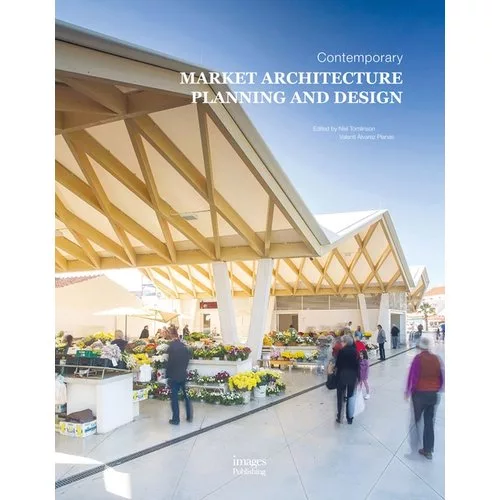
    Contemporary Market Architecture Planning and Design

See More Products
×

The latest news and information

#1 Source for Architectural Design, News and Products

SUBSCRIBE
  • RESOURCES
    • Advertise
    • Contact Us
    • Submit
    • Store
  • ACCOUNT CENTER
    • Create an Account
    • Start a Subscription
    • Manage My Account
    • Sign Up for Newsletters
    • Visit Customer Service
    • Update Preferences
  • PRIVACY
    • PRIVACY POLICY
    • TERMS & CONDITIONS
    • DO NOT SELL MY PERSONAL INFORMATION
    • PRIVACY REQUEST
    • ACCESSIBILITY
  • SERVICES
    • Marketing Services
    • Reprints
    • Market Research
    • List Rental
    • Survey/Respondent Access
  • STAY CONNECTED
    • Linkedin
    • Facebook
    • Instagram
    • YouTube
    • X (Twitter)

Copyright ©2026. All Rights Reserved BNP Media, Inc. and BNP Media II, LLC.

Design, CMS, Hosting & Web Development :: ePublishing