Architectural Record
search
cart
facebook twitter linkedin youtube
  • Sign In
  • Subscribe
  • Sign Out
  • My Account
Architectural Record
  • NEWS
    • Latest News
    • Awards
    • Interviews
    • Obituaries
    • Podcasts
      • Design:Ed Podcast
      • Sponsored Podcasts
  • OPINION
    • Book Reviews / Excerpts
    • Exhibition Reviews
    • Forum
  • EXCLUSIVES
    • Videos
    • Design Vanguard
    • Top 300 Firms
    • Sponsored Content
    • Sponsored eBooks
    • From the Archives
  • CONTINUING ED
    • Editorial Continuing Ed
    • CE Center
    • CE Academies
  • PROJECTS
    • Buildings By Type
    • Reuse & Renovation
    • Museums & Arts Centers
    • Colleges & Universities
    • Multifamily Housing
    • Interiors
    • Lighting
    • Kitchen & Bath
  • HOUSES
    • Record Houses
    • House of the Month
    • Featured Houses
  • PRODUCTS
    • Products by Category
    • Record Products of the Year
    • Latest Products
  • EVENTS
    • Dates & Events
    • Record on the Road
    • Innovation Conference
    • Sustainability in Practice
    • Women In Architecture
    • Webinars
    • Ad Excellence Awards
    • Submit an Event
  • CONNECT
    • Ask RECORD AI
    • Newsletters
    • Contact
    • Advertise
    • Editorial Calendar
    • Store
    • Customer Service
  • SUBMIT
    • Submission Guidelines
    • RECORD Competitions
  • MAGAZINE
    • Subscribe
    • My Account
    • Digital Edition
    • Current Issue
    • Firm Pass
    • Historic Archive
Design Vanguard

Akihisa Hirata Architecture Office

An imaginative architect is inspired by nature to link people and places.
By Naomi Pollock, FAIA
An unlikely pairing of avant-garde architecture and agricultural machinery, Masuya is a showroom for tractors and snow blowers located in rural Niigata Prefecture. Completed in 2005, the concrete buil
Akihisa Hirata Architecture Office
Tokyo
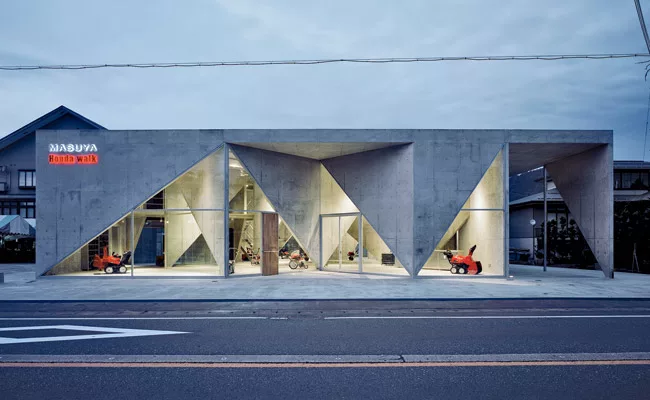
An unlikely pairing of avant-garde architecture and agricultural machinery, Masuya is a showroom for tractors and snow blowers located in rural Niigata Prefecture. Completed in 2005, the concrete building was awarded to Hirata via an online design competition. Hirata’s winning idea was to divide the ground floor into a 16-foot grid. He then divided the square bays diagonally with triangular panels that simultaneously separate and connect adjacent display and sales areas. The smaller second floor holds an employee break room.
An unlikely pairing of avant-garde architecture and agricultural machinery, Masuya is a showroom for tractors and snow blowers located in rural Niigata Prefecture. Completed in 2005, the concrete buil
Akihisa Hirata Architecture Office
Masuya
Tokyo
An unlikely pairing of avant-garde architecture and agricultural machinery, Masuya is a showroom for tractors and snow blowers located in rural Niigata Prefecture. Completed in 2005, the concrete building was awarded to Hirata via an online design competition. Hirata’s winning idea was to divide the ground floor into a 16-foot grid. He then divided the square bays diagonally with triangular panels that simultaneously separate and connect adjacent display and sales areas. The smaller second floor holds an employee break room.
Photo © Nacása & Partners
An unlikely pairing of avant-garde architecture and agricultural machinery, Masuya is a showroom for tractors and snow blowers located in rural Niigata Prefecture. Completed in 2005, the concrete buil
Akihisa Hirata Architecture Office
Masuya
Tokyo
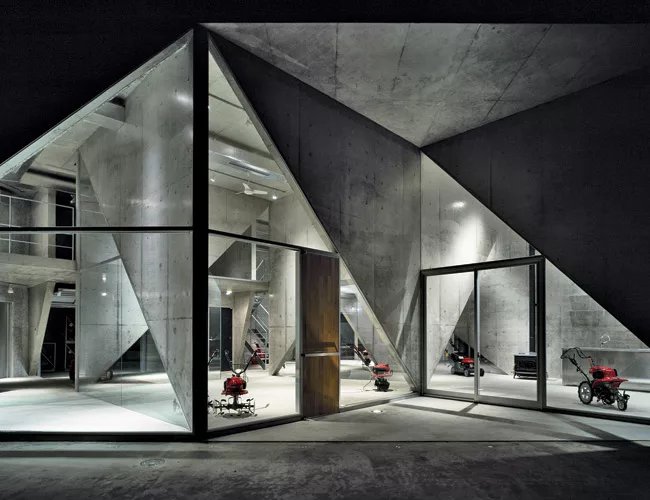
An unlikely pairing of avant-garde architecture and agricultural machinery, Masuya is a showroom for tractors and snow blowers located in rural Niigata Prefecture. Completed in 2005, the concrete building was awarded to Hirata via an online design competition. Hirata’s winning idea was to divide the ground floor into a 16-foot grid. He then divided the square bays diagonally with triangular panels that simultaneously separate and connect adjacent display and sales areas. The smaller second floor holds an employee break room.
Photo © Nacása & Partners
Completed in 2006, Sarugaku is a shopping complex located in Tokyo’s fashionable Daikanyama neighborhood. Influenced by the area’s charming streets and small boutiques, Hirata created a me
Akihisa Hirata Architecture Office
Sarugaku
Tokyo
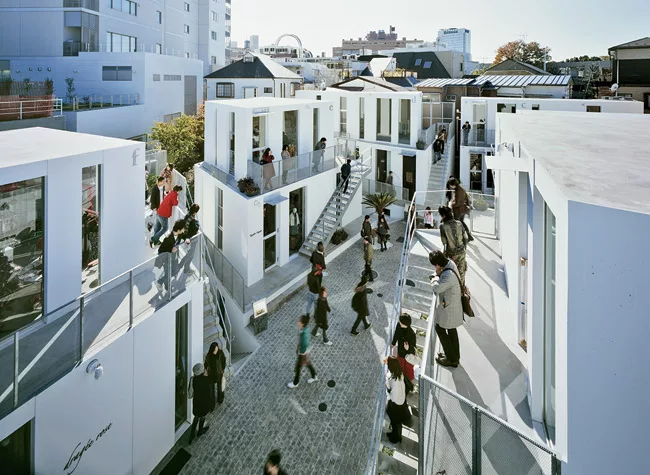
Completed in 2006, Sarugaku is a shopping complex located in Tokyo’s fashionable Daikanyama neighborhood. Influenced by the area’s charming streets and small boutiques, Hirata created a meandering pedestrian walk of his own and lined it with two-story buildings (plus basements) for commercial tenants. Full-height windows allow the various vendors to flaunt their wares and stairs enable customers to browse. Potted trees and ground cover soften the angular white architecture with a touch of greenery.
Photo © Toshiyuki Yano
This Tokyo home, completed in 2011 for a couple with two children, doesn’t just contain stairs, essentially, it is stairs. To maximize a tiny oblong site, Hirata placed three wood columns along
Akihisa Hirata Architecture Office
Coil
Tokyo
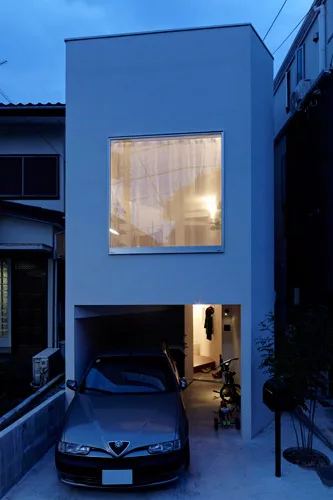
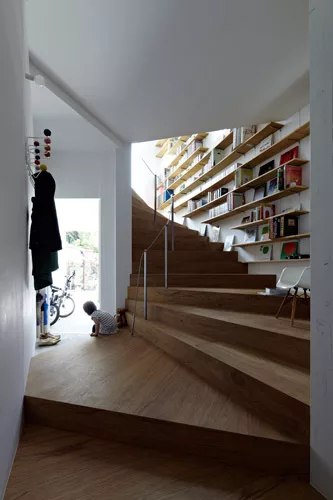
This Tokyo home, completed in 2011 for a couple with two children, doesn’t just contain stairs, essentially, it is stairs. To maximize a tiny oblong site, Hirata placed three wood columns along its centerline and used them to anchor 34 stepped platforms serving as vertical-circulation and functional areas at the same time. The ascent starts at the entrance, where a few steps lead to the bathroom in one direction while large treads in the other form the library, followed by the living and sleeping areas. Topping off the three-story sequence is the kitchen-and-dinning area, opening onto a small terrace.
Photo © Jiucgu Torimura
This Tokyo home, completed in 2011 for a couple with two children, doesn’t just contain stairs, essentially, it is stairs. To maximize a tiny oblong site, Hirata placed three wood columns along
Akihisa Hirata Architecture Office
Coil
Tokyo
This Tokyo home, completed in 2011 for a couple with two children, doesn’t just contain stairs, essentially, it is stairs. To maximize a tiny oblong site, Hirata placed three wood columns along its centerline and used them to anchor 34 stepped platforms serving as vertical-circulation and functional areas at the same time. The ascent starts at the entrance, where a few steps lead to the bathroom in one direction while large treads in the other form the library, followed by the living and sleeping areas. Topping off the three-story sequence is the kitchen-and-dinning area, opening onto a small terrace.
Photo © Jiucgu Torimura
Celebrating the connection between river and ocean, Foam Form was Hirata’s 2011 competition entry for a combined marine exhibition hall and pop music center in Kaohsiung, Taiwan. Keen to span th
Akihisa Hirata Architecture Office
Foam Form
Tokyo
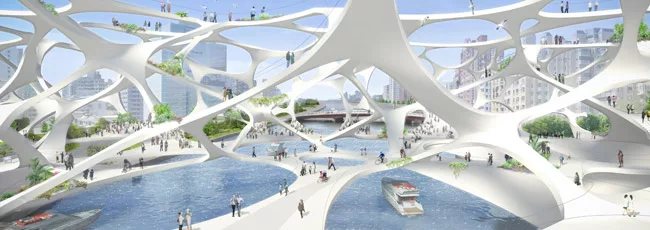
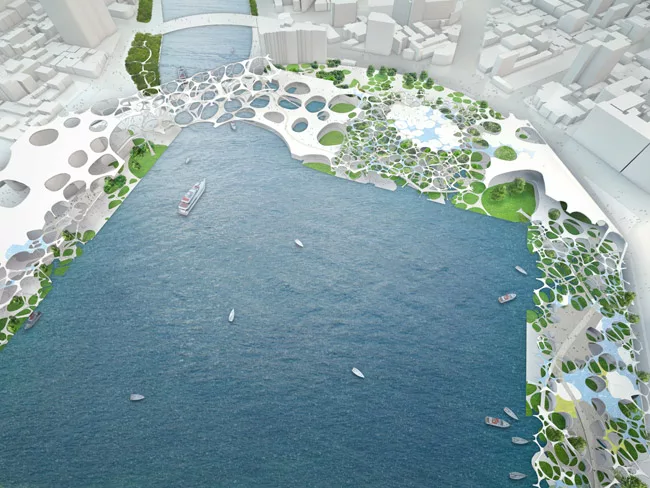
Celebrating the connection between river and ocean, Foam Form was Hirata’s 2011 competition entry for a combined marine exhibition hall and pop music center in Kaohsiung, Taiwan. Keen to span the 410-foot-wide waterway with a light hand, the architect created an airy column-free structure inspired by soap bubbles but made of steel. While bridging the river, it incorporates a mixture of enclosed spaces and open places where people can enjoy the view. Working closely with nearby shipbuilders, Hirata developed a construction system comprised of 98-by-131-foot units that could be sent from the factory by boat for easy on-site assembly.
Image courtesy Akihisa Hirata Architecture Office
Celebrating the connection between river and ocean, Foam Form was Hirata’s 2011 competition entry for a combined marine exhibition hall and pop music center in Kaohsiung, Taiwan. Keen to span th
Akihisa Hirata Architecture Office
Foam Form
Tokyo
Celebrating the connection between river and ocean, Foam Form was Hirata’s 2011 competition entry for a combined marine exhibition hall and pop music center in Kaohsiung, Taiwan. Keen to span the 410-foot-wide waterway with a light hand, the architect created an airy column-free structure inspired by soap bubbles but made of steel. While bridging the river, it incorporates a mixture of enclosed spaces and open places where people can enjoy the view. Working closely with nearby shipbuilders, Hirata developed a construction system comprised of 98-by-131-foot units that could be sent from the factory by boat for easy on-site assembly.
Image courtesy Akihisa Hirata Architecture Office
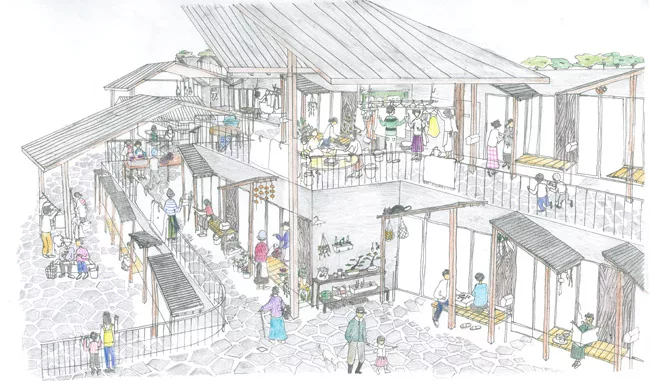
Blending permanent housing mostly for the elderly and a kindergarten under a cluster of pitched roofs, the Kamaishi project takes its cues from the local landscape hard hit by the tsunami in 2011. Bec
Akihisa Hirata Architecture Office
Kamaishi
Tokyo
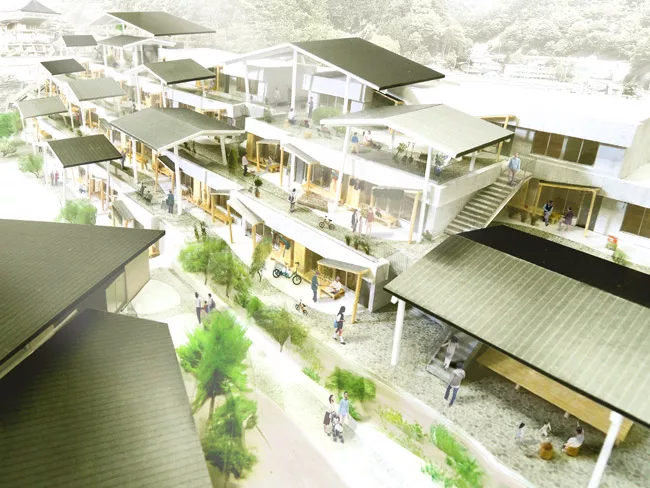
Blending permanent housing mostly for the elderly and a kindergarten under a cluster of pitched roofs, the Kamaishi project takes its cues from the local landscape hard hit by the tsunami in 2011. Because the site that once held an elementary and a junior high school prior to the disaster, was completely flat, Hirata began by creating a multilevel three-dimensional pedestrian street that echoes the hills and engenders a communal atmosphere by incorporating informal spots for people to meet as it winds its way to 40 housing units. Completion is expected in 2014.
Image courtesy Akihisa Hirata Architecture Office
Blending permanent housing mostly for the elderly and a kindergarten under a cluster of pitched roofs, the Kamaishi project takes its cues from the local landscape hard hit by the tsunami in 2011. Bec
Akihisa Hirata Architecture Office
Kamaishi
Tokyo
Blending permanent housing mostly for the elderly and a kindergarten under a cluster of pitched roofs, the Kamaishi project takes its cues from the local landscape hard hit by the tsunami in 2011. Because the site that once held an elementary and a junior high school prior to the disaster, was completely flat, Hirata began by creating a multilevel three-dimensional pedestrian street that echoes the hills and engenders a communal atmosphere by incorporating informal spots for people to meet as it winds its way to 40 housing units. Completion is expected in 2014.
Image courtesy Akihisa Hirata Architecture Office
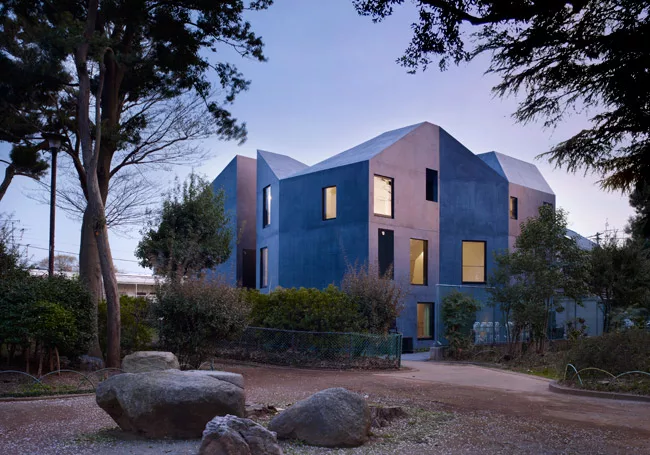
Though located in Tokyo, this 12-unit apartment building was inspired by the craggy topography of mountains.  Completed in 2010, it is composed of walls and roof that blend seamlessly together to form
Akihisa Hirata Architecture Office
Alp
Tokyo
Though located in Tokyo, this 12-unit apartment building was inspired by the craggy topography of mountains. Completed in 2010, it is composed of walls and roof that blend seamlessly together to form a single concrete monolith whose irregular profile contrasts dramatically with the boxy form of Tokyo’s typical housing stock. Like many comparable properties, the individual apartments are accessed via external stairs and walkways. But, once you’re inside, the building’s angular geometry defines both plan and section.
Photo © Toshiyuki Yano
An unlikely pairing of avant-garde architecture and agricultural machinery, Masuya is a showroom for tractors and snow blowers located in rural Niigata Prefecture. Completed in 2005, the concrete buil
Completed in 2006, Sarugaku is a shopping complex located in Tokyo’s fashionable Daikanyama neighborhood. Influenced by the area’s charming streets and small boutiques, Hirata created a me
This Tokyo home, completed in 2011 for a couple with two children, doesn’t just contain stairs, essentially, it is stairs. To maximize a tiny oblong site, Hirata placed three wood columns along
Celebrating the connection between river and ocean, Foam Form was Hirata’s 2011 competition entry for a combined marine exhibition hall and pop music center in Kaohsiung, Taiwan. Keen to span th
Blending permanent housing mostly for the elderly and a kindergarten under a cluster of pitched roofs, the Kamaishi project takes its cues from the local landscape hard hit by the tsunami in 2011. Bec
Though located in Tokyo, this 12-unit apartment building was inspired by the craggy topography of mountains.  Completed in 2010, it is composed of walls and roof that blend seamlessly together to form
December 16, 2013

Architects & Firms

Akihisa Hirata Architecture Office

Tokyo

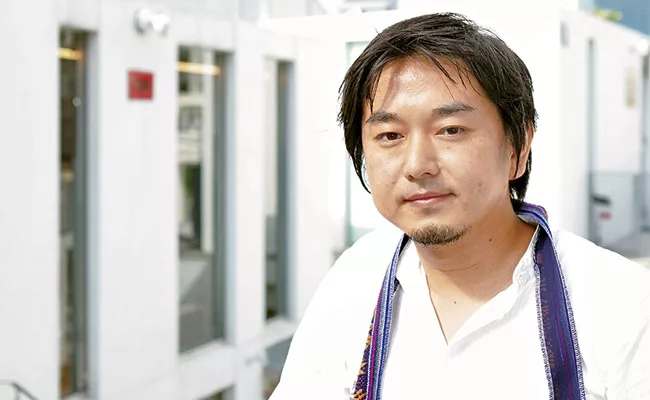
Growing up in a planned community on the edge of Osaka, Japan, Akihisa Hirata dreamed of becoming either a biologist or an architect. By designing buildings inspired by smoke, bubbles, and other natural phenomena, you could say that he found a way to do both. What drives Hirata, however, is not purely an academic pursuit. Nor is it aesthetics. Instead, Hirata is searching for a conceptual grounding that engages the public. “Japanese architecture has become very extreme and lost its connection to society,” explains Hirata. “The problem facing my generation is reconstructing that relationship.”

Having received his master's in architecture from Kyoto University in 1995, Hirata came of age architecturally when Japan was still reeling from the Great Hanshin earthquake in Kobe (just 19 miles from Osaka) and the sarin gas attack in Tokyo, when the morale countrywide was low. Against this gloomy backdrop, Toyo Ito introduced his competition-winning scheme for the Sendai Mediatheque, an entirely new type of public space defined by webbed steel columns that tilt like seaweed underwater. “I was shocked by the model photo,” exclaims Hirata. “It showed something very brilliant.” His spirits lifted by Mediatheque's inspirational scheme, Hirata headed to Tokyo, where he hoped to join Ito's staff. Though Hirata only intended to stay for a short stint, he remained for eight years before leaving to launch his own practice.

Predictably, Hirata's first independent project was a new home for his parents. “They didn't ask me to design them a house, but I did it anyway,” chuckles the architect. They didn't ask him to realize the house either, but the project did land him Japan's prestigious SD Review prize. Still in need of wage-earning work, Hirata entered an Internet-based competition for a showroom selling farm equipment. It seemed unlikely that a dealer in tractors and snow blowers out in the sticks would go for Hirata's unconventional design, yet the young designer got the commission and with that his practice was off and running.

As his body of work grows, Hirata's projects have become increasingly organic in form. As opposed to making architecture purely by enclosing space, he proposes a model inspired by the intertwining of different elements in nature, which he calls “tangling.” To illustrate his point, Hirata describes how underwater rocks support seaweed where fish roe mature. “We are making a kind of infrastructure for people based on the ordered layering in the living world,” he explains. His largest application of “tangling” is a new housing complex in the tsunami-ravaged town of Kamaishi. Taking its cues from the hilly topography, this development begins with a three-dimensional scheme that supports a circulatory system feeding a sequence of gathering spaces embraced by individual dwelling units. By layering this and other projects with different uses, Hirata aims for a “tangling” between person and place, with the hope of making architecture that people can once again relate to.


Akihisa Hirata Architecture Office.

FOUNDED: 2005

DESIGN STAFF: 10

PRINCIPALS: Akihisa Hirata

EDUCATION: Kyoto University, B.A. , 1994; Kyoto University, M.Arch., 1997

WORK HISTORY: Toyo Ito & Associates, Architects, 1997'2005

KEY COMPLETED PROJECTS: Photosynthesis, Milan, 2012; Coil, Tokyo, 2011; Bloomberg Pavilion, Tokyo, 2011; Foam Form, Kaohsiung, Taiwan, 2011; Alp, Tokyo, 2010; Architecture Farm, Aodi, Taiwan, 2008; CSH, 2006; Sarugaku, Tokyo, 2006; Masuya, Nigata, Japan, 2005

KEY CURRENT PROJECTS: Kamakishi Project, Iwate, Japan, 2014; Long House, Los Vilos, Chile, 2014

WEB SITE: www.hao.nu


Share This Story

Looking for a reprint of this article?
From high-res PDFs to custom plaques, order your copy today!

Contributing Editor Naomi Pollock, FAIA, is the author of Japanese Design Since 1945: A Complete Sourcebook and the forthcoming Vanishing Japan: Modern Architecture Gone But Not Forgotten,

Post a comment to this article

Report Abusive Comment

Subscription Center
  • Create an Account
  • Start a Subscription
  • Manage My Account
  • Sign Up for Newsletters
  • Visit Customer Service
  • Update Preferences

More Videos

Sponsored Content

Sponsored Content is a special paid section where industry companies provide high quality, objective, non-commercial content around topics of interest to the Architectural Record audience. All Sponsored Content is supplied by the advertising company and any opinions expressed in this article are those of the author and not necessarily reflect the views of Architectural Record or its parent company, BNP Media. Interested in participating in our Sponsored Content section? Contact your local rep!

close
  • TAMLYN XtremeTrim Exterior Trim
    Sponsored byTamlyn

    Designing Cleaner Panel Facades: Why Exterior Trim Details Matter

  • Building with Vapor Barriers
    Sponsored byReef Industries, Inc.

    Vapor Barriers Help Control Moisture in Tighter Building Designs

  • Duct Interior with Prodeq System
    Sponsored byHenry, a Carlisle Company

    Designing Resilient Water Containment Systems

DESIGN:ED Podcast
Listen to Architectural Record’s DESIGN:ED Podcast

Events

June 16, 2026

Focus on the Façade: Exploring Steel, Timber & Fire-Rated Curtain Walls and Channel Glass Systems

Credits: 1 AIA LU/HSW; 1 AIBD P-CE; 0.1 ICC CEU

Explore modern façade and glazing systems that enhance daylighting, fire safety, and thermal performance while expanding architectural design possibilities.

June 18, 2026

Rebooting the Aging Office Building

Credits: 1 AIA LU/HSW; 1 AIBD P-CE; 0.1 ICC CEU; 1 PDH

Explore façade retrofit strategies and award-winning design concepts that can transform aging office buildings into healthier, higher-performing workplaces for today’s hybrid workforce.

View All Submit An Event

Products

2026 Architect's Square Foot Costbook

2026 Architect's Square Foot Costbook

See More Products

Popular Stories

SanDiegoAirport

Top 300 Architecture Firms of 2026

Coronado Bridge

The Architect’s Guide to San Diego

Dusk House

Design Vanguard 2026: ONO

Crystal Bridges Museum of American Art expansion

Safdie Architects Returns to the Crystal Bridges Museum of American Art for Major Expansion

Hikma Community Complex

Design Vanguard 2026: Mariam Issoufou Architects

Focus on the Facade - Free Webinar - June 16, 2026

Related Articles

  • Ota Museum & Library

    OTA Museum & Library by Akihisa Hirata Architecture Office

    See More
  • Trace Architecture Office

    See More
  • Xiaoquan Elementary School

    China Awards 2012: Xiaoquan Elementary School by TAO (Trace Architecture Office)

    See More

Related Products

See More Products
  • ribbonarch.jpg

    Ribbon Architecture: Light, Shadow, and Reflection in Architecture

  • manuelle gutrand arch.jpg

    Manuelle Gautrand Architecture

See More Products
×

The latest news and information

#1 Source for Architectural Design, News and Products

SUBSCRIBE
  • RESOURCES
    • Advertise
    • Contact Us
    • Submit
    • Store
  • ACCOUNT CENTER
    • Create an Account
    • Start a Subscription
    • Manage My Account
    • Sign Up for Newsletters
    • Visit Customer Service
    • Update Preferences
  • PRIVACY
    • PRIVACY POLICY
    • TERMS & CONDITIONS
    • DO NOT SELL MY PERSONAL INFORMATION
    • PRIVACY REQUEST
    • ACCESSIBILITY
  • SERVICES
    • Marketing Services
    • Reprints
    • Market Research
    • List Rental
    • Survey/Respondent Access
  • STAY CONNECTED
    • Linkedin
    • Facebook
    • Instagram
    • YouTube
    • X (Twitter)

Copyright ©2026. All Rights Reserved BNP Media, Inc. and BNP Media II, LLC.

Design, CMS, Hosting & Web Development :: ePublishing