Safdie Architects Returns to the Crystal Bridges Museum of American Art for Major Expansion
Architects & Firms
“I’ve always said one thing: ‘I’ll never let anyone but Moshe touch that building.’ But all of a sudden, I turned around, and he was 80 and our 50-year master plan turned into a five-year plan,” billionaire Walmart heiress Alice Walton told a room of 500 guests attending a May 29 panel discussion on the Safdie Architects–helmed expansion of her Crystal Bridges Museum of American Art. Breaking ground in 2022, it opens this weekend in Bentonville, Arkansas. Moshe Safdie is now 87 and his original museum building is now a teenager, opening on November 11, 2011, when the architect was 73.
Doubling the museum’s footprint with a focus on expanded educational, community, and exhibition spaces, the 114,000-square-foot project marks the second time that his firm has returned to a previous work to execute a major addition. The other is the Skirball Cultural Center in Los Angeles, which was completed in planned phases over the span of 30 years, concluding in 2013. (An expansion of the firm’s Marina Bay Sands resort complex in Singapore just entered the construction phase.) A visit to the Skirball is also what prompted Walton, now 76, to invite Safdie to her Bentonville home to see if he’d be up for designing an accessible-to-all art museum unified with the rugged Ozark landscape of Northwest Arkansas. But that invite also came with a fair amount of research.
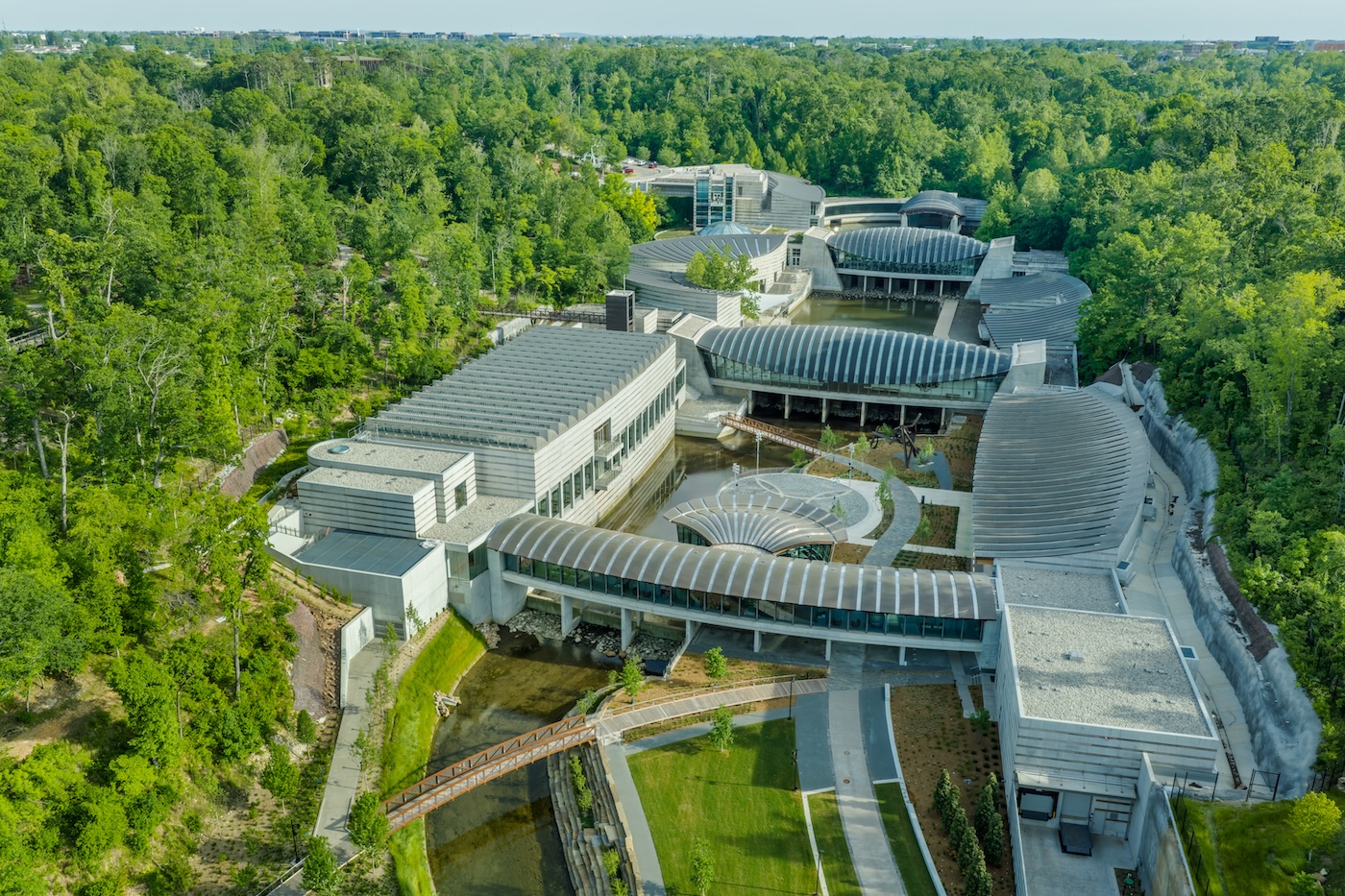
Crystal Bridges, with the expansion in the foreground and original museum to the south. Photo © Tim Hursley
“I didn't have a clue about how you picked an architect, so I did what anybody that doesn't know what they're doing does: I got a bunch of architects' books and read through them all,” Walton recounted during the talk. “I happened upon Moshe's book and saw that he with his buildings there is a perfect integration into existing space.”
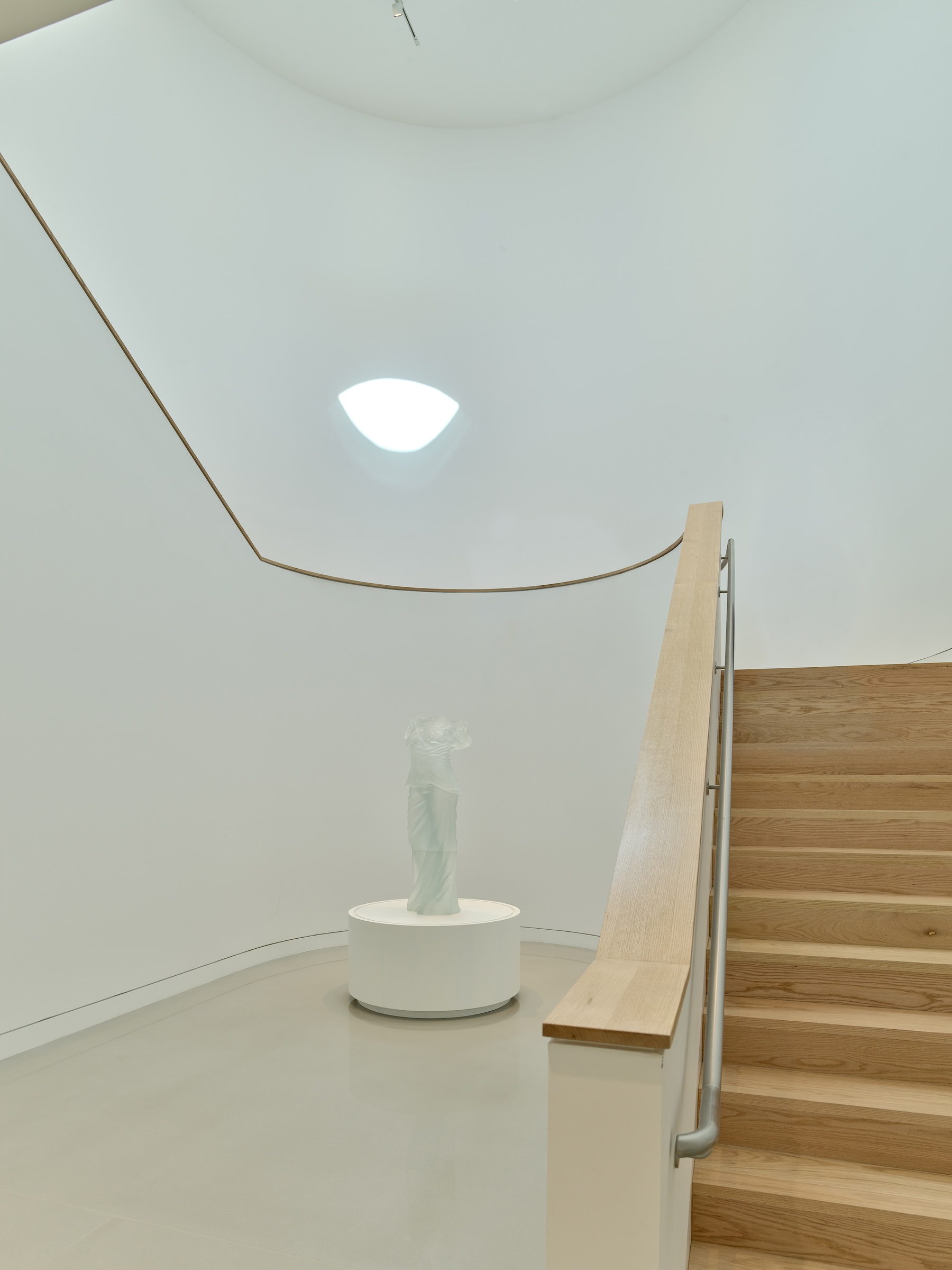
A stairwell connects the special exhibitions gallery and education wing below it. Photo © Tim Hursley
For Crystal Bridges, that existing space was a swath of Walton Family-owned Ozark forest on what was then the edge of town. Comprising a series of interconnected, copper roof–topped pavilions built from cast-in-place concrete banded in Western red cedar, the museum is inserted into a deep, densely wooded ravine where it straddles and spans a pair of ponds formed by a dammed natural spring. Crystal Bridges, which now forms a complete figure-eight loop with the addition of the new building located just downstream, already had an ethereal quality to it. The expansion enhances this while introducing new ideas and forms and improvement on what had been done before. Ultimately, it’s much of the same—less a bold new statement and more a seamless continuation. The harmony between the original building and addition works to the museum’s advantage.
Also harmonious is the relationship between architect and client. Walton and Safdie, joined on stage by Crystal Bridges board chair Olivia Walton (Alice’s niece-in-law), were at-ease with each other during the panel discussion, bringing humor and warmth to what could have otherwise been a dry discussion of a museum expansion. They’re obviously friends (Safdie has also designed a private residence for Walton, completed just last year), and the rapport between the two added both excitement and bittersweetness for the unveiling of a project that’s not quite a swan song but the culmination of a long journey.
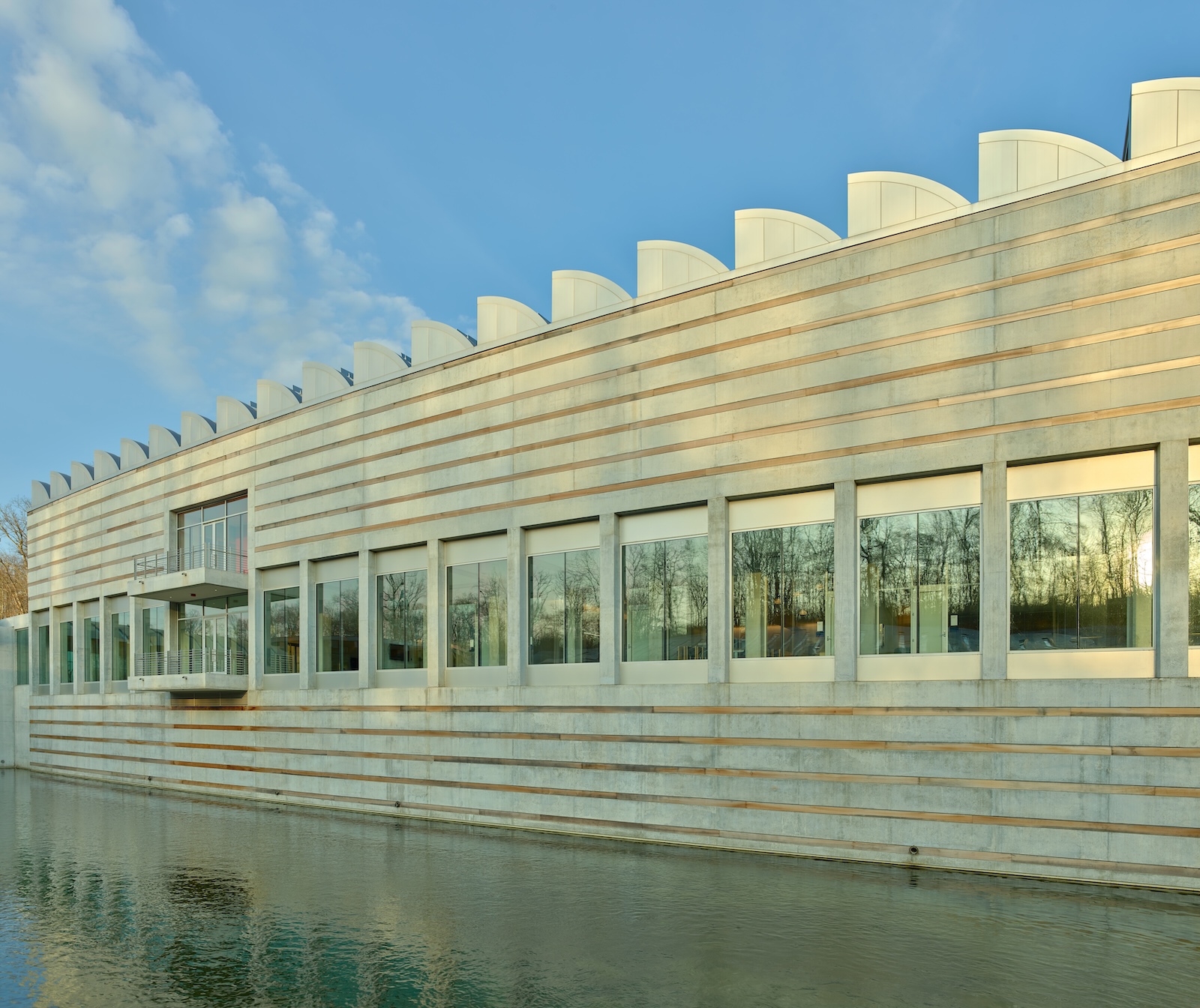
The architectural language of the expansion breaks from the existing museum in areas. Photo © Tim Hursley
.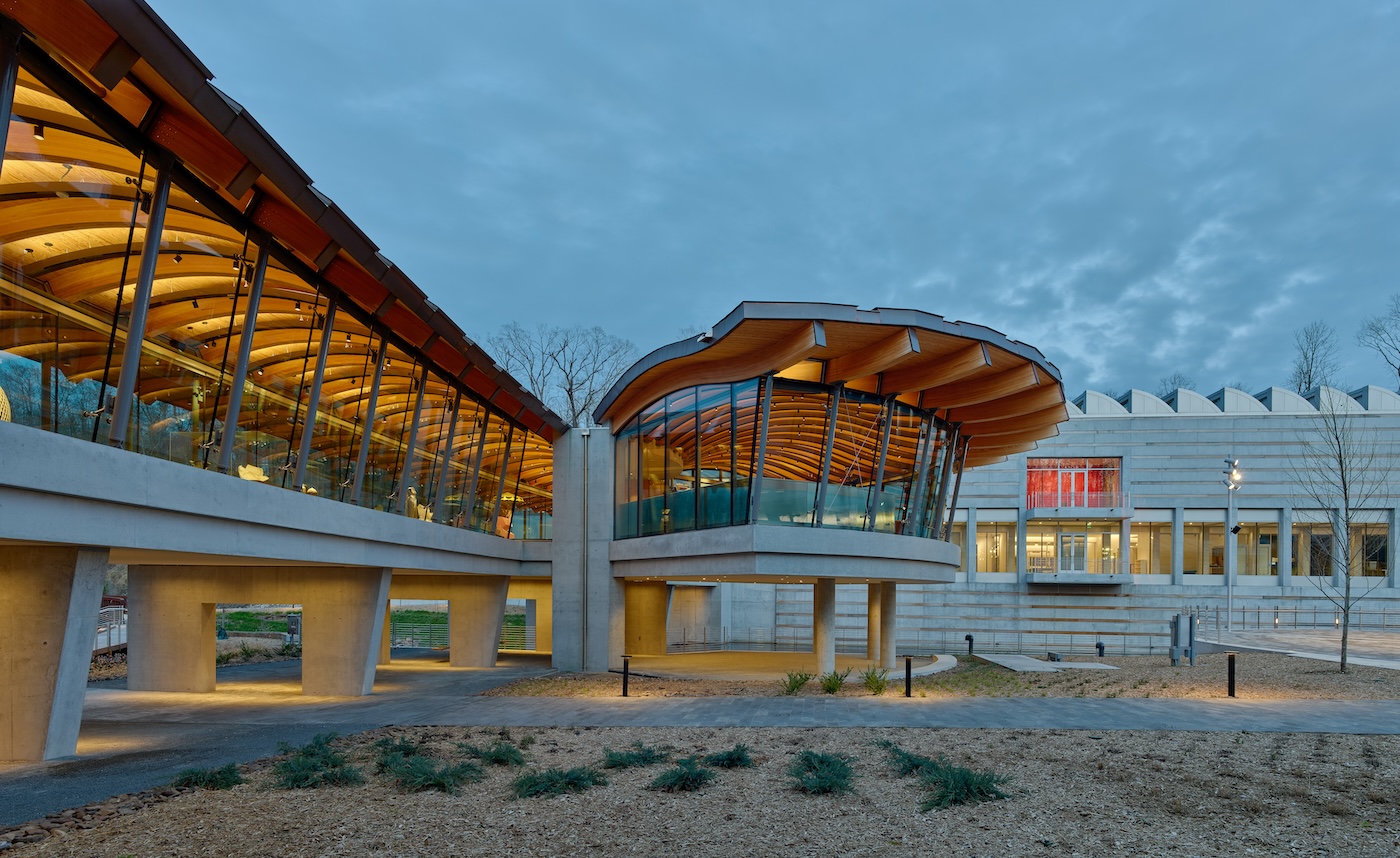
Hospitality space Quartz & Honey joins the musuem's exisitng restaurant, Eleven. Photo © Tim Hursley
With finishing touches underway at the museum in preparation for the June 6 public debut of the expansion, the ticketed talk was held up the road in the ballroom of the Heartland Whole Health Institute, designed by Marlon Blackwell Architects, which is one of a modest handful of major new additions to the 134-acre Crystal Bridges campus that cater to a trifecta of Walton’s intersecting personal and philanthropic passions: art, nature, and wellness.
Her dedication to art, particularly making it more accessible to young visitors, is served well by the expansion, which was managed by Safdie Architects principal and senior projects architect Matthew Longo, who also worked on the first phase of the museum. Local firm Hight Jackson was associate architect on the project, with Buro Happold returning as engineer. In total, the project adds 8,500 square feet of public gathering spaces along with a creative learning “Hub” that encompasses 14,000 square feet of educational spaces, artist-in-residence studios, and a variety of workshops dedicated to different artistic disciplines. Five acres of trail-laced landscape, designed by Minneapolis-based Coen+Partners, surround the expansion; floating above a pond within the museum proper is a circular events plaza for outdoor community programming.
Looking for quick answers on architecture and design topics?
Try Ask RECORD, our new smart AI search tool.
Ask RECORD →
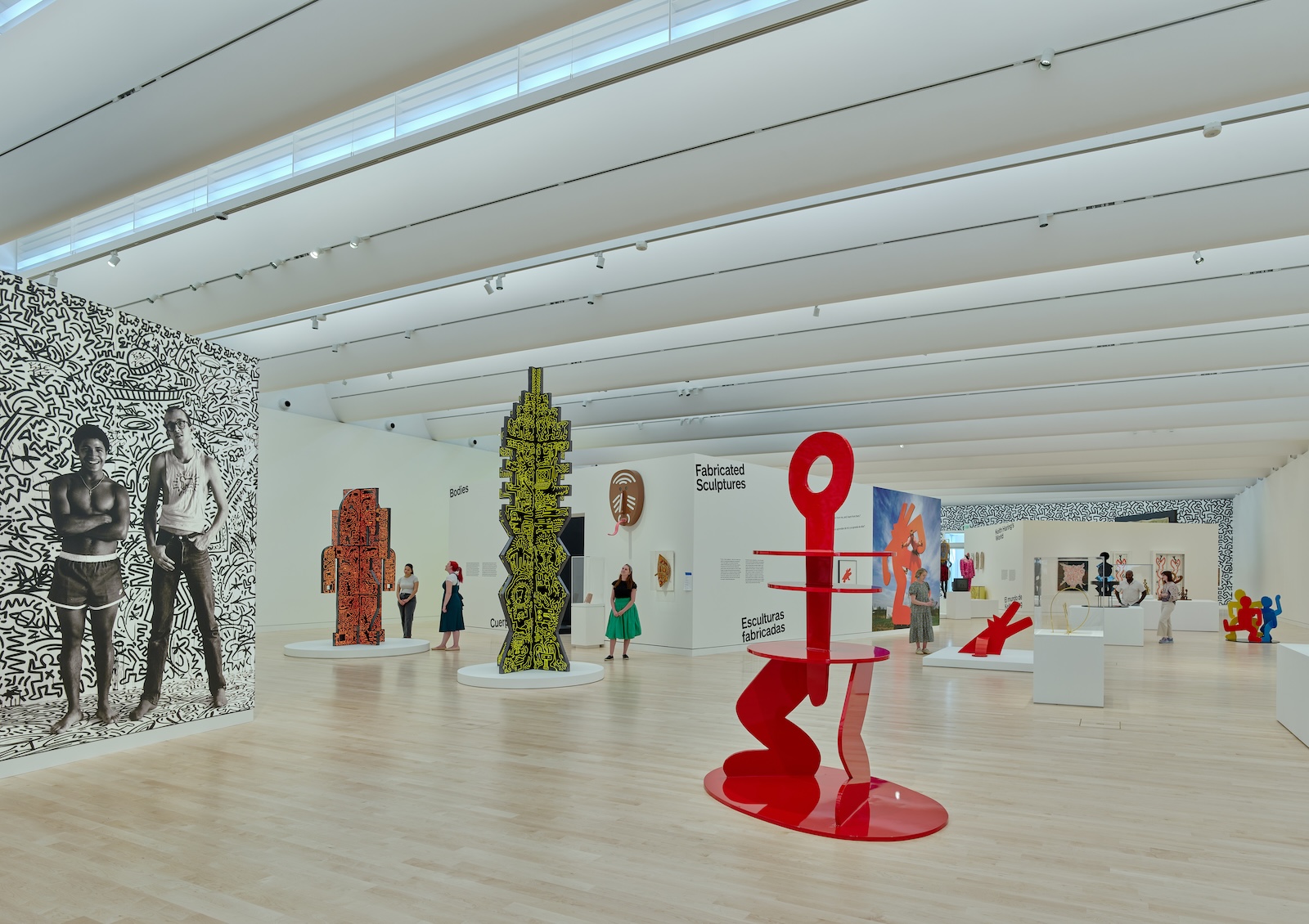
The special exhibitions gallery. Photo © Tim Hursley, artwork © the Keith Haring Foundation
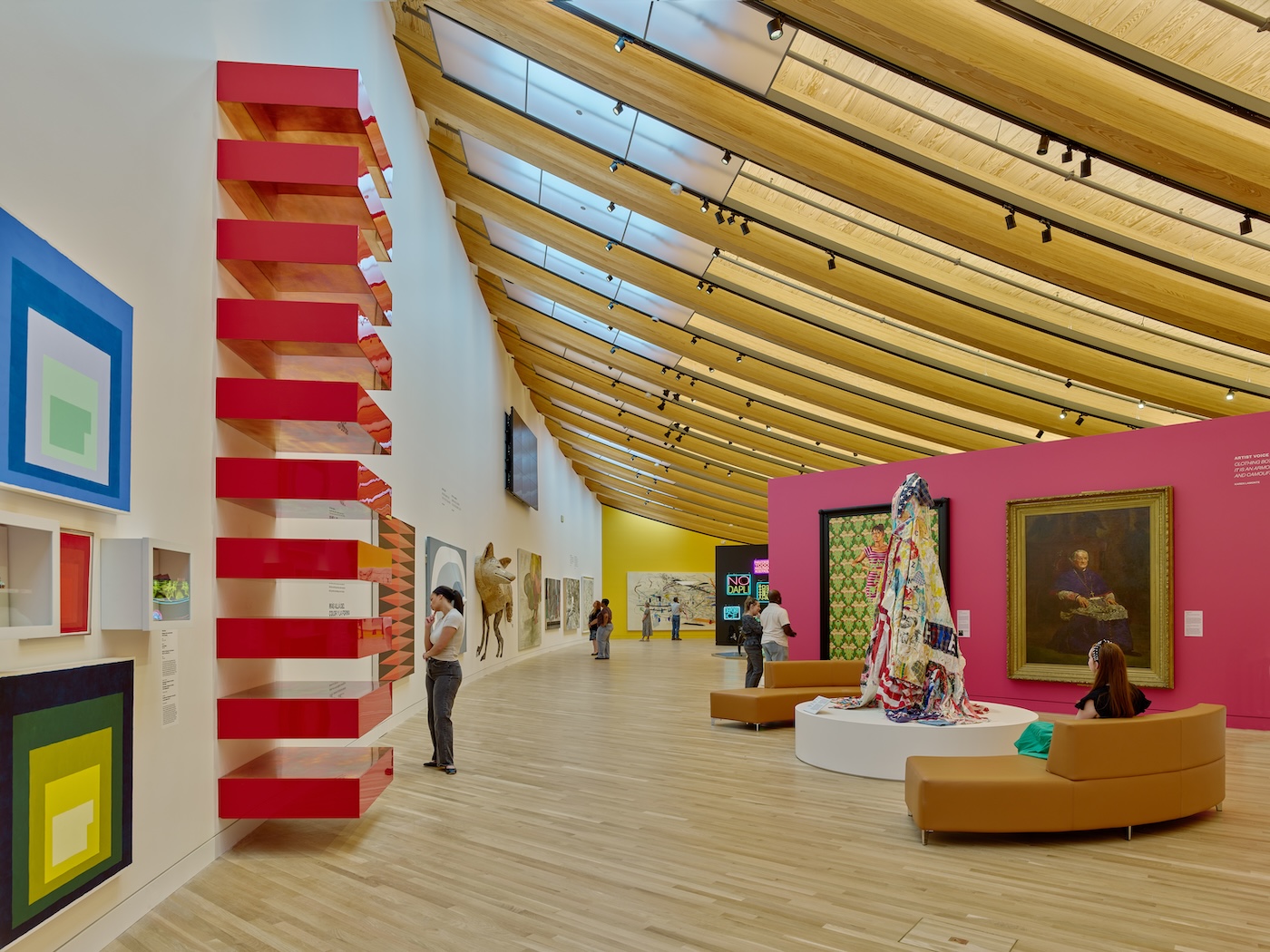
A new gallery focuses exclusively on contemporary art. Photo © Tim Hursley
Making room for the museum’s growing collection (including a significant recent acquisition of Indigenous art and crafts objects), are a pair of flexible new galleries, including a gallery dedicated to Walton’s expansive trove of contemporary art and, to the east, 14,000-square-foot special exhibitions gallery located one level above the educational spaces. Now on view at the latter is the fantastic, Glenn Adamson–curated Keith Haring in 3D. In this column-free space is one of the expansion’s most innovative architectural features: a north-facing skylight system that harnesses reflectors to mix sunlight and the north light to achieve what Safdie calls the “perfect white,” adding: “We managed to do a few things that haven’t been done before.” Walton remarks that the space is “spiritual” with the “most perfect light and ambiance I've ever seen in a room in my life.”
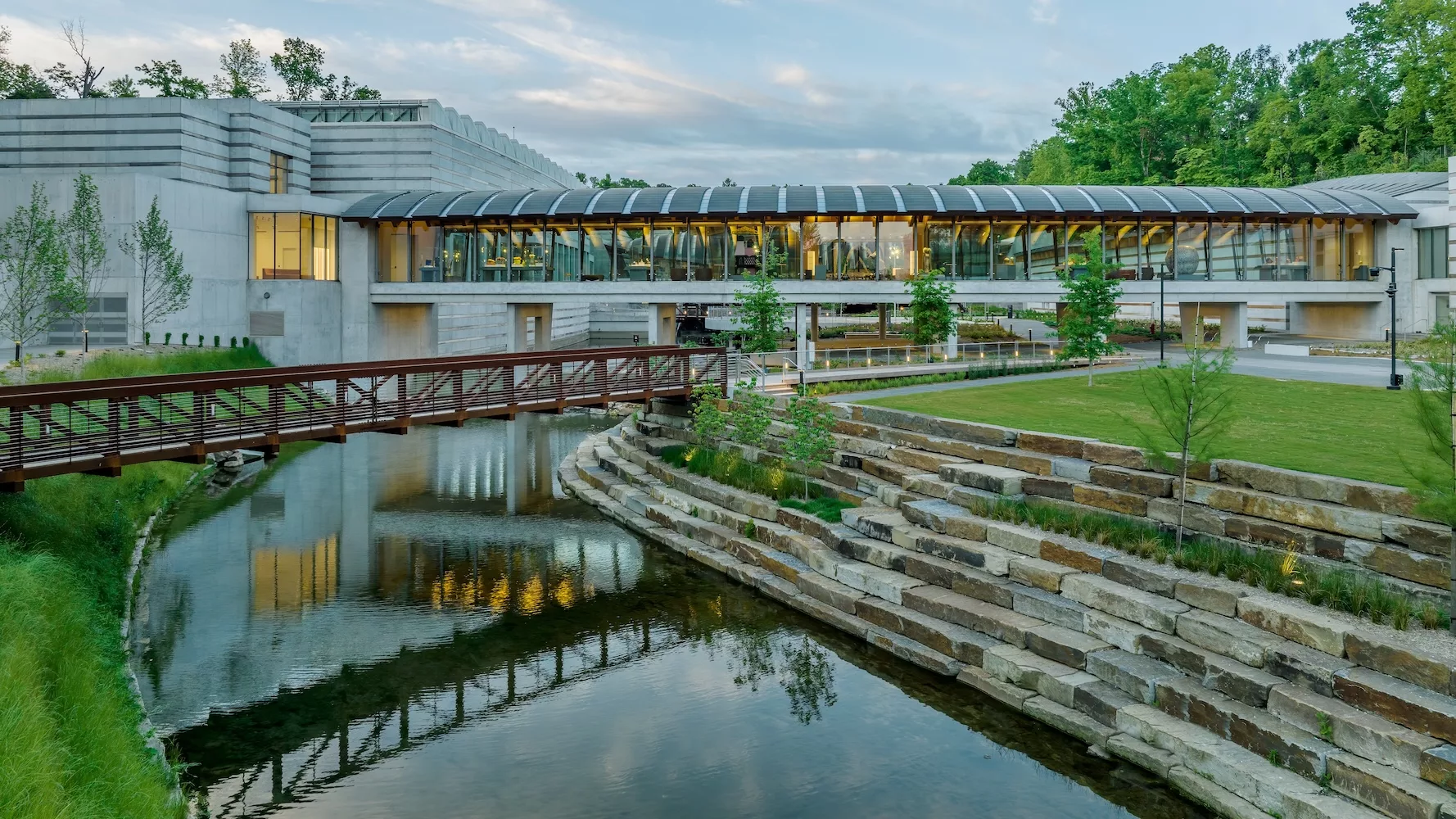
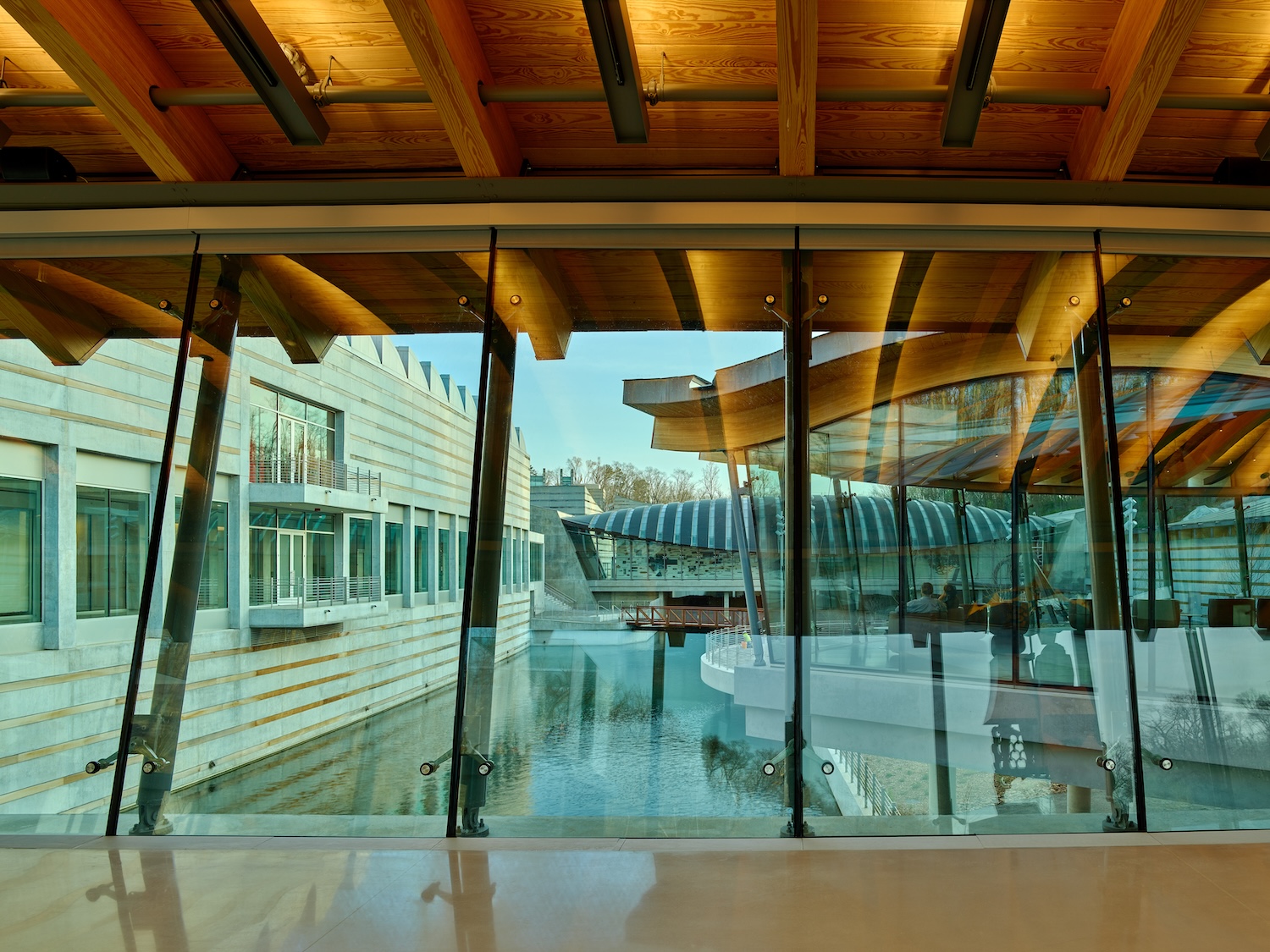
The new galleries are linked by a pond-spanning, bridge-like structure where less light-sensitive art is displayed. At its midpoint, guests can sit back, relax, and take in the views of the Ozark landscape from a 40-seat café, with interiors by Callaghan Horiuchi. The New York–based studio also oversaw the design of other shared public spaces throughout the museum in close collaboration with Safdie Architects.
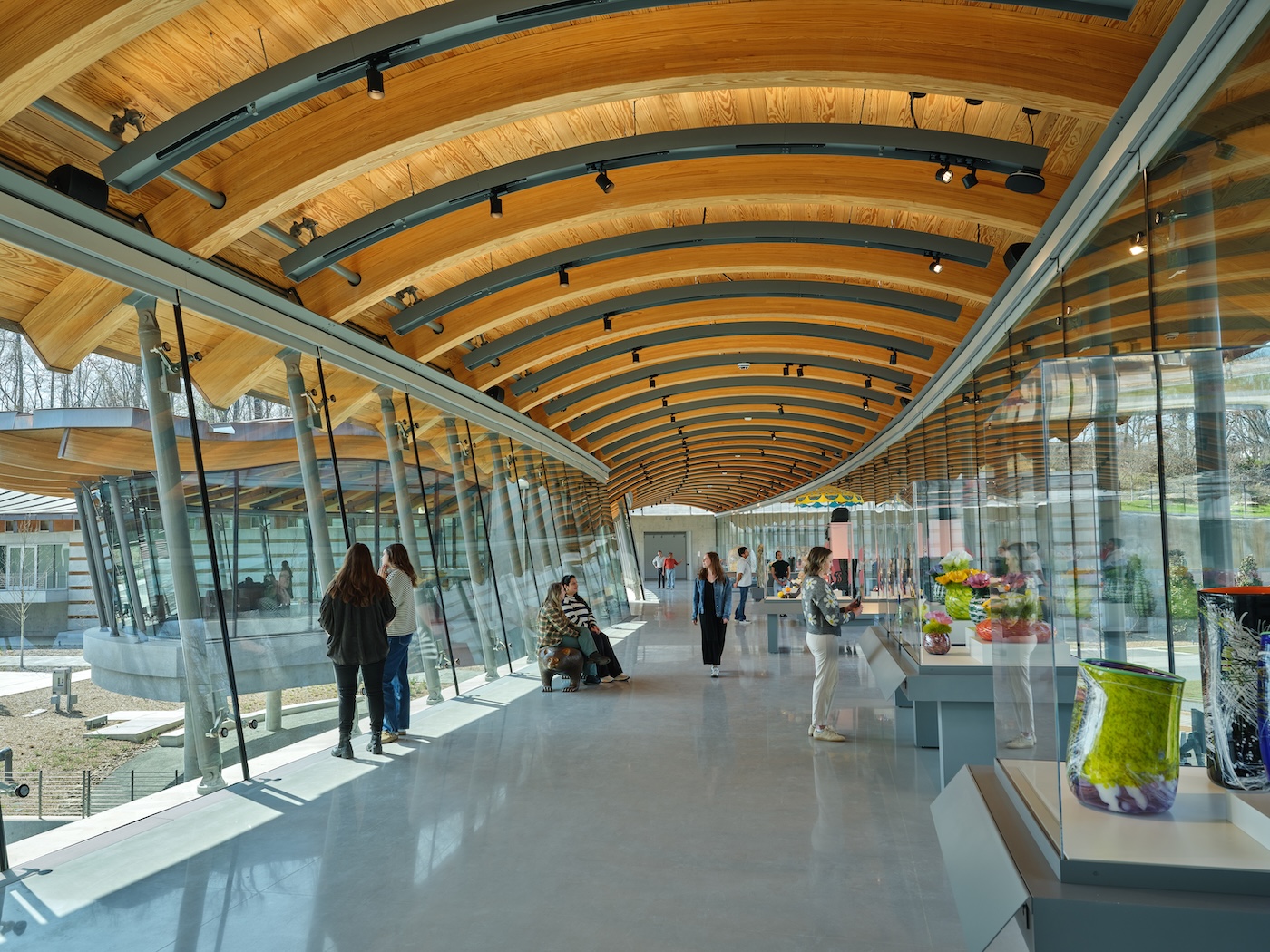
The Bridge Gallery showcases both art and scenic views of the surrounding landscape. Photo © Tim Hursley
Another design highlight is the long-span, Southern yellow pine glulam beams that form the museum’s soaring roof structures, featured so prominently (and presciently) in the original project and returning to bring warmth and visual interest to the new spaces. As noted by Longo during an intimate tour of the project, the mass timber used in the expansion was milled in Alabama. When asked if the same contractor worked on both the first and second phases, Safdie replied: “No, the first was learning on the job and the second was extraordinary—by then, Bentonville had really changed.” (Tulsa-based Flintco served as contractor for the expansion.)
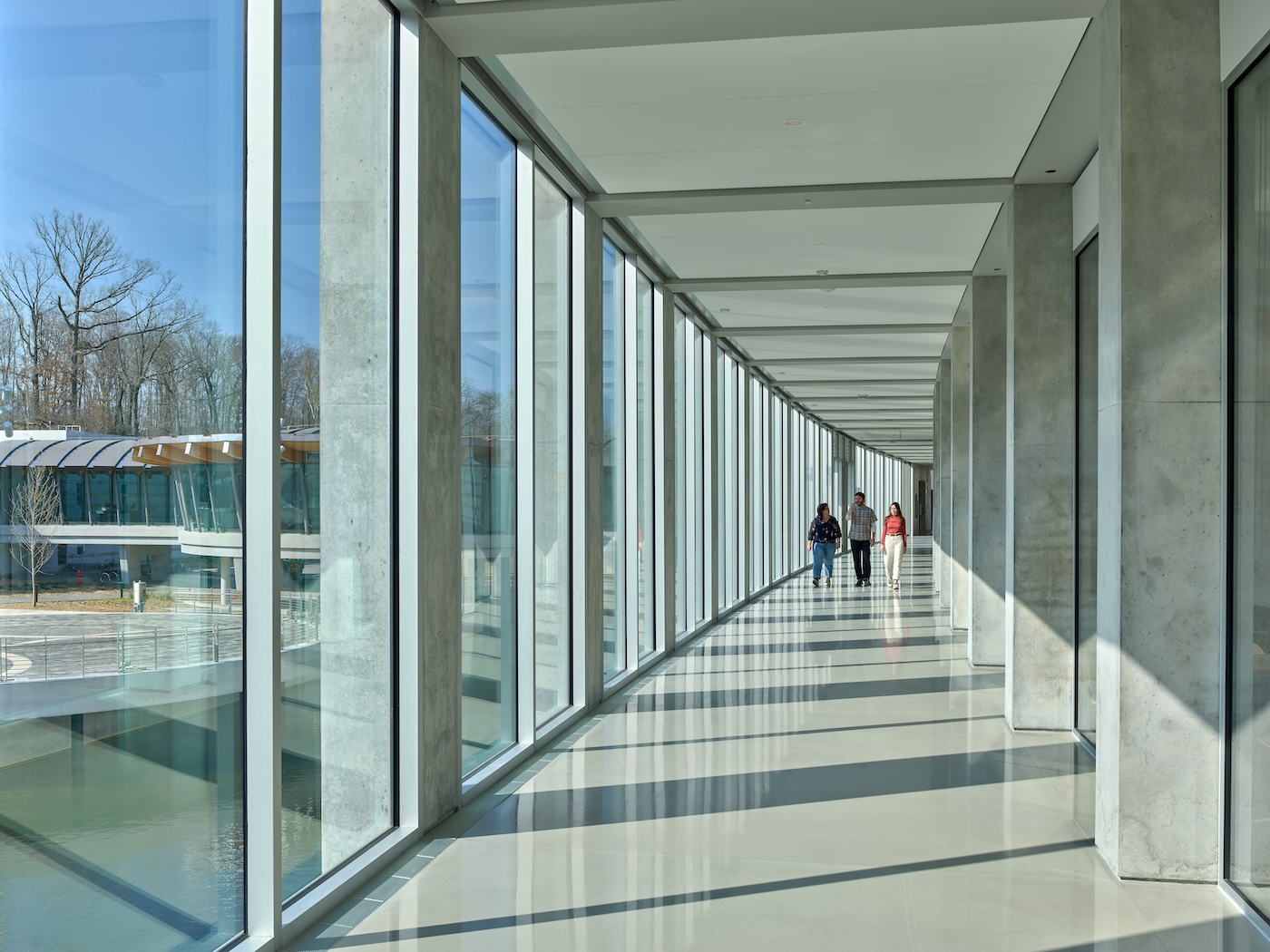
1
2
A light-filled corridor in the education wing, which features numerous learning spaces, such as studios for cermamics and digital art and dedicated space for visiting school groups (1); the "Hub" as seen from the Bridge Gallery (2). Photos © Tim Hursley
During the tour, Safdie showed no signs of slowing down, charging ahead to point out key details of the expansion while reflecting on the early concerns involved with working within such an untamed site (flooding being a major one) and changes in technology between phases one and two. He also touched on Bentonville’s transformation from sleepy company town to buzzy arts-and-culture and outdoor recreation destination, of which Crystal Bridges served as catalyst.
Back on stage that evening, Safdie admitted that it never occurred to him while working on the first phase of Crystal Bridges that there’d be an expansion in the immediate future. “I didn't expect that I'd have to build it, just guide the way. But here we are.”
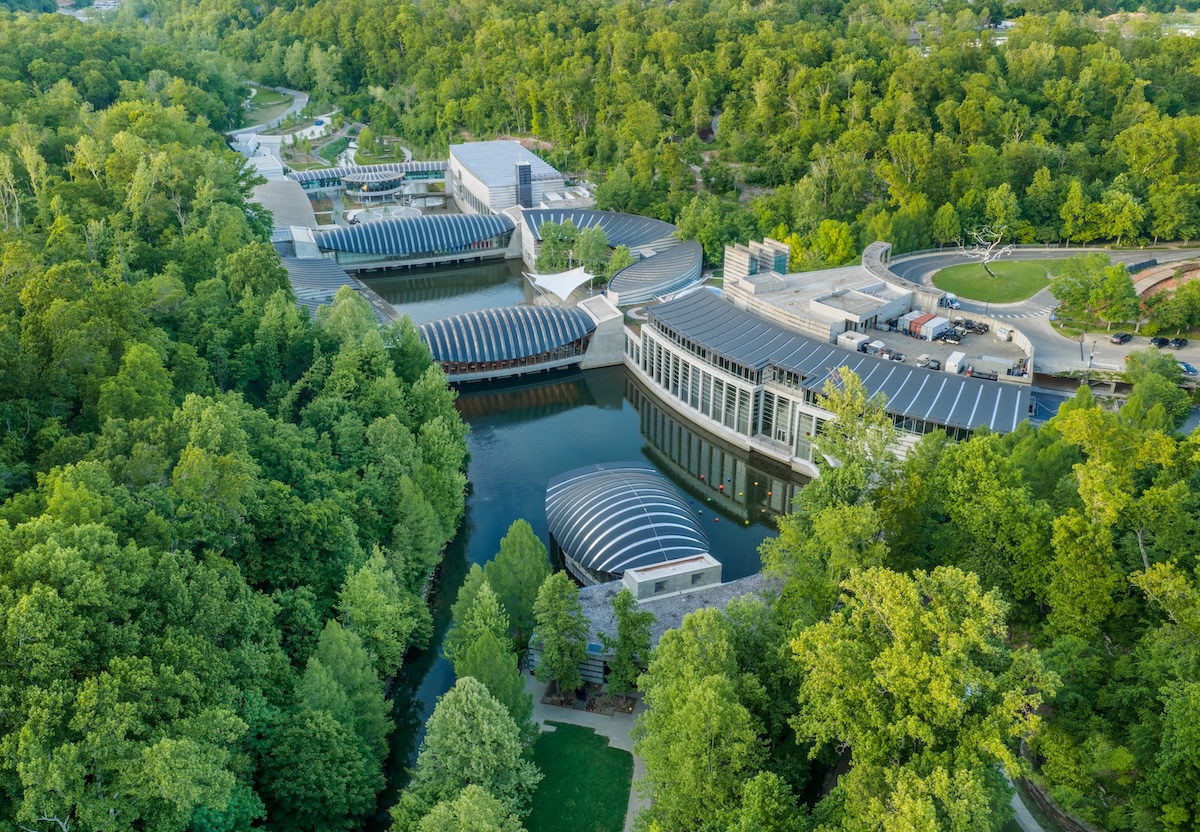
Crystal Bridges as seen from the south. Photo © Tim Hursley
“What was new for this next phase is the conviction that Crystal Bridges is a place for everyone—we wanted to reach out and bring in people who don't normally go to museums,” adds Safdie. “That affected everything we do architecturally and led to the special attention we gave to the educational area in the plan. But, in the end, it's cohesive as one place even though it has gone from being a building to a village. I think that’s the big quantum jump.”
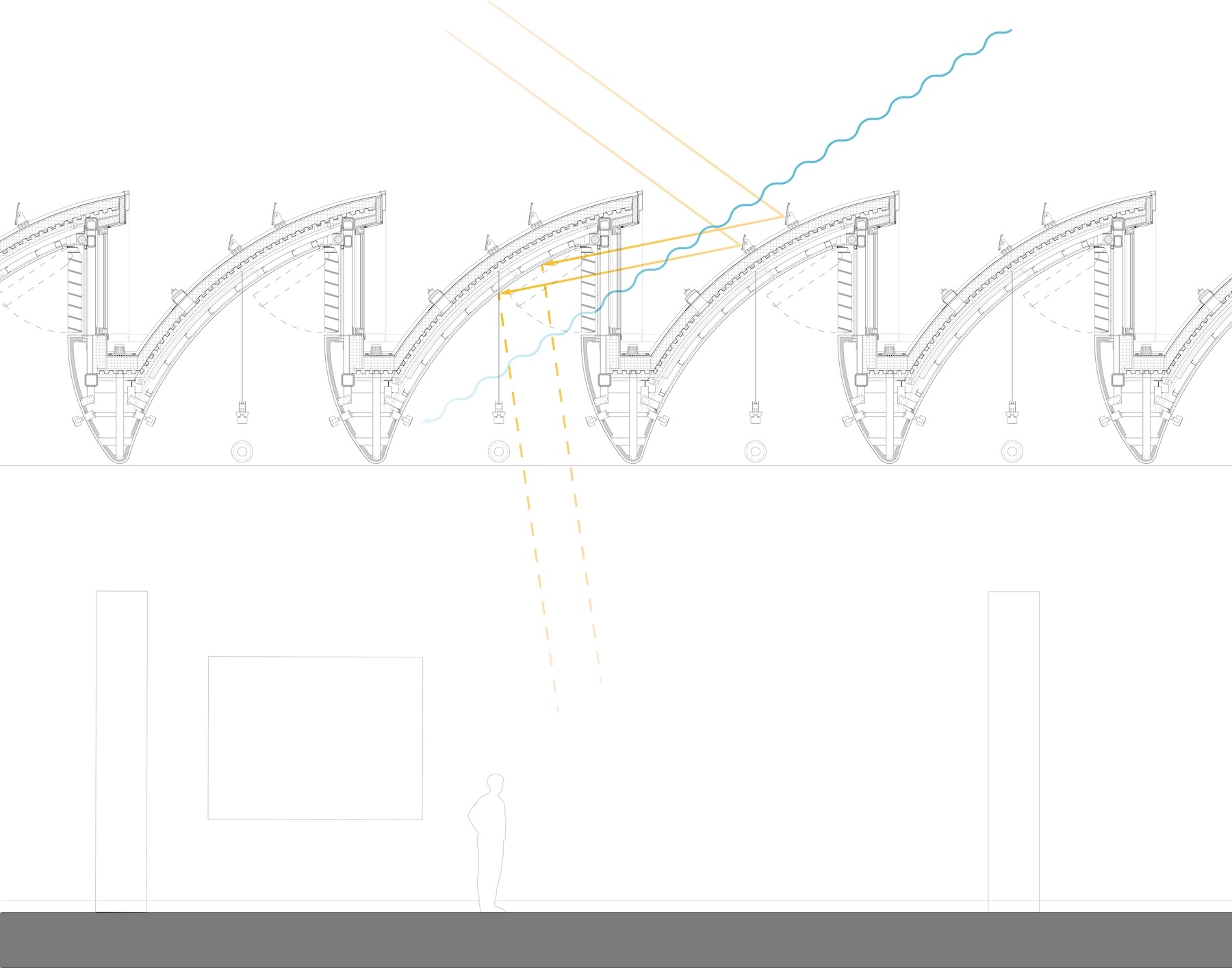
Temporary Exhibitions Gallery roof detail. Image © Safdie Architects; click to enlarge
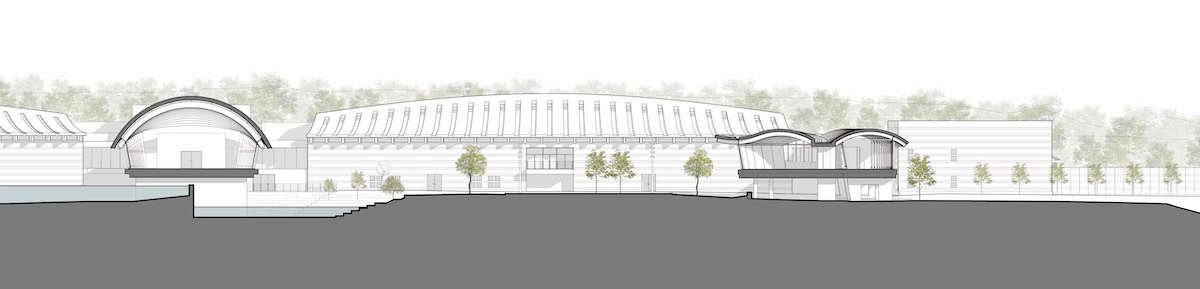
Expansion section. Image © Safdie Architects;
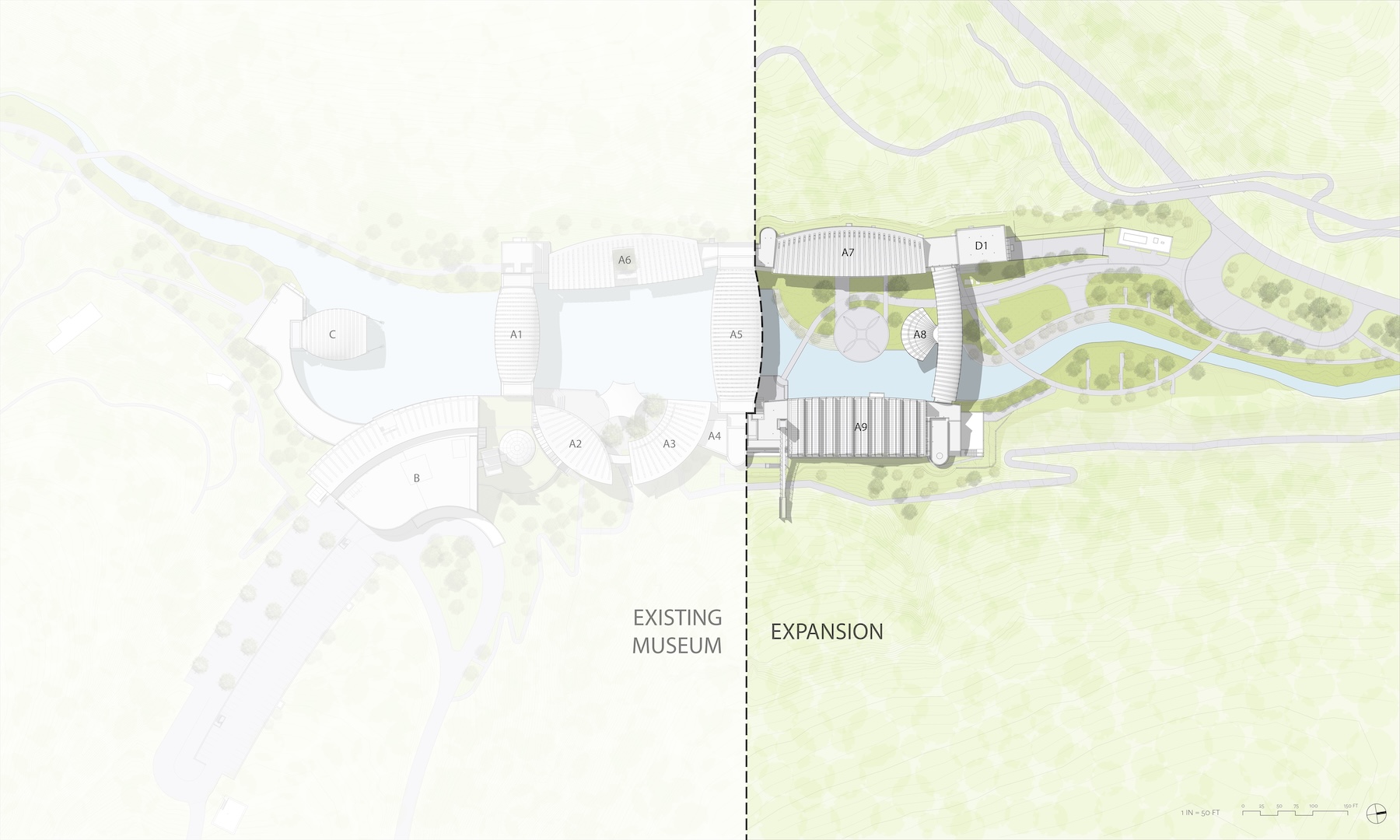
Expansion phasing. Image © Safdie Architects
Phasing Drawing Legend
A1: Eleven Restaurant
A2: Gallery 1
A3: Gallery 2
A4: North Entrance
A5: Gallery 5/Bigelow Bridge
A6: Gallery 6/Candace P. and W. Michael Humphreys Gallery
A7: Gallery 4/David Booth Gallery/Contemporary American Art
A8: Quartz & Honey via Gallery 3/Sybil Robson Orr and Matthew Orr Gallery
A9: North Exhibition Gallery for temporary exhibitions/Johnny Mike Walker Gallery (upper level); the Hub creative learning center (lower level)
B: Main Entrance & South Exhibitions Gallery for temporary exhibitions
C: Great Hall & South Entrance
D: Loading bay
Looking for a reprint of this article?
From high-res PDFs to custom plaques, order your copy today!