Architectural Record
search
cart
facebook twitter linkedin youtube
  • Sign In
  • Subscribe
  • Sign Out
  • My Account
Architectural Record
  • NEWS
    • Latest News
    • Awards
    • Interviews
    • Obituaries
    • Podcasts
      • Design:Ed Podcast
      • Sponsored Podcasts
  • OPINION
    • Book Reviews / Excerpts
    • Exhibition Reviews
    • Forum
  • EXCLUSIVES
    • Videos
    • Design Vanguard
    • Top 300 Firms
    • Sponsored Content
    • Sponsored eBooks
    • From the Archives
  • CONTINUING ED
    • Editorial Continuing Ed
    • CE Center
    • CE Academies
  • PROJECTS
    • Buildings By Type
    • Reuse & Renovation
    • Museums & Arts Centers
    • Colleges & Universities
    • Multifamily Housing
    • Interiors
    • Lighting
    • Kitchen & Bath
  • HOUSES
    • Record Houses
    • House of the Month
    • Featured Houses
  • PRODUCTS
    • Products by Category
    • Record Products of the Year
    • Latest Products
  • EVENTS
    • Dates & Events
    • Record on the Road
    • Innovation Conference
    • Sustainability in Practice
    • Women In Architecture
    • Webinars
    • Ad Excellence Awards
    • Submit an Event
  • CONNECT
    • Ask RECORD AI
    • Newsletters
    • Contact
    • Advertise
    • Editorial Calendar
    • Store
    • Customer Service
  • SUBMIT
    • Submission Guidelines
    • RECORD Competitions
  • MAGAZINE
    • Subscribe
    • My Account
    • Digital Edition
    • Current Issue
    • Firm Pass
    • Historic Archive
Architectural Technology

Facade Retrofits: Wrap It Up

Face-lifts for three buildings showing their age aim to correct performance problems, project a more desirable image, and address the needs of new occupants.
By Joann Gonchar, FAIA
Facade Retrofits: Wrap It Up
Jorgensen Laboratory
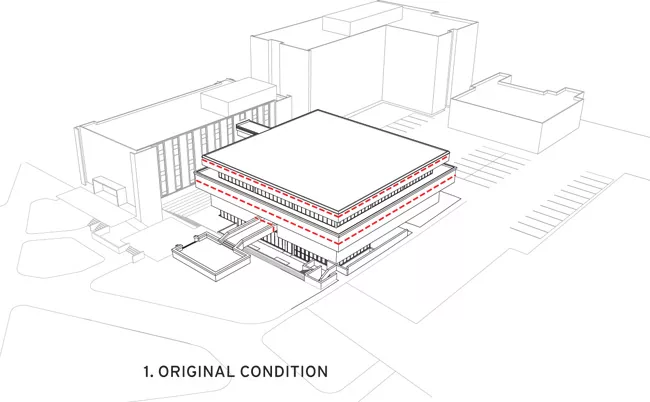
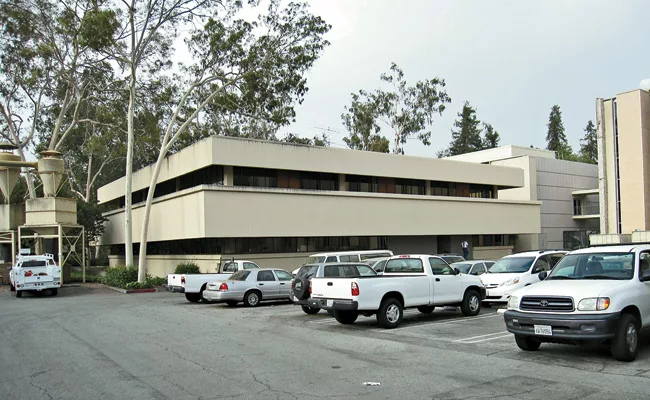
Jorgensen, built in the early 1970s, was originally surrounded on all four sides by deep concrete sunshades.
 
Photo courtesy JFAK
Facade Retrofits: Wrap It Up
Jorgensen Laboratory
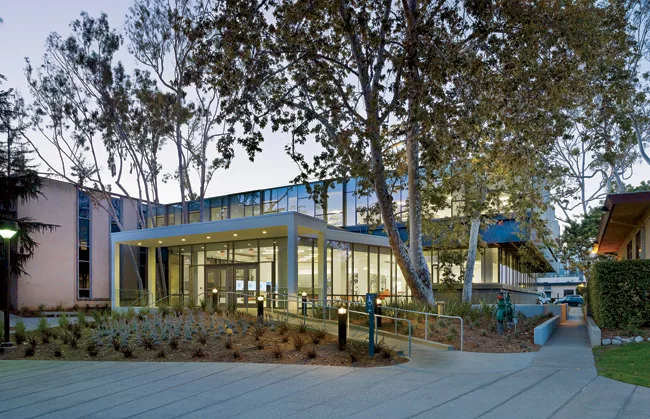
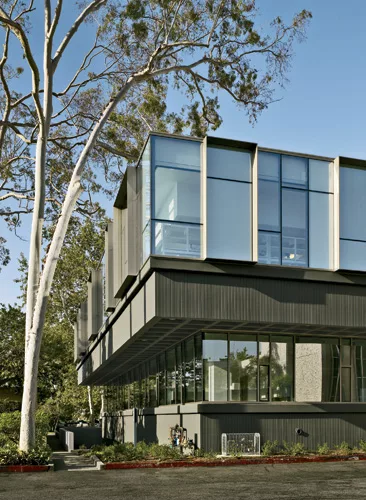
As part of its revamp by John Friedman Alice Kimm Architects, it is now wrapped in a mostly transparent glass skin.
 
Photo © Benny Chan/Fotoworks
Facade Retrofits: Wrap It Up
Jorgensen Laboratory
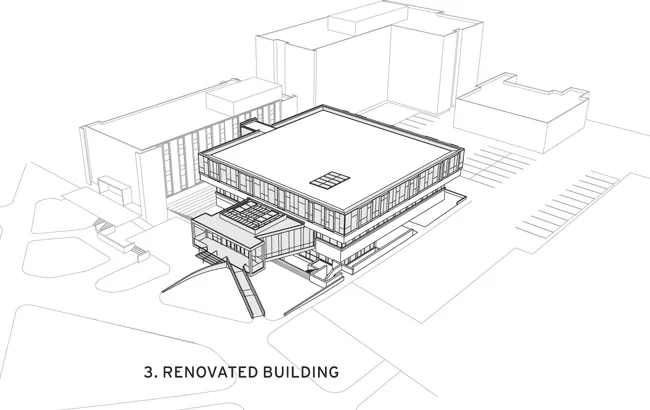
Jorgensen’s transformation included adding a new glass-enclosed entry pavilion.
 
Drawing courtesy JFAK
Facade Retrofits: Wrap It Up
Jorgensen Laboratory
Jorgensen’s transformation included adding a new glass-enclosed entry pavilion.
 
Drawing courtesy JFAK
Facade Retrofits: Wrap It Up
Jorgensen Laboratory
Jorgensen’s transformation included adding a new glass-enclosed entry pavilion.
 
Drawing courtesy JFAK
Facade Retrofits: Wrap It Up
Jorgensen Laboratory, Caltech
Jorgensen’s transformation included adding a new glass-enclosed entry pavilion.
 
Photo © Benny Chan/Fotoworks
Facade Retrofits: Wrap It Up
Jorgensen Laboratory, Caltech
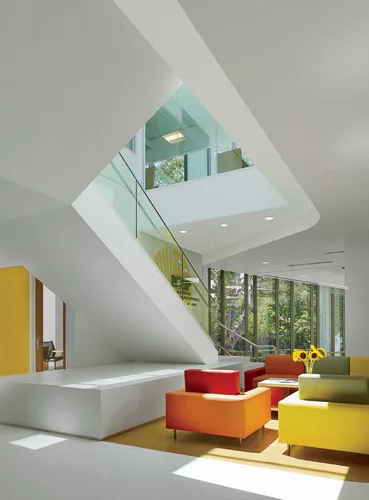
The building’s interior has also been completely reconfigured to place as many labs and offices as near the perimeter as possible. A new skylit atrium and stair allow daylight into spaces deeper in the building’s interior.
 
Photo © Benny Chan/Fotoworks
Facade Retrofits: Wrap It Up
Jorgensen Laboratory
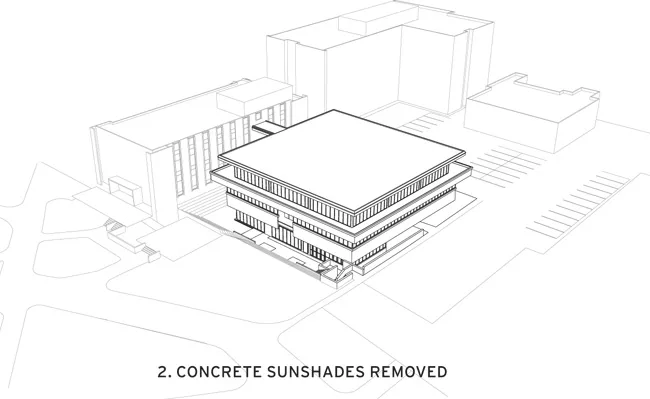
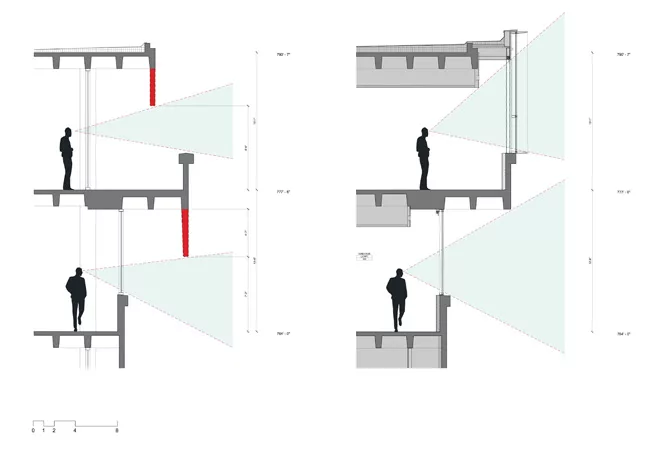
The removal of Jorgensen’s concrete sunshades greatly enhanced daylighting and views.
 
Drawing courtesy JFAK
Facade Retrofits: Wrap It Up
680 Folsom Street
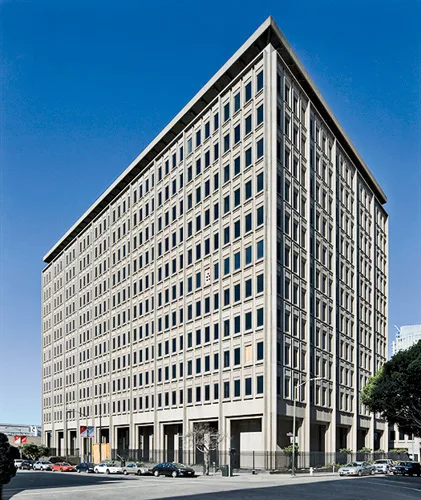
Built in the 1960s, 680 Folsom was originally clad in seemingly impenetrable precast concrete panels.
 
Photo © David Wakely
Facade Retrofits: Wrap It Up
680 Folsom Street
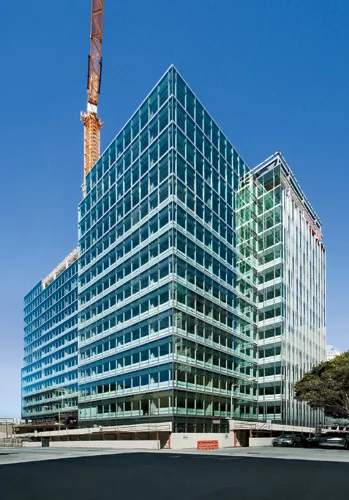
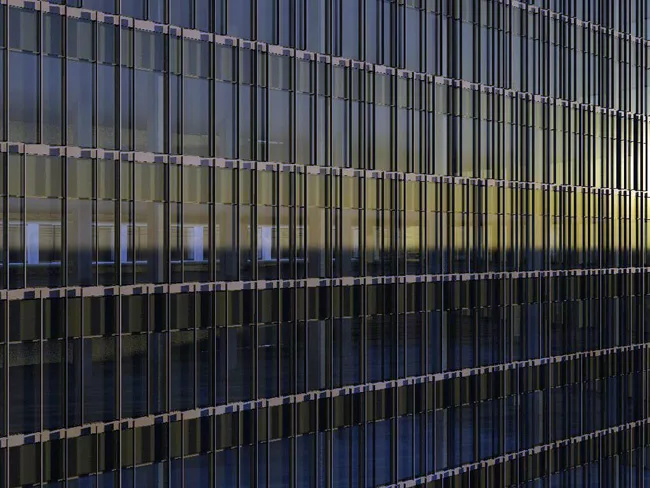
As part of a just-completed renovation by SOM, the building has a new high-performance glass curtain wall, which affords views of San Francisco Bay and the city’s financial core.
 
Photo © David Wakely
Facade Retrofits: Wrap It Up
680 Folsom Street
Vertical fins on the building's northwest-facing facade shield the glazing from the setting sun.
 
Rendering courtesy SOM
Facade Retrofits: Wrap It Up
680 Folsom Street
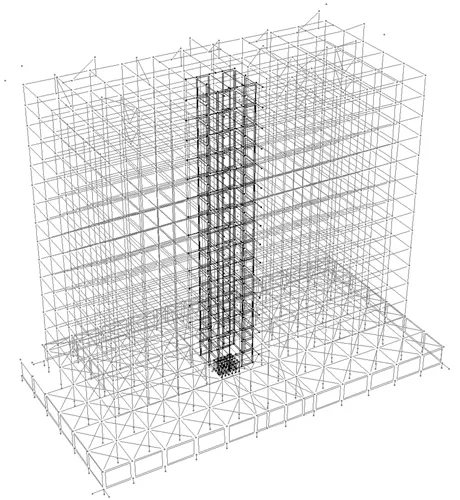
Engineers reconfigured the core to create a base-isolated, pivoting spine.
 
Diagram courtesy Tipping Mar
Facade Retrofits: Wrap It Up
680 Folsom Street
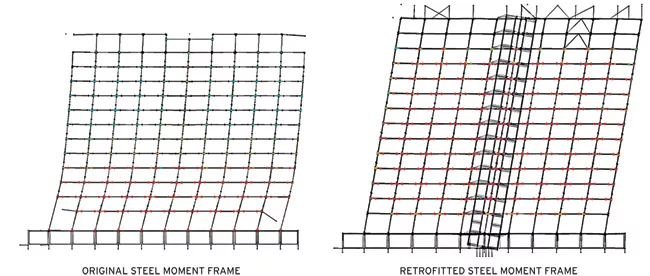
The new spine is intended to force the floors to hang together and move as one unit during a quake. The device should protect structural elements as well as nonstructural components, including the new skin.
 
Diagrams courtesy Tipping Mar
Facade Retrofits: Wrap It Up
215 East 68th Street
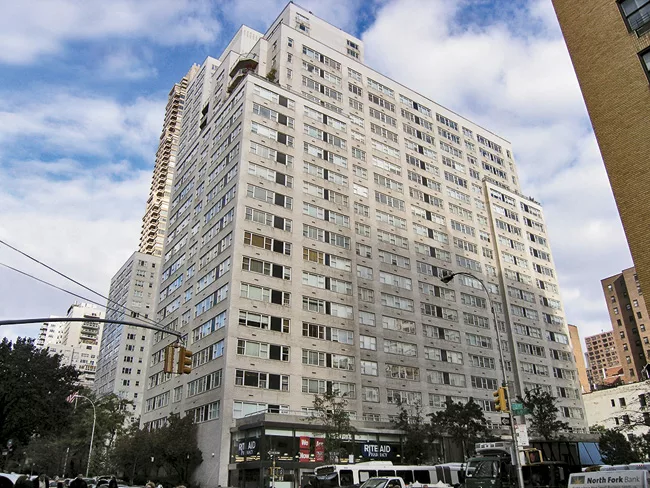
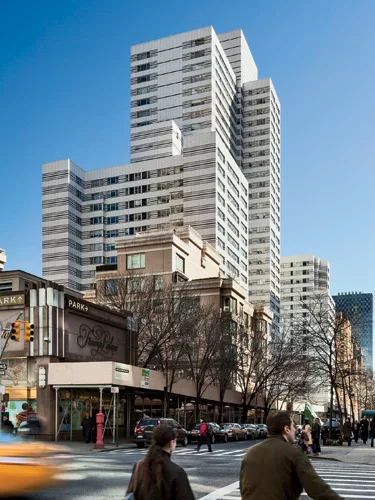
The residential tower designed by Emery Roth & Sons and completed in 1962 on Manhattan’s Upper East Side originally had a glazed-brick, cavity-wall skin.
 
Photo Courtesy FXFOWLE
Facade Retrofits: Wrap It Up
215 East 68th Street
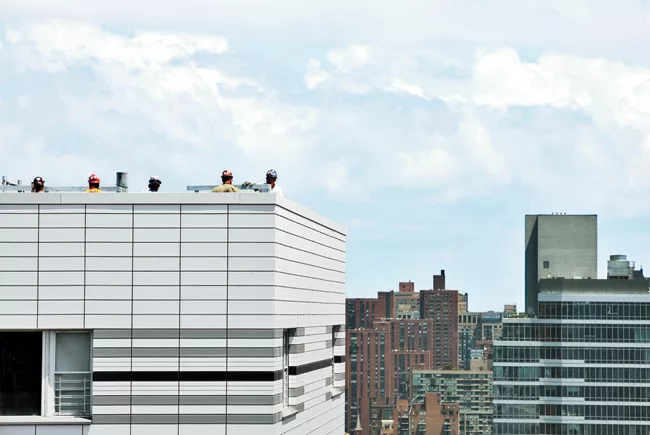
To combat problems that included bowing and spalling, FXFOWLE Architects and Forst Consulting and Architecture designed a new facade of terra-cotta rainscreen panels. The brick was removed and the new rainscreen installed while the building was completely occupied.
 
Photo © Chris Cooper
Facade Retrofits: Wrap It Up
215 East 68th Street
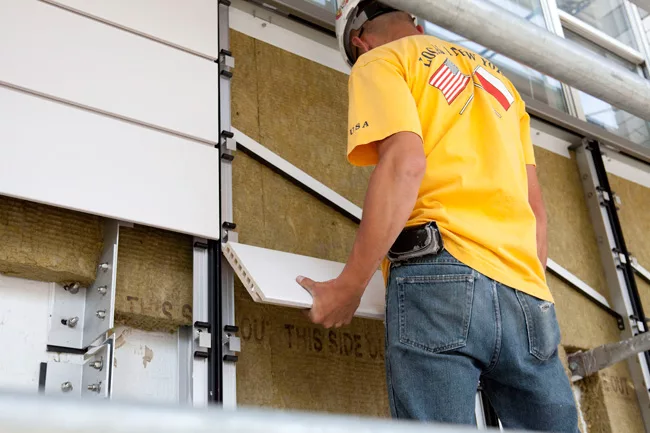
Approximately 600 different sizes and shapes of terra-cotta tiles have been used to clad the building. However, the typical tile is about 1¼ inch thick, 9½ inches tall, and 36 inches long—a size that one worker can easily handle. Almost all of the tiles are white. But the new facade also includes banding of gray and black, as well as scored tiles, between the building’s punched windows.
 
Photo © Ashley Streff
Facade Retrofits: Wrap It Up
215 East 68th Street
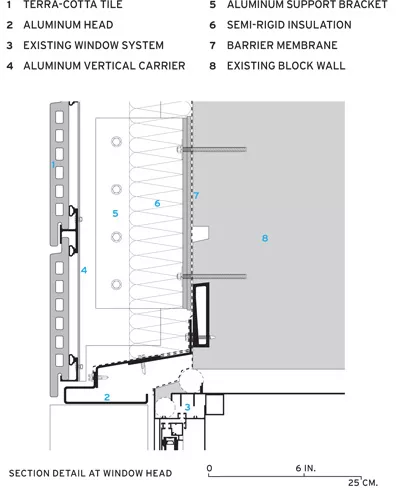
The new rainscreen system includes an extruded aluminum armature that supports the terracotta tiles, an air space, and semi-rigid insulation over a barrier membrane covering the existing block wall.
 
Photo © Ashley Streff
Facade Retrofits: Wrap It Up
215 East 68th Street
 
Drawing courtesy NBK
Facade Retrofits: Wrap It Up
October 16, 2013
People/Products
 
Like all of us, buildings of a certain age often have problems with their facades. Even those that have been well maintained can suffer from failing joints, broken gaskets, and crumbling mortar—conditions that cause air and water infiltration, compromising energy performance and occupant comfort. Sometimes buildings, especially those built in the 1960s and 70s, are simply aesthetically out of sync with the desires of current owners or tenants. But despite their problems, these structures often have good bones and can be reinvigorated with a renovation that includes a new skin.
 
Jorgensen Laboratory, at the California Institute of Technology (Caltech), in Pasadena, was recently revived with such a renovation. The former computational center had been designed by the highly regarded A. Quincy Jones in the early 1970s. But the 30,000-square-foot three-story reinforced-concrete structure was insular and bunkerlike, due to vertical concrete “sunshades,” several feet deep, which blocked daylight and obstructed views of the leafy campus.
 
The university had decided that a new set of users should move in: the Joint Center for Artificial Photosynthesis and the Resnick Institute—two recently established programs focused on energy conservation and generation. There was one major problem, however: the building's image and configuration were “antithetical to the users' mission of sustainability,” says John Friedman, of John Friedman Alice Kimm Architects (JFAK).
 
Caltech hired JFAK to design an overhaul for Jorgensen, which was completed in the spring of 2012. The plan included removing the intrusive sunshades, wrapping the building in thermally efficient glazing, and reorganizing the interior so that many of the new offices and state-of-the-art research spaces could be as near the perimeter as possible. In addition, the architects added a new glass-enclosed entrance pavilion to replace the building's original off-putting entry sequence via a bulky bridge, and they brought sunlight into the interior through a new skylit stair.
 
Before embarking on the radical transformation, JFAK enlisted engineers from Buro Happold to design new building systems and also to study the effect of removing the sunshades. The aim was to improve daylighting, but without incurring solar gain, says David Herd, a Buro Happold partner. “We were looking for the sweet spot,” he adds.
 
By measuring light levels in the existing interior and performing extensive simulations, the engineers demonstrated that JFAK could remove the sunshades without increasing cooling loads. Much of the building perimeter would often be in shadow, they determined, since the first level is mostly below grade, the entry floor is shaded by the overhanging floor above, and the west facade is shielded by an adjacent structure. The surrounding trees also provided some protection.
 
The team devised a new building skin that relies on an aluminum curtain wall system for the top floor, where the new cladding has a vertical span of 12 feet, and a storefront system for the floors below, where spans are shorter. Both systems incorporate 1-inch insulated glazing units with a low-E coating. Although these components are mostly standard, the architects have created interest and rhythm by varying the sizes of the lites, by making some of the mullions deeper than others, and with strategic use of translucent glass. Its placement responds to functional concerns, such as the location of equipment on the interior, “but it is also partly compositional,” says Friedman.
 
This new, mostly transparent envelope allowed the project team to deploy daylight sensors to reduce energy use. The building also has other energy-conserving features, such as air conditioning that automatically shuts off in any perimeter office where a window is opened, as well as a ventilation system configured to reduce the cooling and reheating of fresh air. Together, these strategies helped the project earn LEED Platinum status and should produce a 37 percent savings in energy when compared to a more typical laboratory building—a projection that Buro Happold hopes to confirm over the next few months through a post-occupancy measurement and evaluation process.

Fresh Face, New Spine

Skidmore, Owings & Merrill (SOM) relied on a similar approach for its makeover of a fortresslike office building in San Francisco's South of Market neighborhood, at 680 Folsom Street. The just-completed project, designed for developer TMG Partners, had the aim of transforming the property, vacant since 2007, into desirable office space. The comprehensive renovation included replacement of the 1960s structure's seemingly impenetrable precast-concrete facade panels with a high-performance curtain wall, largely glass. “The goal was to make it more open and inviting and have the activity inside energize the street,” says Leo Chow, an SOM director.

The project also entailed increasing the leasable area by almost a third, to 500,000 square feet, with the addition of small projections on each facade and two new floors on top of the original 12. “The building was a simple, dumb box,” says Chow. “We wanted to articulate it as a series of masses.”

The replacement cladding consists of one-story-tall, 6-foot-wide units that include 10-foot-high insulated vision lites. These afford views of the city's financial core and San Francisco Bay and let daylight deep into the interior. Vertical aluminum fins on the building's northwest-facing facade shield the glazing from the setting sun.

Although attaching a new facade to an existing building is often complicated by elevated code requirements for wind loads and other forces, 680 Folsom's new skin is attached to the structure via the building's original anchors. Their strength proved sufficient, since they had been designed to support the hefty precast panels. “The robust existing slab anchors greatly simplified the retrofit,” says Mic Patterson, director of strategic development at Enclos, the project's facade contractor. “We just had to weld our connector to the existing steel embeds, and we were ready to go.”

The building's steel moment frame did, however, require a seismic retrofit because of the added floors. Early on, the design team considered adding diagonal bracing. Ultimately they rejected such a system, since the braces would occupy valuable floor space and obstruct views through the new curtain wall. Instead, the project's structural engineer, Tipping Mar, devised a novel solution that involved reconfiguring the building core to create a pivoting spine. During a temblor, this base-isolated, reinforced-concrete element should redistribute seismic deformations throughout the structure and prevent the phenomenon of “weak story” at the base, where perimeter columns have vertical spans of 35 feet instead of 15 feet, the building's typical floor-to-floor height. Weak story exists, says Steve Tipping, Tipping Mar principal, where a story's lateral strength is less than 80 percent of the one above it. The new core at 680 Folsom prevents this condition by “forcing the floors to hang together and act as one unit,” he says.

In addition to ensuring that the building's structural integrity is maintained, the retrofit strategy should also minimize damage to nonstructural components, including the building skin. The pivoting spine will limit inter-story drift (the horizontal movement of one level of a building relative to the one above it), making extensive repairs to the curtain wall unnecessary after a design basis earthquake—a quake for whose magnitude the building is designed, in this case one with only a 10 percent chance of being exceeded in 50 years.

Chow says that the importance of protecting the investment in a building's skin should not be underestimated. “To an owner, that's where the value is,” he says, adding that at 680 Folsom, “the facade projects a sense of quality and clean modernism.” This image apparently has market appeal: last summer, while construction was still under way, TMG sold the tower to Boston Properties after leasing almost all of its office space to Macys.com and Riverbed Technology. The companies are expected to move in early next year.

Less-Invasive Surgery

At 680 Folsom and Jorgensen Lab, new facades are just one aspect of those buildings' almost complete reinvention. But installation of a new skin can also be part of less radical transformations, used to address performance problems or to subtly tweak a building's image. Such was the case for a 33-story apartment building with a stepped profile on Manhattan's Upper East Side, designed by Emery Roth & Sons in 1962. The 608-unit tower at 215 East 68th Street was one of the first to use two relatively new, and not yet well-understood technologies: it had a lightweight concrete structure and a cavity-wall facade of one wythe of white-glazed brick with a backup wall of concrete masonry. Over the years, the concrete structure was slowly shrinking. The condition, known as creep, put pressure on the brick, which had been laid without relieving angles. As a result, it bowed and spalled, and water found its way into the interior.

In an attempt to address the problem, the property's manager, Rudin Management, had periodically replaced large sections of brick—a practice that gave the tower a patchwork appearance. For a more lasting solution, Rudin turned to the team of FXFOWLE Architects and a facade specialist, Forst Consulting and Architecture.

The two firms explored replacing the old skin, which covered about 350,000 square feet, with a new brick cavity wall that would be better detailed than the original. But they soon realized that new reinforcement for the inner block wall could serve double duty, functioning also as an armature for terra-cotta rainscreen cladding. They reasoned that a rainscreen system—a two-stage wall where an outer, open-jointed layer serves as the primary barrier for rain, snow, and hail but is not weather-tight—would offer a number of advantages over a brick cavity wall. Because there is an inner weatherproof layer that incorporates insulation as well as a barrier membrane and is separated from the outer skin by an airspace, the exterior cladding is essentially back-ventilated, improving drying capacity, says Ralph Forst, Forst Consulting principal. Another chief benefit is weight—terra-cotta tiles are significantly lighter than brick, which would mean less stress on the building's structure.

The system that the project team developed consists of tiles typically about 1¼ inch thick, 9½ inches tall, and 36 inches long, supported by an extruded aluminum armature. Behind the tiles is a 4½-inch airspace and then 3 inches of semi-rigid insulation over a new barrier membrane covering the existing block wall. Designers maintained white as the facade's dominant color but added banding of gray and black between the building's punched windows. The scheme retains some of the character of the original brick, “but it is richer and more pleasing to look at,” says Bruce Fowle, FXFOWLE founding principal.

Although construction is still going on at the building's base, which will be clad in stone, the terra-cotta work was completed earlier this year. Installation on an existing, fully occupied structure presented several complications. One was the project sequence, which needed to be orchestrated so that it could be performed top-down. If contractors had performed the work bottom-up, the usual method for new construction, they risked damaging already-in-place terra-cotta tiles while demolishing the old brick face, says Bud Streff, director of sales for NBK, the tiles' manufacturer.

The designers and the client are counting on the rainscreen's ease of maintenance. They expect the tiles to be durable, but if some do break or the barrier membrane requires inspection to locate leaks, removal can easily be accomplished without the messy grinding or sawing required for the repair of brick, says Forst.

No leaking or breakage has occurred. However, it's still too early to know if the terra-cotta will be as easy to maintain as its project team hopes. But there is a larger question regarding 215 East 68th Street, and for any building that has been revamped with a new skin: will their new facades seem as fresh decades from now as they do today? It would be interesting to return to the Upper East Side, to the South of Market neighborhood, and to Caltech in twenty years to see if any of the buildings have exchanged their replacement skins.


People

Jorgensen Laboratory

Formal name of building:
Jorgensen Laboratory Renovation

Location:
California Institute of Technology, Pasadena, CA

Completion Date:
May 2012

Gross square footage:
35,700 SF

Total construction cost:
$17.1 million

Client:
California Institute of Technology (Caltech)
Contact: Kenneth Hargreaves (626) 395 - 8881

Architect's firm:
John Friedman Alice Kimm Architects 701 East Third Street, Suite 300
Los Angeles, CA 90013
P: (213) 253 - 4740
F: (213) 253 - 4760
www.jfak.net

Personnel in architect's firm who should receive special credit:
John Friedman, FAIA, Principal in Charge
Alice Kimm, FAIA
Robert McFadden, Designer & Project Architect
Claudia Kessner, Project Architect
Eddie Hermann
Matt Azen
Marc Cucco
Jessica Sano

Engineers:
MEP: Buro Happold Consulting Engineers, Inc
9601 Jefferson Blvd, Suite B
Culver City, CA 90232
(310) 945 - 4800
www.burohappold.com

Structural: Saiful Bouquet
155 North Lake Avenue, Sixth Floor
Pasadena, CA 91101
(626) 304 - 2616
www.saifulbouquet.com

Civil: VCA Engineers
3951 Medford Street
Los Angeles, CA 90063
(323) 729 - 6098
www.vcaeng.com

Consultants:
Lab Planner: Jacobs Consultancy
420 Stevens Avenue, Suite 150
Solana Beach, CA 92075
(858) 793 - 0969
www.jacobsconsultancy.com

Landscape Architect: The Office of James Burnett
550 Lomas Santa Fe, Suite A
Solana Beach, CA 92075
(858) 793 - 6970
www.ojb.com

Technology & Acoustics: Waveguide Consulting, Inc.
6060 Center Drive, Suite 870
Los Angeles, CA 90045
(310) 645 - 2300
www.waveguide.com

FF&E: Neiman Studio
233 South Barrington Avenue, Suite 314
Los Angeles, CA 90049
(310) 925 - 2669
www.neimanstudio.net

General contractor:
DPR Construction
4665 MacArthur Court Suite 100
Newport Beach, CA 92660
Contact: John Foran (949) 633 - 4253
www.dpr.com

Photographer:
Benny Chan (Fotoworks)
5069 Exposition Blvd
Los Angeles, CA 90016
(323) 730 - 0100
www.fotoworks.cc

680 Folsom Street

Formal name of building:
680 Folsom

Location:
680 Folsom Street, San Francisco, CA 94107

Completion Date:
10/2013

Gross square footage:
502,000 square footage

Client:
TMG Partners

Architect's firm:
Skidmore, Owings & Merrill LLP
One Front Street
San Francisco, CA 94111
TEL: 415.981.1555
FAX: 415.398.3214

Personnel in architect's firm who should receive special credit:
SOM Team (all are registered architects)
Design Partner: Craig Hartman, FAIA
Design Director: Leo Chow, AIA
Technical Director: Keith Boswell, FAIA
Managing Director: Carrie Byles, AIA, LEED® AP
Senior Designer: Michael Temple, AIA, LEED®, AP
Senior Technical Designer: Maurice Hamilton, AIA
Technical Designer: Yoko Takada
Senior Architect: Kirit Sedani
Project Manager Danielle McGuire, AIA
Ryan Griffin
Marguerite Eid
Melanie Pratt
Nate Sunderhaus

Consultant:
Structural: Tipping Mar
MEP: ACCO Design-Build
Landscape: SWA
Lighting: Francis Krahe & Associates Inc.

General contractor:
Plant Construction Company

Photographers:
© 2013 David Wakely Photography Tel: 415.861.7503

© Skidmore, Owings & Merrill LLP 2013 Tel: 415.352.6817

215 East 68th Street

Formal name of building:
215 East 68th Street
Location: 215 East 68th Street, New York, NY

Completion Date:
March 2013

Gross square footage:
352,000 SF Gross Exterior Wall ' 245,000 SF of Terra Cotta Rainscreen

Client:
Rudin Management Co, INC.
Paul D. Mandel, SVP, Project Manager

Architects:
FXFOWLE Architects
22 West 19th Street
New York, NY 10011
T +1.212.627.1700
F +1.212.463.8716

Forst Consulting and Architecture, PLLC
19 West 44th Street, Suite 611
New York, NY 10036
T +1.212.286.0900

Personnel in architect's firm who should receive special credit:
FXFOWLE
Bruce Fowle, FAIA, LEED AP, Founding Principal, Partner in Charge / Elizabeth Finkelshteyn, Principal, Project Manager / Bill Chalkley, AIA, LEED AP / Carol Hsuing, AIA, LEED AP

FORST
Ralph D. Forst, RA, Principal / Robert T. Lai, Sr. Designer / Dino Rossi, Project Manager / Glenn C. Steele, Senior Inspector QC/QA

Architect of record, if applicable:
Forst Consulting and Architecture, PLLC
19 West 44th Street, Suite 611
New York, NY 10036
T +1.212.286.0900

Engineer(s):
Severud Associates ' Structural Engineering
Ed DePaola, Principal
Andrew Mueller-Lust, Project Engineer
Fortunato Orlando, Project Engineer

Consultant:
Viridian Associate - Energy

General contractors:
Western Facades
Michael B. Radigan, Project Executive
James D. Rogers, Project Manager
NBK Ceramic
Michael Cleere, Project Designer
Ivo Respondek, Project manager

Photographers:
Chris Cooper / chris@chriscooperphotographer.com / +1 (212) 380-6841

Ashley Streff
ashley@ashleystreff.com
(781) 956-1114


Products

Jorgensen Laboratory

Structural system
Existing concrete waffle slab structure; Steel frame at new entry pavilion

Metal/glass curtain wall:
Arcadia, Inc

Glazing:
Oldcastle BuildingEnvelope

Windows:
Exterior: Arcadia
Interior: Wilson Partitions, Inc.

Shading devices:
MechoShade Systems, Inc.

680 Folsom Street

Structural system
Steel frame with base isolator, concrete sheer wall core

Exterior cladding
Curtainwall: 4-sided structurally glazed custom unitized curtainwall
Shading devices: Vertical, extra aluminum integrated unitized curtain devices
Other cladding unique to this project: Custom, structurally glazed units anchored on back up tube steel support system.

Manufacturers
Exterior Curtainwall & Storefront: Enclos
Glazing: Viracon

215 East 68th Street

Structural system
1962 - PIP Concrete Frame

Exterior cladding
Rain-screen cladding: Custom NBK Rainscreen System
Rain-screen system elements: Factory assembled vertical mullions and tile clips in clear anodized aluminum. 30mm thick glazed Terracotta Tile on stick-built vertical mullions with formed aluminum copings, window sills and closures in PPG Duranar finishes.
Moisture/air barrier: Sikagard 560 (formerly Liquid Plastic’s Decadex) and Dupont’s Liquid Tyvek.
Windows: Existing Traco replacement windows dating from 1996 remained throughout the recladding project.


Share This Story

Looking for a reprint of this article?
From high-res PDFs to custom plaques, order your copy today!

Joann gonchar

Joann Gonchar, FAIA, LEED AP, is deputy editor at Architectural Record. She joined RECORD in 2006, after working for eight years at its sister publication, Engineering News-Record. Before starting her career as a journalist, Joann worked for several architecture firms and spent three years in Kobe, Japan, with the firm Team Zoo, Atelier Iruka. She earned a Master of Architecture degree from the University of Pennsylvania and a Bachelor of Arts from Brown University. She is licensed to practice architecture in New York State.

Post a comment to this article

Report Abusive Comment

Subscription Center
  • Create an Account
  • Start a Subscription
  • Manage My Account
  • Sign Up for Newsletters
  • Visit Customer Service
  • Update Preferences

More Videos

Sponsored Content

Sponsored Content is a special paid section where industry companies provide high quality, objective, non-commercial content around topics of interest to the Architectural Record audience. All Sponsored Content is supplied by the advertising company and any opinions expressed in this article are those of the author and not necessarily reflect the views of Architectural Record or its parent company, BNP Media. Interested in participating in our Sponsored Content section? Contact your local rep!

close
  • TAMLYN XtremeTrim Exterior Trim
    Sponsored byTamlyn

    Designing Cleaner Panel Facades: Why Exterior Trim Details Matter

  • Building with Vapor Barriers
    Sponsored byReef Industries, Inc.

    Vapor Barriers Help Control Moisture in Tighter Building Designs

  • Duct Interior with Prodeq System
    Sponsored byHenry, a Carlisle Company

    Designing Resilient Water Containment Systems

DESIGN:ED Podcast
Listen to Architectural Record’s DESIGN:ED Podcast

Events

June 18, 2026

Rebooting the Aging Office Building

Credits: 1 AIA LU/HSW; 1 AIBD P-CE; 0.1 ICC CEU; 1 PDH

Explore façade retrofit strategies and award-winning design concepts that can transform aging office buildings into healthier, higher-performing workplaces for today’s hybrid workforce.

June 23, 2026

Enhancing Fire Resistance with Advanced PVC Solutions

Credits: 1 AIA LU/HSW; 1 AIBD P-CE; 0.1 ICC CEU; 1 IIBEC CEH

Evaluate advanced PVC solutions that improve fire resistance, support WUI compliance, and enhance resilience in residential and commercial building design.

View All Submit An Event

Products

2026 Architect's Square Foot Costbook

2026 Architect's Square Foot Costbook

See More Products

Popular Stories

SanDiegoAirport

Top 300 Architecture Firms of 2026

Coronado Bridge

The Architect’s Guide to San Diego

Lorcan O' Herilhy

California Architect Lorcan O’Herlihy Has Died, Age 66

CCA, Studio Gang

The Winners of the AIA’s 2026 Architecture Award Range from Collegiate Rowing Hubs to Housing for the Homeless

Dusk House

Design Vanguard 2026: ONO

Rebooting the Aging Office Building - Free Webinar - June 18, 2026

Related Articles

  • Light It Up

    Light It Up

    See More
  • Review: Rhino 5 Revs It Up

    See More
  • Nueva-School-Science-and-Environmental-Center-01.jpeg

    Biden-Harris Administration Seeks Input on National Definition for Zero Emissions Buildings

    See More

Events

View AllSubmit An Event
  • March 19, 2026

    Visualization Collaboration in Practice: Why It Matters and How to Do It Right

    NOW ON DEMANDCredits: 1 AIA LU/Elective; 1 AIBD P-CE; 0.1 ICC CEU; 0.1 IACET CEUThis session helps you rethink the ROI of your visualization stack, see how collaborative visualization ensures consistent outputs, and reduce reliance on outsourced renderings.
View AllSubmit An Event
×

The latest news and information

#1 Source for Architectural Design, News and Products

SUBSCRIBE
  • RESOURCES
    • Advertise
    • Contact Us
    • Submit
    • Store
  • ACCOUNT CENTER
    • Create an Account
    • Start a Subscription
    • Manage My Account
    • Sign Up for Newsletters
    • Visit Customer Service
    • Update Preferences
  • PRIVACY
    • PRIVACY POLICY
    • TERMS & CONDITIONS
    • DO NOT SELL MY PERSONAL INFORMATION
    • PRIVACY REQUEST
    • ACCESSIBILITY
  • SERVICES
    • Marketing Services
    • Reprints
    • Market Research
    • List Rental
    • Survey/Respondent Access
  • STAY CONNECTED
    • Linkedin
    • Facebook
    • Instagram
    • YouTube
    • X (Twitter)

Copyright ©2026. All Rights Reserved BNP Media, Inc. and BNP Media II, LLC.

Design, CMS, Hosting & Web Development :: ePublishing