Architectural Record
search
cart
facebook twitter linkedin youtube
  • Sign In
  • Subscribe
  • Sign Out
  • My Account
Architectural Record
  • NEWS
    • Latest News
    • Awards
    • Interviews
    • Obituaries
    • Podcasts
      • Design:Ed Podcast
      • Sponsored Podcasts
  • OPINION
    • Book Reviews / Excerpts
    • Exhibition Reviews
    • Forum
  • EXCLUSIVES
    • Videos
    • Design Vanguard
    • Top 300 Firms
    • Sponsored Content
    • Sponsored eBooks
    • From the Archives
  • CONTINUING ED
    • Editorial Continuing Ed
    • CE Center
    • CE Academies
  • PROJECTS
    • Buildings By Type
    • Reuse & Renovation
    • Museums & Arts Centers
    • Colleges & Universities
    • Multifamily Housing
    • Interiors
    • Lighting
    • Kitchen & Bath
  • HOUSES
    • Record Houses
    • House of the Month
    • Featured Houses
  • PRODUCTS
    • Products by Category
    • Record Products of the Year
    • Latest Products
  • EVENTS
    • Dates & Events
    • Record on the Road
    • Innovation Conference
    • Sustainability in Practice
    • Women In Architecture
    • Webinars
    • Ad Excellence Awards
    • Submit an Event
  • CONNECT
    • Ask RECORD AI
    • Newsletters
    • Contact
    • Advertise
    • Editorial Calendar
    • Store
    • Customer Service
  • SUBMIT
    • Submission Guidelines
    • RECORD Competitions
  • MAGAZINE
    • Subscribe
    • My Account
    • Digital Edition
    • Current Issue
    • Firm Pass
    • Historic Archive
Exclusives

Good leadership helps practice, the profession, and society

By Andrew Pressman
September 16, 2007

Ongoing and frequent dialogue not only fosters collegiality and a collaborative spirit but can also stimulate innovation. Jim Oswald, a senior associate and senior business strategist within Gensler Consulting, shares Leers’s perspective with regard to engaging staff to ensure their commitment to advancing the firm’s goals: “Informal discussions held in staff meetings, individual coaching sessions, and conversations around the water cooler about the firm’s strategic purpose and direction all help to strengthen staff’s grasp of the ‘why we do what we do’ and proactively engage them in ‘living’ the firm’s vision and goals through their work.”
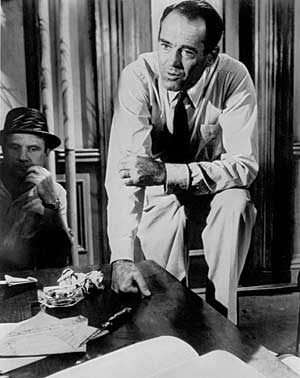
Photography: © Getty Images
By the film’s end, the architect’s skill at leading the group has persuaded it to acquit the accused.

Exposing staff at all levels in the firm to clients as often as possible can be an effective approach to leading teams. William Rawn, FAIA, founding principal of William Rawn Associates in Boston, uses this approach. “This is a powerful way for staff to understand client and consultant goals, and why the principals are leading a project in a certain fashion. If they hear it directly from the client, they are truly invested in the project, which facilitates collaboration and a sense of control.” The essence of Rawn’s transparent leadership style is to engage the office with clients and consultants to impart the values—and reap the rewards—of teamwork. One of the firm’s goals is to develop among all staff members the ability to listen intently to clients from the very start when they express what they need their project to do for them. Rawn believes engagement and inclusion translate into employee satisfaction and make his firm an interesting place to work. This is noteworthy in the context of today’s tight labor pool, where retaining employees who are members of a talented, creative workforce presents special challenges.

Leading the profession

Doing and advocating excellent design, however broadly “excellent” is defined, is one key to leading change within the profession. According to Kate Schwennsen, FAIA, associate dean of the College of Design at Iowa State University, “Architects need sophisticated tools, compelling evidence, and accessible knowledge to do good work and thus to lead.” So creation of knowledge and its wide dissemination should be distinct goals of leadership in the profession.

A key to leading change is to embrace the differences between architects and other professional disciplines, such as mechanical or structural engineers, who are typically joining teams early under the integrated practice model. Bernstein argues that this approach serves professionals well when arriving at innovative solutions to very complex problems facing the profession, such as implementing integrated practice. At the same time, he makes a plea that the profession speak with a unified voice in order for progress to occur in creating a new model of practice.

Schwennsen calls for leaders—citizen architects, both individually and collectively—to become engaged in local and national political discussions. For example, architects can serve on planning or nonprofit community-development boards, as elected officials, or volunteer for profession-related groups such as Habitat for Humanity and Main Street. In addition to contributing to the debate, architects in these roles are invaluable in translating ideas into diagrams and images so that people can understand them. Hot professionwide topics on which architects can substantively add to the discourse include green building standards, urban planning, diversity, campaigns for new bond levies, historic preservation, and housing and building codes, to name a few.

Serving the public

Architects can have an impact on society by transcending disciplinary boundaries and bringing their expertise and spirit toward becoming a constructive presence in our communities and beyond. A striking example of leadership in this realm, that of forging activist alliances in political and public-policy worlds, is the establishment of the environmental advocacy group Architecture 2030, by Santa Fe architect Edward Mazria (www. architecture2030.org). Since 2003, the organization has had a profound international impact on educating architects and the public about the role of the building sector on global warming. It is responsible for influencing the AIA’s sustainability initiatives as well as energy policy for federal buildings, states, and cities around the country.

Architects can also take leadership roles in their communities by seeking and engaging worthy local projects for people or groups who might not otherwise afford architectural services—and really need them. Leading a pro bono initiative [see Record, August 2007, page 63] involves a passion for social or environmental issues and a deep commitment to making a difference in the world. Two groups dedicated to helping architects and firms plug into these types of projects and, as John Cary, executive director of Public Architecture, proclaims, “Develop a more pronounced culture of pro bono service within the profession,” are The 1% Solution and Architecture for Humanity.

Numerous surveys indicate that architects are highly respected in our culture. Maybe that aura is what made Henry Fonda’s juror so influential. Regardless, it could translate into enormous potential for reaching a wide audience that may not always be receptive. Inspired and dynamic leaders listen well, articulate their vision, motivate, think critically and creatively, reflect, prioritize, and then act.

Share This Story

Looking for a reprint of this article?
From high-res PDFs to custom plaques, order your copy today!
Post a comment to this article

Report Abusive Comment

Subscription Center
  • Create an Account
  • Start a Subscription
  • Manage My Account
  • Sign Up for Newsletters
  • Visit Customer Service
  • Update Preferences

More Videos

Sponsored Content

Sponsored Content is a special paid section where industry companies provide high quality, objective, non-commercial content around topics of interest to the Architectural Record audience. All Sponsored Content is supplied by the advertising company and any opinions expressed in this article are those of the author and not necessarily reflect the views of Architectural Record or its parent company, BNP Media. Interested in participating in our Sponsored Content section? Contact your local rep!

close
  • TAMLYN XtremeTrim Exterior Trim
    Sponsored byTamlyn

    Designing Cleaner Panel Facades: Why Exterior Trim Details Matter

  • Building with Vapor Barriers
    Sponsored byReef Industries, Inc.

    Vapor Barriers Help Control Moisture in Tighter Building Designs

  • Duct Interior with Prodeq System
    Sponsored byHenry, a Carlisle Company

    Designing Resilient Water Containment Systems

DESIGN:ED Podcast
Listen to Architectural Record’s DESIGN:ED Podcast

Events

June 10, 2026

Rethinking Stormwater – The Power of Porous Paving

Credits: 1 AIA LU/HSW; 1 AIBD P-CE; 0.1 ICC CEU

Learn how porous paving systems support stormwater management, reduce heat island effects, and enhance sustainable site design performance.

June 11, 2026

Very Early Warning Fire Detection for Mission-Critical Facilities

Credits: 1 AIA LU/HSW; 1 AIBD P-CE; 0.1 ICC CEU

Examine advanced fire detection strategies that support uptime and enhance safety in data centers and other mission-critical facilities.

View All Submit An Event

Products

2026 Architect's Square Foot Costbook

2026 Architect's Square Foot Costbook

See More Products

Popular Stories

Practice Matters illustration

What’s in a (Firm’s) Name? Thinking About Succession and Legacy

Practice Matters illustration

By the Numbers: Counting America's Architects

Riverdale House by Studio Lau

Riverdale House by Studio Lau

House on a Hill

Design Vanguard 2026: Forma

Crane Cove, ONO

Design Vanguard 2026 Winners

Broader Sustainability of CMU - Free Webinar - May 21, 2026

Related Articles

  • Good leadership helps practice, the profession, and society

    See More
  • New AIA firm survey indicates that while business is good, the profession itself changes slowly

    See More
  • New AIA Firm Survey Indicates that While Business is Good, the Profession Itself Changes Slowly

    See More

Related Products

See More Products
  • sustainable building.jpg

    Sustainable Building Design: Principles and Practice

  • 1444336282.gif

    The Handbook of Interior Design

See More Products

Events

View AllSubmit An Event
  • October 7, 2016

    Interior Design: The Essential Profession

    Fast-paced, interactive, and exciting: this one-day symposium will look at the work of interior designers today and in the future, making the case that interior design is inarguably essential to organizational and human health, wellness, and happiness.
View AllSubmit An Event
×

The latest news and information

#1 Source for Architectural Design, News and Products

SUBSCRIBE
  • RESOURCES
    • Advertise
    • Contact Us
    • Submit
    • Store
  • ACCOUNT CENTER
    • Create an Account
    • Start a Subscription
    • Manage My Account
    • Sign Up for Newsletters
    • Visit Customer Service
    • Update Preferences
  • PRIVACY
    • PRIVACY POLICY
    • TERMS & CONDITIONS
    • DO NOT SELL MY PERSONAL INFORMATION
    • PRIVACY REQUEST
    • ACCESSIBILITY
  • SERVICES
    • Marketing Services
    • Reprints
    • Market Research
    • List Rental
    • Survey/Respondent Access
  • STAY CONNECTED
    • Linkedin
    • Facebook
    • Instagram
    • YouTube
    • X (Twitter)

Copyright ©2026. All Rights Reserved BNP Media, Inc. and BNP Media II, LLC.

Design, CMS, Hosting & Web Development :: ePublishing