Chopo Museum
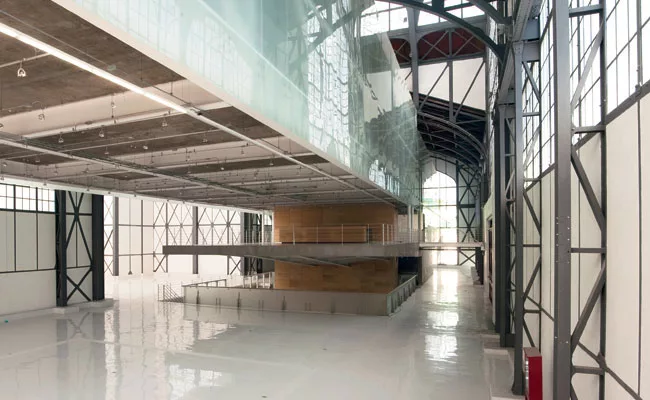
The insertion exists as a building within a building. The two structures touch only at their northern end (background), where the new penetrates the wall of the old.
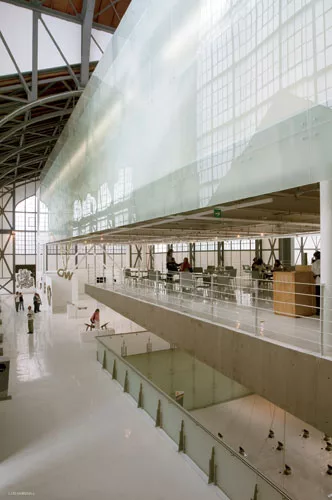
A café occupies a cantilever at the structure’s concrete base. A theater lobby sits below, while galleries surround it on the ground floor of the original building.
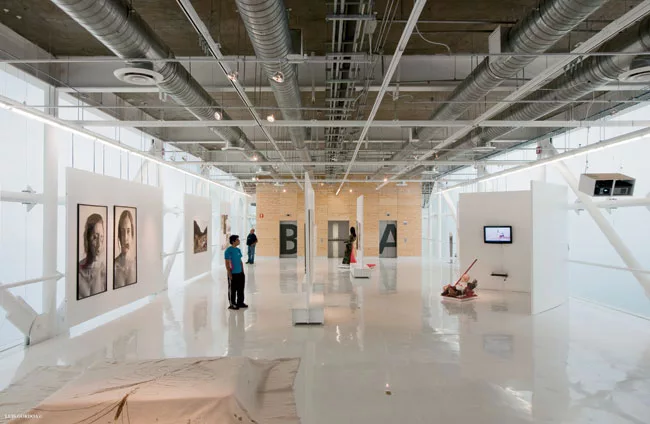
Poured concrete floors with white epoxy resin, exposed white steel tube structure, and translucent glass lend a lightness to the gallery spaces. A plywood-clad shear wall holds the elevator shafts and supports the building seismically.
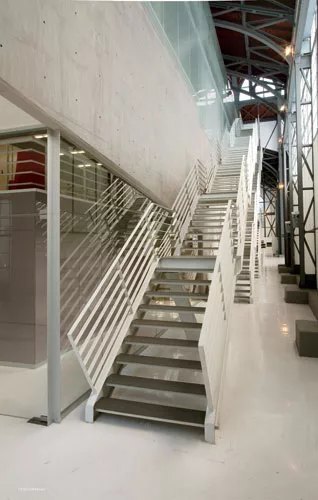
Three sets of fire stairs march in a line across the eastern side of the insertion and serve its various levels.
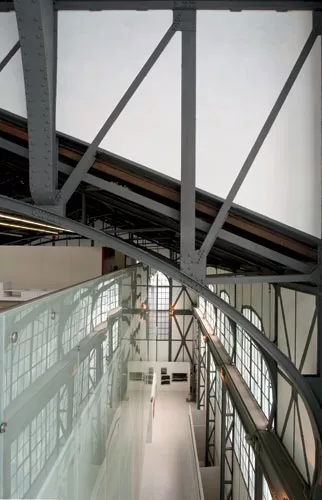
The arched cast-iron trusses and other elements of the original structure are reflected in the insertion’s glass-clad upper reaches.
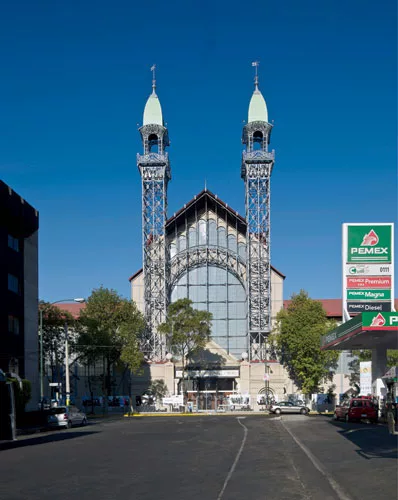
The museum’s Erector Set–like towers rise above the surrounding Santa María la Ribera neighborhood.
Photo © Iñigo Bujedo
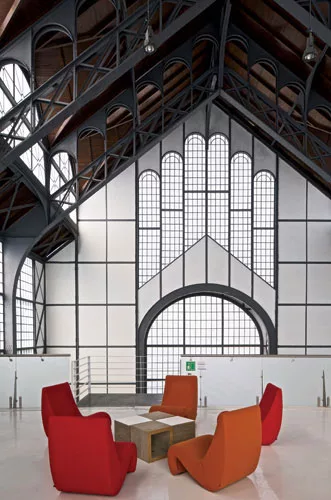
The information center and archive occupies the insertion’s top level, offering dramatic views of the soaring, cathedral-like space.
Photo © Iñigo Bujedo
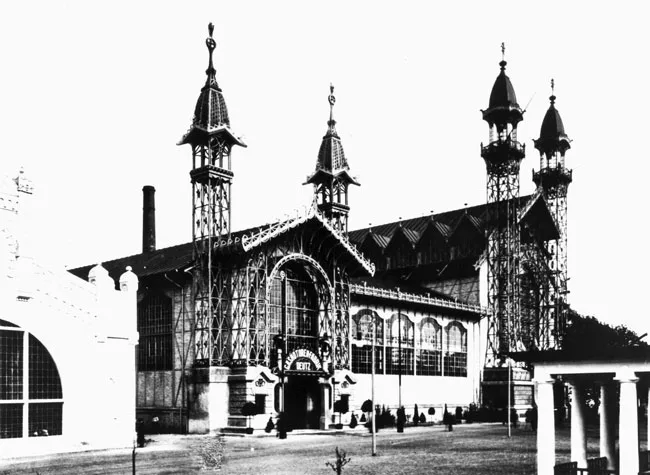
Photo courtesy Chopo Museum
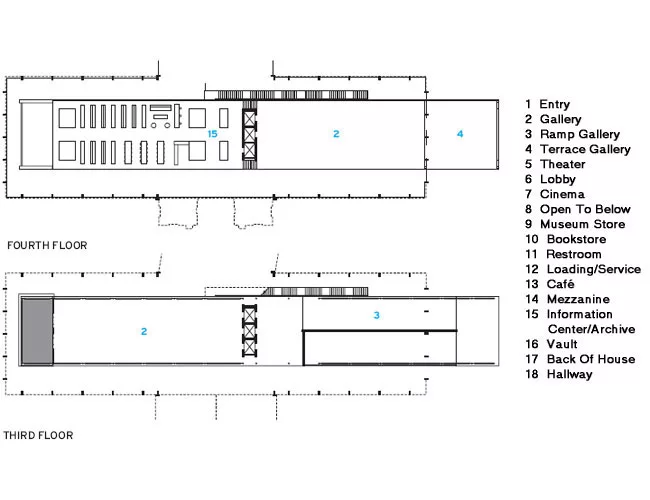
Image courtesy TEN Arquitectos
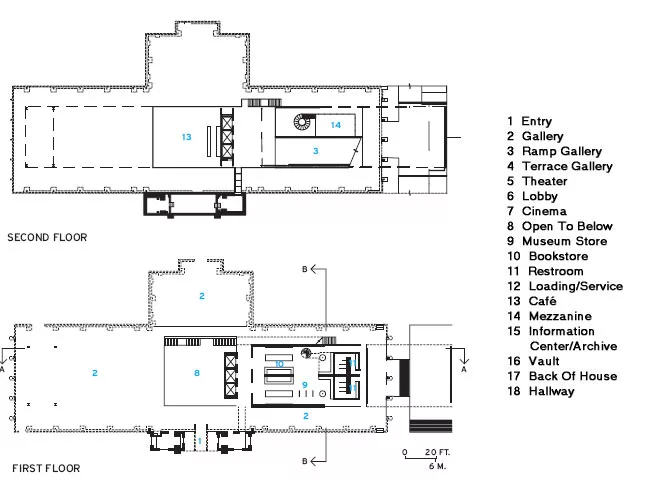
Image courtesy TEN Arquitectos
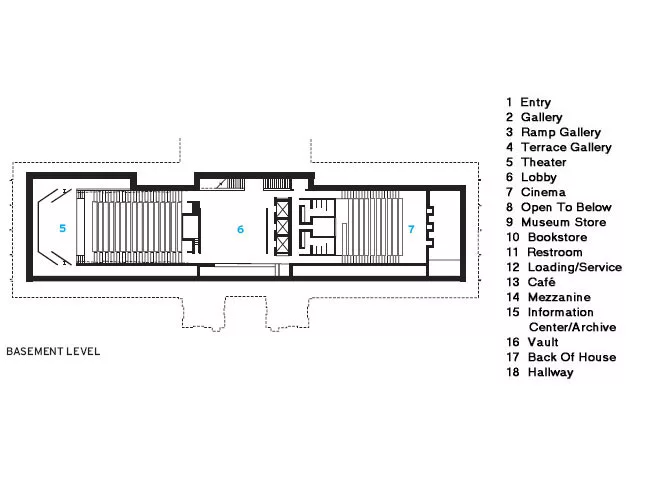
Image courtesy TEN Arquitectos
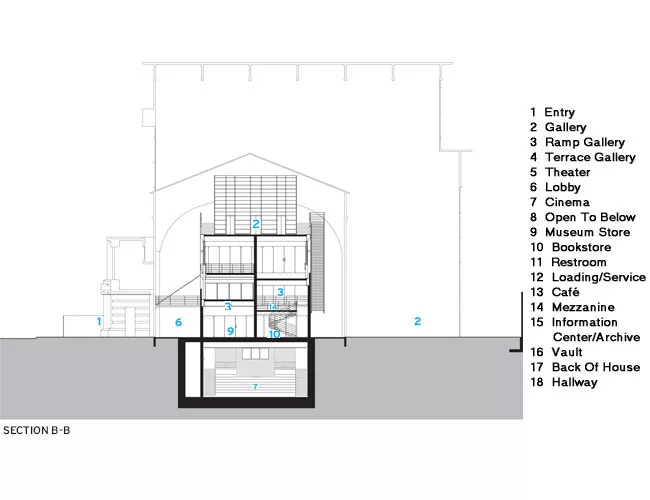
Image courtesy TEN Arquitectos
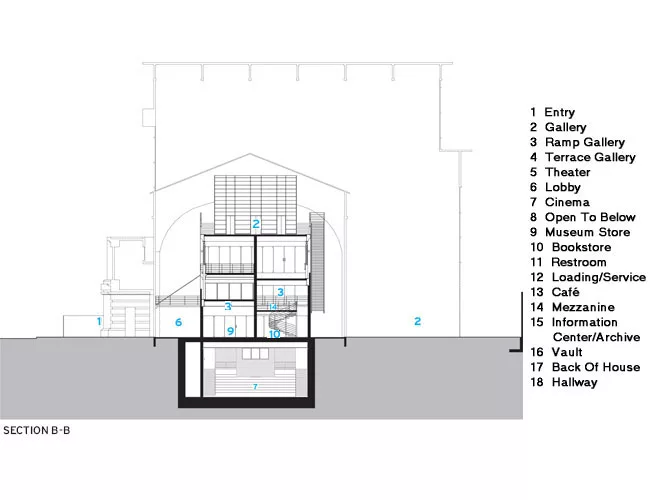
Image courtesy TEN Arquitectos
Architects & Firms
Mexico City, Mexico
Toward the turn of the 20th century, the world’s fair as galvanizing cultural phenomenon had long been capturing the collective imagination, while its more demure cousin, the regional expo, busily proliferated in its shadow. It, too, left enduring artifacts in its wake. The fanciful cast-iron and glass structure that today houses the Chopo Museum in Mexico City, which Mexico- and New York–based TEN Arquitectos recently renovated and expanded, is one of these vestiges.
Designed by German architect Bruno Möhring, who was known for the Art Nouveau bridges and stations he created for Berlin’s elevated tramway, the building was constructed in Oberhausen, Germany, as a pavilion for the 1902 Exhibition of Art and Textile Industry in Düsseldorf. Upon the conclusion of the fair, the Mexican Company of Permanent Exhibitions acquired three of the building’s four halls. They were dismantled, shipped, and reassembled using locally sourced masonry in Santa María la Ribera — at the time a fashionable residential neighborhood in Mexico City — where the structure soon earned the moniker the Crystal Palace because of its resemblance to Sir Joseph Paxton’s hall for London’s Great Exhibition of 1851. In 1913 the building became the home of the National Museum of Natural History, but by 1964 deterioration led to its closing. It remained abandoned until 1973, when the National Autonomous University of Mexico (UNAM) rehabilitated it and, a couple of years later, inaugurated it as the Chopo Museum (named after its street, Chopo, or “Poplar”), a center for experimental art and avant-garde performance. In 2004 the university initiated the process of updating and expanding the institution.
UNAM selected TEN Arquitectos through an invited competition and, in addition to charging them with the restoration, outlined two principal goals. The first was to introduce a program into a largely unprogrammed building, including greatly expanded exhibition space, plus storage, workshops, classrooms, and a theater, cinema, and café. The second goal was to create climate-controlled areas where previously there were none, in hopes of attracting visiting exhibitions to complement the relatively modest permanent holdings of contemporary art.
Local preservationists argued for a straightforward renovation. As an exercise, the architects investigated what it would take to condition (for temperature, humidity, air circulation, and security requirements) the whole volume, and quickly determined it was not a viable alternative. “The building is like a document,” notes TEN Arquitectos principal Enrique Norten. “It’s a testament of a moment of architecture that obviously we all believed needed to be preserved. But the structure was basically useless — it’s a shell. The question became, What do we do with it?” While most exhibitions require specialized conditions, not all pieces demand them, especially among contemporary artworks.Understanding the extent of required enclosed space helped determine the scheme. The team, rather than proposing a separate building or extension that would sacrifice the small garden to the west, envisioned an intervention occurring completely within the existing structure. “We became interested in the relationship between the two buildings — the proximities, detachments, and penetrations,” says Norten. “We started thinking, This institution deals with all of the different art expressions: theater, music, film, painting, sculpture — what about architecture? So we started looking at how to make this amazing artifact become part of the aesthetic procession of the overall building and how to bring people closer to the different original elements.”
Construction started in 2006. The structure was sound, explains partner in charge Salvador Arroyo, so the team merely cleaned it and replaced the original green and yellow glazing with translucent white panes throughout — with the exception of transparent glass on the north facade, where the insertion bursts through the original wall. To create a 90-seat cinema and 200-seat performing arts auditorium, the team conducted a painstaking excavation down two levels, installing slurry walls and tunneling to avoid touching the old foundation and to prevent the watery ground that is typical of Mexico City from coming into contact with the new excavation and foundation. Above the theaters and surrounded by galleries on the existing structure’s ground floor, the insertion rises from a concrete base that juts off to the south as a large cantilever housing a café. Ramp galleries with exposed white painted steel tube structure along their perimeters guide visitors up through the exhibition spaces and are bathed in a gauzy light that penetrates the translucent glazing of the insertion’s upper levels. Throughout the floating volume, the rugged, original structure is ever present: It pushes its riveted arms through galleries and asserts itself 42 feet up, at the top level’s information center and archive, an exhilarating platform that nearly brushes the wooden roof beams and arched cast-iron trusses.
Using glass and steel in very different ways from the original application, the architects achieve continuity between the two structures. With this palette they also hoped to render the insertion light and ethereal. But the project bears the scars of a difficult construction process. The discovery of compromised steel tubing led to a series of site audits, the departure of the original construction company, and a halt to construction for about a year. Additional construction and cost issues affected the original design and numerous details, such as critical dimensions for the load-bearing shear wall, among other things; imperfect architectural concrete that had to be masked with plywood panels; and the value-engineering-out of ceilings in the galleries that result in an unfinished, rather than edgy, feel. These problems are magnified by the weak vital signs of the institution. A recent Friday morning visit revealed sleepy galleries, a gift shop with empty shelves, and a café bereft of tables and chairs, let alone a barista.
With a smart scheme and sensitivee material choices, TEN Arquitectos’ insertion for the Chopo Museum continues the tradition of innovation represented by the original structure and positively highlights architecture in the roster of art expressions that are showcased at the institution. But the project lacks the refinement of detail that the architects had surely intended or that might have been possible elsewhere. With many years of experience practicing both in New York and Mexico City, Norten appreciates the benefits of each locale. “New York provides opportunities to work globally in much more sophisticated conditions,” he notes. “I love working in Mexico,” he goes on. “I love that condition that is sometimes a little bit messy, a little bit more spontaneous.”
Architect:
TEN Arquitectos
Cuernavaca 114 PB
Condesa CP 06140
T +52 55 5211 80 04
F. +52 55 5286 17 35
Completion Date: May 2010
Gross square footage: 34,714 sq. ft. (new construction)
Total construction cost: $12.5 million
PeopleOwner: UNAM (Universidad Nacional Autónoma de México) Architect: Enrique Norten. Partner in charge: Salvador Arroyo, Jorge Pérez. Architects: Victoria Grossi, Natalia Lomeli, Carlos Marín, Marina Muñoz, Verónica Chávez, Fausto Alvarado, Jonathan Barraza, Mateo Riestra, Ernesto Orrante, Ricardo Orozco, Christian Joffroy, Mariana Narváez, Miguel Ríos. Engineer(s): Colinas de Buen Consultant(s): Acoustical: Omar Saad Other: Restauration: RESTAURADORA RYCOLSA SA de CV General Contractor: UNAM (Dirección de obras de la UNAM) Photographer(s): Luis Gordoa +52 55 5211 80 04 Renderer(s): Carlos Marín CAD system, project management, or other software used: Autocad, 3d Studio Max |
ProductsStructural system: Steel frame and concrete Manufacturer of any structural components unique to this project: TRAACSA Windows Glazing Doors Wood doors: DACON Sliding doors: GRUPO LARESGOITI Fire-control doors, security grilles: GRUPO LARESGOITI Special doors (sound control, X-ray, etc.): DACON Hardware Closers: GRUPO LARESGOITI Exit devices: GRUPO LARESGOITI Pulls: GRUPO LARESGOITI Interior finishes Cabinetwork and custom woodwork: DACON Paints and stains: DACON Wall coverings: DACON Special surfacing: DACON Floor and wall tile: bathrooms(PORCELANOSA TILING) DACON Furnishings Tables: VITRA Shelves: MONTEL Lighting Downlights: BELLANI Task lighting: BELLANI Exterior: BELLANI Dimming System or other lighting controls: BELLANI Conveyance Plumbing Energy Other unique products that contribute to sustainability: Rain water raising by AJAM Add any additional building components or special equipment that made a significant contribution to this project: |
Looking for a reprint of this article?
From high-res PDFs to custom plaques, order your copy today!