Architectural Record
search
cart
facebook twitter linkedin youtube
  • Sign In
  • Subscribe
  • Sign Out
  • My Account
Architectural Record
  • NEWS
    • Latest News
    • Awards
    • Interviews
    • Obituaries
    • Podcasts
      • Design:Ed Podcast
      • Sponsored Podcasts
  • OPINION
    • Book Reviews / Excerpts
    • Exhibition Reviews
    • Forum
  • EXCLUSIVES
    • Videos
    • Design Vanguard
    • Top 300 Firms
    • Sponsored Content
    • Sponsored eBooks
    • From the Archives
  • CONTINUING ED
    • Editorial Continuing Ed
    • CE Center
    • CE Academies
  • PROJECTS
    • Buildings By Type
    • Reuse & Renovation
    • Museums & Arts Centers
    • Colleges & Universities
    • Multifamily Housing
    • Interiors
    • Lighting
    • Kitchen & Bath
  • HOUSES
    • Record Houses
    • House of the Month
    • Featured Houses
  • PRODUCTS
    • Products by Category
    • Record Products of the Year
    • Latest Products
  • EVENTS
    • Dates & Events
    • Record on the Road
    • Innovation Conference
    • Sustainability in Practice
    • Women In Architecture
    • Webinars
    • Ad Excellence Awards
    • Submit an Event
  • CONNECT
    • Ask RECORD AI
    • Newsletters
    • Contact
    • Advertise
    • Editorial Calendar
    • Store
    • Customer Service
  • SUBMIT
    • Submission Guidelines
    • RECORD Competitions
  • MAGAZINE
    • Subscribe
    • My Account
    • Digital Edition
    • Current Issue
    • Firm Pass
    • Historic Archive
ProjectsBuildings by TypeMuseums & Art Centers

Whitney Museum of American Art by Renzo Piano Building Workshop

New York City

By Clifford A. Pearson
On the west the building offers views of busy West Street and the Hudson River.
Photograph © Jeff Goldberg/Esto
A grand cantilever on Gansevoort Street protects the main entry and the wide plaza that Piano calls the largo.
Photograph © Jeff Goldberg/Esto
On the east, the building overlooks the High Line.
Photograph © Jeff Goldberg/Esto
A grand cantilever on Gansevoort Street protects the main entry and the wide plaza that Piano calls the largo.
Photograph © Jeff Goldberg/Esto
The flatter north elevation has an industrial look that tries to acknowledge the blue-collar roots of the Meatpacking District.
Photograph © Jeff Goldberg/Esto
Enclosed by precast-concrete panels and suspended from steel cables, the main stair provides access to all floors.
Photograph © Jeff Goldberg/Esto
Reclaimed pine floors in the galleries are sprung, so dance and other performances can take place throughout the museum.
Photograph © Jeff Goldberg/Esto
Steel stairs allow visitors to go from one outdoor art terrace to another.
Photograph © Jeff Goldberg/Esto
On the other gallery floors, daylight comes in only at the narrow east and west ends. One of Frank Stella's black paintings and a sculpture and painting by Ellsworth  Kelly benefit from their placemen
On the other gallery floors, daylight comes in only at the narrow east and west ends. One of Frank Stella's black paintings and a sculpture and painting by Ellsworth Kelly benefit from their placement in one of these spaces.
Photograph © Jeff Goldberg/Esto
The only top-lit gallery is on the eighth floor where sawtooth skylights provide the kind of diffuse glow for which Piano is known.
Photograph © Jeff Goldberg/Esto
Renzo Piano's sketch of the new Whitney's south elevation.
Photograph © Jeff Goldberg/Esto
Renzo Piano's sketch of his unrealized proposal to add onto the Whitney's Marcel Breuer building on Madison Avenue.
Photograph © Jeff Goldberg/Esto
View from the Hudson River.
Photograph © Jeff Goldberg/Esto
Aerial view.
Aerial view.
Photograph © Jeff Goldberg/Esto
View from the northeast.
Photograph © Jeff Goldberg/Esto
View from the east.
View from the east.
Photograph © Jeff Goldberg/Esto
View from the west.
View from the west.
Photograph © Jeff Goldberg/Esto
View from the north.
Photograph © Jeff Goldberg/Esto
View from the outdoor stairs.
Photograph © Jeff Goldberg/Esto
View of the outdoor stairs and the High Line.
Photograph © Jeff Goldberg/Esto
Library on the seventh floor.
Photograph © Jeff Goldberg/Esto
West gallery on the fifth floor.
Photograph © Jeff Goldberg/Esto
Gallery.
Gallery.
Photograph © Jeff Goldberg/Esto
Gallery.
Gallery.
Photograph © Jeff Goldberg/Esto
Gallery.
Gallery.
Photograph © Jeff Goldberg/Esto
Whitney Museum of American Art
Photograph © Jeff Goldberg/Esto
Whitney Museum of American Art
Image courtesy Renzo Piano Building Workshop
Whitney Museum of American Art
Image courtesy Renzo Piano Building Workshop
Whitney Museum of American Art
Image courtesy Renzo Piano Building Workshop
Whitney Museum of American Art
Image courtesy Renzo Piano Building Workshop
On the west the building offers views of busy West Street and the Hudson River.
A grand cantilever on Gansevoort Street protects the main entry and the wide plaza that Piano calls the largo.
On the east, the building overlooks the High Line.
A grand cantilever on Gansevoort Street protects the main entry and the wide plaza that Piano calls the largo.
The flatter north elevation has an industrial look that tries to acknowledge the blue-collar roots of the Meatpacking District.
Enclosed by precast-concrete panels and suspended from steel cables, the main stair provides access to all floors.
Reclaimed pine floors in the galleries are sprung, so dance and other performances can take place throughout the museum.
Steel stairs allow visitors to go from one outdoor art terrace to another.
On the other gallery floors, daylight comes in only at the narrow east and west ends. One of Frank Stella's black paintings and a sculpture and painting by Ellsworth  Kelly benefit from their placemen
The only top-lit gallery is on the eighth floor where sawtooth skylights provide the kind of diffuse glow for which Piano is known.
Renzo Piano's sketch of the new Whitney's south elevation.
Renzo Piano's sketch of his unrealized proposal to add onto the Whitney's Marcel Breuer building on Madison Avenue.
View from the Hudson River.
Aerial view.
View from the northeast.
View from the east.
View from the west.
View from the north.
View from the outdoor stairs.
View of the outdoor stairs and the High Line.
Library on the seventh floor.
West gallery on the fifth floor.
Gallery.
Gallery.
Gallery.
Whitney Museum of American Art
May 16, 2015

Architects & Firms

Cooper Robertson
Renzo Piano Building Workshop

New York

People/Products

Video

Time-lapse courtesy of EarthCam, Inc.

Some buildings look best from afar. Minoru Yamasaki's World Trade Center towers, for example, worked beautifully as supertall exclamation points on the Manhattan skyline, but never connected to the human spirit at ground level. Renzo Piano's new building for the Whitney Museum of American Art in New York does the opposite, failing to strike an inspiring pose for those at a distance but welcoming the public with a graceful entry plaza and transparent lobby. And like certain Hollywood stars, it has its good side and its less photogenic profile. Approach it from the east and you'll find a lively addition to the supercharged Meatpacking District, one that steps back from the nearby High Line while capturing the elevated park's energy with a series of terraces and outdoor stairs. Come from the north, though—either on the High Line or along Washington Street—and your first impression will be of a boxy composition that's vaguely industrial (smokestacks, exposed mechanicals, metal siding), if lacking the muscle or grit of a real factory.

In its Marcel Breuer–designed Brutalist building on East 75th Street, the Whitney had struggled for 30 years to expand. Schemes to add to Breuer's notoriously idiosyncratic 1966 structure—first by Michael Graves, then Rem Koolhaas, and finally Piano—were all shot down by neighbors and preservationists. When New York City offered it a site at the south end of the High Line at a below-market price, the museum decided to move. The new location isn't far from where Gertrude Vanderbilt Whitney established the Whitney Studio in Greenwich Village in 1914 and offers the chance to become part of a neighborhood that has been radically transformed in recent years by the huge success of the High Line and an influx of art galleries just to the north in Chelsea. (The Whitney is leasing the Breuer building to the Metropolitan Museum of Art, which will install its 20th century and contemporary galleries there starting in March 2016. After eight years, the Whitney has the option of either extending the lease or taking back the property.)

When Breuer got the job to design the Whitney, he reportedly asked, “What should a museum look like, a museum in Manhattan? . . . What does it express, what is its architectural message?” In response to those questions, he created a fortified retreat for art, where visitors crossed a concrete bridge to get away from the cacophony of the city. Piano and his team at Renzo Piano Building Workshop (RPBW) took a different approach, connecting their building to the bustle of the Meatpacking District with outdoor spaces for art on the street level and on all of the gallery floors (5, 6, 7, and 8). Overlooking the High Line, the art terraces above the ground floor are linked by outdoor stairs, so visitors can circulate through the gallery floors while connecting on each level with the city. “In my first sketch of the project,” says Piano, “I drew a building that flirts with the High Line and talks to the city.”

At 220,000 square feet, the new Whitney is significantly larger than the 85,000-square-foot Breuer building, but has just 17,000 square feet of additional indoor gallery space (now 50,000, versus 33,000, square feet). What it gains is the full set of educational, curatorial, and conservation facilities that museums expect today. It now has a multiuse black-box theater for film, video, and performance, a 170-seat theater, a works-on-paper study center, a library reading room, and 13,000 square feet of outdoor terraces for art, café tables, and seating. It also boasts the largest column-free museum gallery space in the city: 18,000 square feet for temporary exhibitions on the fifth floor. And, unlike its old location on the Upper East Side, this one offers the chance of future expansion. Directly to the north, the city owns a two-story wholesale meat center and has given the Whitney the right of first offer when that building's lease comes up in 15 years.

A strength of Piano's Whitney is its clear organization: galleries on the south side, curatorial and support spaces on the north, and an exposed precast-concrete core running through the middle that contains vertical circulation and mechanical ducts. Elevators face the main entrance on the ground floor and, as in the Breuer building, open directly onto the galleries upstairs. It will be hard for anyone—even the navigationally challenged—to get lost here.

Stabilized laterally by its concrete core, the building uses a steel frame for vertical loads and required cross bracing only at the southwest corner. RPBW wrapped most of the structure in vertical ribbons of 0.3-inch-thick 3.3-foot-wide steel, which curve subtly at the edges where the body of the building tucks in, such as along Gansevoort Street at the large cantilever that protects the main entrance to the museum. Resting on slender steel columns and enclosed on the ground floor by glass on three sides, the building seems to hover above Gansevoort. The lobby's ceiling angles up to greet the High Line next door, adding to the streamlining effect of the vertical ribbons and cantilevered torso above the entry. “I wanted the building to fly above the street,” says Piano.

Running along Gansevoort from the High Line to the museum entrance, a wide plaza or largo provides a congenial outdoor space for visitors to wait in line, partially protected by the building's cantilever. Uptown, the Whitney drew fewer than 400,000 visitors a year. The High Line attracts 5.5 million people a year, and many of them will want to check out the museum. The Whitney, which declines to forecast how many visitors will show up, may find itself packed even in its larger facility.

With glass on three sides and an open plan that incorporates a freestanding shop, the lobby emphasizes transparency. So, pedestrians on the street can see what's happening inside and museumgoers can enjoy views of the Hudson River, and—in the other direction —they can look through a glass wall separating the lobby from a ground-floor restaurant and see all the action at the entrance to the High Line.

Piano says he purposely avoided imitating Breuer's design, but there are echoes of the uptown building in his Whitney: a main stair enclosed in concrete (though precast and suspended on steel cables here), stone flooring in the lobby, and an extra-wide elevator that can handle either people or art. (The interior surfaces of the large elevator and three adjacent smaller ones serve as canvases for a commissioned artwork by Richard Artschwager, who died in 2013.)

The one thing Piano says he took from the Breuer building was “the unpretentious spirit of its spaces,” explaining, “We didn't want it to be snobby.” In the galleries, wood flooring made from reclaimed heart pine timbers shows scars from its previous life and gives a humble note to the spaces. Overhead, RPBW created a system of gridded ceilings with tracks for lights and others for temporary walls to attach to. After testing out various ceiling heights, the museum ended up asking for basically the same ones they had uptown—17½ feet for galleries on the fifth and sixth floors and 15 feet on the seventh floor.

While curators' offices and conservation labs enjoy plenty of daylight and views through generous north glazing, the galleries on floors 5 through 7 have glass on just the narrow east and west sides, so light at eye level doesn't interfere with viewing the art. Only the top-floor special-projects gallery, which is just 4,500 square feet, gets bathed in natural illumination, thanks to sawtooth skylights equipped with mechanized shades. So the magic Piano has worked at places like the Menil Collection in Houston and the Beyeler Foundation in Basel, which have mostly top-lit galleries, is missing from most of the indoor art spaces at the Whitney. In the east and west galleries that do get daylight and big views of the river and the city, the spaces and the art look fantastic.

The huge temporary-exhibitions gallery on the fifth floor, which was so impressive on a walk-through during construction, is less so now that it is carved up by partitions for the current show, America Is Hard to See, an expansive presentation of nearly 650 works from the museum's permanent collection. In the future, though, the Whitney may use the gallery as one big space for special exhibitions or installations, and the public will get to experience what an 18,000-square-foot, column-free room is like.

What defines the new Whitney are the remarkable outdoor spaces for enjoying art. The museum plans not just to place sculpture on the terraces and on the largo, but to invite artists to project video works on its facades and mount performances on its steel stairs. “We want to use the building as the material for art, not just a site for art,” says Adam Weinberg, the museum's director. “We see the building as an instrument to be played.”

With its exterior stairs animating its city side, the Whitney nods to Piano's first big commission—the Pompidou Center, which whisks visitors up one facade on clear-tube-enclosed escalators. The Whitney doesn't shock the way the Pompidou did when it opened in Paris in 1977 and doesn't represent a bold new direction in architecture. But it combines the maturity of an architect who has been honing his craft for five decades with a jolt of big-city energy.


People

Client: Whitney Museum of American Art

Owner: Whitney Museum of American Art

Architect:
Renzo Piano Building Workshop, architects
in collaboration with Cooper Robertson (New York)

Personnel at Renzo Piano Building Workshop who should receive special credit:
Design team: M.Carroll and E.Trezzani (partners in charge) with K.Schorn, T.Stewart, S.Ishida (partner), A.Garritano, F.Giacobello, I.Guzman, G.Melinotov, L. Priano, L.Stuart and C. Chabaud, J.Jones, G.Fanara, M.Fleming, D.Piano, J.Pejkovic; M.Ottonello (CAD operator); F.Cappellini, F.Terranova, I. Corsaro (models)

Personnel at Cooper Robertson who should receive special credit: Scott Newman (partner in charge); Thomas Wittrock  (project manager); Thomas Holzmann (senior technical manager); Greg Weithman, (project architect); Kieran Trihey, Weifang Lin, Erin Flynn, Christopher Payne, Annalisa Guzzini, Eric Ball, Atara Margolies, German Carmona, Jenelle Kelpe, Marlena Lacher, Eric Boorstyn, Jeremy Boon-Bordenave, Lori Weatherly (interiors), Lauren Weisbrod (project administrator)

Consultants:
Robert Silman Associates (structure); Jaros, Baum & Bolles (MEP, fire prevention); Arup (lighting, daylighting); Heintges & Associates (facade); Phillip Habib & Associates (civil engineering); Theatre Projects (theatre equipment); Cerami & Associates (audiovisual equipment, acoustics); Piet Oudolf with Mathews Nielson (landscaping); Viridian Energy Environmental (LEED consultant), WTM Engineers (flood engineering), Entro Communications (signage), Gardiner & Theobald and Lehrer LLC (owner representatives)

Construction manager: Turner Construction

Photographer(s):  Jeff Goldberg/Esto


Products

Structural system
Steel Frame

Manufacturer of any structural components unique to this project: Cast Connex Corp. (AESS connections)

Exterior staircase: Banker Steel Company, LLC

Exterior cladding
Metal Panels: Joseph Gartner GmBH

Metal/glass curtain wall: Joseph Gartner GmBH

Precast concrete: Betons Prefabriques Du Lac Inc.

Doors
Sliding and Folding Doors: Nana Wall Systems

Roofing
Built-up roofing and green roof: American Hydrotech, Inc.

Glazing
Glass: Bischoff Glastechnik AG

Other: Fire-rated glazing systems: Vetrotech Saint-Gobain

Doors
Entrances: C.R. Laurence Co. Inc., Oldcastle BuildingEnvelope, PRL Glass Systems

Glass Revolving Doors: Blasi GmBH

Interior finishes
Acoustical ceilings: Baswa Acoustic North America, LLC;  Decoustics Ltd.

Suspension grid: Armstrong

Demountable partitions: UniFor S.p.a

Cabinetwork and custom woodwork: Miller Blaker

Intumescent Paint: Carboline Company
Window shade system: Mechoshade Systems, Inc.

Reclaimed heart pine flooring: The Hudson Company

Floor and wall tile: Stone floors: Campolonghi Italia S.p.a.

Wood flooring (galleries): The Hudson Company

Special interior finishes unique to this project:

Gallery and Theatre Ceilings: Pook Diemont & Ohl, Inc.

Interior precast concrete: Betons Prefabriques Du Lac Inc.

Interior metal and glass: Jonathan Metal and Glass, Ltd.

Furnishings
Theatre retractable seating: Jezet Seating

Chairs: Knoll, Inc.; Herman Miller, Inc.

Lighting
Interior ambient lighting:iGuzzini illuminazione S.p.A.;  Sistemalux; LSI Industries

Exterior: iGuzzini illuminazione S.p.A.

Dimming System or other lighting controls: Lutron Electronics, Inc.

Conveyance
Elevators/Escalators: Otis Elevator Company

Add any additional building components or special equipment that made a significant contribution to this project:
Flood barriers and gates: Walz & Krenzer, Inc.

Cooling Towers: SPX Cooling Technologies

Chimney system: Jansons Associates, Inc.


KEYWORDS: EarthCam New York City

Share This Story

Looking for a reprint of this article?
From high-res PDFs to custom plaques, order your copy today!

Cliff portrait 2 0t5a1761 0031

Contributing editor Clifford Pearson is the co-author, with A. Eugene Kohn, of The World By Design, and writes about architecture and urbanism.

Post a comment to this article

Report Abusive Comment

Subscription Center
  • Create an Account
  • Start a Subscription
  • Manage My Account
  • Sign Up for Newsletters
  • Visit Customer Service
  • Update Preferences

More Videos

Sponsored Content

Sponsored Content is a special paid section where industry companies provide high quality, objective, non-commercial content around topics of interest to the Architectural Record audience. All Sponsored Content is supplied by the advertising company and any opinions expressed in this article are those of the author and not necessarily reflect the views of Architectural Record or its parent company, BNP Media. Interested in participating in our Sponsored Content section? Contact your local rep!

close
  • cold storage facility
    Sponsored byCarlisle SynTec Systems

    How Architects Can Design More Continuous Cold Storage Envelopes

  • TAMLYN XtremeTrim Exterior Trim
    Sponsored byTamlyn

    Designing Cleaner Panel Facades: Why Exterior Trim Details Matter

  • Building with Vapor Barriers
    Sponsored byReef Industries, Inc.

    Vapor Barriers Help Control Moisture in Tighter Building Designs

DESIGN:ED Podcast
Listen to Architectural Record’s DESIGN:ED Podcast

Events

June 23, 2026

Enhancing Fire Resistance with Advanced PVC Solutions

Credits: 1 AIA LU/HSW; 1 AIBD P-CE; 0.1 ICC CEU; 1 IIBEC CEH

Evaluate advanced PVC solutions that improve fire resistance, support WUI compliance, and enhance resilience in residential and commercial building design.

June 25, 2026

Designing Glass Railing Systems that Enhance Aesthetics and Meet Code

Credits: 1 AIA LU/HSW; 1 AIBD P-CE; 0.1 ICC CEU

Upon course completion, participants will possess a deeper understanding of glass railings to help ensure that safety, aesthetic, and performance objectives are achieved.

View All Submit An Event

Products

2026 Architect's Square Foot Costbook

2026 Architect's Square Foot Costbook

See More Products

Popular Stories

Lorcan O' Herilhy

California Architect Lorcan O’Herlihy Has Died, Age 66

Obama Presidential Center, Chicago

The Obama Presidential Center Opens on Chicago’s South Side

Spoonbill Ranch

Johnsen Schmaling Architects Integrates Spoonbill Ranch into a Pristine Landscape

West Village Penthouse

Design Vanguard 2026: Brent Buck Architects

Image of Bruce Springsteen Center for American Music

The CookFox-designed Bruce Springsteen Center for American Music Opens in New Jersey

Enhancing Fire Resistance with Advanced PVC Solutions - Free Webinar - June 23, 2026

Related Articles

  • The Academy Museum of Motion Pictures.

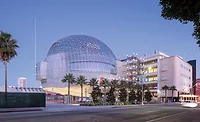
    Academy Museum of Motion Pictures by Renzo Piano Building Workshop

    See More
  • Columbia University Arts Science Center

    Columbia University’s Arts and Science Centers by Renzo Piano Building Workshop

    See More
  • Tribunal de Paris

    Tribunal de Paris by Renzo Piano Building Workshop

    See More

Related Products

See More Products
  • american arch.jpg

    American Architecture: An Illustrated Encyclopedia

See More Products
×

The latest news and information

#1 Source for Architectural Design, News and Products

SUBSCRIBE
  • RESOURCES
    • Advertise
    • Contact Us
    • Submit
    • Store
  • ACCOUNT CENTER
    • Create an Account
    • Start a Subscription
    • Manage My Account
    • Sign Up for Newsletters
    • Visit Customer Service
    • Update Preferences
  • PRIVACY
    • PRIVACY POLICY
    • TERMS & CONDITIONS
    • DO NOT SELL MY PERSONAL INFORMATION
    • PRIVACY REQUEST
    • ACCESSIBILITY
  • SERVICES
    • Marketing Services
    • Reprints
    • Market Research
    • List Rental
    • Survey/Respondent Access
  • STAY CONNECTED
    • Linkedin
    • Facebook
    • Instagram
    • YouTube
    • X (Twitter)

Copyright ©2026. All Rights Reserved BNP Media, Inc. and BNP Media II, LLC.

Design, CMS, Hosting & Web Development :: ePublishing