Architectural Record
search
cart
facebook twitter linkedin youtube
  • Sign In
  • Subscribe
  • Sign Out
  • My Account
Architectural Record
  • NEWS
    • Latest News
    • Awards
    • Interviews
    • Obituaries
    • Podcasts
      • Design:Ed Podcast
      • Sponsored Podcasts
  • OPINION
    • Book Reviews / Excerpts
    • Exhibition Reviews
    • Forum
  • EXCLUSIVES
    • Videos
    • Design Vanguard
    • Top 300 Firms
    • Sponsored Content
    • Sponsored eBooks
    • From the Archives
  • CONTINUING ED
    • Editorial Continuing Ed
    • CE Center
    • CE Academies
  • PROJECTS
    • Buildings By Type
    • Reuse & Renovation
    • Museums & Arts Centers
    • Colleges & Universities
    • Multifamily Housing
    • Interiors
    • Lighting
    • Kitchen & Bath
  • HOUSES
    • Record Houses
    • House of the Month
    • Featured Houses
  • PRODUCTS
    • Products by Category
    • Record Products of the Year
    • Latest Products
  • EVENTS
    • Dates & Events
    • Record on the Road
    • Innovation Conference
    • Sustainability in Practice
    • Women In Architecture
    • Webinars
    • Ad Excellence Awards
    • Submit an Event
  • CONNECT
    • Ask RECORD AI
    • Newsletters
    • Contact
    • Advertise
    • Editorial Calendar
    • Store
    • Customer Service
  • SUBMIT
    • Submission Guidelines
    • RECORD Competitions
  • MAGAZINE
    • Subscribe
    • My Account
    • Digital Edition
    • Current Issue
    • Firm Pass
    • Historic Archive
Projects

Tel Aviv Museum of Art

A new spin to the White City.
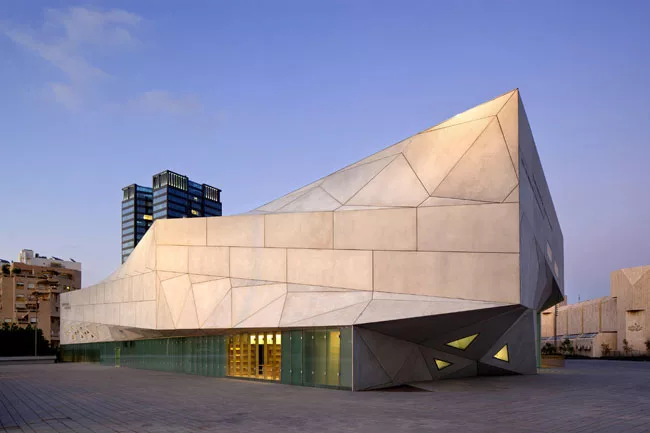
By Joann Gonchar, FAIA
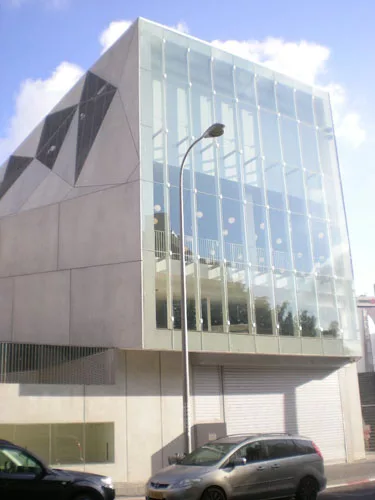
On the west, Cohen lightened the composition by inserting clear and translucent glazing that brings light and views into the museum store.
Tel Aviv Museum of Art
Preston Scott Cohen
Tel Aviv, Israel
On the west, Cohen lightened the composition by inserting clear and translucent glazing that brings light and views into the museum store.
Photo © Amit Geron
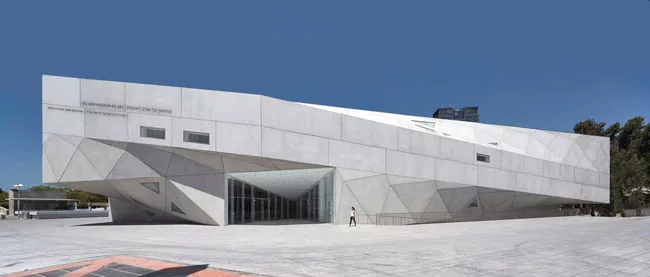
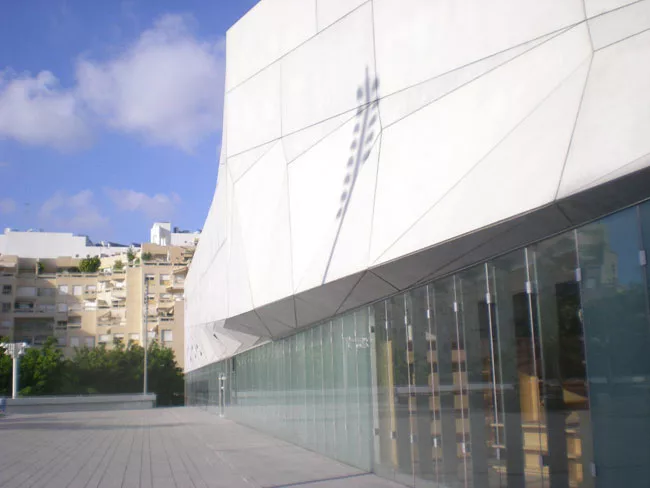
From the plaza, visitors enter the $55 million addition through doors tucked into its folded form
Tel Aviv Museum of Art
Preston Scott Cohen
Tel Aviv, Israel
From the plaza, visitors enter the $55 million addition through doors tucked into its folded form
Photo © Amit Geron
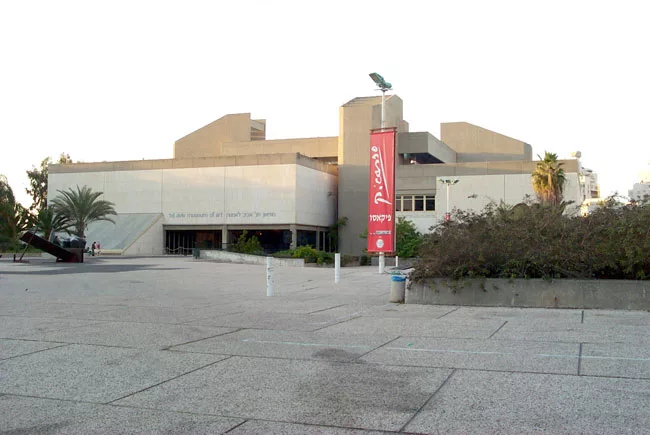
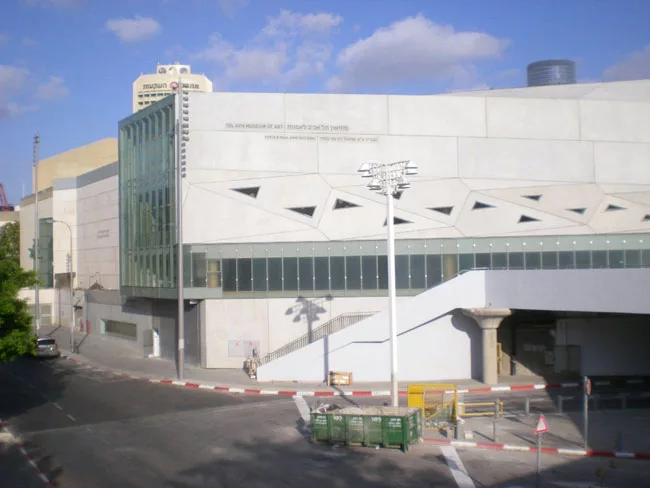
The museum's main building was designed by Dan Eytan and Yitzchak Yashar. Opened in 1971, it proved to be a good example of how Israeli architects adapted the Brutalist style to the Mediterranean clim
Tel Aviv Museum of Art
Preston Scott Cohen
Tel Aviv, Israel
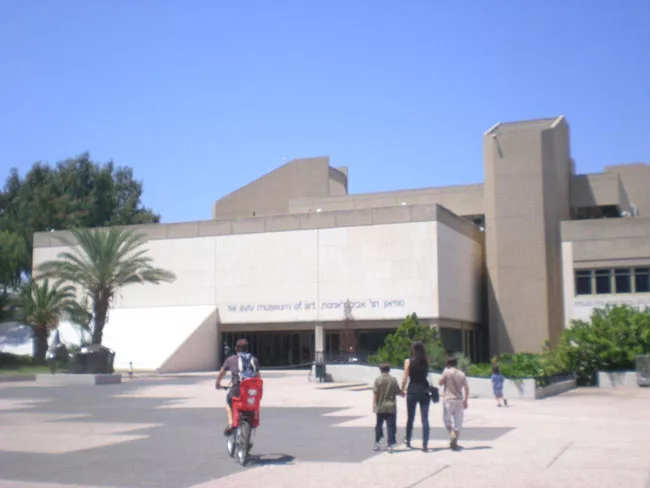
The museum's main building was designed by Dan Eytan and Yitzchak Yashar. Opened in 1971, it proved to be a good example of how Israeli architects adapted the Brutalist style to the Mediterranean climate.
Photo © Amit Geron
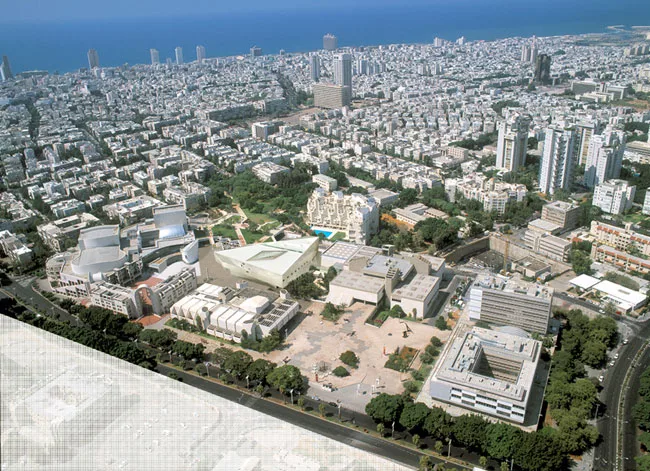
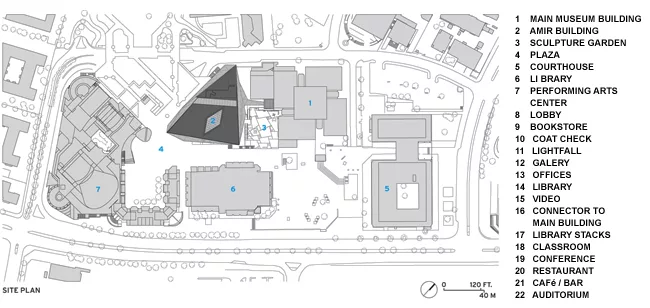
The new addition (seen as a rendered image in the photographic collage) stands across a small sculpture garden from the existing museum. It occupies a site within a larger complex of civic and cultura
Tel Aviv Museum of Art
Preston Scott Cohen
Tel Aviv, Israel
The new addition (seen as a rendered image in the photographic collage) stands across a small sculpture garden from the existing museum. It occupies a site within a larger complex of civic and cultural buildings, including a courthouse (bottom right in photograph), a public library (bottom center), and a performing arts center (far left).
Photo © Amit Geron
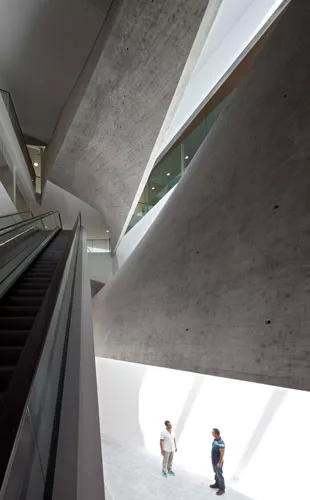
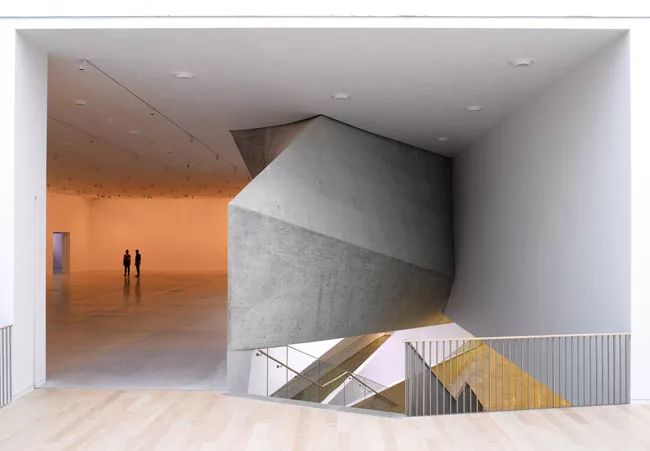
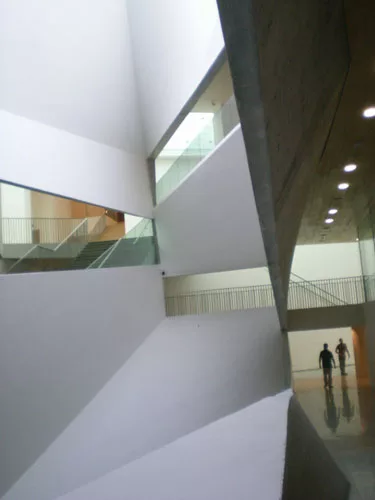
The poured-in-place concrete form of the Lightfall can be seen by visitors as they move around the central atrium space.
Tel Aviv Museum of Art
Preston Scott Cohen
Tel Aviv, Israel
The poured-in-place concrete form of the Lightfall can be seen by visitors as they move around the central atrium space.
Photo © Amit Geron
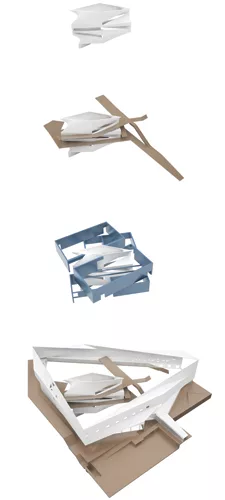
 Drawings from top to bottom show the Lightfall by itself, then with circulation paths, galleries, and finally the building's envelope.
Tel Aviv Museum of Art
Preston Scott Cohen
Tel Aviv, Israel
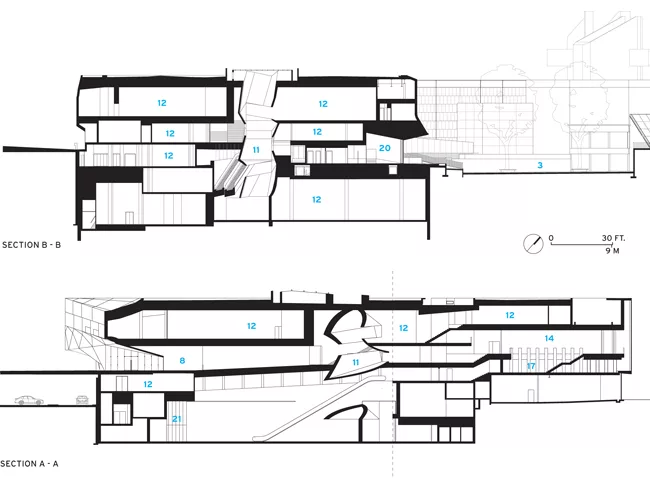
Drawings from top to bottom show the Lightfall by itself, then with circulation paths, galleries, and finally the building's envelope.
Photo © Amit Geron
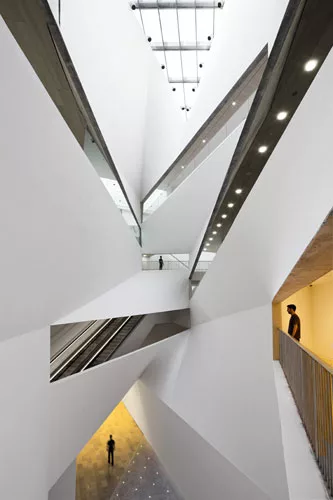
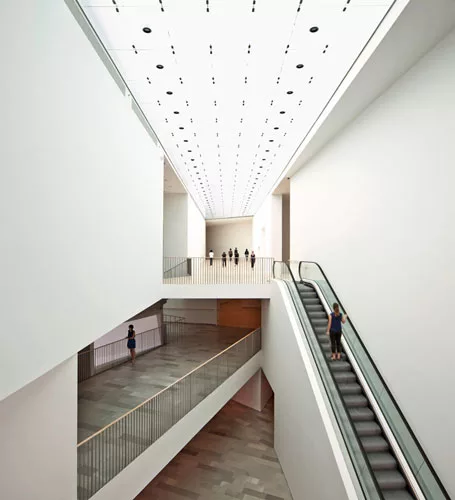
The 87-foot-high void at the center of the Lightfall comes as a dramatic contrast to the building's low-slung appearance from the plaza.
Tel Aviv Museum of Art
Preston Scott Cohen
Tel Aviv, Israel
The 87-foot-high void at the center of the Lightfall comes as a dramatic contrast to the building's low-slung appearance from the plaza.
Photo © Amit Geron
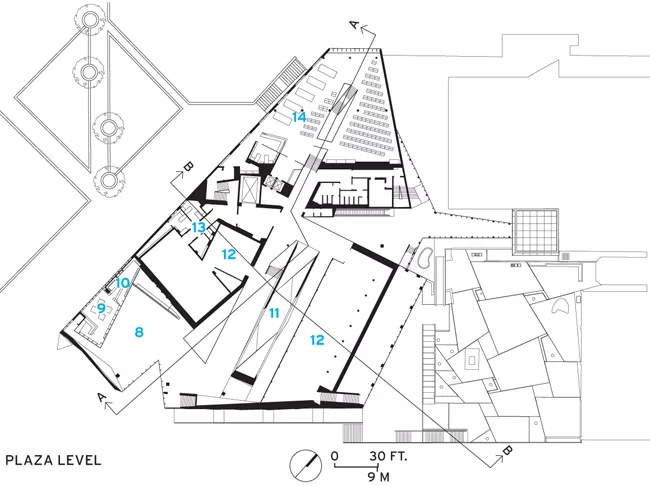
The plain, orthogonal galleries spiral around the Lightfall, which asserts its presence at certain places within the exhibition spaces.
Tel Aviv Museum of Art
Preston Scott Cohen
Tel Aviv, Israel
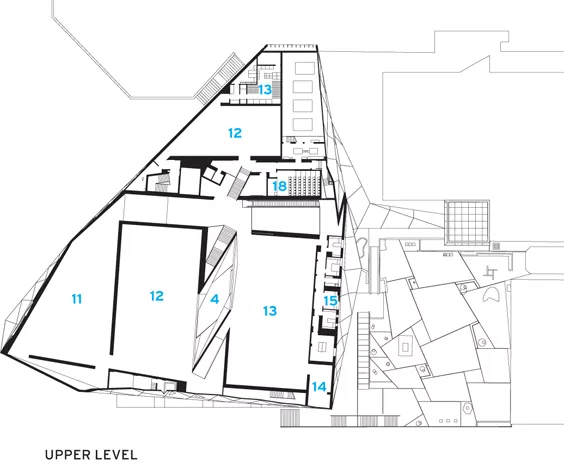
The plain, orthogonal galleries spiral around the Lightfall, which asserts its presence at certain places within the exhibition spaces.
Drawing courtesy Preston Scott Cohen
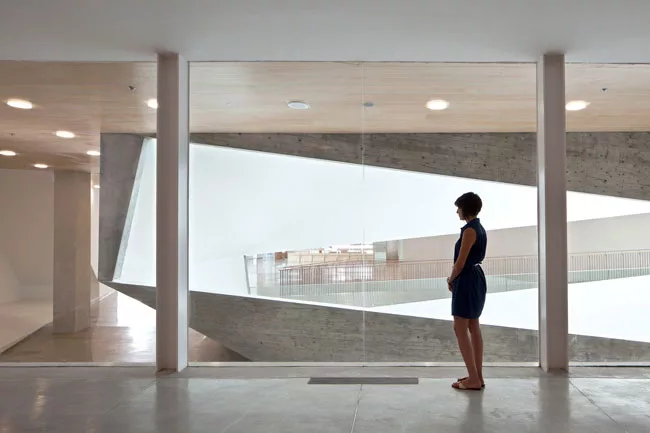
Long rectangular cuts in the Lightfall offer views through the central void and into galleries on the opposite side.
Tel Aviv Museum of Art
Preston Scott Cohen
Tel Aviv, Israel
Long rectangular cuts in the Lightfall offer views through the central void and into galleries on the opposite side.
Drawing courtesy Preston Scott Cohen
Visitors entering from the museum’s main building take a long escalator to the Israeli Promenade, a skylit space leading to galleries displaying 20th-century and contemporary Israeli artworks.
Tel Aviv Museum of Art
Preston Scott Cohen
Tel Aviv, Israel
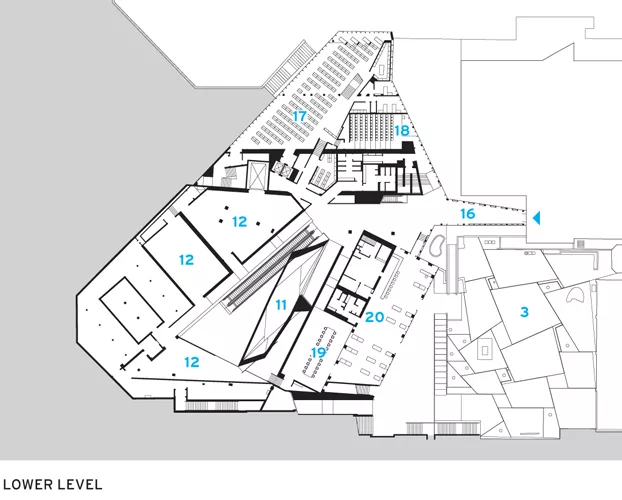
Visitors entering from the museum’s main building take a long escalator to the Israeli Promenade, a skylit space leading to galleries displaying 20th-century and contemporary Israeli artworks.
Drawing courtesy Preston Scott Cohen
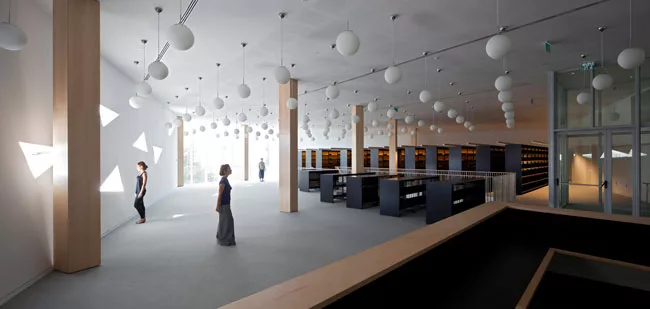
Tucked into the northwest corner of the addition, the library is the only space with columns and one of the few with generous glazing. A lower level provides more space for stacks.
Tel Aviv Museum of Art
Preston Scott Cohen
Tel Aviv, Israel
Tucked into the northwest corner of the addition, the library is the only space with columns and one of the few with generous glazing. A lower level provides more space for stacks.
Drawing courtesy Preston Scott Cohen
Tel Aviv Museum of Art
Preston Scott Cohen
Tel Aviv, Israel
Drawing courtesy Preston Scott Cohen
Tel Aviv Museum of Art
Preston Scott Cohen
Tel Aviv, Israel
Drawing courtesy Preston Scott Cohen
Tel Aviv Museum of Art
Preston Scott Cohen
Tel Aviv, Israel
Drawing courtesy Preston Scott Cohen
Tel Aviv Museum of Art
Preston Scott Cohen
Tel Aviv, Israel
Drawing courtesy Preston Scott Cohen
Tel Aviv Museum of Art
Preston Scott Cohen
Tel Aviv, Israel
Drawing courtesy Preston Scott Cohen
Tel Aviv Museum of Art
Preston Scott Cohen
Tel Aviv, Israel
Drawing courtesy Preston Scott Cohen
Tel Aviv Museum of Art
Preston Scott Cohen
Tel Aviv, Israel
Photo © Amit Geron
Tel Aviv Museum of Art
Preston Scott Cohen
Tel Aviv, Israel
Photo © Amit Geron
Tel Aviv Museum of Art
Preston Scott Cohen
Tel Aviv, Israel
Photo © Amit Geron
Tel Aviv Museum of Art
Preston Scott Cohen
Tel Aviv, Israel
Photo © Amit Geron
Tel Aviv Museum of Art
Preston Scott Cohen
Tel Aviv, Israel
Photo © Amit Geron
Tel Aviv Museum of Art
Preston Scott Cohen
Tel Aviv, Israel
Photo © Amit Geron
Tel Aviv Museum of Art
Preston Scott Cohen
Tel Aviv, Israel
Photo © Amit Geron
Tel Aviv Museum of Art
Preston Scott Cohen
Tel Aviv, Israel
Photo © Amit Geron
Tel Aviv Museum of Art
Preston Scott Cohen
Tel Aviv, Israel
Photo © Amit Geron
Tel Aviv Museum of Art
Preston Scott Cohen
Tel Aviv, Israel
Photo © Amit Geron
Tel Aviv Museum of Art
Preston Scott Cohen
Tel Aviv, Israel
Photo © Amit Geron
Tel Aviv Museum of Art
Preston Scott Cohen
Tel Aviv, Israel
Photo © Amit Geron
Tel Aviv Museum of Art
Preston Scott Cohen
Tel Aviv, Israel
Photo © Amit Geron
Tel Aviv Museum of Art
Preston Scott Cohen
Tel Aviv, Israel
Photo © Amit Geron
Tel Aviv Museum of Art
Preston Scott Cohen
Tel Aviv, Israel
Photo © Amit Geron
On the west, Cohen lightened the composition by inserting clear and translucent glazing that brings light and views into the museum store.
From the plaza, visitors enter the $55 million addition through doors tucked into its folded form
The museum's main building was designed by Dan Eytan and Yitzchak Yashar. Opened in 1971, it proved to be a good example of how Israeli architects adapted the Brutalist style to the Mediterranean clim
The new addition (seen as a rendered image in the photographic collage) stands across a small sculpture garden from the existing museum. It occupies a site within a larger complex of civic and cultura
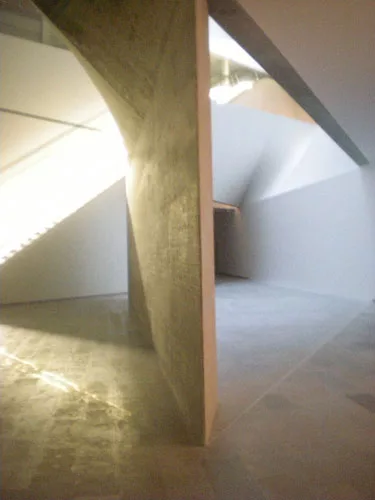
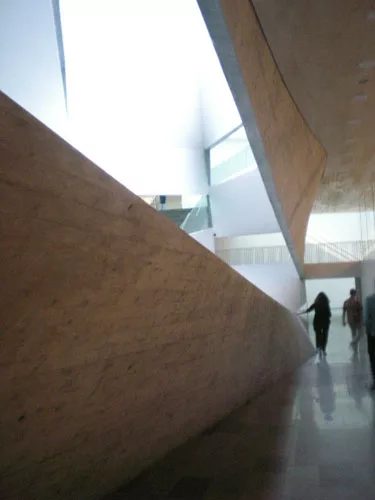
The poured-in-place concrete form of the Lightfall can be seen by visitors as they move around the central atrium space.
 Drawings from top to bottom show the Lightfall by itself, then with circulation paths, galleries, and finally the building's envelope.
The 87-foot-high void at the center of the Lightfall comes as a dramatic contrast to the building's low-slung appearance from the plaza.
The plain, orthogonal galleries spiral around the Lightfall, which asserts its presence at certain places within the exhibition spaces.
Long rectangular cuts in the Lightfall offer views through the central void and into galleries on the opposite side.
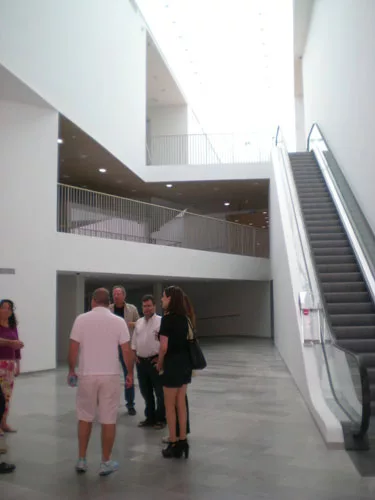
Visitors entering from the museum’s main building take a long escalator to the Israeli Promenade, a skylit space leading to galleries displaying 20th-century and contemporary Israeli artworks.
Tucked into the northwest corner of the addition, the library is the only space with columns and one of the few with generous glazing. A lower level provides more space for stacks.
Tel Aviv Museum of Art
November 15, 2011

Architects & Firms

Preston Scott Cohen, Inc.

Tel Aviv, Israel

Seen from the flat plaza that wraps around it on two sides, Preston Scott Cohen's radical addition to the Tel Aviv Museum of Art strikes a geometrically independent pose. But this angled and faceted block dressed in precast concrete actually connects with its context much more than it disrupts, continuing a legacy of innovative architecture that has made Tel Aviv a Bauhaus mecca since the 1920s. Called “the White City,” Tel Aviv's early-20th-century downtown boasts buildings by Erich Mendelsohn, a master plan by Patrick Geddes, and hundreds of International Style structures. In 2003, UNESCO declared it a World Cultural Heritage site.

Like those 20th-century buildings, Cohen's 195,000-square-foot museum addition expresses a faith in the latest technology. And like much traditional Mediterranean architecture, it hides an intriguing core within a cool, white exterior. The museum's new wing—called the Herta and Paul Amir Building—works from the inside out. Spiraling around a dramatic 87-foot-high atrium that the architect calls the Lightfall, the building takes visitors through a series of spatial experiences that are complex at its center and simpler at its perimeter. In its construction, too, the project started from the inside, with precast-concrete panels manufactured on-site in an area that is now a gallery. After casting the panels, workers attached them to the building's steel frame to form a faceted, weatherproof envelope. (See sidebar, A Folded and Faceted Facade)

Even the building's location is set within something else—an interior site with no frontage on Shaul Hamelech Boulevard, the main street leading to the Tel Aviv Museum. While the museum's 1971 Brutalist-style main building (designed by Dan Eytan and Yitzchak Yashar) addresses Shaul Hamelech from across an entry plaza, Cohen's adjacent building sits behind a public library and a performing arts complex. Visitors discover the addition only by turning left after walking through the entry plaza. (If they arrive by car, they park below ground, then take an elevator to the redesigned plaza in front of the addition.)

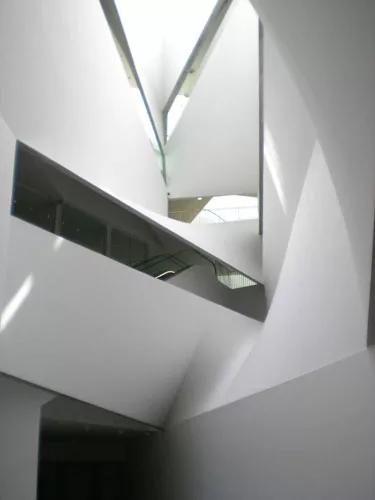
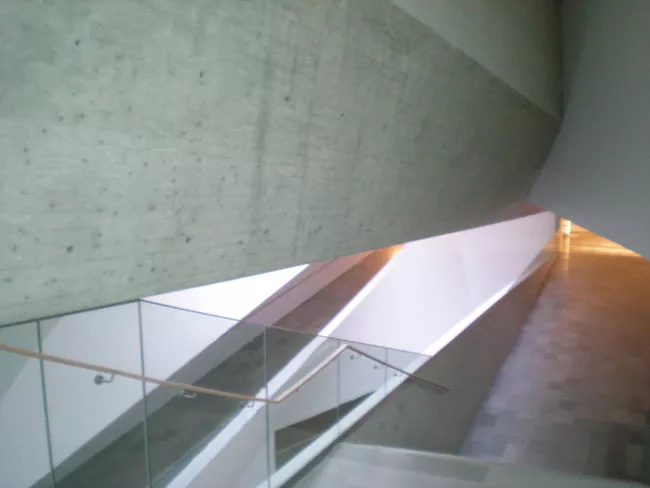
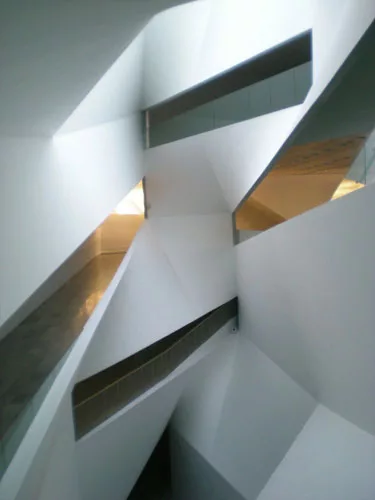
Asked by the museum to provide rectangular galleries in a building on a triangular site, Cohen used the central atrium to negotiate between the two geometries—in the process creating a skylit element that cants, angles, and curves from three stories below grade to two above. Beautifully constructed of poured-in-place concrete with long slashes cut out to bring light and views through it, the Lightfall asserts its own identity as a freestanding structure within the museum. Although the Lightfall holds itself up, it does not support any other part of the building. (See sidebar, A Spiraling and Twisting Core)

“The Lightfall is both an autonomous element within the building and the piece that joins everything else,” says Cohen, who used sophisticated computer software to help shape the complex (continued on pg. 79) structure. “It's the source of authority in the architecture, not just the leftover space.” And because the stairs and ramps around the Lightfall provide most of the circulation in the museum, the galleries can provide more space for art.

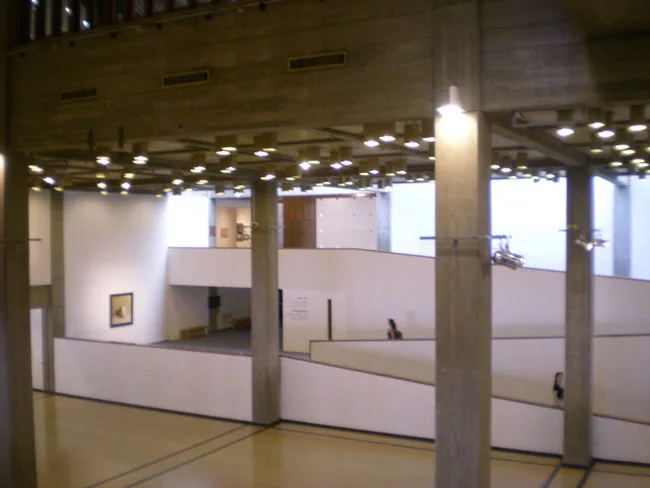
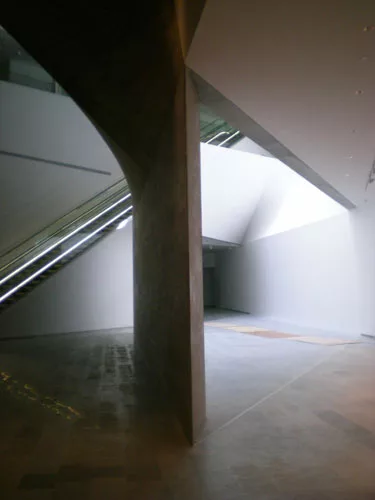
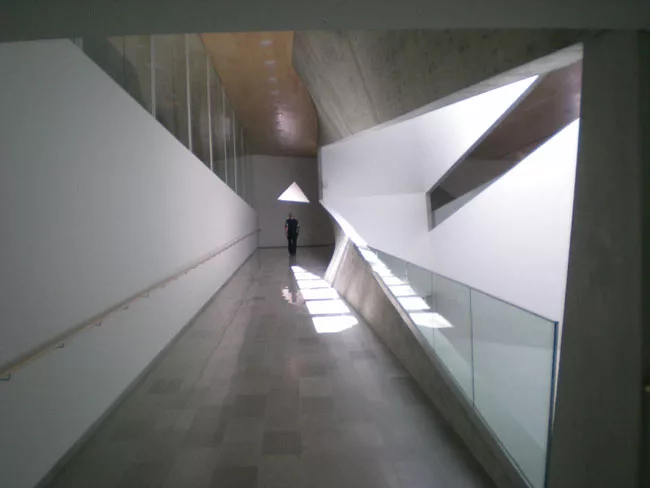
Visitors can enter the new building two different ways: through a glass-enclosed connector from the main building or from the plaza. In many respects, the addition acts as a pair of museums, and the circulation into and through it reinforces this impression. If you come from the old building, you arrive at a tall lobby with a long escalator that takes you to a top-floor space called the Israeli Promenade. From there, you follow a path along the perimeter of the building to a series of large galleries exhibiting the museum's acclaimed collection of 20th-century and contemporary Israeli art. In essence, this portion of the building serves as an extension of the existing museum and the collections found there.

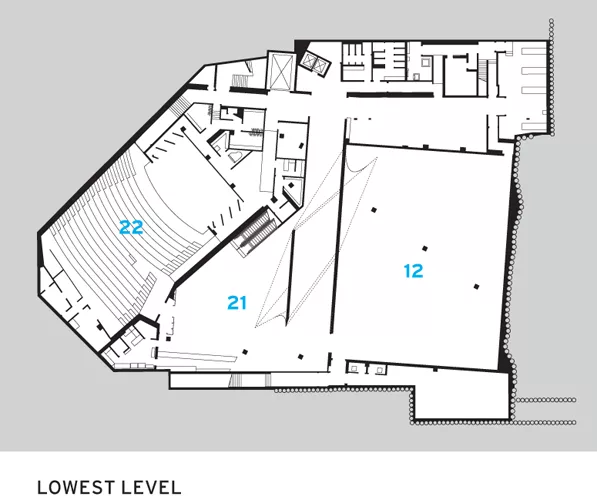
If you enter the Amir Building from the plaza, though, you discover a different kind of museum—one dedicated to changing exhibitions, as well as photography, architecture, and design. It also houses a museum shop on the entry level, a 450-seat auditorium below, and a two-story library above. From the plaza, the building appears as a horizontal object rising just a couple of stories. But after you buy your ticket and walk to the Lightfall, you can look both down and up the full height of the atrium. “This plunging, vertical space comes as a surprise,” says Cohen.

No matter your route, moving through the new building is an architectural dance between neutral, orthogonal galleries and the ever-changing geometry of the Lightfall. Sculpted as a series of 28 hyperbolic paraboloids, the Lightfall exerts a magnetic pull toward the center of the building. While its concrete shell is exposed on its sides facing the galleries, white plaster on its interior surfaces reflects daylight throughout the building. Cohen stacked the galleries and rotated each one 22.5 degrees from the next, spiraling the spaces around the void.

The museum's director, Mordechai Omer, who oversaw the project since the design competition in 2003 but died just months before it was set to open in November, had insisted on simple galleries with no direct daylight. While the resulting rooms do provide flexible spaces for many kinds of exhibitions, the larger ones—such as the 9,000-square-foot temporary gallery on the lowest level—come across as cold and distant settings for art. Other museums have found ways of filtering daylight to protect art while using the light to animate gallery spaces.

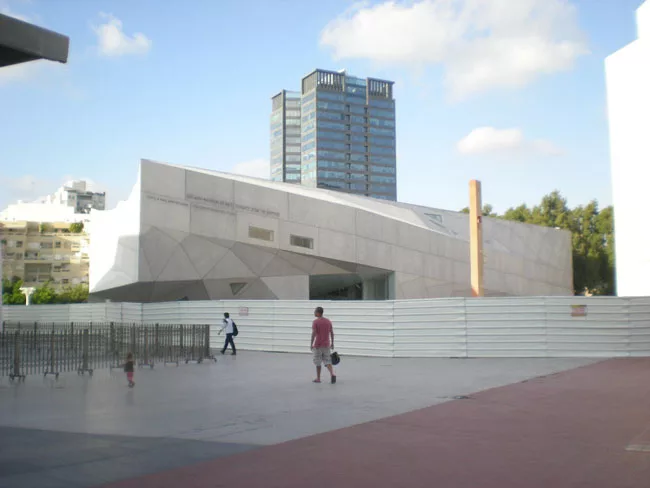
The architectural energy generated by the Lightfall dissipates on the outside of the building, where large precast-concrete panels form a taut, flush skin of folded planes. Cohen had wanted to continue the hyperbolic paraboloids found in the Lightfall on the building's facades, but this proved to be too expensive. So he created faceted surfaces instead. As a result, the exterior lacks the visual excitement of the interior and seems a bit disconnected from its geometries. The plaza beyond the building, which Cohen redesigned as a hard, abstract plane, would benefit, too, from some shaded areas and places to sit.

Yet the Herta and Paul Amir Building offers Tel Aviv an exciting new place to see art and experience innovative architecture. While its Lightfall activates a powerful, centripetal force inside, it makes strong connections to the museum's main building and to the city's history of embracing radical leaps in Modernism within its urban fabric.

Completion Date: October 2011

Gross square footage: 195,000 square feet

Total construction cost: $55 million

Architect:
Preston Scott Cohen, Inc.
179 Sidney Street, 1st floor
Cambridge, MA 02139
tel: 617-441-2110
fax: 617-441-2113
www.pscohen.com

People

Architect:
Preston Scott Cohen, Inc.
179 Sidney Street, 1st floor
Cambridge, MA 02139
tel: 617-441-2110
fax: 617-441-2113
www.pscohen.com

Preston Scott Cohen, Principal in charge of design
Amit Nemlich, Project Architect and Architect of Record
Tobias Nolte, Bohsung Kong, project team; Steven Christensen, Guy Re Moor, project assistants
Cameron Wu, Andrew Saunders, Janny Baek, competition team

Engineers: YSS Consulting Engineers Ltd., Dani Shacham (structural); M. Doron - I. Shahar Consulting Eng. Ltd. (HVAC)

Consultants: CPM Construction Managment Ltd. (project managers); Tillotson Design Associates, New York (lighting); Landman Aluminum Ltd. (glazing consultant); Chaskelevitch Engineering (concrete façade and lightfall contractor)

General contractor:
Danya-Minrav

Photographers: 
Final Photographs: ©Amit Geron, Courtesy Tel Aviv Museum of Art.
Construction Photographs: Ohad Matalon, Courtesy Tel Aviv Museum of Art
Existing museum photo: Courtesy Preston Scott Cohen, Inc.
Aerial view montage: Courtesy Preston Scott Cohen, Inc.


Products

Steel structure: Minrav Steel
 
Pre-cast concrete panels: Danya-Minrav   
 
Curtain walls, glazing and skylights: custom by Chaskelevitch Engineering and R.B.R Technologies

Wooden ceilings: Hamadbik LTD.

Stone flooring: Jerusalem Gardens Stone Works

Wooden floors: Hercules

Wood furnishing: custom by Segal Furniture Enterprises.
KEYWORDS: Israel

Share This Story

Looking for a reprint of this article?
From high-res PDFs to custom plaques, order your copy today!

Joann gonchar

Joann Gonchar, FAIA, LEED AP, is deputy editor at Architectural Record. She joined RECORD in 2006, after working for eight years at its sister publication, Engineering News-Record. Before starting her career as a journalist, Joann worked for several architecture firms and spent three years in Kobe, Japan, with the firm Team Zoo, Atelier Iruka. She earned a Master of Architecture degree from the University of Pennsylvania and a Bachelor of Arts from Brown University. She is licensed to practice architecture in New York State.

Post a comment to this article

Report Abusive Comment

Subscription Center
  • Create an Account
  • Start a Subscription
  • Manage My Account
  • Sign Up for Newsletters
  • Visit Customer Service
  • Update Preferences

More Videos

Sponsored Content

Sponsored Content is a special paid section where industry companies provide high quality, objective, non-commercial content around topics of interest to the Architectural Record audience. All Sponsored Content is supplied by the advertising company and any opinions expressed in this article are those of the author and not necessarily reflect the views of Architectural Record or its parent company, BNP Media. Interested in participating in our Sponsored Content section? Contact your local rep!

close
  • TAMLYN XtremeTrim Exterior Trim
    Sponsored byTamlyn

    Designing Cleaner Panel Facades: Why Exterior Trim Details Matter

  • Building with Vapor Barriers
    Sponsored byReef Industries, Inc.

    Vapor Barriers Help Control Moisture in Tighter Building Designs

  • Duct Interior with Prodeq System
    Sponsored byHenry, a Carlisle Company

    Designing Resilient Water Containment Systems

DESIGN:ED Podcast
Listen to Architectural Record’s DESIGN:ED Podcast

Events

June 10, 2026

Rethinking Stormwater – The Power of Porous Paving

Credits: 1 AIA LU/HSW; 1 AIBD P-CE; 0.1 ICC CEU

Learn how porous paving systems support stormwater management, reduce heat island effects, and enhance sustainable site design performance.

June 11, 2026

Very Early Warning Fire Detection for Mission-Critical Facilities

Credits: 1 AIA LU/HSW; 1 AIBD P-CE; 0.1 ICC CEU

Examine advanced fire detection strategies that support uptime and enhance safety in data centers and other mission-critical facilities.

View All Submit An Event

Products

2026 Architect's Square Foot Costbook

2026 Architect's Square Foot Costbook

See More Products

Popular Stories

Coronado Bridge

The Architect’s Guide to San Diego

Practice Matters illustration

What’s in a (Firm’s) Name? Thinking About Succession and Legacy

Practice Matters illustration

By the Numbers: Counting America's Architects

Inward House

Inward House by VeeV Design Studio

Riverdale House by Studio Lau

Riverdale House by Studio Lau

Broader Sustainability of CMU - Free Webinar - May 21, 2026

Related Articles

  • Tel Aviv Museum of Art

    See More
  • Tel Aviv Museum of Art

    See More
  • Museum of Modern Art in Warsaw

    Warsaw’s Museum of Modern Art is a Lesson in Contrast

    See More

Related Products

See More Products
  • superlux.jpg

    SuperLux: Smart Light Art, Design & Architecture for Cities

See More Products
×

The latest news and information

#1 Source for Architectural Design, News and Products

SUBSCRIBE
  • RESOURCES
    • Advertise
    • Contact Us
    • Submit
    • Store
  • ACCOUNT CENTER
    • Create an Account
    • Start a Subscription
    • Manage My Account
    • Sign Up for Newsletters
    • Visit Customer Service
    • Update Preferences
  • PRIVACY
    • PRIVACY POLICY
    • TERMS & CONDITIONS
    • DO NOT SELL MY PERSONAL INFORMATION
    • PRIVACY REQUEST
    • ACCESSIBILITY
  • SERVICES
    • Marketing Services
    • Reprints
    • Market Research
    • List Rental
    • Survey/Respondent Access
  • STAY CONNECTED
    • Linkedin
    • Facebook
    • Instagram
    • YouTube
    • X (Twitter)

Copyright ©2026. All Rights Reserved BNP Media, Inc. and BNP Media II, LLC.

Design, CMS, Hosting & Web Development :: ePublishing