Architectural Record
search
cart
facebook twitter linkedin youtube
  • Sign In
  • Subscribe
  • Sign Out
  • My Account
Architectural Record
  • NEWS
    • Latest News
    • Awards
    • Interviews
    • Obituaries
    • Podcasts
      • Design:Ed Podcast
      • Sponsored Podcasts
  • OPINION
    • Book Reviews / Excerpts
    • Exhibition Reviews
    • Forum
  • EXCLUSIVES
    • Videos
    • Design Vanguard
    • Top 300 Firms
    • Sponsored Content
    • Sponsored eBooks
    • From the Archives
  • CONTINUING ED
    • Editorial Continuing Ed
    • CE Center
    • CE Academies
  • PROJECTS
    • Buildings By Type
    • Reuse & Renovation
    • Museums & Arts Centers
    • Colleges & Universities
    • Multifamily Housing
    • Interiors
    • Lighting
    • Kitchen & Bath
  • HOUSES
    • Record Houses
    • House of the Month
    • Featured Houses
  • PRODUCTS
    • Products by Category
    • Record Products of the Year
    • Latest Products
  • EVENTS
    • Dates & Events
    • Record on the Road
    • Innovation Conference
    • Sustainability in Practice
    • Women In Architecture
    • Webinars
    • Ad Excellence Awards
    • Submit an Event
  • CONNECT
    • Ask RECORD AI
    • Newsletters
    • Contact
    • Advertise
    • Editorial Calendar
    • Store
    • Customer Service
  • SUBMIT
    • Submission Guidelines
    • RECORD Competitions
  • MAGAZINE
    • Subscribe
    • My Account
    • Digital Edition
    • Current Issue
    • Firm Pass
    • Historic Archive
Projects

The Shard

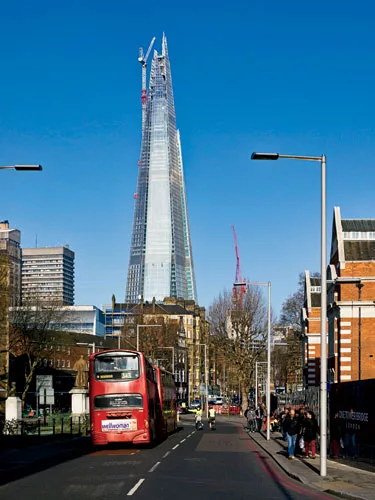
Crystal Palace: An enormous exclamation point on the London skyline, the Shard challenges the city's old notions of fitting in and offers a new approach to high-density growth.
By Clifford A. Pearson
The Shard
The Shard
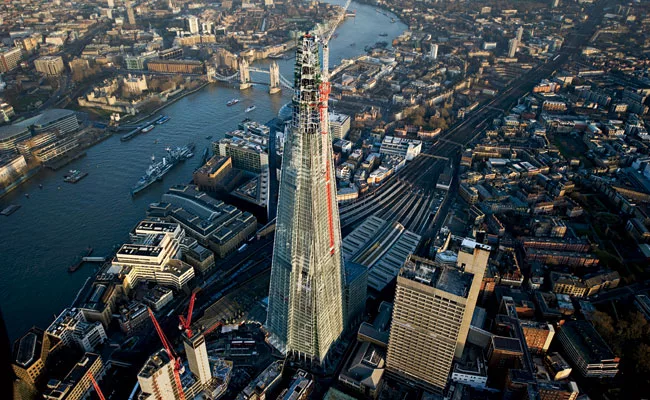
The 72-story tower sits above the underground and intercity train lines at London Bridge Station. At its feet, a 17-story office building also by Piano is under construction as part of a development called London Bridge Quarter.
 
Photo © Robtel Telford
The Shard
The Shard
The Borough of Southwark still presents a mostly low-rise, masonry context for the new tower. To protect itself from the sun, the Shard has a double skin of glass, separated by a 10-inch cavity with motorized blinds, that allows it to respond flexibly to solar loads.
 
Photo © Robtel Telford
The Shard
The Shard
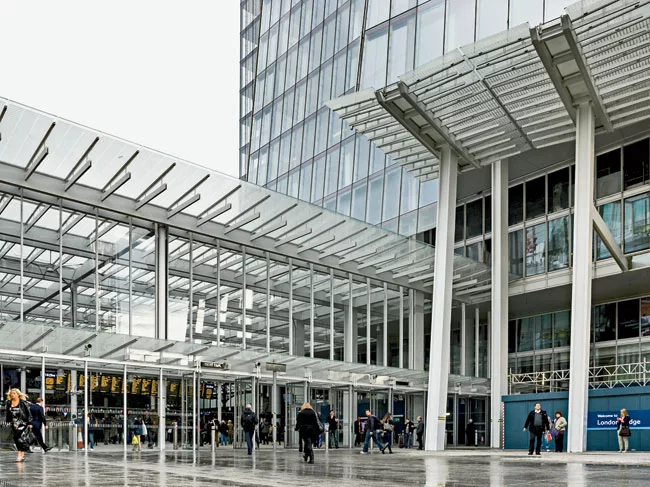
A new glass canopy and a plaza designed by Piano lead to the intercity train station.
 
Photo © Robtel Telford
The Shard
The Shard
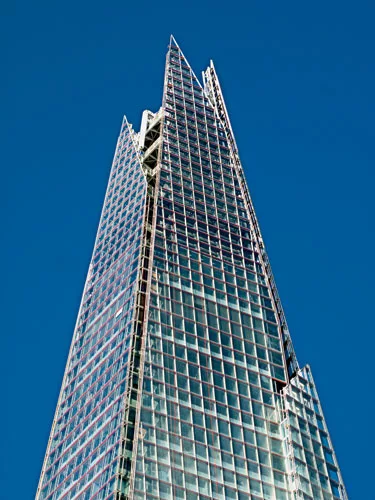
The tower's eight glass facades continue nearly 200 feet beyond the highest habitable floor, screening equipment and animating the top.
 
Photo © Robtel Telford
The Shard
The Shard
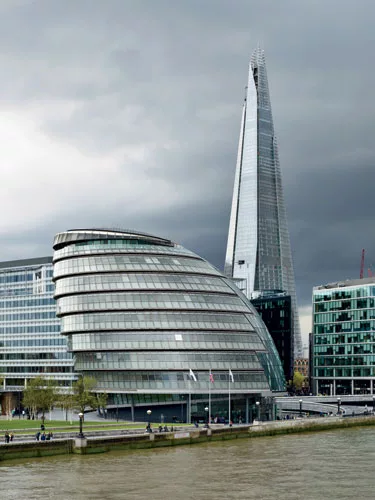
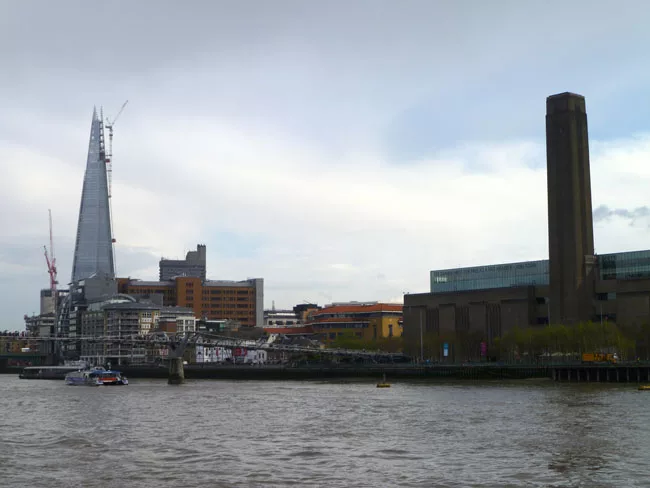
The Shard joins Foster + Partners' City Hall and a number of other contemporary projects such as the Tate Modern on the south bank of the Thames.
 
Photo © Robtel Telford
The Shard
The Shard
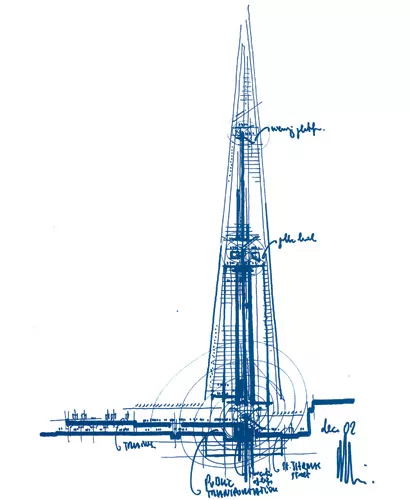
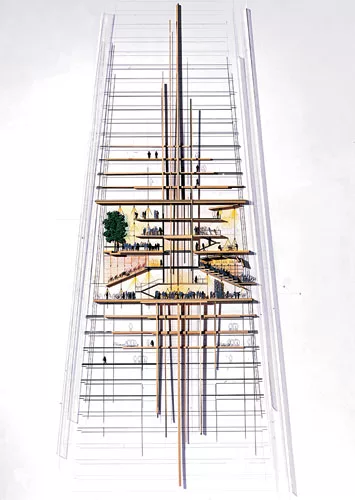
A multilevel observatory offers both indoor and outdoor galleries.
 
Image courtesy Renzo Piano Building Workshop
The Shard
The Shard
A multilevel observatory offers both indoor and outdoor galleries.
 
Image courtesy Renzo Piano Building Workshop
The Shard
The Shard
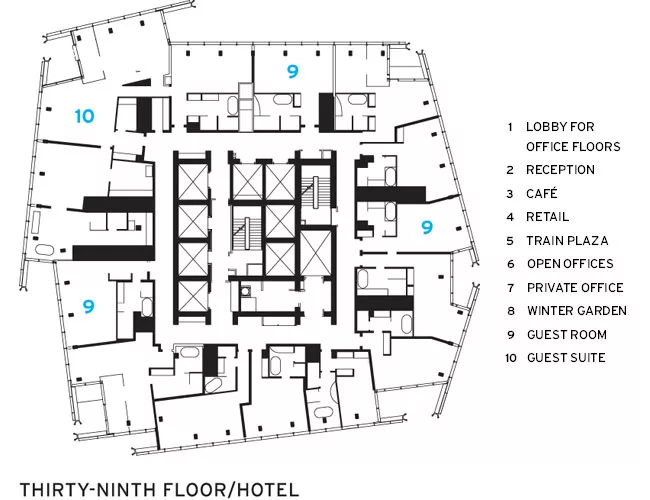
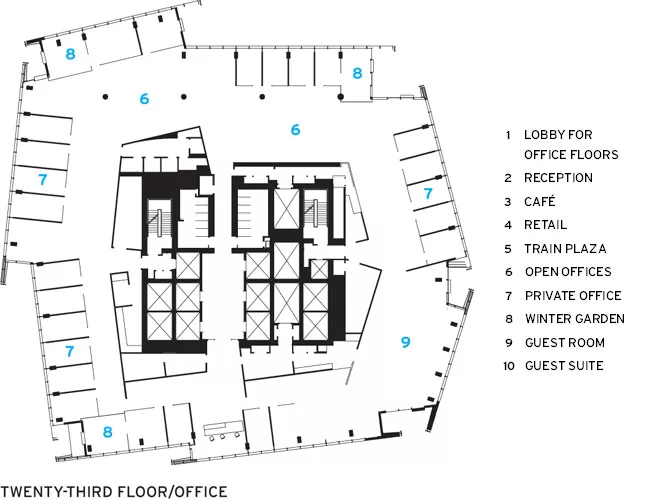
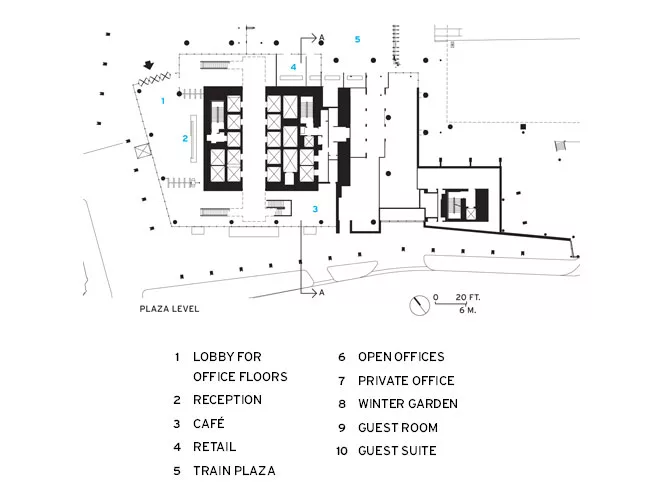
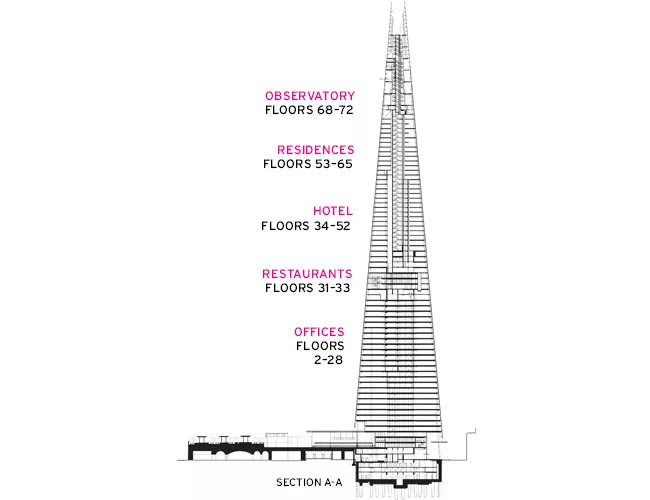
The building combines concrete and steel structural systems and five basic uses in different portions.
 
Image courtesy Renzo Piano Building Workshop
The Shard
The Shard
The building combines concrete and steel structural systems and five basic uses in different portions.
 
Image courtesy Renzo Piano Building Workshop
The Shard
The Shard
The building combines concrete and steel structural systems and five basic uses in different portions.
 
Image courtesy Renzo Piano Building Workshop
The Shard
The Shard
The building combines concrete and steel structural systems and five basic uses in different portions.
 
Image courtesy Renzo Piano Building Workshop
The Shard
The Shard
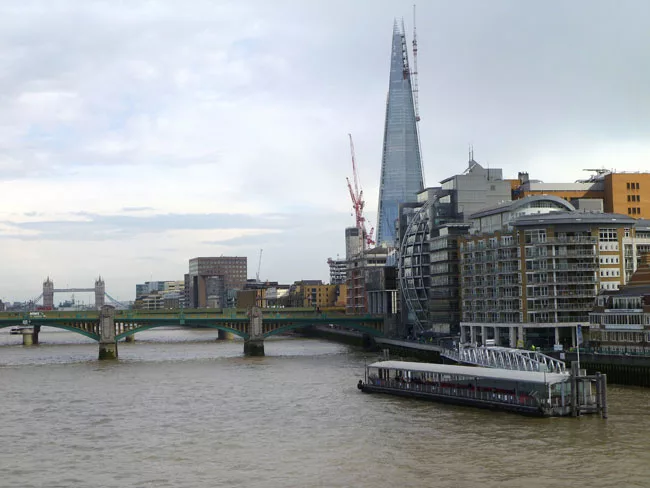
View of the Shard fron the Thames, with Tower Bridge.
 
Image courtesy Renzo Piano Building Workshop
The Shard
The Shard
View of the Shard with the Tate Modern on the right.
 
Photograph by Clifford Pearson
The Shard
The Shard
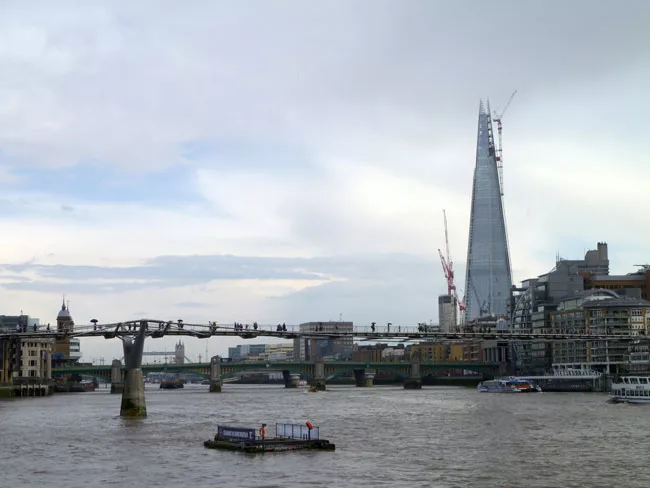
View of the Shard with the Millennium Bridge in foreground.
 
Photograph by Clifford Pearson
The Shard
The Shard
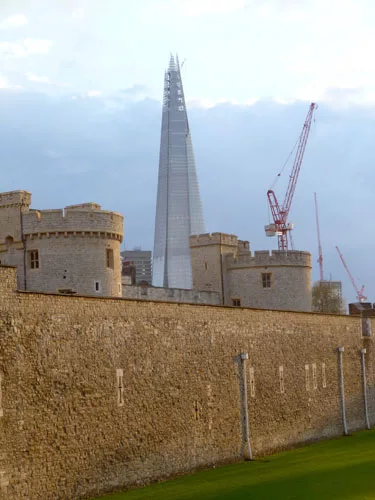
View of the Shard with the Tower of London in foreground.
 
Photograph by Clifford Pearson
The Shard
The Shard
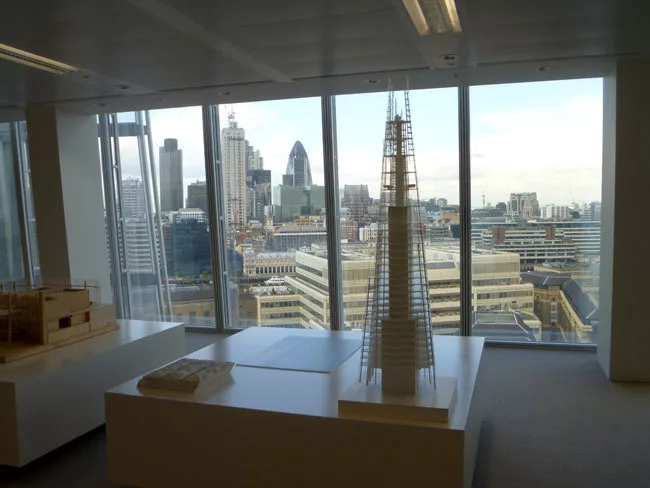
View from the sales office in the Shard looking toward the Gherkin and the City of London.
 
Photograph by Clifford Pearson
The Shard
The Shard
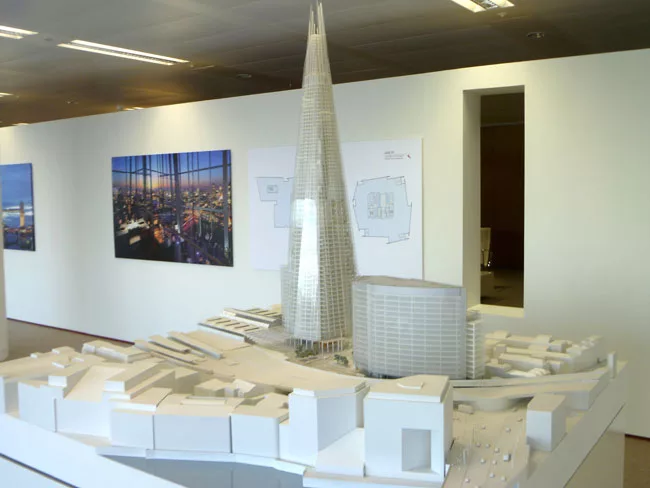
Model of the Shard and the adjacent 17-story building called The Place at London Bridge Quarter, also designed by Renzo Piano Building Workshop.
 
Photograph by Clifford Pearson
The Shard
The Shard
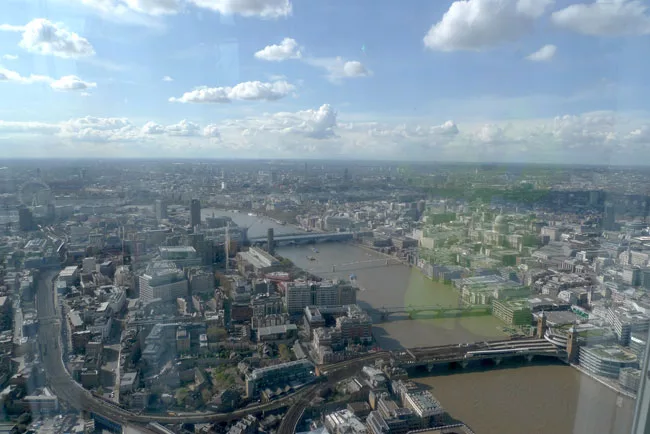
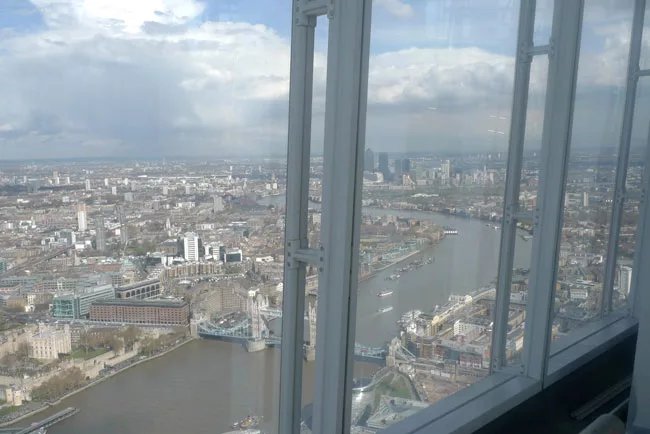
View from one of the Shard's upper floors of the Thames.
 
Photograph by Clifford Pearson
The Shard
The Shard
View from the Shard of the Thames and the Tower Bridge.
 
Photograph by Clifford Pearson
The Shard
The Shard
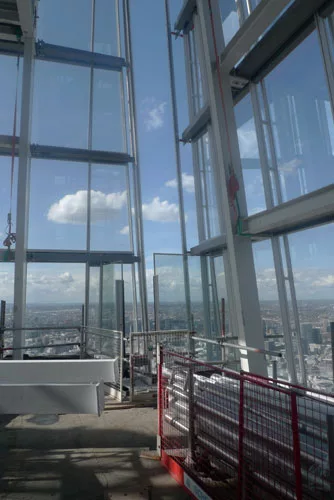
On top of the Shard.
 
Photograph by Clifford Pearson
The Shard
The Shard
The Shard
The Shard
The Shard
The Shard
The Shard
The Shard
The Shard
The Shard
The Shard
The Shard
The Shard
The Shard
The Shard
The Shard
The Shard
The Shard
The Shard
The Shard
June 16, 2012

Architects & Firms

Renzo Piano Building Workshop

London

People/Products

If placed next to the Burj Khalifa (2,723 feet), the Shard (1,016 feet) would register as a small fry. But in London, it's a big deal'more than 20 stories taller than its closest rival, One Canada Square, 12 miles away at Canary Wharf. And while One Canada Square huddles in a scrum of office towers, the Shard rises all by itself in Southwark, a changing but still gritty area with few buildings more than 15 stories high.

No matter where you are in London, the Shard stands out. To its detractors, that is its biggest sin. The Guardian's art critic Jonathan Jones called it 'arrogant' and 'grotesquely out of scale with other London landmarks.' Tall buildings in London cluster mostly at Canary Wharf and in the business district known as the City, where Foster's Gherkin stands and KPF's Pinnacle and Rogers's Cheese Grater are planned.

But the Shard began as a political statement as well as a business proposition. In 2000, the British government released an Urban White Paper encouraging high-density development at transit nodes. Developer Irvine Sellar, who had bought a 24-story building adjacent to London Bridge Station in 1998, saw the report as a chance to tear down the existing structure and build something much, much bigger. With support from the new mayor, Ken Livingston, and Fred Manson, the director of regeneration for the Borough of Southwark, Sellar proposed a tower 400 meters (1,312 feet) high, then reduced it in the face of opposition. To Livingston and Manson, the 300,000 people using the subways, buses, and intercity trains at London Bridge Station every day justified the enormous project. And to Sellar'who had made a fortune retailing clothes on Carnaby Street in the 1960s, then another one developing industrial properties'the busy site right on the Thames seemed like a smart business bet.

Sellar realized he'd need a high-profile architect to match the scale of his ambitions, so he hired Renzo Piano. After an arduous review process and loud criticism that the building would ruin views of St. Paul's Cathedral, the government approved the project in 2003. Financial turmoil in 2008 nearly scuttled the project, but investors from Qatar saved it in exchange for a controlling share. Construction began in March 2009, and the final section of steel was lifted into place in April 2012. The project brings together five main uses (from bottom to top): 27 floors for offices, three for restaurants, 19 for a Shangri-La Hotel, 13 for apartments, and five for indoor and outdoor observation galleries. Office tenants won't move in until early next year, about the same time as the observation galleries and restaurants open and a few months before the hotel debuts. The 10 apartments'which range in size from 6,000 to 8,000 square feet and occupy one or two stories'have been held off the market until the building opens and higher prices (supposedly) can be had.

Although Piano had designed high-rises in Sydney (2000) and Berlin (1997), he was not a fan of the building type when he started on the Shard. 'Very often skyscrapers are symbols of arrogance and power,' he asserts. 'They are about being bigger, taller, more powerful.' He wanted the Shard to do something else. 'It's a physical expression of the energy at the most crowded place in London.' And as a mixed-use complex, it plays a different role from a building with just offices. 'It is a small town that will stay active 24 hours a day,' he says.

Piano drew inspiration for the project from ship masts and church spires. But he warns that 'metaphors can be dangerous in architecture. You can't imitate when you design.' The elongated, pyramidal form of the building came to Piano at his first meeting with Sellar and developed into an eight-sided tower with angled glass facades that don't quite touch one another. Piano gave the building its name by accident, describing it at a press conference as 'a shard . . . a shard of crystal.' The media latched onto the term and never let go.

Using ultra-clear, low-iron glass was critical to the scheme. 'Too often tall buildings are opaque and mysterious,' says Piano. 'We wanted this one to be transparent, so everyone could see all the activity inside.' And by angling the glass, the tower reflects views of the sky. 'The building is an expression of the weather in London, changing all the time. It plays with the clouds and flirts with the light,' says the architect in his familiar poetic mode.

In terms of its structure, the Shard stacks a series of different systems on top of each other'starting with a concrete foundation, then a steel frame for the office floors and the public spaces of the hotel, then another concrete frame for the hotel guest rooms and the residences, and finally a steel frame for the observation galleries and the building's unoccupied top. It may seem odd to put a concrete structure on top of a steel one, but the arrangement reduces the building's sway, says William Matthews, the project architect for Renzo Piano Building Workshop. To speed construction, the contractor used a 'top-down' process that began with a concrete platform at ground level, then built up at the same time as the foundation was being erected below. The process was more expensive, but it cut six months from the schedule.

Piano talks of the building bringing different uses together, but each one has its own entry and elevators'so it's unclear how much mixing will actually go on. Office workers will arrive from a new glass-canopy-covered plaza on the train-station level, while people living in the apartments, staying in the hotel, or going up to the observatory will enter from different streets one level below the train shed.

Because London provides no real context or common vocabulary for skyscrapers, the Shard must work as a solo performer, graceful enough to hold public attention over time. On a typical day in April, it changed personality along with the mercurial weather: gray and moody when surrounded by clouds, dashing and a bit roguish in sunlight. But since each side looks essentially the same, it offers equal faces to all directions'forfeiting the ability to surprise us. Undeniably elegant, the Shard works as a formal presence on the skyline. But it's unclear right now whether the project directs London onto a new path of higher, denser development or'as the Empire State Building did in New York in 1931'signals the end of an era of affluence and ambition.


People

Owner: Sellar Property Group + Qatar (State of)

Architect:
Renzo Piano Building Workshop
34 Rue des Archives, 75004 Paris
+ 33 1 44 61 49 00

Personnel in architect's firm who should receive special credit:
Partners in charge: Renzo Piano, Joost Moolhuijzen

Project Architect: William Matthews

London Bridge Quarter construction phase key team: Eileen Chen, Bart Akkerhuis, Giles Reid, Grant Bannatyne, Jack Carter, Etain Fitzpatrick

Model maker: Olivier Aubert

Associate architect(s):
Tower - Adamson Associates
Station Concourse – Pascall + Watson
Office fit-out – Pringle Richards Sharratt
Landscape – Townshend

Engineer(s):
MEP: Arup

Structure: WSP Cantor Seinuk

Vertical transportation: Lerch Bates

Consultant(s):
Cost: Davis Langdon

Contract administration: Turner & Townsend

General contractor: Mace

Photographer(s): Jason Hawkes and Rob Telford
 

Size:

1.2 million square feet (gross)

Cost:

$729 million (shell and core)

Completion date:

 July 2012 (shell and core); 2013 (interior fit-out)


Products

Structural system
Level 00-75 Slip formed concrete core
Level 02-40 Composite steel deck + steel perimeter columns
Level 40-72 Post tensioned concrete slabs + concrete perimeter columns
Level 72-87 Steel structure

Concrete sub-contractor – Bryne Brothers
Steelwork contractor – Severfield Reeve

Exterior cladding
Masonry:
Bespoke handmade bricks manufactured by Yorkshire Handmade and installed at street level

Metal/glass curtain wall:
Bespoke design manufactured and installed by Scheldebouw BV

Tower façade:
55,000m² of unitized curtain walling – 11,000 panels
Passive double façade – all glass is low-iron (Pilkington)
Laminated fixed outer pane with Ipasol Bright coating (Interpane)
Openable inner pane / DGU with low-E coating
250mm wide cavity containing motorised roller blind controlled by BMS – local over ride possible
U-value – 1.1
G-value – 0.12 (with blind down)

Low level façade:
Bespoke steel stick system with aluminium clip profiles

Interior finishes
Wall coverings:

Calacatta Apuano marble, hand chiseled or honed used in main office lobby (Supplied by Savema Spa and installed by Grant’s of Shoreditch)

Polished plaster installed in lift lobbies (Armourcoat)

Floor and wall tile: Flamed Kuppan Green granite installed in public areas

Furnishings
Reception furniture: Eames chairs by Vitra

Lighting
Interior ambient lighting: LED fixtures by iGuzzini or DAL

Exterior: Fixtures by iGuzzini

Conveyance
Elevators/Escalators: 46 lifts & 5 escalators by Kone

Other unique products that contribute to sustainability:
1.1MW CHP (combined heat and power) system
Efficient Façade system (G Value 0.12)
Latest generation MEP equipment
Target CO² emission – 28kg/m²

 
KEYWORDS: London

Share This Story

Looking for a reprint of this article?
From high-res PDFs to custom plaques, order your copy today!


Cliff portrait 2 0t5a1761 0031

Contributing editor Clifford Pearson is the co-author, with A. Eugene Kohn, of The World By Design, and writes about architecture and urbanism.

Post a comment to this article

Report Abusive Comment

Subscription Center
  • Create an Account
  • Start a Subscription
  • Manage My Account
  • Sign Up for Newsletters
  • Visit Customer Service
  • Update Preferences

More Videos

Sponsored Content

Sponsored Content is a special paid section where industry companies provide high quality, objective, non-commercial content around topics of interest to the Architectural Record audience. All Sponsored Content is supplied by the advertising company and any opinions expressed in this article are those of the author and not necessarily reflect the views of Architectural Record or its parent company, BNP Media. Interested in participating in our Sponsored Content section? Contact your local rep!

close
  • TAMLYN XtremeTrim Exterior Trim
    Sponsored byTamlyn

    Designing Cleaner Panel Facades: Why Exterior Trim Details Matter

  • Building with Vapor Barriers
    Sponsored byReef Industries, Inc.

    Vapor Barriers Help Control Moisture in Tighter Building Designs

  • Duct Interior with Prodeq System
    Sponsored byHenry, a Carlisle Company

    Designing Resilient Water Containment Systems

DESIGN:ED Podcast
Listen to Architectural Record’s DESIGN:ED Podcast

Events

June 10, 2026

Rethinking Stormwater – The Power of Porous Paving

Credits: 1 AIA LU/HSW; 1 AIBD P-CE; 0.1 ICC CEU

Learn how porous paving systems support stormwater management, reduce heat island effects, and enhance sustainable site design performance.

June 11, 2026

Very Early Warning Fire Detection for Mission-Critical Facilities

Credits: 1 AIA LU/HSW; 1 AIBD P-CE; 0.1 ICC CEU

Examine advanced fire detection strategies that support uptime and enhance safety in data centers and other mission-critical facilities.

View All Submit An Event

Products

2026 Architect's Square Foot Costbook

2026 Architect's Square Foot Costbook

See More Products

Popular Stories

Practice Matters illustration

What’s in a (Firm’s) Name? Thinking About Succession and Legacy

Practice Matters illustration

By the Numbers: Counting America's Architects

House on a Hill

Design Vanguard 2026: Forma

Crane Cove, ONO

Design Vanguard 2026 Winners

KRESA by DLR

In Kalamazoo, DLR Group Completes a Mass-Timber Hub for Career and Technical Education Programs

Broader Sustainability of CMU - Free Webinar - May 21, 2026

Related Articles

  • Renzo Piano's "The Shard" Rising Over London

    See More
  • Al Jazeera Media Network

    Al Jazeera Media Network

    See More
  • Los Angeles Museum of the Holocaust

    See More

Related Products

See More Products
  • 0470130628.gif

    Sustainable Design: The Science of Sustainability and Green Engineering

See More Products
×

The latest news and information

#1 Source for Architectural Design, News and Products

SUBSCRIBE
  • RESOURCES
    • Advertise
    • Contact Us
    • Submit
    • Store
  • ACCOUNT CENTER
    • Create an Account
    • Start a Subscription
    • Manage My Account
    • Sign Up for Newsletters
    • Visit Customer Service
    • Update Preferences
  • PRIVACY
    • PRIVACY POLICY
    • TERMS & CONDITIONS
    • DO NOT SELL MY PERSONAL INFORMATION
    • PRIVACY REQUEST
    • ACCESSIBILITY
  • SERVICES
    • Marketing Services
    • Reprints
    • Market Research
    • List Rental
    • Survey/Respondent Access
  • STAY CONNECTED
    • Linkedin
    • Facebook
    • Instagram
    • YouTube
    • X (Twitter)

Copyright ©2026. All Rights Reserved BNP Media, Inc. and BNP Media II, LLC.

Design, CMS, Hosting & Web Development :: ePublishing