Architectural Record
search
cart
facebook twitter linkedin youtube
  • Sign In
  • Subscribe
  • Sign Out
  • My Account
Architectural Record
  • NEWS
    • Latest News
    • Awards
    • Interviews
    • Obituaries
    • Podcasts
      • Design:Ed Podcast
      • Sponsored Podcasts
  • OPINION
    • Book Reviews / Excerpts
    • Exhibition Reviews
    • Forum
  • EXCLUSIVES
    • Videos
    • Design Vanguard
    • Top 300 Firms
    • Sponsored Content
    • Sponsored eBooks
    • From the Archives
  • CONTINUING ED
    • Editorial Continuing Ed
    • CE Center
    • CE Academies
  • PROJECTS
    • Buildings By Type
    • Reuse & Renovation
    • Museums & Arts Centers
    • Colleges & Universities
    • Multifamily Housing
    • Interiors
    • Lighting
    • Kitchen & Bath
  • HOUSES
    • Record Houses
    • House of the Month
    • Featured Houses
  • PRODUCTS
    • Products by Category
    • Record Products of the Year
    • Latest Products
  • EVENTS
    • Dates & Events
    • Record on the Road
    • Innovation Conference
    • Sustainability in Practice
    • Women In Architecture
    • Webinars
    • Ad Excellence Awards
    • Submit an Event
  • CONNECT
    • Ask RECORD AI
    • Newsletters
    • Contact
    • Advertise
    • Editorial Calendar
    • Store
    • Customer Service
  • SUBMIT
    • Submission Guidelines
    • RECORD Competitions
  • MAGAZINE
    • Subscribe
    • My Account
    • Digital Edition
    • Current Issue
    • Firm Pass
    • Historic Archive
Projects

Red Location Cultural Precinct

Where Defiance Began: A cultural complex honors the legacy of the fight against apartheid, while bringing it alive for a new generation of South Africans.
By Karen Eicker
Red Location Cultura Precinct
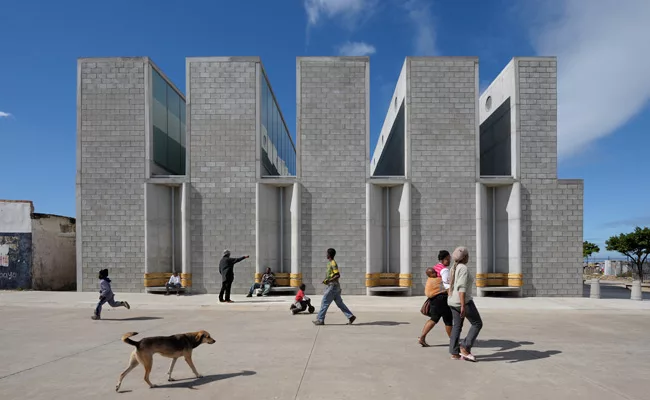
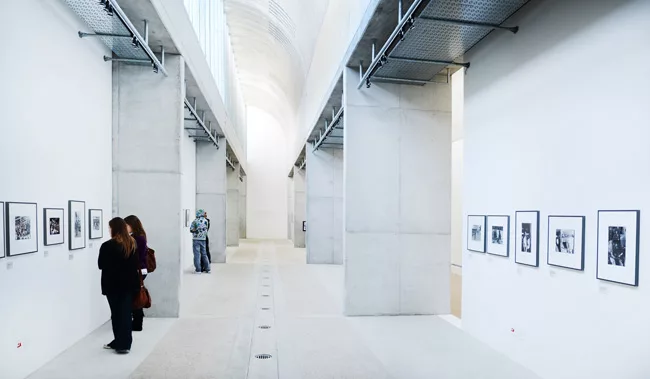
Glazing on the upper portion of the art gallery's multiple bays brings daylight into barrel-vaulted galleries.
 
Photo © Iwan Baan
Red Location Cultura Precinct
The gallery presents shows of work by emerging artists, as well as providing arts education for people in the area.
 
Photo © Iwan Baan
Red Location Cultura Precinct
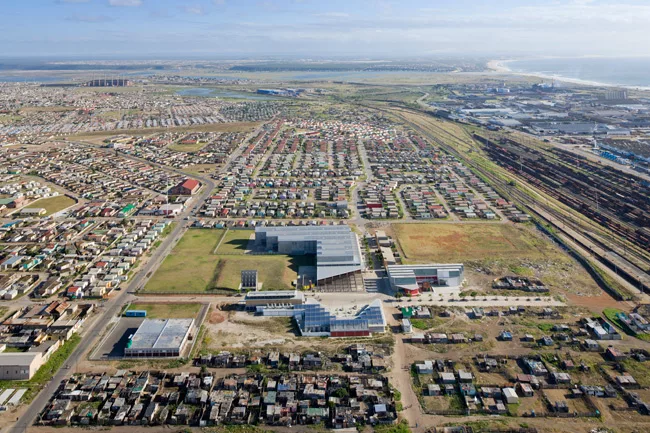
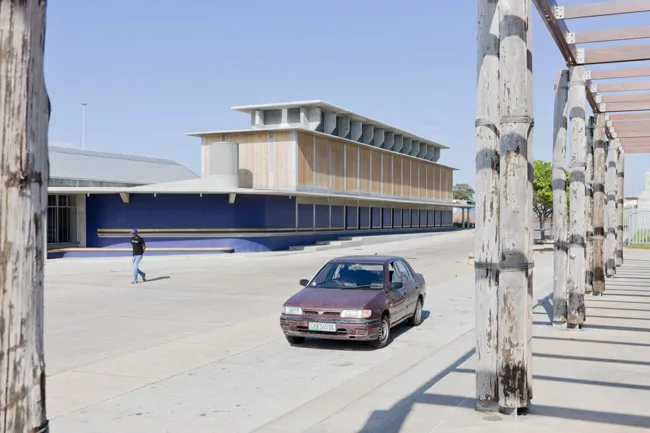
Noero Wolff Architects planned the complex so buildings engage the streets and activate the public realm.
 
Photo © Iwan Baan
Red Location Cultura Precinct
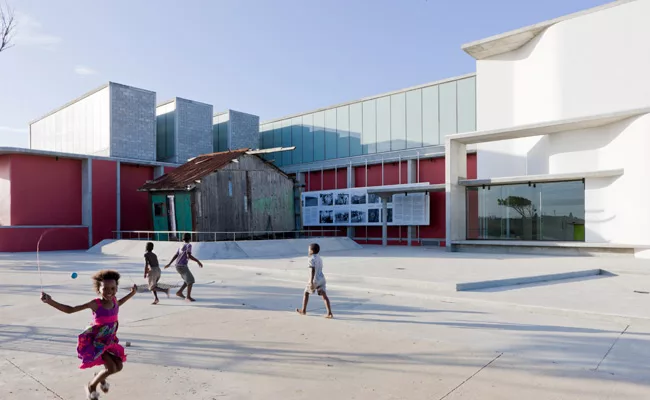
The entry court of the new art gallery wraps around a shack from 1902, connecting its mission to the area's past and its roots as a home to people of humble means.
 
Photo © Iwan Baan
Red Location Cultura Precinct
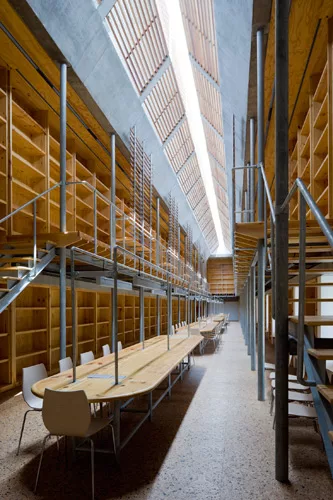
Much of the library is dedicated to the digital world, but a double-height reading room in the archive will be filled with printed books.
 
Photo © Iwan Baan
Red Location Cultura Precinct
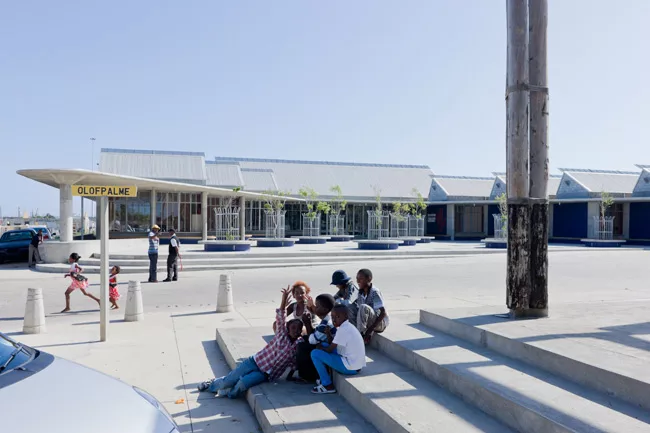
A thin concrete canopy curves around the forecourt of the library, looking across the street at the portico and steps of the Museum of Struggle, which was completed in 2006.
 
Photo © Iwan Baan
Red Location Cultura Precinct
The archive building offers space for book storage and an impressive reading room.
 
Photo © Iwan Baan
Red Location Cultural Precinct
Image courtesy Noero Wolff Architects
Red Location Cultura Precinct
Red Location Cultural Precinct
August 16, 2012

Architects & Firms

Noero Wolff Architects

Port Elizabeth, South Africa

Red Location is the oldest surviving relocation site in Port Elizabeth, where thousands of native Africans were forced to settle by the colonial government in the early 1900s. It is one of South Africa's original centers of antiapartheid activism, as well as a cradle of culture in the Eastern Cape; one of its townships, New Brighton, is the home of the Serpent Players (made famous by playwrights Athol Fugard, John Kani, and Winston Ntshona), as well as artists such as George Pemba, and many jazz musicians.

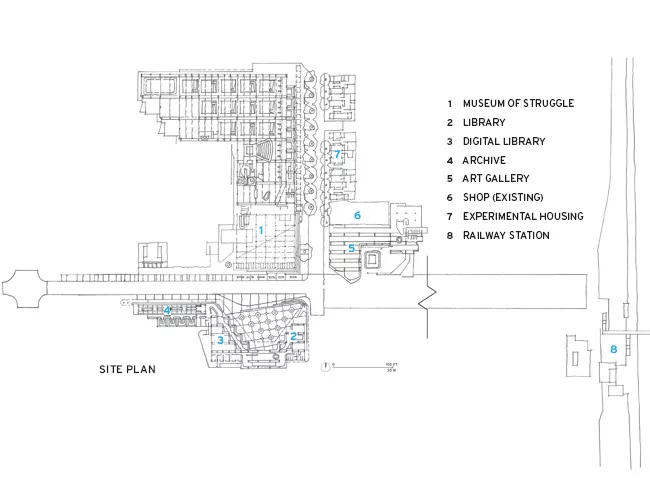
The Red Location Cultural Precinct, in New Brighton, honors the turbulent history of the area, while providing the surrounding community with opportunities for education, employment, and artistic expression. The first phase of the project, the Museum of Struggle, opened in November 2006 with exhibits on the contemporary history of South Africa, particularly the resistance against apartheid. Noero Wolff Architects, the Cape Town–based practice, designed the entire complex after winning a national competition in 1998.

In July 2011, construction of the second and third buildings in the precinct—an art gallery and a library/archive—was completed, though the facilities have yet to be occupied. The final phase will comprise a performing-arts center and a school for the performing arts, to be designed by Jo Noero, who recently separated from his partner Heinrich Wolff. Construction is scheduled to start on these buildings in two years. Eventually, the complex will also accommodate 210 houses for people working in the cultural precinct, and various commercial and public open spaces.

Rory Riordan, chief executive of Dojon Financial Services and one of the project's tireless supporters, explains that the Red Location precinct began as an idea in 1992 when a group of politically interested people, including himself, were traveling outside the country studying local governmental issues. One of the group members was a township activist from New Brighton, Ernest Malgas, who had been imprisoned for his political activities and tortured numerous times. “During the trip, shortly before he died, Ernest called us together,” says Riordan. “He entrusted us with the joint responsibility of somehow commemorating how the people of Red Location have always had to live, and how they suffered in their fight against apartheid.”

After the dismantling of apartheid in 1994, several members of the group were elected to be councillors in the city government and began to plan a cultural center on a piece of open land next to the historic New Brighton Railway Station, where in 1952 activist Raymond Mhlaba initiated the Defiance Campaign by walking through the “whites only” entrance.

Noero recalls, “In a progressive move, the city agreed to leave the site as a single subdivision for the duration of the development.” This allowed the architects “to push the buildings as close as possible to the streets” and activate the public realm with visitors and local residents moving through the site. Noero is designing the performing-arts center and school so that some of their elements—including a performance space and a set-design area—can spill outdoors. The intention is to let people take charge of the street, especially as the project grows and commercial and social activities intensify over time.

Reinforcing the precinct's connection to its social context, a mix of formally and informally constructed houses—ranging from shacks to subsidized units—surround the site. Noero responded to the scale of these residential areas by articulating his buildings with porticoes and colonnades that reach out to their neighbors while serving as thresholds to the larger civic spaces inside.

He also acknowledged the area's industrial heritage and its powerful trade-union movement in his buildings' saw-tooth roofs, which echo those of nearby factories and the railway station. The roofs and their clerestory glazing provide good ambient lighting as well as natural ventilation. “The language and form are explicit yet simultaneously ambiguous, using pragmatic measures like volume and the quality of light to express the various purposes of the spaces,” says Noero.

The new 16,000-square-foot library and archive sits directly across the street from the museum, responding to the older building's large entry pergola with its own forecourt and thin concrete canopy. The different programs–digital library on one side of the central foyer and computer school, reading rooms, and archive on the other–are expressed as separate forms within the building's two embracing wings. Different floor finishes—concrete, timber, carpeting, and cork—reinforce the separate identity of each function. The saw-tooth roof brings in a diffuse south light (the equivalent of north light in the Northern Hemisphere) that softly reflects off the interiors' warm timber surfaces. A double-height reading room that will house printed works relating to South Africa, the Eastern Cape, and the Nelson Mandela Bay Municipality (which includes Port Elizabeth) acts as a visual and spatial exclamation mark for the building.

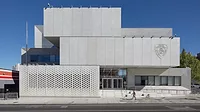
The 12,000-square-foot art gallery welcomes visitors with a forecourt displaying a small, corrugated-iron shack dating from 1902. Inside the gallery, concrete vaults scoop south light into the exhibition spaces, their exposed concrete surfaces providing a cool, bright ambience for the art. A floor-to-ceiling window at one end of the sophisticated exhibition space, though, looks onto the ramshackle houses, offering a stark reminder of the building's context. The gallery will provide arts education for local residents as well as exhibition opportunities for emerging artists in the area.

“The fact that this project has moved forward very slowly has been of huge benefit,” says Noero. “To create quality architecture, particularly social architecture within complex communities, you need time to properly understand the processes and relationships.”

This careful consideration has produced a family of three closely related, yet distinctly individual buildings that gently capture the tough history and tenacious dreams of a community caught, always, in the throes of change.

Completion Date: July 2011

Size: 16,000 square feet (library/archive); 12,000 square feet (art gallery)

Cost: $4 million

People

Client: Nelson Mandela Metropolitan Municipality

Architect: Noero Wolff Architects

Personnel in architect's firm who should receive special credit:
Architect of record:
Noero Wolff Architects

Partner in charge and principal designer: Jo Noero

Project Team: Jo Noero, Robert McGiven, John Blair, Kylie Richards, Korine Stegman, Stanley Ngarinda

Engineer(s):
Structural and Civil Engineers: Goba in association with de Villiers and Hulme

Quantity Surveyors: Bahm, Tayob, Kahn and Matunda

Mechanical Engineers: Clinkscales, Maughn-Brown and Partners

General contractor:  SBT Ooskaap
 

Products

Exterior cladding
Masonry:
Concrete block: Terraforce
Cement: Holcim

Roofing
MetalRoof sheeting: corrugated galvanised S Rib Sheeting - Mittal Steel

Windows
Galvanised Steel Window Frames: Dura Industries

Interior finishes
Cork floor tiles: Green Earth Flooring

 
KEYWORDS: Africa South Africa

Share This Story

Looking for a reprint of this article?
From high-res PDFs to custom plaques, order your copy today!
An architect and award-winning journalist, Karen Eicker is a director of the Architect Africa Network.

Post a comment to this article

Report Abusive Comment

Subscription Center
  • Create an Account
  • Start a Subscription
  • Manage My Account
  • Sign Up for Newsletters
  • Visit Customer Service
  • Update Preferences

More Videos

Sponsored Content

Sponsored Content is a special paid section where industry companies provide high quality, objective, non-commercial content around topics of interest to the Architectural Record audience. All Sponsored Content is supplied by the advertising company and any opinions expressed in this article are those of the author and not necessarily reflect the views of Architectural Record or its parent company, BNP Media. Interested in participating in our Sponsored Content section? Contact your local rep!

close
  • cold storage facility
    Sponsored byCarlisle SynTec Systems

    How Architects Can Design More Continuous Cold Storage Envelopes

  • TAMLYN XtremeTrim Exterior Trim
    Sponsored byTamlyn

    Designing Cleaner Panel Facades: Why Exterior Trim Details Matter

  • Building with Vapor Barriers
    Sponsored byReef Industries, Inc.

    Vapor Barriers Help Control Moisture in Tighter Building Designs

DESIGN:ED Podcast
Listen to Architectural Record’s DESIGN:ED Podcast

Events

June 23, 2026

Enhancing Fire Resistance with Advanced PVC Solutions

Credits: 1 AIA LU/HSW; 1 AIBD P-CE; 0.1 ICC CEU; 1 IIBEC CEH

Evaluate advanced PVC solutions that improve fire resistance, support WUI compliance, and enhance resilience in residential and commercial building design.

June 25, 2026

Designing Glass Railing Systems that Enhance Aesthetics and Meet Code

Credits: 1 AIA LU/HSW; 1 AIBD P-CE; 0.1 ICC CEU

Upon course completion, participants will possess a deeper understanding of glass railings to help ensure that safety, aesthetic, and performance objectives are achieved.

View All Submit An Event

Products

2026 Architect's Square Foot Costbook

2026 Architect's Square Foot Costbook

See More Products

Popular Stories

Lorcan O' Herilhy

California Architect Lorcan O’Herlihy Has Died, Age 66

Obama Presidential Center, Chicago

The Obama Presidential Center Opens on Chicago’s South Side

Spoonbill Ranch

Johnsen Schmaling Architects Integrates Spoonbill Ranch into a Pristine Landscape

Image of Bruce Springsteen Center for American Music

The CookFox-designed Bruce Springsteen Center for American Music Opens in New Jersey

Three Courtyards House

Design Vanguard 2026: Balsa Crosetto Piazzi

Enhancing Fire Resistance with Advanced PVC Solutions - Free Webinar - June 23, 2026

Related Articles

  • South Africa's Golden Bowls

    See More
  • 40th Precinct, the Bronix

    BIG’s 40th Precinct is a Big Upgrade for the NYPD in the Bronx

    See More

Related Products

See More Products
  • Architectural Record - October 2025

    Architectural Record October 2025 Issue

See More Products
×

The latest news and information

#1 Source for Architectural Design, News and Products

SUBSCRIBE
  • RESOURCES
    • Advertise
    • Contact Us
    • Submit
    • Store
  • ACCOUNT CENTER
    • Create an Account
    • Start a Subscription
    • Manage My Account
    • Sign Up for Newsletters
    • Visit Customer Service
    • Update Preferences
  • PRIVACY
    • PRIVACY POLICY
    • TERMS & CONDITIONS
    • DO NOT SELL MY PERSONAL INFORMATION
    • PRIVACY REQUEST
    • ACCESSIBILITY
  • SERVICES
    • Marketing Services
    • Reprints
    • Market Research
    • List Rental
    • Survey/Respondent Access
  • STAY CONNECTED
    • Linkedin
    • Facebook
    • Instagram
    • YouTube
    • X (Twitter)

Copyright ©2026. All Rights Reserved BNP Media, Inc. and BNP Media II, LLC.

Design, CMS, Hosting & Web Development :: ePublishing