Architectural Record
search
cart
facebook twitter linkedin youtube
  • Sign In
  • Subscribe
  • Sign Out
  • My Account
Architectural Record
  • NEWS
    • Latest News
    • Awards
    • Interviews
    • Obituaries
    • Podcasts
      • Design:Ed Podcast
      • Sponsored Podcasts
  • OPINION
    • Book Reviews / Excerpts
    • Exhibition Reviews
    • Forum
  • EXCLUSIVES
    • Videos
    • Design Vanguard
    • Top 300 Firms
    • Sponsored Content
    • Sponsored eBooks
    • From the Archives
  • CONTINUING ED
    • Editorial Continuing Ed
    • CE Center
    • CE Academies
  • PROJECTS
    • Buildings By Type
    • Reuse & Renovation
    • Museums & Arts Centers
    • Colleges & Universities
    • Multifamily Housing
    • Interiors
    • Lighting
    • Kitchen & Bath
  • HOUSES
    • Record Houses
    • House of the Month
    • Featured Houses
  • PRODUCTS
    • Products by Category
    • Record Products of the Year
    • Latest Products
  • EVENTS
    • Dates & Events
    • Record on the Road
    • Innovation Conference
    • Sustainability in Practice
    • Women In Architecture
    • Webinars
    • Ad Excellence Awards
    • Submit an Event
  • CONNECT
    • Ask RECORD AI
    • Newsletters
    • Contact
    • Advertise
    • Editorial Calendar
    • Store
    • Customer Service
  • SUBMIT
    • Submission Guidelines
    • RECORD Competitions
  • MAGAZINE
    • Subscribe
    • My Account
    • Digital Edition
    • Current Issue
    • Firm Pass
    • Historic Archive
Residential ArchitectureHouse of the Month

Hampden Lane House

Architect Robert Gurney designs a simple light-filled cubiform house in Bethesda, Maryland.
By Ingrid Spencer
Hampden Lane House
Hampden Lane House
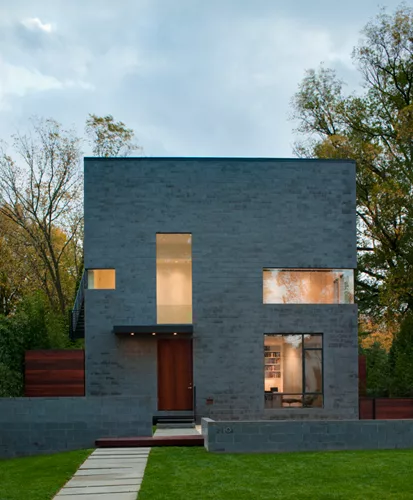
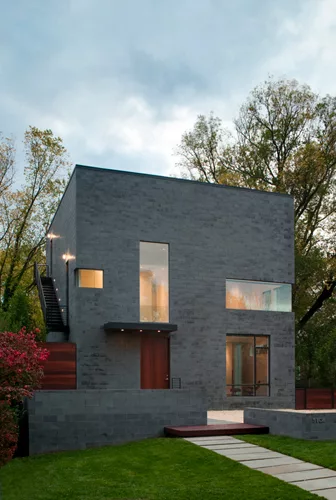
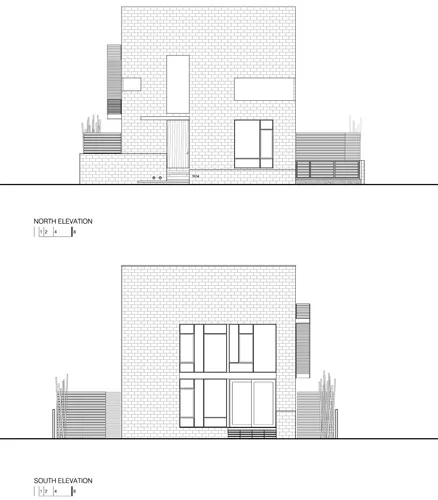
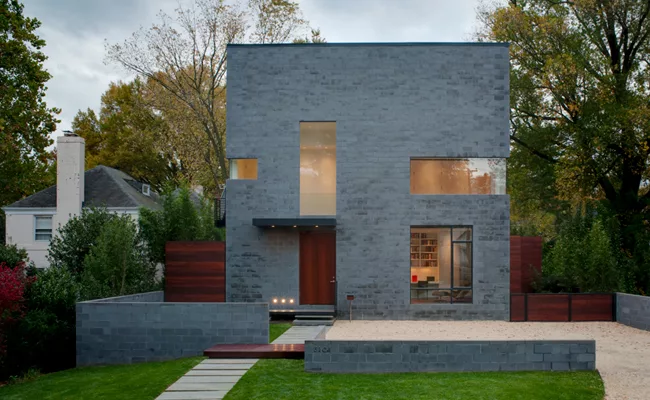
The north elevation of the cubic house brings to mind Adolf Loos's Villa M'ller in Prague (1930) in its simplicity and austerity of detail. A charcoal-gray ground-faced block clads the structure, while the front door is mahogany.
 
Photo © Maxwell MacKenzie
Hampden Lane House
Hampden Lane House
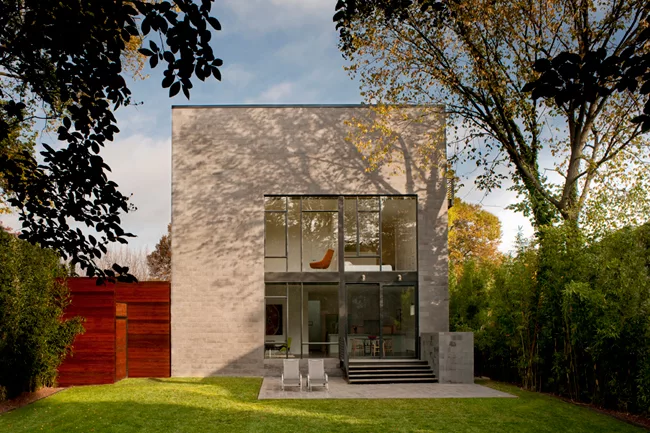
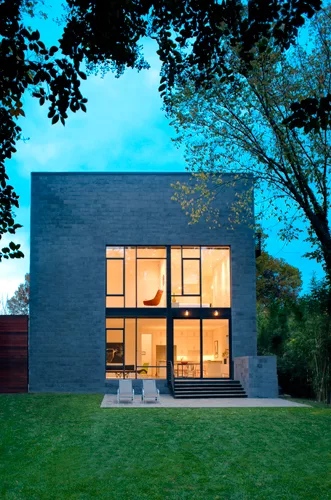
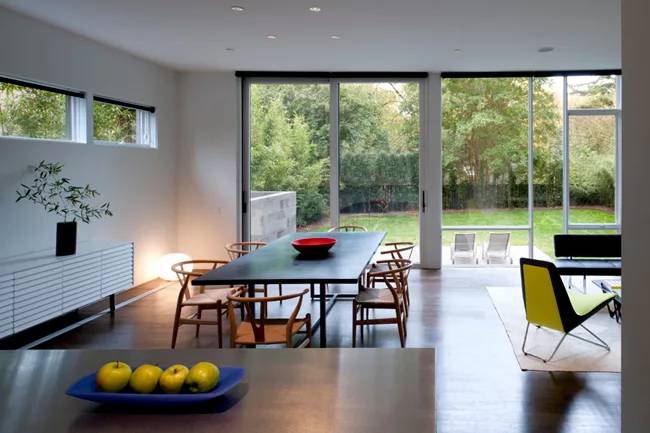
A double-height window wall on the south elevation allows living spaces inside to become part of a landscaped open-air 'room.'
 
Photo © Maxwell MacKenzie
Hampden Lane House
Hampden Lane House
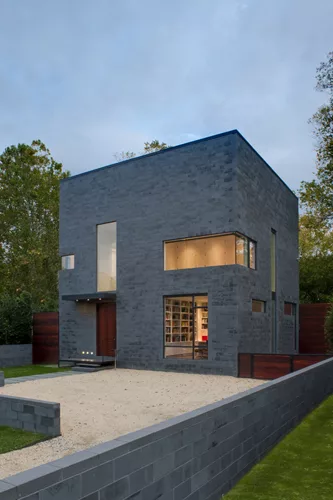
In order to give privacy to the interior, Gurney designed narrow rectilinear windows on the side walls, such as the L-shaped one on the west elevation of the ground floor.
 
Photo © Maxwell MacKenzie
Hampden Lane House
Hampden Lane House
In order to give privacy to the interior, Gurney designed narrow rectilinear windows on the side walls, such as the L-shaped one on the west elevation of the ground floor.
 
Photo © Maxwell MacKenzie
Hampden Lane House
Hampden Lane House
In order to give privacy to the interior, Gurney designed narrow rectilinear windows on the side walls, such as the L-shaped one on the west elevation of the ground floor.
 
Photo © Maxwell MacKenzie
Hampden Lane House
Hampden Lane House
In order to give privacy to the interior, Gurney designed narrow rectilinear windows on the side walls, such as the L-shaped one on the west elevation of the ground floor.
 
Photo © Maxwell MacKenzie
Hampden Lane House
Hampden Lane House
In order to give privacy to the interior, Gurney designed narrow rectilinear windows on the side walls, such as the L-shaped one on the west elevation of the ground floor.
 
Photo © Maxwell MacKenzie
Hampden Lane House
Hampden Lane House
In order to give privacy to the interior, Gurney designed narrow rectilinear windows on the side walls, such as the L-shaped one on the west elevation of the ground floor.
 
Photo © Maxwell MacKenzie
Hampden Lane House
Hampden Lane House
In order to give privacy to the interior, Gurney designed narrow rectilinear windows on the side walls, such as the L-shaped one on the west elevation of the ground floor.
 
Photo © Maxwell MacKenzie
Hampden Lane House
Hampden Lane House
 
Photo © Maxwell MacKenzie
Hampden Lane House
Hampden Lane House
 
Photo © Maxwell MacKenzie
Hampden Lane House
Hampden Lane House
 
Photo © Maxwell MacKenzie
Hampden Lane House
Hampden Lane House
 
Photo © Maxwell MacKenzie
Hampden Lane House
Hampden Lane House
 
Image courtesy Robert M. Gurney
Hampden Lane House
Hampden Lane House
 
Image courtesy Robert M. Gurney
Hampden Lane House
Hampden Lane House
 
Image courtesy Robert M. Gurney
Hampden Lane House
Hampden Lane House
 
Image courtesy Robert M. Gurney
Hampden Lane House
Hampden Lane House
 
Image courtesy Robert M. Gurney
Hampden Lane House
Hampden Lane House
 
Image courtesy Robert M. Gurney
Hampden Lane House
Hampden Lane House
Hampden Lane House
Hampden Lane House
Hampden Lane House
Hampden Lane House
Hampden Lane House
Hampden Lane House
Hampden Lane House
Hampden Lane House
Hampden Lane House
Hampden Lane House
Hampden Lane House
Hampden Lane House
Hampden Lane House
Hampden Lane House
Hampden Lane House
Hampden Lane House
Hampden Lane House
October 16, 2011

Architects & Firms

Robert M. Gurney, FAIA

Bethesda, Maryland

People/Products

Architect Robert Gurney and his client, a young entrepreneur with a large family, shocked the residents of the Edgemoor section of Bethesda, Maryland, with the house they created. It was not because of the design's Modernist roots, although the house is decidedly unlike the Colonial- and Craftsman-style ones nearby.

The surprise comes from its size. At just 2,200 square feet, the house is dwarfed by its stately, overscaled neighbors. 'Most of the new houses in the neighborhood are being built to the maximum size allowed by the zoning,' says Gurney. 'This was a different approach'with more outdoor space and a third less area for the house than what had been there.'

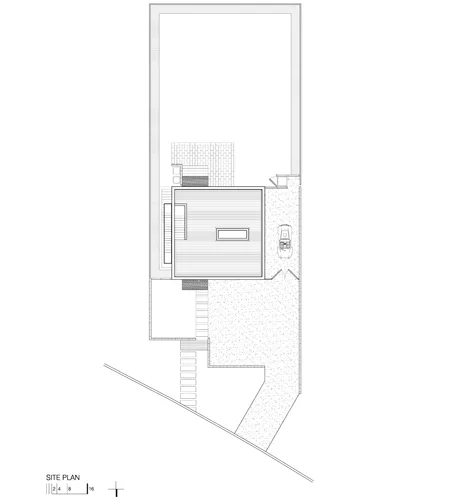
The client desired a totally efficient design for his 60-by-l50-foot property, which Gurney found in an understated cube. The elegance of the simple box startles in its lack of excess. Charcoal-gray ground-faced concrete block clads the wood-frame house, with rectangular and square windows of varying sizes punched out to capture views, control sunlight, and afford privacy to interior spaces.

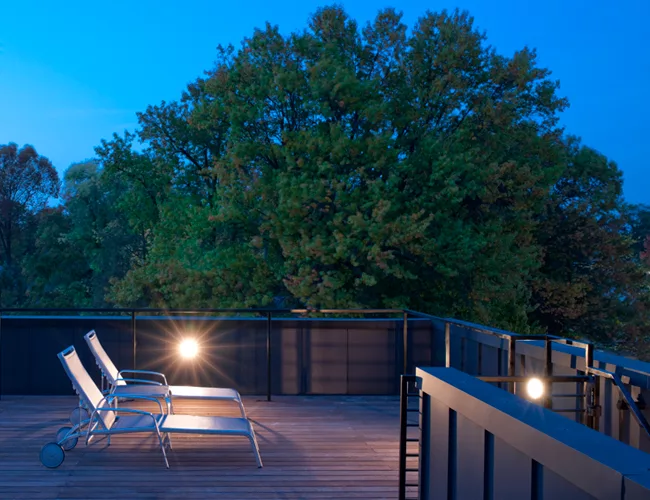
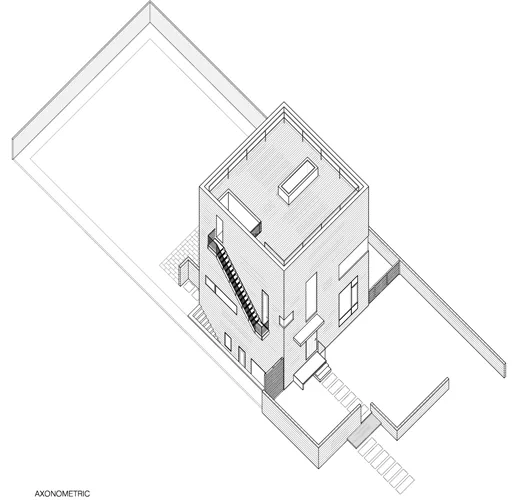
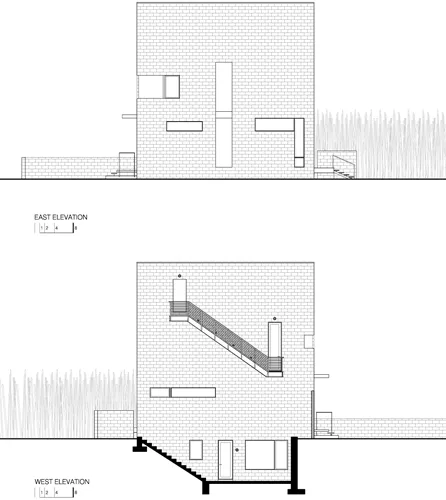
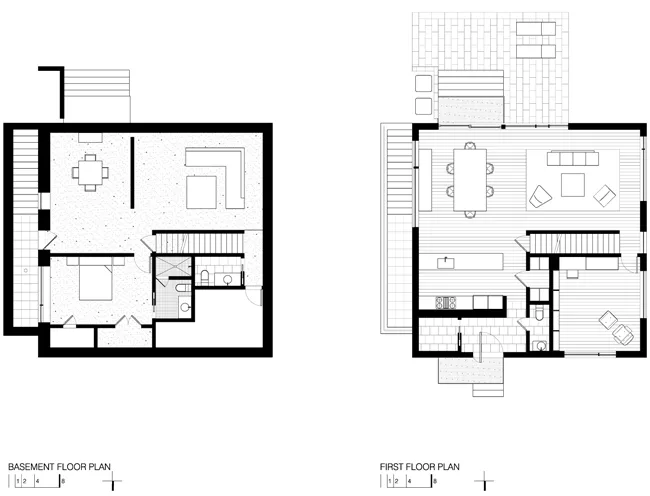
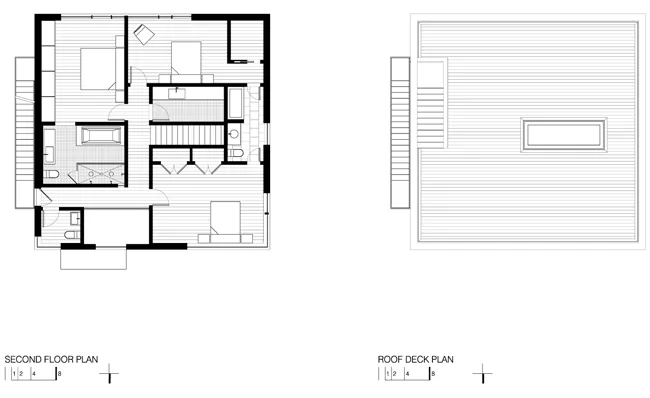
Although small, the two-story house has a large basement and an 1,100-square-foot roof deck surfaced in ip' wood and edged by concrete-block parapet walls that afford glimpses of Bethesda's growing skyline. A steel staircase on the east elevation provides access to the deck from the second floor.

Gurney's client, whose office is two blocks away, often holds business meetings on the roof, or invites contacts from his financial services firm to dinner. Mostly, though, the house is for the family. 'We're very informal,' he says.

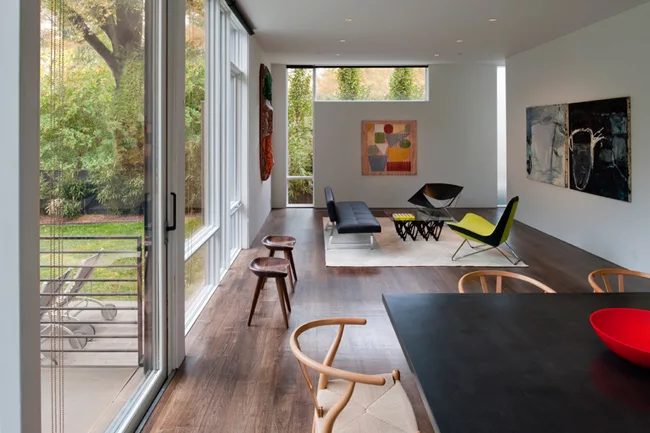
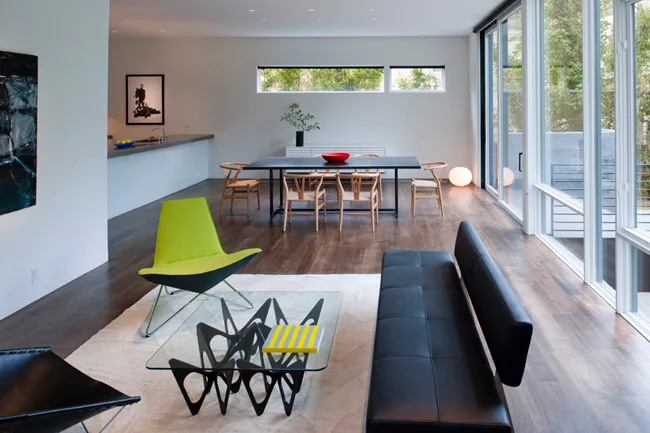
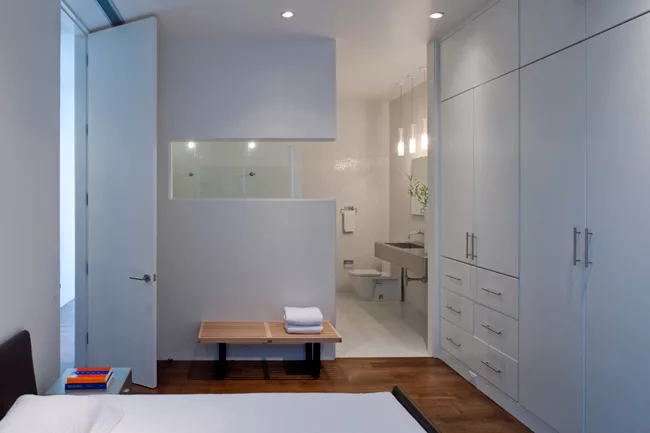
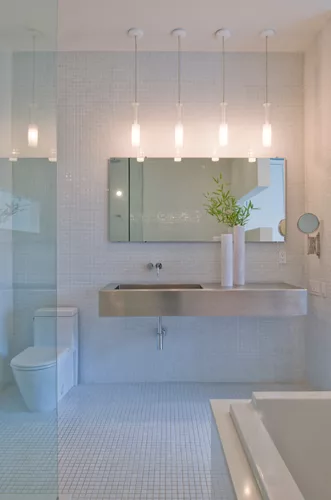
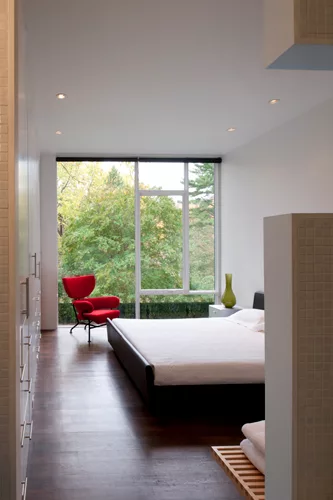
Inside the house, spaces are bright and open, with walnut floors, white walls, and stainless steel countertops as the main finishes. The four children (with one on the way) spend most of their time outside or in the basement, which contains one bedroom, a playroom, a media room, and a laundry. Other than a small office area, the ground floor is devoted to public spaces, including an open kitchen, while bedrooms are on the second floor.

'Not one part of this house goes unused,' says Gurney. His client agrees, and adds, 'It's a house of its time, and it's completely a reflection of me.'


People

Owner
Withheld

Architect
Robert M. Gurney, FAIA, Architect
5110 ½ MacArthur Blvd, NW
Washington, DC 20016
(202) 237-0925 (ph)
(202) 237-0927 (fax)
www.robertgurneyarchitect.com

Personnel in architect's firm who should receive special credit
Architect: Robert M. Gurney, FAIA

Project Architect: Brian Tuskey

Architect of record
Robert M. Gurney, FAIA

Associate architect(s)
Project  Architect: Brian Tuskey

Engineer(s)
D. Anthony Beale LLC

General contractor
John Thompson
Freedom First Homes

Photographer(s)
Maxwell MacKenzie Architectural Photographer


Products

Structural system
Wood and Steel Framing

Exterior cladding
Masonry: Ground faced concrete block

Metal/glass curtainwall: Weathershield Windows and Doors; Parrett Sliding Doors

Wood: Mangaris Red Balau (Outdoor Deck + Screens)

Roofing
Elastomeric: EPDM

Metal: Standing Seam on interior of Parapet wall.

Windows Weathershield Windows and Doors

Glazing
Skylights: Custom

Doors
Entrances: Custom; Mahogany

Wood doors: Interior; Painted Wood

Sliding doors: Parrett

Hardware
Locksets: FSB

Interior finishes
Cabinetwork and custom woodwork: Painted Wood

Paints and stains: Sherwin Williams

Floor and wall tile: 1x1 White Mosaic

Lighting
Interior ambient lighting: Lightolier, Bega. LBL Lighting, Buschfeld

Downlights: Lightolier

Task lighting: Task Luche, Stonco

Plumbing
Bathroom Fixtures: Duravit; Custom Stainless Steel Sink

Bathroom Fittings: Vola

Kitchen Fixtures: Franke

Kitchen Fittings: Vola

 
KEYWORDS: Maryland

Share This Story

Looking for a reprint of this article?
From high-res PDFs to custom plaques, order your copy today!

Post a comment to this article

Report Abusive Comment

Subscription Center
  • Create an Account
  • Start a Subscription
  • Manage My Account
  • Sign Up for Newsletters
  • Visit Customer Service
  • Update Preferences

More Videos

Sponsored Content

Sponsored Content is a special paid section where industry companies provide high quality, objective, non-commercial content around topics of interest to the Architectural Record audience. All Sponsored Content is supplied by the advertising company and any opinions expressed in this article are those of the author and not necessarily reflect the views of Architectural Record or its parent company, BNP Media. Interested in participating in our Sponsored Content section? Contact your local rep!

close
  • TAMLYN XtremeTrim Exterior Trim
    Sponsored byTamlyn

    Designing Cleaner Panel Facades: Why Exterior Trim Details Matter

  • Building with Vapor Barriers
    Sponsored byReef Industries, Inc.

    Vapor Barriers Help Control Moisture in Tighter Building Designs

  • Duct Interior with Prodeq System
    Sponsored byHenry, a Carlisle Company

    Designing Resilient Water Containment Systems

DESIGN:ED Podcast
Listen to Architectural Record’s DESIGN:ED Podcast

Events

June 10, 2026

Rethinking Stormwater – The Power of Porous Paving

Credits: 1 AIA LU/HSW; 1 AIBD P-CE; 0.1 ICC CEU

Learn how porous paving systems support stormwater management, reduce heat island effects, and enhance sustainable site design performance.

June 11, 2026

Very Early Warning Fire Detection for Mission-Critical Facilities

Credits: 1 AIA LU/HSW; 1 AIBD P-CE; 0.1 ICC CEU

Examine advanced fire detection strategies that support uptime and enhance safety in data centers and other mission-critical facilities.

View All Submit An Event

Products

2026 Architect's Square Foot Costbook

2026 Architect's Square Foot Costbook

See More Products

Popular Stories

Practice Matters illustration

What’s in a (Firm’s) Name? Thinking About Succession and Legacy

Practice Matters illustration

By the Numbers: Counting America's Architects

House on a Hill

Design Vanguard 2026: Forma

Crane Cove, ONO

Design Vanguard 2026 Winners

House A on a Hill

Design Vanguard 2026: Santiago Valdivieso

Broader Sustainability of CMU - Free Webinar - May 21, 2026

Related Articles

  • House at Further Lane - House of the Month -

    See More
  • House at Further Lane

    See More

Related Products

See More Products
  • biogenic.jpg

    Manual of Biogenic House Sections

  • iconic house.jpg

    The Iconic House

See More Products
×

The latest news and information

#1 Source for Architectural Design, News and Products

SUBSCRIBE
  • RESOURCES
    • Advertise
    • Contact Us
    • Submit
    • Store
  • ACCOUNT CENTER
    • Create an Account
    • Start a Subscription
    • Manage My Account
    • Sign Up for Newsletters
    • Visit Customer Service
    • Update Preferences
  • PRIVACY
    • PRIVACY POLICY
    • TERMS & CONDITIONS
    • DO NOT SELL MY PERSONAL INFORMATION
    • PRIVACY REQUEST
    • ACCESSIBILITY
  • SERVICES
    • Marketing Services
    • Reprints
    • Market Research
    • List Rental
    • Survey/Respondent Access
  • STAY CONNECTED
    • Linkedin
    • Facebook
    • Instagram
    • YouTube
    • X (Twitter)

Copyright ©2026. All Rights Reserved BNP Media, Inc. and BNP Media II, LLC.

Design, CMS, Hosting & Web Development :: ePublishing