Architectural Record
search
cart
facebook twitter linkedin youtube
  • Sign In
  • Subscribe
  • Sign Out
  • My Account
Architectural Record
  • NEWS
    • Latest News
    • Awards
    • Interviews
    • Obituaries
    • Podcasts
      • Design:Ed Podcast
      • Sponsored Podcasts
  • OPINION
    • Book Reviews / Excerpts
    • Exhibition Reviews
    • Forum
  • EXCLUSIVES
    • Videos
    • Design Vanguard
    • Top 300 Firms
    • Sponsored Content
    • Sponsored eBooks
    • From the Archives
  • CONTINUING ED
    • Editorial Continuing Ed
    • CE Center
    • CE Academies
  • PROJECTS
    • Buildings By Type
    • Reuse & Renovation
    • Museums & Arts Centers
    • Colleges & Universities
    • Multifamily Housing
    • Interiors
    • Lighting
    • Kitchen & Bath
  • HOUSES
    • Record Houses
    • House of the Month
    • Featured Houses
  • PRODUCTS
    • Products by Category
    • Record Products of the Year
    • Latest Products
  • EVENTS
    • Dates & Events
    • Record on the Road
    • Innovation Conference
    • Sustainability in Practice
    • Women In Architecture
    • Webinars
    • Ad Excellence Awards
    • Submit an Event
  • CONNECT
    • Ask RECORD AI
    • Newsletters
    • Contact
    • Advertise
    • Editorial Calendar
    • Store
    • Customer Service
  • SUBMIT
    • Submission Guidelines
    • RECORD Competitions
  • MAGAZINE
    • Subscribe
    • My Account
    • Digital Edition
    • Current Issue
    • Firm Pass
    • Historic Archive
Architecture News

Review: Pedro E. Guerrero: A Photographer's Journey, American Masters
By Dante A. Ciampaglia
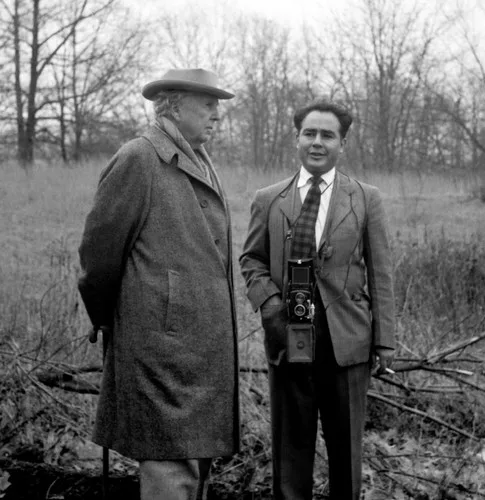
Frank Lloyd Wright and Pedro E. Guerrero, Pleasantville, New York, 1949.<div id='_mcePaste'>&#65279;&#65279;
Review: Pedro E. Guerrero: A Photographer’s Journey, American Masters
Frank Lloyd Wright and Pedro E. Guerrero, Pleasantville, New York, 1949.

Photo © 2015 Pedro E. Guerrero Archives
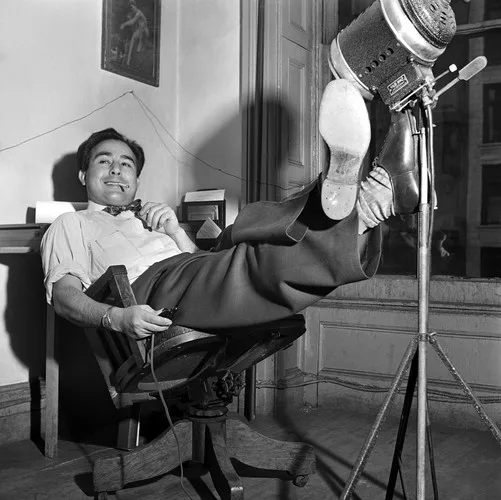
Photographer Pedro E. Guerrero on assignment circa 1950s.<div id='_mcePaste'>&#65279;&#65279;
Review: Pedro E. Guerrero: A Photographer’s Journey, American Masters
Photographer Pedro E. Guerrero on assignment circa 1950s.

Photo © 2015 Pedro E. Guerrero Archives
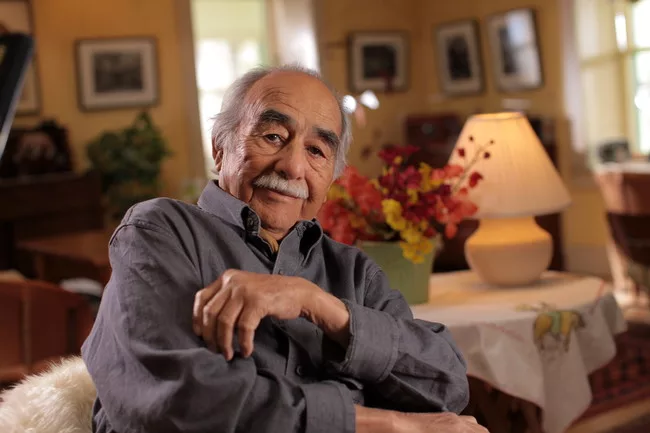
Pedro E. Guerrero in his home office in Florence, Arizona.
Review: Pedro E. Guerrero: A Photographer’s Journey, American Masters
Pedro E. Guerrero in his home office in Florence, Arizona.
Photo © Miguel Creus
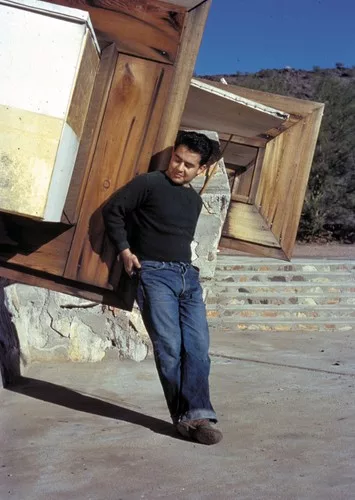
Pedro E. Guerrero, age 22, at Taliesin West, architect Frank Lloyd Wright's home.
Review: Pedro E. Guerrero: A Photographer’s Journey, American Masters
Pedro E. Guerrero, age 22, at Taliesin West, architect Frank Lloyd Wright's home.
Photo © 2015 Pedro E. Guerrero Archives
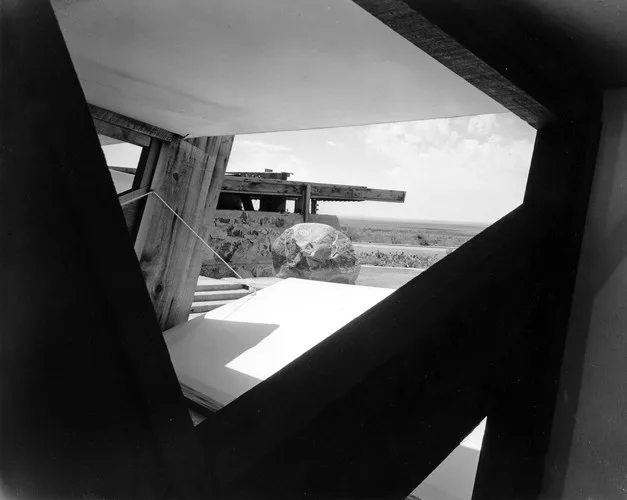
Frank Lloyd Wright's Arizona home, Taliesin West, 1940, photographed by Pedro E. Guerrero.
Review: Pedro E. Guerrero: A Photographer’s Journey, American Masters
Frank Lloyd Wright's Arizona home, Taliesin West, 1940, photographed by Pedro E. Guerrero.
Photo © 2015 Pedro E. Guerrero Archives
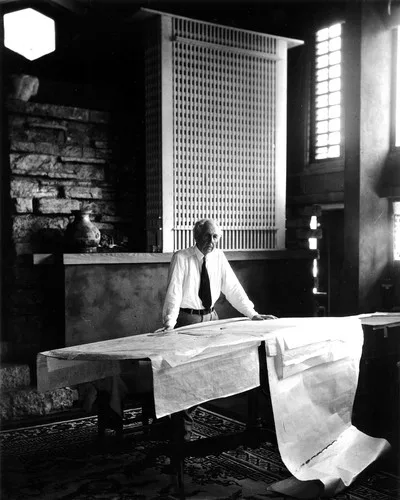
Frank Lloyd Wright stands at the drafting table in his studio at Taliesin, Wisconsin, 1947, photographed by Pedro E. Guerrero.
Review: Pedro E. Guerrero: A Photographer’s Journey, American Masters
Frank Lloyd Wright stands at the drafting table in his studio at Taliesin, Wisconsin, 1947, photographed by Pedro E. Guerrero.
Photo © 2015 Pedro E. Guerrero Archives
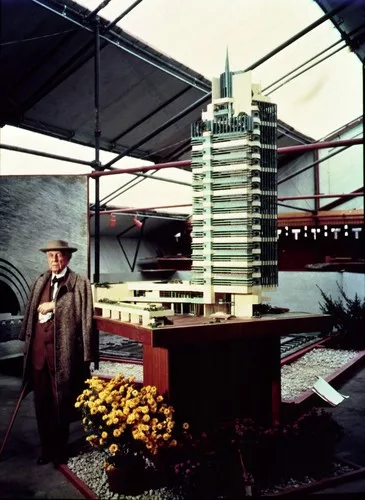
Frank Lloyd Wright at the &#8220;Sixty Years of Living Architecture&#8221; exhibit on the site of the future Guggenheim Museum, 1953, photographed by Pedro E. Guerrero.
Review: Pedro E. Guerrero: A Photographer’s Journey, American Masters
Frank Lloyd Wright at the “Sixty Years of Living Architecture” exhibit on the site of the future Guggenheim Museum, 1953, photographed by Pedro E. Guerrero.
Photo © 2015 Pedro E. Guerrero Archives
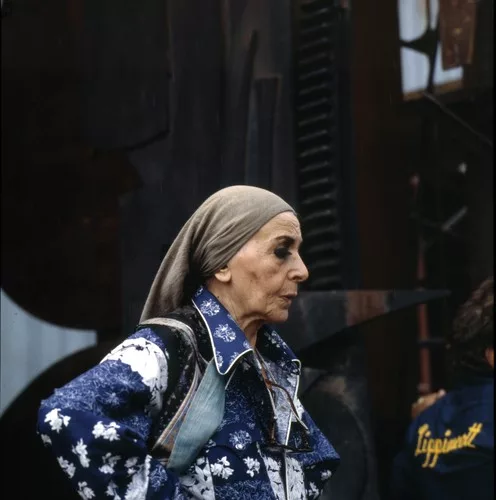
Louise Nevelson at Lippincott Studios in 1977, photographed by Pedro E. Guerrero.
Review: Pedro E. Guerrero: A Photographer’s Journey, American Masters
Louise Nevelson at Lippincott Studios in 1977, photographed by Pedro E. Guerrero.
Photo © 2015 Pedro E. Guerrero Archives
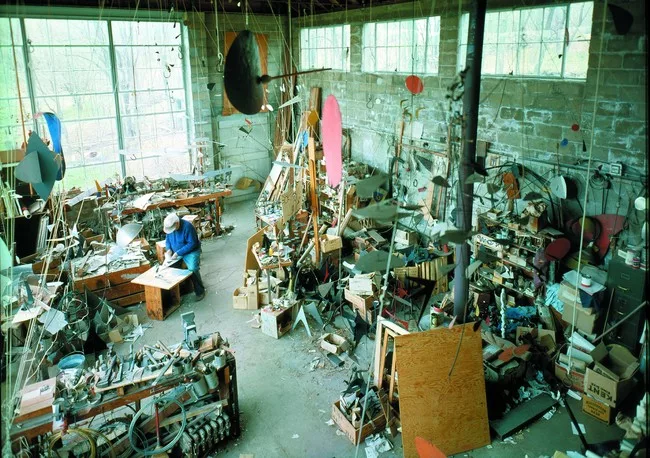
Sculptor Alexander Calder's studio, 1964, photographed by Pedro E. Guerrero.
Review: Pedro E. Guerrero: A Photographer’s Journey, American Masters
Sculptor Alexander Calder's studio, 1964, photographed by Pedro E. Guerrero.
Photo © 2015 Pedro E. Guerrero Archives
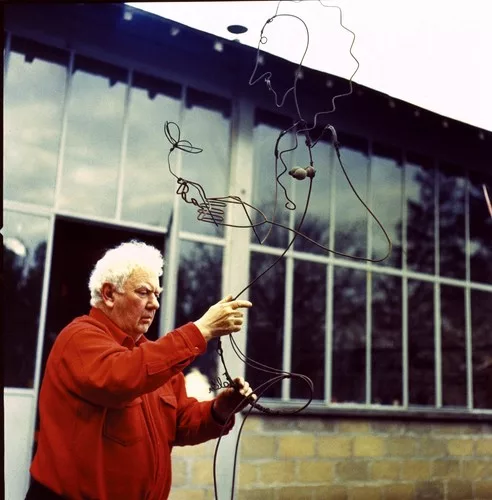
Sculptor Alexander Calder at work in Sache, France, 1964, photographed by Pedro E. Guerrero.
Review: Pedro E. Guerrero: A Photographer’s Journey, American Masters
Sculptor Alexander Calder at work in Sache, France, 1964, photographed by Pedro E. Guerrero.
Photo © 2015 Pedro E. Guerrero Archives
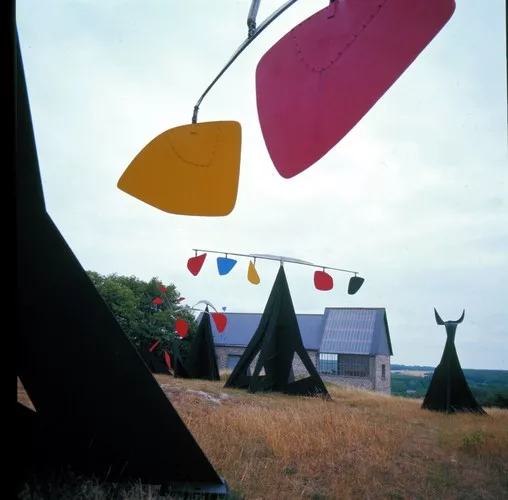
Sculptor Alexander Calder stabiles in Sache, France, 1976, photographed by Pedro E. Guerrero.
Review: Pedro E. Guerrero: A Photographer’s Journey, American Masters
Sculptor Alexander Calder stabiles in Sache, France, 1976, photographed by Pedro E. Guerrero.
Photo © 2015 Pedro E. Guerrero Archives
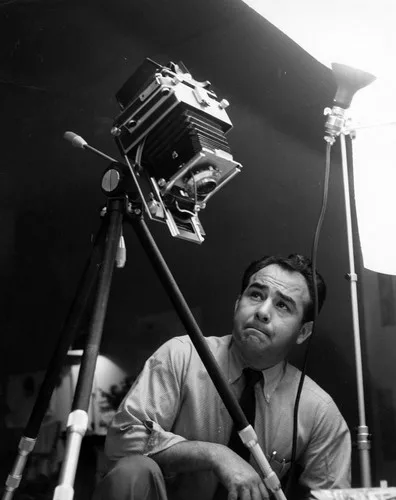
Pedro E. Guerrero self-portrait in his New York City studio, circa 1950s.
Review: Pedro E. Guerrero: A Photographer’s Journey, American Masters
Pedro E. Guerrero self-portrait in his New York City studio, circa 1950s.
Photo © 2015 Pedro E. Guerrero Archives
Frank Lloyd Wright and Pedro E. Guerrero, Pleasantville, New York, 1949.<div id='_mcePaste'>&#65279;&#65279;
Photographer Pedro E. Guerrero on assignment circa 1950s.<div id='_mcePaste'>&#65279;&#65279;
Pedro E. Guerrero in his home office in Florence, Arizona.
Pedro E. Guerrero, age 22, at Taliesin West, architect Frank Lloyd Wright's home.
Frank Lloyd Wright's Arizona home, Taliesin West, 1940, photographed by Pedro E. Guerrero.
Frank Lloyd Wright stands at the drafting table in his studio at Taliesin, Wisconsin, 1947, photographed by Pedro E. Guerrero.
Frank Lloyd Wright at the &#8220;Sixty Years of Living Architecture&#8221; exhibit on the site of the future Guggenheim Museum, 1953, photographed by Pedro E. Guerrero.
Louise Nevelson at Lippincott Studios in 1977, photographed by Pedro E. Guerrero.
Sculptor Alexander Calder's studio, 1964, photographed by Pedro E. Guerrero.
Sculptor Alexander Calder at work in Sache, France, 1964, photographed by Pedro E. Guerrero.
Sculptor Alexander Calder stabiles in Sache, France, 1976, photographed by Pedro E. Guerrero.
Pedro E. Guerrero self-portrait in his New York City studio, circa 1950s.
September 22, 2015

The best architecture photographers use light and perspective to elevate what could be static images into single-frame movies, documenting places as organisms full of verve, mystery, and life. Ezra Stoller might be the first name in the architectural photography conversation, but PBS’ American Masters series makes a strong case that it should be Pedro E. Guerrero.

The inspiring, albeit limited, 60-minute documentary profile Pedro E. Guerrero: A Photographer’s Journey, which aired Friday, September 18 and can be viewed online at PBS.org, introduces us to a photographer who deserves far greater recognition. (Google “Pedro Guerrero” and most of the first two pages of results are about a former baseball player with that name.) Guerrero, who began his career as a 22-year-old amateur with no architectural knowledge, ultimately made his name chronicling Frank Lloyd Wright’s projects and, later, mid-century interiors and the work of artists Alexander Calder and Louise Nevelson. But it’s his work with Wright that would define him—and, to an extent, Wright.

In the late 1930s, after returning from art school in Los Angeles to his home in Mesa, Arizona, Guerrero needed work and direction. His father suggested he contact Wright, whose winter compound was in nearby Scottsdale, for a job. Guerrero did. Wright, in need of a photographer, hired him, and the beginning of a life-changing relationship was born.

Guerrero photographed Taliesin West, residential projects, and, later, the Guggenheim. He had a keen eye for capturing the architect’s work. He would circle it, observe it, and “find things falling into place the way I wanted them to,” Guerrero says in the film. One critic adds that Guerrero “spoke the language of Frank Lloyd Wright,” and it’s hard to argue when you look at his images from Arizona. His 1940 photograph of the Taliesin West’s drafting studio, for instance, is dramatic and heroic: The long, geometric structure grows out of the desert at sharp angles, surrounded by cactus with the reflecting pool seemingly connected to the marbled sky above. Wright’s construction is locked in an eternal ballet with the natural world.

The experience with Wright shaped Guerrero and his career. Wright gave Guerrero his first break, exposed him to a world that would otherwise have been closed to a Mexican-American person of limited means, and gave him entrée to the elite arts and culture scene of New York. The relationship proved to be Guerrero’s ticket into the magazine world (he shot homes and interiors for Home & Garden for 20 years), which brought him into contact with Calder and Neveslon. “When Wright was alive, he was really, totally the center of my universe, you might say, and one of the greatest influences on my life, outside of my own father,” Guerrero says in the film.

But the relationship was mutually beneficial. Guerrero’s photos of Wright’s buildings—and his portraits of the architect—shaped how the world saw both the man and his accomplishments. Though Wright adopted an aristocratic affect, through Guerrero’s keen lens he comes off a stately workman, a Victorian gentleman, and contemplative elder statesman. These images are indelibly linked with our perception of Wright, thanks to Guerrero’s sensitive eye. Whether it’s interior or exterior architectural photos, shots of the Fellowship working on Taliesin West, Calder manipulating materials into mobiles, or Nevelson directing assistants in her studio, humanity radiates out of Guerrero’s images.

For many, Pedro E. Guerrero: A Photographer’s Journey will likely be the first introduction to Guerrero’s life and work. It’s an excellent primer, built on a single “exclusive, in-depth” interview with Guerrero recorded shortly before his death in 2012. But with only a one-hour runtime, the documentary leaves much unsaid. Nearly 30 minutes is spent on his collaboration with Wright, while the rest is left to cover the next 50 years, including his work with Calder and Nevelson. What’s noticeably absent is his time as an official member of Wright’s Fellowship (which lasted a year) and his experience as a Mexican-American in a racially divided culture (at black-tie parties in New York and Connecticut he was routinely mistaken for a waiter), among other defining aspects of his life.

Guerrero explores those topics in his autobiography, also titled Pedro E. Guerrero: A Photographer’s Journey, which makes you wonder about the content of that core interview. What wasn’t used? Could it have been shaped into a film on its own? With those questions in mind, it’s easy to imagine a different kind of film. Historical and critical context from scholars and experts is certainly important, but in this case allowing Guerrero narrate his story, generously illustrated with his iconic images, would have been a far richer introduction to an artist worthy of wider acclaim.

Share This Story

Looking for a reprint of this article?
From high-res PDFs to custom plaques, order your copy today!

Dante ciampaglia

Dante A. Ciampaglia has two decades experience editing print and digital magazines, including at Newsweek, Sports Illustrated, and Time. He has been a contributor to Architectural Record for more than 10 years, writing about the intersection of architecture, film, and the visual arts. His work has also been published by the Washington Post, Paris Review, Wired, Los Angeles Review of Books, Metropolis, and the Brooklyn Rail, among others.

Post a comment to this article

Report Abusive Comment

Subscription Center
  • Create an Account
  • Start a Subscription
  • Manage My Account
  • Sign Up for Newsletters
  • Visit Customer Service
  • Update Preferences

More Videos

Sponsored Content

Sponsored Content is a special paid section where industry companies provide high quality, objective, non-commercial content around topics of interest to the Architectural Record audience. All Sponsored Content is supplied by the advertising company and any opinions expressed in this article are those of the author and not necessarily reflect the views of Architectural Record or its parent company, BNP Media. Interested in participating in our Sponsored Content section? Contact your local rep!

close
  • TAMLYN XtremeTrim Exterior Trim
    Sponsored byTamlyn

    Designing Cleaner Panel Facades: Why Exterior Trim Details Matter

  • Building with Vapor Barriers
    Sponsored byReef Industries, Inc.

    Vapor Barriers Help Control Moisture in Tighter Building Designs

  • Duct Interior with Prodeq System
    Sponsored byHenry, a Carlisle Company

    Designing Resilient Water Containment Systems

DESIGN:ED Podcast
Listen to Architectural Record’s DESIGN:ED Podcast

Events

June 18, 2026

Rebooting the Aging Office Building

Credits: 1 AIA LU/HSW; 1 AIBD P-CE; 0.1 ICC CEU; 1 PDH

Explore façade retrofit strategies and award-winning design concepts that can transform aging office buildings into healthier, higher-performing workplaces for today’s hybrid workforce.

June 23, 2026

Enhancing Fire Resistance with Advanced PVC Solutions

Credits: 1 AIA LU/HSW; 1 AIBD P-CE; 0.1 ICC CEU; 1 IIBEC CEH

Evaluate advanced PVC solutions that improve fire resistance, support WUI compliance, and enhance resilience in residential and commercial building design.

View All Submit An Event

Products

2026 Architect's Square Foot Costbook

2026 Architect's Square Foot Costbook

See More Products

Popular Stories

SanDiegoAirport

Top 300 Architecture Firms of 2026

Coronado Bridge

The Architect’s Guide to San Diego

Lorcan O' Herilhy

California Architect Lorcan O’Herlihy Has Died, Age 66

CCA, Studio Gang

The Winners of the AIA’s 2026 Architecture Award Range from Collegiate Rowing Hubs to Housing for the Homeless

Dusk House

Design Vanguard 2026: ONO

Rebooting the Aging Office Building - Free Webinar - June 18, 2026

Related Articles

  • PBS Doc I. M. Pei

    I. M. Pei Returns to China in PBS American Masters Documentary

    See More
  • House-Photographer-II

    House for a Photographer II

    See More
  • Roberto Burle Marx: Brazilian Modernist

    Review of 'Roberto Burle Marx: Brazilian Modernist'

    See More

Related Products

See More Products
  • american arch.jpg

    American Architecture: An Illustrated Encyclopedia

  • book3.jpg

    If Architecture is a Language, Then a Building is a Story

See More Products
×

The latest news and information

#1 Source for Architectural Design, News and Products

SUBSCRIBE
  • RESOURCES
    • Advertise
    • Contact Us
    • Submit
    • Store
  • ACCOUNT CENTER
    • Create an Account
    • Start a Subscription
    • Manage My Account
    • Sign Up for Newsletters
    • Visit Customer Service
    • Update Preferences
  • PRIVACY
    • PRIVACY POLICY
    • TERMS & CONDITIONS
    • DO NOT SELL MY PERSONAL INFORMATION
    • PRIVACY REQUEST
    • ACCESSIBILITY
  • SERVICES
    • Marketing Services
    • Reprints
    • Market Research
    • List Rental
    • Survey/Respondent Access
  • STAY CONNECTED
    • Linkedin
    • Facebook
    • Instagram
    • YouTube
    • X (Twitter)

Copyright ©2026. All Rights Reserved BNP Media, Inc. and BNP Media II, LLC.

Design, CMS, Hosting & Web Development :: ePublishing