Zaha Hadid reduced the size and toned down the expression of her initial design for the 2020 Tokyo Olympic Stadium, but it is still garnering criticism. In the latest round of public outcry over Tokyo’s 2020 Olympic Stadium, architect Arata Isozaki has stepped into the ring, joining a coterie of illustrious architects opposed to the project’s development. Though he favored the initial helmet-shaped scheme that landed the London architect Zaha Hadid the commission, the revised design has Isozaki deeply concerned. He convened last week with Hadid associate Satoshi Ohashi at a public forum in Tokyo intended to give both parties
Protestors gather around the National Stadium on Saturday, hoping to save it from demolition. On Saturday, placard-wearing protestors took to the streets of central Tokyo and peacefully encircled the 50,000-seat Kasumigaoka National Stadium designed by Mitsuo Katayama and erected for the 1964 Olympics. In preparation for hosting the games again in 2020, the vintage structure is being readied for demolition followed by replacement with a futuristic, Zaha Hadid-designed arena several times its size. But a collection of architects and lay people alike are hoping to convince the Japan Sport Council (JSC) to do otherwise. Japan does not have a great
The new national stadium of Japan, by Zaha Hadid Architects, will be built for the 2020 summer Olympics in Tokyo. In September, the International Olympic Committee (IOC) announced the host city for the Games of the XXXII Olympiad in 2020. A town with a good track record, Tokyo beat out Istanbul and Madrid and took the prize for the third time. The city was first selected for the 1940 summer games, which were canceled due to World War II. Tokyo’s second win was for the 1964 summer Olympics. Symbolizing the end of Japan’s post–World War II reconstruction, new athletic facilities
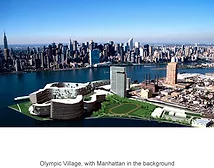
Though many consider New York City’s bid to host the 2012 Summer Olympics a long shot, NYC2012, the City’s nonprofit spin-off founded by Deputy Mayor Daniel Doctoroff, submitted its 600-page Bid Book on November 11 to the International Olympic Committee (IOC).