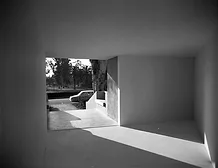
Architects and artists alike have long idolized Gordon Matta-Clark for his aggressive transformations of existing buildings. From slicing a suburban home in half (Splitting, 1974) to carving a cone out of 17th-century French apartments (Conical Intersect, 1975), Matta-Clark pioneered the manipulation of found architecture to create complex perceptual and social effects.
The Metropolitan Museum of Art has been collecting architecture and design since 1870, when it was given a Roman sarcophagus. More recent acquisitions include a stairway from the Chicago Stock Exchange Building, by Louis Sullivan, and an entire living room by Frank Lloyd Wright.
Museum curators tend to stay behind the scenes, especially when high-profile artists are involved. But the Whitney Museum of American Art’s Jeff Koons: A Retrospective, which runs through October 19, has been so lavishly praised that its curator, Scott Rothkopf, couldn’t stay out of the spotlight if he tried.
 RSS
RSS