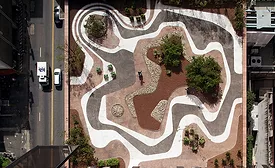
Over his 60-year career, Roberto Burle Marx established himself as a key figure in South American Modernism by designing more than 2,000 gardens and landscapes around the world for private residences, civic buildings, and public spaces.
In late 2013, Kanye West visited the Harvard Graduate School of Design and said, “I really do believe that the world can be saved through design,” and “everything needs to actually be ‘architected.’” For many, this collision of hip-hop and architecture was unexpected, and the staid crowd of architectural professionals reacted, let’s say, defensively.
House model; Nayarit, Mexico, 100 B.C.–A.D. 200 Long before rendering two-dimensional designs into three-dimensional models became standard architectural procedure, the indigenous peoples of Latin America represented buildings in small-scale forms to much different ends. Andean and Mesoamerican cultures crafted replicas of temples and houses for funerary and burial rites, and to honor loved ones at shrines. This ritualistic use of the architectural model is the focus of Design for Eternity: Architectural Models from the Ancient Americas, a compact and enlightening exhibition at the Metropolitan Museum of Art that opened Monday and runs through Sept. 18, 2016. The first such show