Architectural Record
search
cart
facebook twitter linkedin youtube
  • Sign In
  • Subscribe
  • Sign Out
  • My Account
Architectural Record
  • NEWS
    • Latest News
    • Awards
    • Interviews
    • Obituaries
    • Podcasts
      • Design:Ed Podcast
      • Sponsored Podcasts
  • OPINION
    • Book Reviews / Excerpts
    • Exhibition Reviews
    • Forum
  • EXCLUSIVES
    • Videos
    • Design Vanguard
    • Top 300 Firms
    • Sponsored Content
    • Sponsored eBooks
    • From the Archives
  • CONTINUING ED
    • Editorial Continuing Ed
    • CE Center
    • CE Academies
  • PROJECTS
    • Buildings By Type
    • Reuse & Renovation
    • Museums & Arts Centers
    • Colleges & Universities
    • Multifamily Housing
    • Interiors
    • Lighting
    • Kitchen & Bath
  • HOUSES
    • Record Houses
    • House of the Month
    • Featured Houses
  • PRODUCTS
    • Products by Category
    • Record Products of the Year
    • Latest Products
  • EVENTS
    • Dates & Events
    • Record on the Road
    • Innovation Conference
    • Sustainability in Practice
    • Women In Architecture
    • Webinars
    • Ad Excellence Awards
    • Submit an Event
  • CONNECT
    • Ask RECORD AI
    • Newsletters
    • Contact
    • Advertise
    • Editorial Calendar
    • Store
    • Customer Service
  • SUBMIT
    • Submission Guidelines
    • RECORD Competitions
  • MAGAZINE
    • Subscribe
    • My Account
    • Digital Edition
    • Current Issue
    • Firm Pass
    • Historic Archive

What Will Happen to Charity Hospital and Other Endangered Projects?

A fresh look at the state of historic preservation.
By Robert Ivy, FAIA FAIA
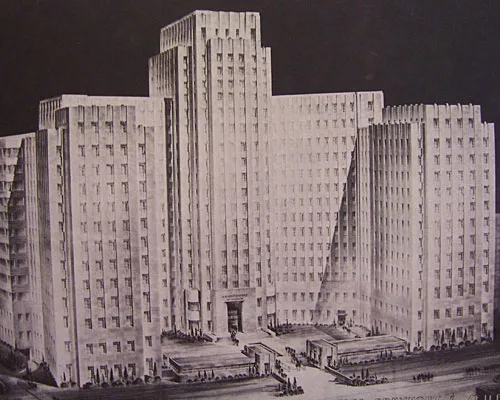
Charity Hospital

Rendering of original design by Weiss, Dreyfous & Seiferth, 1939. The firm also designed the Louisiana State Capitol and buildings at Louisiana State University in Baton Rouge.

Image courtesy NTHP
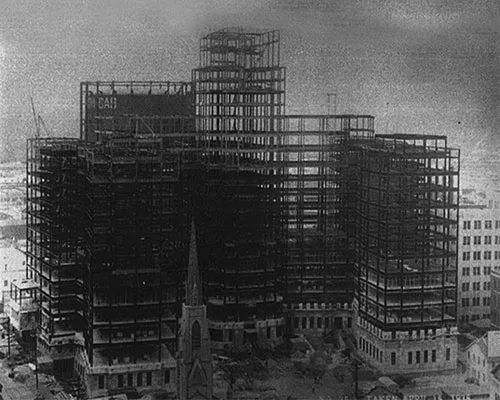
Charity Hospital

The steel structure of Charity Hospital, during construction in 1938.

Image courtesy NTHP
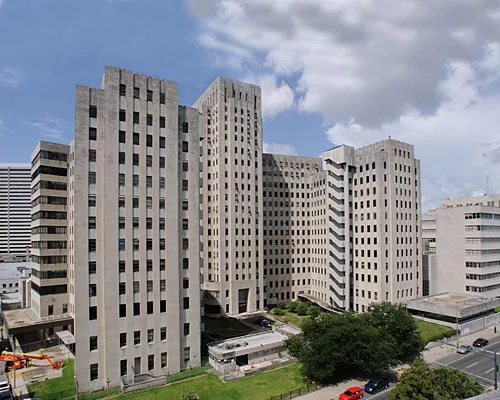
Charity Hospital

Charity Hospital in 2008.

Image courtesy RMJM
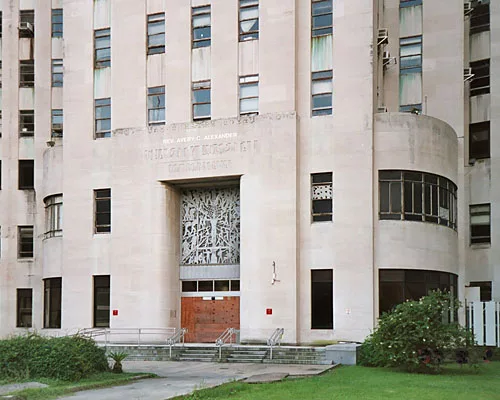
Charity Hospital

Main entrance to Charity Hospital, boarded, 2007.

Image courtesy NTHP / Todd Callender
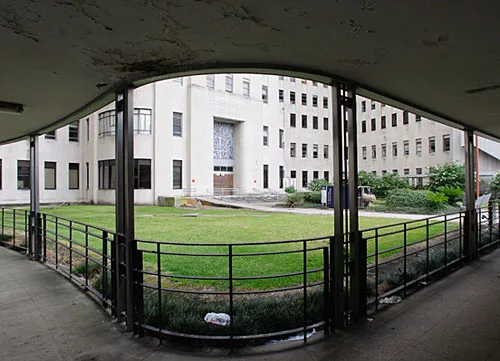
Charity Hospital

Interior courtyard at Charity Hospital, 2007.

Image courtesy RMJM
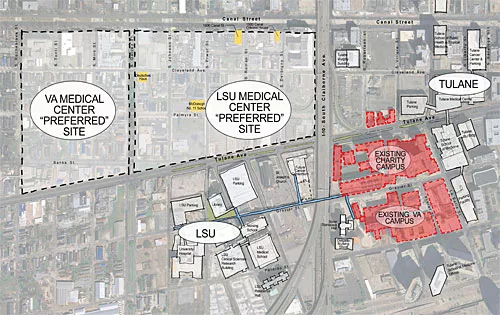
Charity Hospital

Louisiana’s existing plan for two new campuses for the Louisiana State University Medical Center and Veterans’ Affairs Medical Center.

Image courtesy RMJM
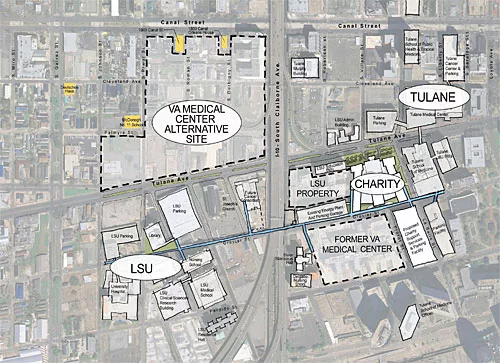
Charity Hospital

Alternative plan for medical campus, including the refurbishment of Charity Hospital as the Louisiana State University Medical Center.

Image courtesy RMJM

Charity Hospital

Proposed new entry to Charity Hospital.

Image courtesy RMJM

Charity Hospital

Proposed entry atrium.

Image courtesy RMJM

Charity Hospital

Proposed view from Tulane Avenue.

Image courtesy RMJM

Charity Hospital
Charity Hospital
Charity Hospital
Charity Hospital
Charity Hospital
Charity Hospital
Charity Hospital
Charity Hospital
Charity Hospital
Charity Hospital
June 19, 2009
After decades of gaining strength as a movement, the battle lines have been drawn again, with a significant structure in peril. The Medical Center of Louisiana at New Orleans, popularly known as Charity Hospital, a looming Art Moderne presence in the Deep South, battered by Hurricane Katrina but apparently structurally intact, now faces a more insidious foe—abandonment—together with the demolition of more than 120 structures in a nearby neighborhood currently listed on the National Register of Historic Places. But not without a fight.
 
The contemporary drama pits big money ($2 billion in much-needed investment for New Orleans to become a 21st-century medical Mecca) and power (the Veterans Administration and the Louisiana Office of Facility Planning and Control) against a hard-hit community, organizing and finding its voice after the hurricane, asking to be heard. No one denies that the city needs the capital investment, or that a medical campus would benefit the larger city and state economy. As in many preservation arguments, however, the value and relevance of an existing property lies at the core of the debate, in this case the 1-million-square-foot hospital designed by Weiss, Dreyfous, & Seiferth and built from 1937 to 1939. Should it be retained or jettisoned? Is any sort of compromise scheme possible?
 
Today, architects on both sides of the divide are playing a central role at Charity once again. The Foundation for Historical Louisiana partnered with the National Trust for Historic Preservation in commissioning a $600,000 evaluation of the core property by the firm RMJM, which maintains an active practice in both historic preservation and health care (with local architects Waggonner & Ball, and structural engineers Robert Silman Associates, among others). A respected national firm, NBBJ, and local partners have been employed by state authorities responsible for planning entirely new facilities for Charity and the VA on another 70-block campus—located in midtown, and farther away from the central business district—carved, in part, from an existing neighborhood.
 
“I cannot imagine a more important case for historic preservation,” states Jack Davis, a New Orleanian and member of the board of trustees of the National Trust for Historic Preservation. He cites the RMJM study that shows how transforming the existing structure makes sense economically, reducing costs by $283 million dollars compared to the current plan; saves time (two years, by renovating an unoccupied structure); and keeps New Orleans’s urban core intact while delivering the sought-after, contemporary medical complex.
 
But Louisiana officials in charge of the proceedings aren’t convinced. In a letter to the state legislature, Jerry Jones, an architect and assistant commissioner of the state’s Office of Facility Planning and Control, wrote that building a hospital that does not equal the programmatic goals set for the new campus “does not make long-term sense.” Jones and others argue that renovating Charity would provide comparatively inadequate parking and ambulatory-care space. It would also preclude flexibility in future building and expansion of the medical center. Ultimately, the state legislature will decide if the plans for the alternate site—and the continued neglect of Charity—proceed as previously planned.
 
Given the iconic stature of the hospital (founded in 1736) in the history of health care, the building’s importance in the Louisiana landscape, and the ramifications of demolishing houses currently listed as “contributing” on the National Register—as well as the immediate need for medical care—the outcome matters for the city’s, the state’s, and the region’s future. An outside arbiter, such as a university, might bring clarity and credibility to the issues, though in this case, most of New Orleans’s prodigious educational establishment has a vested interest in the outcome.
 
The Charity dilemma, still unresolved as of this writing, illustrates how preservation has evolved into a vital and necessary discussion in contemporary urban environments. It also demonstrates how, in a French phrase familiar in New Orleans, “Plus ça change, plus c’est la même chose” (“The more things change, the more they remain the same,” for non-French speakers). For centuries, the links to our past and the past’s relationship to our present have provoked heated argument, even passion, which can sometimes galvanize a community and on occasion occlude its vision. The term preservation, and the discipline and movement that accompany it, has shifted with time: Today’s preservationist occupies a different landscape than our grandmother’s.
 
KEYWORDS: historic preservation

Share This Story

Looking for a reprint of this article?
From high-res PDFs to custom plaques, order your copy today!


Previous 1 2 3 Next

Post a comment to this article

Report Abusive Comment

Subscription Center
  • Create an Account
  • Start a Subscription
  • Manage My Account
  • Sign Up for Newsletters
  • Visit Customer Service
  • Update Preferences

More Videos

Sponsored Content

Sponsored Content is a special paid section where industry companies provide high quality, objective, non-commercial content around topics of interest to the Architectural Record audience. All Sponsored Content is supplied by the advertising company and any opinions expressed in this article are those of the author and not necessarily reflect the views of Architectural Record or its parent company, BNP Media. Interested in participating in our Sponsored Content section? Contact your local rep!

close
  • TAMLYN XtremeTrim Exterior Trim
    Sponsored byTamlyn

    Designing Cleaner Panel Facades: Why Exterior Trim Details Matter

  • Building with Vapor Barriers
    Sponsored byReef Industries, Inc.

    Vapor Barriers Help Control Moisture in Tighter Building Designs

  • Duct Interior with Prodeq System
    Sponsored byHenry, a Carlisle Company

    Designing Resilient Water Containment Systems

DESIGN:ED Podcast
Listen to Architectural Record’s DESIGN:ED Podcast

Events

June 10, 2026

Rethinking Stormwater – The Power of Porous Paving

Credits: 1 AIA LU/HSW; 1 AIBD P-CE; 0.1 ICC CEU

Learn how porous paving systems support stormwater management, reduce heat island effects, and enhance sustainable site design performance.

June 11, 2026

Very Early Warning Fire Detection for Mission-Critical Facilities

Credits: 1 AIA LU/HSW; 1 AIBD P-CE; 0.1 ICC CEU

Examine advanced fire detection strategies that support uptime and enhance safety in data centers and other mission-critical facilities.

View All Submit An Event

Products

2026 Architect's Square Foot Costbook

2026 Architect's Square Foot Costbook

See More Products

Popular Stories

Coronado Bridge

The Architect’s Guide to San Diego

Practice Matters illustration

What’s in a (Firm’s) Name? Thinking About Succession and Legacy

Practice Matters illustration

By the Numbers: Counting America's Architects

Inward House

Inward House by VeeV Design Studio

Riverdale House by Studio Lau

Riverdale House by Studio Lau

Broader Sustainability of CMU - Free Webinar - May 21, 2026

Related Articles

  • What Will Happen to Charity Hospital and Other Endangered Projects?

    See More
  • What Will Happen to Charity Hospital and Other Endangered Projects?

    See More
  • What Will Obama's Presidency Mean for Architects?

    See More

Related Products

See More Products
  • movable arch.jpg

    Movable Architecture: A Design Guide to Container Reuse

  • GlobalData_logo_blue_header.png

    Construction in the US - Key Trends and Opportunities to 2023

See More Products

Events

View AllSubmit An Event
  • September 17, 2025

    Waterproofing Solutions for Shotcrete Foundations: What You Need to Know

    NOW ON DEMANDCredits: 1 AIA LU/HSW; 1 AIBD P-CE; 0.1 ICC CEU; 0.1 IACET CEU; 1 IDCEC CEU/HSW During this 1-hour seminar, attendees will explore the principles, design considerations, and best practices for pre-applied waterproofing systems in shotcrete applications.
View AllSubmit An Event
×

The latest news and information

#1 Source for Architectural Design, News and Products

SUBSCRIBE
  • RESOURCES
    • Advertise
    • Contact Us
    • Submit
    • Store
  • ACCOUNT CENTER
    • Create an Account
    • Start a Subscription
    • Manage My Account
    • Sign Up for Newsletters
    • Visit Customer Service
    • Update Preferences
  • PRIVACY
    • PRIVACY POLICY
    • TERMS & CONDITIONS
    • DO NOT SELL MY PERSONAL INFORMATION
    • PRIVACY REQUEST
    • ACCESSIBILITY
  • SERVICES
    • Marketing Services
    • Reprints
    • Market Research
    • List Rental
    • Survey/Respondent Access
  • STAY CONNECTED
    • Linkedin
    • Facebook
    • Instagram
    • YouTube
    • X (Twitter)

Copyright ©2026. All Rights Reserved BNP Media, Inc. and BNP Media II, LLC.

Design, CMS, Hosting & Web Development :: ePublishing