Architectural Record
search
cart
facebook twitter linkedin youtube
  • Sign In
  • Subscribe
  • Sign Out
  • My Account
Architectural Record
  • NEWS
    • Latest News
    • Awards
    • Interviews
    • Obituaries
    • Podcasts
      • Design:Ed Podcast
      • Sponsored Podcasts
  • OPINION
    • Book Reviews / Excerpts
    • Exhibition Reviews
    • Forum
  • EXCLUSIVES
    • Videos
    • Design Vanguard
    • Top 300 Firms
    • Sponsored Content
    • Sponsored eBooks
    • From the Archives
  • CONTINUING ED
    • Editorial Continuing Ed
    • CE Center
    • CE Academies
  • PROJECTS
    • Buildings By Type
    • Reuse & Renovation
    • Museums & Arts Centers
    • Colleges & Universities
    • Multifamily Housing
    • Interiors
    • Lighting
    • Kitchen & Bath
  • HOUSES
    • Record Houses
    • House of the Month
    • Featured Houses
  • PRODUCTS
    • Products by Category
    • Record Products of the Year
    • Latest Products
  • EVENTS
    • Dates & Events
    • Record on the Road
    • Innovation Conference
    • Sustainability in Practice
    • Women In Architecture
    • Webinars
    • Ad Excellence Awards
    • Submit an Event
  • CONNECT
    • Ask RECORD AI
    • Newsletters
    • Contact
    • Advertise
    • Editorial Calendar
    • Store
    • Customer Service
  • SUBMIT
    • Submission Guidelines
    • RECORD Competitions
  • MAGAZINE
    • Subscribe
    • My Account
    • Digital Edition
    • Current Issue
    • Firm Pass
    • Historic Archive
Design Vanguard

Leong Leong

Two architect brothers sought different mentors, then opened their own firm. With budgets big and small, they are designing through the recession.
By Fred A. Bernstein
Leong Leong
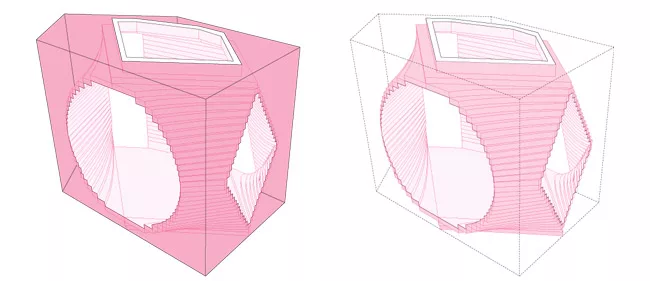
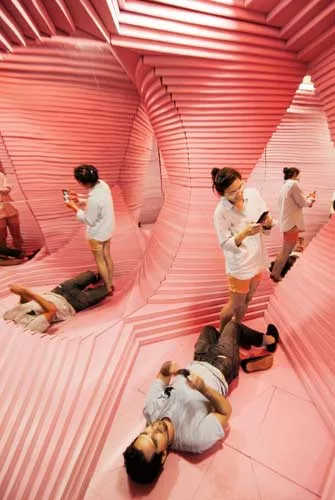
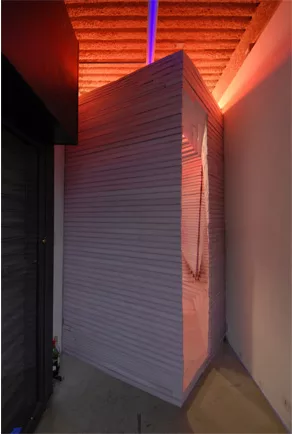
With graphic designer and officemate Jiminie Ha, the brothers opened a pop-up space on the Lower East Side called Turning Pink. They used slabs of rigid insulation (which will be reused) to create what, from the outside, seemed to be a 60-square-foot box, but, from the inside, dissolved into a kind of endless landscape.
 
Photo © Leong Leong
Leong Leong
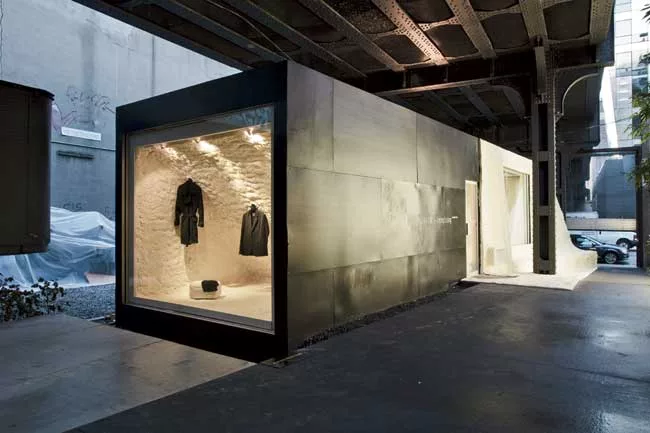
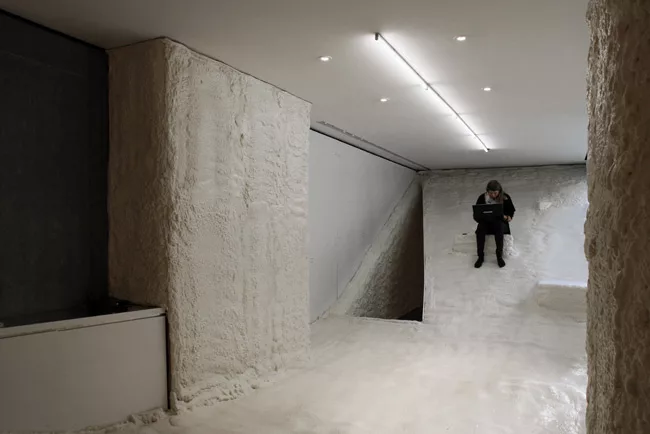
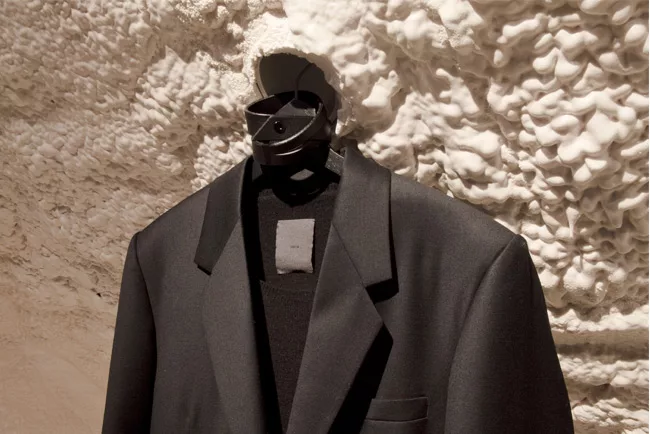
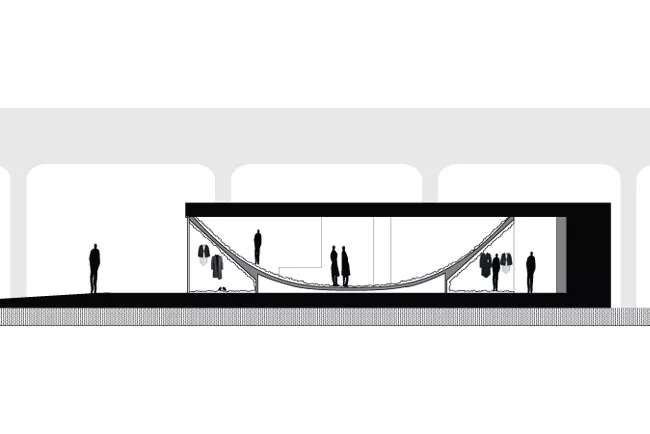
In Siki Im's pop-up store, under the High Line in New York City, customers moved around a concave platform made from a soy-based spray foam. Clothes were tucked around the structure so 'you had to really look for them,' says Dominic.
 
Photo © Leong Leong
Leong Leong
In Siki Im's pop-up store, under the High Line in New York City, customers moved around a concave platform made from a soy-based spray foam. Clothes were tucked around the structure so 'you had to really look for them,' says Dominic.
 
Photo © Leong Leong
Leong Leong
In Siki Im's pop-up store, under the High Line in New York City, customers moved around a concave platform made from a soy-based spray foam. Clothes were tucked around the structure so 'you had to really look for them,' says Dominic.
 
Photo © Dan McMahon
Leong Leong
In Siki Im's pop-up store, under the High Line in New York City, customers moved around a concave platform made from a soy-based spray foam. Clothes were tucked around the structure so 'you had to really look for them,' says Dominic.
 
Photo © Dan McMahon
Leong Leong
In Siki Im's pop-up store, under the High Line in New York City, customers moved around a concave platform made from a soy-based spray foam. Clothes were tucked around the structure so 'you had to really look for them,' says Dominic.
 
Photo © Dan McMahon
Leong Leong
In Siki Im's pop-up store, under the High Line in New York City, customers moved around a concave platform made from a soy-based spray foam. Clothes were tucked around the structure so 'you had to really look for them,' says Dominic.
 
Image courtesy Leong Leong
Leong Leong
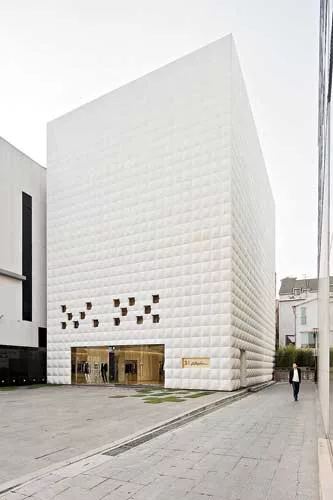
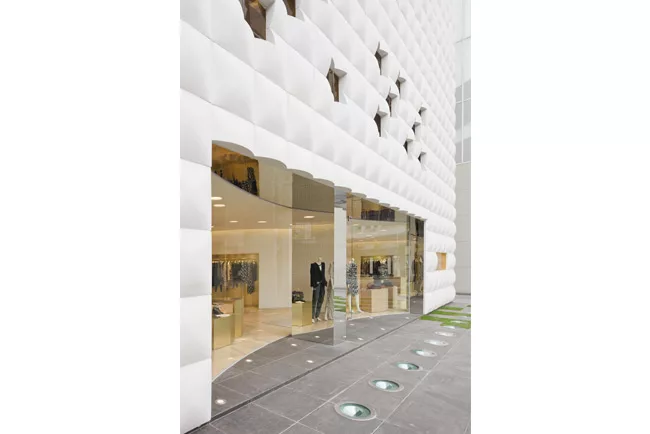
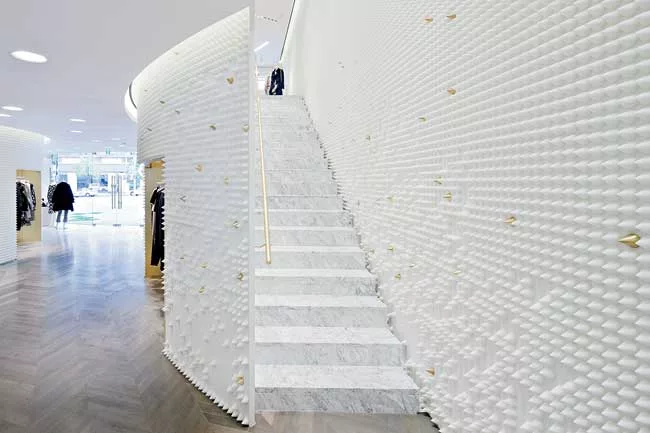
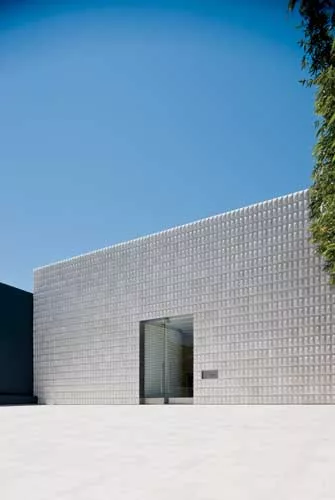
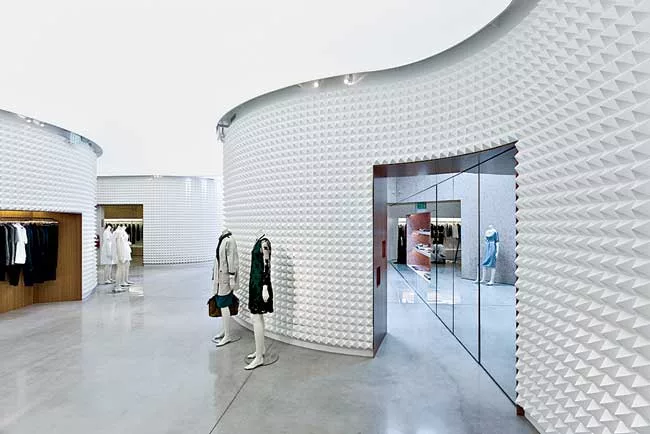
Dominic Leong, working with his previous firm, PARA-Project and Office Giancarlo Valle, turned a 5,000-square-foot warehouse-style building in Beverly Hills (above) into a boutique for the fashion designer Phillip Lim. For their second Phillip Lim store, in Seoul (at right and below), Leong Leong 'cropped' the Los Angeles plan into a smaller footprint. Picking up on themes introduced in California, they covered interior walls with foam panels that erode into a constellation of brass stars. Exterior walls of custom-made concrete tiles form a gradient from bulbous to flat.
 
Photo © Iwan Baan
Leong Leong
Dominic Leong, working with his previous firm, PARA-Project and Office Giancarlo Valle, turned a 5,000-square-foot warehouse-style building in Beverly Hills into a boutique for the fashion designer Phillip Lim. For their second Phillip Lim store, in Seoul, Leong Leong 'cropped' the Los Angeles plan into a smaller footprint. Picking up on themes introduced in California, they covered interior walls with foam panels that erode into a constellation of brass stars. Exterior walls of custom-made concrete tiles form a gradient from bulbous to flat.
 
Image courtesy Leong Leong
Leong Leong
lDominic Leong, working with his previous firm, PARA-Project and Office Giancarlo Valle, turned a 5,000-square-foot warehouse-style building in Beverly Hills into a boutique for the fashion designer Phillip Lim. For their second Phillip Lim store, in Seoul, Leong Leong 'cropped' the Los Angeles plan into a smaller footprint. Picking up on themes introduced in California, they covered interior walls with foam panels that erode into a constellation of brass stars. Exterior walls of custom-made concrete tiles form a gradient from bulbous to flat.
 
Photo © Iwan Baan
Leong Leong
Dominic Leong, working with his previous firm, PARA-Project and Office Giancarlo Valle, turned a 5,000-square-foot warehouse-style building in Beverly Hills into a boutique for the fashion designer Phillip Lim. For their second Phillip Lim store, in Seoul, Leong Leong 'cropped' the Los Angeles plan into a smaller footprint. Picking up on themes introduced in California, they covered interior walls with foam panels that erode into a constellation of brass stars. Exterior walls of custom-made concrete tiles form a gradient from bulbous to flat.
 
Photo © Iwan Baan
Leong Leong
Dominic Leong, working with his previous firm, PARA-Project and Office Giancarlo Valle, turned a 5,000-square-foot warehouse-style building in Beverly Hills into a boutique for the fashion designer Phillip Lim. For their second Phillip Lim store, in Seoul, Leong Leong 'cropped' the Los Angeles plan into a smaller footprint. Picking up on themes introduced in California, they covered interior walls with foam panels that erode into a constellation of brass stars. Exterior walls of custom-made concrete tiles form a gradient from bulbous to flat.
 
Photo © Iwan Baan
Leong Leong
Leong Leong
Leong Leong
Leong Leong
Leong Leong
Leong Leong
Leong Leong
Leong Leong
Leong Leong
Leong Leong
Leong Leong
Leong Leong
December 16, 2011

New York, New York

Brothers Dominic Leong and Chris Leong became architects for the only reason that matters: They couldn’t imagine doing anything else. Growing up in California’s Napa Valley in a house designed by their father —a computer scientist-turned-architect—they saw the pitfalls of the profession, as well as its possibilities, and vowed to someday start a firm together.

In the meantime, they acquired different mentors: Dominic worked for Bernard Tschumi, while Chris apprenticed at SHoP Architects.

When Dominic (now 33) presented a scheme to Tschumi, the reaction was likely to be, “How does this advance the history of architecture?” (Tschumi was the longtime dean of Columbia’s architecture school.) And when Chris (who’s 34) presented a scheme to the SHoP partners, they were likely to ask, “How does this advance architectural practice?” (SHoP’s founders are expanding their role beyond architecture and into development and construction.) When they left their employers to form Leong Leong, in 2009, the brothers combined approaches, showing they could be both formally inventive while devising new ways to make a project a reality.

Determined not to become paper architects while waiting out the recession, they have thrown themselves into small projects, even doing some of the construction work themselves. And at a time when ground-up commissions are elusive, they have avoided being typecast as interior architects by treating interiors as landscapes, with distinct “indoor” and “outdoor” spaces. That’s true of their 4,000-square-foot store in Los Angeles for the Cambodian-American fashion designer Phillip Lim. There, they installed undulating walls that suggest a shopping street, under a ceiling—a light-diffusing PVC membrane—that could be a sky. While many fashion brands have trademark colors or logos, the Leongs are giving Lim a trademark texture, using custom concrete tiles, with bulbous profiles, on the facades of the two stores. The brothers are currently designing Lim’s 13,000-square-foot office in Lower Manhattan.

Right now the Leong brothers are making a name for themselves even without big budgets. Recently, they designed the annual Beaux Arts Ball organized by the Architectural League of New York. The location was the Brooklyn Army Terminal, an intermodal transit hub in Brooklyn, designed by Cass Gilbert in 1918. With just $15,000 to spend and acres of enclosed space to work with, they shrink-wrapped groups of plastic milk crates to create stations, which they call “mutant” objects, that encouraged gathering and socializing. All of it was easily recyclable, giving the architects a chance, Chris says, to make the project sustainable “while exploring aesthetic and cultural experiences rather than green clichés.” 


Leong Leong

LOCATION: New York City

FOUNDED: 2009

DESIGN STAFF: 7

PRINCIPALS: Christopher Leong, Dominic Leong

EDUCATION: Christopher – Princeton University, M.Arch., 2006; University of California, Berkeley, B.A., 2000. Dominic – Columbia University, MSAAD, 2003; California Polytechnic State University, B.Arch., 2001

WORK HISTORY: Christopher – SHoP Architects, 2006–09; Leong Architects, 2001–03; Gluckman Mayner Architects, 2000–01. Dominic – PARA-Project, 2006–09; Bernard Tschumi Architects, 2003–07

KEY COMPLETED PROJECTS:  3.1 Phillip Lim Flagship Store, Seoul, 2009

KEY CURRENT PROJECTS: Winery, Napa, California, 2012

WEB SITE: www.leong-leong.com


Share This Story

Looking for a reprint of this article?
From high-res PDFs to custom plaques, order your copy today!

Fred Bernstein studied architecture at Princeton and law at NYU and writes about both subjects.

Post a comment to this article

Report Abusive Comment

Subscription Center
  • Create an Account
  • Start a Subscription
  • Manage My Account
  • Sign Up for Newsletters
  • Visit Customer Service
  • Update Preferences

More Videos

Sponsored Content

Sponsored Content is a special paid section where industry companies provide high quality, objective, non-commercial content around topics of interest to the Architectural Record audience. All Sponsored Content is supplied by the advertising company and any opinions expressed in this article are those of the author and not necessarily reflect the views of Architectural Record or its parent company, BNP Media. Interested in participating in our Sponsored Content section? Contact your local rep!

close
  • TAMLYN XtremeTrim Exterior Trim
    Sponsored byTamlyn

    Designing Cleaner Panel Facades: Why Exterior Trim Details Matter

  • Building with Vapor Barriers
    Sponsored byReef Industries, Inc.

    Vapor Barriers Help Control Moisture in Tighter Building Designs

  • Duct Interior with Prodeq System
    Sponsored byHenry, a Carlisle Company

    Designing Resilient Water Containment Systems

DESIGN:ED Podcast
Listen to Architectural Record’s DESIGN:ED Podcast

Events

June 10, 2026

Rethinking Stormwater – The Power of Porous Paving

Credits: 1 AIA LU/HSW; 1 AIBD P-CE; 0.1 ICC CEU

Learn how porous paving systems support stormwater management, reduce heat island effects, and enhance sustainable site design performance.

June 11, 2026

Very Early Warning Fire Detection for Mission-Critical Facilities

Credits: 1 AIA LU/HSW; 1 AIBD P-CE; 0.1 ICC CEU

Examine advanced fire detection strategies that support uptime and enhance safety in data centers and other mission-critical facilities.

View All Submit An Event

Products

2026 Architect's Square Foot Costbook

2026 Architect's Square Foot Costbook

See More Products

Popular Stories

Practice Matters illustration

What’s in a (Firm’s) Name? Thinking About Succession and Legacy

Coronado Bridge

The Architect’s Guide to San Diego

Practice Matters illustration

By the Numbers: Counting America's Architects

Riverdale House by Studio Lau

Riverdale House by Studio Lau

KRESA by DLR

In Kalamazoo, DLR Group Completes a Mass-Timber Hub for Career and Technical Education Programs

Broader Sustainability of CMU - Free Webinar - May 21, 2026

Related Articles

  • LGBT Center New Campus

    Los Angeles LGBT Center Opens New Campus

    See More
  • Pop-Up in Yangon, Myanmar, Tests Out Revitalization

    See More
  • Office Space: Venice Biennale Preview

    See More
×

The latest news and information

#1 Source for Architectural Design, News and Products

SUBSCRIBE
  • RESOURCES
    • Advertise
    • Contact Us
    • Submit
    • Store
  • ACCOUNT CENTER
    • Create an Account
    • Start a Subscription
    • Manage My Account
    • Sign Up for Newsletters
    • Visit Customer Service
    • Update Preferences
  • PRIVACY
    • PRIVACY POLICY
    • TERMS & CONDITIONS
    • DO NOT SELL MY PERSONAL INFORMATION
    • PRIVACY REQUEST
    • ACCESSIBILITY
  • SERVICES
    • Marketing Services
    • Reprints
    • Market Research
    • List Rental
    • Survey/Respondent Access
  • STAY CONNECTED
    • Linkedin
    • Facebook
    • Instagram
    • YouTube
    • X (Twitter)

Copyright ©2026. All Rights Reserved BNP Media, Inc. and BNP Media II, LLC.

Design, CMS, Hosting & Web Development :: ePublishing