Architectural Record
search
cart
facebook twitter linkedin youtube
  • Sign In
  • Subscribe
  • Sign Out
  • My Account
Architectural Record
  • NEWS
    • Latest News
    • Awards
    • Interviews
    • Obituaries
    • Podcasts
      • Design:Ed Podcast
      • Sponsored Podcasts
  • OPINION
    • Book Reviews / Excerpts
    • Exhibition Reviews
    • Forum
  • EXCLUSIVES
    • Videos
    • Design Vanguard
    • Top 300 Firms
    • Sponsored Content
    • Sponsored eBooks
    • From the Archives
  • CONTINUING ED
    • Editorial Continuing Ed
    • CE Center
    • CE Academies
  • PROJECTS
    • Buildings By Type
    • Reuse & Renovation
    • Museums & Arts Centers
    • Colleges & Universities
    • Multifamily Housing
    • Interiors
    • Lighting
    • Kitchen & Bath
  • HOUSES
    • Record Houses
    • House of the Month
    • Featured Houses
  • PRODUCTS
    • Products by Category
    • Record Products of the Year
    • Latest Products
  • EVENTS
    • Dates & Events
    • Record on the Road
    • Innovation Conference
    • Sustainability in Practice
    • Women In Architecture
    • Webinars
    • Ad Excellence Awards
    • Submit an Event
  • CONNECT
    • Ask RECORD AI
    • Newsletters
    • Contact
    • Advertise
    • Editorial Calendar
    • Store
    • Customer Service
  • SUBMIT
    • Submission Guidelines
    • RECORD Competitions
  • MAGAZINE
    • Subscribe
    • My Account
    • Digital Edition
    • Current Issue
    • Firm Pass
    • Historic Archive
Design Vanguard

Héctor Fernández Elorza Architects

Rooted in Spain but influenced by Sweden, a Madrid-based architect combines the rugged and the refined.

By David Cohn
This intervention occupies the basement of a Neoclassical loggia in Madrid. Collaborating with Jesús Aparicio, Elorza removed a portion of a thick floor slab to create a double-height auditoriu
Héctor Fernández Elorza Architects
Madrid
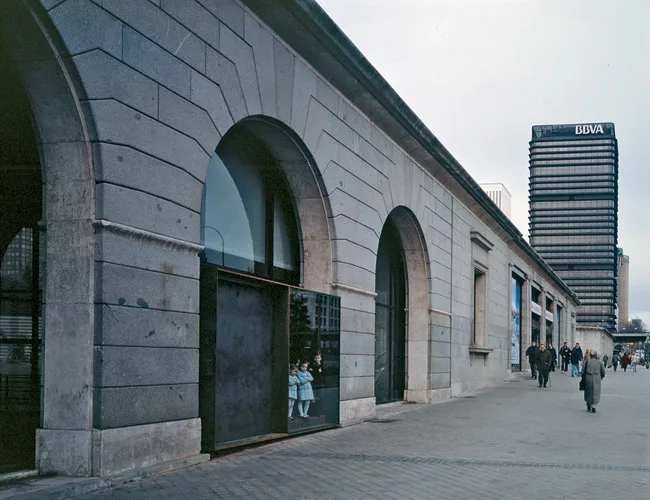
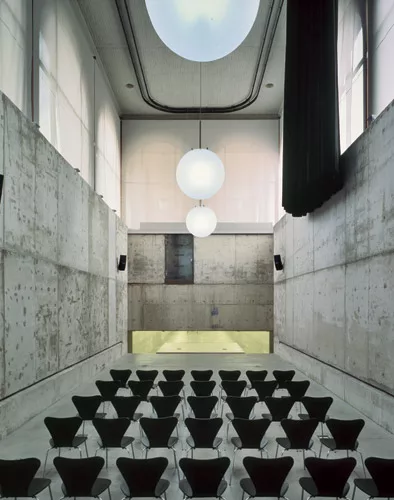
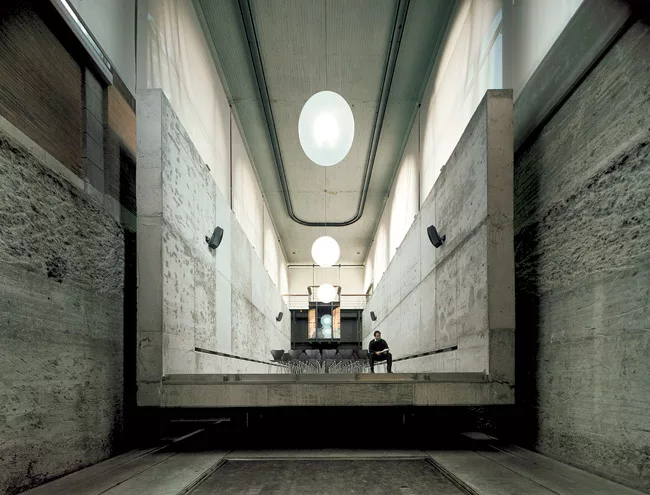
This intervention occupies the basement of a Neoclassical loggia in Madrid. Collaborating with Jesús Aparicio, Elorza removed a portion of a thick floor slab to create a double-height auditorium lined with rough concrete walls that reinforce the structure’s foundations and hide mechanical services and uplighting.
Photo © Montse Zamorano
This intervention occupies the basement of a Neoclassical loggia in Madrid. Collaborating with Jesús Aparicio, Elorza removed a portion of a thick floor slab to create a double-height auditoriu
Héctor Fernández Elorza Architects
Architectural Documentation Center and Lecture Hall
Madrid
This intervention occupies the basement of a Neoclassical loggia in Madrid. Collaborating with Jesús Aparicio, Elorza removed a portion of a thick floor slab to create a double-height auditorium lined with rough concrete walls that reinforce the structure’s foundations and hide mechanical services and uplighting.
Photo © Roland Halbe
This intervention occupies the basement of a Neoclassical loggia in Madrid. Collaborating with Jesús Aparicio, Elorza removed a portion of a thick floor slab to create a double-height auditoriu
Héctor Fernández Elorza Architects
Architectural Documentation Center and Lecture Hall
Madrid
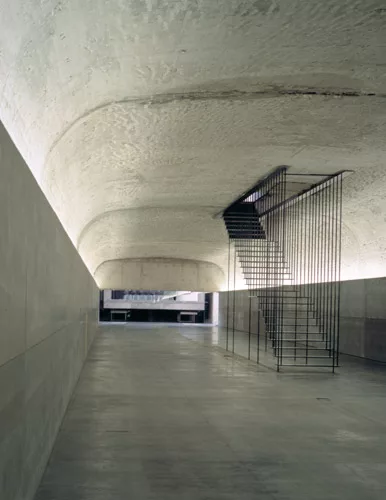
This intervention occupies the basement of a Neoclassical loggia in Madrid. Collaborating with Jesús Aparicio, Elorza removed a portion of a thick floor slab to create a double-height auditorium lined with rough concrete walls that reinforce the structure’s foundations and hide mechanical services and uplighting.
Photo © Hisao Suzuki
This intervention occupies the basement of a Neoclassical loggia in Madrid. Collaborating with Jesús Aparicio, Elorza removed a portion of a thick floor slab to create a double-height auditoriu
Héctor Fernández Elorza Architects
Architectural Documentation Center and Lecture Hall
Madrid
This intervention occupies the basement of a Neoclassical loggia in Madrid. Collaborating with Jesús Aparicio, Elorza removed a portion of a thick floor slab to create a double-height auditorium lined with rough concrete walls that reinforce the structure’s foundations and hide mechanical services and uplighting.
Photo © Hisao Suzuki
This intervention occupies the basement of a Neoclassical loggia in Madrid. Collaborating with Jesús Aparicio, Elorza removed a portion of a thick floor slab to create a double-height auditoriu
Héctor Fernández Elorza Architects
Architectural Documentation Center and Lecture Hall
Madrid
This intervention occupies the basement of a Neoclassical loggia in Madrid. Collaborating with Jesús Aparicio, Elorza removed a portion of a thick floor slab to create a double-height auditorium lined with rough concrete walls that reinforce the structure’s foundations and hide mechanical services and uplighting.
Photo © Hisao Suzuki
At this windowless facility in Madrid where scientists handle dangerous substances, narrow patios separate four labs, while a vehicular service corridor runs the length of the building. Elorza enclose
Héctor Fernández Elorza Architects
Chemical Laboratory, University of Alcalá
Madrid
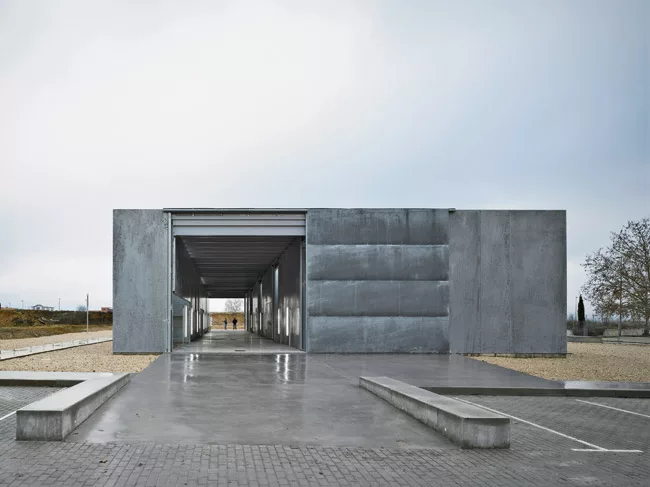
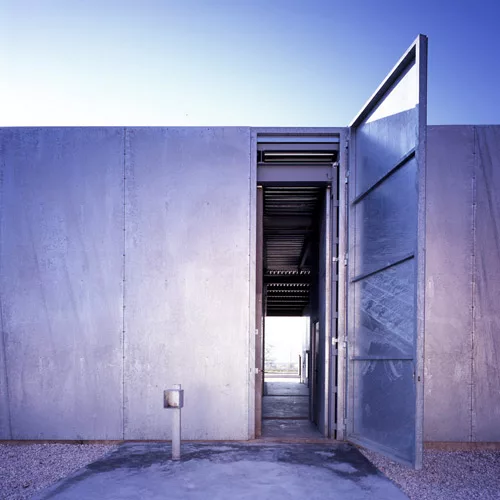
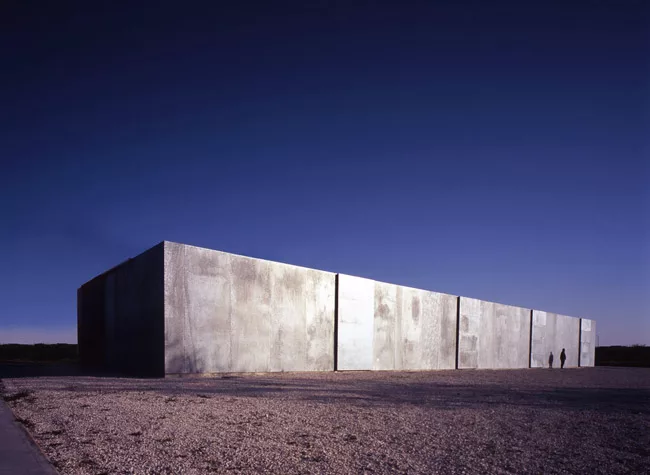
At this windowless facility in Madrid where scientists handle dangerous substances, narrow patios separate four labs, while a vehicular service corridor runs the length of the building. Elorza enclosed the structure in 16-foot-high galvanized steel panels to keep costs down, but also to create visual interaction between the material’s imperfect surface and the changing daylight reflected on it.
Photo © Roland Halbe
At this windowless facility in Madrid where scientists handle dangerous substances, narrow patios separate four labs, while a vehicular service corridor runs the length of the building. Elorza enclose
Héctor Fernández Elorza Architects
Chemical Laboratory, University of Alcalá
Madrid
At this windowless facility in Madrid where scientists handle dangerous substances, narrow patios separate four labs, while a vehicular service corridor runs the length of the building. Elorza enclosed the structure in 16-foot-high galvanized steel panels to keep costs down, but also to create visual interaction between the material’s imperfect surface and the changing daylight reflected on it.
Photo © Carlos Pesqueira
At this windowless facility in Madrid where scientists handle dangerous substances, narrow patios separate four labs, while a vehicular service corridor runs the length of the building. Elorza enclose
Héctor Fernández Elorza Architects
Chemical Laboratory, University of Alcalá
Madrid
At this windowless facility in Madrid where scientists handle dangerous substances, narrow patios separate four labs, while a vehicular service corridor runs the length of the building. Elorza enclosed the structure in 16-foot-high galvanized steel panels to keep costs down, but also to create visual interaction between the material’s imperfect surface and the changing daylight reflected on it.
Photo © Carlos Pesqueira
To give this addition to an existing 1940s building in Madrid its own identity, Elorza separated the two structures with a long patio and raised the new one on four piers. The patio is lined on one si
Héctor Fernández Elorza Architects
School of Cellular and Genetic Biology, University of Alcalá
Madrid
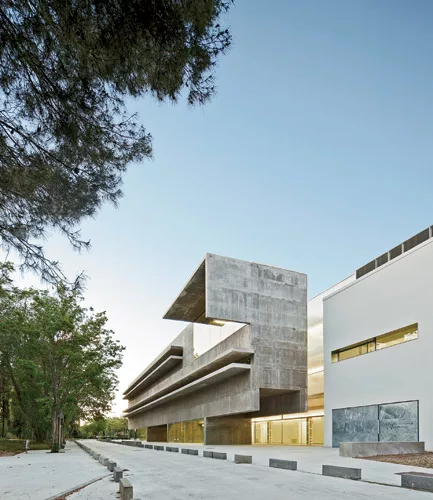
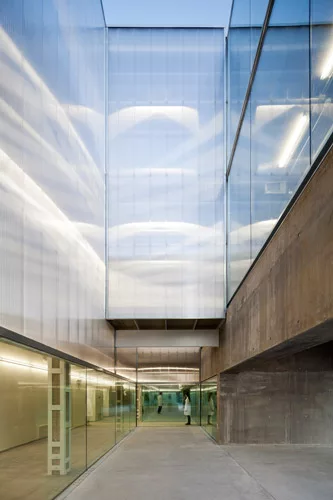
To give this addition to an existing 1940s building in Madrid its own identity, Elorza separated the two structures with a long patio and raised the new one on four piers. The patio is lined on one side with corridors, enclosed in translucent polycarbonate sheets, that serve as bridges to access rooms in the new section. Deep concrete planes protect the new facade from the western sun, as does an L-shaped flap, which, like a cupped hand, shields the floor-to-ceiling windows of a large meeting room.
Photo © Montse Zamorano
To give this addition to an existing 1940s building in Madrid its own identity, Elorza separated the two structures with a long patio and raised the new one on four piers. The patio is lined on one si
Héctor Fernández Elorza Architects
School of Cellular and Genetic Biology, University of Alcalá
Madrid
To give this addition to an existing 1940s building in Madrid its own identity, Elorza separated the two structures with a long patio and raised the new one on four piers. The patio is lined on one side with corridors, enclosed in translucent polycarbonate sheets, that serve as bridges to access rooms in the new section. Deep concrete planes protect the new facade from the western sun, as does an L-shaped flap, which, like a cupped hand, shields the floor-to-ceiling windows of a large meeting room.
Photo © Montse Zamorano
Elorza converted this deconsecrated chapel in Jarandilla de la Vera into a center for cultural activities. He lined its interior with a tube of structural concrete'floor, walls, and pitched ceiling'to
Héctor Fernández Elorza Architects
Santo Sepulcro Cultural Center
Madrid
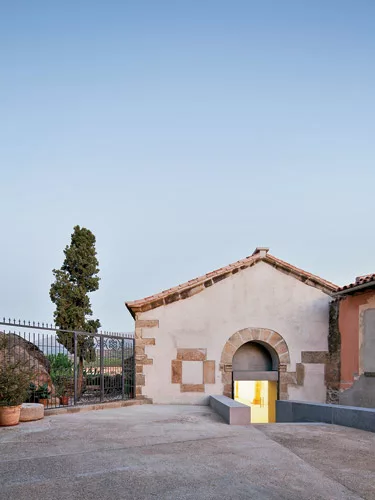
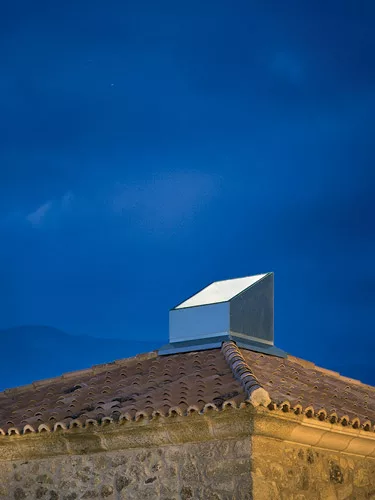
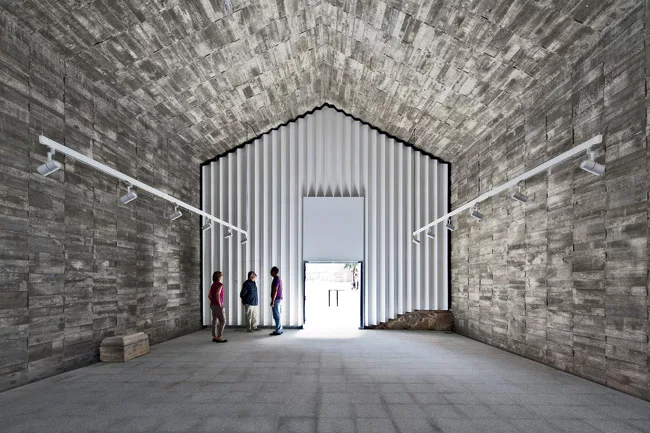
Elorza converted this deconsecrated chapel in Jarandilla de la Vera into a center for cultural activities. He lined its interior with a tube of structural concrete'floor, walls, and pitched ceiling'to reinforce the exterior masonry and to replace the ruined roof structure. By using the discarded wood substrate of the old roof as formwork for the new concrete, he gave the interior surfaces a rich and varied texture. The gable end of the space is finished with a wood screen, cut in a sawtooth pattern to absorb sound.
Photo © Montse Zamorano
Elorza converted this deconsecrated chapel in Jarandilla de la Vera into a center for cultural activities. He lined its interior with a tube of structural concrete'floor, walls, and pitched ceiling'to
Héctor Fernández Elorza Architects
Santo Sepulcro Cultural Center
Madrid
Elorza converted this deconsecrated chapel in Jarandilla de la Vera into a center for cultural activities. He lined its interior with a tube of structural concrete'floor, walls, and pitched ceiling'to reinforce the exterior masonry and to replace the ruined roof structure. By using the discarded wood substrate of the old roof as formwork for the new concrete, he gave the interior surfaces a rich and varied texture. The gable end of the space is finished with a wood screen, cut in a sawtooth pattern to absorb sound.
Photo © Montse Zamorano
Elorza converted this deconsecrated chapel in Jarandilla de la Vera into a center for cultural activities. He lined its interior with a tube of structural concrete'floor, walls, and pitched ceiling'to
Héctor Fernández Elorza Architects
Santo Sepulcro Cultural Center
Madrid
Elorza converted this deconsecrated chapel in Jarandilla de la Vera into a center for cultural activities. He lined its interior with a tube of structural concrete'floor, walls, and pitched ceiling'to reinforce the exterior masonry and to replace the ruined roof structure. By using the discarded wood substrate of the old roof as formwork for the new concrete, he gave the interior surfaces a rich and varied texture. The gable end of the space is finished with a wood screen, cut in a sawtooth pattern to absorb sound.
Photo © Montse Zamorano
Built on a site used as a dump and gravel quarry, this is one of four parks designed by Elorza outside Zaragoza. He leveled the 30-foot slope into terraces that are supported with unreinforced concret
Héctor Fernández Elorza Architects
Valdefierro Park, Zaragoza
Madrid
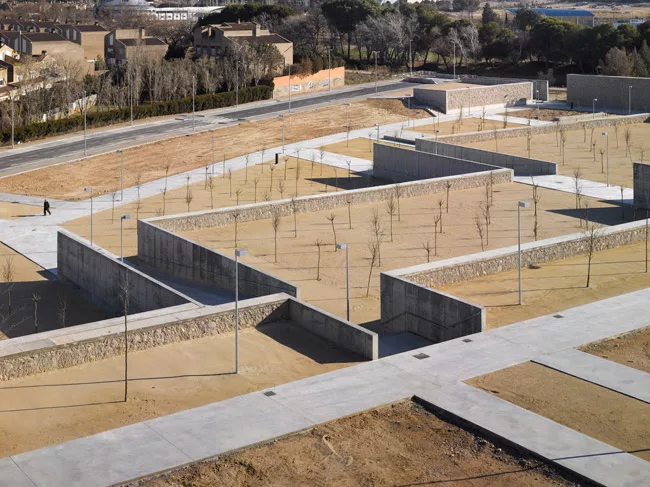
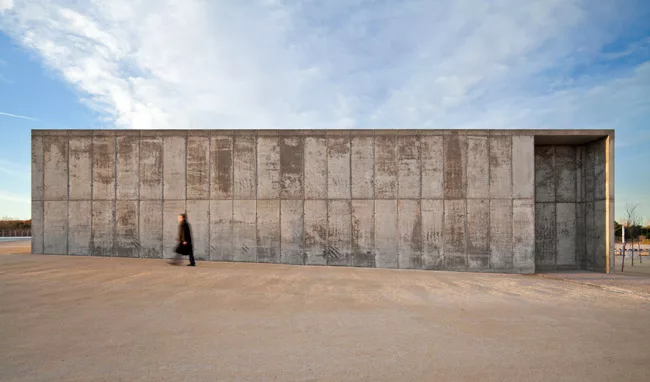
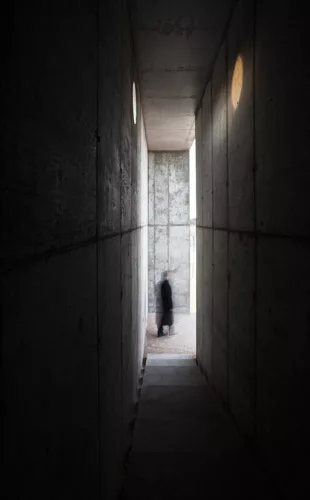
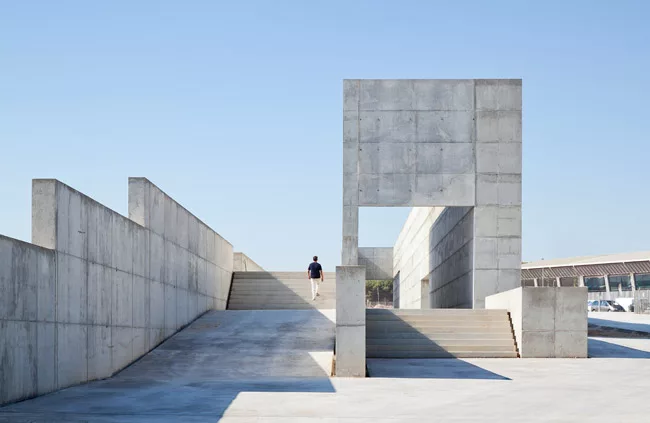
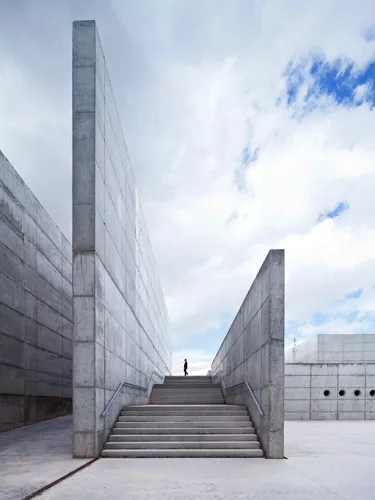
Built on a site used as a dump and gravel quarry, this is one of four parks designed by Elorza outside Zaragoza. He leveled the 30-foot slope into terraces that are supported with unreinforced concrete retaining walls. The concrete aggregate includes tons of demolition debris found on the site. Raked with a trench cutter and trimmed with jack hammers at its edges, the concrete's rough surface blends with the parched tones of the region's arid landscape. The walls frame stairs and ramps, and are hollowed out in places for enclosed stairs, a bench or a window.
Photo © Roland Halbe
Built on a site used as a dump and gravel quarry, this is one of four parks designed by Elorza outside Zaragoza. He leveled the 30-foot slope into terraces that are supported with unreinforced concret
Héctor Fernández Elorza Architects
Valdefierro Park, Zaragoza
Madrid
Built on a site used as a dump and gravel quarry, this is one of four parks designed by Elorza outside Zaragoza. He leveled the 30-foot slope into terraces that are supported with unreinforced concrete retaining walls. The concrete aggregate includes tons of demolition debris found on the site. Raked with a trench cutter and trimmed with jack hammers at its edges, the concrete's rough surface blends with the parched tones of the region's arid landscape. The walls frame stairs and ramps, and are hollowed out in places for enclosed stairs, a bench or a window.
Photo © Montse Zamorano
Built on a site used as a dump and gravel quarry, this is one of four parks designed by Elorza outside Zaragoza. He leveled the 30-foot slope into terraces that are supported with unreinforced concret
Héctor Fernández Elorza Architects
Valdefierro Park, Zaragoza
Madrid
Built on a site used as a dump and gravel quarry, this is one of four parks designed by Elorza outside Zaragoza. He leveled the 30-foot slope into terraces that are supported with unreinforced concrete retaining walls. The concrete aggregate includes tons of demolition debris found on the site. Raked with a trench cutter and trimmed with jack hammers at its edges, the concrete's rough surface blends with the parched tones of the region's arid landscape. The walls frame stairs and ramps, and are hollowed out in places for enclosed stairs, a bench or a window.
Photo © Montse Zamorano
This park, designed with Manuel Fern'ndez Ram'rez, sits along a ring road on the outskirts of Zaragoza and serves as a gateway to an adjacent residential neighborhood. A sunken plaza serves as one of
Héctor Fernández Elorza Architects
Venecia Park, Zaragoza
Madrid
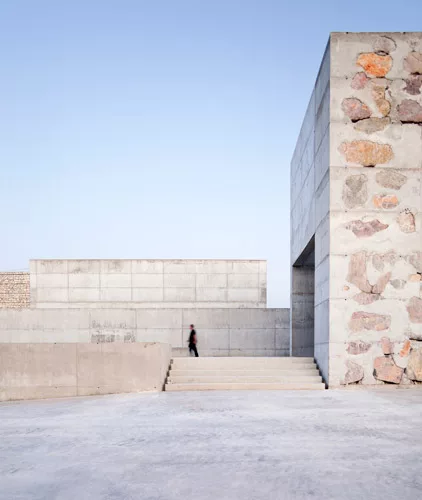
This park, designed with Manuel Fern'ndez Ram'rez, sits along a ring road on the outskirts of Zaragoza and serves as a gateway to an adjacent residential neighborhood. A sunken plaza serves as one of the key spaces, while rugged walls block sounds from the road and strong winds. The architects used a variety of masonry for the walls, including poured concrete and stone held in metal gabion cages.
Photo © Montse Zamorano
This park, designed with Manuel Fern'ndez Ram'rez, sits along a ring road on the outskirts of Zaragoza and serves as a gateway to an adjacent residential neighborhood. A sunken plaza serves as one of
Héctor Fernández Elorza Architects
Venecia Park, Zaragoza
Madrid
This park, designed with Manuel Fern'ndez Ram'rez, sits along a ring road on the outskirts of Zaragoza and serves as a gateway to an adjacent residential neighborhood. A sunken plaza serves as one of the key spaces, while rugged walls block sounds from the road and strong winds. The architects used a variety of masonry for the walls, including poured concrete and stone held in metal gabion cages..
Photo © Montse Zamorano
This park, designed with Manuel Fern'ndez Ram'rez, sits along a ring road on the outskirts of Zaragoza and serves as a gateway to an adjacent residential neighborhood. A sunken plaza serves as one of
Héctor Fernández Elorza Architects
Venecia Park, Zaragoza
Madrid
This park, designed with Manuel Fern'ndez Ram'rez, sits along a ring road on the outskirts of Zaragoza and serves as a gateway to an adjacent residential neighborhood. A sunken plaza serves as one of the key spaces, while rugged walls block sounds from the road and strong winds. The architects used a variety of masonry for the walls, including poured concrete and stone held in metal gabion cages.
Photo © Montse Zamorano
This intervention occupies the basement of a Neoclassical loggia in Madrid. Collaborating with Jesús Aparicio, Elorza removed a portion of a thick floor slab to create a double-height auditoriu
At this windowless facility in Madrid where scientists handle dangerous substances, narrow patios separate four labs, while a vehicular service corridor runs the length of the building. Elorza enclose
To give this addition to an existing 1940s building in Madrid its own identity, Elorza separated the two structures with a long patio and raised the new one on four piers. The patio is lined on one si
Elorza converted this deconsecrated chapel in Jarandilla de la Vera into a center for cultural activities. He lined its interior with a tube of structural concrete'floor, walls, and pitched ceiling'to
Built on a site used as a dump and gravel quarry, this is one of four parks designed by Elorza outside Zaragoza. He leveled the 30-foot slope into terraces that are supported with unreinforced concret
This park, designed with Manuel Fern'ndez Ram'rez, sits along a ring road on the outskirts of Zaragoza and serves as a gateway to an adjacent residential neighborhood. A sunken plaza serves as one of
December 16, 2013

Madrid

Using raw primary materials such as concrete and galvanized steel, simple forms, and an adroit manipulation of scale, the Madrid-based architect Héctor Fernández Elorza gives even small projects a monumental authority. Two horizontal glass slashes across the facade of his Faculty of Cellular and Genetic Biology at the University of Alcalá, for example, transform the rows of diminutive offices and seminar rooms behind them into a mysterious, iconic mask, while deeply projecting concrete planes shade the interior spaces from the western sun. At a larger scale, in the Valdefierro Park outside his native Zaragoza, long concrete retaining walls emerge from the hillside like the ruins of a lost city.

After graduating from the Escuela Técnica Superior de Arquitectura de Madrid, Elorza spent two years in Stockholm studying the work of Gunnar Asplund and his disciple Sigurd Lewerentz, and he credits particularly the latter for showing him how the tactile quality of materials can become the protagonist of a design. But he translates this lesson from the Swedish context of fine craftsmanship in wood and masonry to the more brutish realities of low-budget public construction in Spain. Valdefierro is a case in point, where he saved money by reusing the tons of demolition rubble that filled the site as aggregate for its concrete walls and then raked their surfaces with a trench-cutting machine to create a coarse, irregular finish that vibrates under the strong local light.

That strategy exemplifies Elorza's drive to find the “opportunity” in each project within what generally presents itself as an obstacle. In the university building, that opportunity was the direct western exposure of its facade. And when restoring a chapel for a cultural center in the small town of Jarandilla de la Vera, he reused the wood substrate of the building's ruined roof as a richly textured formwork for the new concrete walls, floor, and ceiling inside the space.

With its formal austerity and muscular use of materials, his work has much in common with that of several past Design Vanguard winners from Madrid, including Iñaqui Carnicero (December 2011, page 60), José Mar'a Sánchez Garc'a (December 2009, page 94) and Ant'n Garc'a-Abril (December 2004, page 164). All four were strongly influenced by the teachings of Alberto Campo Baeza and, in different ways, have added sculptural weight to the elegantly severe and minimalist forms that Campo Baeza is known for. In the case of Elorza, his work reduces formal play in and of itself to a minimum. He dismisses what he terms “geometry” as merely a “tool” for the architect. “The idea is always something else,” he maintains, “and geometry allows you to build it.” Despite the obvious differences, his connection to Scandinavia also distinguishes him from his Spanish contemporaries, inspiring perhaps that streak of romantic theatricality that pushes his work toward the sublime.


Héctor Fernández Elorza Architects

FOUNDED: 2003

DESIGN STAFF: 3

PRINCIPALS: Héctor Fernández Elorza

EDUCATION: KTH Stockholm, Ph.D., 2000; Escuela Técnica Superior de Arquitectura de Madrid, M.Arch., 1998

WORK HISTORY: Aparicio Architects, 2000

KEY COMPLETED PROJECTS: University of Alcalá Faculty of Cellular and Genetic Biology, Madrid, 2012; Venecia Park, 2011; Santo Sepulcro’s Chapel, 2010; Twin Squares, 2010; UAH Chemical Laboratory Building, 2009; Valdefierro’s Park, 2009

KEY CURRENT PROJECTS: San Esteban’s Cultural House

WEB SITE: www.hfelorza.com


Share This Story

Looking for a reprint of this article?
From high-res PDFs to custom plaques, order your copy today!
David Cohn is a Madrid-based architecture critic and international correspondent for Architectural Record. His latest book, Spain: Modern Architectures in History, was released in 2025.

Post a comment to this article

Report Abusive Comment

Subscription Center
  • Create an Account
  • Start a Subscription
  • Manage My Account
  • Sign Up for Newsletters
  • Visit Customer Service
  • Update Preferences

More Videos

Sponsored Content

Sponsored Content is a special paid section where industry companies provide high quality, objective, non-commercial content around topics of interest to the Architectural Record audience. All Sponsored Content is supplied by the advertising company and any opinions expressed in this article are those of the author and not necessarily reflect the views of Architectural Record or its parent company, BNP Media. Interested in participating in our Sponsored Content section? Contact your local rep!

close
  • cold storage facility
    Sponsored byCarlisle SynTec Systems

    How Architects Can Design More Continuous Cold Storage Envelopes

  • TAMLYN XtremeTrim Exterior Trim
    Sponsored byTamlyn

    Designing Cleaner Panel Facades: Why Exterior Trim Details Matter

  • Building with Vapor Barriers
    Sponsored byReef Industries, Inc.

    Vapor Barriers Help Control Moisture in Tighter Building Designs

DESIGN:ED Podcast
Listen to Architectural Record’s DESIGN:ED Podcast

Events

June 18, 2026

Rebooting the Aging Office Building

Credits: 1 AIA LU/HSW; 1 AIBD P-CE; 0.1 ICC CEU; 1 PDH

Explore façade retrofit strategies and award-winning design concepts that can transform aging office buildings into healthier, higher-performing workplaces for today’s hybrid workforce.

June 23, 2026

Enhancing Fire Resistance with Advanced PVC Solutions

Credits: 1 AIA LU/HSW; 1 AIBD P-CE; 0.1 ICC CEU; 1 IIBEC CEH

Evaluate advanced PVC solutions that improve fire resistance, support WUI compliance, and enhance resilience in residential and commercial building design.

View All Submit An Event

Products

2026 Architect's Square Foot Costbook

2026 Architect's Square Foot Costbook

See More Products

Popular Stories

SanDiegoAirport

Top 300 Architecture Firms of 2026

Lorcan O' Herilhy

California Architect Lorcan O’Herlihy Has Died, Age 66

Coronado Bridge

The Architect’s Guide to San Diego

CCA, Studio Gang

The Winners of the AIA’s 2026 Architecture Award Range from Collegiate Rowing Hubs to Housing for the Homeless

Dusk House

Design Vanguard 2026: ONO

Enhancing Fire Resistance with Advanced PVC Solutions - Free Webinar - June 23, 2026

Related Articles

  • Think Global, Act Local

    See More
  • Illa Glòries

    Design Vanguard 2026: Cierto Estudio

    See More
  • Hector Guimard: Art Nouveau to Modernism.

    Review of Hector Guimard: Art Nouveau to Modernism

    See More
×

The latest news and information

#1 Source for Architectural Design, News and Products

SUBSCRIBE
  • RESOURCES
    • Advertise
    • Contact Us
    • Submit
    • Store
  • ACCOUNT CENTER
    • Create an Account
    • Start a Subscription
    • Manage My Account
    • Sign Up for Newsletters
    • Visit Customer Service
    • Update Preferences
  • PRIVACY
    • PRIVACY POLICY
    • TERMS & CONDITIONS
    • DO NOT SELL MY PERSONAL INFORMATION
    • PRIVACY REQUEST
    • ACCESSIBILITY
  • SERVICES
    • Marketing Services
    • Reprints
    • Market Research
    • List Rental
    • Survey/Respondent Access
  • STAY CONNECTED
    • Linkedin
    • Facebook
    • Instagram
    • YouTube
    • X (Twitter)

Copyright ©2026. All Rights Reserved BNP Media, Inc. and BNP Media II, LLC.

Design, CMS, Hosting & Web Development :: ePublishing