This website requires certain cookies to work and uses other cookies to help you have the best experience. By visiting this website, certain cookies have already been set, which you may delete and block. By closing this message or continuing to use our site, you agree to the use of cookies. Visit our updated privacy and cookie policy to learn more.
This Website Uses Cookies By closing this message or continuing to use our site, you agree to our cookie policy. Learn MoreThis website requires certain cookies to work and uses other cookies to help you have the best experience. By visiting this website, certain cookies have already been set, which you may delete and block. By closing this message or continuing to use our site, you agree to the use of cookies. Visit our updated privacy and cookie policy to learn more.
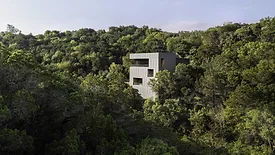
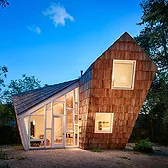
Surrounded by suburban development, the vertically oriented Austin home peaks above the tree canopy from within a ravine that had long been written off as unbuildable.
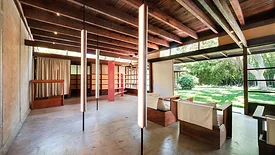
This month, the MAK Center in Los Angeles celebrates the centennial of the Schindler House with an exhibition of historical materials and works by contemporary artists.
A young family of four sought a five-bedroom home with a pool in an artsy, eccentric neighborhood of Austin with strict zoning specifications and large existing trees.
The architect removed a previous addition to the home, then added a new wing with the master suite, a glazed dining terrace, a sitting space with a wood-burning stove, and utility rooms.