Architecture & Money
Continuing Education: How to Make Money
Firms improve the bottom line by expanding the definition of architectural practice.

We all know the complaints: too many architects routinely accept fees for projects they know won't pencil out. They enter unpaid competitions. They give away services, or they compete for jobs based solely on price. And they commit this economic hara-kiri in an environment already beset by stagnant fees, risk-averse clients who are allergic to innovative design, and a construction process increasingly dominated by cost-conscious contractors.
While bottom-feeding architects are as old as the profession itself, the business challenges facing most mainstream firms are unprecedented. Like so many other industries, architecture is undergoing profound change, much of it driven by technology, which in turn is undermining the economic foundation of the profession. How architects get paid—and what they get paid for—is in flux. The smartest and most profitable firms are identifying new opportunities and creating a broader definition of what constitutes architectural services.
The new normal starts with the fundamentals of any business, in any era: cost and price. “Successful firms do one of two things,” says Scott Simpson, a senior principal at the Greenway Group and coauthor, with James Cramer, of How Firms Succeed 5.0. “If they use a commodity business model, they need to have the production process down to a science. They control the cost side, which means they raise their profit margin. Or they find a way to attract higher-paying customers by offering something that clients can't get someplace else. That is a value-proposition argument.”
The most successful firms—especially the stars who can command a premium—sell the value of design. But much of the profession still labors under the commodity model. The traditional, decades-old fee structure—which pays architects a percentage of a project's budget for the creation of design and construction drawings—is under attack and is hobbling architects still clinging to it.
The system worked fine for the better part of the 20th century, when most architects charged the standard fees recommended by professional associations. But, in 1973, the Federal Trade Commission outlawed fee scales, upending the profession. “Once that changed, architects—who were never trained in business or had any real sense of what they were selling—were thrown into this cauldron of hourly fees and hourly reimbursements,” says Frank Stasiowski, president and CEO of PSMJ, a research, training, and consulting firm based in Newton, Massachusetts. “That was very good in the 1970s, when you had fleets of designers, drafters, and model makers.” In the ensuing decades, digital technology has drastically reduced the number of hours (and people) it takes to produce drawings. This created efficiencies but set in motion an inexorable erosion of fees based on hours. “It's why, around 1980,” he says, “I started predicting the demise of the profession, based on that model.”
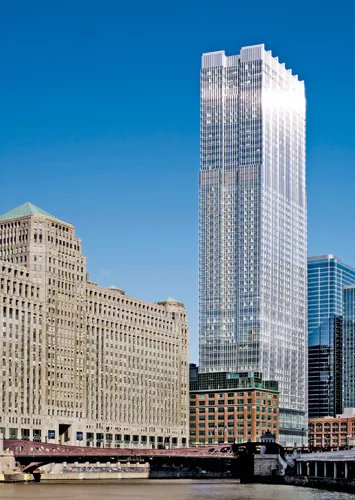
So how do firms escape the commodity trap and achieve what management consultants call “value pricing,” a fancy term for something fairly basic: a profitable fee? It helps to understand the needs of your clients and speak a common language. Pickard Chilton, a 50-person New Haven, Connecticut-based firm specializing in commercial buildings for companies like ExxonMobil, Conoco, and Chase, realizes that large multinational corporations live and breathe metrics. “We understand what our clients' business objectives are,” says founding principal William Chilton.
The firm creates a case for its schemes, backed by numbers. “A lot of architects will focus on how many design awards they've won—and we've won hundreds—but we track the financial performance of our buildings,” adds Jon Pickard, another founding principal. “We've been able to create buildings that command the highest rents in their markets. This makes the conversation with our clients, many of whom are developers, a little easier.”
Combined with its ability to frame a business argument, Pickard Chilton is also organizationally lean. The firm serves exclusively as a design architect, teaming with architects of record who produce the construction documents. This allows the practice to stay small and nimble, even though it specializes in large buildings. “If we were a full-service firm, we'd be 350 people and dissipated in our focus,” says Pickard. “We don't get distracted managing a legion of people and drafting thousands of documents, which is the commodity portion of the business.”
On the other end of the spectrum from the design-only business model is a strategy long thought to be fraught with risk: design-build. Despite the trepidations of the profession, some type of holistic approach—whether design-build or integrated project delivery (IPD), which ties the owner, contractor, and architect into a single project entity—is becoming more attractive, given emerging technologies and the vast potential for cost savings. Unfortunately for architects, design-build as it's typically practiced is a bit of a misnomer. The process might more accurately be called “build-design,” because it's contractor-led and motivated primarily by cost-cutting.
But the architects who drive the design-build process swear by it. They maintain that, when overseen by architects, it results in both better buildings and significantly more revenue. “As a business model, it is the only answer for architects,” says Peter Gluck, founder of Gluck+, a 40-person New York-based firm. “There's no way you can build an architecturally distinguished building with a standard architectural fee. The people who do good buildings that way do it on the backs of young architects.”
Contractually, Gluck maintains two business entities—design and construction—and says the construction portion is exponentially more profitable. “Let's say an architect makes a 10 percent fee,” he explains. “The AIA used to recommend keeping 10 percent as profit, so that's 1 percent of the cost of the building. Contractors make 10 percent for overhead and 10 percent for profit. That sounds to me like the contractor makes 10 times as much as the architect. It's a bit of an exaggeration, but not by much.”
Gluck+ is essentially being rewarded for reducing construction inefficiencies, which on a typical project can run as high as 35 percent, according to Greenway's Simpson. “We're wasting four times as much money in construction as we're paying architects in fees,” he says. “But that's good news, because if we can design more efficient processes, some of those savings can go back into the architect's profit pool.”
And while design-build does place more responsibility on architects, it does not entail, contrary to popular belief, more legal risk, says Gluck. “For some reason, people think that contractors have lots of liability,” he says. “Unless they do something fraudulent, they have insurance. But the liability insurance on a construction project is included in the budget. It's a line item, like the plumbers,” he continues. “As an architect, I pay over $100,000 a year in insurance. But I build all of my buildings, and don't pay a nickel for insurance as a contractor.”
Still, design-build is not for everyone. It is a fundamentally different way of practicing architecture, with a steep learning curve. No company becomes a design-build firm overnight. For some architects, IPD holds more promise. The joint arrangement and shared responsibility often result in quality design and construction efficiencies, which architects can then be rewarded for. “We're working under an IPD contract at Brown University, where there's additional profit built into our compensation model for broad-based performance,” says James Timberlake of KieranTimberlake, a 100-person firm based in Philadelphia. “Part of that is energy efficiency. Part of it is overall project performance, in terms of time, money, and quality. These performance-based incentives are starting to become increasingly common.”
Capturing additional sources of revenue typically requires negotiating skills, research, and ingenuity. PSMJ's Stasiowski once worked with a firm that designed a 20-acre residential development and negotiated, in addition to its standard fee, a 1 percent royalty on the sale of each house for a 99-year period, reflecting the increased value of the property as a result of its design. “Why not get a piece of the action every time a real-estate agent gets her 6 percent fee?” he asks. “That's the kind of creative thinking that the profession needs.”
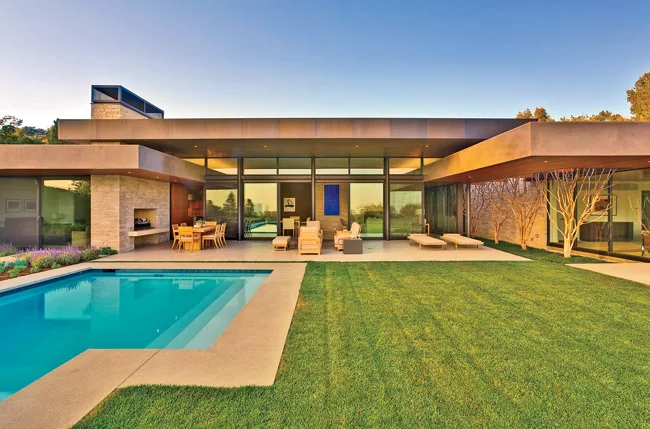
Increasing the number of revenue streams is also crucial. Marmol Radziner, the Los Angeles-based architecture, interiors, landscape, and construction firm, offers a diverse portfolio of services. Founded in 1989 by Leo Marmol and Ron Radziner, the firm started out building its own projects out of necessity, since it lacked access to quality contractors. Over time, that effort has morphed into a robust 120-person department that includes design-build services (for most of their own projects), construction (for other architects and developers), furniture, custom cabinetry, and even jewelry. Perhaps more important, the department acts as an idea incubator for both the construction side and the 85-member architecture, interiors, and landscape-design component. “There's a somewhat inconsistent ebb and flow to the work itself, and being diverse helps balance that out,” Marmol says. “That diversity, from a business standpoint, provides financial stability.”
Seizing an opportunity to take full advantage of Southern California's hot housing market, the firm recently set up a new development unit, dedicated to high-end houses. “We want to control the whole process,” Marmol says. “So we're purchasing the land, developing the architectural program, and marketing the houses.”
This broader, fluid definition of architecture is exactly what the profession needs to embrace as a survival strategy. “We must change not just the mechanics of what we charge but the whole thought process behind it,” Stasiowski says, adding, “Architects need to get out of the drawing business and into the consulting business. And if we do that, then we have to think like consultants and base our fees on the value we create for our clients. And those fees, in some cases, might have nothing to do with the number of hours it takes. That's a major mental shift.”
Martin C. Pedersen, former executive editor of Metropolis, is a New Orleans-based writer and editor.
For more information, read our Top 10 Business Tips for Architects.
Looking for a reprint of this article?
From high-res PDFs to custom plaques, order your copy today!