Architectural Record
search
cart
facebook twitter linkedin youtube
  • Sign In
  • Subscribe
  • Sign Out
  • My Account
Architectural Record
  • NEWS
    • Latest News
    • Awards
    • Interviews
    • Obituaries
    • Podcasts
      • Design:Ed Podcast
      • Sponsored Podcasts
  • OPINION
    • Book Reviews / Excerpts
    • Exhibition Reviews
    • Forum
  • EXCLUSIVES
    • Videos
    • Design Vanguard
    • Top 300 Firms
    • Sponsored Content
    • Sponsored eBooks
    • From the Archives
  • CONTINUING ED
    • Editorial Continuing Ed
    • CE Center
    • CE Academies
  • PROJECTS
    • Buildings By Type
    • Reuse & Renovation
    • Museums & Arts Centers
    • Colleges & Universities
    • Multifamily Housing
    • Interiors
    • Lighting
    • Kitchen & Bath
  • HOUSES
    • Record Houses
    • House of the Month
    • Featured Houses
  • PRODUCTS
    • Products by Category
    • Record Products of the Year
    • Latest Products
  • EVENTS
    • Dates & Events
    • Record on the Road
    • Innovation Conference
    • Sustainability in Practice
    • Women In Architecture
    • Webinars
    • Ad Excellence Awards
    • Submit an Event
  • CONNECT
    • Ask RECORD AI
    • Newsletters
    • Contact
    • Advertise
    • Editorial Calendar
    • Store
    • Customer Service
  • SUBMIT
    • Submission Guidelines
    • RECORD Competitions
  • MAGAZINE
    • Subscribe
    • My Account
    • Digital Edition
    • Current Issue
    • Firm Pass
    • Historic Archive
Projects

Asia Society Hong Kong Center

Cultural Bridge: On a thickly overgrown slope of Hong Kong, Tod Williams and Billie Tsien create a journey through time and space for the Asia Society.
By Suzanne Stephens
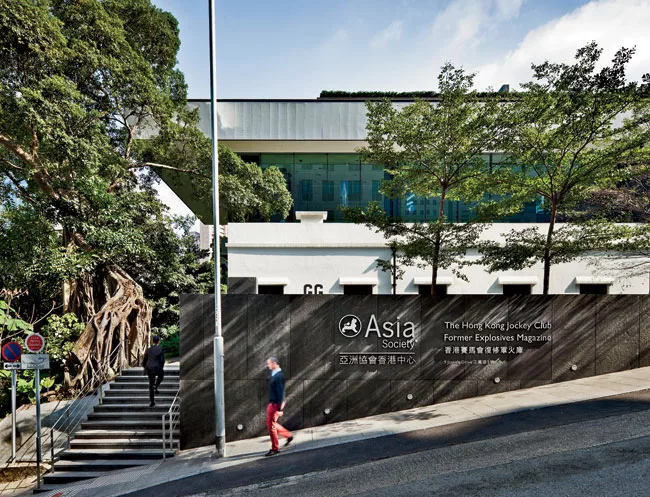
The center's entrance is located at what is  called the Hong Kong Jockey Club Former Explosives Magazine on Justice Drive.
Asia Society Hong Kong Center
Tod Williams Billie Tsien Architects
Hong Kong
The center's entrance is located at what is called the Hong Kong Jockey Club Former Explosives Magazine on Justice Drive.
Photo © Michael Moran
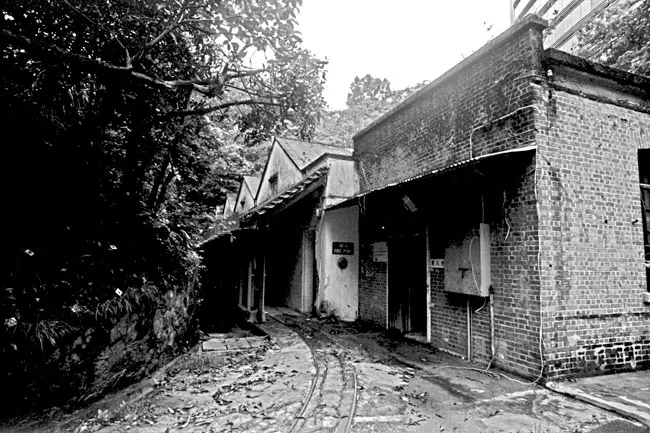
Three structures formerly used for munitions storage and a laboratory at the upper part of the site have been renovated for a theater, an art gallery, and a conference wing.
Asia Society Hong Kong Center
Tod Williams Billie Tsien Architects
Hong Kong
Three structures formerly used for munitions storage and a laboratory at the upper part of the site have been renovated for a theater, an art gallery, and a conference wing.
Photo © Michael Moran
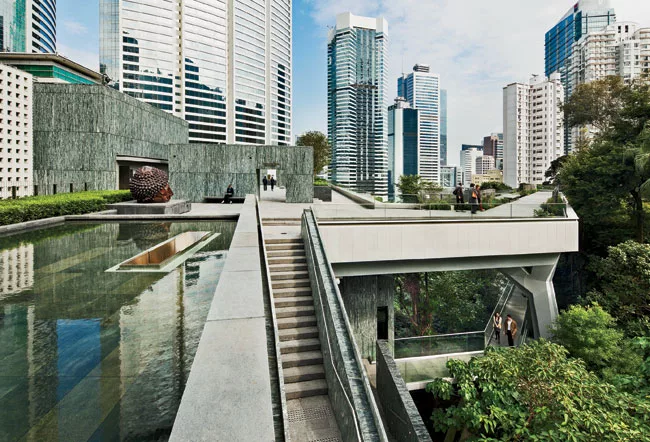
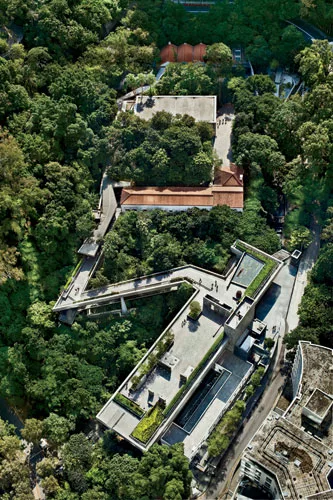
A pedestrian bridge links them to the new main pavilion on the lower site. On the pavilion's roof garden, visitors can enjoy an oasis in green marble amid skyscrapers and thick vegetation.
Asia Society Hong Kong Center
Tod Williams Billie Tsien Architects
Hong Kong
A pedestrian bridge links them to the new main pavilion on the lower site. On the pavilion's roof garden, visitors can enjoy an oasis in green marble amid skyscrapers and thick vegetation.
Photo © Michael Moran
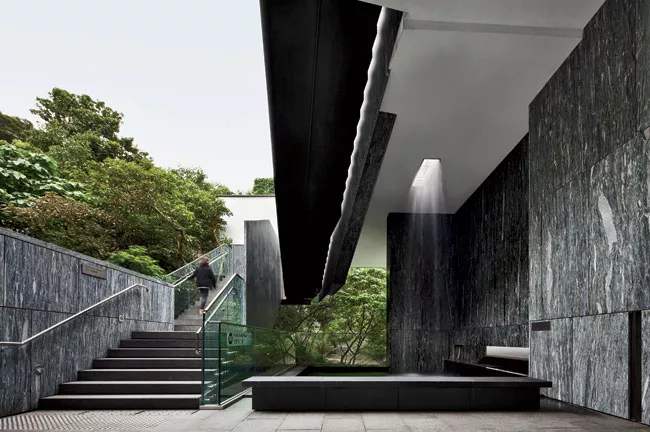
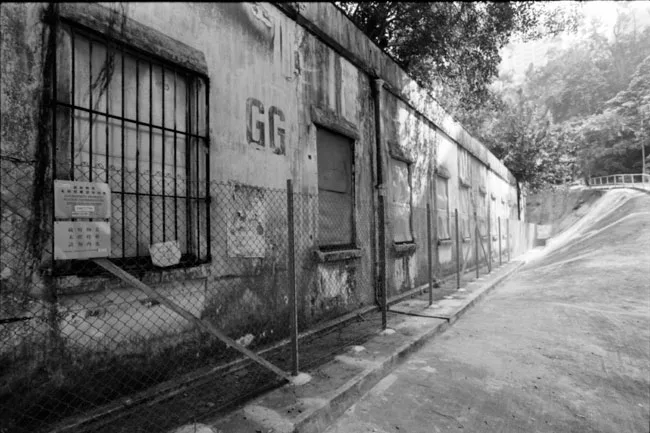
Stairs lead to the GG Block, built in the 1940s for the Royal Military Police and now used for offices. Next to it is the new pavilion, designed for visitor orientation, events, and dining.
Asia Society Hong Kong Center
Tod Williams Billie Tsien Architects
Hong Kong
Stairs lead to the GG Block, built in the 1940s for the Royal Military Police and now used for offices. Next to it is the new pavilion, designed for visitor orientation, events, and dining.
Photo © Michael Moran
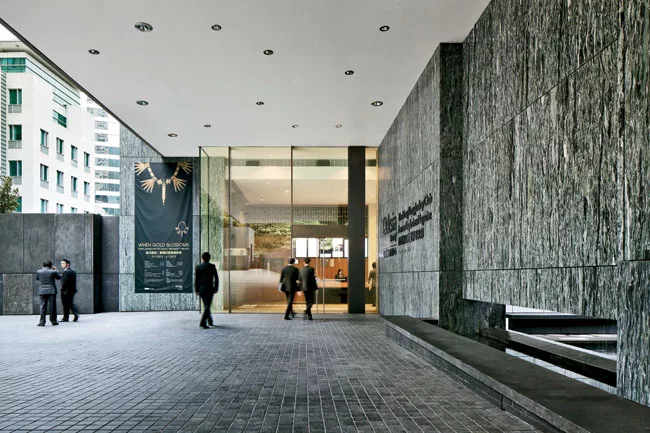
Striated Chinese-marble walls define the entrance as well as the lobby plaza on the east, where a waterfall cascades from the roof.
Asia Society Hong Kong Center
Tod Williams Billie Tsien Architects
Hong Kong
Striated Chinese-marble walls define the entrance as well as the lobby plaza on the east, where a waterfall cascades from the roof.
Photo © Michael Moran
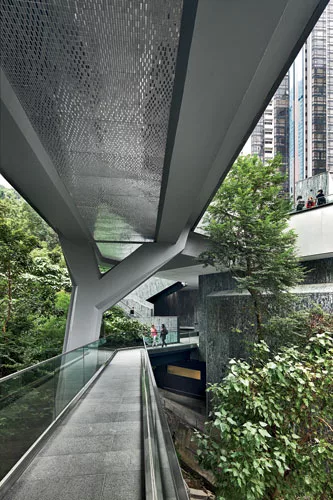
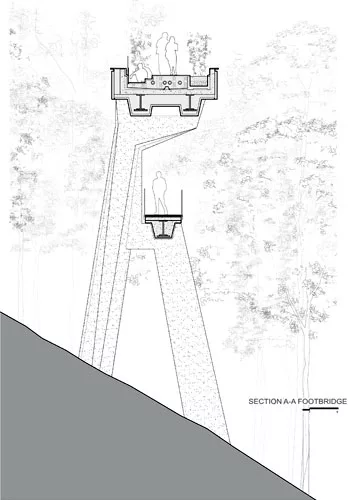
A double-level footbridge extends on the east from the roof garden of the new main pavilion and the plaza of the lobby level below. The walkway, marked by concrete Y-shaped supports, glazed ceramic ti
Asia Society Hong Kong Center
Tod Williams Billie Tsien Architects
Hong Kong
A double-level footbridge extends on the east from the roof garden of the new main pavilion and the plaza of the lobby level below. The walkway, marked by concrete Y-shaped supports, glazed ceramic tiles (on the underside of the upper level), and glass balustrades, angles from the lower site through the lush thicket to the former explosives compound at the top.
Photo © Michael Moran
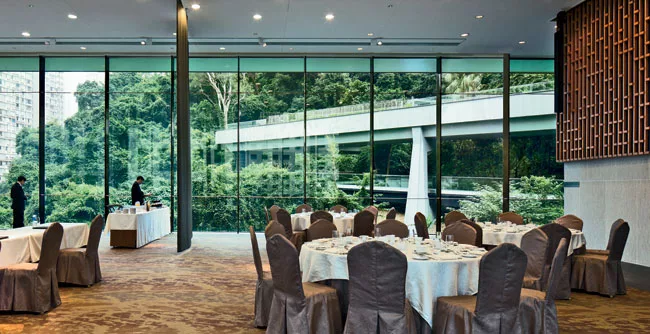
The Jockey Club Hall on the second floor of the main pavilion offers expansive views of the scenery by virtue of 17-foot-high glass window walls extending 110 feet on the east and west elevations.
Asia Society Hong Kong Center
Tod Williams Billie Tsien Architects
Hong Kong
The Jockey Club Hall on the second floor of the main pavilion offers expansive views of the scenery by virtue of 17-foot-high glass window walls extending 110 feet on the east and west elevations.
Photo © Michael Moran
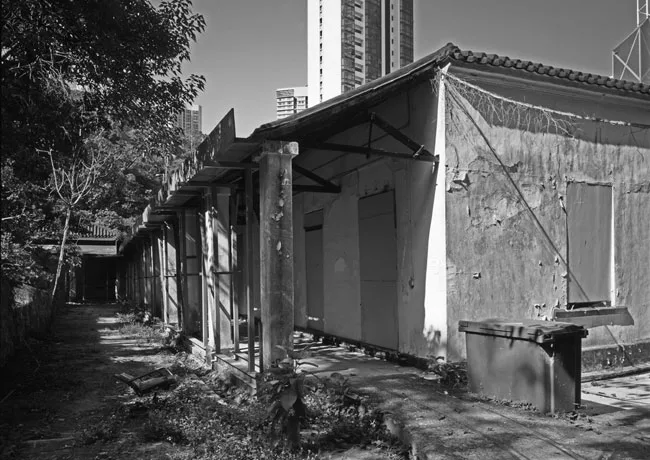
The architects also glazed and covered the veranda of this masonry structure.
Asia Society Hong Kong Center
Tod Williams Billie Tsien Architects
Hong Kong
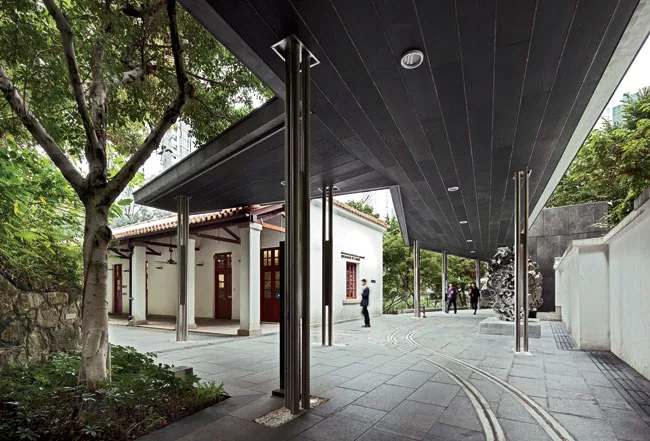
The architects also glazed and covered the veranda of this masonry structure.
Photo © Michael Moran
Next to the new main pavilion on the lower site is the renovated GG Block, which Williams and Tsien converted to administrative offices. They also glazed and covered the veranda of this masonry struct
Asia Society Hong Kong Center
Tod Williams Billie Tsien Architects
Hong Kong
Next to the new main pavilion on the lower site is the renovated GG Block, which Williams and Tsien converted to administrative offices. They also glazed and covered the veranda of this masonry structure.
Photo © Michael Moran
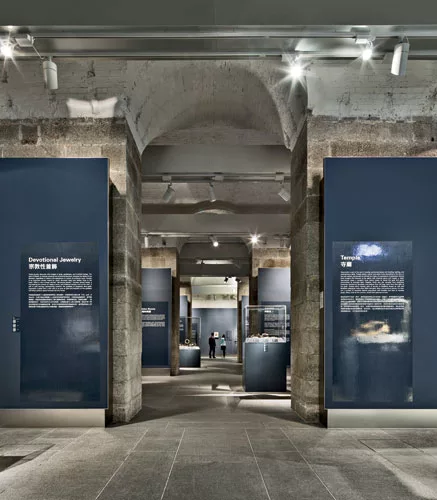
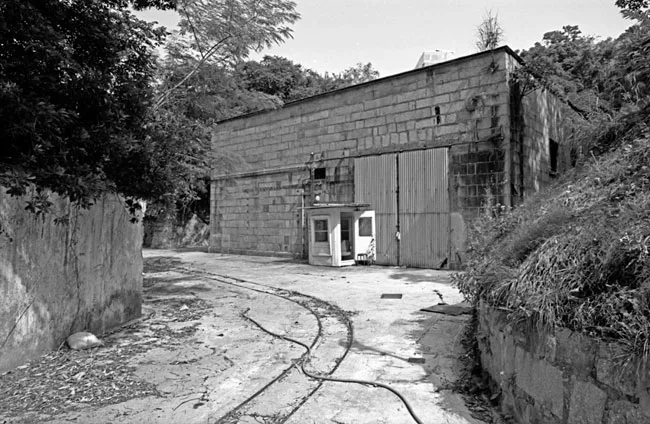
Magazine A (1868), with granite walls and brick barrel-vaulted ceilings, is now an art gallery. Its thick walls help keep indoor temperature and humidity in check.
Asia Society Hong Kong Center
Tod Williams Billie Tsien Architects
Hong Kong
Magazine A (1868), with granite walls and brick barrel-vaulted ceilings, is now an art gallery. Its thick walls help keep indoor temperature and humidity in check.
Photo © Michael Moran
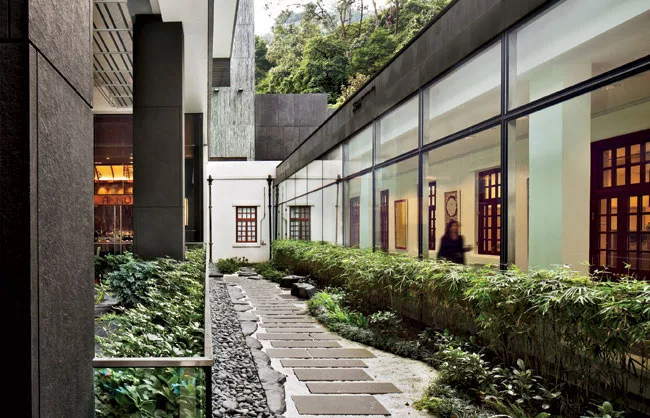
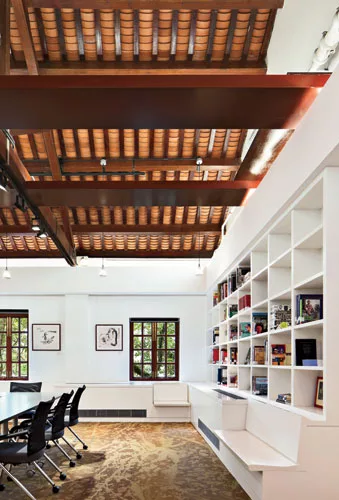
In the Explosives Magazine Compound at the top of the hill, the architects restored and renovated an 1860s laboratory for conferences.
Asia Society Hong Kong Center
Tod Williams Billie Tsien Architects
Hong Kong
In the Explosives Magazine Compound at the top of the hill, the architects restored and renovated an 1860s laboratory for conferences.
Photo © Michael Moran
Asia Society Hong Kong Center
Tod Williams Billie Tsien Architects
Hong Kong
Image courtesy Tod Williams Billie Tsien Architects
Asia Society Hong Kong Center
Tod Williams Billie Tsien Architects
Hong Kong
Image courtesy Tod Williams Billie Tsien Architects
Asia Society Hong Kong Center
Tod Williams Billie Tsien Architects
Hong Kong
Image courtesy Tod Williams Billie Tsien Architects
Asia Society Hong Kong Center
Tod Williams Billie Tsien Architects
Hong Kong
Image courtesy Tod Williams Billie Tsien Architects
Asia Society Hong Kong Center
Tod Williams Billie Tsien Architects
Hong Kong
Photo courtesy Tod Williams Billie Tsien Architects
Asia Society Hong Kong Center
Tod Williams Billie Tsien Architects
Hong Kong
Photo courtesy Tod Williams Billie Tsien Architects
Asia Society Hong Kong Center
Tod Williams Billie Tsien Architects
Hong Kong
Photo courtesy Tod Williams Billie Tsien Architects
Asia Society Hong Kong Center
Tod Williams Billie Tsien Architects
Hong Kong
Photo courtesy Tod Williams Billie Tsien Architects
The center's entrance is located at what is  called the Hong Kong Jockey Club Former Explosives Magazine on Justice Drive.
Three structures formerly used for munitions storage and a laboratory at the upper part of the site have been renovated for a theater, an art gallery, and a conference wing.
A pedestrian bridge links them to the new main pavilion on the lower site. On the pavilion's roof garden, visitors can enjoy an oasis in green marble amid skyscrapers and thick vegetation.
Stairs lead to the GG Block, built in the 1940s for the Royal Military Police and now used for offices. Next to it is the new pavilion, designed for visitor orientation, events, and dining.
Striated Chinese-marble walls define the entrance as well as the lobby plaza on the east, where a waterfall cascades from the roof.
A double-level footbridge extends on the east from the roof garden of the new main pavilion and the plaza of the lobby level below. The walkway, marked by concrete Y-shaped supports, glazed ceramic ti
The Jockey Club Hall on the second floor of the main pavilion offers expansive views of the scenery by virtue of 17-foot-high glass window walls extending 110 feet on the east and west elevations.
The architects also glazed and covered the veranda of this masonry structure.
Next to the new main pavilion on the lower site is the renovated GG Block, which Williams and Tsien converted to administrative offices. They also glazed and covered the veranda of this masonry struct
Magazine A (1868), with granite walls and brick barrel-vaulted ceilings, is now an art gallery. Its thick walls help keep indoor temperature and humidity in check.
In the Explosives Magazine Compound at the top of the hill, the architects restored and renovated an 1860s laboratory for conferences.
Asia Society Hong Kong Center
June 16, 2013

Architects & Firms

Tod Williams Billie Tsien Architects

Hong Kong

Over several decades of designing together, Tod Williams and Billie Tsien have steadfastly emphasized the serene and assured manipulation of spaces, planes, and materials, and exhibited an impeccable sense of craft. In addition, they have cannily united large- and small-scale architectural elements into integrated compositions, as seen in their new Barnes Foundation in Philadelphia and 'now possibly threatened with demolition' their Folk Art Museum in New York City. But in their design for the Asia Society Hong Kong Center, completed in 2012, they took on even more challenges. Their scheme shows the firm's prowess at blending architecture into the landscape while balancing new construction with renovated historic structures.

Immersed in the lush hills of the Admiralty area of Hong Kong Island, the Asia Society's new 65,000-square-foot center occupies more than 3 acres of rainforest that had been the Explosives Magazine Compound for the British Army. There, between 1860 and 1907, the colonial rulers had created two ammunition-storage facilities and a munitions lab at the top of the steep site, with earth berms positioned between them in case of explosions. A fourth building, named GG Block, was constructed in the 1940s on the lower part of the hill for the Royal Military Police. By the 1980s the ammunitions complex had been abandoned, and in 1999 the Hong Kong branch of the Asia Society succeeded in leasing the property from the city'which by then had been transferred from British to Chinese rule.

The society, founded in New York in 1956 to foster cultural and business interaction between America and Asia, obtained major funding from the Hong Kong Jockey Club Charities Trust to create a satellite home in this burgeoning metropolis. Its program called for salvaging the munitions buildings on the upper site, in accordance with the recommendation by a landmarks advisory board, although the structures were in a sorry state of disrepair. In addition to making use of 17,000 square feet of these existing spaces for cultural facilities and offices, the society needed a new building for visitors' orientation, dining, and meetings.

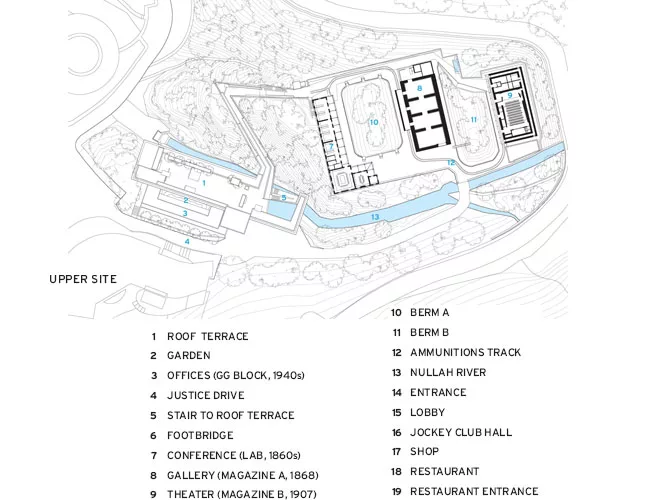
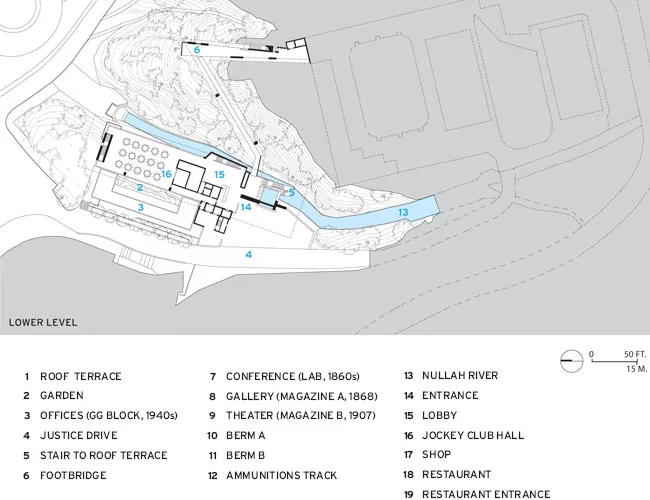
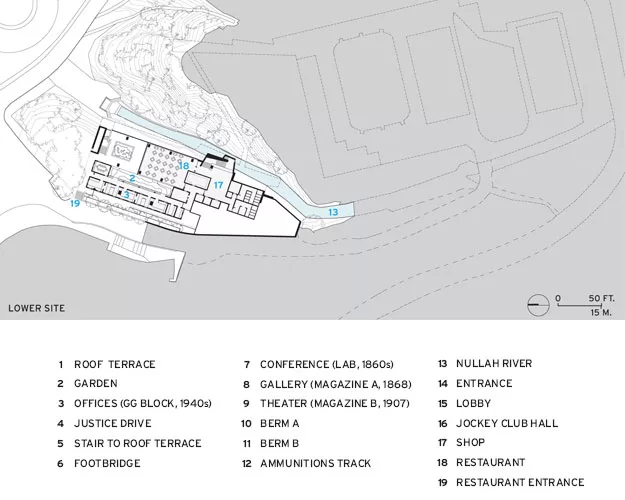
In its winning scheme for the invited competition, Tod Williams Billie Tsien Architects (TWBTA) placed a new 10,170-square-foot main pavilion next to the GG Block, now renovated for offices. The architects then linked this lower portion of the slope to the three existing structures at the top by creating a two-level concrete bridge, reminiscent of Hong Kong's own elevated walkways. Instead of busy streets, this pedestrian path on Y-shaped supports angles over, around, and through the lush growth to avoid harming fruit bats in the palm trees.

Ultimately the walkway deposits you at the renovated cluster from another era: the former lab from the 1860s, now used for conferences; next, Magazine A, built in 1868 and transformed into a gallery; and finally Magazine B, built in 1907, which the architects converted to a 100-seat theater.

Hong Kong preservation architect Ivan C.C. Ho guided the firm in the finer points of rebuilding the red-tile roofs and reproducing teak doors, window frames, rafters, beams, and joists, as well as restoring masonry- and granite-walled structures. TWBTA's interventions are discreet and minimal'such as the elegant glass-and-steel entrance to the gallery'and accommodate new uses without irreversible changes to the old structures. It helped that the firm put mechanical equipment underground in the western part of the upper site.

In visiting the center you arrive at the lower site, first passing the GG Block, and then move on to the new main pavilion, a two-level, poured-in-place-concrete structure. There, a grandly proportioned plaza sheathed in a strikingly striated Chinese marble announces the entrance. Beyond the cream-colored and gray stone surfaces of the lobby, you find the majestic Jockey Club Hall. This rectangular multipurpose room seems to float out into the vines and trees, owing to laminated-glass curtain walls, 17 feet high and 110 feet long, on the east and west elevations. Downstairs is the shop and AMMO, a brashly gleaming restaurant designed by Joyce Wang of Wang Design in Hong Kong in a steampunk aesthetic'the only note at the center that is counter to Williams and Tsien's Zenlike spaces.

The Zen aspect is most apparent when you ascend the outside stairs from the lobby to the roof of the main pavilion. Here an elegantly composed terrace with planting, courtyards, fountains, and seating immerses you in both the city and the jungle. The roof terrace, also lavishly surfaced in green Chinese marble, connects you to the upper level of the walkway along the east side for your jaunt to the upper site.

The project's cascading-down-the-slope configuration means that its most visible element is actually the pedestrian bridge and the roof terrace of the pavilion. Indeed, the only overall view of the Asia Society center is an aerial one, which a cluster of nearby skyscrapers can provide. As Tsien puts it, 'This is a horizontal building in a vertical city.'

A year after the $51.5 million complex opened, Alice Mong, executive director of the Asia Society Hong Kong, notes that the center 'has been a big hit with the community''although the staff already needs more room. This oasis in the middle of a bustling city offers a feeling of tranquility desperately desired and surprising to find. And in doing so, it transports you through time and space, between old and new architecture.

A conversation with: Billie Tsien and Tod Williams
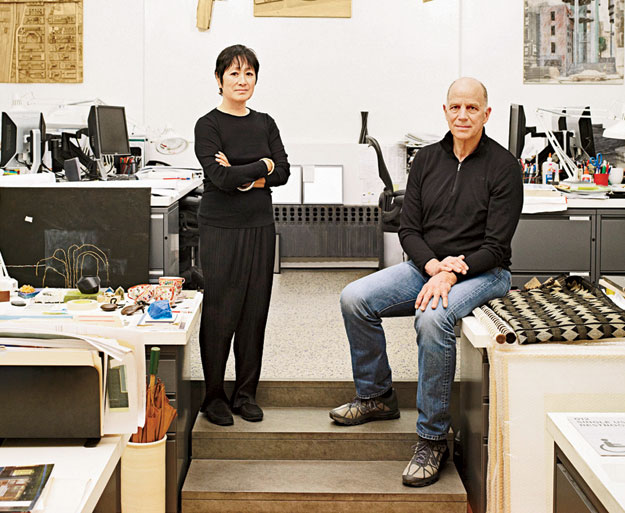
Billie Tsien and Tod Williams
Photo © Christopher Sturman

Billie Tsien and Tod Williams formed a professional partnership in 1986, nine years after Tsien started working at Williams's office and three years after they married. The two collaborate closely on the design of their projects'they say it is hard to properly parse the process of designing together. Williams says of Tsien: 'She's the smart one and controls the world.' Tsien demurs, replying that they make decisions together by bantering back and forth, to which Williams adds, 'Sometimes we disagree. We do butt heads, yet the period is short and resolved without bruising.' Tsien elucidates, 'But we don't compromise'the decision comes at the end of a long and interesting conversation.' Tsien praises Williams for focusing more on construction and visualizing easily in the third dimension, while she volunteers, 'I think in terms of composition and aesthetics.' Williams notes, 'Billie steps back philosophically.'


Architect: Tod Williams Billie Tsien Architects

Size: 65,000 square feet (gross)

Cost: $51.5 million

Completion date: February 2012

People

Owner:
Asia Society Hong Kong

Location:
The Hong Kong Jockey Club Former Explosives Magazine
9 Justice Drive, Admiralty, Hong Kong

Completion Date (Month and Year):
February 2012

Gross square footage:
GSF: 65,000SF

Breakdown:
New building construction – Pavilion building: 10,173 SF
Building Renovations – GG Block, Lab Building, Magazine A and B: 16,927 SF
Site construction including roof terrace and footbridge – 21,026 SF
General site construction including site paving on upper site, car drop off, zen garden etc – 16,874 SF

Total construction cost:
$51.5Million

Architect:
Tod Williams Billie Tsien Architects
222 Central Park South
New York, NY 10019
Phone: 212.582.2385

Design Architect:
Tod Williams Billie Tsien Architects

Tod Williams, Principal
Billie Tsien, Principal
William Vincent, Project Architect
Robin Blodgett, team member
Johnny Cho, team member
David Later, team member
Aurelie Paradiso, team member
Miriam Petersen, team member
John Skillern, team member
Elisa Testa, team member
Jennifer Turner, team member
Mathieu Verougstraete, Intern

Owners Rep:
Patrick Chung & Associates Ltd.
Associate Architect – Core and Shell:
AGC Design Ltd. (Hong Kong)

Associate Architect – Interiors:
Associated Architects Ltd. (Hong Kong)

Structural Engineers:
Severud Associates (New York)
Ove Arup & Partners Hong Kong Limited (Hong Kong)

Mechanical Engineers:
Altieri Sebor Wieber LLC (Norwalk, CT)
J. Roger Preston Co. Ltd. (Hong Kong)

Civil Engineer / Geotechnical Engineer:
Ove Arup & Partners Hong Kong Limited (Hong Kong)

Restoration/Preservation Consultant:
Architectural Resources Group (San Francisco, CA)
Ivan C.C. Ho (Hong Kong)

Landscape:
ADI Limited (Hong Kong)

Theater:
Fisher Dachs Associates (New York)

Lighting:
Over Arup & Partners Hong Kong Ltd. (Hong Kong)

Curtain Wall:
Axis Group Limited (San Diego, LA)

Water Feature Consultant:
Dan Euser Waterarchitecture, Inc. (Ontario, CA)

Stone Consultant:
Walker and Zanger (Mount Vernon, NY)

Acoustical:
Acoustic Dimensions (New Rochelle, NY)

Specifications:
Construction Specifications, Inc. (Englishtown, NJ)

Estimator:
Davis Langdon & Seah International (Hong Kong)

General contractor – Core & Shell:
Hip Hing Construction Co. Ltd. (Hong Kong)

General contractor –Interiors:
Interiors – Yearfull Contracting Limited (Hong Kong)

Photographer(s):
© Michael Moran / OTTO
Phone: 718.237.8830
Email: Michael@moranstudio.com

Drawing (s):
Courtesy Tod Williams Billie Tsien Architects

CAD system, project management, or other software used:
AutoCAD


Products

Structural system
Cast in place concrete

Exterior cladding:
Mist Green Marble (Green stone from Shanxi, China used for Pavilion cladding)

Masonry:
Furging Black (Grey Stone used as interior and exterior pavers)
Shaxi Black (Black Stone used for exterior elements such as planters, to clad passage through berm B, benches, etc).
Iran Moca (Beige stone used to clad lobby and part of Jockey Hall)

Roofing
Tile/shingles:
Silver Tiles on the underside of upper level footbridge:
Made by YCC (China)
Silver Metallic glazed ceramic tile
Model: CYC001

Interior finishes
Acoustical ceilings: Ecophon

Acoustical Curtain/Blackout Drapery:
Used in Jockey Hall
Knoll Fabric
Name: Eve
Color: Granite
Style Number: D1058/6

Cabinetwork and custom millwork: Corian

Carpets:
Jockey Hall and Theater:
Tandus Flooring
Name: Atmosphere
Style #: 03666
Color: Russet Silk (#49504)

Offices:
Tandus Flooring with Suzanne Tick
Name: Gridline
Style #: 06108

Fixed seating:
Auditorium chairs: Camatic Seating

Upholstery:
For Auditorium seating:
Kobe Fabric
Article: Bronzo
Color: 00022

Lighting
Interior ambient lighting:
Erco

Task lighting:
Exterior:
Bega

 
KEYWORDS: Hong Kong

Share This Story

Looking for a reprint of this article?
From high-res PDFs to custom plaques, order your copy today!

Stephens

Suzanne Stephens, a former deputy editor of Architectural Record, has been a writer, editor, and critic in the field of architecture for several decades. She has a Ph.D. in architectural history from Cornell University, and teaches a seminar in the history of architectural criticism in the architecture program of Barnard and Columbia colleges.

Post a comment to this article

Report Abusive Comment

Subscription Center
  • Create an Account
  • Start a Subscription
  • Manage My Account
  • Sign Up for Newsletters
  • Visit Customer Service
  • Update Preferences

More Videos

Sponsored Content

Sponsored Content is a special paid section where industry companies provide high quality, objective, non-commercial content around topics of interest to the Architectural Record audience. All Sponsored Content is supplied by the advertising company and any opinions expressed in this article are those of the author and not necessarily reflect the views of Architectural Record or its parent company, BNP Media. Interested in participating in our Sponsored Content section? Contact your local rep!

close
  • cold storage facility
    Sponsored byCarlisle SynTec Systems

    How Architects Can Design More Continuous Cold Storage Envelopes

  • TAMLYN XtremeTrim Exterior Trim
    Sponsored byTamlyn

    Designing Cleaner Panel Facades: Why Exterior Trim Details Matter

  • Building with Vapor Barriers
    Sponsored byReef Industries, Inc.

    Vapor Barriers Help Control Moisture in Tighter Building Designs

DESIGN:ED Podcast
Listen to Architectural Record’s DESIGN:ED Podcast

Events

June 18, 2026

Rebooting the Aging Office Building

Credits: 1 AIA LU/HSW; 1 AIBD P-CE; 0.1 ICC CEU; 1 PDH

Explore façade retrofit strategies and award-winning design concepts that can transform aging office buildings into healthier, higher-performing workplaces for today’s hybrid workforce.

June 23, 2026

Enhancing Fire Resistance with Advanced PVC Solutions

Credits: 1 AIA LU/HSW; 1 AIBD P-CE; 0.1 ICC CEU; 1 IIBEC CEH

Evaluate advanced PVC solutions that improve fire resistance, support WUI compliance, and enhance resilience in residential and commercial building design.

View All Submit An Event

Products

2026 Architect's Square Foot Costbook

2026 Architect's Square Foot Costbook

See More Products

Popular Stories

SanDiegoAirport

Top 300 Architecture Firms of 2026

Lorcan O' Herilhy

California Architect Lorcan O’Herlihy Has Died, Age 66

Coronado Bridge

The Architect’s Guide to San Diego

CCA, Studio Gang

The Winners of the AIA’s 2026 Architecture Award Range from Collegiate Rowing Hubs to Housing for the Homeless

Dusk House

Design Vanguard 2026: ONO

Rebooting the Aging Office Building - Free Webinar - June 18, 2026

Related Articles

  • Asia Society Texas Center

    See More
  • Beauty and Ethics in Hong Kong

    See More
  • High Hopes in Hong Kong

    See More
×

The latest news and information

#1 Source for Architectural Design, News and Products

SUBSCRIBE
  • RESOURCES
    • Advertise
    • Contact Us
    • Submit
    • Store
  • ACCOUNT CENTER
    • Create an Account
    • Start a Subscription
    • Manage My Account
    • Sign Up for Newsletters
    • Visit Customer Service
    • Update Preferences
  • PRIVACY
    • PRIVACY POLICY
    • TERMS & CONDITIONS
    • DO NOT SELL MY PERSONAL INFORMATION
    • PRIVACY REQUEST
    • ACCESSIBILITY
  • SERVICES
    • Marketing Services
    • Reprints
    • Market Research
    • List Rental
    • Survey/Respondent Access
  • STAY CONNECTED
    • Linkedin
    • Facebook
    • Instagram
    • YouTube
    • X (Twitter)

Copyright ©2026. All Rights Reserved BNP Media, Inc. and BNP Media II, LLC.

Design, CMS, Hosting & Web Development :: ePublishing