Architectural Record
search
cart
facebook twitter linkedin youtube
  • Sign In
  • Subscribe
  • Sign Out
  • My Account
Architectural Record
  • NEWS
    • Latest News
    • Awards
    • Interviews
    • Obituaries
    • Podcasts
      • Design:Ed Podcast
      • Sponsored Podcasts
  • OPINION
    • Book Reviews / Excerpts
    • Exhibition Reviews
    • Forum
  • EXCLUSIVES
    • Videos
    • Design Vanguard
    • Top 300 Firms
    • Sponsored Content
    • Sponsored eBooks
    • From the Archives
  • CONTINUING ED
    • Editorial Continuing Ed
    • CE Center
    • CE Academies
  • PROJECTS
    • Buildings By Type
    • Reuse & Renovation
    • Museums & Arts Centers
    • Colleges & Universities
    • Multifamily Housing
    • Interiors
    • Lighting
    • Kitchen & Bath
  • HOUSES
    • Record Houses
    • House of the Month
    • Featured Houses
  • PRODUCTS
    • Products by Category
    • Record Products of the Year
    • Latest Products
  • EVENTS
    • Dates & Events
    • Record on the Road
    • Innovation Conference
    • Sustainability in Practice
    • Women In Architecture
    • Webinars
    • Ad Excellence Awards
    • Submit an Event
  • CONNECT
    • Ask RECORD AI
    • Newsletters
    • Contact
    • Advertise
    • Editorial Calendar
    • Store
    • Customer Service
  • SUBMIT
    • Submission Guidelines
    • RECORD Competitions
  • MAGAZINE
    • Subscribe
    • My Account
    • Digital Edition
    • Current Issue
    • Firm Pass
    • Historic Archive
Editorial

Outlook 2010 Sticking to the Facts

By Robert Ivy, FAIA FAIA
November 1, 2009
November 2009

Whenever two or three architects gather — over the coffeepot, at a cocktail party, in the elevator —a single topic emerges: When will the recession end? Faced with frequent layoffs and calls from their bankers, and with a dynamic marketplace that seems to be constantly shrinking, principals have been relying on help wherever they might find it, whether through anecdotes, colleagues, advice from professional practice consultants, or Ouija boards. Then on Friday, October 16, 2009, the construction economists spoke.

Photo © André Souroujon

Interest in where the markets will trend always draws a crowd. We all want to know the effect of the general economy on our businesses, and how prices of commodities and even world trade will affect our work and our clientele. This year, more than most, all eyes remained on center stage at the Capital Hilton in Washington, D.C., searching for clues. In full disclosure, McGraw-Hill Construction sponsors the annual Outlook Executive Conference, and I moderated this year’s event. However, as an editor I listened with as rapt attention as any onlooker. What would happen in 2010?

In two days, we heard tempered remarks from all concerned. David Wyss, Standard and Poor’s chief economist, led off with an analysis of the general economy, which he characterized as showing “glimmers of hope.” He cited upturns in housing prices and improving financial markets, though unemployment remaining from the “synchronized sinking” of the world recession will hurt the construction industry. How are we emerging? With a bound? No, Wyss sees us “crawling out” of a recession that many have characterized as the Great Recession (with capital letters), headed toward a “slow recovery.” Risks remain in the levels of unemployment, in the price of oil, and in the volatility of financial markets, any one of which could upset the slowly rising tides.

The shared wisdom of panelists and speakers regarding the stimulus for the construction industry can be summed up in a single word: Wait. Initial “shovel-ready” stimulus dollars went to infrastructure such as highway projects, even to asphalt, while the more complex building projects that require preparation and careful documentation should hit the architectural marketplace next year. The General Services Administration and other

governmental agencies will receive much of the stimulus funding, in projects as massive as the new headquarters for the Department of Homeland Security in Washington, D.C., or in the energy retrofit of smaller regional office buildings.

Robert Murray, the Vice President for Economic Affairs for McGraw-Hill Construction, spoke last, and presented his long-awaited 2010 Construction Outlook for U.S. construction activity. However, individual sectors of the industry are behaving independently. Single-family housing has hit bottom and is beginning a slow upward trend. Commercial building “is still in deep decline,” according to Murray. Surprisingly, institutional building, which has been a bulwark throughout the past two years, is dropping in volume as funding sources dry up. The educational sector, another strength of the last two years, is weakening. Public works and infrastructure, by contrast, “are set to turn up.”

Murray and his peers do not see us rebounding with the élan of previous recession and recovery cycles, where low points would be followed by “V”-shaped jumps upward, but by a more deliberate “U”-shaped change that will not reach the heights of 2005—06. As a nor’easter was bearing down on the East Coast of the United States, Murray summarized by recognizing movement from the depths of the recession that began in 2007 that may reach 11 percent overall above the low points of 2009. Growth is relative in his scenario, however.

Is the stimulus working? When can American firms plan for a loosening of credit by the marketplace? Which sectors of the client community will be seeking architectural and building services? The Outlook addressed these questions and more, and if the prognostications prove false, at least for two days architects, engineers, constructors, and owners had data and facts to rely on, and could banish the anecdotes and vague worries of the past months to the dustbin. Examining the facts, and then analyzing them, provides momentary comfort and may help to build confidence, so necessary for the coming year.

If you wish to write to our editor-in-chief you can email him rivy@mcgraw-hill.com.

Share This Story

Looking for a reprint of this article?
From high-res PDFs to custom plaques, order your copy today!

Post a comment to this article

Report Abusive Comment

Subscription Center
  • Create an Account
  • Start a Subscription
  • Manage My Account
  • Sign Up for Newsletters
  • Visit Customer Service
  • Update Preferences

More Videos

Sponsored Content

Sponsored Content is a special paid section where industry companies provide high quality, objective, non-commercial content around topics of interest to the Architectural Record audience. All Sponsored Content is supplied by the advertising company and any opinions expressed in this article are those of the author and not necessarily reflect the views of Architectural Record or its parent company, BNP Media. Interested in participating in our Sponsored Content section? Contact your local rep!

close
  • TAMLYN XtremeTrim Exterior Trim
    Sponsored byTamlyn

    Designing Cleaner Panel Facades: Why Exterior Trim Details Matter

  • Building with Vapor Barriers
    Sponsored byReef Industries, Inc.

    Vapor Barriers Help Control Moisture in Tighter Building Designs

  • Duct Interior with Prodeq System
    Sponsored byHenry, a Carlisle Company

    Designing Resilient Water Containment Systems

DESIGN:ED Podcast
Listen to Architectural Record’s DESIGN:ED Podcast

Events

June 10, 2026

Rethinking Stormwater – The Power of Porous Paving

Credits: 1 AIA LU/HSW; 1 AIBD P-CE; 0.1 ICC CEU

Learn how porous paving systems support stormwater management, reduce heat island effects, and enhance sustainable site design performance.

June 11, 2026

Very Early Warning Fire Detection for Mission-Critical Facilities

Credits: 1 AIA LU/HSW; 1 AIBD P-CE; 0.1 ICC CEU

Examine advanced fire detection strategies that support uptime and enhance safety in data centers and other mission-critical facilities.

View All Submit An Event

Products

2026 Architect's Square Foot Costbook

2026 Architect's Square Foot Costbook

See More Products

Popular Stories

Practice Matters illustration

What’s in a (Firm’s) Name? Thinking About Succession and Legacy

Practice Matters illustration

By the Numbers: Counting America's Architects

House on a Hill

Design Vanguard 2026: Forma

Crane Cove, ONO

Design Vanguard 2026 Winners

House A on a Hill

Design Vanguard 2026: Santiago Valdivieso

Broader Sustainability of CMU - Free Webinar - May 21, 2026

Related Articles

  • Reflecting the Facts

    See More
  • AIA 2010: A Lively Start to the Day at the Architectural Record Ad Awards Breakfast

    See More
  • Back to the Future

    See More

Related Products

See More Products
  • 3dthinking.jpg

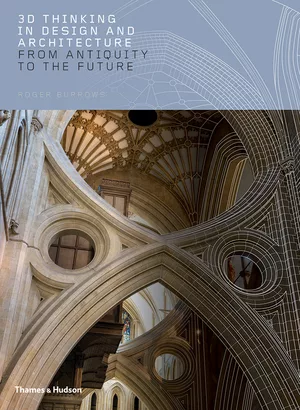
    3D Thinking in Design and Architecture: From Antiquity to the Future

  • GlobalData_logo_blue_header.png

    Construction in the US - Key Trends and Opportunities to 2023

  • movable arch.jpg

    Movable Architecture: A Design Guide to Container Reuse

See More Products
×

The latest news and information

#1 Source for Architectural Design, News and Products

SUBSCRIBE
  • RESOURCES
    • Advertise
    • Contact Us
    • Submit
    • Store
  • ACCOUNT CENTER
    • Create an Account
    • Start a Subscription
    • Manage My Account
    • Sign Up for Newsletters
    • Visit Customer Service
    • Update Preferences
  • PRIVACY
    • PRIVACY POLICY
    • TERMS & CONDITIONS
    • DO NOT SELL MY PERSONAL INFORMATION
    • PRIVACY REQUEST
    • ACCESSIBILITY
  • SERVICES
    • Marketing Services
    • Reprints
    • Market Research
    • List Rental
    • Survey/Respondent Access
  • STAY CONNECTED
    • Linkedin
    • Facebook
    • Instagram
    • YouTube
    • X (Twitter)

Copyright ©2026. All Rights Reserved BNP Media, Inc. and BNP Media II, LLC.

Design, CMS, Hosting & Web Development :: ePublishing