Color in Architecture: Part 1 and 2
Principles of Architectural Polychromy
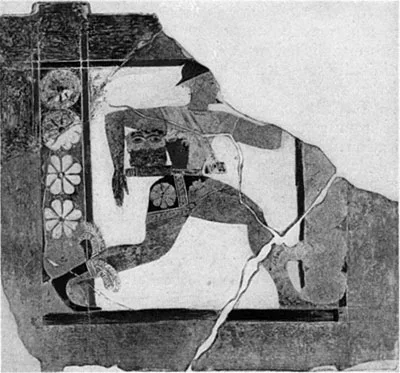
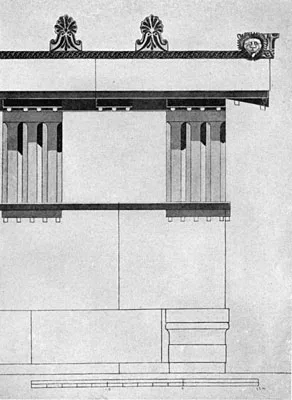
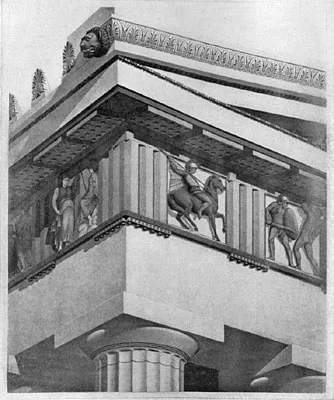
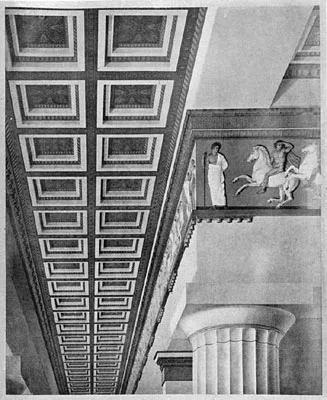
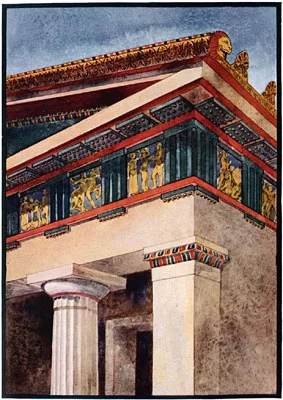
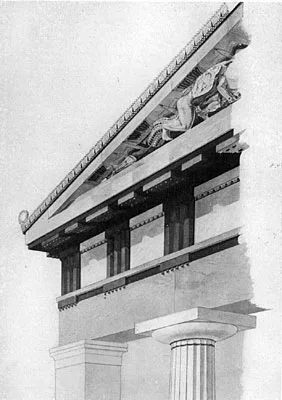
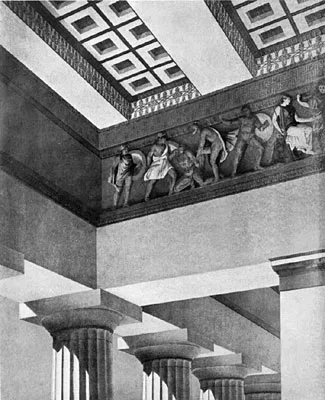
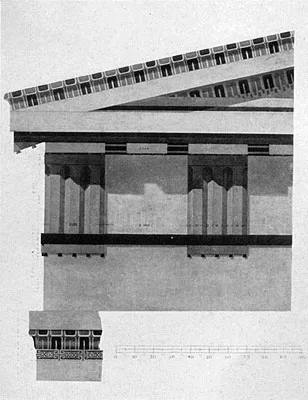
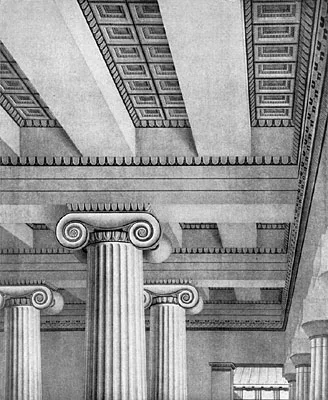
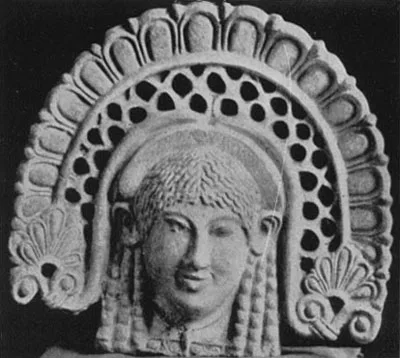
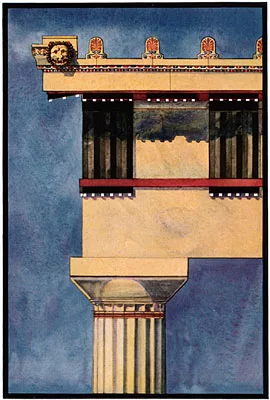
From ARCHITECTURAL RECORD, January 1922
PART I: The Conditions which Control the Introduction of Color
The element of confusion which accompanies an inexperienced attempt to introduce color in a façade arises in most cases from ignorance of the physical properties of color, and their relation to and reaction upon the architectonic values established in design. The major difficulties presenting themselves in practice may be arranged in two main groups. The first concerns the selection of those architectural items to which the application of color may advantageously be made. The second includes the formulation of a color technique; this, besides dealing with the planning of colors upon ornamental form, and with the conformation of contour and relief for the reception of color, involves an answer to the question whether architectural polychromy should include tone gradation or be confined to uniform tones.
The intention which actuates the use of color in the various arts, to realize aesthetic objectives, functions in two general directions. In the pictorial arts, color stimulates imaginative processes; in the applied arts, the endowment of substance or surface with a species of scenic-value or sense-appeal is the factor determining the methods of application and the quality of color. For the painter it is the most pliable means with which the complexities of effect may be reconstituted, in such guise that his temperament records, on contemplation of his finished work, a reaction equivalent to that experienced during the initial phases of inspiration. The function of color in architecture is of a less involved character; it contributes an extraneous form of beauty to that which is purely architectural; the gratification of the aesthetic sense is visual rather than intellectual, the use of color being free from the intent to stimulate reflex processes.
Color in its architectural relation must naturally be classified as a decorative resource. Each decorative resource has the capacity to realize a distinctive type of effect unattainable by the legitimate use of any other decorative means. Our initial steps in research are thus prescribed. It is first necessary to identify those forms of effect which are expressive of the decorative function of polychromy in architectural effect; this can only be effected through an acquaintance with the action and reaction of color upon architectural values and properties. It is, then, necessary to formulate a technique which will serve as the mechanism for effect.
The prime capability of color in architecture Is, that it is the most potent of all vehicles for emphasis. Color possesses an inherent property recognized in its scientific aspect as its radiant energy. This form of energy is capable of a control which enables it to attain results of an esthetic character; the phenomena which characterize it produce direct optical results in their decorative operation; but these results react indirectly upon certain vital properties in architectural design unless subjected to rigid regulation. It is necessary, therefore, to discover the nature and location of those reactions upon elements of architectural design which must not suffer depreciation through the presence of color, in order that the results proceeding from the use of color may be uniformly advantageous.
A major objective is sought, in all architectural design, to which each contributory element of effect is instinctively subordinated; it consists in the creation of an aspect of harmonious adjustment between the component structural forces, in order that a sense of statical force may predominate; by statical force is meant that impression of equilibrium resulting from a perfect coördination of the varied forces sensed in an architectural composition. If strong emphasis, in the guise of color, is added to a façade in which the effect of these varied forces conveys an impression of satisfactory adjustment, it is obviously imperative that color location and its decorative development must have a clearly recognized relation to values previously established. Since emphasis constitutes a focus of effect, the inclusion of a predominant element such as polychromy, capable of imparting the maximum degree of accentuation to any member, must not occur as an unrelated and superadded artistic activity.
The visual impression resulting from the presence of color upon any architectural member is antithetical to its appearance of structural strength; this latter quality is diminished relatively to the degree of color elaboration. However, it does not follow that the presence of color in a façade is consequently antagonistic to this vital element in architectural design. On the contrary, color may accentuate the extremes of certain aesthetic qualities present in a work of art. It may contribute by contrast to the sense of statical force in the main conception, by augmenting the impression of lightness in members that are secondary or supported, thereby intensifying the structural integrity of those architectural items which are essentially sustaining.
Looking for quick answers on architecture and design topics?
Try Ask RECORD, our new smart AI search tool.
Ask RECORD →
The decorative capacities of color in architecture may be grouped under three main activities:
1. Its inherent chromatic energy, which introduces a quality of decorative emphasis in any item upon which it figures.
2. Its decorative contribution to architectural effect, by the introduction of a decorative interest distinct from the purely architectonic.
3. Its influence upon structural attributes, by accentuating qualities of delicacy and elegance in architectural members in which those elements are characteristic.
The Use of Color in Historic Types
The historic types of architecture developed between archaic eras and modern times may be roughly classed as those wherein racial instincts achieved a spontaneous expression and those, dating from the sixteenth century in Europe, which are in the majority of cases classic derivatives. In many of the former, color figures prominently on façades, as an important factor in their creators' content of beauty: in the latter, it is almost entirely absent. In races and ages where an uninfluenced form of expression was possible, the sensuous appeal of color was a valuable medium for imparting to the minds of the masses those impressions and influences which constituted so important a function in the social message conveyed through architectural design. During the later period, with the revival of the classic type of design, another set of esthetic ideals controlled imaginative effort.
In the Renaissance of Italy, the basic interest discovered in the classic models was that of organized proportions, which did not exist in the Byzantine, Romanesque or Gothic. We must also remember that, with the inception of this style, there was a revision of values in the media of effect, and that masses and detail were subject to a changed angle of consideration; as in painting, so also in architecture, the qualities of light and shade striven for were radically different from those sought by stylistic predecessors. Leonardo da Vinci introduced the most revolutionary intimation in pictorial effect by demonstrating that the composition of groups and the focus of interest in details could be effected by chiaro-oscuro.
It can readily be appreciated why, when decorative interest was focussed by delicate transitions and accents of light and shade, so forcibly contrasting a factor as color was omitted, as being a component item of a quality of effect achieved through the medium of another group of aesthetic ideals; in addition to this, there were no longer any traces of color on any of the examples to serve as guides and references to its original presence; the fact that color was thus used, could be gathered only from the value statements of a few classic authors--data in all probability ignored by the pioneers of the movement. This argument applies also to the later derivations of the eighteenth and nineteenth centuries, which accepted the Italian interpretation of the classics, in equal ignorance of the decorative entity of the original types.
Research among ancient systems of polychromy, in order to discover principles upon which to found practice and to develop technique, must be directed by a simple consideration that spares its much fruitless toil. As color action and reaction must be adjusted in a direct relation to architectonic values, the solution to our difficulties can only exist in that stylistic type which most nearly embodies our own esthetic standards and ideals.
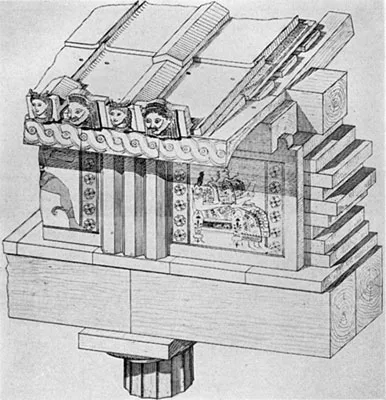
This basis of selection eliminates all those polychromic types which exert only a cultural interest, such as the Assyrian, Egyptian, Hindu, Mongolian and other oriental and exotic architectural expressions. By this process of elimination we find our hopes centered upon Greek polychromy as practiced during the sixth, fifth and fourth centuries B. C., during which period Greek architecture achieved its most spontaneous and virile expression. The untiring enthusiasm, patience and energy of modern Greek archaeologists have accumulated sufficient authenticated data bearing upon our field of research to test any theories in the light of a series of examples.
The most forcible impression received from an initial grouping of Greek architectural polychrome data, is the appearance of standardization conveyed by a uniformity of method governing the location of color on façades, during these three great centuries. The next impression, resulting from an exhaustive examination of color planning upon ornamental detail, lies in their rigid adherence to certain decorative conventions: Greek conservatism is so consistently apparent for three centuries despite radical changes in architectural types, that fixed procedure by a race so artistically versatile can only be explained by the surmise that they embodied certain basic aesthetic or physical essentials, which could be neither dispensed with nor replaced in practice.
An analysis of the Greek system of color location and composition on the façade reveals the existence of architectural principles and methods evolved through an intuitive knowledge of the action of radiant energy in color when a group of pigments are assembled decoratively, and the direct relation of this energy to specific architectonic properties; it is an art based upon an understanding essentially scientific. In their polychromy the Greeks give us yet another instance of their matchless intuition, displayed wherever natural phenomena direct the creation of artistic effects.
Under the guidance of this rare form of intuition, the component elements of artistic impulse undergo an automatic process of mutual adjustment, of an order far superior to any procurable by other means. The uniformity in these methods of artistic procedure was not the result of any control arbitrarily enforced, as is reputed to have been the case with creative effort in Greek sculpture; it rather appears as a moral control arising from a conviction that the methods established in practice were so basically sound, that deviation from them must inevitably lead to error.
In this first and introductory part of our treatise on polychromy, it has been necessary to make several statements which call for explanation and discussion; these will be developed as each section of our subject is examined in fuller detail. It will be found that the Greek polychrome method affords a solution of the major difficulties which beset practice today: it teaches us the principles governing color location, color adjustment in ornamentation, and the manipulation of light as the means of developing color interest in the uniformly applied tone--the only form in which color may be used in architecture, as shall be demonstrated in a future issue.
Looking for a reprint of this article?
From high-res PDFs to custom plaques, order your copy today!