Architecture + Creativity
Genesis of Genius: Excerpts from Pierluigi Serraino's New Book, The Creative Architect
A 1950s study tried to find what makes architects creative. The results are surprising and telling.
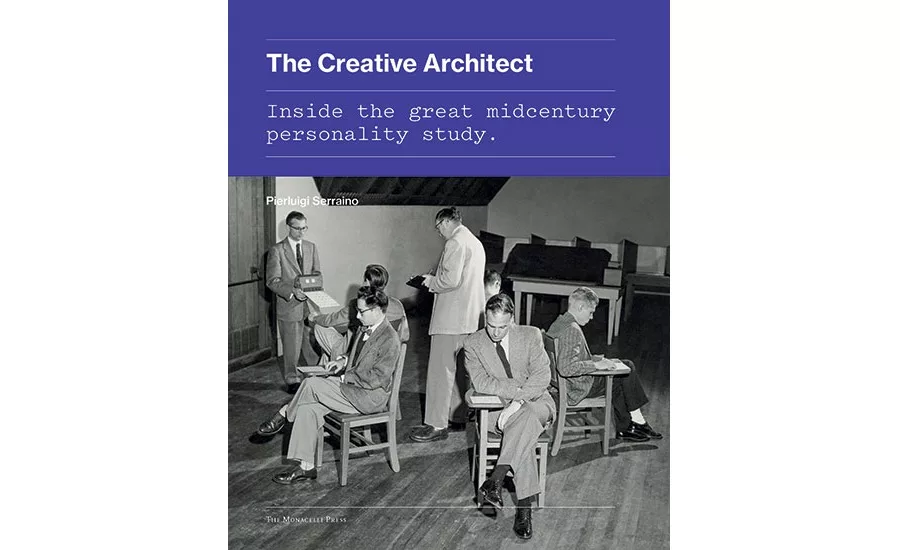
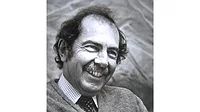
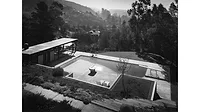
Image courtesy Institute of Personality and Social Research, University of California, Berkeley
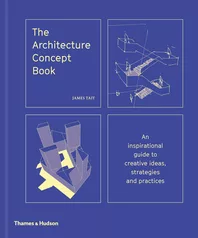
Book jacket by The Monacelli Press
Editor’s Note: In June, The Creative Architect: Inside the Great Midcentury Personality Study, by Pierluigi Serraino, will be published by Monacelli Press. The book is based on psychological tests conducted by the University of California, Berkeley, in 1958–59 to try to determine what promotes creativity in architects. RECORD presents excerpts of three case studies of the leading architects of the day—Eero Saarinen, Philip Johnson, and Richard Neutra—along with the author’s summary of the goals, methodology, and findings of this unusual, almost-forgotten investigation.
In 1958, the Institute of Personality Assessment and Research (IPAR) at the University of California, Berkeley, embarked on an ambitious endeavor to closely study 40 of the most creative architects living in the U.S. or working in the country at the time. This was part of a broader inquiry whose overall mission was to learn the personality characteristics of well-known creative people by observing them in a controlled setting. The ultimate goal was to develop a pedagogical environment that could foster creativity in future generations. The head of IPAR and this project was Donald MacKinnon, a former Office of Strategic Services (OSS) psychologist in World War II, who was in charge of identifying soldiers to carry out espionage in Europe and the Far East.
MacKinnon used his assessment method to spot and psychologically dissect creative people of different groups, including writers (such as Truman Capote, Norman Mailer, and Arthur Koestler), research scientists, mathematicians, and even Mount Everest climbers. The psychologist had a love of architects: he believed they exhibited a unique set of cognitive skills, from the artistic to the scientific, making them particularly suitable subjects to understand the conditions that triggered creativity. William Wurster, then dean of the architecture school at Berkeley, was asked to put together a list of the most talented ones. He formed a panel of five people, each of whom separately listed and ranked their favorites. Elizabeth Kendall Thompson, at the time the West Coast editor of RECORD, who closely advised MacKinnon on design matters, acted as an unofficial panel member.
Letters of invitation went out to the listed men. On the top was Frank Lloyd Wright, then 91, who never answered (he died in 1959). Mies van der Rohe tersely declined, as did Walter Gropius, Marcel Breuer, and Paul Rudolph, albeit in a more polite manner. Eames said yes, but withdrew later because of scheduling conflicts. Eero Saarinen, who ranked third after Mies on the invitation list, accepted after Wurster’s relentless insistence. Louis Kahn, Richard Neutra (then 66 and the oldest in the study), and many others followed suit. When the word spread that Saarinen was coming, Philip Johnson, Victor Lundy (36 and the youngest), John Carl Warnecke, and Ralph Rapson asked to be scheduled in the same slot. Arriving in groups of 10 on four separate weekends, a parade of top architects entered the front door of IPAR’s home in a former fraternity house. MacKinnon had alerted the invited guests that the weekend was “not going to be relaxing.” But nothing could prepare them for the 22 hours of grueling testing—of which making mosaics was the most visually oriented procedure. On an 8-by-10-inch background, the subjects needed to fill out in its entirety a field of 1-inch mosaics from a choice of 22 colors. Each had 30 minutes. Saarinen used only white, while Johnson relied on black and white. Evaluating the mosaics’ quality were other specialists, including noted architectural historian James Ackerman, who argued that the most creative showed a propensity for complex patterns and rejected predictable formal solutions.
In the individual psychological interviews, architects often confessed or revealed provocative insights. Saarinen said about his famous architect father, Eliel: “I aped him, read history. He was my image–I would try to follow him.” When asked what were the most important elements for professional advancement in architecture, Kahn said, “I am conflicted—a broad understanding of relationships and order, but [you] must have an opportunity to work.” A profoundly humane portrait emerged from all this. These much mythologized personalities, deeply torn in their personal histories, found a satisfying integration of self with architecture.
The study confirmed that I.Q. was important yet not decisive. Beyond a threshold, being more intelligent does not equate to being more creative. IPAR scientists realized that creativity starts with sensing a problem others do not see, a type of intuition in making connections that few have. It also turned out that nonconformity is a pillar of creativity. When applied to real problems, it naturally unsettles established norms. Solitary investigation is a common modus operandi with creative people, and they pursue their vision regardless of others’ opinions. As MacKinnon pointed out, they had the courage to act on their insights. But this group, MacKinnon felt, is not well adjusted, since the quest for creative solutions emanates from a certain temperamental turbulence.
For these creative architects, teamwork was out of the question, in that it would lower their standards, a message opposite to what Walter Gropius was then staunchly advocating. Most important, architecture was, above all, an art form, not a socially conditioned response to the world.
Ultimately, IPAR achieved what it was after. The study spelled out characteristics and conditions for the production of creative work and the nature of its makers. Those findings made explicit often hidden factors of subjective mental states. They are still worth our attention.
Looking for quick answers on architecture and design topics?
Try Ask RECORD, our new smart AI search tool.
Ask RECORD →
Looking for a reprint of this article?
From high-res PDFs to custom plaques, order your copy today!