EPA Issues Final Formaldehyde Rule

Toxic levels of formaldehyde in FEMA-issued trailers were due to the resins in composite wood products.
Photo © Infrogmation via Wikimedia
Toxic levels of formaldehyde in FEMA-issued trailers were due to the resins in composite wood products.
Photo © Design Build Love via Flickr
The bright white trailers started arriving in late 2005, weeks after Hurricane Katrina laid waste to hundreds of thousands of homes along the Gulf Coast. The unadorned FEMA-issued units didn’t look like much—aluminum siding outside, veneer-clad cabinetry inside—but, to their displaced occupants, the trailers were a godsend.
“It had that great brand-new smell that I thought was just wonderful,” said Jennifer Donelson of Gulfport, Mississippi, in a 2008 interview with a Sierra Club member. “I had never had anything brand-new before.”
But the smell that had symbolized a fresh start made Donelson, her family, and hundreds of others sick. “It could almost knock you down,” remembers Becky Gillette, the Sierra Club volunteer, who also lived in Mississippi.
The symptoms weren’t subtle: burning eyes and throat, nausea, nosebleeds, and a relentless croup known to residents as “trailer cough” or “Katrina crud.”
Gillette’s neighbor, who lived in a FEMA trailer, had a suspicion the symptoms were caused by formaldehyde—a carcinogenic chemical commonly used in the composite wood products that make up flooring, furniture, cabinetry, and other elements of interiors.
Beginning in April 2006, Gillette, in partnership with her Sierra Club chapter, tested 69 trailers and found the vast majority had formaldehyde levels exceeding what was considered safe. Testing by the Environmental Protection Agency (EPA) and the Centers for Disease Control and Prevention confirmed the findings.
But in subsequent years, the federal government did little to standardize and regulate formaldehyde in building products. In the meantime, the chemical was found at toxic levels again in FEMA trailers supplied to victims of Iowa’s floods in 2008, and, last year, in Chinese-made laminate flooring from Lumber Liquidators—a product that was probably installed in tens of thousands of homes across the U.S., according to a report by 60 Minutes.
Looking for quick answers on architecture and design topics?
Try Ask RECORD, our new smart AI search tool.
Ask RECORD →
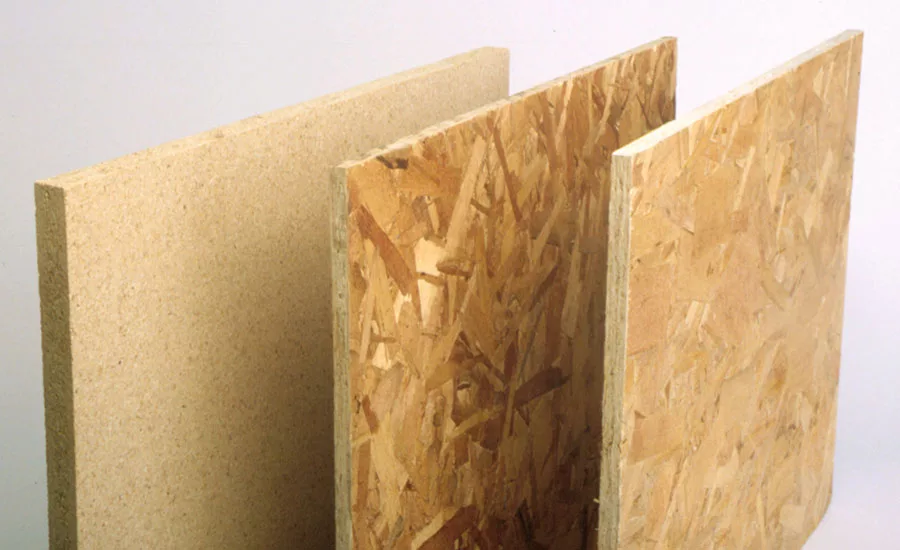
On July 27—nearly a decade after the first FEMA-trailer scandal—the EPA issued its final regulation to safeguard the public from the chemical. The rule, which Congress directed the EPA to finalize, calls for domestic and imported composite wood products—including hardwood plywood, medium-density fiberboard, and particleboard—to be labeled as compliant with Title VI of the Toxic Substance Control Act and to be monitored by third-party certifiers. After the rule is published in the Federal Register—a process that could take several weeks—panel producers will have one year to comply, according to an agency spokesperson.
“The new rule will level the playing field for domestic manufacturers . . . and will ensure that imported products . . . will meet the new standard,” said Jim Jones, an EPA official, in a statement.
The EPA emission standards mirror rules set forth by the California Air Resources Board (CARB), legislation that went into effect in 2009. Prior to the California regulations, formaldehyde emissions from composite wood panels and finished goods were commonly as much as 20 times higher than the new standards.
The emission standards for the EPA rule are nearly identical to the CARB formaldehyde standards, primarily targeting the use of urea-formaldehyde resins (UF). The rules for hardwood plywood with both a veneer and a composite core would limit formaldehyde emissions to no more than 0.05 parts per million (ppm), while thin medium-density fiberboard could emit up to 0.13 ppm. As with the California standards, composite wood product producers, importers, and distributors, must also have their products tested regularly by a third-party monitor.
There are, however, a few changes to the CARB rules, including requirements for additional record-keeping. The EPA rule also obliges manufacturers to disclose the results of their quality-control tests—meaning that the public, via a Freedom of Information Act request, could access the information.
The wood industry is supportive of the new rule. According to the Engineered Wood Association, the new rule “prevents inconsistencies that could have resulted with state-by-state regulations.” The president and CEO of the American Wood Council, Robert Glowinski, said the new legislation is “consistent with good product stewardship.”
But environmental advocates are more cautious. “It looks to me like the EPA has done a pretty good job,” says Tom Lent, the policy director at the Healthy Building Network, “but the devil in these things is enforcement.”
“Our position was to move the industry away from formaldehyde entirely, given that we felt it was starting to develop some good alternatives,” says Lent, citing the fact that some manufacturers have introduced soy-based adhesives in lieu of formaldehyde.
One portion of the rule that is cause for concern, says Lent, is an extended seven-year grace period for laminated products, a time frame, according to the EPA, that is “more realistic.”
“It’s not exactly kicking the can down the alley, but it makes it a long runway before this actually starts taking effect,” says Lent. “If you are just starting a hospital project, this is probably good news, but for everyone with a faster timeline, you still need to figure out how to avoid formaldehyde emissions.”
According to the EPA, the rule will impact nearly 1 million small businesses. But, because of the CARB standards, many are already compliant. “There will be more impact on regional manufacturers who haven’t been paying attention to the California market,” predicts Lent. “Hopefully, the rule will have a big impact on Chinese companies.”
While the burden of the new EPA ruling falls primarily on the shoulders of composite wood manufacturers, ultimately, according to Lent, the architectural profession needs to set the bar higher for healthy building products and create a market for formaldehyde-free alternatives.
“Anything you can pull off [to reduce emissions] is going to positively affect a life,” says Lent. “The work we do as specifiers, architects, and interior designers is even more important than the footprint of the individual project.”
Looking for a reprint of this article?
From high-res PDFs to custom plaques, order your copy today!