Lewis Arts Complex at Princeton University by Steven Holl Architects
Princeton, New Jersey

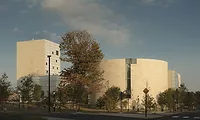
On the northern edge of the site sits an arts tower.
Photo © Paul Warchol

Coming from the new train station, one can enter the complex at grade from the south.
Photo © Paul Warchol

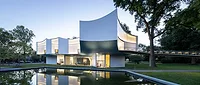
The glazed music building reveals the rhythmic composition of the suspended wood practice rooms.
Photo © Paul Warchol

The various volumes, including a rounded one that houses a black box theater, are clad in a light-colored limestone.
Photo © Paul Warchol

A wall features a relief of the complex’s plan.
Photo © Paul Warchol

Skylights in the forum reflect the movement of water from the pool above.
Photo © Paul Warchol

The cherrywood-clad practice rooms are discrete boxes.
Photo © Denise Applewhite

Custom rug designs are based on Holl’s musically inspired watercolors.
Photo © Paul Warchol

Image courtesy Steven Holl Architects

Image courtesy Steven Holl Architects

Image courtesy Steven Holl Architects

Image courtesy Steven Holl Architects

Image courtesy Steven Holl Architects

Image courtesy Steven Holl Architects
Architects & Firms
Steven Holl Architects (SHA) has built some of the most imaginative buildings of the last decades. Several of them are university projects, including two gems at the University of Iowa campus; the most recent, the Visual Arts Building, opened just last year. But even an architect of Holl’s stature has seen his share of misses along with the hits. In theory, his latest project, the Lewis Arts Complex at Princeton University, named for the late alumnus and philanthropist Peter B. Lewis, has all the ingredients to make a great building—an enlightened client, a robust program, a prominent site, and a subject close to the architect’s heart. With one major exception, unfortunately, in the execution, much of this work falls short.
Princeton has long enjoyed a reputation as one of the most elite educational institutions in the country, nestled within a pastoral campus with a rich mix of collegiate Gothic and Romanesque revival buildings. In recent years, it has devoted increased attention to the creative and performing arts, historically taken less seriously than academic courses. Its plans for a purpose-built complex on the western edge of campus to house the growing number of students in theater, dance, music, studio art, and creative writing—previously scattered in buildings all over campus—were ambitious, perhaps overly so.
Additional Content:
Jump to credits & specifications
Before construction could even begin on the Lewis Arts Complex—the largest building-development project on the Princeton campus in its history, according to university architect Ron McCoy—the railway station for the “Dinky,” a small train that connects the spot to the New Jersey Transit line, had to be moved. A new station, designed by Rick Joy and also recently completed, sits across from the complex, which now serves as a gateway to the campus.
As a gateway, Holl’s assemblage of buildings—a rounded one to the west that contains theater and dance, a tall central one for visual and literary arts, and a boxy structure to the east for music—could work, if it were a gateway to somewhere else. Exiting the station, one can either enter Lewis at grade, into the vast interior forum space that connects the entire complex, or ascend a gently inclined stairway to an outdoor plaza level that features a large reflecting pool, around which the three buildings that make up the complex are positioned. If the arrangement seems familiar, it should. Holl modeled it after Michelangelo’s Campidoglio in Rome, not only in plan but also in the slope of the steps.
However, at Princeton, Holl’s concrete-framed volumes, clad entirely in a light-colored limestone from an ancient Roman quarry in Lecce, Italy, feel out of place amid the university’s ornate, highly textural buildings. That’s not to say modern additions aren’t encouraged. Two recent ones featured in this issue, by design studio The Living (page 66) and KPMB Architects (page 86) respectively—not to mention the Rick Joy station—do a nice job fitting in through either their scale or deference to existing buildings, or even their construction quality, which at the Holl project is, in some areas, inferior. Another building, by Tod Williams Billie Tsien Architects | Partners, completed last year, is a beautifully minimalist yet highly contextual insertion. The facades on Holl’s buildings, even where there are swaths of glazing, are completely unarticulated and—let’s face it—just too beige. They are not only uncharacteristic for Princeton, they’re uncharacteristic for Holl, who has never been afraid to experiment with form or materials or to add a pop of color, and has been perhaps the one contemporary architect to most effectively use light as a building component and almost as a surface. None of that is evident here.
What’s more surprising about the bland exteriors is that some of the interiors display an opposite tendency—incorporating too many materials, too many ideas. In each of the three buildings, they feature different design elements. It is an attempt, says SHA partner in charge Noah Yaffe, “to provide a strong identity for each department.” That’s fine within the individual structures. But within the forum—the great connector and “purposely non-purpose-built” social space that opens onto the ground-floor theaters and instrumental-rehearsal space, with their various finishes—dark end-grain wood floors and seating surfaces mix with colorful furniture and walls of board-formed concrete painted white. A spiraling “dancing stair” made from sheets of perforated metal, whose pattern was derived from a dance notation, similar to stairs Holl has used elsewhere to great effect, here seems too contrived. It’s all a bit jarring. The deep-set skylights overhead, reflecting the movement of water from the pool above onto their edges, add a mildly calming effect but are overwhelmed by the cacophony of materials and forms.
It’s not surprising that the most successful of the three individual structures is the one devoted to music; taken on its own, it’s a great little building. For several years now, Holl has taught a series of studio classes with composer Raphael Mostel at Columbia University’s Graduate School of Architecture, Planning and Preservation called the Architectonics of Music. Musical scores have influenced many of his projects, including a private house and gallery in Seoul whose plan was inspired by a never-performed composition by István Anhalt entitled Symphony of Modules. At Princeton, Morton Feldman’s multilayered musical approach, which Mostel wrote about in an online piece for record on the Lewis Arts Complex, served as inspiration.
Stepping into the music building is like stepping inside an instrument. Raw concrete walls, floors, and a floating staircase harmoniously juxtapose with the cherrywood offices and practice rooms. For optimal acoustic isolation, the practice rooms are suspended from the roof, the rhythmic composition of those hanging boxes visible through the entirely glazed facade. It is, to be sure, a high note of the complex.
Another strength of the project is its porosity, both with respect to allowing multiple views into the buildings and multiple routes through the complex to different areas of the campus. It works well as a gateway for that reason. And Holl did look to historic structures in other areas of the campus—the height of the five-story arts tower matches that of Blair Arch, for instance. The diameter of the round structure that houses the black box theater mimics that of Alexander Hall, home to Princeton’s orchestra. That emphasis on dimensions, proportions, and even composition works well in certain individual elements of the complex, but an equal emphasis on the combination and integration of materials, texture, and scale would have benefited the complex as a whole.
CreditsArchitect’s firm name, address and phone number: Steven Holl Architects, 450 West 31st Street 11th Floor, New York, NY 10001, (212) 629-7262
SHA Steven Holl, RA (design architect, principal) Noah Yaffe (design architect, partner in charge) Christina Yessios (project architect) Jongseo Lee (project architect) Nathan Rich ( project architect, design phase only) Whitney Forward (Assistant Project Architect)
Chris McVoy, Martin Kropac, Scott Fredricks, Alfonso Simelio, Arseni Timofejev, Michael Haddy, Yasmin Vobis, Zach Cohen, Jing Han, Laetitia Buchter, Ying Yi Cai, Gary He, Asami Takahashi, Ebbie Wisecarver (Project Team)
Associate architect(s): BNIM Architects
Architect of record (if applicable): BNIM Architects Casey Cassias, RA, FAIA – Principal-in-Charge Joe Keal, RA, AIA –Senior Project Manager Greg Sheldon, RA, FAIA – Senior Project Architect Ishita Banerjee, RA, AIA – Project Architect/Interiors Sebren Ryan Camp, RA, AIA – Project Architect/Building Envelope Jeremy Nelson Elvis Achelpohl Kara Bouillette-RA,AIA Vanessa Douthat Sarah Hirsch-RA, AIA Janelle Kimsey Kristin Long-RA, AIA Sarah Murphy Janell Rock-RA, IIDA; Beena Ramaswami Kyle Rogler- RA, AIA Rick Schladweiler-RA,AIA Emily Thompson
General contractor: Turner Construction
Engineers (structural, civil, mechanical etc.) Arup (Structural engineer) Arup (MEP Engineer) Vanasse Hangen Brustin, Inc. (Civil Engineer) R.W. Sullivan Engineering (Code Consultant) IBA Consulting and Engineering (Waterproofing Consultant) Front Inc. (Façade Consultant)
Consultants (landscape, lighting, acoustical etc.): Michael Van Valkenburgh and Associates (Landscape Architect) Arup (Lighting) CMS (Pool consultant)
Photographer (include phone number and credits as they should appear): Paul Warchol; (212) 431 – 3461; © Paul Warchol |
SpecificationsStructural System Steel Structure by SteelFab Cast-in-place concrete by Villa
Exterior Cladding Masonry: Lecce Stone by Pimar, Facade (21-million-year-old beige limestone from a quarry in Lecce, Italy, that has been continuously mined for 2,000 years). Bluestone paving- Tompkins Quarry Metal panels: Bead Blast Stainless Steel Soffits by Gartner Metal/glass curtain wall: Custom Steel-Framed Curtain Wall by Gartner (Subsidiary of Permasteelisa) Custom Steel-Cable System Curtain Wall by Gartner (Subsidiary of Permasteelisa) Insulated glass units with Okalux Kapipane, with acid etch finish depending on location by Gartner Concrete: Cast in place, Board Formed by Villa
Roofing Built-up roofing: Vegetated roof assembly Metal: Formed Metal Copings by Gartner
Windows Metal frame: Gartner
Glazing Glass: Gartner Skylights: Gartner Insulated-panel or plastic glazing: Gartner
Doors Entrances: Gartner Curtain Wall Entrance System Metal doors: Hollow Metal Doors by Long Island Fireproof Door, Inc. Wood doors: Veneered Wood Doors in Bamboo, Walnut, Whitewashed Ash, and Cherry. Select doors clad in Split Spruce and Whitewashed Ash Slats by Eastern Millwork, Inc. Sliding doors: Whitewashed Ash Wood Sliding Doors by Eastern Millwork, Inc. Fire-control doors, security grilles: Clark Doors Sliding Sound Control and Fire Doors, McKeon Sliding Fire Doors, Total Door Systems Double Egress Doors. Special doors (sound control, X-ray etc.): Acoustic Sound Control Doors by Quietstar Upswinging doors, other: Custom Pivot doors designed by BNIM Architects
Hardware Locksets: Sargent Mortise Locks, Best Core Cylinders Closers: LCN 4040XP Exit devices: Von Duprin 88, 98/99 Series Pulls: Rockwood Security devices: CACs, Salto Locks Other special hardware: Custom exterior door pulls designed by Steven Holl Architects, Fabricated by Firedance Studio, LLC Zero International Auto Door Bottoms, Gasketing Rixson Pivots Dorma Operators Hafele Hinges Ives Ball Catches K.N. Crowder Sliding Door Hangers
Interior Finishes Acoustical ceilings: Fellert Acoustical Plaster Silk Ceiling Suspension grid: Clark Dietrich Building Systems Cabinetwork, custom woodwork: Custom millwork wall finishes and cabinetry in bamboo, ash, walnut, cherry, and spruce veneers and solid wood by Eastern Millwork Inc. Paints and stains: Sherwin Williams paints, Floor and wall tile (cite where used): American Olean Tiles in WCs Resilient flooring: Custom Harlequin Basketweave Sprung Floor Systems for Dance Studios and Theater, in Hardwood and Harlequin Standfast Vinyl Performance Surfaces. Bamboo flooring with natural finish and custom gray stain by Plyboo Endgrain Mesquite woodflooring supplied by Kaswell Carpet: Design: Steven Holl Architects; Fabrication: cc-tapis
Special interior finished unique to this project: Perforated Blackened Steel Wall Panels in Black Box Theater fabricated and installed by A. Zahner Company. Foamed Aluminum Wall Panels by Alusion, installed by Giffin Interiors Clear, Acid etched, and acoustical glass by Josloff Glass Co. Perforated steel guardrail designed by SHA, fabricated by Crystal Metal Works Bead Blast Stainless Steel Handrails and Stanchions fabricated by Crystal Metal Works Steel cable guardrail system fabricated by Crystal Metal Works
Furnishings Office furniture: Open Offices – Design: Steven Holl Architects; Fabrication: United Store Fixtures Company Private Offices & Classroom Furniture – Geiger Reception furniture: Fixed seating: Retractable Theatrical Seating (Black Box Theater, Dance Theater, Dance Studio): Jezet Seating Walnut Benches – Design: Steven Holl Architects; Fabrication: United Store Fixtures Company Chairs: Dance Studio Chairs – Schmidinger Möbelbau Theater Studio Chairs – Kristalia (Luca Nichetto) Task Seating – Herman Miller (Don Chadwick & Bill Stumpf) Task Seating – Vitra (Antonio Citterio) Task Seating – Steelcase Musician Chairs– Wenger Dance and Theater Studio Chairs – Howe Office Guest Chairs – Vitra (Maarten Van Severen) High Stools – Vitra (Maarten Van Severen) Conference Seating – Vitra (Maarten Van Severen) Loose Audience Seating – Wenger Work Table Chairs – Alvaro Siza PLork Musician Chairs – Andreu World (Jasper Morrison) Outdoor Seating – Knoll (Harry Bertoia) Tables: CNC-Milled Walnut Tables & Stools – Design: Steven Holl Architects; Fabrication: Walla Walla Foundry Walnut Conference Tables and Work Tables – Design: Steven Holl Architects; Fabrication: Huston & Company Forum café tables – Cappellini; Jasper Morrison Coffee Tables (Lounges) – Nakashima Industrial Work Tables - Formaspace Outdoor Tables – Knoll (Eero Saarinen) Music Practice Room Tables – Brent Comber Lounge seating: CNC-Milled Walnut Stools – Design: Steven Holl Architects; Fabrication: Walla Walla Foundry Forum Serpentine Sofas – Design: Steven Holl Architects; Fabrication: Wittmann Forum lounge chairs – Arflex; Luca Nichetto Sofas & Armchairs (Lounges) – Moroso (Patricia Urquiola) Sofas (Lounges) – Cappellini (Rodolfo Dordoni) Upholstery: Forum Built-in Bench Leather Upholstery – Kevin Cooke Other furniture: Music Stands and Instrument Storage – Wenger
Lighting Interior ambient lighting: Arts Tower Custom Light Fixture – Design: Steven Holl Architects; Fabrication: Firedance Studio Theater & Dance Custom CNC-Milled Walnut Light Fixture – Design: Steven Holl Architects; Fabrication: Walla Walla Foundry Music Building Custom Light Fixture – Design: Steven Holl Architects; Fabrication: Firedance Studio Solid State Luminaries, Vario LEDs, Visual Lighting Technologies, Alcolyte LED, Philips, Moda Light, Cree, USA Illumination, Architectural Lighting Works, Axis Lighting, Delray Lighting, Lightolier Downlights: Edison Price, Kirlin, Erco, ETC, Cree, USAi, Williams, Pathway Tasklighting: Modern Forms Boxie Exterior: Bega, Vario LEDs, Solid State Luminaries, Wagner Lumenrail, Tivoli Dimming system or other lighting controls: Lutron
Conveyance Elevators/escalators: Traction Elevators by Mid-American Elevator Company, Inc. with Hollister Whitney gearless machine. Rimex bead blast stainless steel cab interior with 3 Form Varia Ecoresin panel ceiling.
Plumbing Filtrine 125-CP & 125-CP-MOD custom Filtrine 107-16-HL
Energy Energy management or building automation system: BMS System by Arup and Automated Logic Other unique products that contribute to sustainability: Geothermal heating and cooling; green roofs to decrease rate and run-off of storm water and improve water quality; material and landscape designed to reduce heat island effect for roof and non-roof; high-performance exterior envelope (glazing and thermal mass); closed loop ground source heat pumps (139 wells, 500' deep); natural ventilation and light; interior shading; sensor-based equipment; storm water management, water reduction through high-efficiency fixtures; LED building and theatrical lighting; LEED enhanced commissioning; construction waste reduction |
Looking for a reprint of this article?
From high-res PDFs to custom plaques, order your copy today!