Cooper Hewitt Design Triennial 2019 Explores Remedies for a Fragile Planet
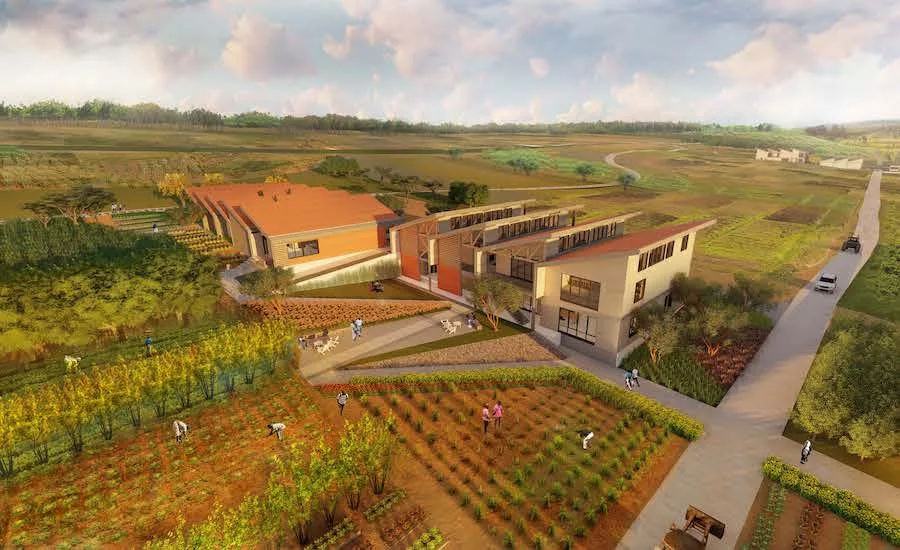
Among the architectural solutions in the exhibition is a campus by MASS Design Group for a new institute in Rwanda which aims to train agricultural entrepreneurs.
Rendering courtesy MASS Design Group
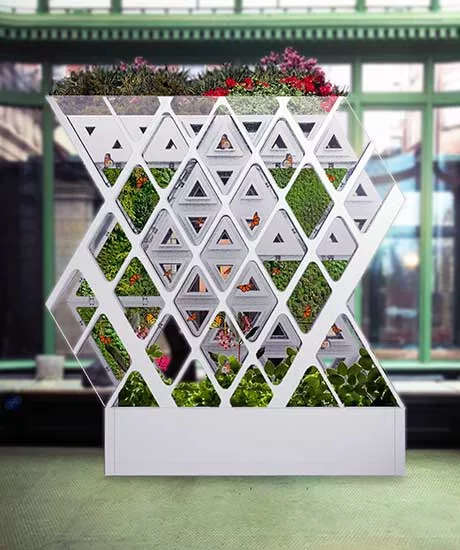
Terreform ONE has housed a Monarch Sanctuary within the cavity defined by the two skins of a double-glazed facade.
Photo © Terreform ONE
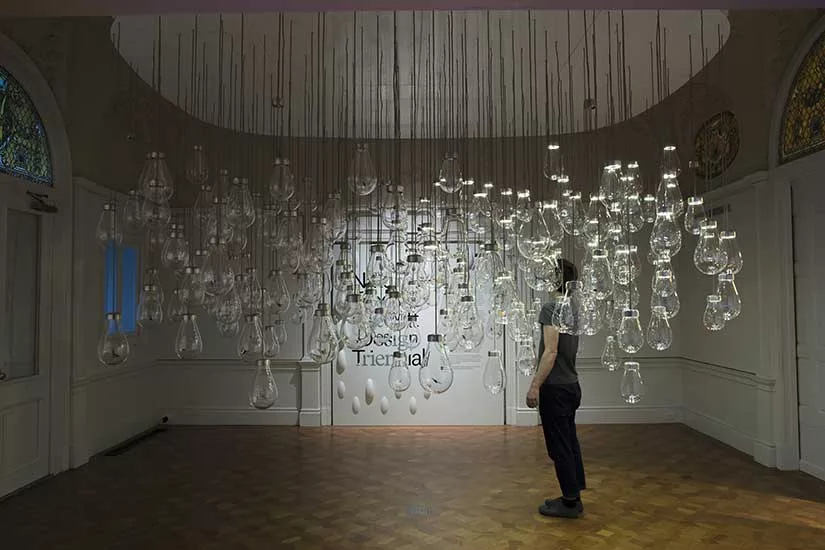
Curiosity Cloud, by mischer'traxler studio, comprises hanging, blown glass bulbs. Each contains a hand-fabricated insect. The piece is equipped with infrared sensors that enable the bugs to start to fly around as a person approaches.
Photo by Matt Flynn © Smithsonian Institution
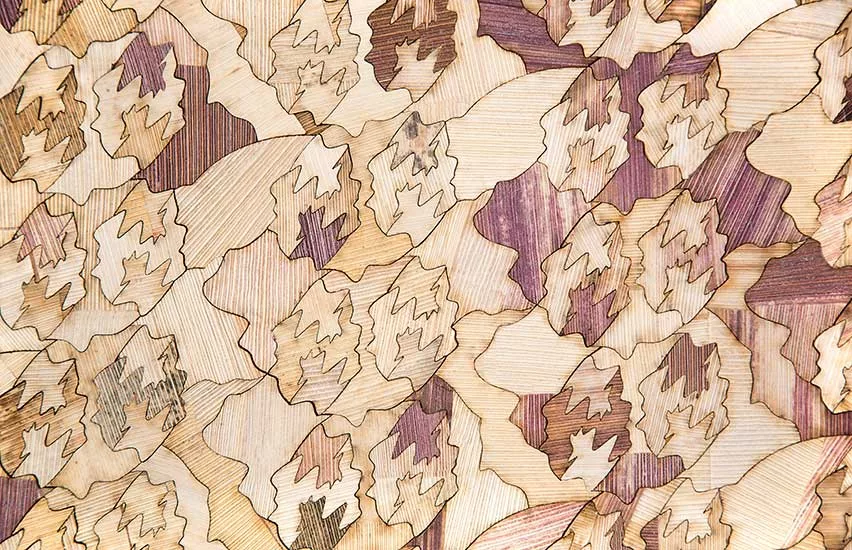
Fernando Laposse’s Totomoxtle is made from the variously colored husks of heirloom Mexican corn. The husks are pressed onto a paper or textile backing, and cut into small pieces to create a marquetry that can be used for furniture or interior surfaces.
Photo courtesy of Fernando Laposse
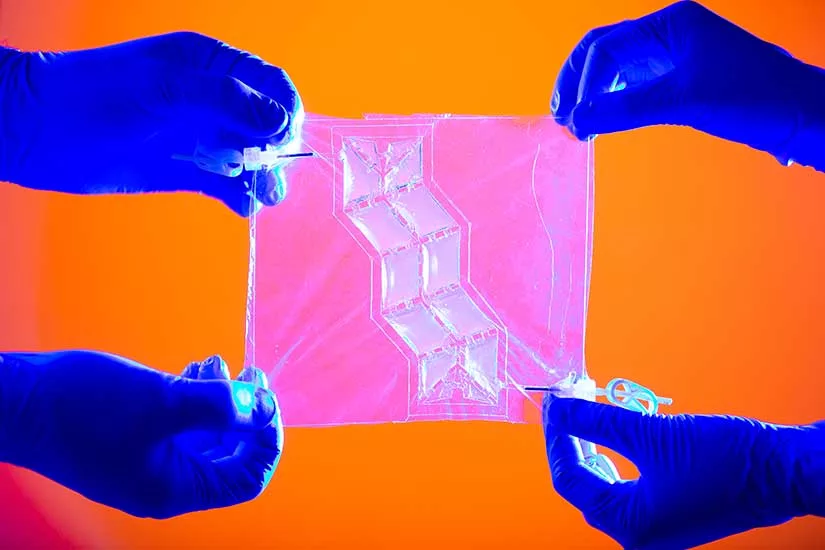
The Origami Membrane for 3D Organ Engineering, a collaboration between Chuck Hoberman and the Wyss Institute for Biologically Inspired Engineering at Harvard University, is an inflatable and foldable structure filled with hydrogels that contain organ cells. It is now being tested on kidney cells, for use outside the body as a portable dialysis device.
Photo courtesy of Chuck Hoberman and Richard Novak, Wyss Institute for Biologically Inspired Engineering at Harvard University
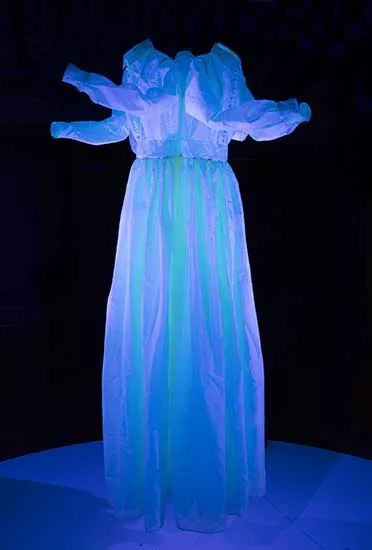
Fantasma, a long garment made of glowing transgenic silk, is the product of Japanese art and science. Created by the Tokyo design studio AnotherFarm, the Tsukuba-based National Agricultural and Research Organization, and the Kyoto-based textile manufacturer Hosoo, the silk is engineered by injecting silkworm eggs with coral DNA so that it glows.
Photo by Matt Flynn © Smithsonian Institution
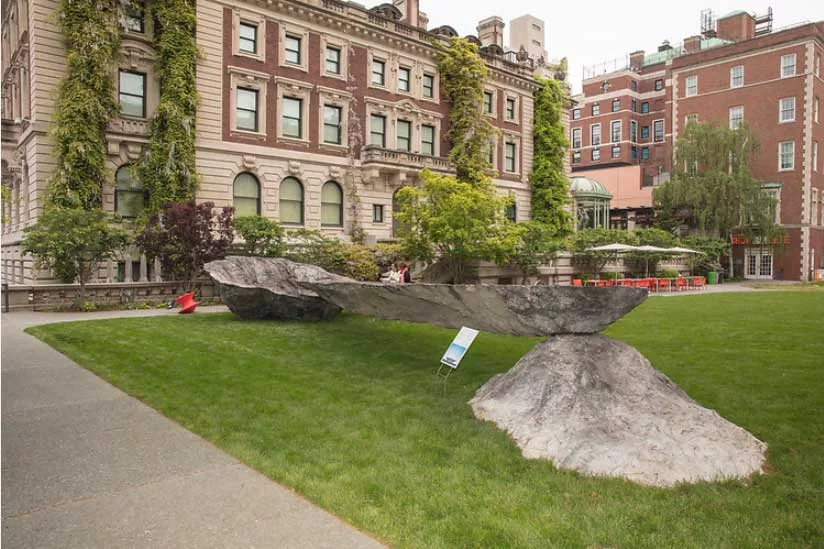
Ensamble Studio’s Petrified River, set in the museum’s garden, is a composition in concrete—a “hill” and a “pond,” with a 40-foot “river” between them.
Photo by Matt Flynn © Smithsonian Institution
Can design save the planet? Judging by the more than 60 projects that are shown in “Nature—Cooper Hewitt Design Triennial,” which is on view at the Cooper Hewitt, National Design Museum through January 20, 2020, there is definite cause for optimism. The exhibition, which was jointly organized by the Cooper Hewitt and the Cube design museum in Kerkade, the Netherlands—and which will be presented simultaneously at both museums—illustrates the ways in which designers are working with scientists, engineers, and environmentalists to solve the crises stemming from climate change, environmental pollution, and other man-made problems.
The Triennial, developed by a team that includes Caitlin Condell, Andrea Lipps, and Matilda McQuaid from the Cooper Hewitt, and Gene Bertrand and Hans Gubbels of Cube, is organized into seven sections: Understand, Simulate, Salvage, Facilitate, Augment, Remediate, and Nurture, each of which describes specific strategies for working with nature.
A number of projects propose architectural solutions. In the Rwanda Institute for Conservation Agriculture, by MASS Design Group (winners of a 2017 National Design Award), landscape and architecture help train young people to be leaders of conservation agriculture, employing the One Health concept, which links human, animal, and environmental health. The Monarch Sanctuary, a project by Mitchell Joachim and Vivian Kuan of the nonprofit research group Terreform ONE, proposes a New York building with a double-glass facade. Inside the cavity between its two skins is a 30,000-square-foot sanctuary—in the form of a vertical meadow with regulated temperature and humidity—where threatened butterflies can breed during their annual migration.
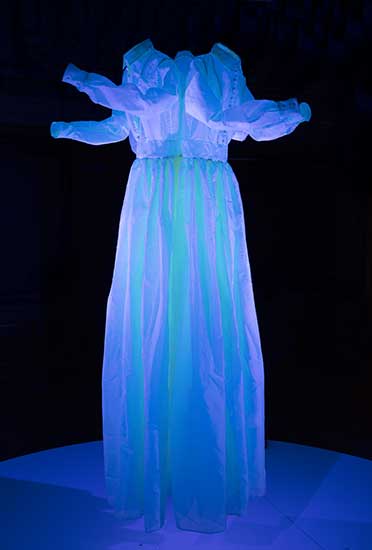
The exhibition includes numerous examples of materials research. The Bioreceptive Concrete Panels by London-based Marcos Cruz, Richard Beckett, and Javier Ruiz are made of concrete with a low pH that supports the growth of small plants like moss, without requiring expensive irrigation. Fantasma, a long garment made of glowing transgenic silk, demonstrates how nature, craft, and engineering can amplify each other. The piece, a product of Japanese art and science, was created by the Tokyo design studio AnotherFarm, the Tsukuba-based National Agricultural and Research Organization, and the Kyoto-based textile manufacturer Hosoo; the silk has been engineered by injecting silkworm eggs with coral DNA so that it glows. And the designer Fernando Laposse’s Totomoxtle is a new material made from the variously (and richly) colored husks of heirloom Mexican corn, a crop threatened by industrial agriculture in that country. The husks are pressed onto a paper or textile backing, and cut into small pieces to create a marquetry that can be used for furniture or interior surfaces, like the wall panels in the exhibition.
One of the Triennial’s most intriguing combinations of design and bioengineering is the Origami Membrane for 3D Organ Engineering, a collaboration between the inventor Chuck Hoberman and researchers at the interdisciplinary Wyss Institute for Biologically Inspired Engineering at Harvard, including Richard Novak, Elizabeth Calamari, Sauveur Jeanty, and Donald Ingber, the institute’s founding director. An inflatable foldable-membrane structure is filled with hydrogels that contain organ cells, and is now being tested on kidney cells, for use outside the body as a portable dialysis device.
Among the more conceptual projects, the Madrid-based Ensamble Studio’s Petrified River, which is set in the museum’s garden, is a composition in concrete—a “hill” and a “pond,” with a 40-foot “river” between them—that is a metaphor for what the architects call “the rich landscape that Manhattan once was, when it was known as Mannahatta or ‘island of many hills.’ ” An equally poetic installation is the Austrian studio mischer’traxler’s Curiosity Cloud, a series of hanging blown-glass bulbs, each of which contains a hand-fabricated insect that starts to fly around (thanks to a concealed circuit board and infrared sensor) when someone approaches it. The 23 species shown (both native and invasive) are North American, and they reveal, the designers say, “how fragile, dependent, and important” the coexistence among species is. These and other projects, and the prodigious amount of creative and scientific talent on display in the Triennial, offer hope for the future of all the earth’s living things.
Looking for quick answers on architecture and design topics?
Try Ask RECORD, our new smart AI search tool.
Ask RECORD →
Looking for a reprint of this article?
From high-res PDFs to custom plaques, order your copy today!