Hikma Religious-Secular Complex by Atelier Masomi and Studio Chahar
Dandaji, Niger
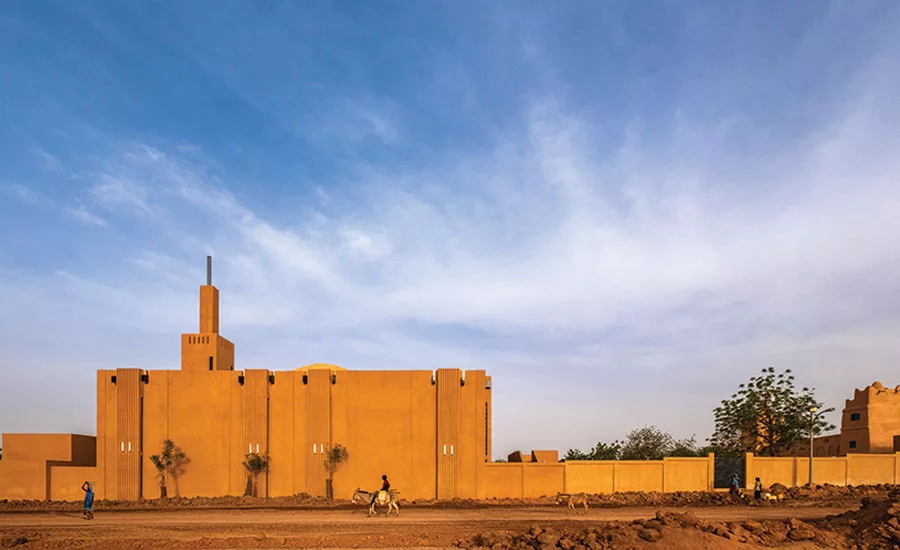
In a new mosque, the architects used compressed-earth block (CEB) to echo clay architectural elements of the building they converted to a library.
Photo © James Wang
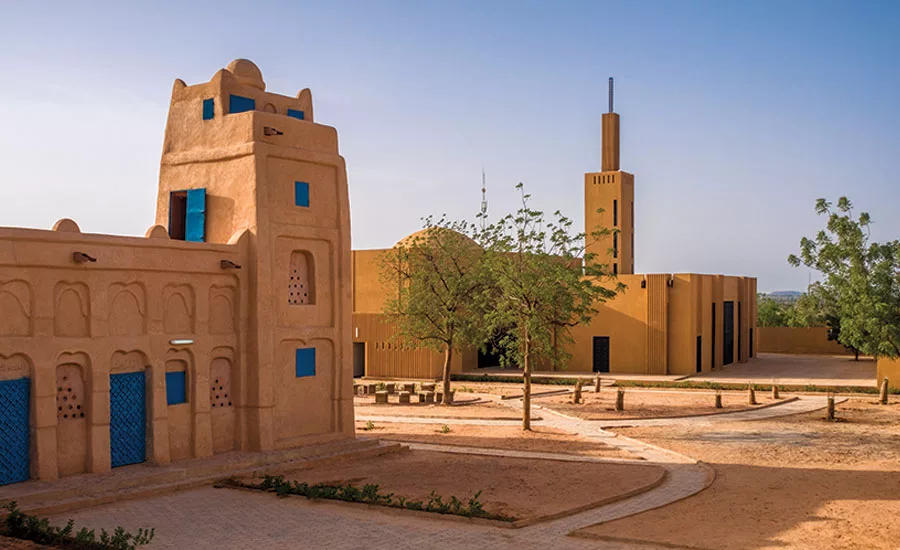
In a new mosque, the architects used compressed-earth block (CEB) to echo clay architectural elements of the building they converted to a library (shown).
Photo © James Wang
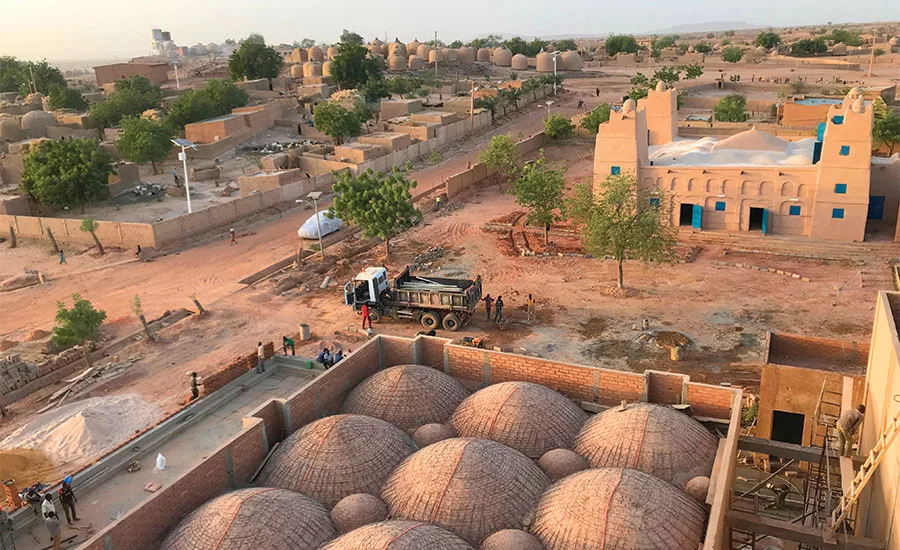
The roof domes of one new prayer hall are contemporary versions of the library’s.
Photo © James Wang
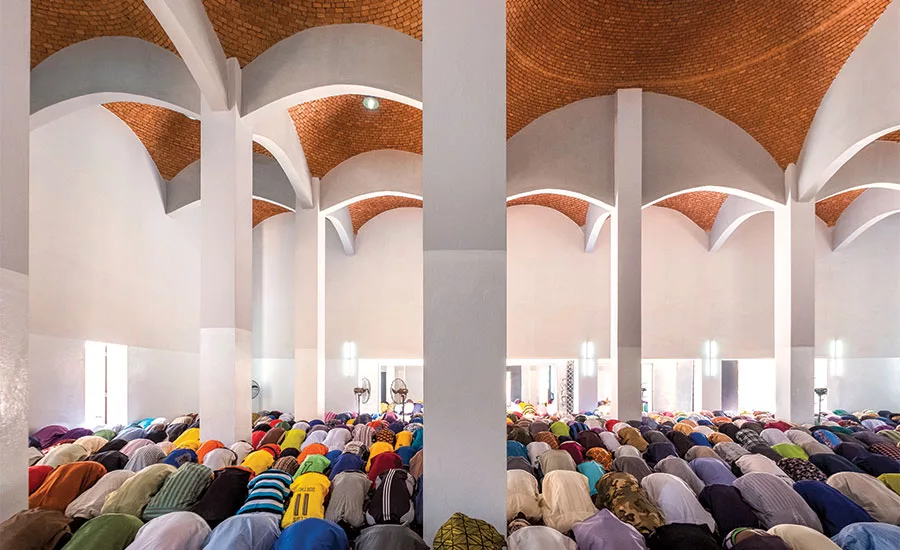
The new mosque has two prayer halls, one for men and for women.
Photo © James Wang
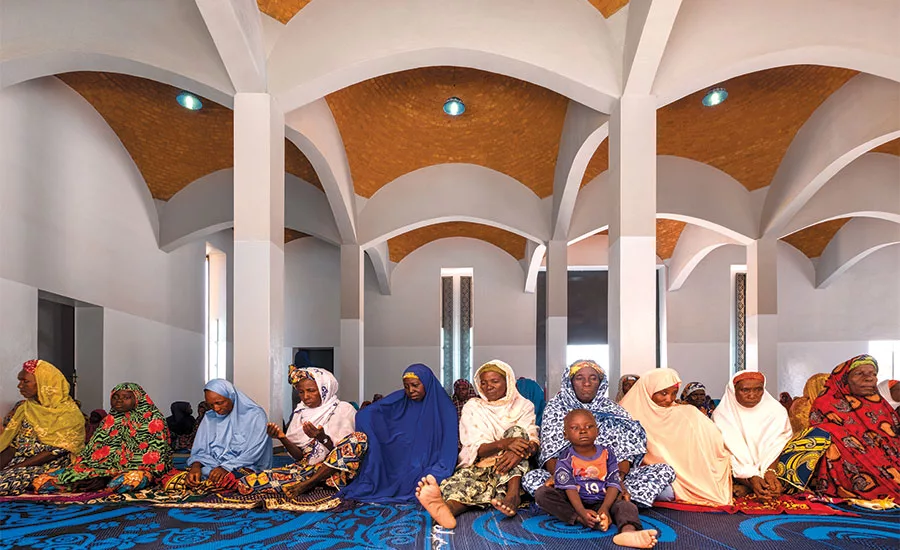
The new mosque has two prayer halls, one for men and for women.
Photo © James Wang
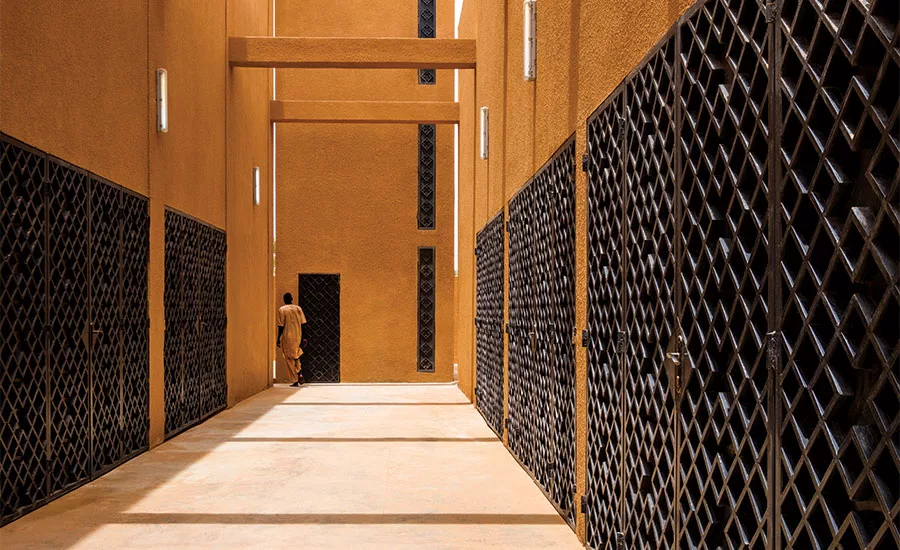
These rooms have views of each other across a walkway when their metal doors are open.
Photo © James Wang
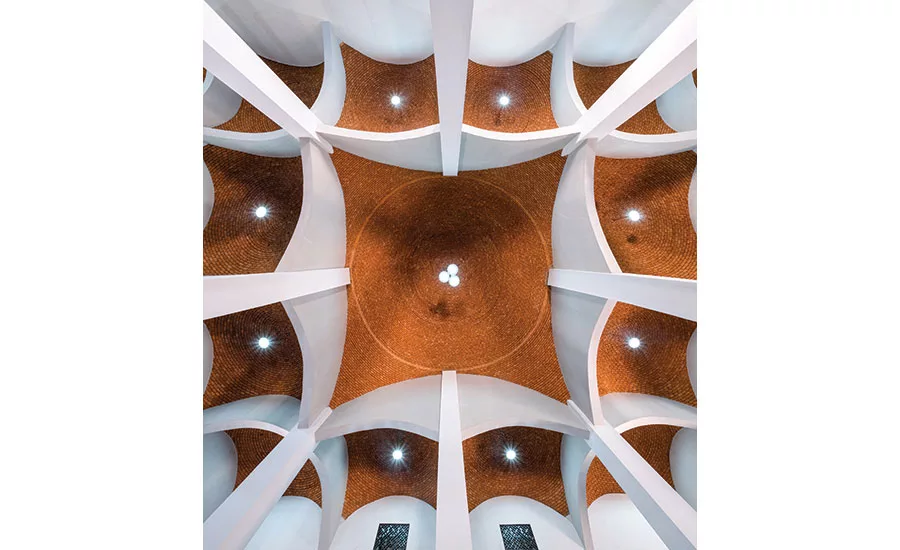
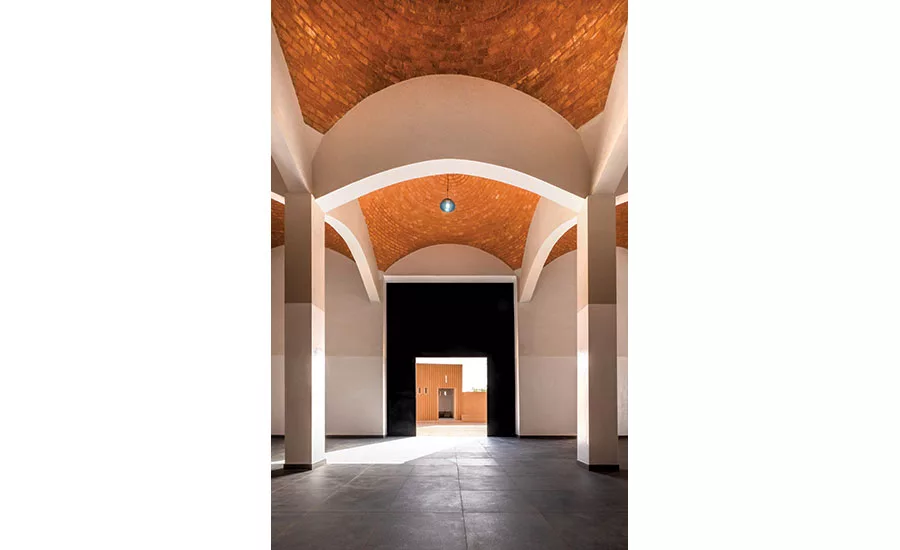
What appear to be clay-brick ceiling vaults in both halls are actually CEBs.
Photo © James Wang
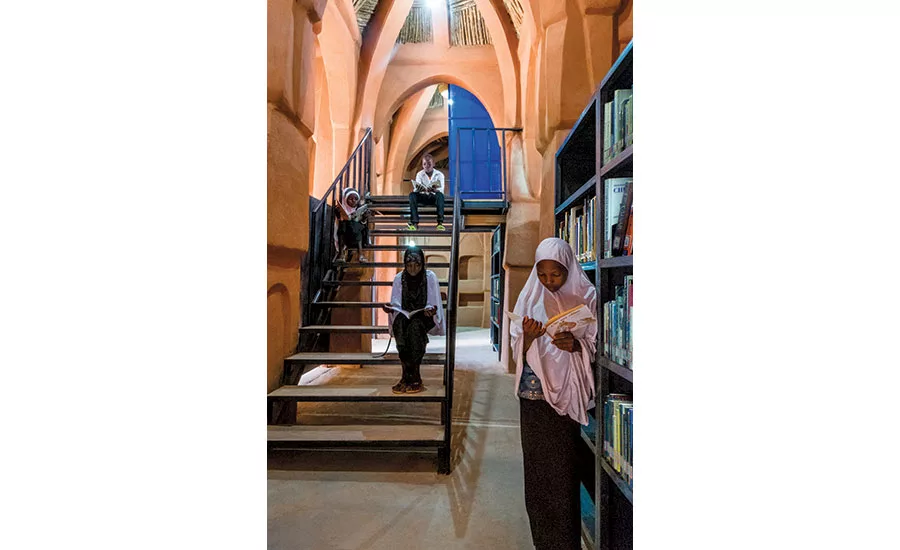
Clay-and-wood vaults over the library’s mezzanine provide the same thermal benefits as CEB vaults in the mosque’s entrances.
Photo © James Wang
Clay-and-wood vaults over the library’s mezzanine provide the same thermal benefits as CEB vaults in the mosque’s entrances.
Photo © James Wang
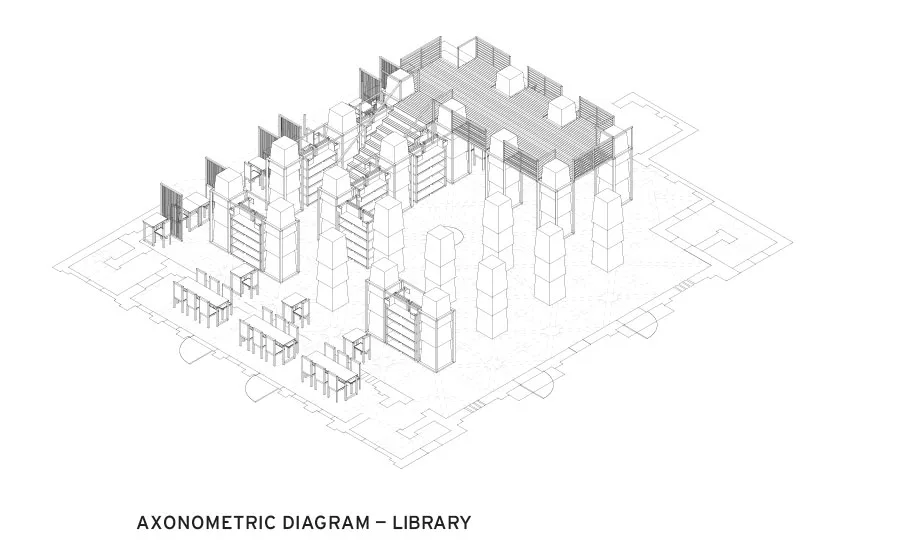
Image courtesy Atelier Masomi
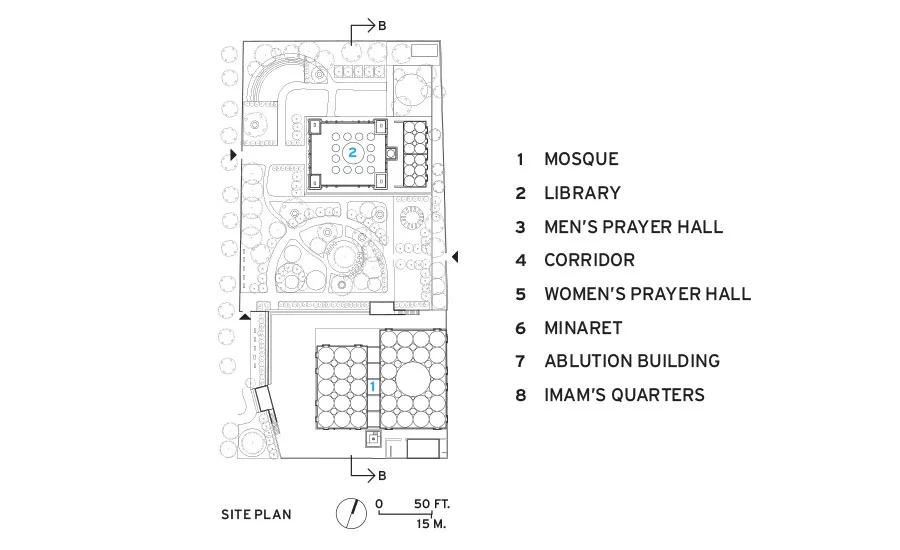
Image courtesy Atelier Masomi
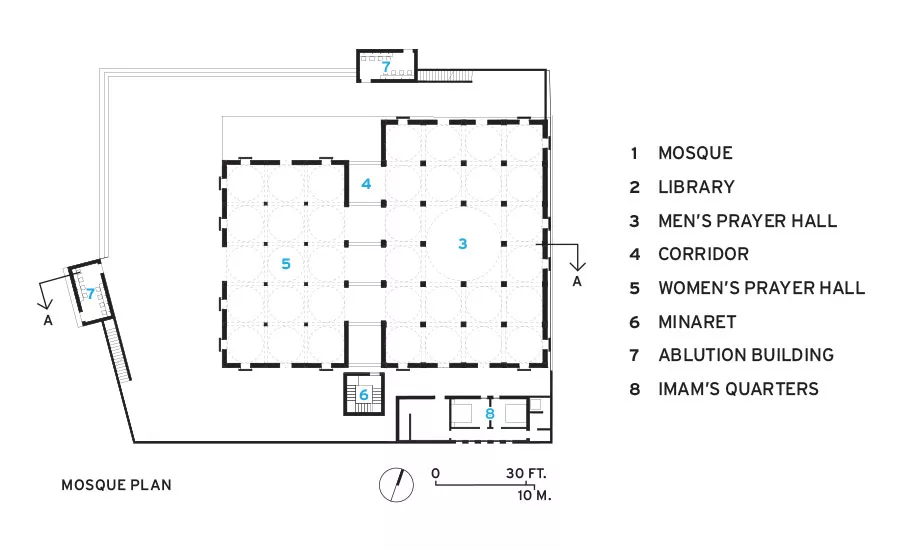
Image courtesy Atelier Masomi
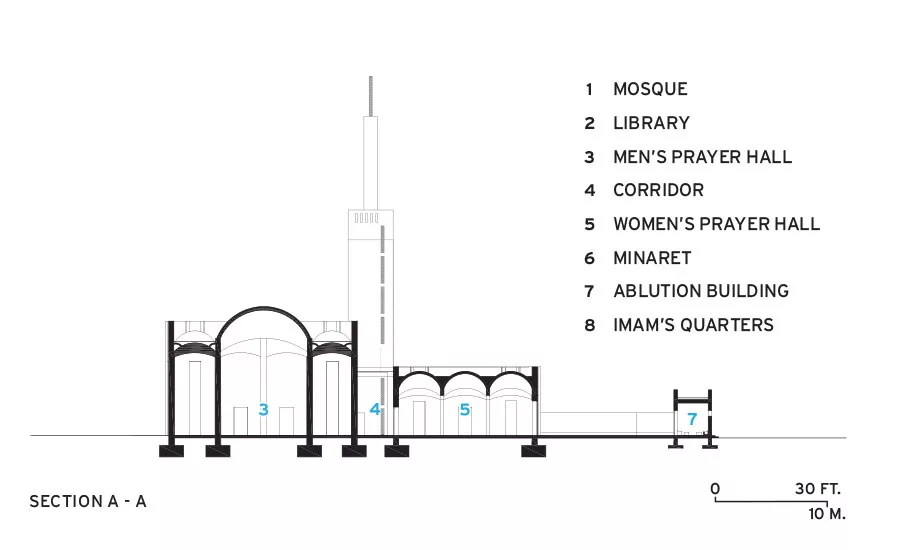
Image courtesy Atelier Masomi
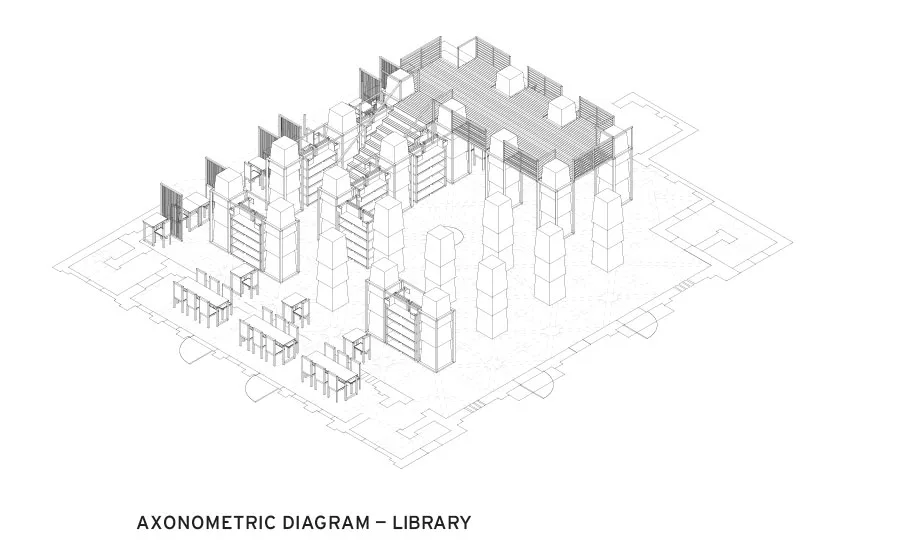
Image courtesy Atelier Masomi
There was a time in Niger when village mosques were maintained by their communities. The earthen structures, like one designed in the desert town of Dandaji by the late Nigerien architect Falké Barmou 20 years ago, was an honored type, repaired and replastered as needed in a collective gesture of religious devotion, to withstand the region’s seasonal downpours.
But times have changed. When the Dandaji mosque began to crumble—its chunky parapets and corner towers eroded by water damage and neglect—the villagers wanted to tear it down and fund construction of a modern building with easier maintenance and more room for the growing population of 3,000, preferably in durable concrete.
Additional Content:
Jump to credits & specifications
That’s when architect Mariam Kamara, founder of Atelier Masomi, based in Niger’s capital, Niamey, learned of the problem from family friends (her father had grown up in Dandaji). She successfully advocated for saving the old mosque by recalling its history. The boxy mud-brick volume, with its artisanal hand-plastered exterior, was a small replica of another that Barmou had designed in nearby Yaama, which won the prestigious Aga Khan Award for Architecture in 1986. Like that earlier, larger mosque, Dandaji’s “is an amazing example of a traditional type of Islamic architecture,” says Kamara, “one which we can’t easily maintain anymore because the skills are disappearing.”
But she believed that, with improved building materials and methods, and a new program as a library (a bonus, since Dandaji also has the only middle school for miles, used by students from five towns), the hefty maintenance requirements could be eased, and the building could once more serve as valuable community space. An area adjacent to it would be the site of the new mosque, if the clients approved of pursuing two projects instead of one. Convinced of the existing mosque’s importance, the villagers agreed.
To handle the larger-than-expected brief, Kamara, who earned her M.Arch. from the University of Washington, asked another alum of that program, Yasaman Esmaili, principal of the Tehran- and Bostonbased Studio Chahar, to collaborate with her. Kamara and Esmaili had met as students while assisting professors, the late Robert Hull (founding principal of Miller Hull) and Elizabeth Golden, on the Gohar Khatoon Girls’ School in northern Afghanistan. As they worked, they bonded over stories about their Muslim upbringings—Esmaili in Iran and Kamara in Niger. Since that time, they’d also worked together designing a housing project in Niamey.
The 24,140-square-foot rectangular campus they conceived for Dandaji is defined by a concrete wall that encloses the restored and repurposed mosque at the north end, the spacious new mosque composed of a set of prayer halls and ablution buildings at the south end, and a community courtyard in the middle.
Crisp Art Deco–like details and tall, razor-straight walls enclose the new mosque’s volumes, including the prayer halls. Between them, at the southernmost end of a long walkway, sits the minaret, formed by two rectangular prisms, with the narrower one stacked on top, culminating in a spire. Just north and east of this neat cluster are two smaller boxes, the stations for ritual washing before prayers.
While its hue echoes the library’s, its bones have a different DNA: the mosque and its ancillary structures are not built of local clay but compressed-earth blocks, or CEBs, which feature a mix of soil and other content. This composite material, which Esmaili and Kamara first used in the Niamey housing development, requires less maintenance than clay while providing the same thermal benefits.
To encourage daily use of the halls, the architects laid a concrete path from the library to the mosque’s first point of entry, the ablution building on the north side. From there, a door featuring steel latticework, used throughout the complex and fabricated by local craftspeople, leads to an outdoor corridor and the mosque itself. The larger hall used by men opens onto a hallway across from the smaller one designated for women. Each room has views into the other when doors along the corridor separating them are open. Once inside the halls, the gaze of worshipers is focused upward, following the height of the concrete columns that support the clean-lined, white-painted concrete arches that frame red CEB vaults. The underside of each dome holds a pendant fixture that twinkles like a star at the center.
The architects’ intention was that nothing on the white-painted walls would distract from the dramatic ceiling or, during sermons, from the imam, whose podium is a simple set of steps on the western wall. Under the paint, the wall itself is plastered in a mixture of cement and an iron-rich soil, laterite, for strength.
The adjacent restoration is another story. “The projects are two totally different animals, in terms of materials,” Kamara says.
In fact, the library’s irregularly shaped walls make it appear as though it were sculpted from a single slab of clay. Elevations are punctuated by blue-painted steel shutters and doors and rows of shallow carved niches, their edges softened by age. The team enlisted original architect Barmou’s former assistant to oversee the restoration of its walls and roof. In places where walls needed to be rebuilt or repaired, the method of construction was similar to what’s used for cast-in-place concrete with rebar, but, instead, raw clay was packed and molded by hand around wood dowels. The exterior has a new coating of plaster made of clay, shea butter, sand, and the nontraditional laterite, which is so durable it should reduce the replastering schedule from an annual task to one that happens every 10 years. The interior walls, too, received a fresh coat of plaster, but with a slightly different recipe.
To convert the interior into a library, the architects designed a series of steel-framed insertions: shelves between columns that double as partitions, and a mezzanine accessed by a short flight of stairs, which creates a perch for reading and studying cross-legged on mats under the roof’s multiple domes. Outside the west-facing entrance, the team built an annex for educational workshops on subjects ranging from math to literacy to farm production. Although it is made of CEBs, like the other new structures, village masons made sure its domed roof, parapets, and plasterwork appeared identical to those elements on the converted mosque, as if the decades-old building and the addition were built at the same time.
The masons’ skills, says Kamara, ensured a cohesive mix of modern and traditional. “I knew of these techniques. I had studied them, but I hadn’t seen them done,” says Kamara, explaining how some age-old methods were woven together with hers and Esmaili’s more modern ones, citing the protective plaster for the exterior walls of both the new mosque and the library.
Because the architects were receptive to the mason’s practices, the artisans in turn showed patience with theirs. “There was a lot of exchange. We are architects, but we are not there just to prescribe from our Western educations,” says Esmaili. Kamara agrees: “It’s way more interesting to learn from them,” she says. “That process shows that modernity is not synonymous with a Western aesthetic.”
CreditsArchitect: Atelier Masomi — Mariam Kamara, principal
Associate architect: Studio Chahar — Yasaman Esmaili, principal
Engineering: URBATEC (structural); Willi Demo Sekangay (electrical)
General contractor: Entreprise Salou Alpha & Fils
Client: Village of Dandaji, Niger
Size: 24,140 square feet
Cost: $544,300
Completion date: May 2018 |
SpecificationsPaint National Paints
Lighting Egelec
Doors & Windows Atelier de Technologie Métallique
Locksets Paco |
Looking for a reprint of this article?
From high-res PDFs to custom plaques, order your copy today!