Architectural Record
search
cart
facebook twitter linkedin youtube
  • Sign In
  • Subscribe
  • Sign Out
  • My Account
Architectural Record
  • NEWS
    • Latest News
    • Awards
    • Interviews
    • Obituaries
    • Podcasts
      • Design:Ed Podcast
      • Sponsored Podcasts
  • OPINION
    • Book Reviews / Excerpts
    • Exhibition Reviews
    • Forum
  • EXCLUSIVES
    • Videos
    • Design Vanguard
    • Top 300 Firms
    • Sponsored Content
    • Sponsored eBooks
    • From the Archives
  • CONTINUING ED
    • Editorial Continuing Ed
    • CE Center
    • CE Academies
  • PROJECTS
    • Buildings By Type
    • Reuse & Renovation
    • Museums & Arts Centers
    • Colleges & Universities
    • Multifamily Housing
    • Interiors
    • Lighting
    • Kitchen & Bath
  • HOUSES
    • Record Houses
    • House of the Month
    • Featured Houses
  • PRODUCTS
    • Products by Category
    • Record Products of the Year
    • Latest Products
  • EVENTS
    • Dates & Events
    • Record on the Road
    • Innovation Conference
    • Sustainability in Practice
    • Women In Architecture
    • Webinars
    • Ad Excellence Awards
    • Submit an Event
  • CONNECT
    • Ask RECORD AI
    • Newsletters
    • Contact
    • Advertise
    • Editorial Calendar
    • Store
    • Customer Service
  • SUBMIT
    • Submission Guidelines
    • RECORD Competitions
  • MAGAZINE
    • Subscribe
    • My Account
    • Digital Edition
    • Current Issue
    • Firm Pass
    • Historic Archive
Opinion

Review of 'Architecture of Nature/Nature of Architecture'

By Diana Agrest with Yael Agmon
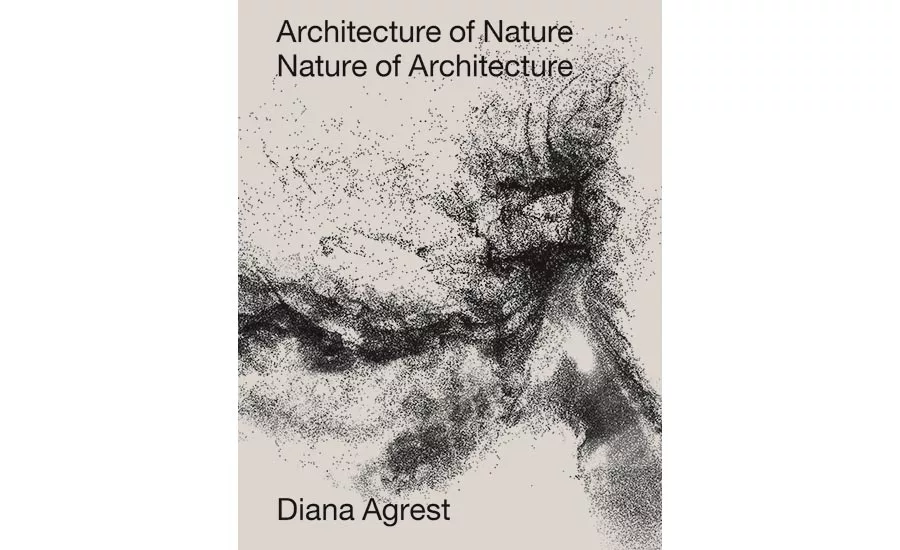
By Edward Eigen
Architecture of Nature/Nature of Architecture

Architecture of Nature/Nature of Architecture, by Diana Agrest, with Yael Agmon. Applied Research and Design Publishing, 280 pages, $49.95.

August 5, 2019

The fortunes of Peter Cooper, patron and founder of Cooper Union for the Advancement of Science and Art, were based on the production of glue and household cements from byproducts of the slaughterhouse—cows’ and calves’ feet. It was a messy but profitable business, assuring Cooper a legacy as a “pioneer polluter” of New York’s pond water. Interestingly, Architecture of Nature/Nature of Architecture, which showcases work being done by architecture students in the institute built by Cooper’s industrial ingenuity, is a vivid catalogue of material and physical processes that are as alluring and troubling as the oily rainbow sheen on a contaminated puddle. The speculative schemes—products of a nearly decade-long series of design studios taught by the book’s lead author, architect and educator Diana Agrest, at Cooper Union’s School of Architecture to “deal with environmental issues”—present a dangerous kind of beauty. As historian and essayist D. Graham Burnett says in a dialogue with Agrest, “Let us hope that this book of yours, so apparently people-less, returns those who read it to the central problem of ‘us.’ Of us ‘now.’"

Agrest describes in moving terms her early and far-ranging travels, from her native Argentina to the underground homes of Matmata on the edge of the Sahara. She looked at the passing landscape in proto-architectural terms—from the “plan” of the Argentine Pampas, with its “uninterrupted horizontal” expanse, to the “section” of the geological record written in stratigraphic lines of the country’s Serranías de Hornocal mountains in the Argentine province of Jujuy. Traveling on foot, train, and in a beat-up old station wagon, the young student found the long-sought conduit between the sciences and humanities. As Agrest notes, the “central role of representation” in architecture is to create “a common ground between architecture and science in the understanding of nature.” These representations might take the form of standard architectural drawings and models adapted to nonstandard objects—such as seismic faults— as well as nature prints, scientific atlases, and even scans of electron-microscopic imagery. The significance of Agrest’s claim is apparent in “Representation as Production,” a far-ranging dialogue between the author and scholars Peter Galison and Caroline A. Jones. Like the Burnett dialogue, it is one of the book’s clarifying interludes between examples of the studio’s work. Another welcome voice is that of John McPhee, whose reprinted essay of 1980, “Basin and Range: Geological Time,” does not show signs of age.

Who, then, is the “us” of this book, and where and when are we “now?” In the acknowledgments (like a signpost at the end of this long journey), Agrest elaborates on how the visually dynamic bulk of student work from the Cooper Union design studios came together. Collectively, and as a group portrait of the generation that produced it, this compilation records changing weather patterns in a prevailing climate of warranted geoecological pessimism.

By comparison, the material illustrated in New York’s Museum of Modern Art 1971 exhibition about Cooper Union, the Education of an Architect: A Point of View (and accompanying book), with its iterations of the vaunted Nine- Square problem, seems to have come from another epoch. The past “elements” of architecture—grid, frame, post, beam, etc.—have been replaced with invisible force fields, topographical vessels, cloud formations, and sinkholes. The overall impression is the unraveling of a singular point of view. The question is no longer that of composition but of “dealing with” a turbulent state of nature in a perpetual process of becoming and/or coming undone. One future possibility is that “us” (architects) will be cropped out of the picture and nature, by whatever definition, will return to reassert itself over our now long-estranged better selves. As an atlas of us now, this handsomely produced and lavishly illustrated book covers some intriguingly uncommon ground.

Looking for quick answers on architecture and design topics?
Try Ask RECORD, our new smart AI search tool.
Ask RECORD →

KEYWORDS: Book Reviews / Excerpts

Share This Story

Looking for a reprint of this article?
From high-res PDFs to custom plaques, order your copy today!
Edward Eigen is the author of On Accident: Episodes in Architecture and Landscape.

Post a comment to this article

Report Abusive Comment

Subscription Center
  • Create an Account
  • Start a Subscription
  • Manage My Account
  • Sign Up for Newsletters
  • Visit Customer Service
  • Update Preferences

More Videos

Sponsored Content

Sponsored Content is a special paid section where industry companies provide high quality, objective, non-commercial content around topics of interest to the Architectural Record audience. All Sponsored Content is supplied by the advertising company and any opinions expressed in this article are those of the author and not necessarily reflect the views of Architectural Record or its parent company, BNP Media. Interested in participating in our Sponsored Content section? Contact your local rep!

close
  • TAMLYN XtremeTrim Exterior Trim
    Sponsored byTamlyn

    Designing Cleaner Panel Facades: Why Exterior Trim Details Matter

  • Building with Vapor Barriers
    Sponsored byReef Industries, Inc.

    Vapor Barriers Help Control Moisture in Tighter Building Designs

  • Duct Interior with Prodeq System
    Sponsored byHenry, a Carlisle Company

    Designing Resilient Water Containment Systems

DESIGN:ED Podcast
Listen to Architectural Record’s DESIGN:ED Podcast

Events

June 10, 2026

Rethinking Stormwater – The Power of Porous Paving

Credits: 1 AIA LU/HSW; 1 AIBD P-CE; 0.1 ICC CEU

Learn how porous paving systems support stormwater management, reduce heat island effects, and enhance sustainable site design performance.

June 11, 2026

Very Early Warning Fire Detection for Mission-Critical Facilities

Credits: 1 AIA LU/HSW; 1 AIBD P-CE; 0.1 ICC CEU

Examine advanced fire detection strategies that support uptime and enhance safety in data centers and other mission-critical facilities.

View All Submit An Event

Products

2026 Architect's Square Foot Costbook

2026 Architect's Square Foot Costbook

See More Products

Popular Stories

Practice Matters illustration

What’s in a (Firm’s) Name? Thinking About Succession and Legacy

Coronado Bridge

The Architect’s Guide to San Diego

Practice Matters illustration

By the Numbers: Counting America's Architects

Riverdale House by Studio Lau

Riverdale House by Studio Lau

House on a Hill

Design Vanguard 2026: Forma

Broader Sustainability of CMU - Free Webinar - May 21, 2026

Related Articles

  • Architecture Unbound.

    Review of 'Architecture Unbound: A Century of the Disruptive Avant-Garde'

    See More
  • Architecture and Design at the Museum of Modern Art: The Arthur Drexler Years, 1951-1986

    Review of 'Architecture and Design at the Museum of Modern Art: The Arthur Drexler Years, 1951-1986'

    See More
  • Modern Architecture and Climate

    Review of 'Modern Architecture and Climate: Design Before Air Conditioning'

    See More

Related Products

See More Products
  • 1118522532.gif

    Future Details of Architecture

  • experience of arc.jpg

    The Experience of Architecture

  • of place.jpg

    Architecture of Place

See More Products
×

The latest news and information

#1 Source for Architectural Design, News and Products

SUBSCRIBE
  • RESOURCES
    • Advertise
    • Contact Us
    • Submit
    • Store
  • ACCOUNT CENTER
    • Create an Account
    • Start a Subscription
    • Manage My Account
    • Sign Up for Newsletters
    • Visit Customer Service
    • Update Preferences
  • PRIVACY
    • PRIVACY POLICY
    • TERMS & CONDITIONS
    • DO NOT SELL MY PERSONAL INFORMATION
    • PRIVACY REQUEST
    • ACCESSIBILITY
  • SERVICES
    • Marketing Services
    • Reprints
    • Market Research
    • List Rental
    • Survey/Respondent Access
  • STAY CONNECTED
    • Linkedin
    • Facebook
    • Instagram
    • YouTube
    • X (Twitter)

Copyright ©2026. All Rights Reserved BNP Media, Inc. and BNP Media II, LLC.

Design, CMS, Hosting & Web Development :: ePublishing