A Swiss River Canal Reimagined
Geneva
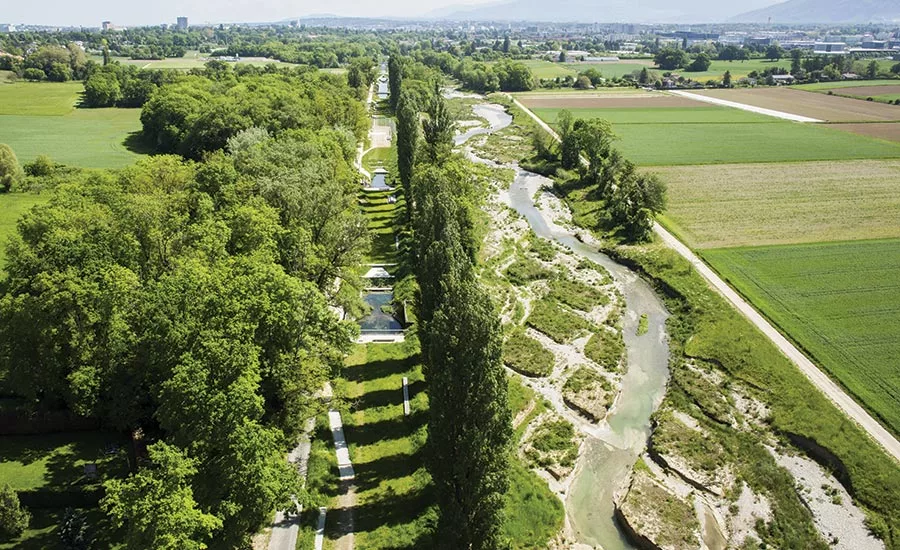
A new riverbed was created on the site of the original.
Photo © Fabio Chironi
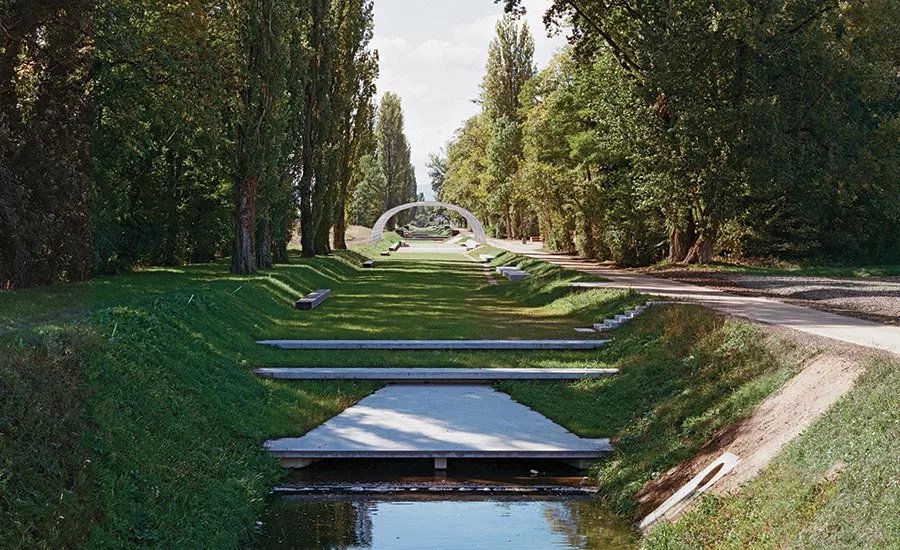
The adjacent drained canal has been transformed into a green space inspired by 19th-century British gardens.
Photo © Jacques Bethet
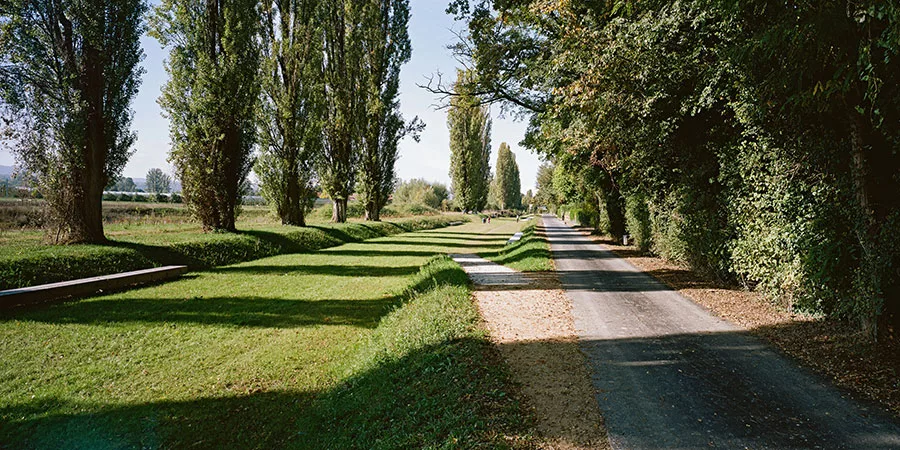
The promenade's bike path, which runs adjacent to the old canal, is heavily utilized by commuters from France who work in Geneva.
Photo © Jacques Bethet
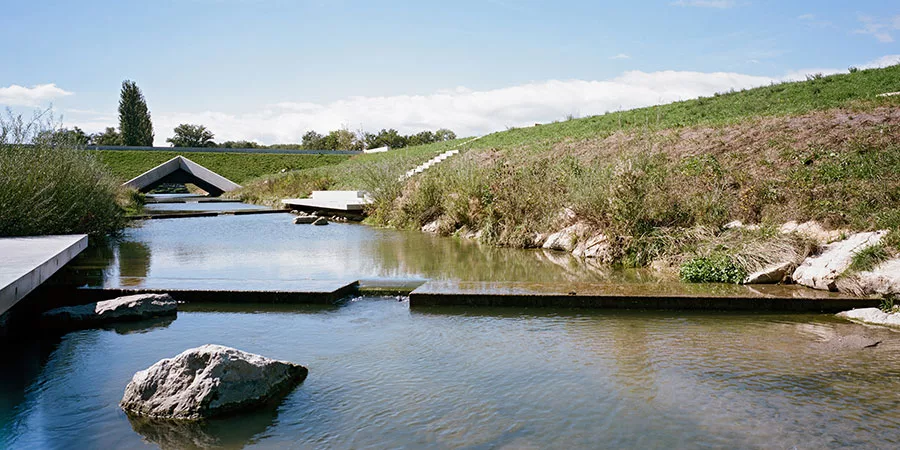
The old canal and dikes have been repurposed as public gardens, some of which are water gardens.
Photo © Jacques Bethet
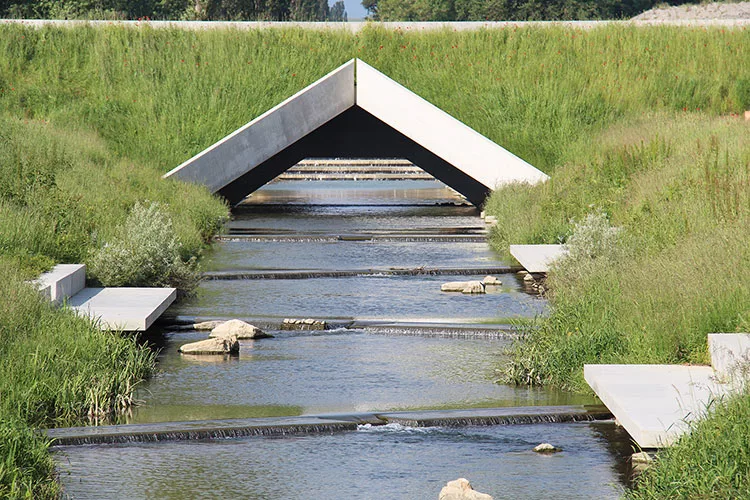
The old canal and dikes have been repurposed as public gardens, some of which are water gardens.
Photo © Jacques Bethet
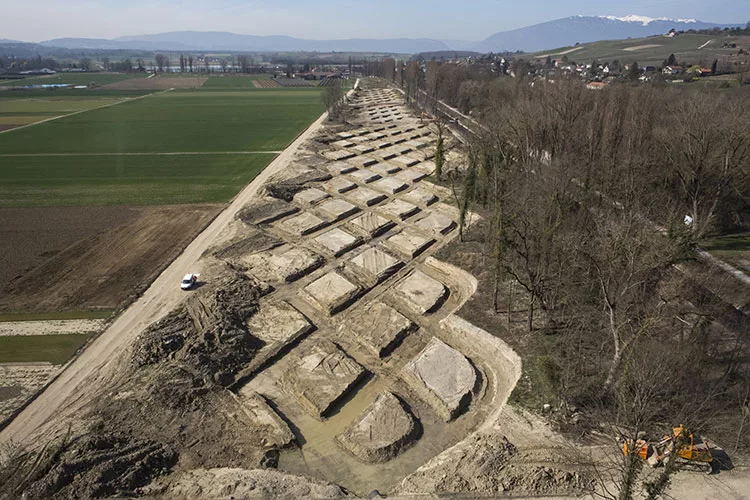
The team carved a 200-foot-wide diamond-shaped pattern into the raised silt anticipating the natural erosion to help control the flow and curb flooding.
Photo © Fabio Chironi
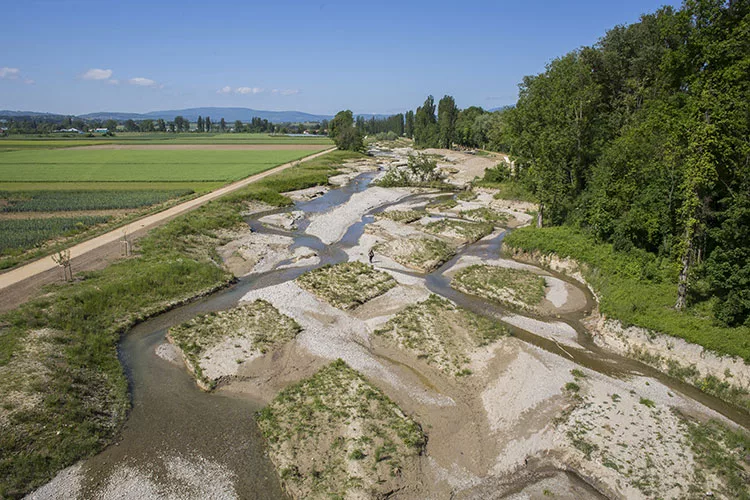
The team carved a 200-foot-wide diamond-shaped pattern into the raised silt anticipating the natural erosion to help control the flow and curb flooding.
Photo © Fabio Chironi
Flowing through the idyllic southwestern tip of Switzerland is the Aire, a small river that winds through the countryside close to Geneva, then across the French border, through the village of San-Julien-en-Genevois. This temperamental ribbon of water has been a major flood risk to the region’s agriculture and neighboring towns: it was reined in by a canal once in 1896 and again in the 1940s before the Canton of Geneva finally launched a competition for a plan to tame the river in 2001. The winner was a multidisciplinary team named Superpositions, composed of architects and landscape architects Georges Descombes and Atelier Descombes & Rampini; B+C Engineers; ZS Structural Engineers, and biologists Biotec SA. In the years since the group won, it has completed three phases of work on the three-mile stretch, redirecting the water from the man-made channel to a newly designed riverbed on the Aire’s original footprint. The parallel, now-defunct canal has been adapted into a verdant public promenade. (The fourth and final phase—to demolish a dam in order to redistribute gravel and soil downstream—will be complete by 2022.)
Despite the team’s efforts to influence nature, ultimately, of course, “a river must design itself,” says Greg Bussien of Atelier Descombes & Rampini. This perspective informed the project’s first phases, restoring the riverbed to its original location. After the group’s biologists and hydraulic engineers measured the environmental impact of each phase—water quality and biodiversity had been low in the Aire region due to sewage and pesticide runoff—the landscape architects amended the design to improve conditions for the riverscape. After studying natural sediment deposits in other waterways, the team carved a 200-foot-wide diamond-shaped pattern deep into the raised silt, to manipulate water flow and help curb flooding during the wet winter months.
To create the public garden out of the adjacent industrial-era canal, the designers added concrete steps down the trench’s embankments and planted it out as a green space. Amenities, including pergolas and benches, serve Swiss and French locals commuting to Geneva, many of whom use the bike path along the river to get to the city each day. When the project is finally complete, the Aire will once again showcase its natural splendor, enhanced for all to enjoy.
Looking for quick answers on architecture and design topics?
Try Ask RECORD, our new smart AI search tool.
Ask RECORD →
Looking for a reprint of this article?
From high-res PDFs to custom plaques, order your copy today!