Architectural Record
search
cart
facebook twitter linkedin youtube
  • Sign In
  • Subscribe
  • Sign Out
  • My Account
Architectural Record
  • NEWS
    • Latest News
    • Awards
    • Interviews
    • Obituaries
    • Podcasts
      • Design:Ed Podcast
      • Sponsored Podcasts
  • OPINION
    • Book Reviews / Excerpts
    • Exhibition Reviews
    • Forum
  • EXCLUSIVES
    • Videos
    • Design Vanguard
    • Top 300 Firms
    • Sponsored Content
    • Sponsored eBooks
    • From the Archives
  • CONTINUING ED
    • Editorial Continuing Ed
    • CE Center
    • CE Academies
  • PROJECTS
    • Buildings By Type
    • Reuse & Renovation
    • Museums & Arts Centers
    • Colleges & Universities
    • Multifamily Housing
    • Interiors
    • Lighting
    • Kitchen & Bath
  • HOUSES
    • Record Houses
    • House of the Month
    • Featured Houses
  • PRODUCTS
    • Products by Category
    • Record Products of the Year
    • Latest Products
  • EVENTS
    • Dates & Events
    • Record on the Road
    • Innovation Conference
    • Sustainability in Practice
    • Women In Architecture
    • Webinars
    • Ad Excellence Awards
    • Submit an Event
  • CONNECT
    • Ask RECORD AI
    • Newsletters
    • Contact
    • Advertise
    • Editorial Calendar
    • Store
    • Customer Service
  • SUBMIT
    • Submission Guidelines
    • RECORD Competitions
  • MAGAZINE
    • Subscribe
    • My Account
    • Digital Edition
    • Current Issue
    • Firm Pass
    • Historic Archive
Architecture NewsCoronavirus Coverage

Designing for Decarceration in a Pandemic

By Cathleen McGuigan
Restorative Justice Meeting in Oakland

At Restore Oakland, a project in the Bay Area by Designing Justice + Designing Spaces, people gather for restorative justice gatherings, which bring together the victim and the perpetrator to resolve the harm caused—outside of a courtroom.

Photo © Emily Hagopian

May 27, 2020

In crowded prisons and jails across the United States, the coronavirus has severely threatened both inmates and guards. A correctional facility in Marion, Ohio, looked like one of the worst potential death traps when it was reported last month that nearly 80 percent of its inmates had tested positive for COVID-19. Last week, according to the New York Times, the virus has likely sickened a greater number of corrections officers in New York City jails than in any other metropolis, with more than 1,200 out of nearly 10,000 staff testing positive, and at least a half-dozen deaths. In an effort to relieve widespread dangerous conditions, more than 16,000 inmates in America have been released early—primarily those serving time for non-violent crimes, who are eligible for parole or near the end of their sentences, as well as many held pre-trial in jails, unable to make bail.

The exodus is relatively small; with more than 2.2 million people behind bars (a vastly disproportionate number are African American), the U.S. leads the world in mass incarceration. Still, the wave of early releases is leading to other problems, mid-pandemic: where do so many inmates go, most without families nearby or prospects for work? Some may unwittingly be carrying the virus, too, and can wind up homeless or in overburdened shelters.

The DJDS team, photo © Oretola Thomas

For architect and activist Deanna Van Buren, this crisis may be a defining moment. The core mission of her non-profit practice, Designing Justice+Designing Spaces (DJDS), based in Oakland, California, is to end mass incarceration, and she and her team have worked in various ways to help newly released inmates re-enter communities. The firm recently created a prototype called the Mobile Refuge Room, with design input from former inmates: made of plywood, it is a small pop-up space with a bed, desk, storage for clothes—and, importantly, a door. “People need privacy, dignity and safety,” says Van Buren, noting that ex-prisoners are often sent to transitional housing, which can be no more than a cot in a large shared space.
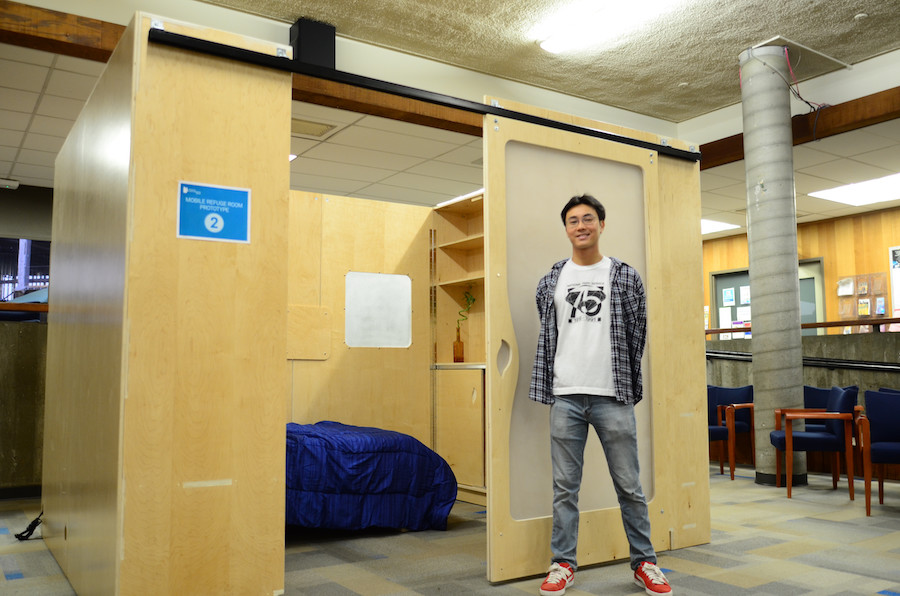
Mobile Refuge Room, photo courtesy DJDS

The probation department of Alameda County ordered fifteen of the Mobile Refuge Rooms before the pandemic; now the county has released about 1,000 inmates, and DJDS is scrambling to find a manufacturer who can start building the rooms, and scale up. Van Buren believes there will be a large demand, given the unit’s portability (they can be deployed in spaces like former school gyms) and relatively low cost. “The goal is to be able to do them for about $10,000,” she says. “We think people need them everywhere, not just Alameda County.”

For the larger mission of closing incarceration facilities, DJDS is joining with the Vera Institute of Justice on a project called “Unbuilding Jails,” to “help municipalities close down their jails,” says Van Buren, “and re-invest in the community.” One such project is in Los Angeles County, where the board of supervisors voted last year to cancel a contract for a new detention facility downtown and instead create alternative justice infrastructure—such as mental health and other vital facilities in neighborhoods. DJDS is part of the feasibility team, mapping potential sites. The firm is also helping plan the re-purposing of the 470,000-square-foot jail in downtown Atlanta, which the mayor has ordered closed, with a variety of potential facilities and community programs.
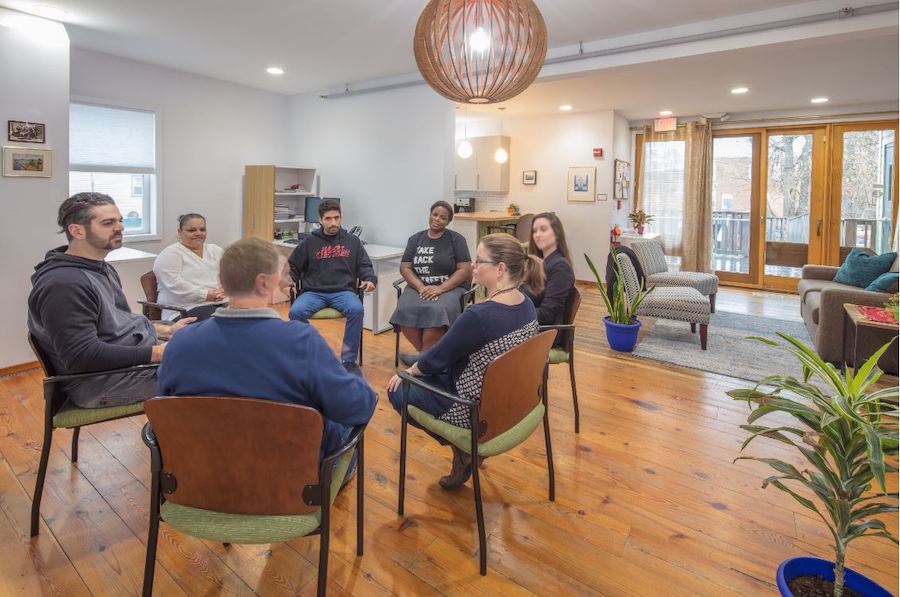
Peacemaking Center in Syracuse, NY, photo courtesy DJDS

Van Buren, who was honored with RECORD’s Women in Architecture Award as an activist in 2017, also has been a pioneer in promoting the role of design in restorative justice—the concept that fosters dialogue between a perpetrator and a victim. She has designed spaces for the Center for Court Innovation peacemaking project in Syracuse, New York, and the Restore Oakland center, in a former nightclub in the Bay Area–city.

And as the pandemic continues to spread through prisons, the Boston-based not-for-profit architecture firm MASS Design Group posted design guidelines last week for fighting COVID-19 in carceral facilities. Drawing on input from such partners as the Vera Institute of Justice and the University of Michigan’s Prison Creative Arts Project, MASS outlined an extensive set of strategies, beginning with de-populating prisons. But the office has also worked to end mass incarceration, and included the caveat that their recommendations “are not intended to be an ideal design nor an implicit approval of the current conditions within correctional facilities.”
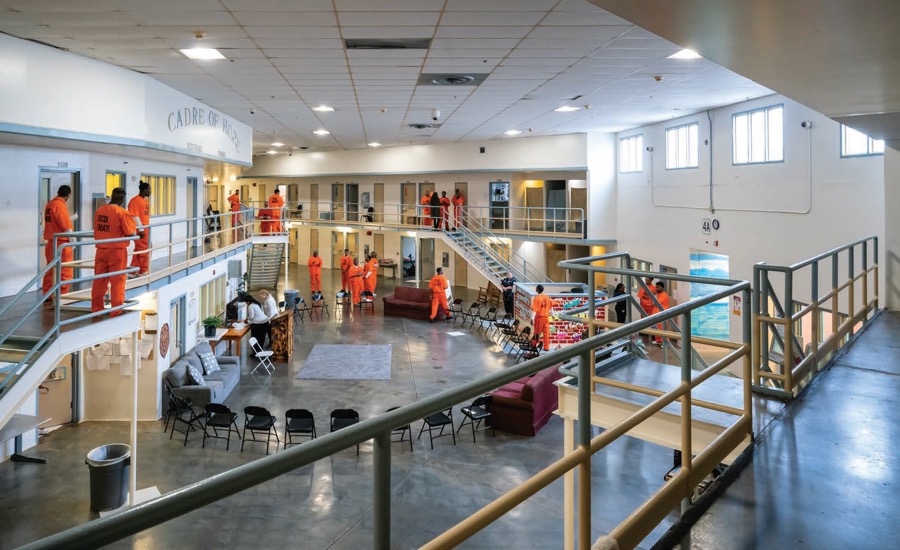
MASS Design Group's COVID-19 guide for carceral environments points to the F3 Unit at Lee Correctional Institution in South Carolina, which held up to 128 people at its peak but now accommodates just under 50, allowing for more comfortable distancing. Photo © Iwan Baan

Looking for quick answers on architecture and design topics?
Try Ask RECORD, our new smart AI search tool.
Ask RECORD →

KEYWORDS: diversity in architecture

Share This Story

Looking for a reprint of this article?
From high-res PDFs to custom plaques, order your copy today!


Mcguigan

Cathleen McGuigan served as editor in chief of Architectural Record from 2011 to 2022.

Post a comment to this article

Report Abusive Comment

Subscription Center
  • Create an Account
  • Start a Subscription
  • Manage My Account
  • Sign Up for Newsletters
  • Visit Customer Service
  • Update Preferences

More Videos

Sponsored Content

Sponsored Content is a special paid section where industry companies provide high quality, objective, non-commercial content around topics of interest to the Architectural Record audience. All Sponsored Content is supplied by the advertising company and any opinions expressed in this article are those of the author and not necessarily reflect the views of Architectural Record or its parent company, BNP Media. Interested in participating in our Sponsored Content section? Contact your local rep!

close
  • cold storage facility
    Sponsored byCarlisle SynTec Systems

    How Architects Can Design More Continuous Cold Storage Envelopes

  • TAMLYN XtremeTrim Exterior Trim
    Sponsored byTamlyn

    Designing Cleaner Panel Facades: Why Exterior Trim Details Matter

  • Building with Vapor Barriers
    Sponsored byReef Industries, Inc.

    Vapor Barriers Help Control Moisture in Tighter Building Designs

DESIGN:ED Podcast
Listen to Architectural Record’s DESIGN:ED Podcast

Events

June 25, 2026

Designing Glass Railing Systems that Enhance Aesthetics and Meet Code

Credits: 1 AIA LU/HSW; 1 AIBD P-CE; 0.1 ICC CEU

Upon course completion, participants will possess a deeper understanding of glass railings to help ensure that safety, aesthetic, and performance objectives are achieved.

June 30, 2026

Generator Selection and Sizing for Outage-Ready Homes

Credits: 1 AIA LU/HSW; 1 AIBD P-CE; 0.1 ICC CEU

Explore how propane-powered systems and whole-home generators can improve energy resilience, reduce electrical loads, and lower long-term residential costs.

View All Submit An Event

Products

2026 Architect's Square Foot Costbook

2026 Architect's Square Foot Costbook

See More Products

Popular Stories

Lorcan O' Herilhy

California Architect Lorcan O’Herlihy Has Died, Age 66

Obama Presidential Center, Chicago

The Obama Presidential Center Opens on Chicago’s South Side

Spoonbill Ranch

Johnsen Schmaling Architects Integrates Spoonbill Ranch into a Pristine Landscape

Image of Bruce Springsteen Center for American Music

The CookFox-designed Bruce Springsteen Center for American Music Opens in New Jersey

Three Courtyards House

Design Vanguard 2026: Balsa Crosetto Piazzi

Designing Glass Railing Systems that Enhance Aesthetics and Meet Code - Free Webinar - June 25, 2026

Related Articles

  • Rush-Hospital-Perkins-Will-01.jpg

    Planned for a Pandemic: Rush University Medical Center Tower by Perkins and Will

    See More
  • Mediamatic-Amsterdam-Willem-Velthoven-FT.jpg

    Architects Envision Ways to Make Restaurants Safe During a Pandemic

    See More
  • Cathleen McGuigan

    The Art of Designing for Culture

    See More

Related Products

See More Products
  • image7.jpg

    Contemporary Architecture in China Towards A Critical Pragmatism

  • book3.jpg

    If Architecture is a Language, Then a Building is a Story

See More Products
×

The latest news and information

#1 Source for Architectural Design, News and Products

SUBSCRIBE
  • RESOURCES
    • Advertise
    • Contact Us
    • Submit
    • Store
  • ACCOUNT CENTER
    • Create an Account
    • Start a Subscription
    • Manage My Account
    • Sign Up for Newsletters
    • Visit Customer Service
    • Update Preferences
  • PRIVACY
    • PRIVACY POLICY
    • TERMS & CONDITIONS
    • DO NOT SELL MY PERSONAL INFORMATION
    • PRIVACY REQUEST
    • ACCESSIBILITY
  • SERVICES
    • Marketing Services
    • Reprints
    • Market Research
    • List Rental
    • Survey/Respondent Access
  • STAY CONNECTED
    • Linkedin
    • Facebook
    • Instagram
    • YouTube
    • X (Twitter)

Copyright ©2026. All Rights Reserved BNP Media, Inc. and BNP Media II, LLC.

Design, CMS, Hosting & Web Development :: ePublishing