The Supreme Court’s Wake-Up Call to Architects
A decision undermining the EPA's regulatory power highlights the urgency of decarbonizing the grid
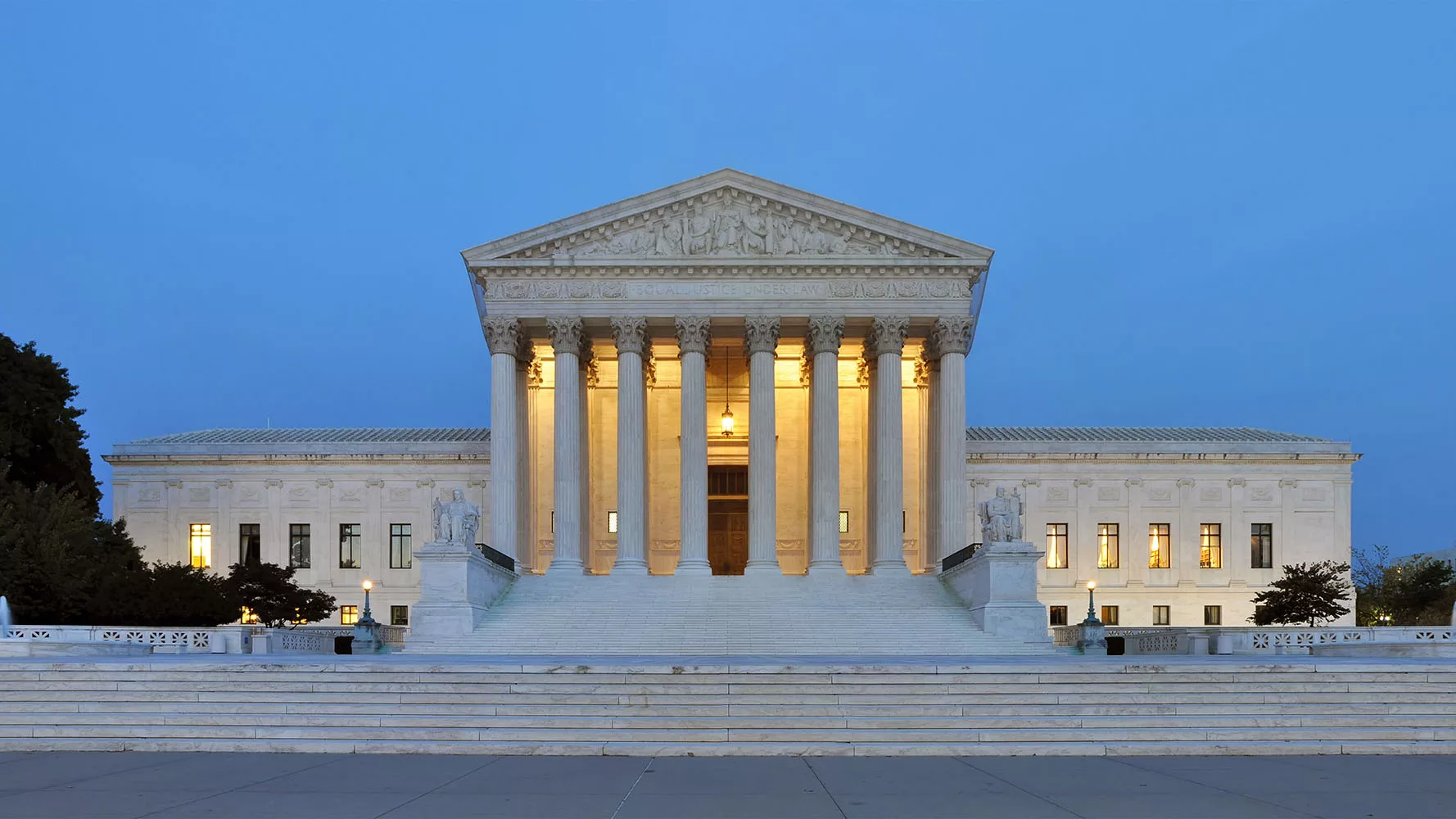
The Supreme Court Building in Washington, D.C. Photo by Joe Ravi, via Wikimedia Commons (CC-BY-SA 3.0 license)
On June 30, the Supreme Court ruled by a 6–3 majority in West Virginia v. EPA that the Environmental Protection Agency (EPA) cannot compel utilities to switch from coal power plants to renewables, as proposed by the agency’s Clean Power Plan. Hyperbolic headlines portrayed a devastating blow to climate action, but these messages missed the nuance and limitations of the ruling. This decision targeted a policy that never went into place. (The EPA replaced the plan in 2019 with less stringent requirements.) It does not limit the EPA’s authority to regulate carbon emissions at individual plants, nor does it affect state and local government policies or targets for renewable energy—as long as those policies are not tied to the federal authority granted to the EPA.
What was compromised in this ruling is the EPA’s ability to mandate “generation shifting,” or requiring utilities to switch fuel sources for energy generation as part of a coordinated, lower-cost, national transition to renewable energy. The plant-by-plant emission reductions that the EPA is likely to pursue instead could prove more expensive for utilities and lead to higher prices in the short term (until coal plants are retired), which is why the electric utility industry opposed the Supreme Court’s decision to take this case.
Design professionals and our clients have a stake in this decision because buildings use over three-quarters of all electricity in the U.S. While architects and engineers often design energy-efficient buildings and advocate for energy efficiency through policies and codes, we rarely advocate for renewable electricity generation even though it is central to our decarbonization goals. Along these lines, the ruling undermines an effort to make the energy transition coordinated and predictable. Without a clear timeline for a clean grid transition, it will now be harder to make the case for decarbonization to hesitant clients.
We can and should design all-electric buildings that do not burn toxic, climate-changing fossil fuels on-site, but we need a carbon-free electricity grid to meet our climate goals.
The good news is that, for power generation, wind and solar are lower-cost alternatives to fossil fuels. Coal’s share of the electricity-generation fuel mix has already dropped from a peak of 57 percent in the 1980s to around 20 percent today. Renewable energy’s share is also at 20 percent, and is growing just as fast as coal’s share is declining. (The balance comes largely from natural gas and nuclear generation.) Additionally, many states and utility companies have established policies committing to 100 percent renewable energy; taken together, these commitments will cover at least 60 percent of U.S. electricity production by 2050, which is still relatively early in the life of any building or renovation designed today. While the Supreme Court ruling makes the timeline less certain, all-electric buildings in much of the U.S. will still have dramatically lower lifetime carbon emissions.
The energy-generation transition is imperative for mitigating climate change, but the benefits don’t stop there: clean energy is also critical to human health and environmental justice. Switching to renewable energy will help prevent hundreds of thousands of early deaths in the U.S. each year caused directly or indirectly by hazardous air pollutants from combustion, including 52,000 deaths linked to power generation alone and many more from poor air quality due to the combustion of fossil fuels in buildings.
We remain concerned about the possible broader implications of this Supreme Court ruling, as it could be extended to limit the ability of the EPA and other agencies to regulate activities that could compromise our collective health, safety, and welfare.
Looking for quick answers on architecture and design topics?
Try Ask RECORD, our new smart AI search tool.
Ask RECORD →
But, regardless of how these concerns play out, the ruling doesn’t change our professional obligation to the public and the environment. We must continue this important work, embracing our role in solving the climate emergency. Therefore, architects and engineers can and must:
- design energy-efficient, grid-interactive buildings;
- use our specifications to promote a market for low-carbon products;
- calculate a cost comparison of on-site renewables and off-site power purchase agreements for renewables when reviewing projected costs for building operations;
- advocate for upstream renewable electricity policy at local, state, and regional levels;
- recommend grants for the development of new renewables through local, state, or national programs.
By taking these important steps, designers can help blunt the negative effects of the Supreme Court decision—and play a central role in tackling one of the defining crises of our time.
This essay was coauthored by members of the Sustainability Leaders Peer Networks convened by BuildingGreen, including: Kjell Anderson, LMN Architects; Barbra Batshalom, Sustainable Performance Institute; Clark Brockman, SERA Architects; Patrick Donnelly, Integrus Architecture; Bryna Dunn, Moseley Architects; Efrie Escott, KieranTimberlake; Arathi Gowda, ZGF; Nadav Malin, BuildingGreen; Erik Ring, LPA Inc.; Alex Wilson, Resilient Design Institute.
Looking for a reprint of this article?
From high-res PDFs to custom plaques, order your copy today!