Tribute: Eugene Kohn (1930–2023)
Architects & Firms
More than the design of any building or skyscraper, A. Eugene Kohn, who died today, March 9, at the age of 92 following a battle with cancer, will be remembered for crafting and nurturing a firm that designed major projects around the world. That firm, Kohn Pedersen Fox (KPF), launched on July 4, 1976, at the nadir of a long recession, grew to become a pioneer in global architecture responsible for six of the world’s 12 tallest buildings. Though best known for his skills at landing commissions, he was much more than a silver-tongued salesman. It was his vision of a practice adept at designing and delivering complex projects that shaped KPF from the start and guided it as economic, technological, and internal challenges arose. Instead of showcasing the art—and ego—of an individual designer, KPF would promote a team approach to architecture. To do that, Kohn understood that he and his partners William Pedersen and Sheldon Fox would need to attract talented young architects, mentor them, give them the opportunity to work on significant projects, and eventually hand over leadership of the firm to them.
1
2
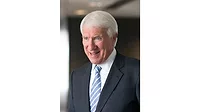
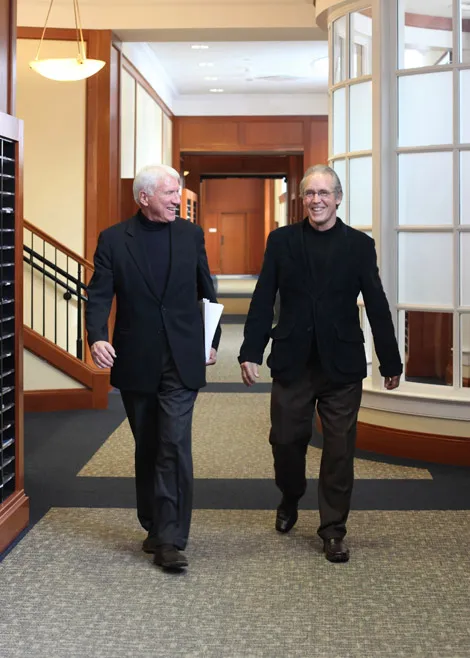
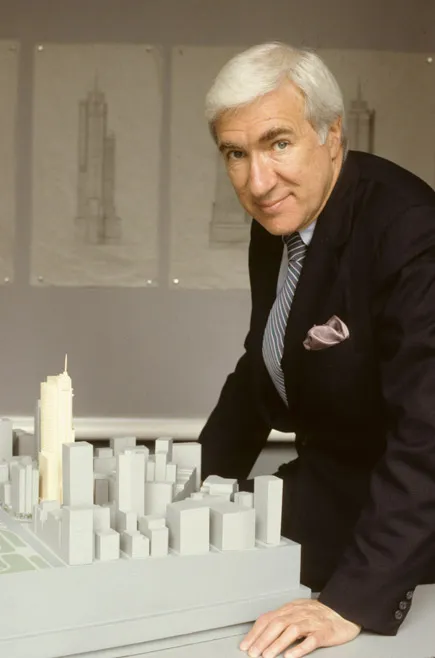
Gene Kohn and Bill Pedersen at Harvard (1); Kohn with a model of Chifley Tower, Sydney. (2). Photos © John Chu, courtesy KPF (1); courtesy KPF (2)
Before founding KPF at age 46, Kohn had run a major architecture firm—John Carl Warnecke & Associates—and worked at large Philadelphia firms such as Vincent Kling & Associates. Mentored by Warnecke and Kling, two large—but quite different—personalities, Kohn learned how to work with powerful clients and assemble design teams that could produce complex, award-winning buildings. From Kling, he acquired an understanding of the unseen-but critical components of a successful architecture firm—such as the cadre of skilled detailers who worked on construction documents and the team-building events during which Kling would play guitar and regale his troops with stories. From Warnecke, he learned to cultivate relationships with influential leaders in business and government. But when Warnecke refused to change the structure of his firm to adapt to the difficult economic climate of the mid-1970s, Kohn left and then lured Fox and Pedersen, who had also been at the firm, to join him in starting their own practice.

3
4
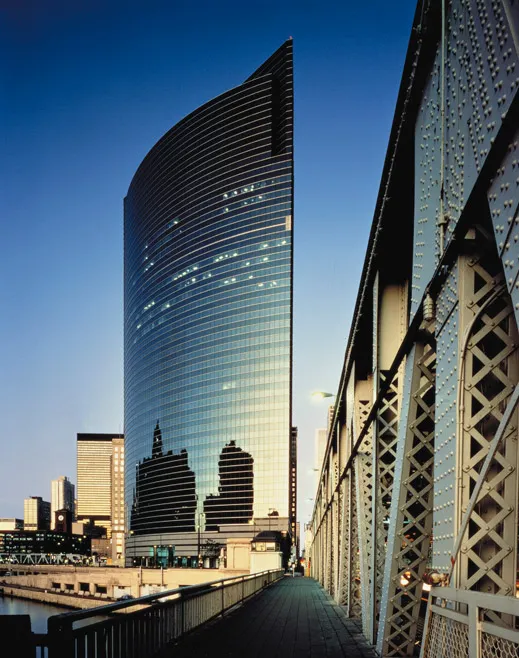
10 and 30 Hudson Yards, New York (3); 333 Wacker Drive, Chicago (4). Photos © Connie Zhou, courtesy KPF (3); © Barbara Karant, courtesy KPF (4)
Although he had won design awards at Warnecke and saw himself as a good designer, Kohn realized that Pedersen was a brilliant designer. So he let Pedersen design the firm’s most important early projects and put Fox in charge of managing internal operations. Kohn focused on drumming up business, working with clients, and strategizing the firm’s future. KPF’s first job came after he read a short notice in The New York Times that the American Broadcasting Company, the then-upstart television network, had just acquired an old armory on West 66th Street and planned to convert it into studios for producing soap operas. Kohn turned that unglamorous project into a decades-long relationship with ABC that led to a series of bigger and sexier projects for the network.
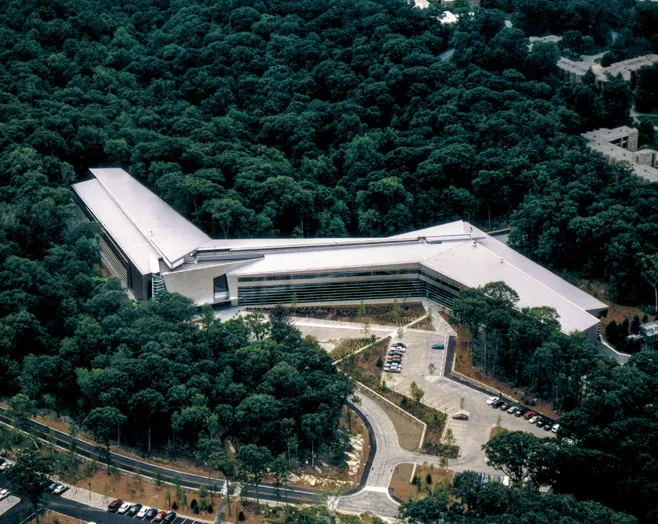
IBM headquarters, Armonk, New York. Photo © Peter Aaron / OTTO, courtesy KPF
Within a few years, KPF was designing headquarters for corporations such as AT&T Long Lines, Motorola, and Rocky Mountain Energy, and high-rise office buildings in Denver and Philadelphia for developers such as Reliance Development and Urban Investment & Development. In 1980, KPF beat out bigger and more established firmssuch as SOM, Pei Cobb Freed, and César Pelli to win the job of designing a huge new headquarters for Procter & Gamble in Cincinnati. In 1983, KPF’s design for 333 Wacker Drive in Chicago won almost universal acclaim when it opened and established the firm as a major player in American architecture. For the rest of the 1980s, the firm rode a wave of high-profile commissions throughout the country—from Wilmington, Delaware, and Minneapolis to Los Angeles and Boston—mostly speculative office projects and mostly Postmodern in style. In 1990, the American Institute of Architects named KPF its Firm of the Year, one of the youngest practices to win that honor.
Being identified with Postmodernism and commercial architecture, though, would hinder the firm as design trends changed and clients for museums and cultural projects looked elsewhere for design services. Decades after KPF pivoted to a more Modernist approach to design, Kohn sometimes heard that clients still thought of the firm as Postmodern.
5
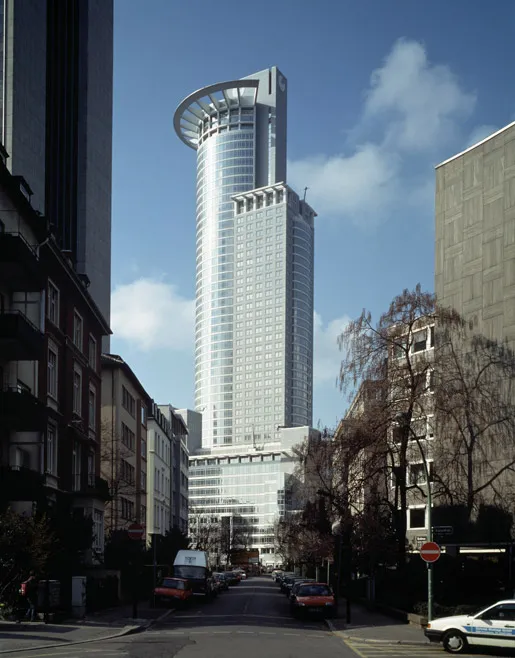
6
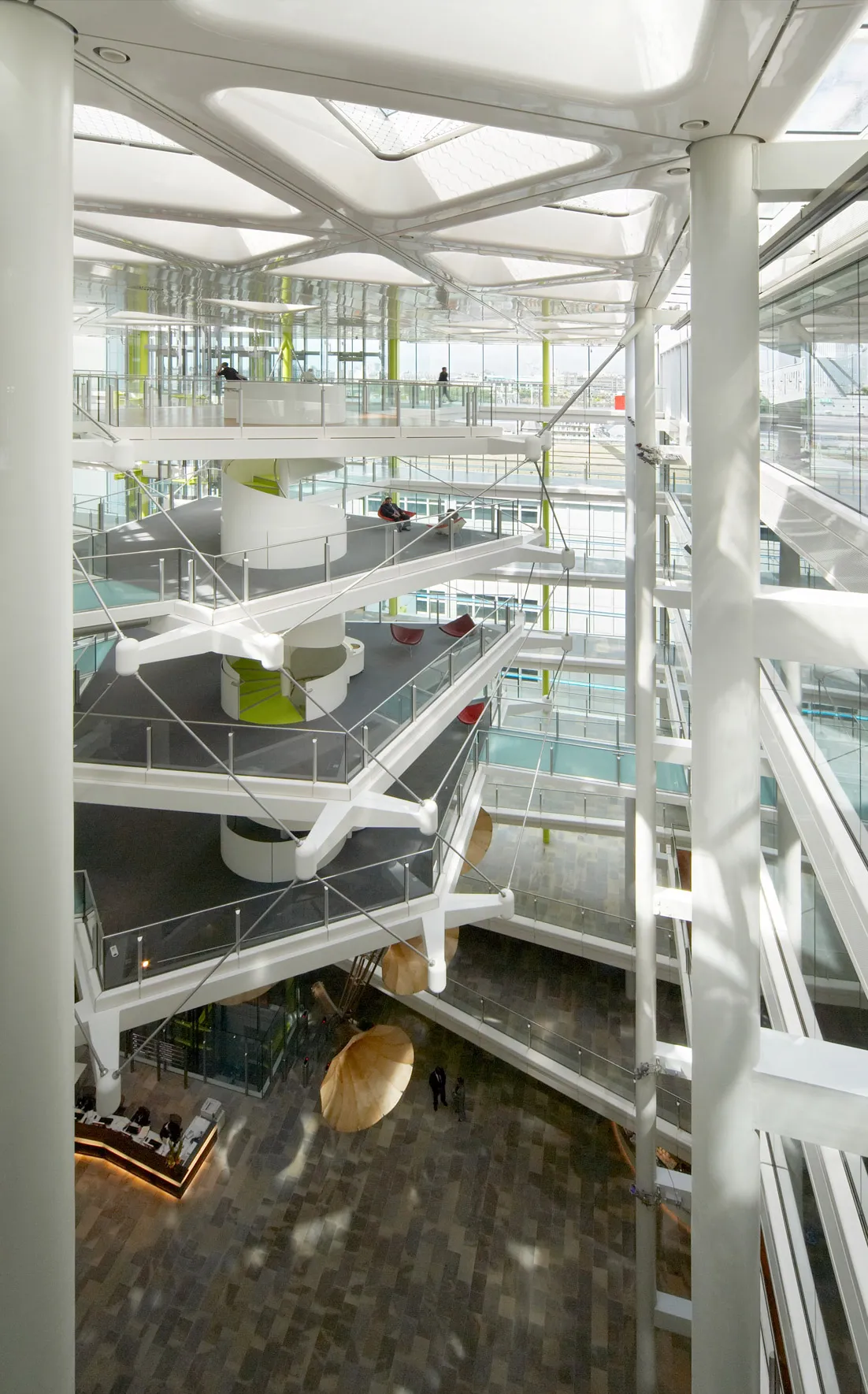
Unilever House, London (5); DZ Bank headquarters, Frankfurt (6). Photos © H.G. Esch, courtesy KPF (5); © Dennis Gilbert, courtesy KPF (6)
In 1985, Kohn attended a lecture at an Urban Land Institute conference and heard a speaker warn his audience: “If you’re not global by 1990, half of you will be out of business.” Kohn took the message to heart and made a concerted effort to find clients and projects abroad. Although his partners were wary of seeking foreign clients and over-extending the firm, Kohn pushed forward. He made trips to London to cultivate relationships with developers, bankers, and influential figures such as Peter Murray, who had been the editor of the RIBA Journal and helped put together an exhibition of KPF’s work in London. By the early 1990s, the firm was busy in London, Frankfurt, Hamburg, Sydney, and Montreal, as the U.S. economy slogged through a grueling recession.
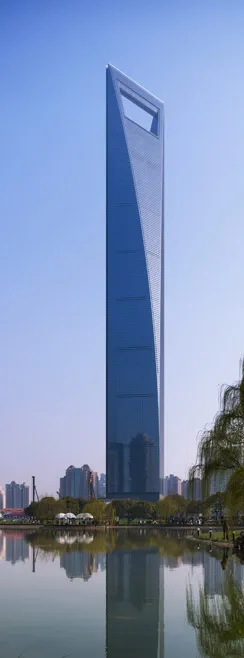
Shanghai World Financial Center.
Photo © Tim Griffith, courtesy KPF
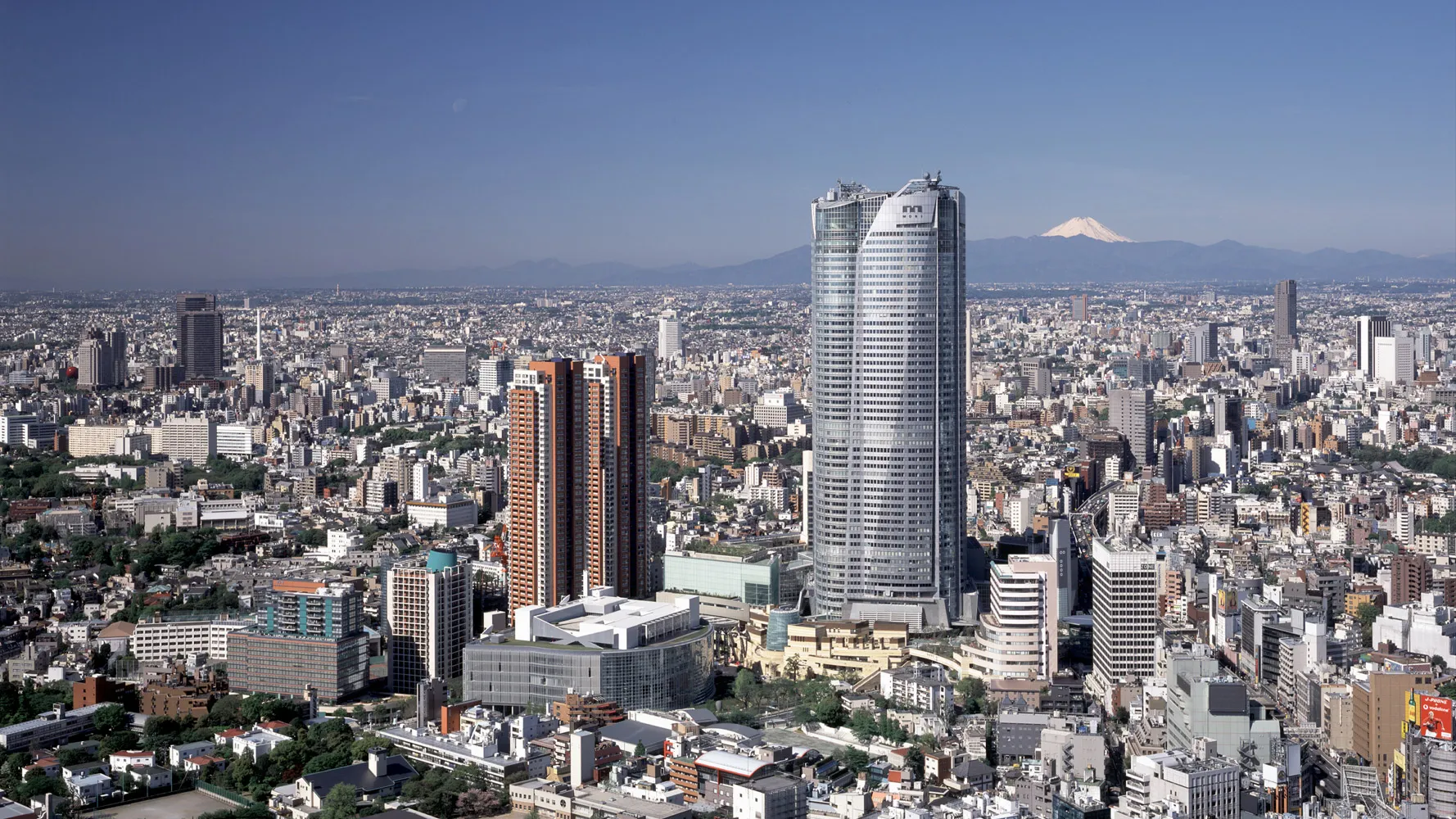
While working on an office building in Chicago in the late 1980s, Kohn got to know executives of the Japanese company Taisei, which was a co-developer of the project. Those executives later invited KPF to compete for an enormous mixed-use project for Japan Rail in Nagoya. Winning that project convinced Kohn that Asia offered huge opportunities and led to a remarkable string of mega-projects including Plaza 66 in Shanghai (2000) Roppongi Hills in Tokyo (2003), the Shanghai World Financial Center (2008), New Songdo City in South Korea (2001–2009), the Jing An Kerry Center in Shanghai (2013), the Lotte World Tower and Concert Hall in Seoul (2017), the Ping An International Finance Center in Shenzhen (2017), and the China Zun tower in Beijing (2018). Such projects kept KPF flush while many American firms struggled in the 1990s and early 2000s and created opportunities for young associates to prove themselves and move up in the firm.
Looking for quick answers on architecture and design topics?
Try Ask RECORD, our new smart AI search tool.
Ask RECORD →
Kohn groomed Paul Katz, Lee Polisano, and James von Klemperer to take over KPF, accompanying them on business trips to projects around the world. Polisano, who ran KPF’s London office, became president of the firm in 2003, initiating a transition that proved rockier than expected. Polisano stayed in London, rather than move back to New York, and his tenure at the top of the firm was difficult. In 2009, he announced his intention to set up his own firm in London and keep many of KPF’s projects and clients.
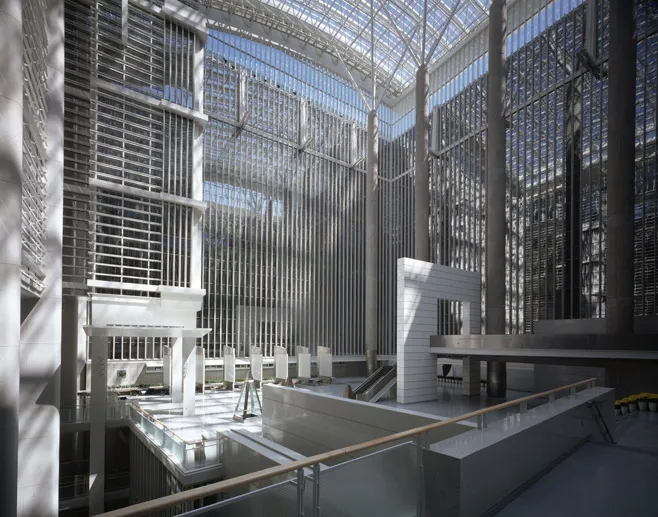
World Bank headquarters, Washington, D.C. Photo © Michael Dersin, courtesy KPF
Kohn, who was 78 years old at the time, refused to allow his firm to split apart and decided to fight his protégé mano-a-mano. He moved to London with his wife Barbara Shattuck Kohn, an experienced investment banker, and managed to keep most of KPF’s employees there and its clients. When many of his contemporaries were retiring, Kohn relished the challenge of rescuing his London operations and keeping KPF on an upward trajectory.
Kohn didn’t give up on the firm’s plan for transition, soon making Katz president. For the next five years, the firm prospered with Katz as president and Kohn as chairman of the board. In 2014, Katz died suddenly at age 57. Kohn, who loved sports and prided himself on developing a deep “bench” of talented players, then handed the reins to von Klemperer, who continues as president today.
“Gene brought together the art of architecture and the commerce of building cities. He presided over the creation of some of the greatest city centers in the world,” said von Klemperer in a recent interview, referring to the firm’s multiple projects in places like Tokyo, Shanghai, London, and New York. “He was a conductor, not a soloist, and got everyone to play together.”
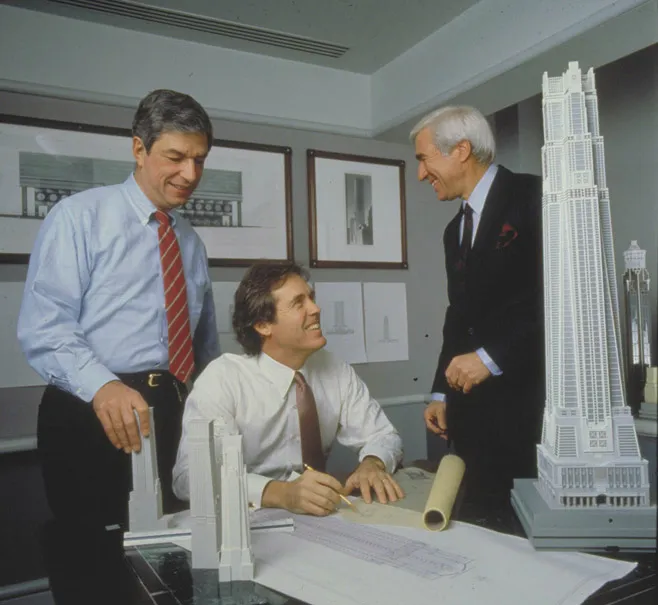
Sheldon Fox, Bill Pedersen, and Gene Kohn, left to right.
Photo courtesy KPF
“He was an optimist who was always looking forward to the next opportunity,” noted Pedersen. “But he surrounded himself with other kinds of people like Shelley and me, who were more skeptical.” Pedersen remembered Kohn pushing the firm to enter the competition for the World Bank headquarters in Washington, D.C., even though he knew hundreds of other architects from around the globe were aiming for the same prize. “My initial reaction was to say ‘No.’ His was to say, ‘Let’s do it.’” KPF won the job and the building opened in 1996 to wide acclaim, including a glowing review by Benjamin Forgey in the Washington Post. It later earned a national Honor Award from the AIA.
Kohn understood the importance of good clients to the creation of good architecture. For many years he taught a class at the Harvard Business School, “basically training future clients,” explained Pedersen.
Although he became friends with powerful people such as King Charles III of England, Guggenheim director Thomas Krens, and developer Minoru Mori, “he never pretended to be anything but a guy from Philadelphia,” noted von Klemperer. “That was part of his charm.”
Looking for a reprint of this article?
From high-res PDFs to custom plaques, order your copy today!