Architectural Record
search
cart
facebook twitter linkedin youtube
  • Sign In
  • Subscribe
  • Sign Out
  • My Account
Architectural Record
  • NEWS
    • Latest News
    • Awards
    • Interviews
    • Obituaries
    • Podcasts
      • Design:Ed Podcast
      • Sponsored Podcasts
  • OPINION
    • Book Reviews / Excerpts
    • Exhibition Reviews
    • Forum
  • EXCLUSIVES
    • Videos
    • Design Vanguard
    • Top 300 Firms
    • Sponsored Content
    • Sponsored eBooks
    • From the Archives
  • CONTINUING ED
    • Editorial Continuing Ed
    • CE Center
    • CE Academies
  • PROJECTS
    • Buildings By Type
    • Reuse & Renovation
    • Museums & Arts Centers
    • Colleges & Universities
    • Multifamily Housing
    • Interiors
    • Lighting
    • Kitchen & Bath
  • HOUSES
    • Record Houses
    • House of the Month
    • Featured Houses
  • PRODUCTS
    • Products by Category
    • Record Products of the Year
    • Latest Products
  • EVENTS
    • Dates & Events
    • Record on the Road
    • Innovation Conference
    • Sustainability in Practice
    • Women In Architecture
    • Webinars
    • Ad Excellence Awards
    • AIA 2026 Videos
    • Submit an Event
  • CONNECT
    • Ask RECORD AI
    • Newsletters
    • Contact
    • Advertise
    • Editorial Calendar
    • Store
    • Customer Service
  • SUBMIT
    • Submission Guidelines
    • RECORD Competitions
  • MAGAZINE
    • Subscribe
    • My Account
    • Digital Edition
    • Current Issue
    • Firm Pass
    • Historic Archive
Architecture NewsProjectsWood Projects

Belgium’s Meise Botanic Garden Unveils Hyperboloid Pavilion Showcasing the Possibilities of Timber
By Pansy Schulman
Meise Green Ark Lead.jpg

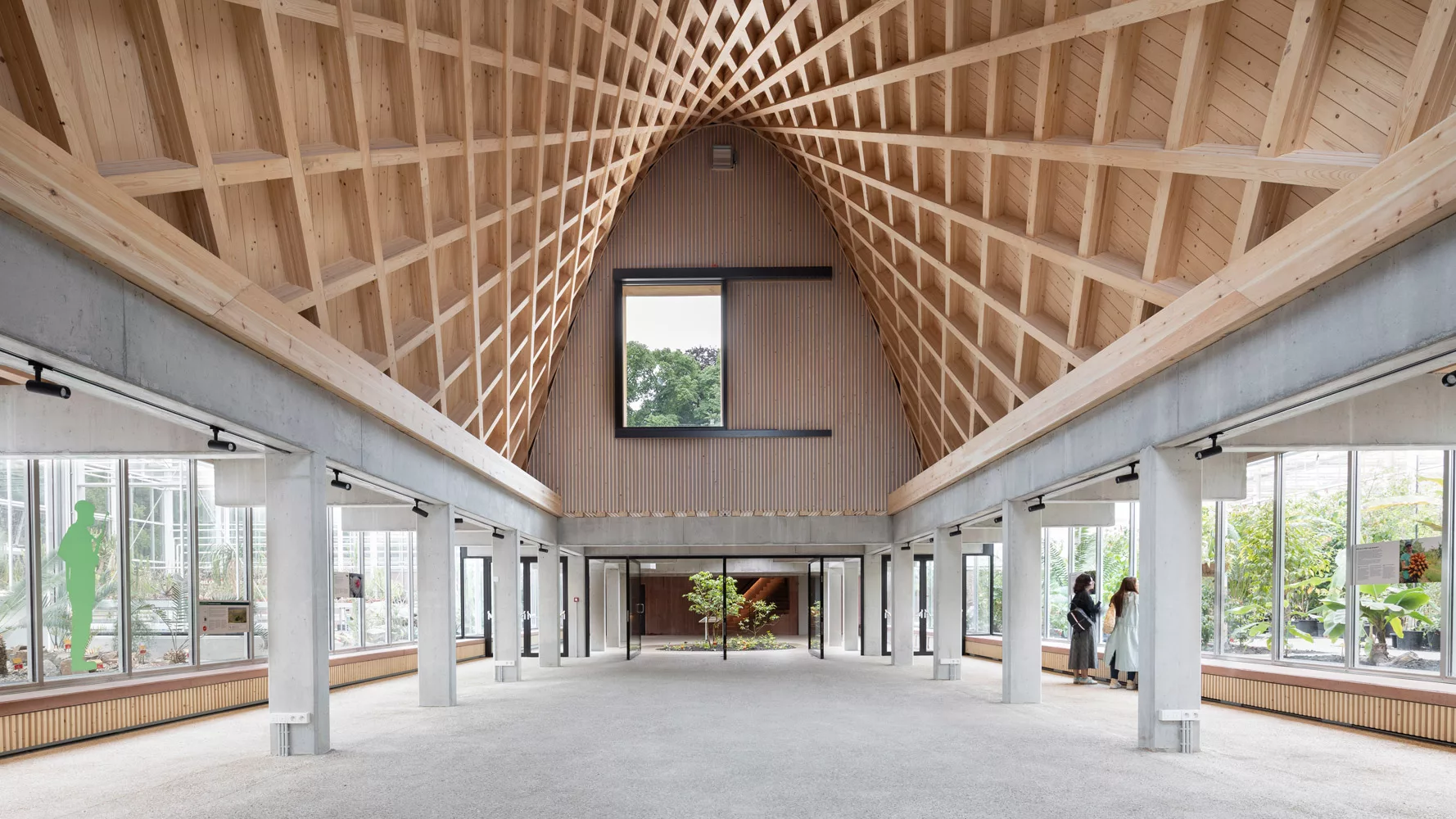
Green Ark Visitor Center, Meise Botanic Garden, Belgium.Photo © NU architectuuratelier

July 29, 2024
✕
Image in modal.

In May, the Meise Botanic Garden in Belgium unveiled the Green Ark project, a comprehensive renovation and expansion comprising 82,000 square feet of new and improved greenhouse facilities. Anchoring the new complex is a striking hyperboloid visitor’s pavilion, designed by Belgian firm NU architectuuratelier, which showcases the material potential of timber and leverages the latest sustainable technology. The complex structure was inspired by Felix Candela’s Cosmic Rays Pavilion (1951) in Mexico City, and constructed using Kebony Clear wood, a sustainable alternative to tropical hardwood.
Meise Green Ark

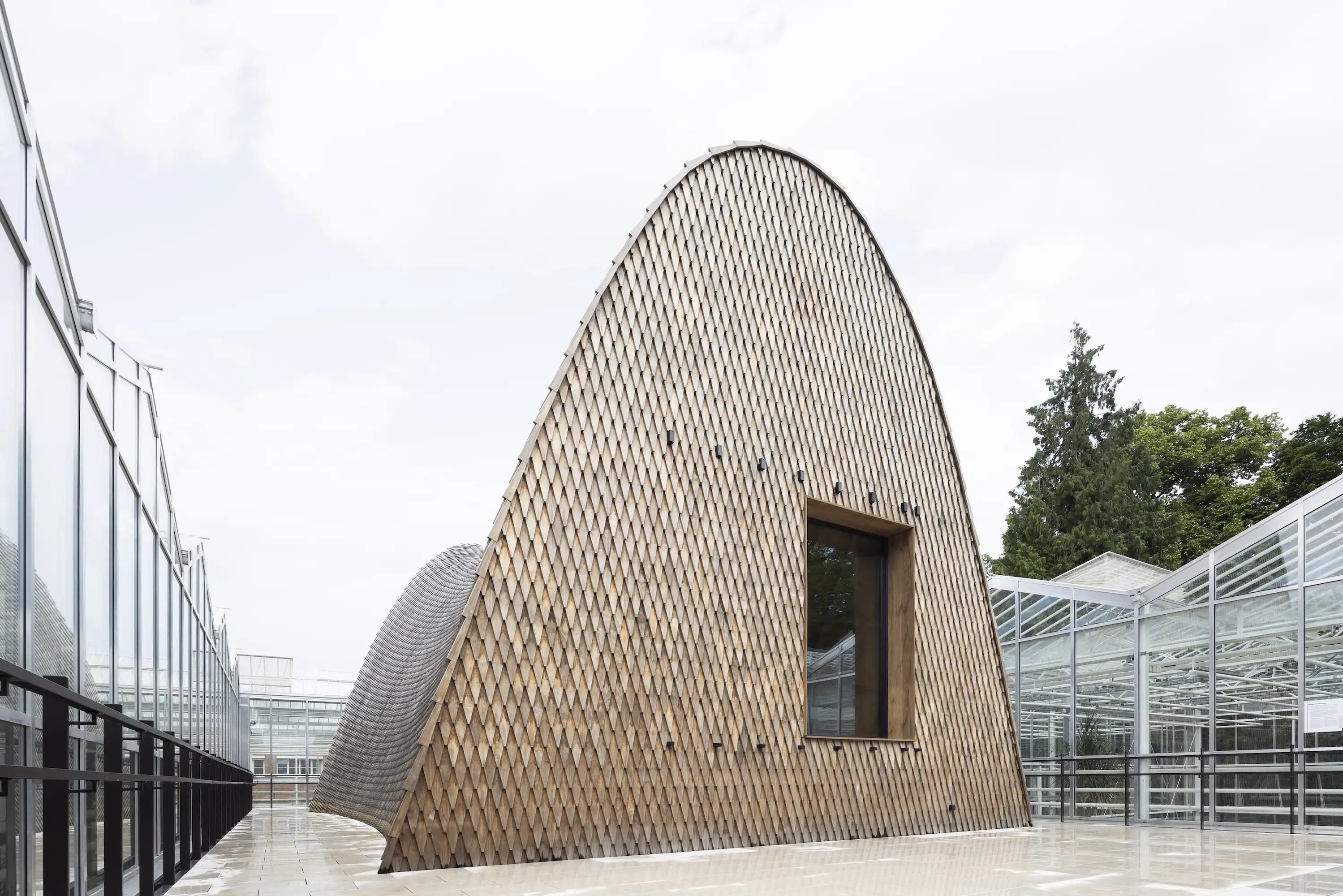
The 25,000-square-foot building serves as education hub and public welcoming center. Photo © NU architectuuratelier

Meise Botanic Garden, established in 1797 in Brussels, is one of the world’s largest conservatories of endangered plant species. In 1938, it relocated to its current 227-acre home on the stately grounds of Bouchout Castle in Meise, a Flemish municipality just north of the Brussels-Capital Region. Prior to the Green Ark initiative, the garden’s leaky and outdated facilities were sorely in need of an update. Many of its greenhouses, largely built in the 1930s and 40s, were deteriorating and posed safety risks, their interiors strung with ceiling-level nets to prevent falling glass from injuring workers and plant life below.

The renovation prioritized the preservation of the garden’s vast repository of species—numbering over 23,000 and representing 6 percent of the world’s known plant species—an endeavor that requires highly controllable growing environments. Overseen by an interdisciplinary team of state organizations, manufacturers, and designers including Belgian woodworking studio De Keyser Wood Industry, NU architectuuratelier, design studios Archipelago and Mouton, and general contractor Van Poppel, the new complex of 22 greenhouses (each with a different bioclimate) also integrates a rainwater harvesting system and efficiency-minded technologies that cut the facility's energy consumption in half.
Meise Green Ark
Meise Green Ark

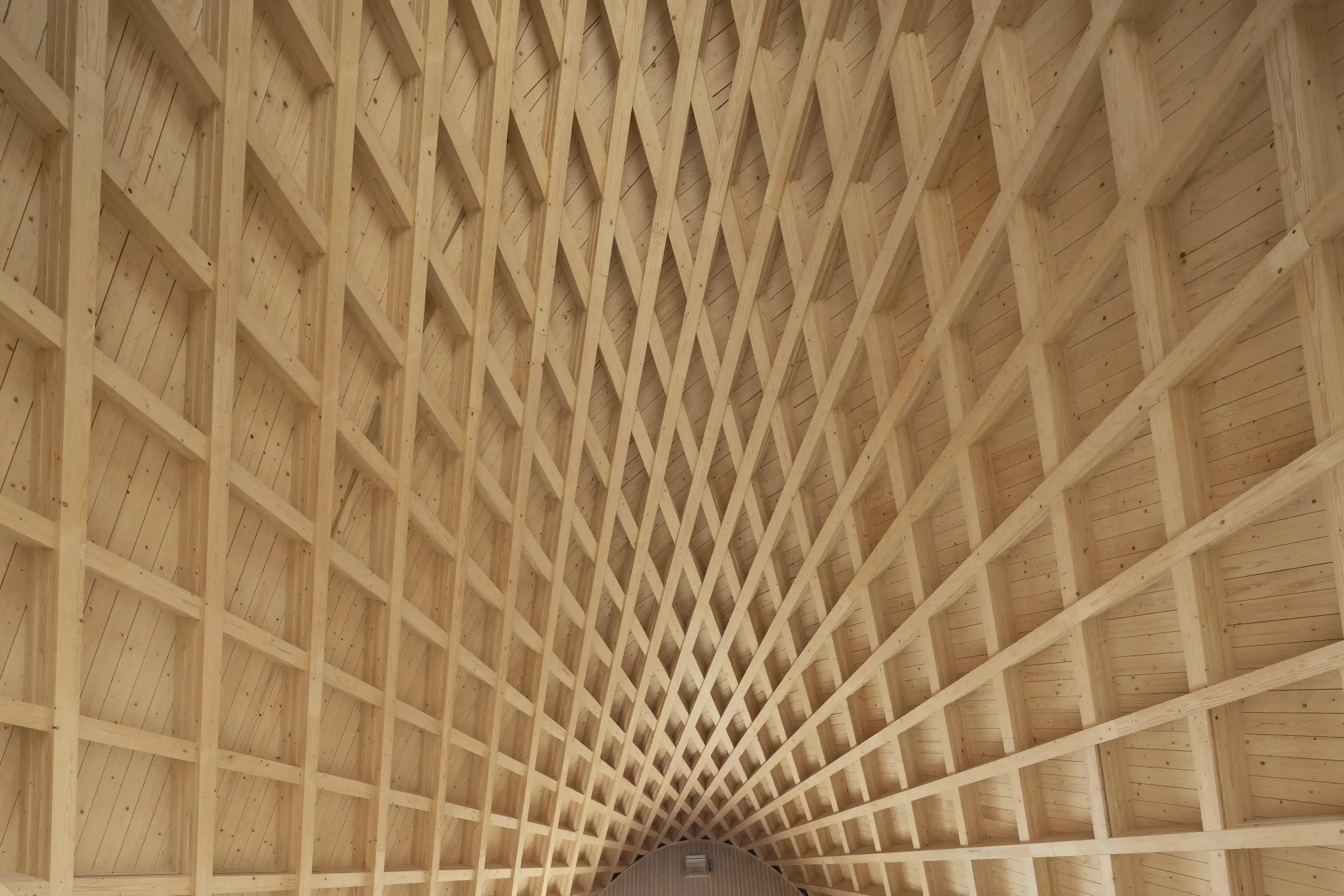
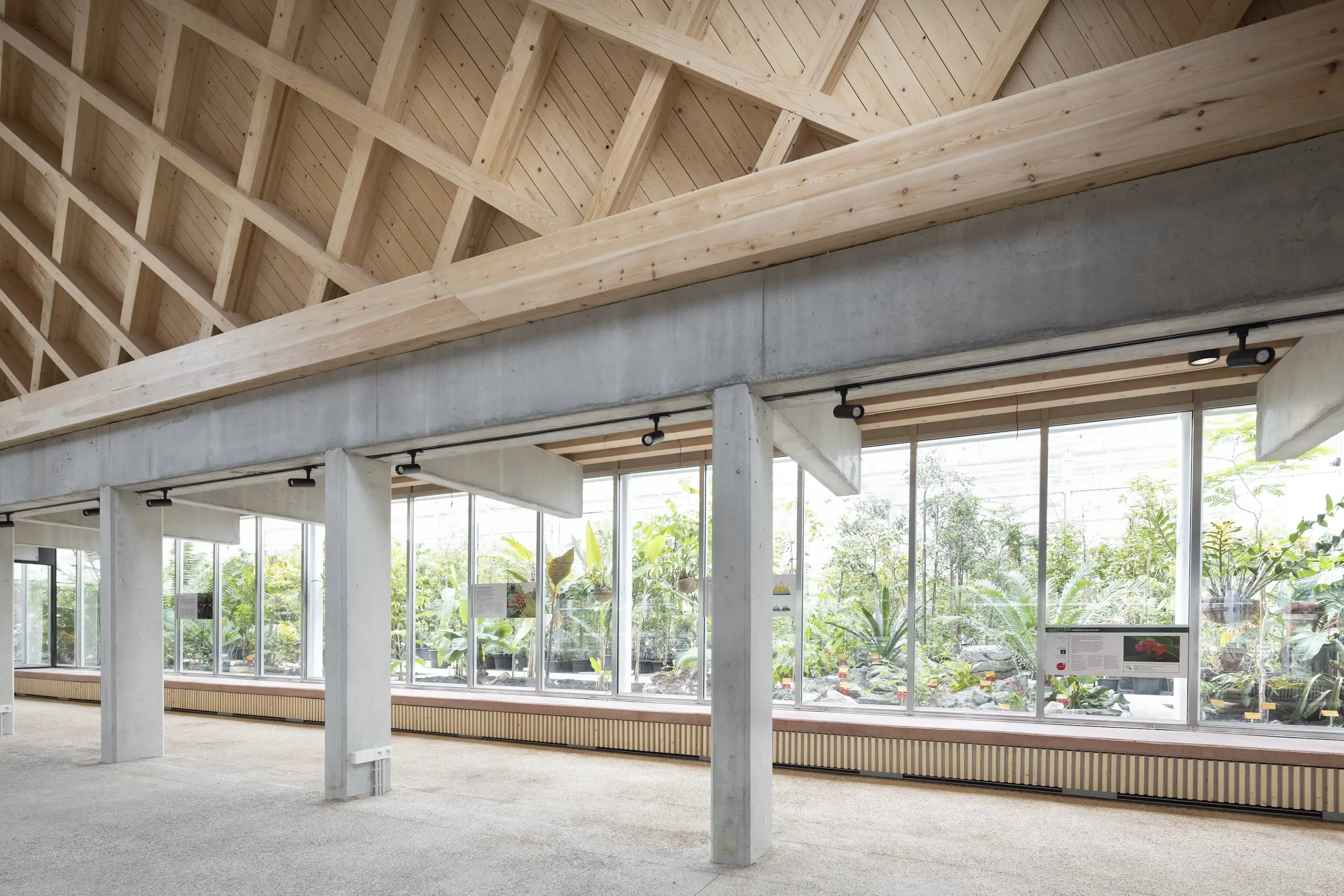
The timber "shell" rests on a concrete basin-type structure. Glazing on the ground level allows for panoramic views into the adjoining greenhouses. Photos © NU architectuuratelier 

The 25,000-square-foot visitor’s pavilion, which sits at the heart of the new sprawl of facilities, was conceived by Ghent-based NU with the Flemish government and De Keyser as a public education center and as a way for visitors to experience the garden’s natural splendor from a distance, protecting the fragile flora in the surrounding greenhouses. Resting on a concrete basin-type structure, the arched timber roof was made with stacked wooden Kebony planks, creating a rigid but sturdy “shell” with a vaulted interior space that showcases the naked timber lattice structure. The timber structure is supported by laminated veneer lumber gables and a wooden ring beam incorporated into the basin below.

Glazing on the ground level allows for panoramic views into the glass-fronted greenhouses that surround it, and a flat terrace deck outside provides elevated vistas and tactile access to the pavilion roof’s scale-like cladding, which is made from Kebony wood shingles. The roof’s dramatic swoop also allows it to function as a rainwater collection system.
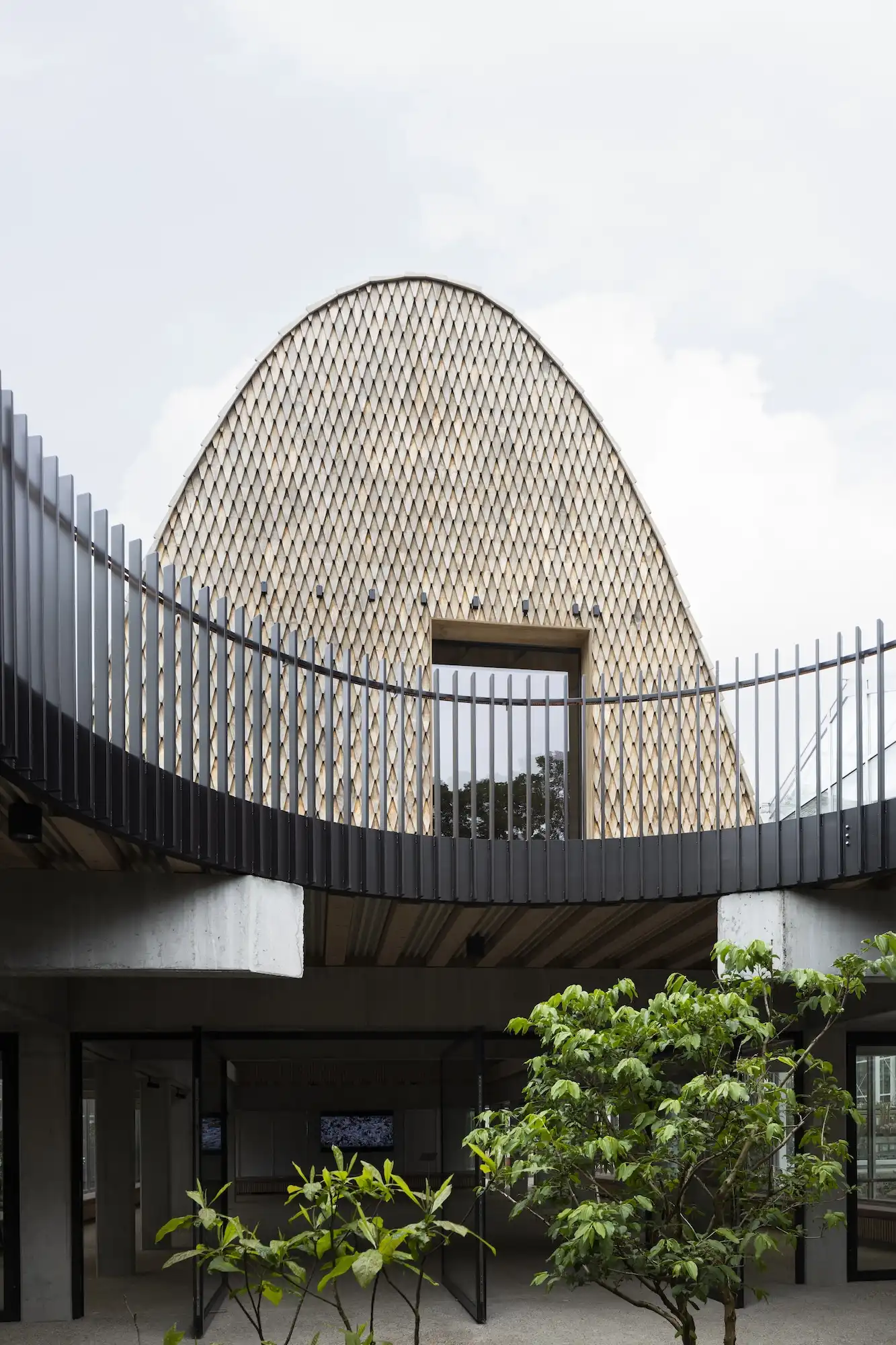
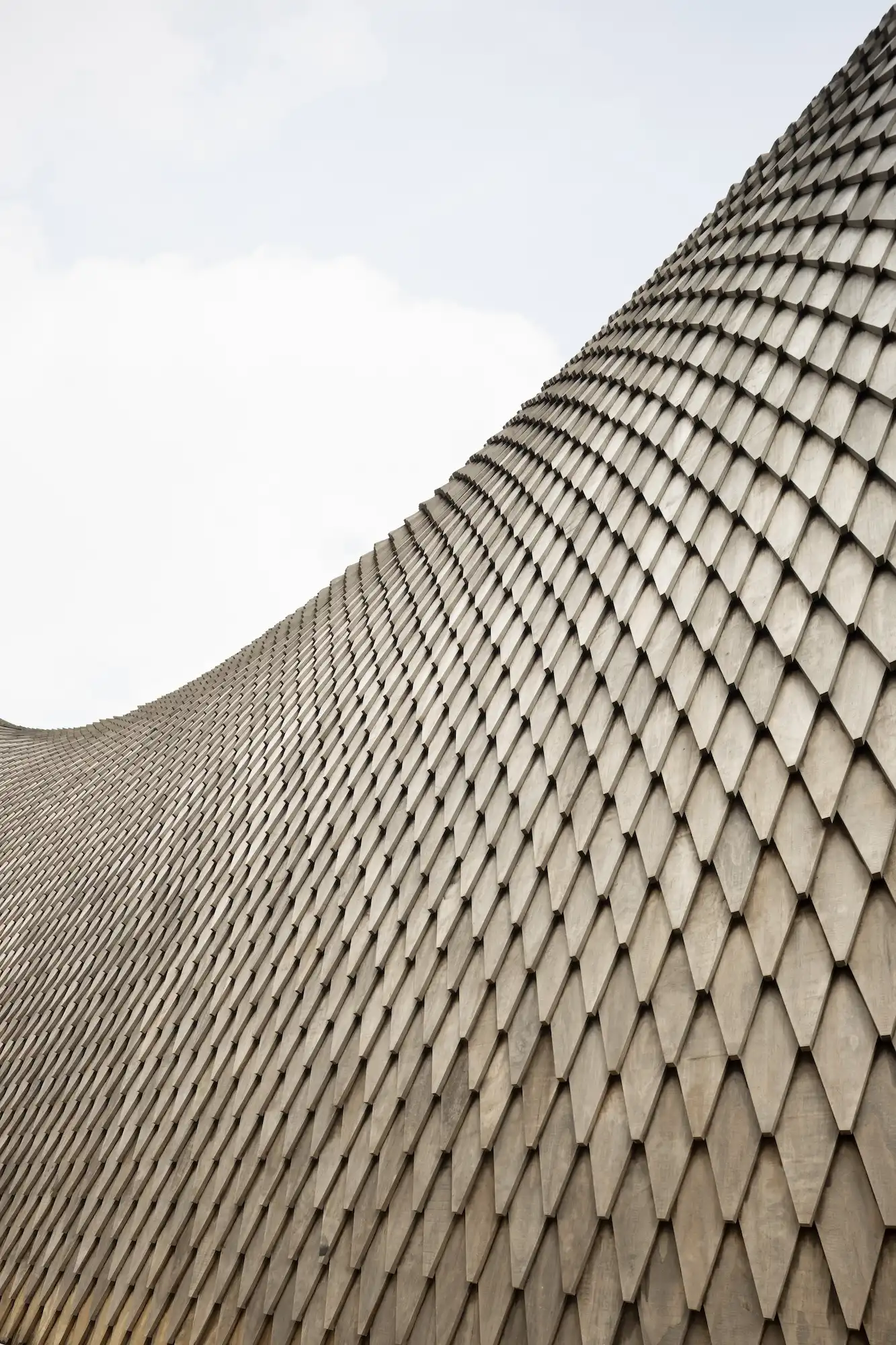
Meise Green Ark
Meise Green Ark

The Ark's dramatically swooping roof, clad with Kebony wood shingles, allows it to function as a rainwater collection system. Photos © NU architectuuratelier 

Headquartered in Norway, Kebony’s wood modification process, according to the company,  involves treating FSC-certified softwood, typically pine, with 99 percent bio-based and renewable chemicals. This process permanently alters the wood’s cellular structure, forming furan polymers within the cell walls. The result is a material that rivals tropical hardwood in terms of durability, dimensional stability, and hardness, but with a significantly reduced environmental footprint. While tropical hardwoods can take 80-200 years to mature, the modified softwood used in this project reaches harvestable size in just 25-30 years.

As global biodiversity faces unprecedented threats from climate change and habitat loss, institutions like the Meise Botanic Garden play an increasingly crucial role in conservation efforts. The Green Ark project, which also includes a new seed bank connected to the pavilion, demonstrates how innovative architecture can enhance a scientific institution's capacity to address these challenges—both of preservation and, equally important, that of cultivating public education and support.

Looking for quick answers on architecture and design topics?
Try Ask RECORD, our new smart AI search tool.
Ask RECORD →

KEYWORDS: Belgium mass timber timber construction

Share This Story

Looking for a reprint of this article?
From high-res PDFs to custom plaques, order your copy today!
Pansy Schulman is a former associate editor for Architectural Record.

Post a comment to this article

Report Abusive Comment

Subscription Center
  • Create an Account
  • Start a Subscription
  • Manage My Account
  • Sign Up for Newsletters
  • Visit Customer Service
  • Update Preferences

More Videos

Sponsored Content

Sponsored Content is a special paid section where industry companies provide high quality, objective, non-commercial content around topics of interest to the Architectural Record audience. All Sponsored Content is supplied by the advertising company and any opinions expressed in this article are those of the author and not necessarily reflect the views of Architectural Record or its parent company, BNP Media. Interested in participating in our Sponsored Content section? Contact your local rep!

close
  • 3D configurator
    Sponsored byDoorBird

    How DoorBird’s 3D Configurator Is Redefining Customization Across Residential and Commercial Design

  • interior of modern office
    Sponsored byCurrent

    The Downlight's Second Life: Why Below-Ceiling Serviceability Is the Specification Detail That Matters Most

  • cold storage facility
    Sponsored byCarlisle SynTec Systems

    How Architects Can Design More Continuous Cold Storage Envelopes

DESIGN:ED Podcast
Listen to Architectural Record’s DESIGN:ED Podcast

Events

July 22, 2026

Water Containment Waterproofing: Best Practices and System Selection

Credits: 1 AIA LU/HSW; 1 AIBD P-CE; 0.1 ICC CEU

Examine waterproofing strategies for water containment structures that enhance durability, prevent failures, and support long-term building performance.

July 29, 2026

Adaptive Reuse Reimagined: Designing Multifamily Housing from Existing Buildings

Credits: 1 AIA LU/HSW; 1 AIBD P-CE; 0.1 ICC CEU; 1 IIBEC CEH

Examine adaptive reuse envelope strategies that improve energy performance, preserve architectural character, and transform existing buildings into high-performing multifamily housing.

View All Submit An Event

Products

Architectural Detailing: Function, Constructibility, Aesthetics, 4th Edition

Architectural Detailing: Function, Constructibility, Aesthetics, 4th Edition

See More Products

Popular Stories

7480 N Delaware

A Portland Apartment Building by Daniel Toole Architecture Stands as a Study in Adaptation

Goldring Woldenberg Park

Continuing Education: Postindustrial Waterfronts

Chacarita Alta Housing

In Paraguay’s Capital, MOS and Adamo-Faiden Rethink Public Housing for Residents of Informal Settlements

Kaya, San Diego

With San Diego’s Kaya, Jeff Svitak Melds Housing Density with Community

Tang Wing, NY Historical

RAMSA Completes an Inconspicuous Addition to the New York Historical

Water Containment Waterproofing: Best Practices and System Selection - Free Webinar - July 22, 2026

Related Articles

  • Chinook Hospital

    Aluminum Honeycomb: The Material Reshaping the Possibilities of Modern Facades

    See More
  • A sneak peek at Weiss/Manfredi's new visitor center for the Brooklyn Botanic Garden

    See More
×

The latest news and information

#1 Source for Architectural Design, News and Products

SUBSCRIBE
  • RESOURCES
    • Advertise
    • Contact Us
    • Submit
    • Store
  • ACCOUNT CENTER
    • Create an Account
    • Start a Subscription
    • Manage My Account
    • Sign Up for Newsletters
    • Visit Customer Service
    • Update Preferences
  • PRIVACY
    • PRIVACY POLICY
    • TERMS & CONDITIONS
    • DO NOT SELL MY PERSONAL INFORMATION
    • PRIVACY REQUEST
    • ACCESSIBILITY
  • SERVICES
    • Marketing Services
    • Reprints
    • Market Research
    • List Rental
    • Survey/Respondent Access
  • STAY CONNECTED
    • Linkedin
    • Facebook
    • Instagram
    • YouTube
    • X (Twitter)

Copyright ©2026. All Rights Reserved BNP Media, Inc. and BNP Media II, LLC.

Design, CMS, Hosting & Web Development :: ePublishing