Books
‘Women Architects at Work’ Uncovers Overlooked Contributors to Modernist History
Excerpt: ‘Women Architects at Work: Making American Modernism’, by Mary Anne Hunting and Kevin D. Murphy.
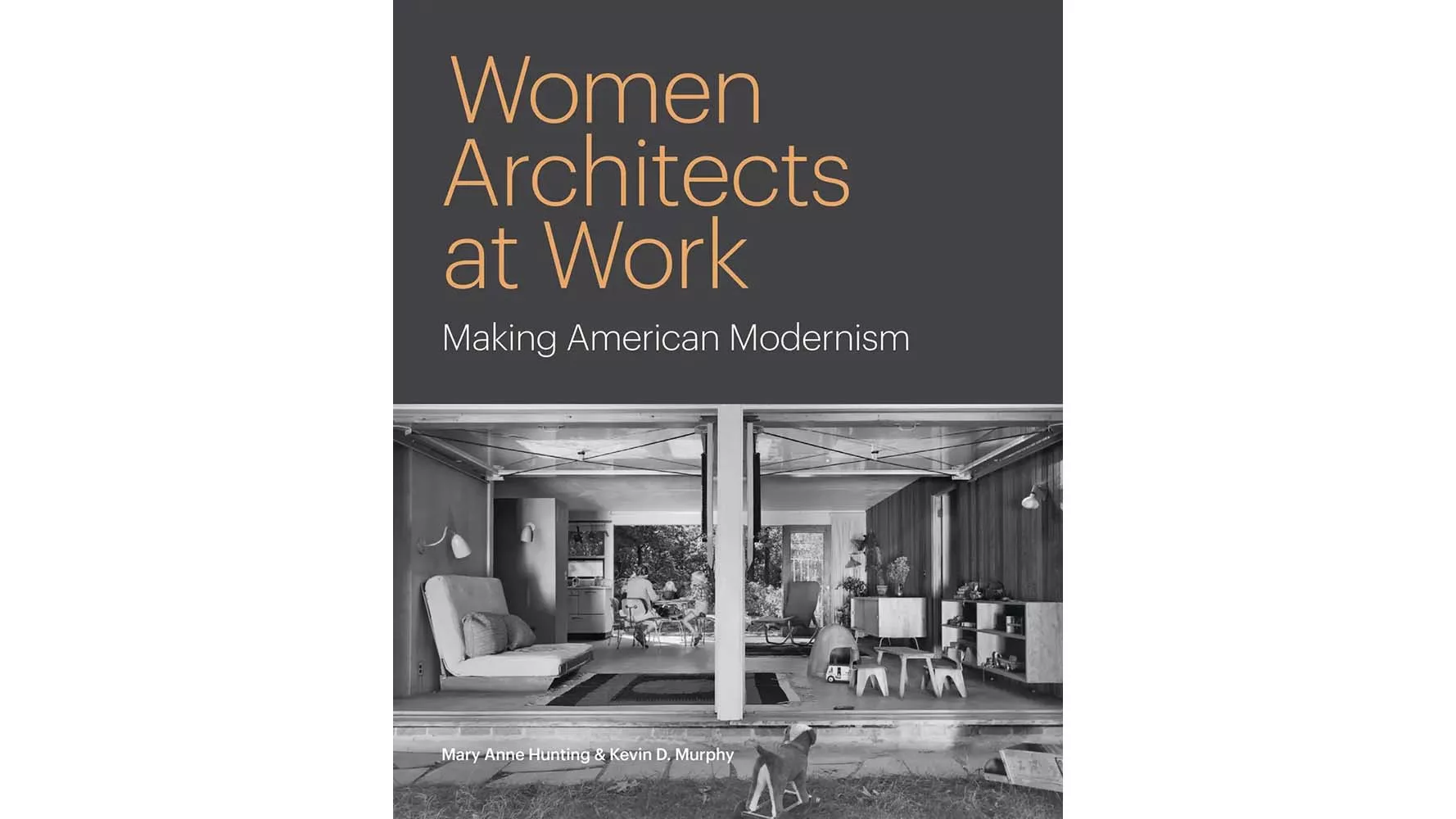
Women have been mostly missing from the history of Modernism. Authors Mary Anne Hunting and Kevin D. Murphy seek to correct the record. In this excerpt from their book, the authors introduce a number of women whose significance to Modernism has been overlooked.
In the first half of the 20th century, the number of women in the United States trained in architecture markedly trailed that of men. Paradoxically, though, the divergent forms of their practice allowed them to reach a large and broad audience to advance Modernism. Many women in architecture effectively advocated for a particular kind of Modernism, in which the International Style was balanced by a more “humanized” expression, as the architectural historian William H. Jordy identified modern buildings that also incorporated historical and regional references. Far from the simplified view presented in traditional histories of Modernism and the caricature advanced by Postmodernists, the modern movement was notably diverse. And, although women architects promoted it through a variety of means, their contributions are only occasionally documented in period literature. More often, they go unacknowledged or are forgotten.
The house Eleanor Agnes Raymond (1887–1989) designed in 1931 for her younger sister Rachel C. Raymond in Belmont, Massachusetts (regrettably demolished in late 2006), exemplified the new type of Modernism that inspired subsequent variations. Historic images of the house show that it possessed the geometric austerity of the 1920s villas of European Modernist architects, including André Lurçat, whose designs the Raymond sisters saw on their visit to France in 1928. At the same time, the building incorporated locally familiar materials and accents of strong color relating to on-site vegetation. The overall aesthetic of the Raymond house recalls how architectural historian Daniel P. Gregory described the wood-framed farmhouse designed in 1927 for his grandmother, Sadie Gregory, in Santa Cruz, California, by the Bay Area architect William Wilson Wurster: “It represented an in-between stage in the evolution of Modernism: not traditional, not avant-garde, but free-thinking and pragmatic.”
Raymond was humble and had no intention of creating a monument to herself in a signature style, as male architects tended to do. But, similarly to others’ in her extensive network of professional women, her design sensibility was informed by the unique design criteria established at the Cambridge School of Architecture and Landscape Architecture. Founded in 1916 in Cambridge, Massachusetts, the institution was distinguished for being exclusively dedicated to the professional education of women, most of whom were college graduates, frequently from the Seven Sisters. The school’s pedagogy progressed over time—from informal tutorials and occasional lectures to structured curricula composed of the histories of architecture and landscape architecture, graphics, freehand drawing, design, construction, and professional practice. Yet it never deviated from its core principle that a building and its corresponding landscape are to be considered a single design problem rather than two separate assignments, which was more customary. All entering students shared a broad first-year curriculum encompassing the fundamental elements of design, after which they could concentrate on their chosen discipline of either architecture, landscape architecture, or (beginning in 1935) “interior architecture.” Consequently, a centerpiece of the school’s method of training was collaboration both in and outside each woman’s chosen field. Though influenced by the evolving curricula at Harvard University, where most instructors were also employed, the Cambridge School was different in that its small size and gendered focus made it possible to adapt, to compensate for any perceived deficiencies of the students. The school was also able to respond to demand for more complex problems, expanding beyond the domestic realm, which was the stereotypical assignment for women and an early mandate of the school.
Indeed, the relegation of women architects to residential projects was a contentious issue at the Cambridge School and beyond. While some capitalized on the widely held belief that women had an innate affinity for domestic architecture by building successful practices as designers of single-family homes, others succeeded in winning a variety of commissions. For instance, Cambridge School alumna Elizabeth Hirsh Fleisher (1892–1975) was the lead designer of public-housing projects in Philadelphia as well as the more upscale Parkway House (1952), a conspicuously expressionistic apartment building on the Benjamin Franklin Parkway, undertaken while she was in a long-term professional partnership with Gabriel Blum Roth.
The comprehensive training of Cambridge School women gave them an edge in that each was prepared to expand beyond her own specialization into other areas of design. For instance, after Alice Morgan Carson (Hiscock; 1908–2001) earned degrees in both architecture and landscape architecture, she designed a handful of modern houses and worked as an acting curator at the Museum of Modern Art, but found her greatest success designing and selling high-end needlepoint kits. Still, none of the women we examined escaped the overarching problem that the field was fraught with sexism—in hiring practices, promotions, titles, assignments, salaries, and construction-site supervision. Women trained in architecture at coeducational institutions such as the Massachusetts Institute of Technology (MIT)—where they were allegedly perceived as a “nuisance”—were vulnerable to prejudice from the time they were first admitted, in the late 19th century. Regardless of where they trained, many were able to innovate meaningful professional situations in which they could apply their knowledge and skills to move beyond entry-level drafting work. Advancing Modernism in a variety of capacities was the path to their success.
Some women developed national professional reputations during their lifetimes, notably the San Francisco–based architect Julia Morgan (1872–1957), who has continued to be known to a relatively large public. Others were widely recognized as designers in their own times but later largely overlooked, for instance Victorine du Pont Homsey (1900–98), a Cambridge School architecture graduate, and Ruth Reynolds Freeman (1913–69), an architecture graduate from Cornell University. Though they collaborated with their architect husbands, in Delaware and Vermont, respectively, in designing groundbreaking modern buildings, they have received relatively little scholarly attention. Among the women who earned architecture degrees at MIT before World War II, a few—like Marion Mahony Griffin (1871–1971) who worked for Frank Lloyd Wright and then with her husband, Walter Burley Griffin—have been recognized for their contributions to Modernism; others, such as Elizabeth Coit (1892–1987), who authored important studies of housing issues in the 1940s, remain obscure. But they all contributed to and advocated for American Modernism in diverse ways.
At various points in their careers, women architects created a wide array of exhibitions, publications, and works of art and design, not to mention the buildings they planned and communities they developed under the rubric of Modernism. Their near invisibility in the history of Modernism, however, has resulted in a canon of architects that overwhelmingly consists of white males. Without the inclusion of women in the narrative of Modernism, our comprehension of this dynamic movement is impoverished.
Looking for quick answers on architecture and design topics?
Try Ask RECORD, our new smart AI search tool.
Ask RECORD →
Looking for a reprint of this article?
From high-res PDFs to custom plaques, order your copy today!