RECORD Forum
Skyline for One: Building Tall in Europe
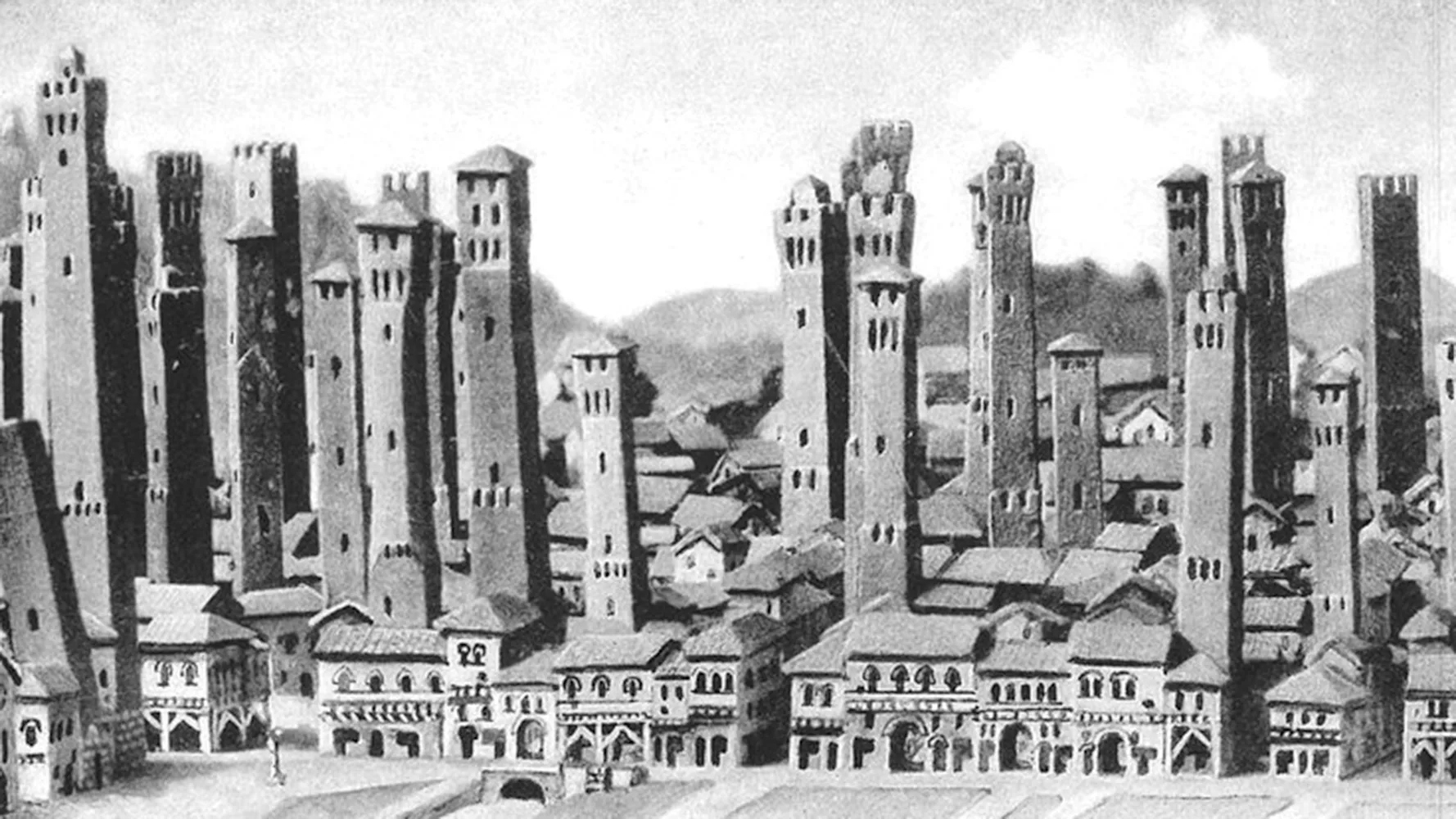
Bologna used to look a lot like Manhattan.
In the 12th century, nearly 100 slender towers pierced the skyline of the central Italian city. Monuments to civic rivalry and aristocratic pride, several topped 300 feet. More status symbol than comfortable dwelling, these narrow, windowless buildings were driven by a desire for spectacle rather than necessity.
Nearly all have been obliterated by centuries of damage, collapse, or demolition. Among the survivors is Torre Asinelli, casting its slender shadow 320 feet above the city center. It is Bologna’s most prominent emblem of a lofty architectural heritage—one of Europe’s earliest flirtations with height for height’s sake.
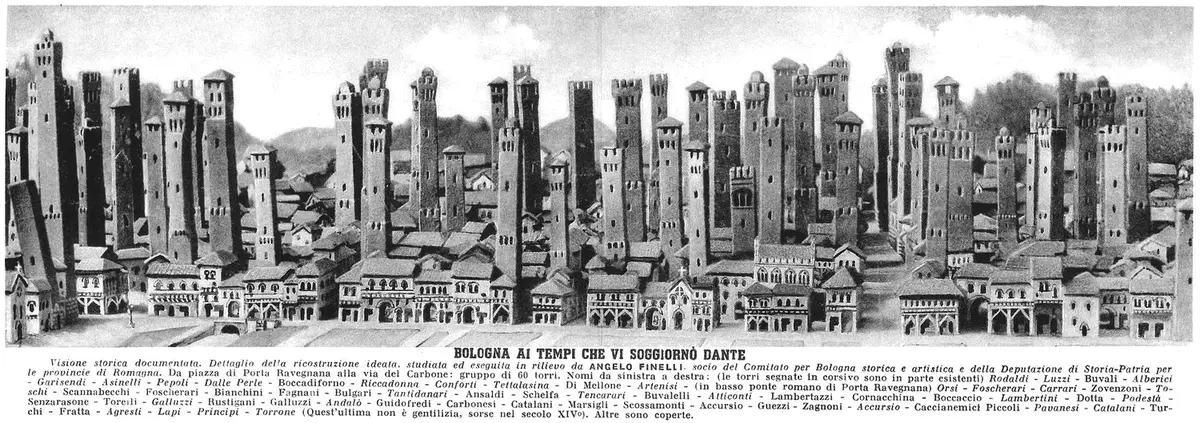
Many of the historic towers in Bologna, Italy, have long since disappeared. Image © Angelo Finelli, click to enlarge.
For the next 700 years, ecclesiastical ambition pitted cathedrals from Beauvais to Ulm as rivals for the title of Europe’s tallest building. The race ended in 1889, when the wrought iron Eiffel Tower transfixed Paris, dwarfing every building on the continent—and globally—at 986 feet.
Rather than usher in a new vertical age, Gustave Eiffel’s tower represented an achievement Europeans never fully embraced. Unlike their American counterparts, they recoiled from skylines of high-rise strivers.
Opposition was already brewing, favoring buildings of more modest height. In 1898, a writer for Architectura magazine called architect Willem Molenbroek’s 138-foot Art Nouveau Witte Huis in Rotterdam “an American product,” warning: “One can only hope that we will be spared . . . they may find them beautiful, but we certainly do not.”
The ambivalence lingered, even as the era’s leading architects drafted proposals for soaring structures. By the 1920s, Mies van der Rohe had planned curvilinear and star-shaped shards of glass for Berlin, while Le Corbusier dreamed of leveling Paris and placing cruciform towers in parkland. Their ambitions largely fell flat at home.
Looking for quick answers on architecture and design topics?
Try Ask RECORD, our new smart AI search tool.
Ask RECORD →
Meanwhile, skylines stretched ever higher in the United States. The Philadelphia Saving Fund Society building brought International Style design to new heights, and Rockefeller Center fused verticality with urban vitality. New York’s Empire State Building, topping out at 1,250 feet in 1931, would reign as the world’s tallest for four decades.
Postwar reconstruction opened the door to new building types in devastated Europe, but sprouts of tall buildings often failed to materialize. The next wave of old-continent skyscrapers rose in solitary gestures, as the commercial high-rise began stalking cities from Antwerp to Zurich.
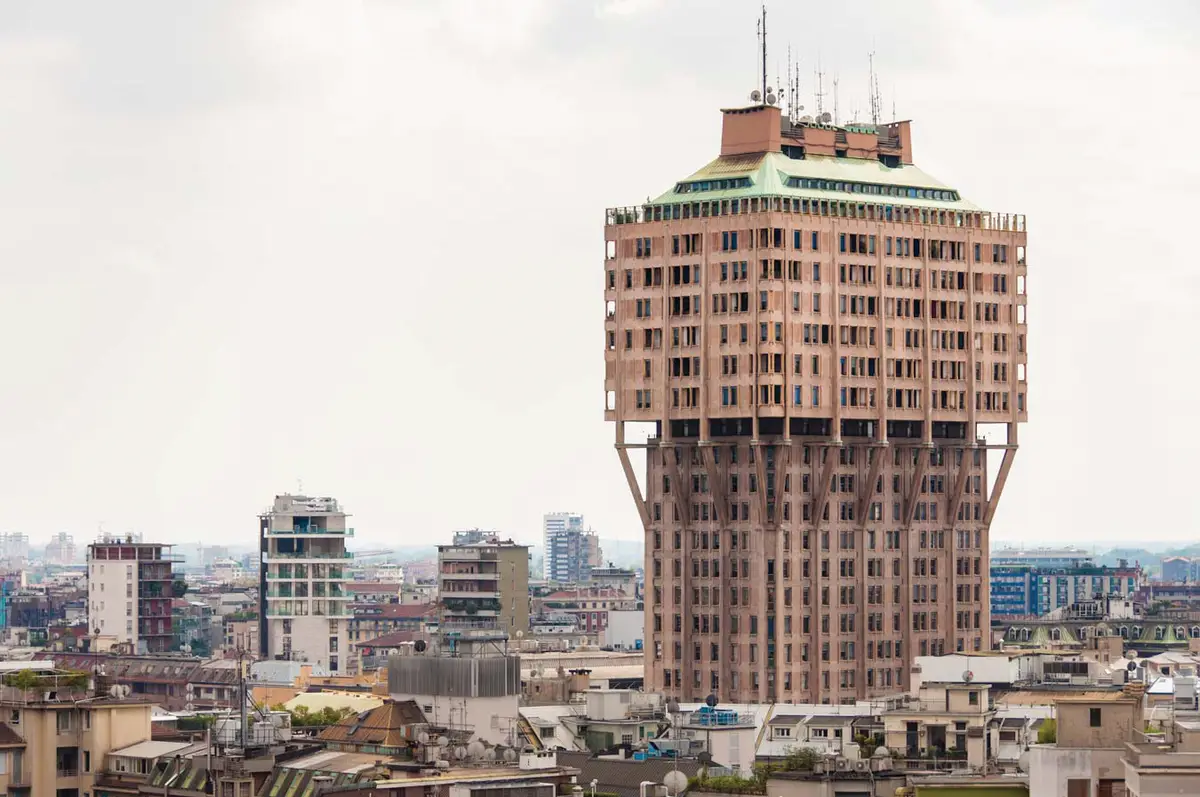
Milan was an early test case, where two experimental towers, both completed in 1958, were born out of World War II’s destruction. BBPR’s 250-foot-tall Torre Velasca was a hulking, mushroom-shaped swing at high-rise contextualism, with its pinkish stone cladding, projecting top block, and inverted flying buttresses echoing the city’s Gothic cathedral and medieval castle.
1
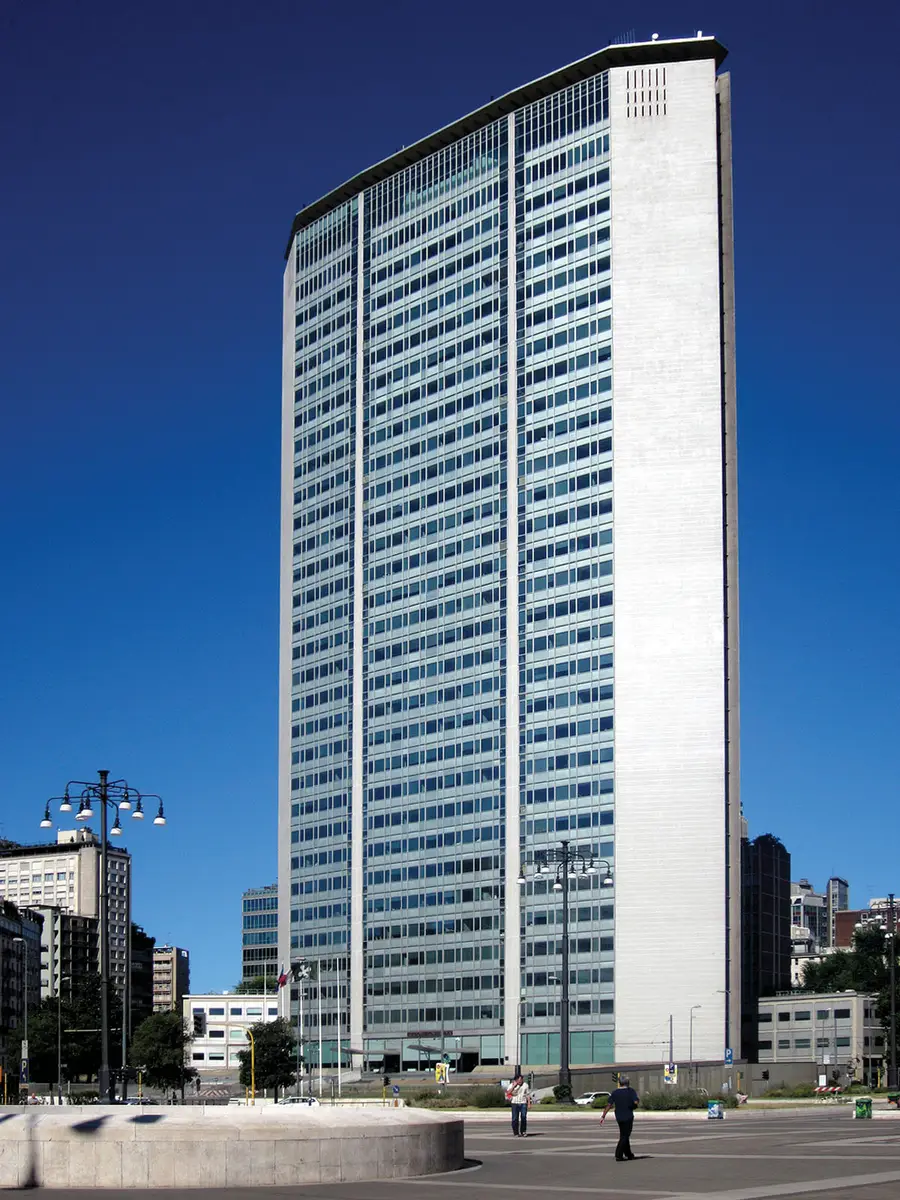
BBPR’s Torre Velasca (1) and Gio Ponti’s Pirelli Tower (2) made waves when they popped up on Milan’s skyline. Photos © Phillip Wong (1), IK’S World Trip (2)
2
Adjacent to the central train station, Gio Ponti and Pier Luigi Nervi’s razor-sharp, ultrasuave Pirelli Tower, at 417 feet, offered a future-forward counterpoint to Velasca’s fortresslike bulk. Both towers weathered early opposition and are now protected landmarks. The ostensible lessons from Velasca and Pirelli—that the skyscraper’s success couldn’t rest on vertical authority alone—went unremarked. Larger shocks loomed.
Fast-forward to Paris in 1968. Intended as a symbol of revitalization in a rundown central district, construction of the nearly 700-foot-tall Tour Montparnasse, France’s most audacious and controversial erection since Eiffel, triggered an instantly ferocious response—it was a hideous obsidian scar that didn’t so much redefine the skyline as shatter it.
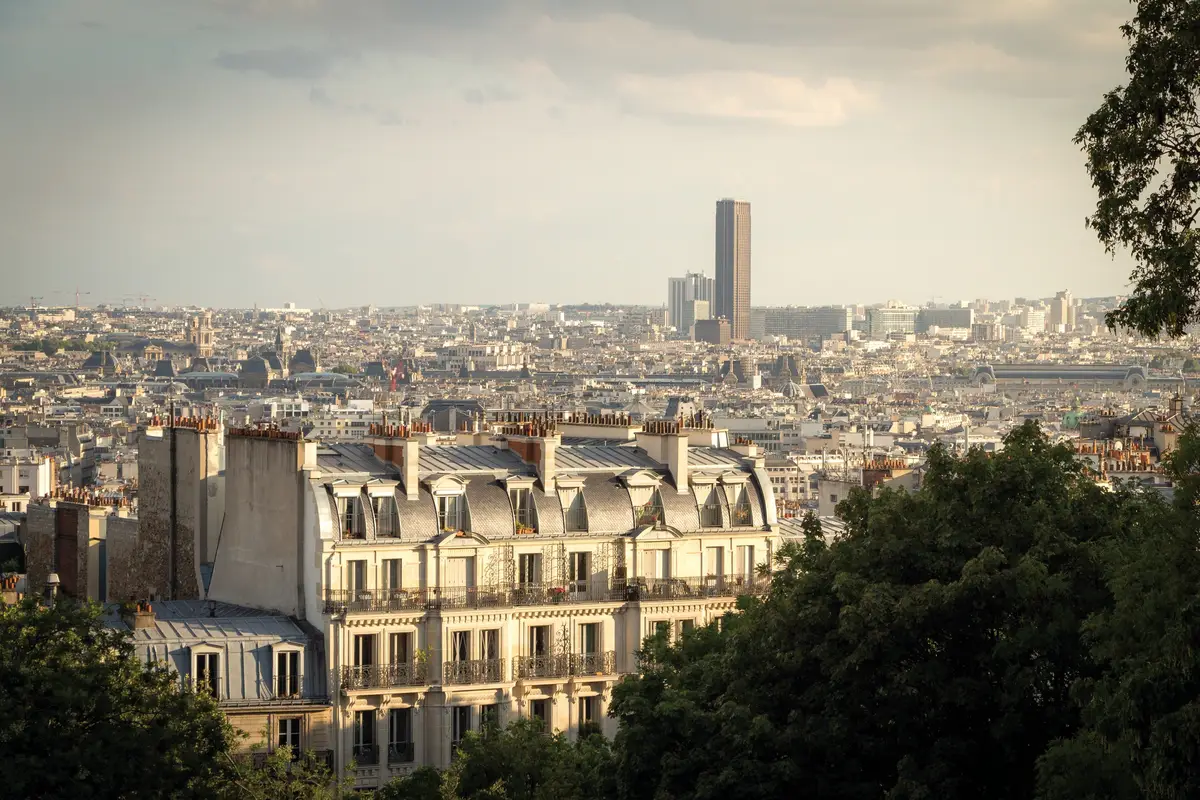
Visible from afar, Tour Montparnasse was one of the most controversial buildings to rise in Paris. Photo © J Ahrndt
The 59-floor provocation sparked another revolution in Parisian urban planning: a legal ban on buildings over seven stories, enacted shortly after Montparnasse topped out. More than one French politician even staked election fortunes on promising to raze it.
Despite continued exasperation with these unwelcome American imports, the solitary tower still beckons, its monumental scale capable of overpowering protest and providing sufficient visionary allure to investors, city planners, and political backers pining for an upright Bilbao effect.

Calatrava’s Turning Torso, in Sweden, is visible from across the Øresund strait in Denmark. Photo © Roland Halbe
Malmö, Sweden, is home to Santiago Calatrava’s 623-foot Turning Torso, completed in 2005, a stack of nine five-story cubes rotated around a central core. In blinding white, it sweeps up from the shoreline of this postindustrial city, a high-tech sculptural lighthouse of influx capital and luxury living tall enough for Copenhageners across the Øresund strait to see. Calatrava’s sculptural torso turned a few heads and pocketed some high-rise design awards, but no encores appeared on the skyline.
In Gothenburg, 174 miles up the Swedish coast from Malmö, work on SOM’s 806-foot-tall, $500 million luxury residential Karlatornet has just wrapped up. Another so-called beacon of revitalization with a torqued silhouette, outfitted in shimmering, faceted panels, it’s the new anchor of Lindholmen, a former shipbuilding hub turned high-tech innovation district, and the tallest building in the Nordic region.
These two Swedish giants are undoubtably eye-catching—slick, stylish, and sophisticated—but surreal aliens on the shore, ambitious outsiders seemingly indifferent to, or ignorant of, local urban etiquette. Is the traditional European skyline defenseless against the overpowering scale of these gargantuan additions? The limits of contextualism are only so elastic.
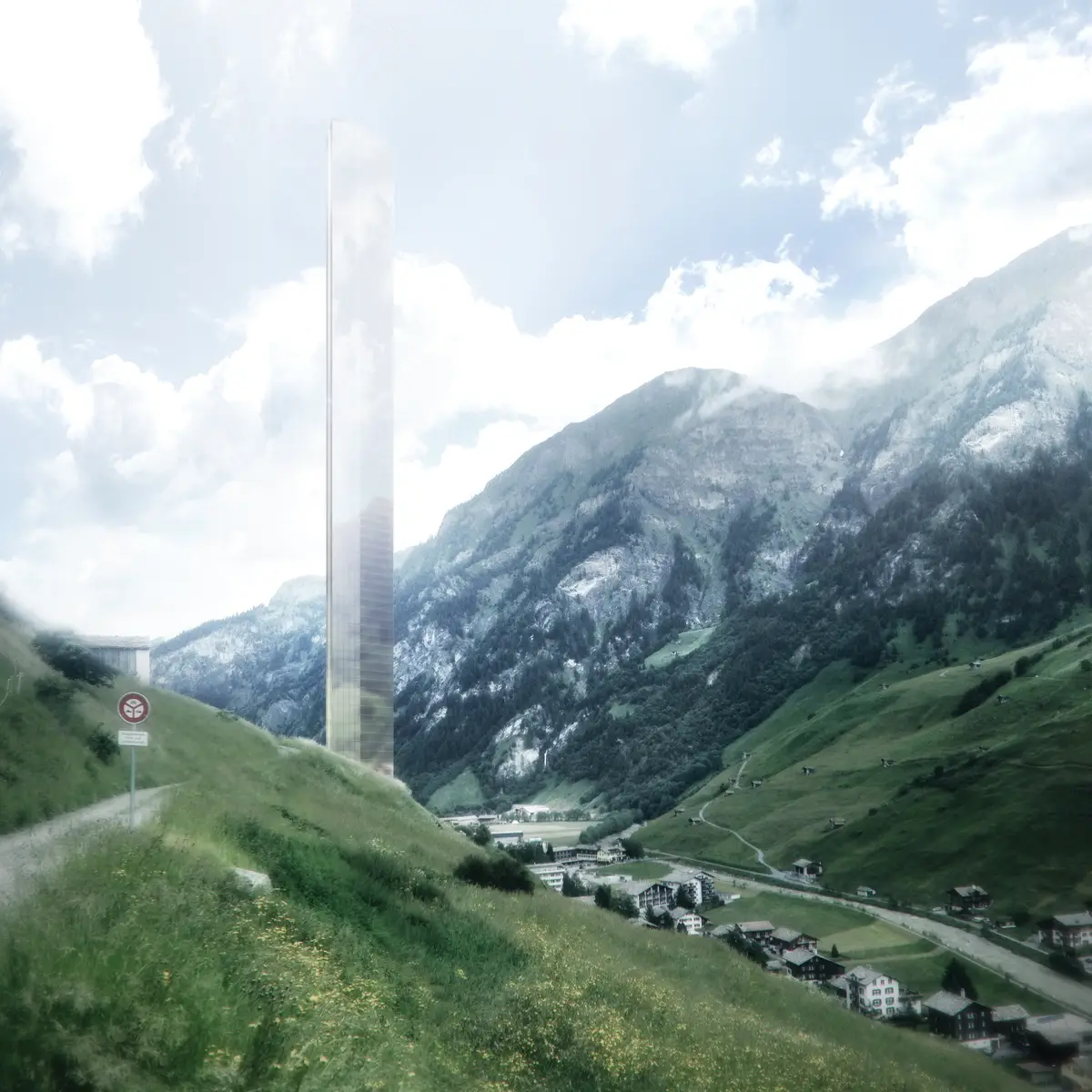
Morphosis proposed a tower, clad in mirrored glass, for the city of Vals high in the Swiss Alps. Image © Morphosis
A rural provocation reared in 2015, when Morphosis Architects released renderings of a 1,250-foot-tall tower for Vals—population 950—a Swiss hideaway already made famous by Peter Zumthor’s decidedly horizontal thermal baths. Morphosis proposed cladding the project in reflective glass, promising to make this “minimalist act” nearly invisible amid the Alpine landscape. The Vals tower drew global ire. A “gigantic mirror-clad middle finger” and an “obnoxious gesture inflicted on a sleepy small town,” said architecture critic Oliver Wainwright.
Throwing up a supertall in a mountain village is surely incendiary, but a Swiss Alp would scarcely register an edifice even twice the height. Might Mother Nature even welcome the competition? In any event, the developer has iced the proposal (for now)—and the Alps have grown a few more millimeters.
The current tallest building in Europe is St. Petersburg’s Lakhta Center (2019)—at 1,516 feet tall, among the 20 tallest globally—a twisted, supertall glass stalagmite in winter blue, visible 12 miles away from the Hermitage Bridge. It is handsome, regal even, but aloof and distanced from the city’s champagne and caviar splendor.
As the signifier of urban modernity, the skyscraper is a symbol Europe always recognized and, at least partly, understood, but distrusted and disliked. In truth, the skyscraper often upends the equilibrium of these cities, however lofty their medieval towers or cathedral spires. Europe’s historic skylines balanced height with human scale; the skyscraper simply overwhelms.
The successes, though few and far between, became icons. Eiffel is arguably the world’s most famous man-made monument; Pirelli is an undisputed design classic. What they have in common is an architectural aesthetic that transcended the existing urban fabric, recalibrating what the historic skyline could absorb and make part of its continuum. Put simply, they work.
Too many do not, but Europeans may also have the tall tower to thank for the increased focus on contextualism in urban planning. For every Pirelli success, there are double the number of Montparnasse monsters providing critical ammunition for preserving the low-slung skyline.
That hasn’t stopped developers, architects, and city planners from trying, even in Paris. Swiss firm Herzog & de Meuron’s long-delayed 590-foot Tour Triangle is the first skyscraper allowed to rise in the center since that brooding monolith topped out half a century ago.
Bologna’s towering achievements have long since been eclipsed; the skyward trend of thinking persists as European cities tackle urban renewal, the housing crisis, and densification. Despite the aesthetic fatigue all architectural movements face, the tall building, no longer novel, still retains its power to shock—and inspire.
Looking for a reprint of this article?
From high-res PDFs to custom plaques, order your copy today!