Lake|Flato and KSS Design Philadelphia’s Tallest Mass-Timber Structure
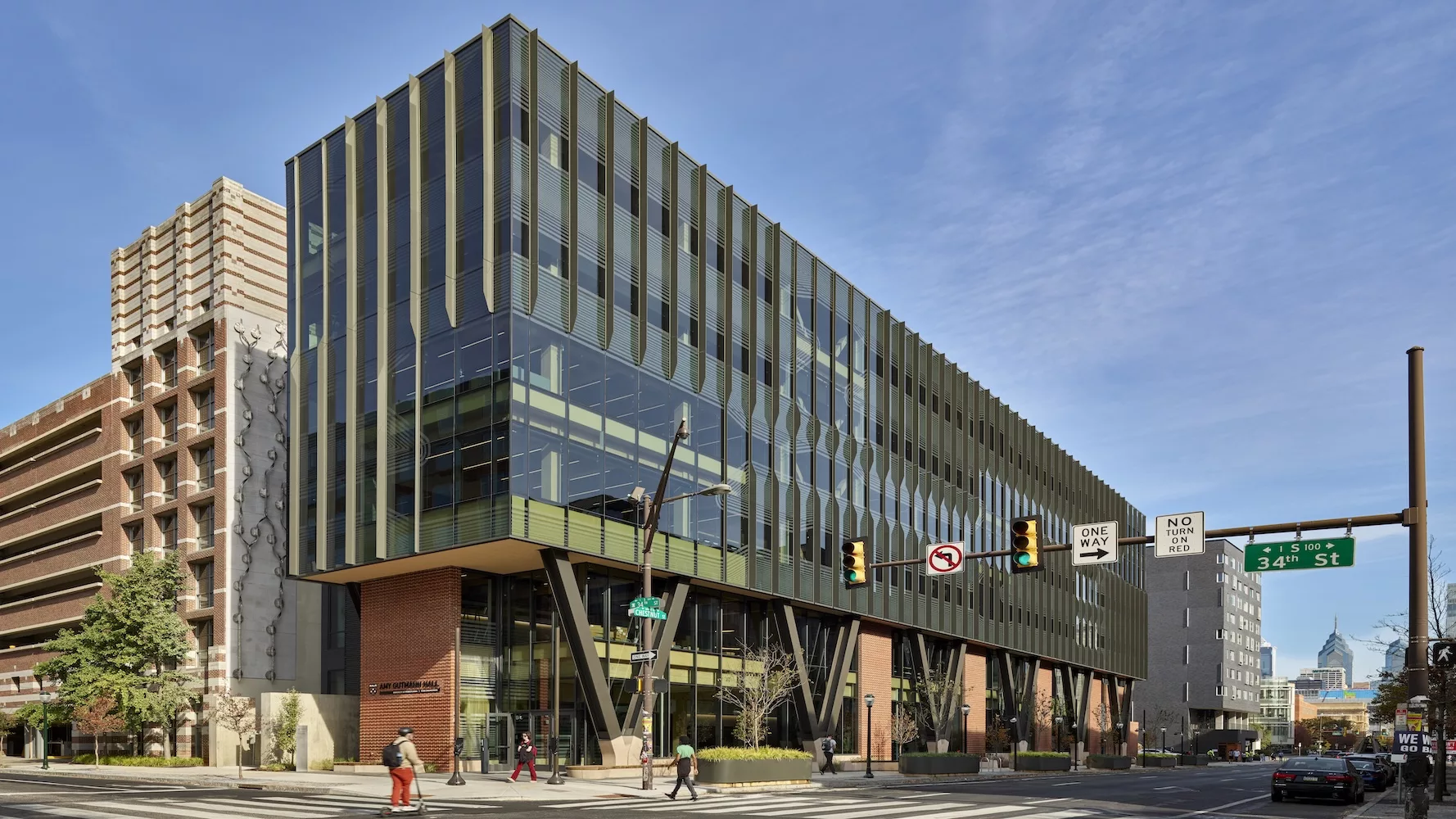
Amy Gutmann Hall anchors a busy West Philadelphia street corner. Photo © Jeffrey Totaro
For some, the terms data science and artificial intelligence conjure images of people focused on computer screens and manipulating lines of code. But for a recently completed building housing these disciplines at the University of Pennsylvania, the architects Lake|Flato with KSS envisioned an environment where people would instead engage with each other. “We wanted to create a place that celebrated human experience,” says Andrew Herdeg, Lake|Flato partner. One that was “invigorating but also calm and inviting.”
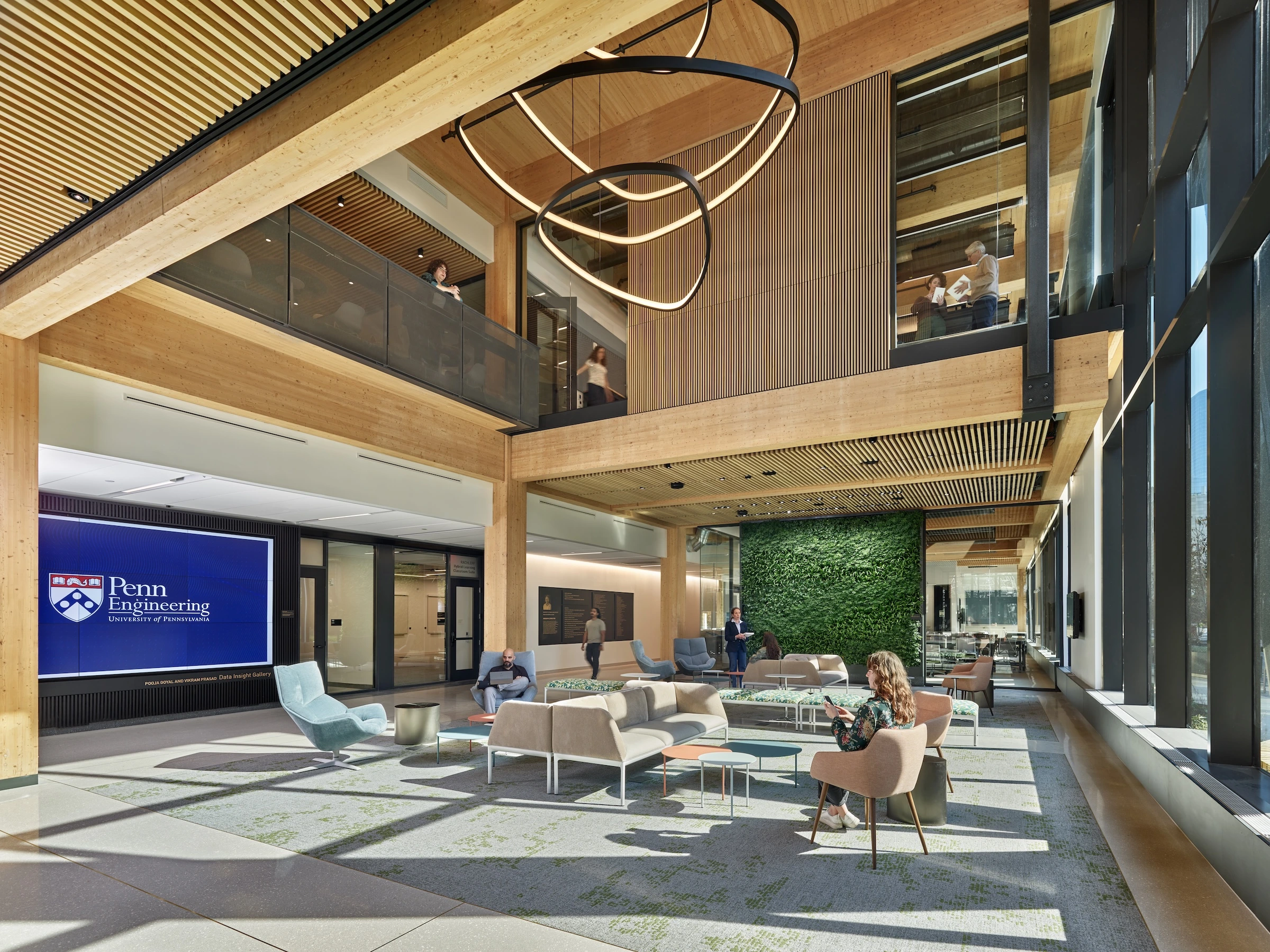
The double-height lobby includes a sculptural chandelier and lush green wall. Photo © Jeffrey Totaro
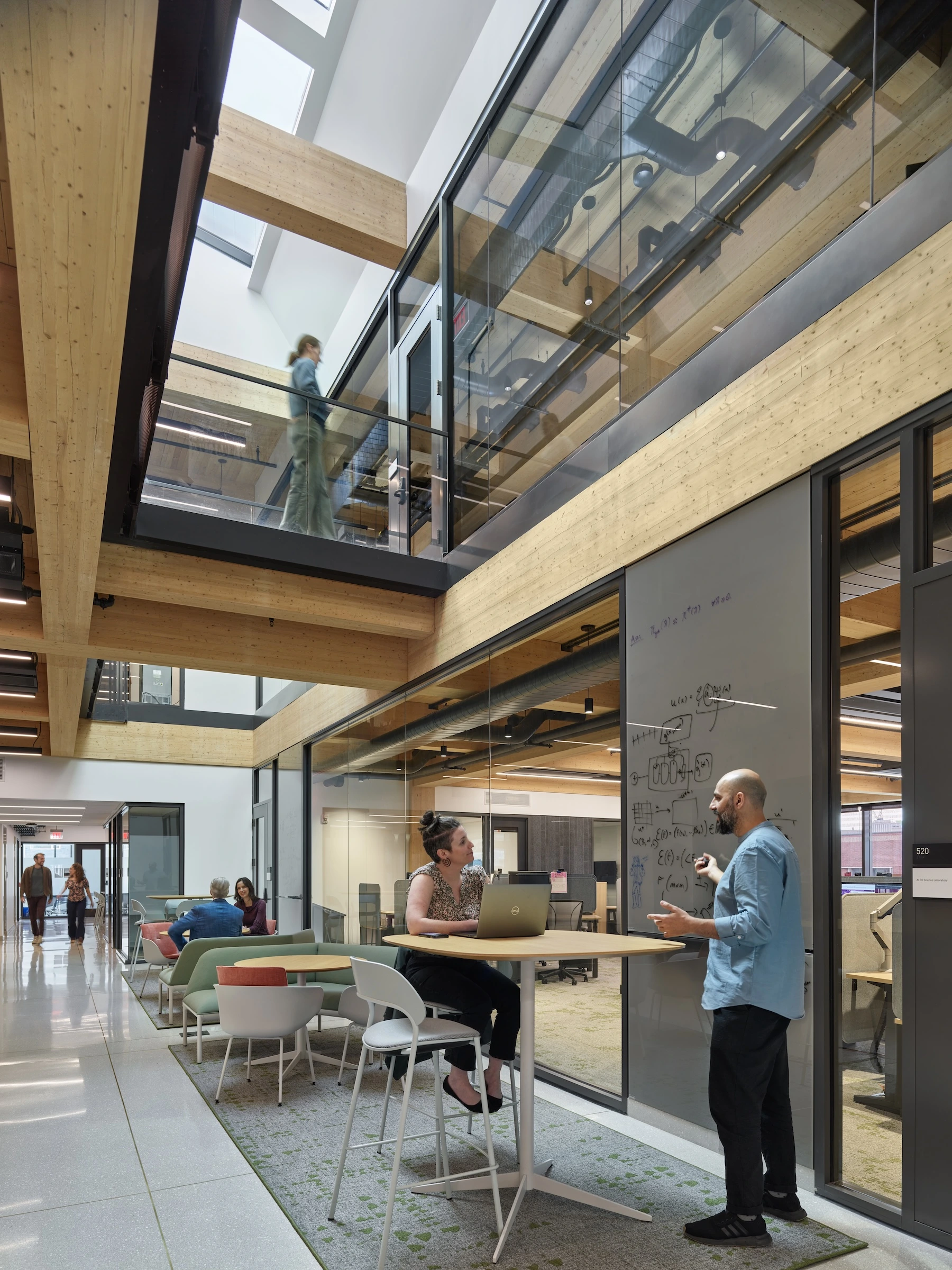
Bridges and overlooks encourage chance encounters and the sharing of ideas. Photo © Jeffrey Totaro
A key aspect of such a project for Herdeg is the materials, which needed to be “authentic, real, and natural,” he says. Toward that end, behind its darkly tinted glass exterior, the six-story, 116,000-square-foot structure, which meets the ground with steel V-shaped columns, has a frame composed of glulam columns and beams and cross-laminated timber (CLT) floor plates—making it the tallest mass-timber building in Philadelphia, and one of the largest on the East Coast. Named Amy Gutmann Hall, after the university’s longest-serving president, the new facility for Penn Engineering sits outside the leafy campus core, anchoring a busy West Philly street corner and accommodating teaching labs, active learning classrooms, collaboration zones, and research neighborhoods. Double-height spaces have been integrated throughout the interior, including at the lobby, which is punctuated by a lush green wall and sculptural chandelier. Traversed by bridges and protected by glass balustrades, Gutmann Hall features a spatial arrangement that offers overlooks and visual connections between levels, with the aim of promoting serendipitous encounters and conversations.
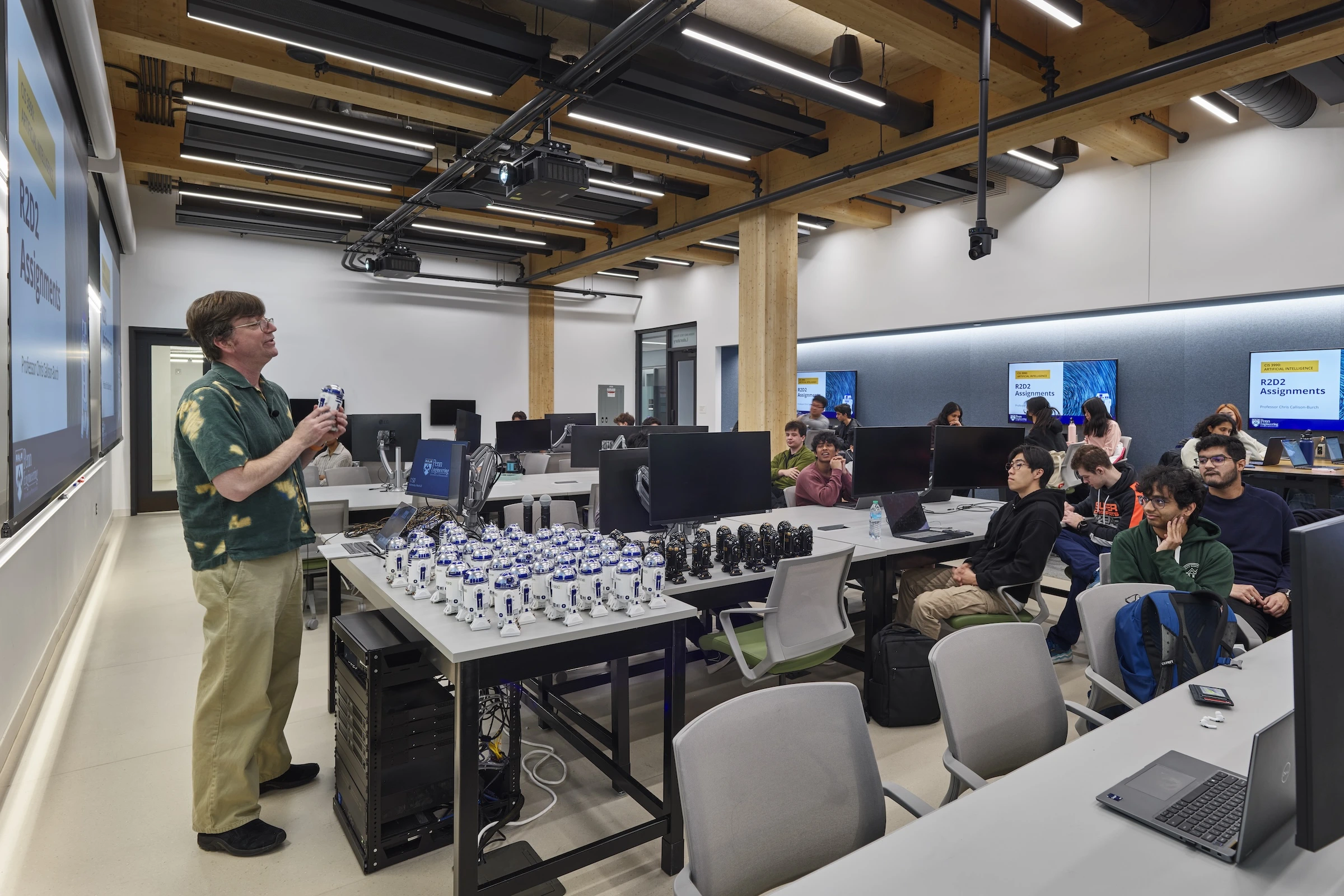
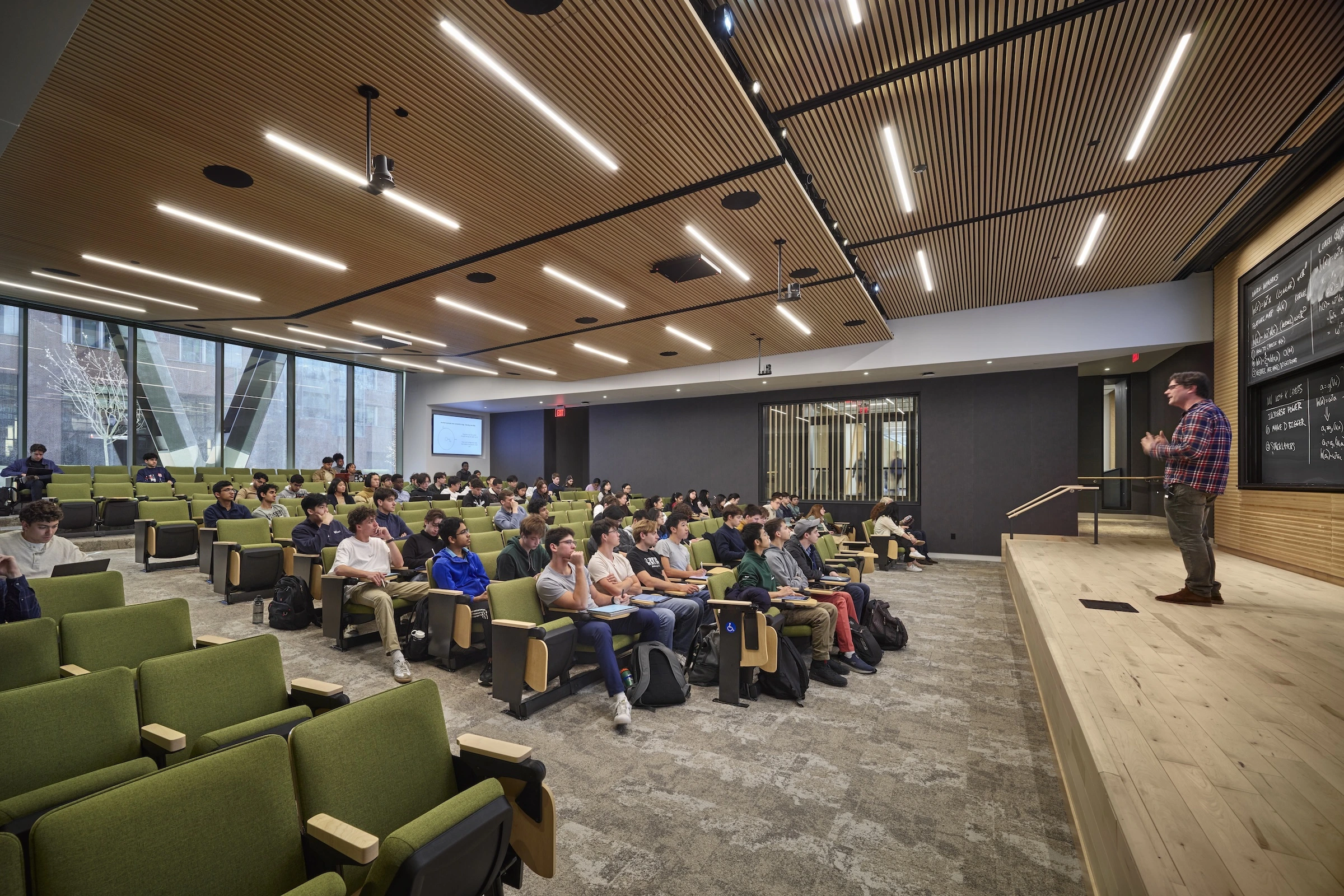
The cross-disciplinary academic hall has numerous classrooms and an auditorium. Photo © Jeffrey Totaro
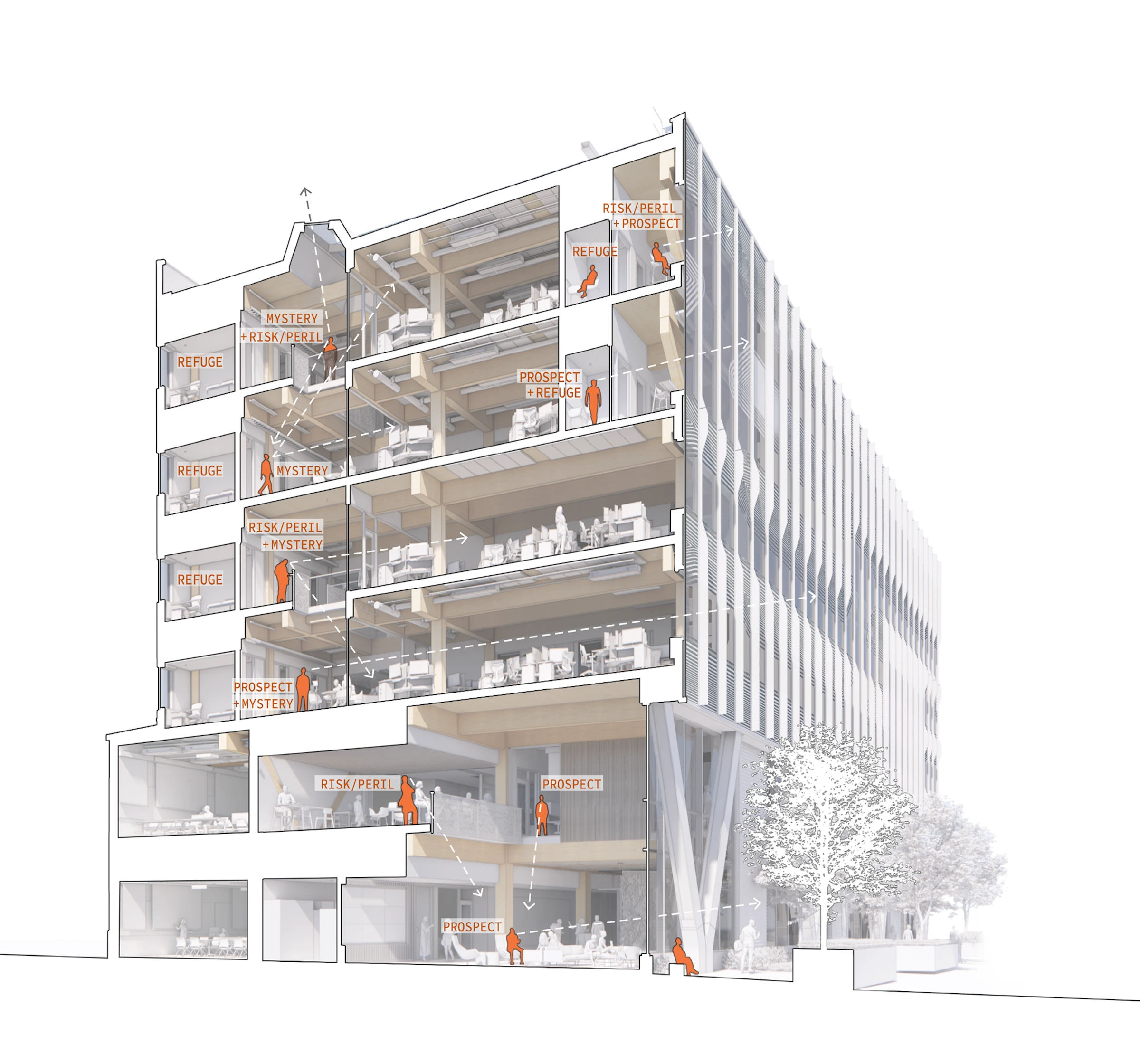
Gutmann Hall’s glulam and CLT elements were fabricated from timber from the vast Canadian boreal forest by Montreal-based Nordic Structures, whose advanced manufacturing techniques align with the values of the client, points out Kerry Phillips, Lake|Flato associate partner. The decision to use a mass-timber structure reduced embodied carbon by 52 percent compared to concrete and 41 percent compared to steel, she says. The approach was also fast: it took a crew of six to eight workers only 15 weeks to erect the structure, according to Becker Raab, an associate at KSS.
1

2
Interior spaces are configured according to biophilic principles (1). The building includes prefabricated structural and curtainwall systems, like mass timber and unitized curtainwalls (2). Images courtesy Lake|Flato
The frame is visible through the high-performance glass skin, especially at night, when the building is illuminated from within. A frit pattern, evocative of circuits, developed in collaboration with digital design and fabrication expert Andrew Kudless adorns the facade and works with vertical fins, which establish a syncopated rhythm across the elevation, to reduce heat gain and glare.
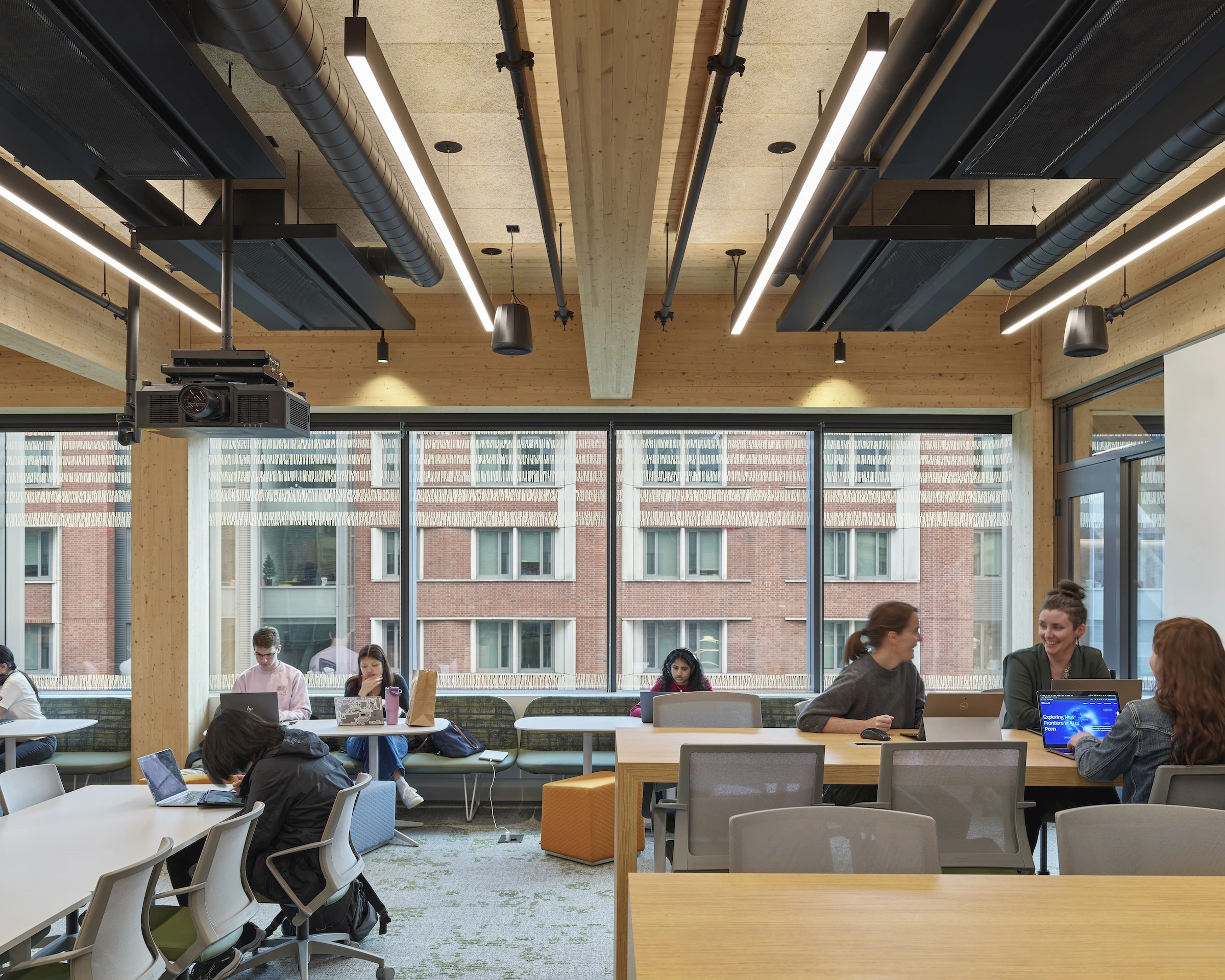
The building systems have been closely coordinated with the exposed timber structure. Photo © Jeffrey Totaro
Among the features contributing to the building’s target of LEED Gold certification are its highly efficient systems for heating and cooling, including chilled beams. This infrastructure has been painted black and is tightly coordinated so as not to compete with the exposed timber structure. Though it may sound like a small detail, “the organization of these systems is a real accomplishment,” notes Herdeg. It is indicative of the level of care and thoughtfulness that pervades Gutmann Hall—from its double-height spaces to its warm wood frame—making it an ideal place for students to focus on the next generation of digital tools. But it will also encourage them to step away from their screens and interact with each other too.

The mass-timber frame is visible through the glass skin, particularly at night. Photo © Jeffrey Totaro
Looking for quick answers on architecture and design topics?
Try Ask RECORD, our new smart AI search tool.
Ask RECORD →
Looking for a reprint of this article?
From high-res PDFs to custom plaques, order your copy today!