Design Vanguard 2025: T+E+A+M
Ann Arbor, Michigan

Architects & Firms
Does any long-term good come out of the Venice Architecture Biennale?
To this question the Ann Arbor, Michigan–based firm T+E+A+M offers an encouraging answer. Its four cofounders, University of Michigan faculty Thom Moran, Ellie Abrons, Adam Fure, and Meredith Miller, came together for a speculative project presented at the 2016 Biennale—a proposal to transform Detroit’s infamous Packard Plant into a campus dedicated to material reuse, one where spolia from the abandoned buildings would be reconstituted and used to construct formally unruly interventions across the site. Since that splashy debut, the principals have continued to teach and pursue research, many centered on material experimentation. They have also endeavored to make the always-treacherous jump from theoretical to real territory, and are now on the cusp of completing one of their largest projects: Building in a Building, a commercial hub on Detroit’s east side surgically inserted behind a half-demolished century-old structure.
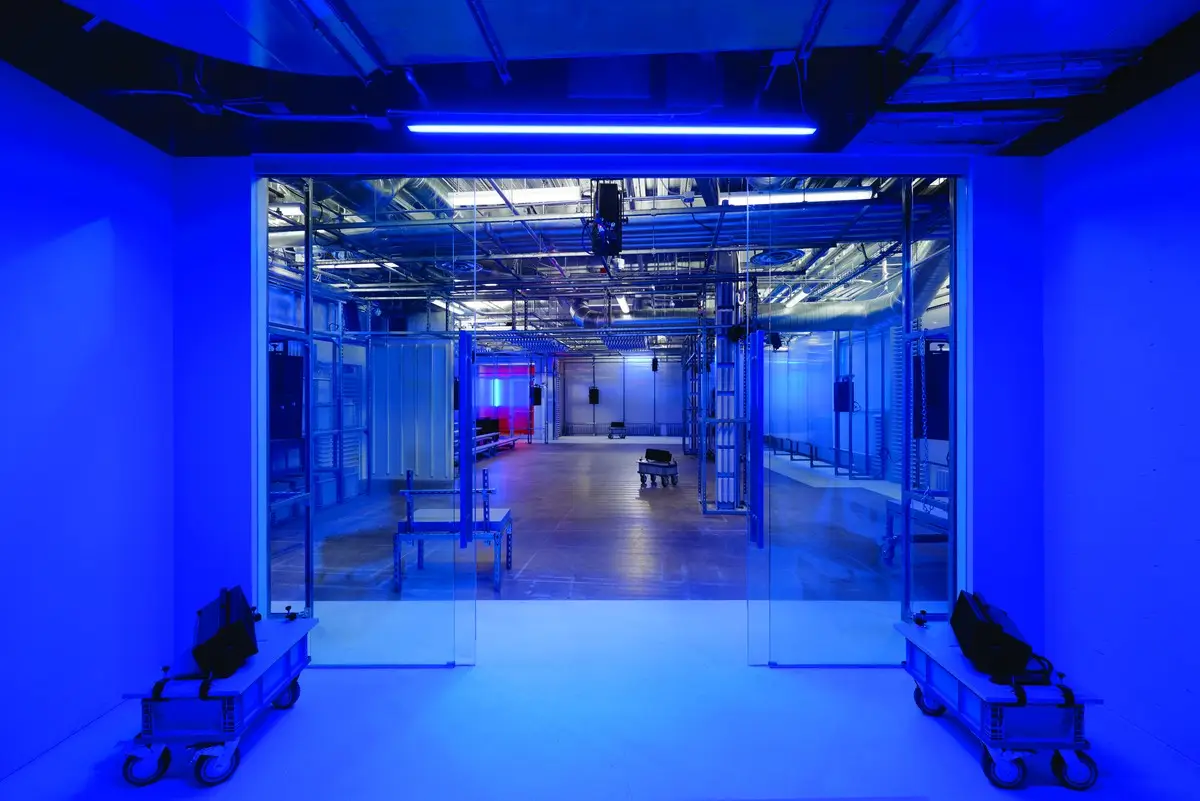
The Warehouse (Above and top of page)
The architects converted a commercial space into a flexible performance venue that also serves as a hub for teaching and creative practice in the sonic arts at Dartmouth College. Performance spaces can be reconfigured, allowing artists to experiment and test new ideas. Infrastructure for sound and lighting is exposed, giving them a visible role in the design. Photo © Brooke Holm, click to enlarge.
From the start, the principals were united in rejecting then-dominant notions of the architect as heroic form-maker. All four received their master’s degrees in the years preceding the 2008 financial crisis, and each ended up pursuing fellowships and teaching opportunities in the difficult years that followed. Having been sufficiently disabused of any lingering romantic myths about architecture, the group set out to find its own way of working. “We’ve tried to forge a different model of practice, not from a top-down ideological position, but something more emergent,” says Abrons, 49, noting a desire to balance an enduring interest in design with broader efforts to make a “meaningful impact in the world.”
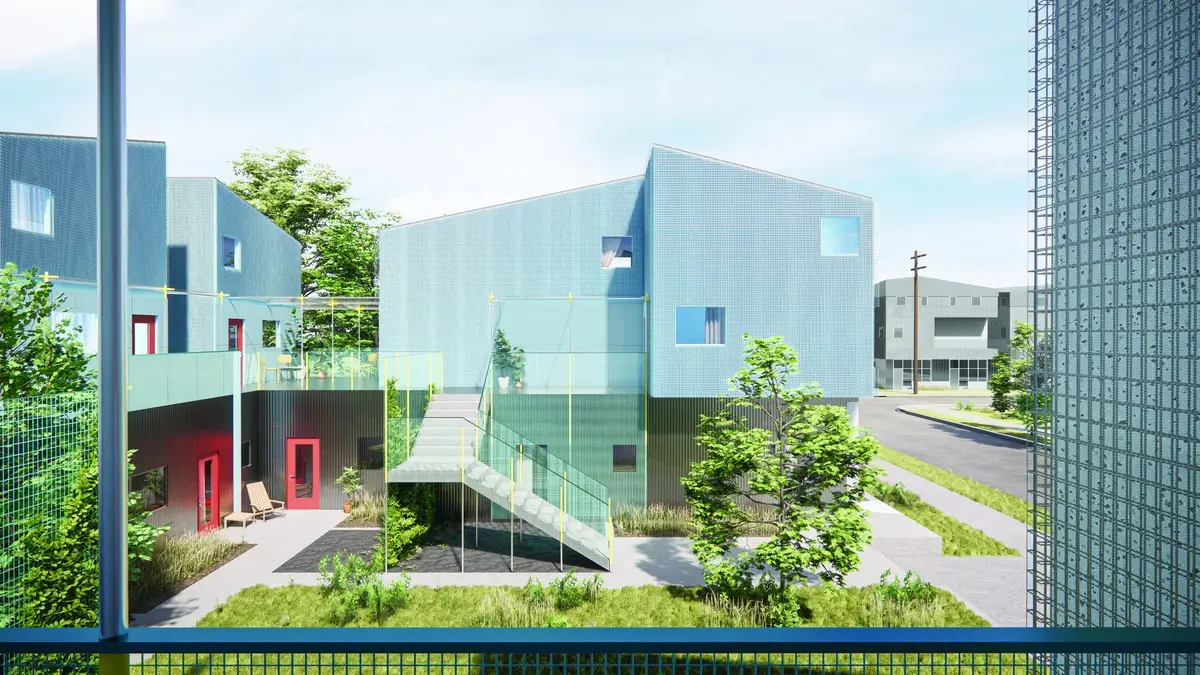
4 over 4
Designed as a prototype for low-cost middle-density housing, this project provides eight apartments that rent at below-market rates. T+E+A+M saved money by using a prefabricated shallow foundation that minimized site work, lightweight composite wall and roof panels that expedited on-site assembly, and all-electric utilities to eliminate need for gas lines. Photo © T+E+A+M
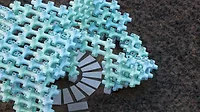
The group has realized this effort in an intriguing variety of collective and individual ways—from participation in the city planning process in Ann Arbor (Abrons serves on the planning commission) or efforts to redesign construction processes (Fure, 44, and Moran, 46, are pursuing builder’s licenses) to the development of a new cladding product made from foundry sand and recycled polymers (a project led by Miller, 45, and Moran). All four continue to teach at Michigan, which has enabled the firm to avoid relying on paying clients: much of its work is financed by grants, and its principals make use of space in a university building.
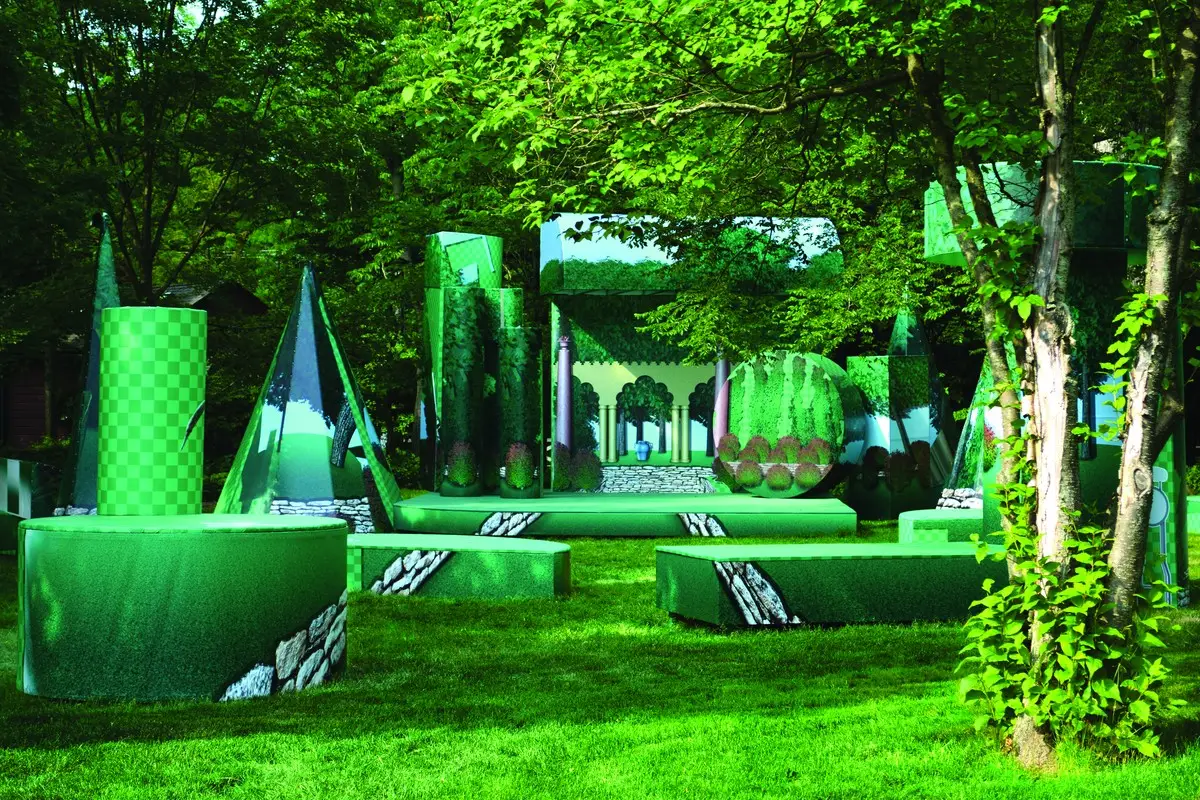
Living Picture
Renderings of Howard Van Doren Shaw’s design for a garden stage at his home, Ragdale, are projected onto 3D shapes arranged on the original site in Illinois. The project blends past and present, real and fake, set and surroundings. Photo © T+E+A+M
In a sense, T+E+A+M’s slate of commissioned projects takes it full circle back to a client-driven process. Fortunately, the firm’s penchant for experimentation and rethinking materiality is not lost in this work; if anything, built projects deepen and amplify these interests by offering opportunities to test them on the ground. “What’s exciting to us is the material assembly of things,” says Moran, and it is gratifying to see how the notions of reconstitution and reuse introduced at the Biennale have made their way into Building in a Building. There, on a narrow corner lot, a striking hybrid is taking shape as the facade of the existing structure wraps around a generous public courtyard and meets the dark form of the new volume rising behind it. The quiet restraint of the design—a shift from the bold forms of the Biennale proposal—show T+E+A+M’s evolution from a polemical to a pragmatic position, and suggest that it has discovered a design sensibility befitting its emergent model of practice.

1
Building in a Building
Asked to renovate a 100-yearold commercial building on Detroit’s east side, the architects decided instead to preserve just part of the old structure, add a new building behind it, and create a courtyard between the two. The complex, scheduled to open this year, will serve as a neighborhood hub with restaurants and retail spaces. Photos © the Whitaker Group (1), Chris Miele (2)

2

Thom Moran, Ellie Abrons, Adam Fure, Meredith Miller. Photo © Devin O’Neill
FOUNDED: 2016
DESIGN STAFF: 4-6
PRINCIPALS: Thom Moran, Ellie Abrons, Adam Fure, Meredith Miller
EDUCATION:
Moran: Yale School of Architecture, M.Arch., 2007; University of Illinois Urbana-Champaign, BS in Architectural Studies, 2001
Abrons: University of California, Los Angeles, M.Arch., 2006; New York University, BA in Art History and Gender Studies, 1996
Fure: University of California, Los Angeles, M.Arch., 2006; University of Michigan, BS in Architecture, 2003
Miller: Princeton University, M.Arch., 2006; University of Virginia, BS in Architecture, 2002
WORK HISTORY:
Moran: SMNG-A, 2007–09; XTEN Architecture, 2001–02
Abrons: Office dA, 2007–09; Greg Lynn Form, 2007; Servo, 2005–07
Fure: Office dA, 2008–09; Greg Lynn Form, 2006–08
Miller: Höweler + Yoon Architecture, 2006–09; Helfand Architecture, 2004–06.
KEY COMPLETED PROJECTS:
The Warehouse, 2024, Hanover, New Hampshire; Northwood ADU, 2021, Ann Arbor, Michigan; 4 over 4, 2020, Detroit; Living Picture, 2017, Lake Forest, Illinois; Ghostbox, 2017, Chicago
KEY CURRENT PROJECTS:
Residential Addition; Post Rock (both in Ann Arbor, Michigan); Building in a Building; Rehab for America: The New Starter Home (both in Detroit); Home for Healing Community Center, Ypsilanti, Michigan
Looking for quick answers on architecture and design topics?
Try Ask RECORD, our new smart AI search tool.
Ask RECORD →
Looking for a reprint of this article?
From high-res PDFs to custom plaques, order your copy today!