Sustainability in Practice Summer 2025
In Conversation with Carmody Groarke

Architects & Firms
Although Kevin Carmody and Andy Groarke met during their time in David Chipperfield Architects’ London office in the early 2000s, they are more likely to cite one of his clients, Antony Gormley, as a mentor. While the pair were working on the sculptor’s new studio, he showed them how “materials take their form through processes and how these can determine the character of a project.” They founded their own practice in 2006, continuing to collaborate with Gormley thereafter on a range of works. Two other early projects embedded the importance of material lifespan in their subsequent work: Studio East Dining was a striking temporary restaurant at the heart of the emerging Olympics Park in 2010, made from building-site materials such as scaffolding boards and poles, which were returned to their original use after three weeks. By contrast, their memorial to the July 7 terrorist attacks in Hyde Park in London was made from stainless-steel cast vertical pillars and was built to last for 300 years.
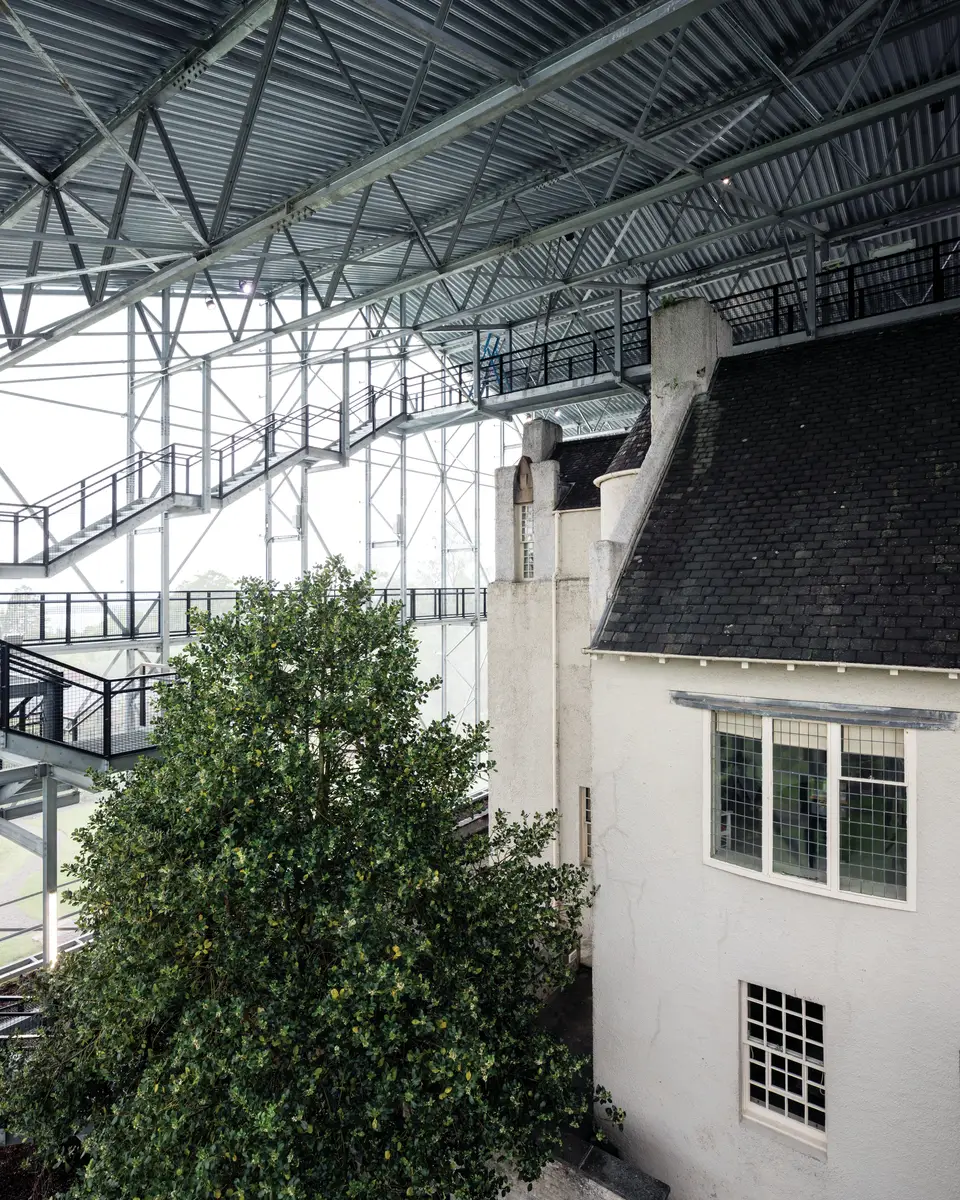
Hill House Box is unusual in allowing visits by members of the public during active conservation as one of Charles Rennie Mackintosh’s most significant works is being restored. Photo © Johan Dehlin, click to enlarge.
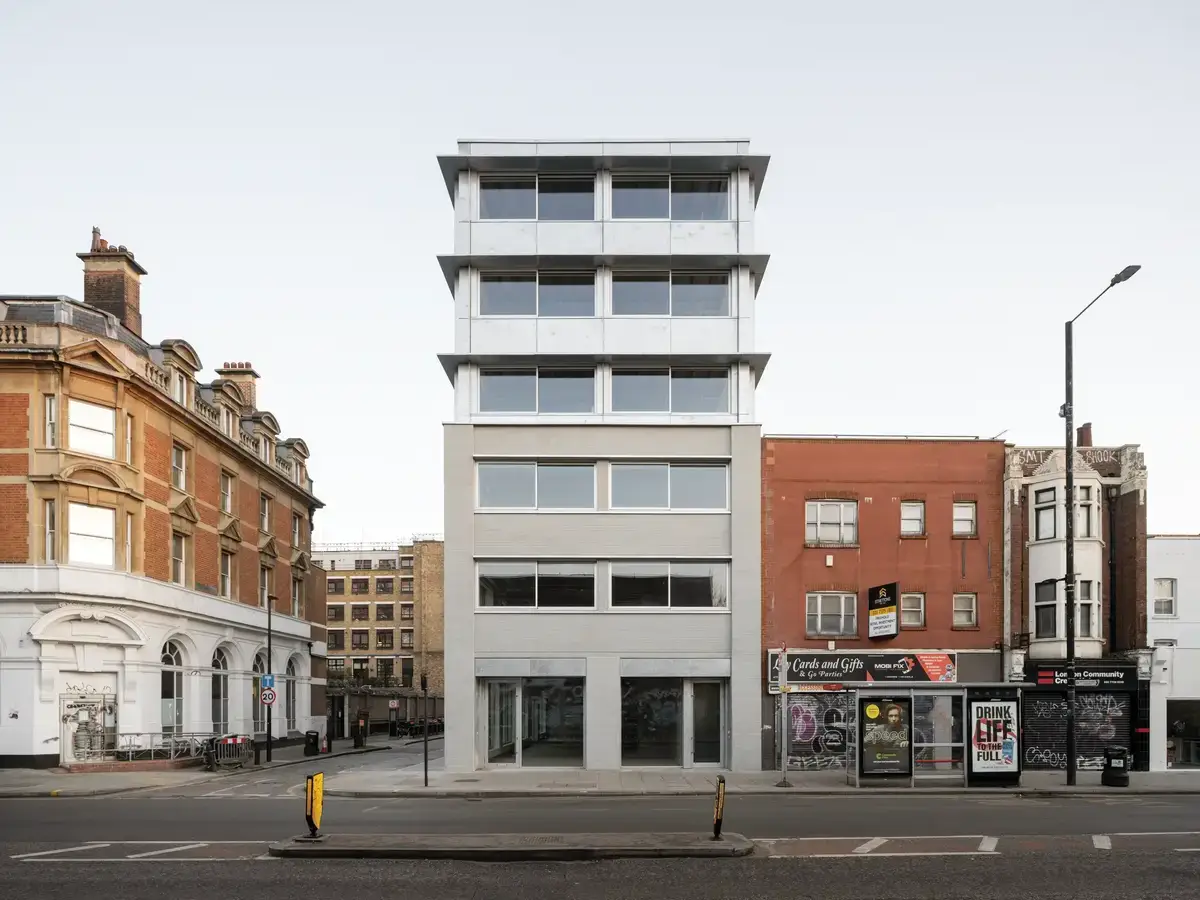
Carmody Groarke is known in London for its stylish, low-budget adaptations of existing buildings, which give, says Groarke, “an experience of architecture through the way that it is made.” For example, the galvanized steel–clad extension of a simple warehouse in Bethnal Green, which mirrors the floors below, is a visual manifesto for reusing the city’s industrial structures imaginatively. However, the firm’s most interesting work has operated at the two extreme poles of lifespan established by its early projects. The Hill House Box is a temporary superstructure that protects Hill House, a key Charles Rennie Mackintosh work near Glasgow, that members of the public can access to closely view the historic building during restoration and renovation. The office has also been working on a long-term master plan for the British Library. RECORD contributor Tim Abrahams speaks with Andy Groarke about the practice’s thoughtful approach to the life of construction materials.
1
2
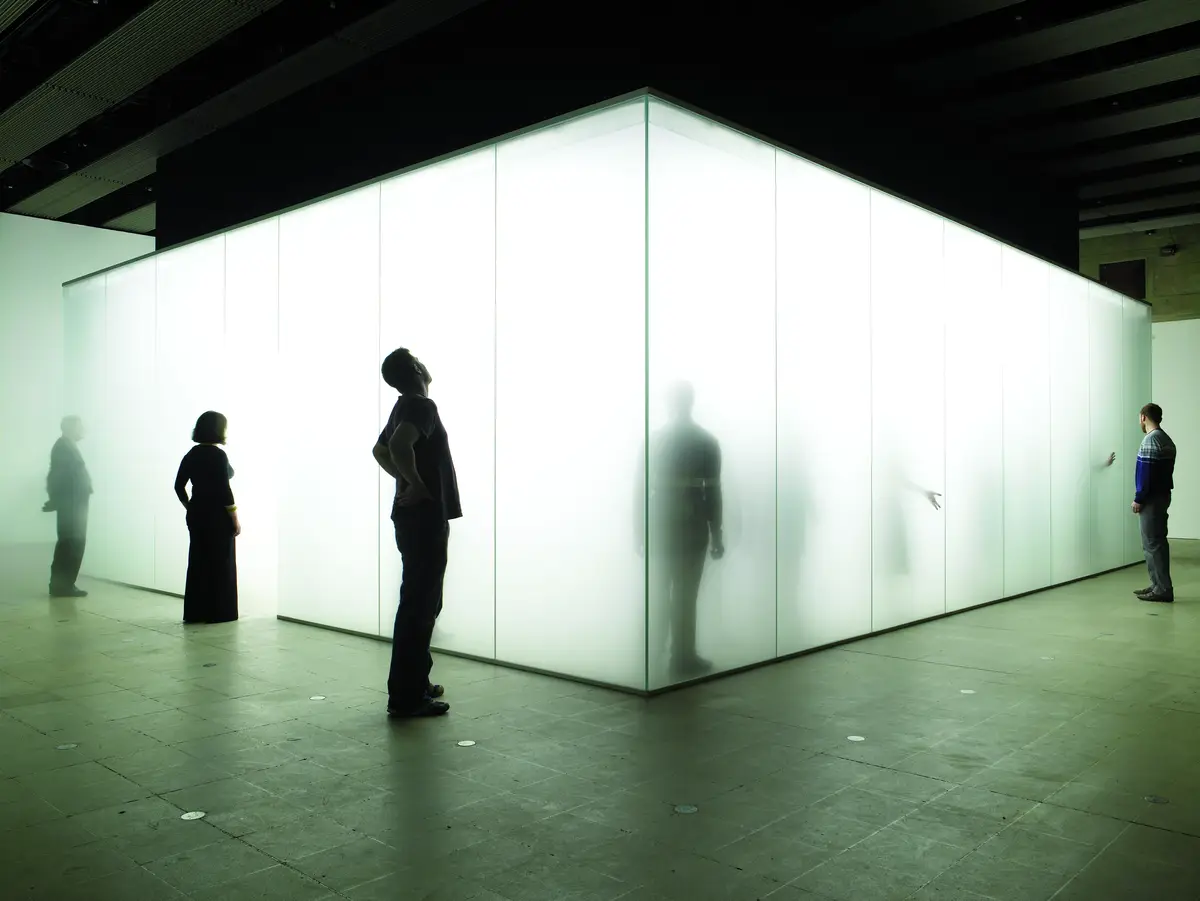
The extension of a former 1970s textile workshop on Bethnal Green Road in East London is a model of urban reuse (1). Carmody Groarke worked with Antony Gormley on his first major retrospective (2). Photos © Johan Dehlin (1), courtesy Carmody Groarke (2)
Tell me about the new building at Boston Spa for the British Library, which is expected to be completed next summer.
Around 80 percent of the library’s collection is stored in Yorkshire, in buildings that were originally part of a WWII munitions plant. The last facility, built in the 1970s, used conventional architecture based on retrieving books off shelves by hand. The new building is a fully automated storage facility. In a single room the size of a soccer pitch and about 10 stories high, 8 million books will live.
Where is the architecture in such a building?
We thought about trying to find ways in which the architecture could help not only environmental sustainability, but the long-term institutional sustainability of the British Library by creating an archive building that was as passive as possible.
We are nearing completion, and the tests are telling us it’s one of the most airtight buildings in Europe, so we can neutralize risks to the collection by de-oxygenating the environment to the same air quality of Base Camp Two on Mount Everest—quite difficult to breathe in, but it almost eradicates the risk of fire. The environmental engineers have worked out that the collection itself can create thermal stability, meaning that the energy use of the building is only around 3 percent of the energy use of the last storage building the British Library built.
What is it like to be inside it?
You get this otherworldly space of robots and books at a scale that, at first sight, you can’t get your head around. We find that a tremendously interesting spectacle.
What about the exterior?
You’re left with a very big shed on the landscape. And so we did a research project with our students at Yale to look at sheds that have abstracted themselves in terms of scale and by giving away nothing of their contents. These buildings have none of the grammar of conventional architecture, and we thought, how do we place them in the world? How do we give them form and figure?
What will be the public experience of it?
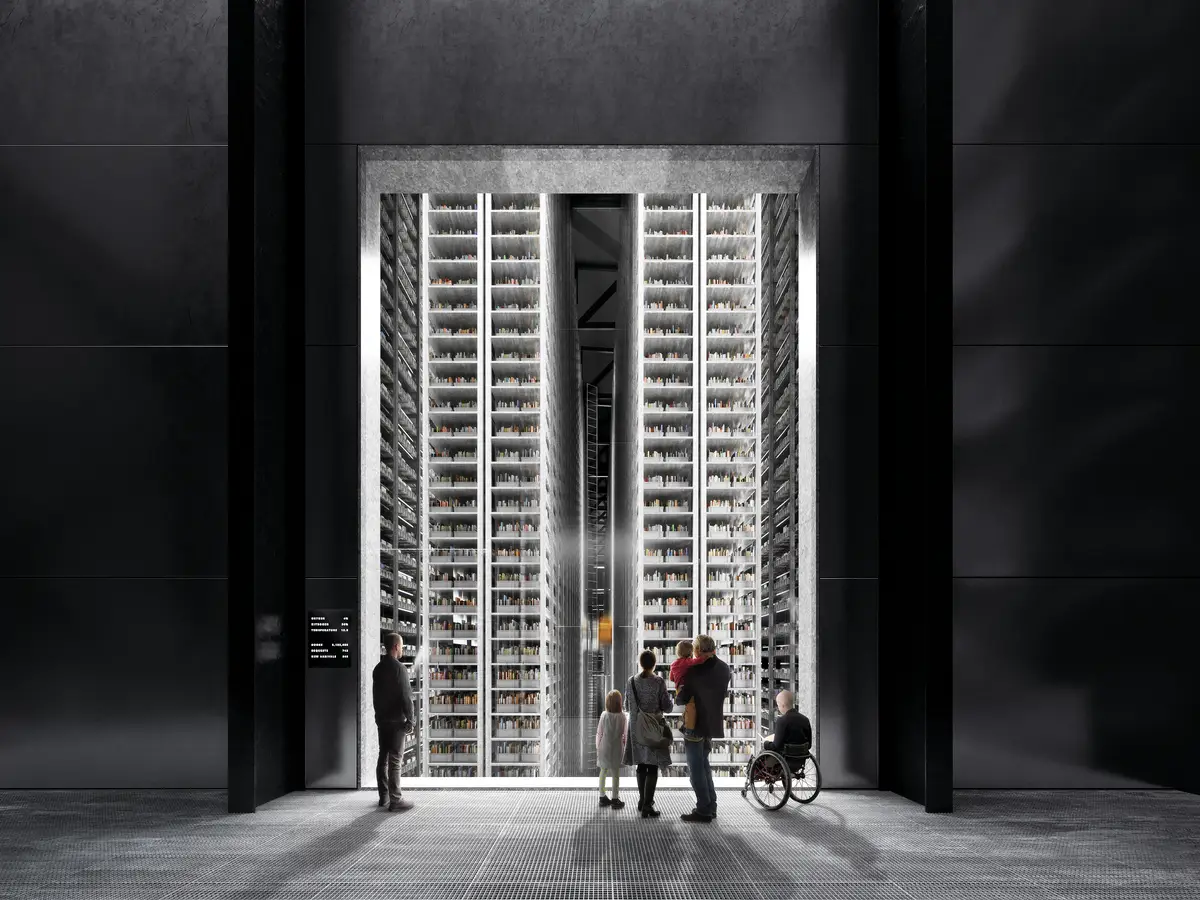
A viewing gallery will allow the public to experience the British Library’s automated technology. Image courtesy Carmody Groarke
One bay of this huge shed is dedicated to the visitor experience. A super-airtight window gives you a view straight down into the workings of the British Library.
How does this relate to the project you are doing in Amiens?
Through developing the expertise with the British Library, we won a competition for the Bibliothèque Nationale de France to create an even larger conservation and collection storage. We are taking those environmental innovations one step further by putting the structure on the outside of the box. Referencing the flying buttresses of Amiens cathedral, we have created a totally different architectural identity. It also creates a completely smooth internal space that will improve airtightness.
Looking for quick answers on architecture and design topics?
Try Ask RECORD, our new smart AI search tool.
Ask RECORD →
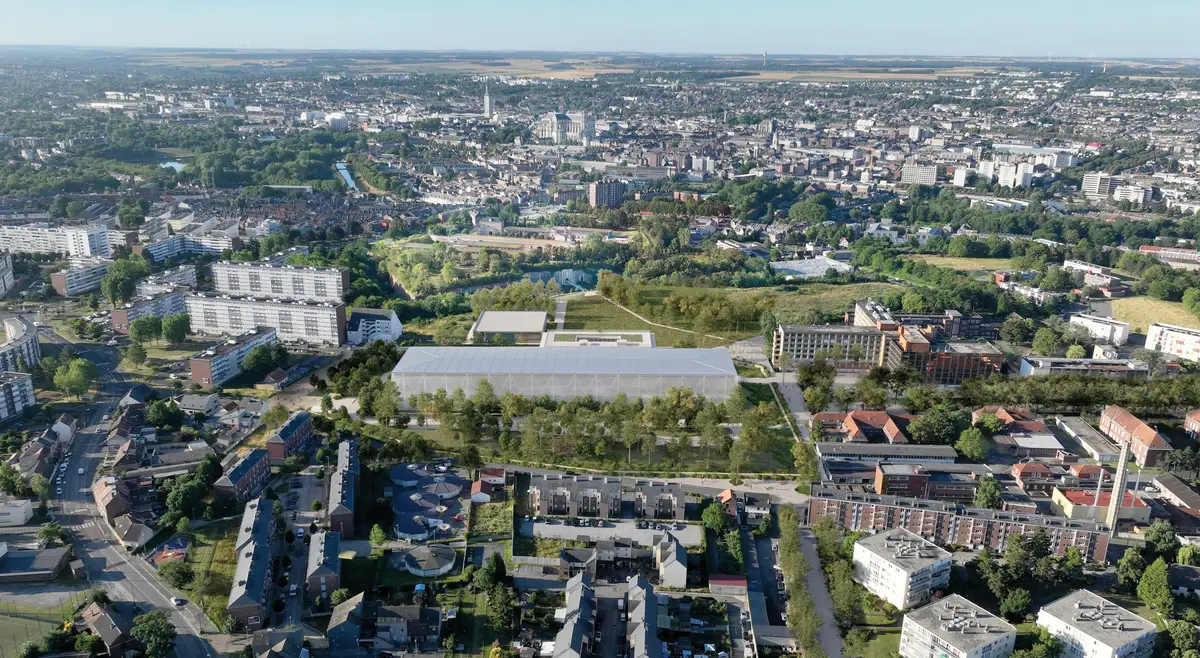
Another archive, in France, puts the structure on the outside, mimicking the nearby Amiens cathedral. Photo © Benjamin McMahon
The material process is significant to the Design Museum Gent. Can you tell us about it?
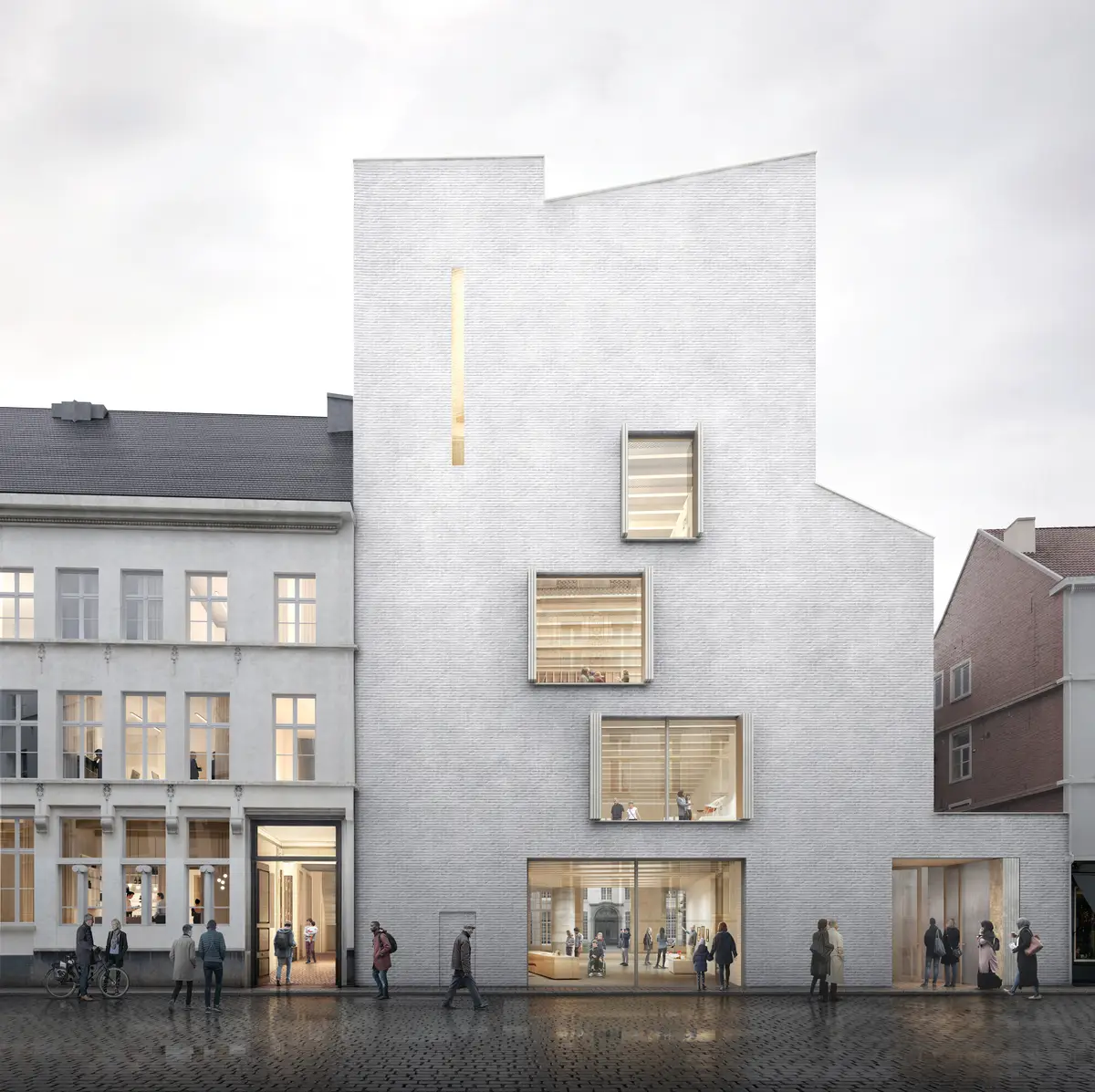
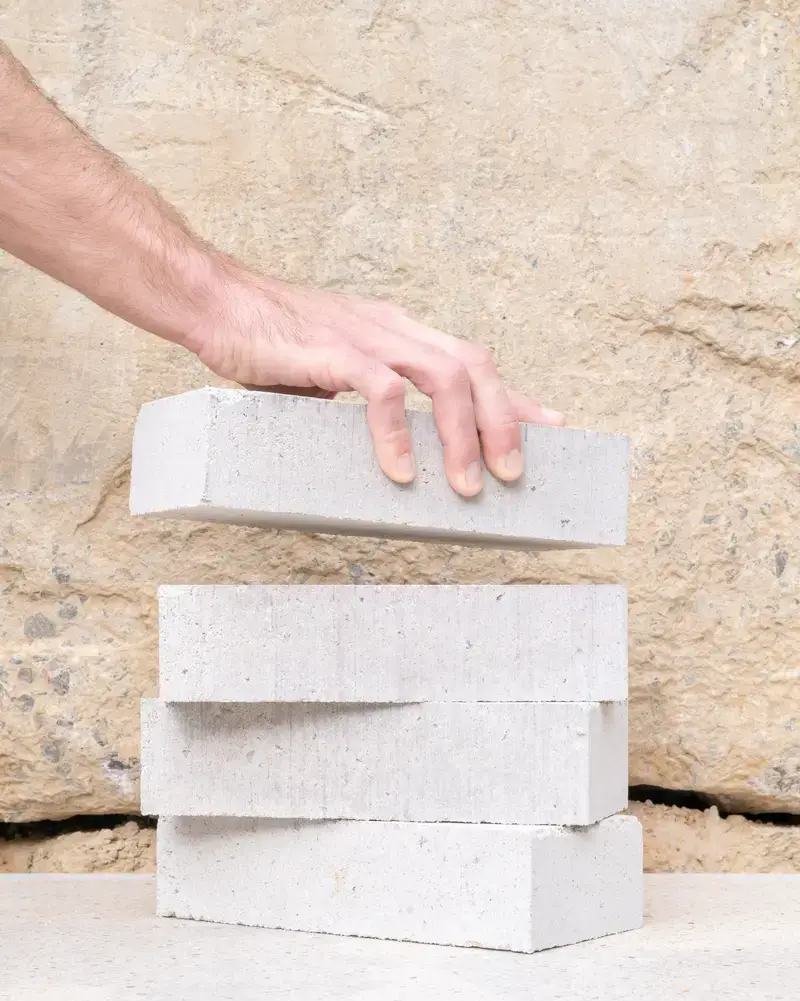
We won that project in a competition in 2019. We had an idea about how the form would fit the city. And we had an idea that, like Ghent’s cathedral and town hall, the building should be white but, like other buildings in the city, brick. Then Covid hit. We started to rethink how we would physically make it and started to research brick technology, realizing how violent and consumptive it is as a building material. So the question became, “How can we create something that is made with a vernacular process of laying brick on brick but reduce the impact through design?” We created a totally new brick from a cocktail of municipal waste.
3
Structured and finished in timber internally, a new building for the Design Museum Gent (3) uses brick made from city waste for its facade (4). Photos courtesy Carmody Groarke
4
Are you talking about building-material waste?
Concrete from demolished buildings, ceramics, toilets, car windshields—a very specific recipe which would give this brick its light, white character. We cured it and pressed it with lime, so it didn’t need to be cooked. We can get to about 35 percent of the carbon of a regular brick.
These bricks are as strong as a regular clay-fired brick. They absorb a little more water in certain conditions. We reflected on this and changed the grammar of the building according to this new vernacular material. We’ve amplified the details: projecting copings and bigger eaves and window sills.
How did the client react when you went back to them with this innovation?
We’re really fortunate that they’ve been supportive of this journey to innovate with this idea that the building is a representational one, and it’s showing what public buildings can and should be. This is a publicly funded project, which means we can’t just do anything we want. The brick was developed over two years of testing and approvals.
What will be the architectural effect of this rethought building material? How does that reflect your general attitude to the relationship between process and end product?
When we begin a project, we may have certain instincts about form and spaces and the materials that are going to make them. But, thereafter, the life of architecture in its realization and after its realization depends on many things beyond our control. And we’ve got to be very comfortable with that afterlife.
Looking for a reprint of this article?
From high-res PDFs to custom plaques, order your copy today!