Höweler + Yoon and Carlo Ratti Associati’s AquaPraça Debuts at the Venice Architecture Biennale
.webp?t=1757890701)

Photo © Giovanni Pellegrini
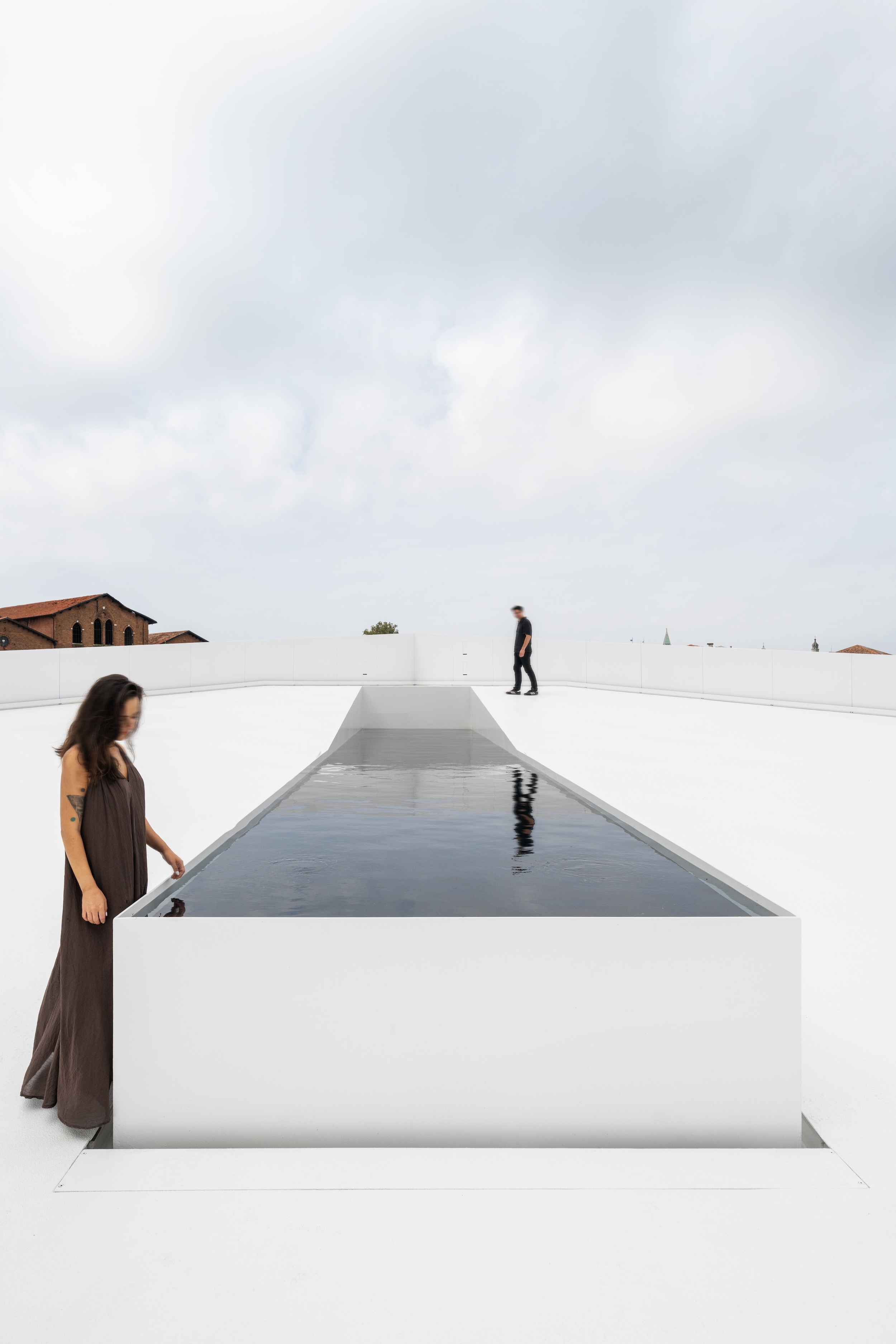
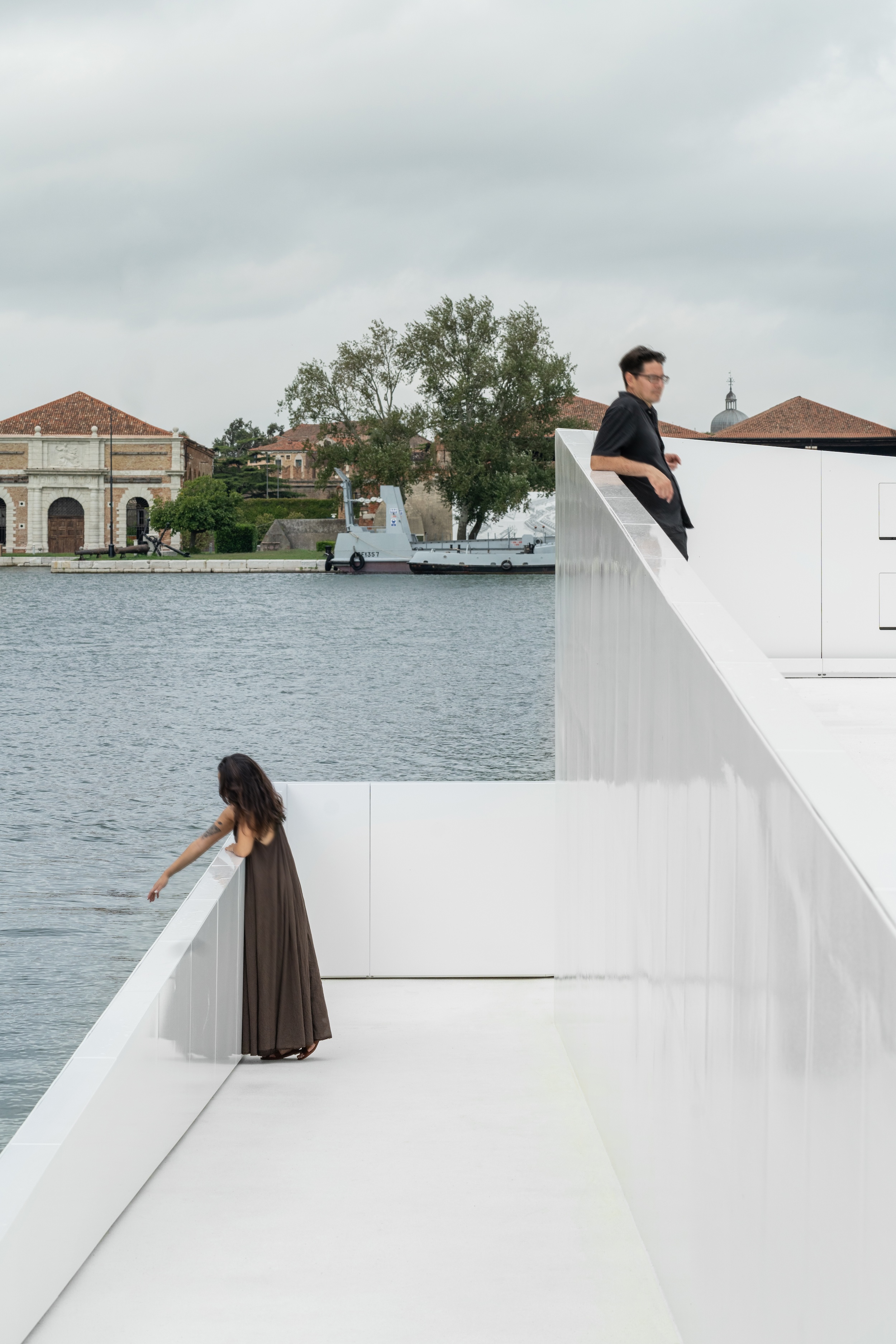
Venice, so acutely imperiled by climate change–induced rising sea levels, is an apt locale for the submersible steel structure, which its designers describe as a platform, literal and figurative, that “creates a public space buoyed by the sea, creating a physical dialogue between the built environment and natural forces.” Floating using the principles of equilibrium, displacement, and buoyancy, the adaptable AquaPraça, which constantly calibrates by taking in and releasing water to maintain a minimal freeboard with the surrounding sea level, is engineered to accommodate up to 150 people for exhibitions, lectures, and other events.
.jpeg "AquaPraça")
Photo © Giovanni Pellegrini
The public barge-plaza’s presence in Venice, however, is a transitory one. As of this writing, AquaPraça—“water square” in Portuguese—is being prepped to make the long, transatlantic journey to the Brazilian port city of Belém, where it will serve as the centerpiece of Italy’s pavilion at the 2025 United Nations Climate Change Conference (COP30) from November 10–21. When COP30 concludes, it will be donated to the Brazilian government and remain in Belém as a community space—a permanent work of civic infrastructure.
Photos © DSL Studio
“Bringing this structure to Brazil creates a striking and symbolic presence at the conference, highlighting our commitment to sustainability,” said COP30 president Andre Corrêa do Lago in a statement. “Moreover, it serves as a lasting legacy of our joint efforts and a continuous reminder of the importance of sustainability.”
As Höweler + Yoon co-founder Eric Höweler told RECORD, AquaPraça will be transported as a single piece via ship for the weekslong journey to Belém, the second-largest city in Brazil’s North Region and a major gateway to the Amazon River. “We looked at tugging it, but it's too risky.”
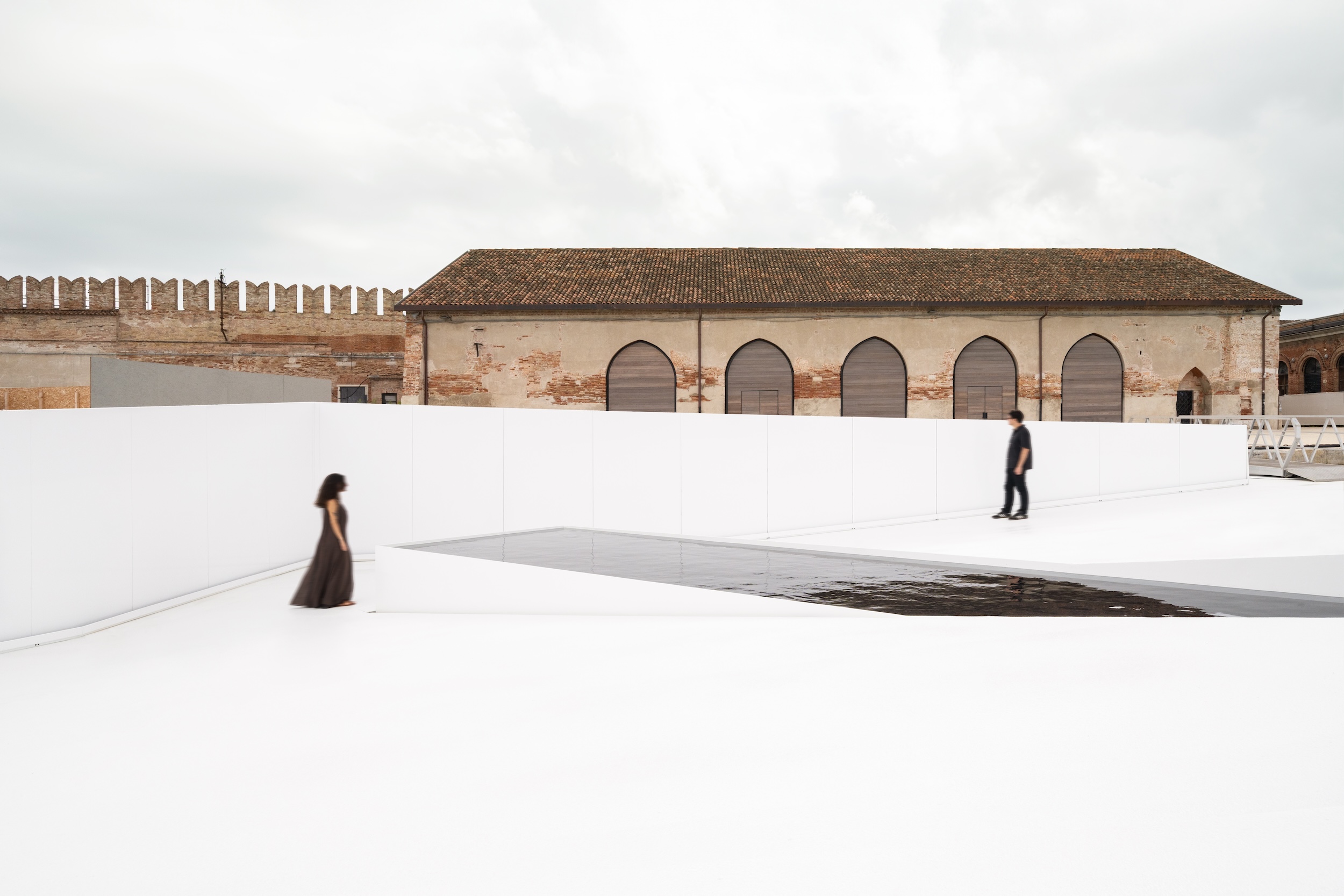
Photo © DSL Studio
Once in place at COP30, a piloti-supported roof structure, fabricated in Italy and making the trip to Brazil alongside the barge, will be installed over the floating plaza. Höweler initially argued that AquaPraça looked better sans roof. “It’s such a surreal vision,” he says. “You’re in this abstract landscape, and it's not quite normal—the horizon and everything's tipped, but the water table is dead flat.”
The roof, however, serves an important role: protecting visitors from the punishing weather of the Amazon—far hotter and wetter than oft-overcast Venice. An oculus-like slot in the waffle slab roof is mirrored by a slot for the plaza’s water table. “It’s nice that the two relate to each other and define a kind of volume of rectangular space between them,” says Höweler. “I can also imagine the roof collecting water and then dumping it into the water table.”
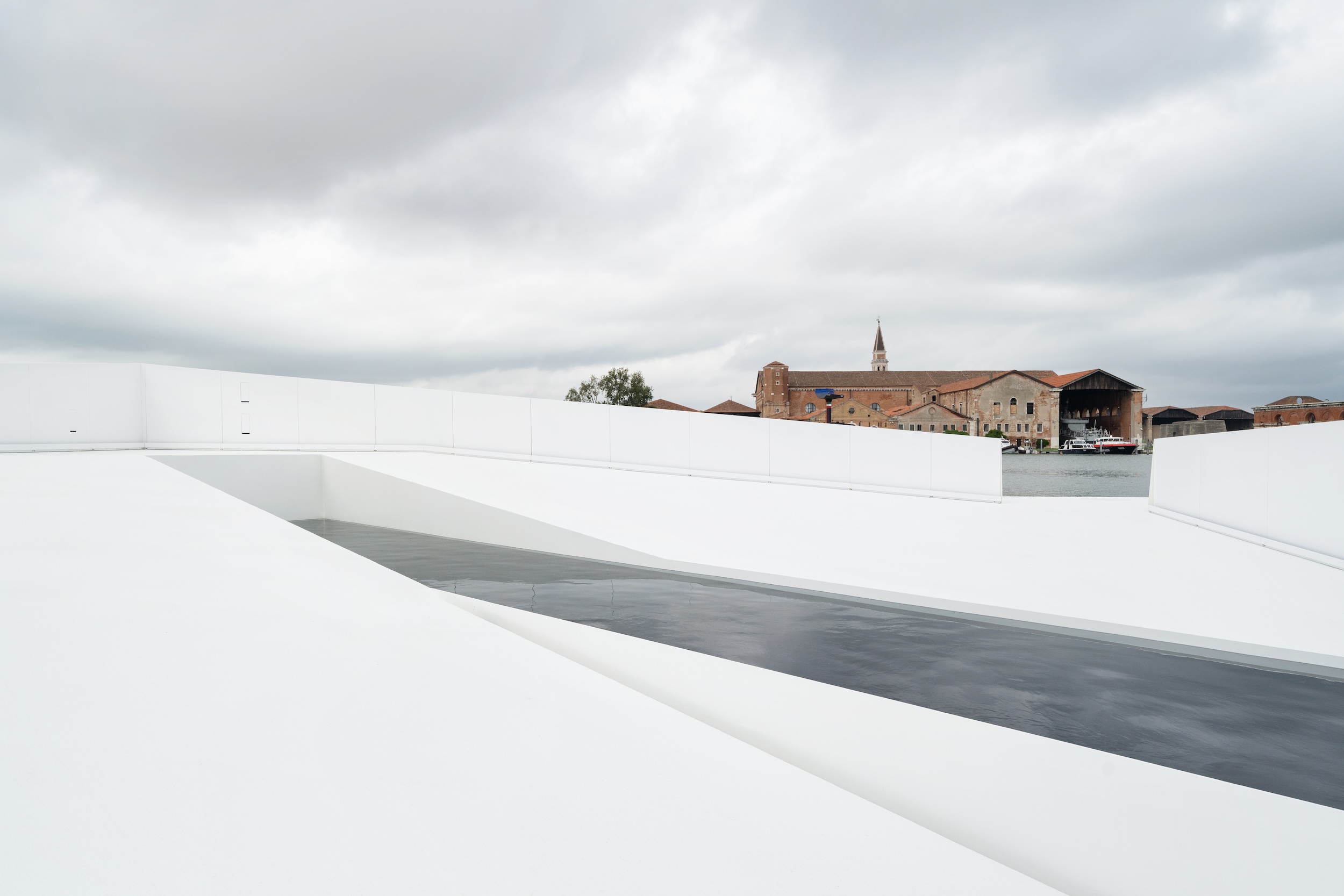
Photo © DSL Studio
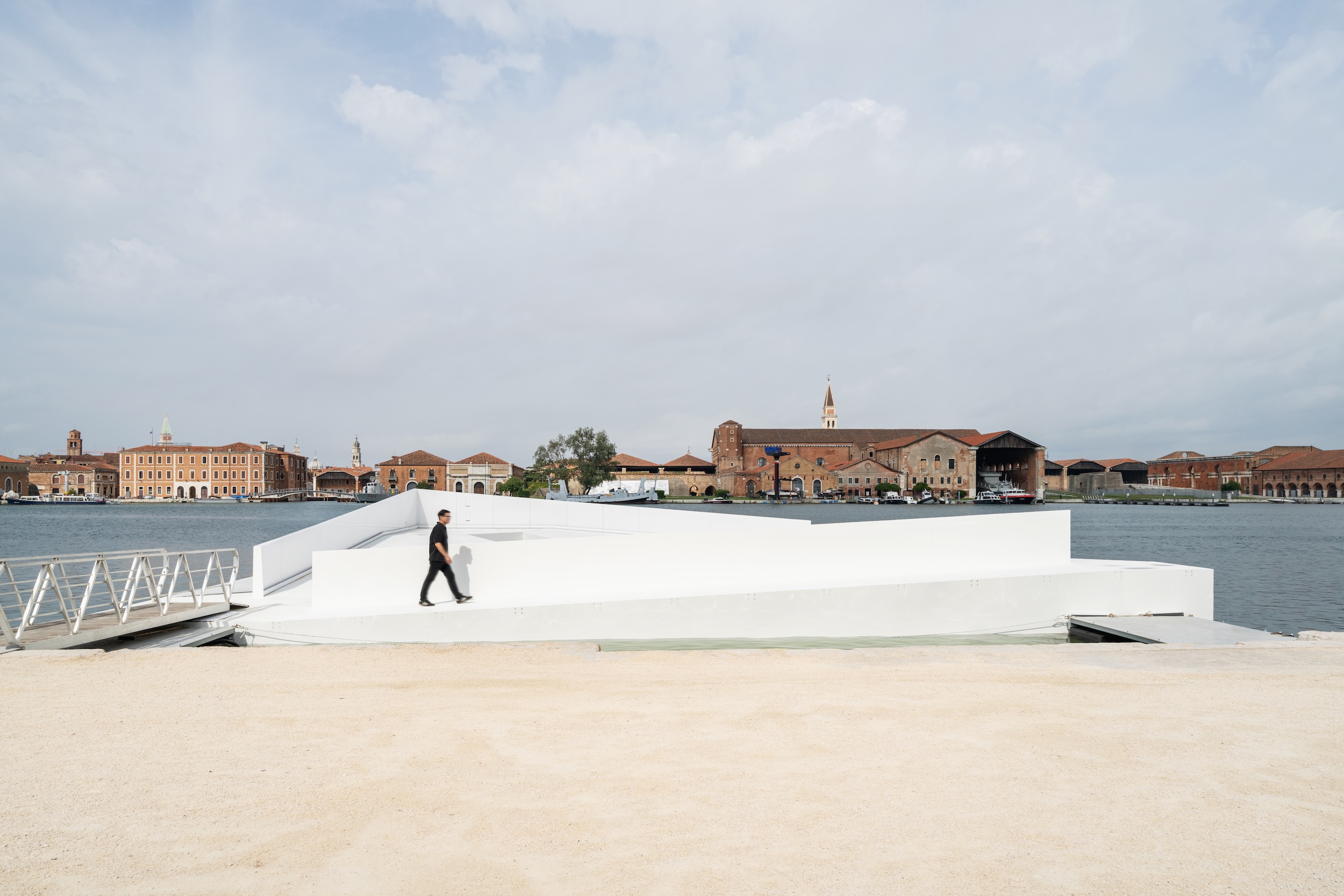
Photo © DSL Studio
The joint efforts to bring AquaPraça to life are impressive. It is a project of Italy’s Ministry of Foreign Affairs and International Cooperation along with the Ministry of Environment and Energy Security, in partnership with the COP30 Presidency. A large international coalition of backers made the work possible: CIHEAM Bari, World Bank Group’s Connect4Climate program, BF International, Bloomberg Philanthropies, and others.
Looking for quick answers on architecture and design topics?
Try Ask RECORD, our new smart AI search tool.
Ask RECORD →
On the ground (and over the water), Höweler + Yoon and CRA worked with Italian steel fabricator Cimolai to realize AquaPraça, finalizing the structural design, construction, and certification within just five months. Once complete, the plaza was tugged from Cimolai’s facilities in northeastern Italy to Venice for its short-lived stint at the Biennale.
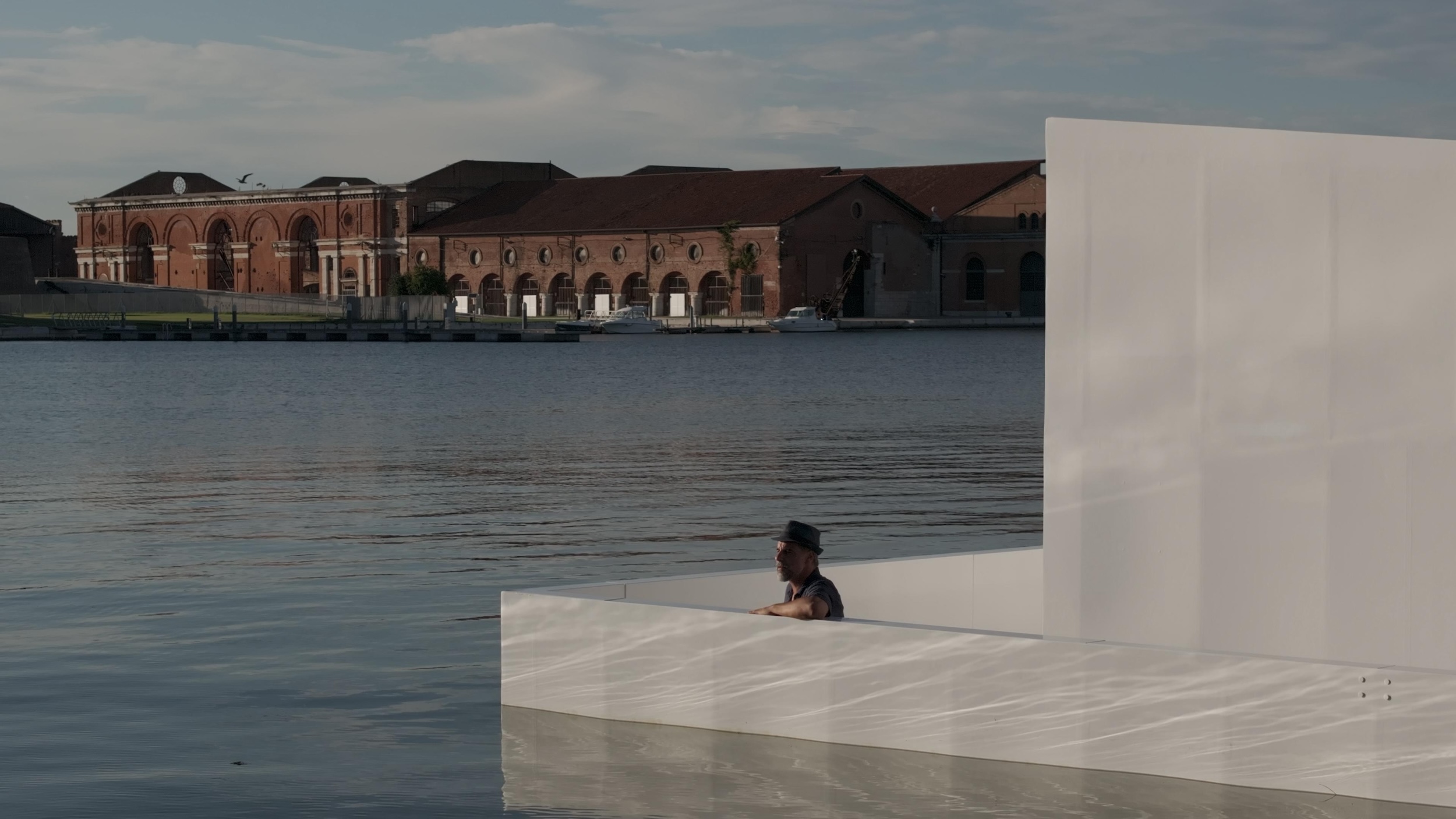
Photo © Giovanni Pellegrini
“In a way, COP30 is a better venue than Venice because you can imagine world leaders and politicians using it as a physical platform to talk about climate policies and sea level rise,” Höweler adds. “You could be sitting around a mahogany conference room table discussing and negotiating but instead you’re standing around a water table. It makes things so tangible and proximate, with the sea right there in the center.”
Looking for a reprint of this article?
From high-res PDFs to custom plaques, order your copy today!