In Focus
A Snug Infill Site Becomes Home for a Tight-Knit Multigenerational Family in Valencia
Valencia, Spain

Architects & Firms
Nestled among small plazas and historic buildings in a quiet, old quarter of Valencia, one of Spain’s most vibrant cities on the Mediterranean, this understated multifamily home contains three apartments on four floors for a couple and the families of their two adult children. Each family occupies a floor, with the parents on top in a duplex that opens to a large roof terrace shared by all. The clients, who work together in a family business, sold their three suburban homes to make the move, drawn by the benefits of city living and of coming closer together as a multigenerational family.
1
2
3
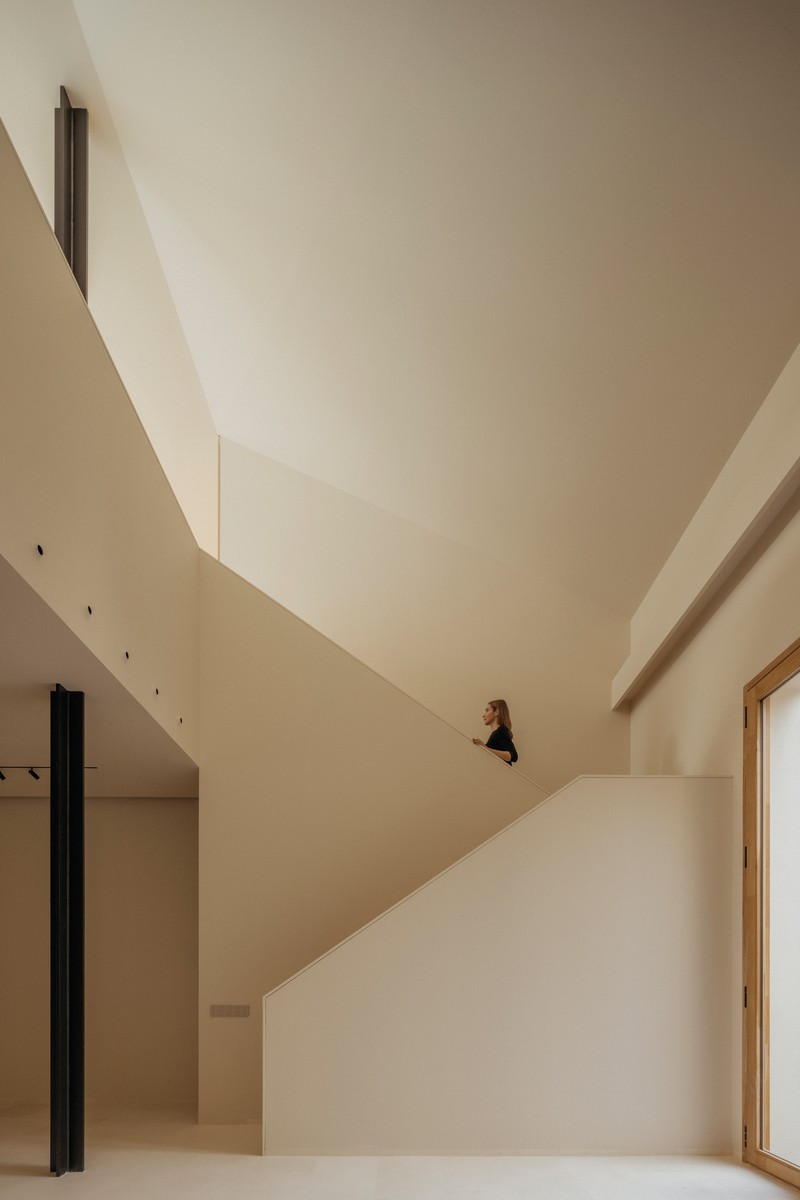
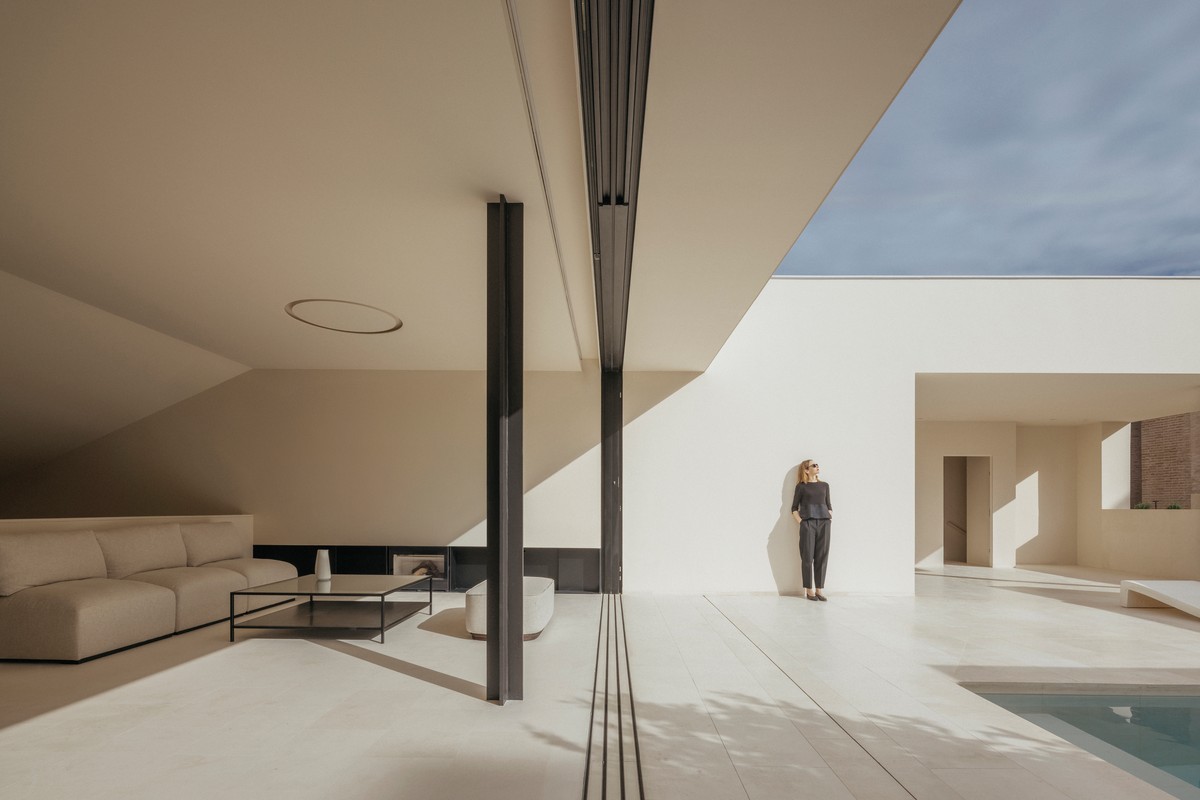
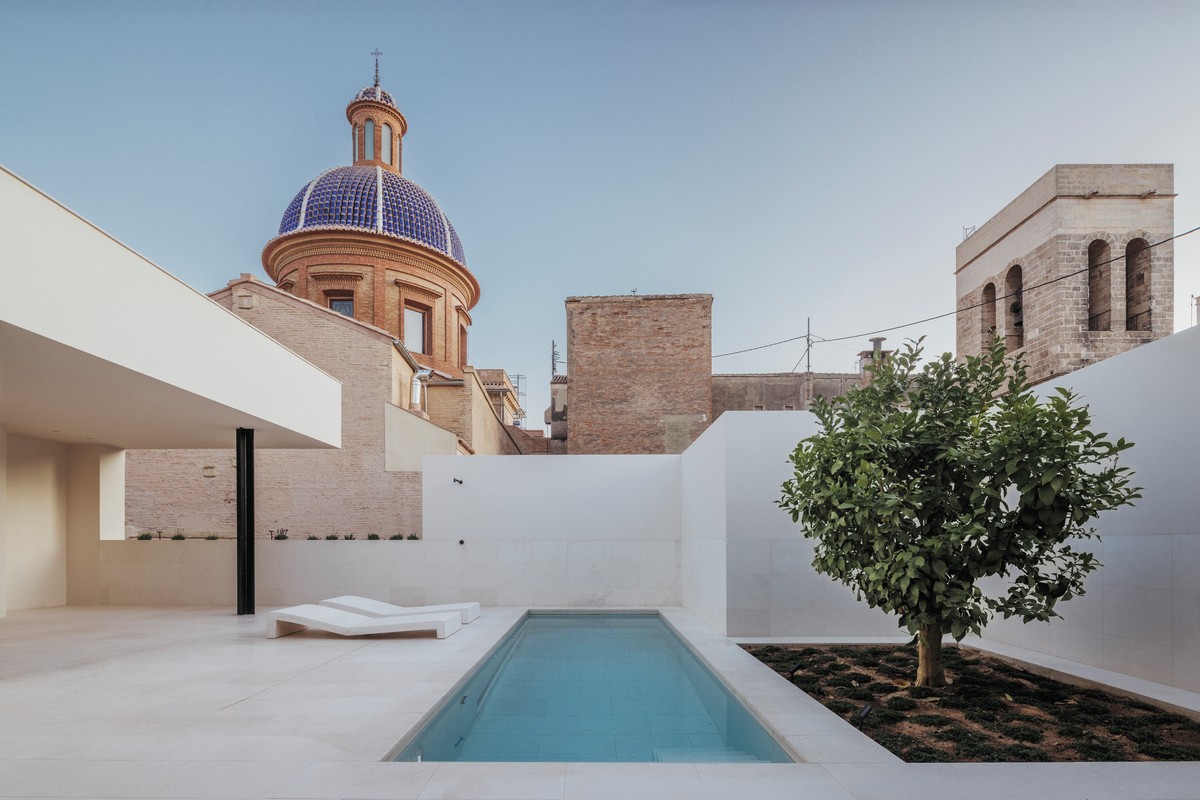
Stairs lead to the terrace (1), which serves as the family’s primary gathering space (2 & 3). Photos © Alejandro Gómez Vives, click to enlarge.
For local architect Jose Fernández-Llebrez, the challenge was to adapt each floor to their different needs while shoehorning the program into the deep, eccentric infill site. The party walls shift in and out, so that the patio at the southern end drifts far off axis from the 30-foot-wide facade to the north. Despite this difficulty, he designed a large, continuous open space for the kitchen, living, and dining areas, that runs from the front to the back of the site in each apartment, assuring cross ventilation. He smoothed the irregular transition from the front to the back with rounded corners and two pairs of structural steel columns that bracket each side of the space, painted, like other metalwork, in matte off-black. The columns are an unusual detail in the otherwise subdued interiors, where floors are a sand-colored limestone and kitchen services are hidden behind paneled walls, with minimalist island blocks for sinks and cooktops. Fernández-Llebrez explains that the columns helped keep structural costs down. Their cross-shaped profile may recall Mies van der Rohe’s Barcelona Pavilion, but their use in the spatial transition of these main rooms, with ceilings of up to 13 feet, also brings to mind similar strategies in Neoclassical interiors, such as those of British architect Robert Adam.
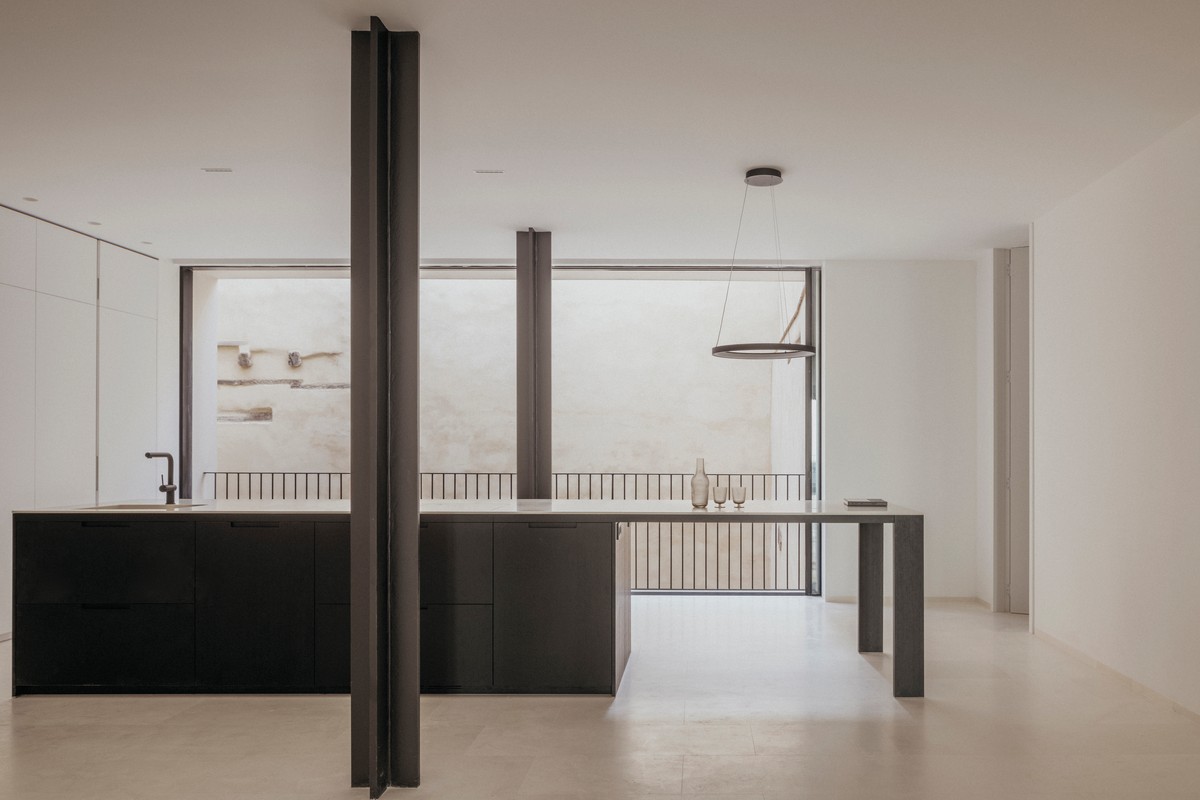
The custom-millwork kitchens are bracketed by cruciform columns. Photo © Alejandro Gómez Vives
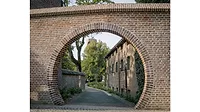
Another difficulty presented by the site was access. On the northern facade, which is composed with traditional balcony windows, as required by local regulations for the historic district, a large oak door, not unlike the carriage entries found in the historic urban houses of the upper class, opens to a hydraulic platform that moves cars to and from the basement garage. With the main living spaces occupying the rest of the facade, the architect made the radical decision to locate the main entry door, together with the vertical circulation, on the other side of the lot, accessible from around the block, at the end of a narrow private cul-de-sac that opens from the corner of a nearby plaza. Known as an atzucat for its Islamic origins, this paved space is closed off from the plaza with another monumental oak door. Like the project’s other outdoor spaces, including two 10-foot-square courts for the bedrooms and baths, the atzucat is planted with ferns and ivy that will cover the party walls. Other vegetation includes a line of five small cypress trees in the atzucat and a mature cypress in a light well at the end of the large rear patio, which connects a basement workspace to the outdoors.
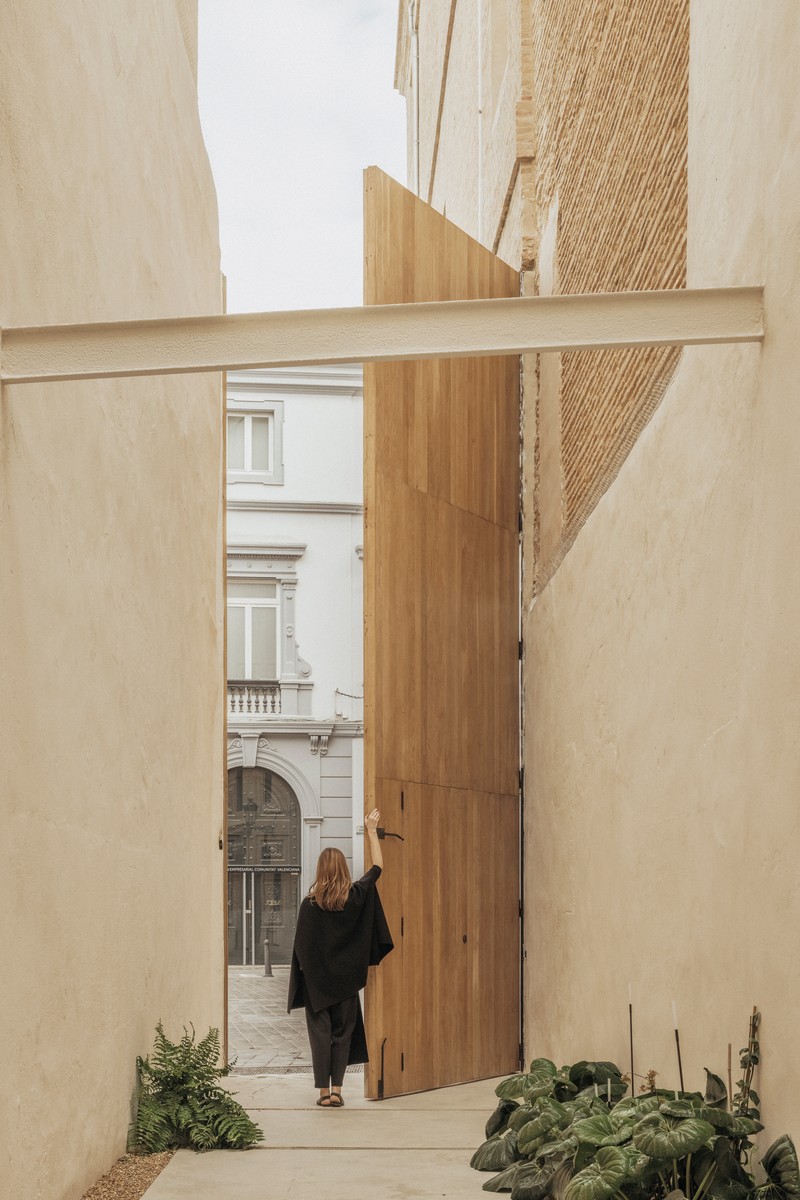
Plantings in the atzucat will cover the party walls. Photo © Alejandro Gómez Vives
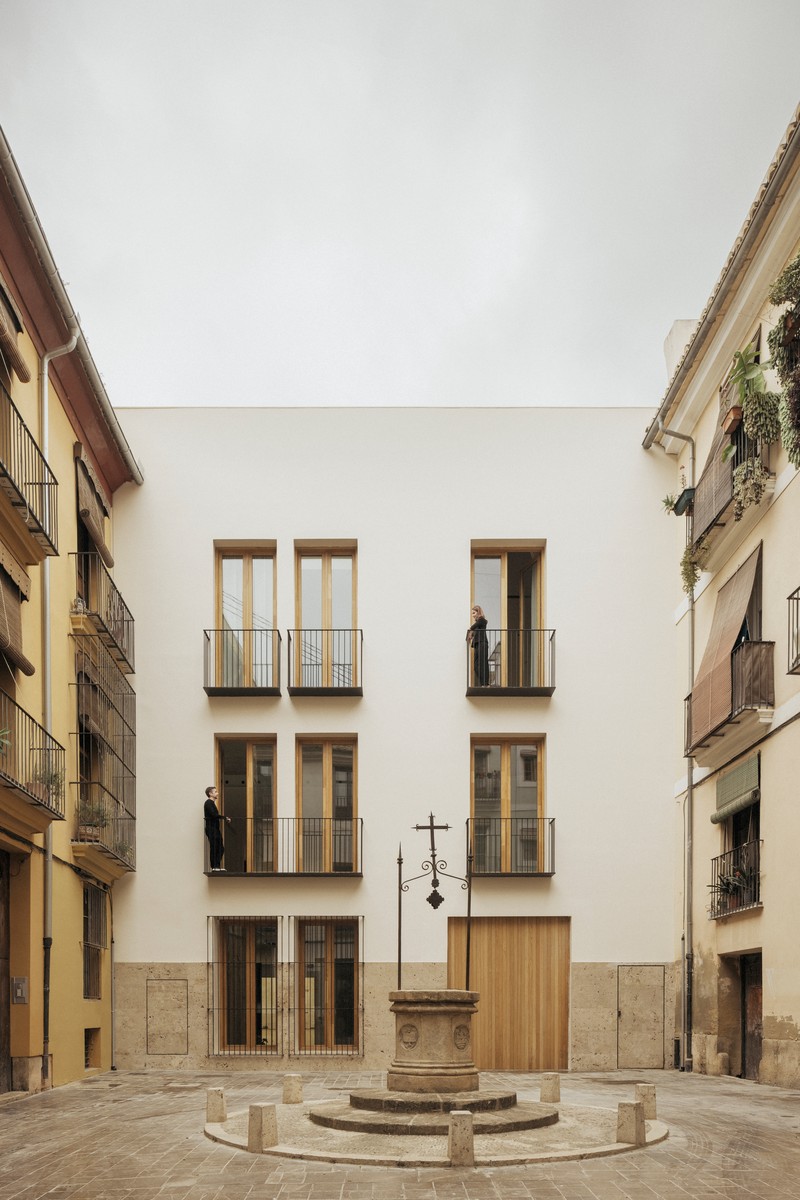
Balconies on the facade, required by local code, overlook a historic plaza. Photo © Alejandro Gómez Vives
The heart of the family home is the top-floor terrace, with its 25-foot swimming pool, a mature lemon tree set in a bed of lavender, and a paellero, a wood-burning brick oven for making paella, the famous local specialty. Dominating the view are the tiled dome of a 19th-century chapel and a Romanesque church tower, both located just across the rear patio. “They seem to be on top of you,” Fernández-Llebrez relates. “You hear the bells as if you were inside the tower. The clients love it,” he continues, “and they’ve already picked a couple of lemons from the tree to make gin and tonics.”
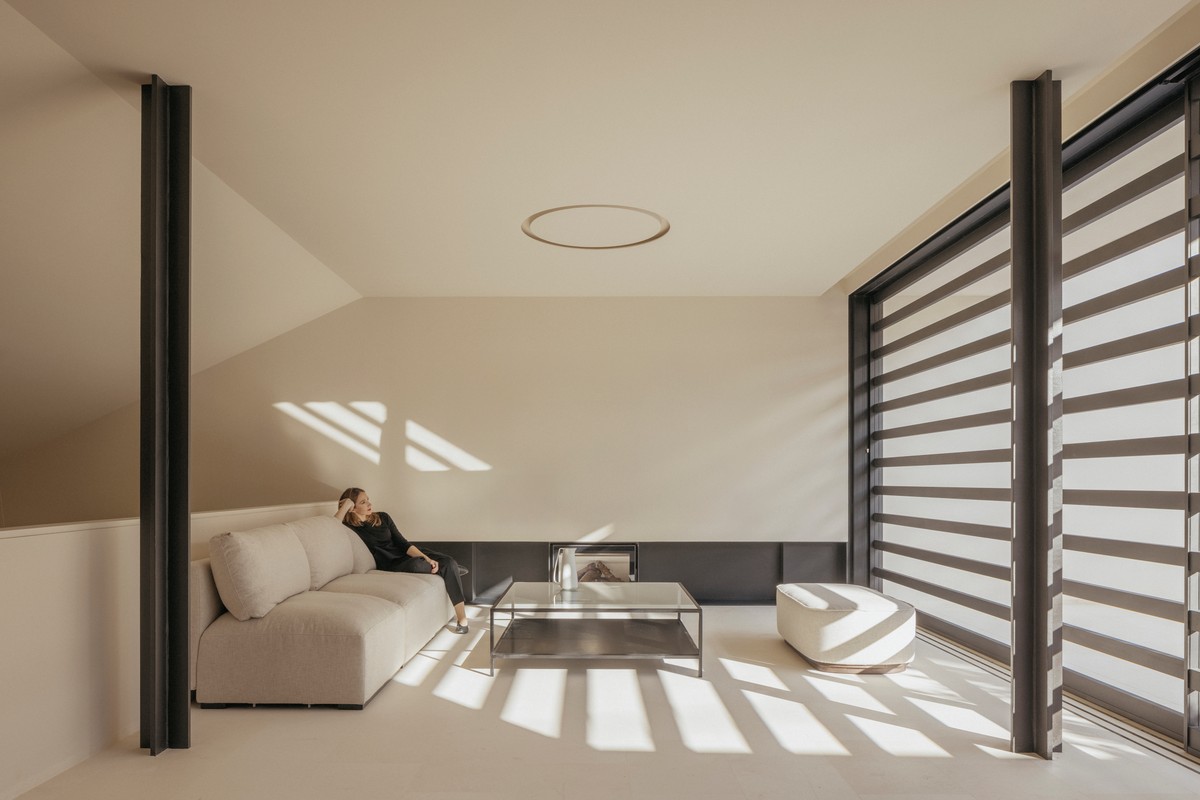
On the top floor, large sliding doors lead to the terrace. Photo © Alejandro Gómez Vives
The organization of urban living around these private outdoor spaces is echoed in the rich history of the site, uncovered in mandatory archaeological excavations. The most splendid find was an 11th-century Islamic patio with a well-preserved hexagonal fountain finished in colored tiles, though it was claimed for a public collection, per Spanish law. Exceptions were made, however, for some of the blue-and-white tiles from a 15th-century patio, which now pave a section of the atzucat, and a Roman well, which can be seen under glass that paves a section of the basement, together with a few amphoras from the client’s collection.
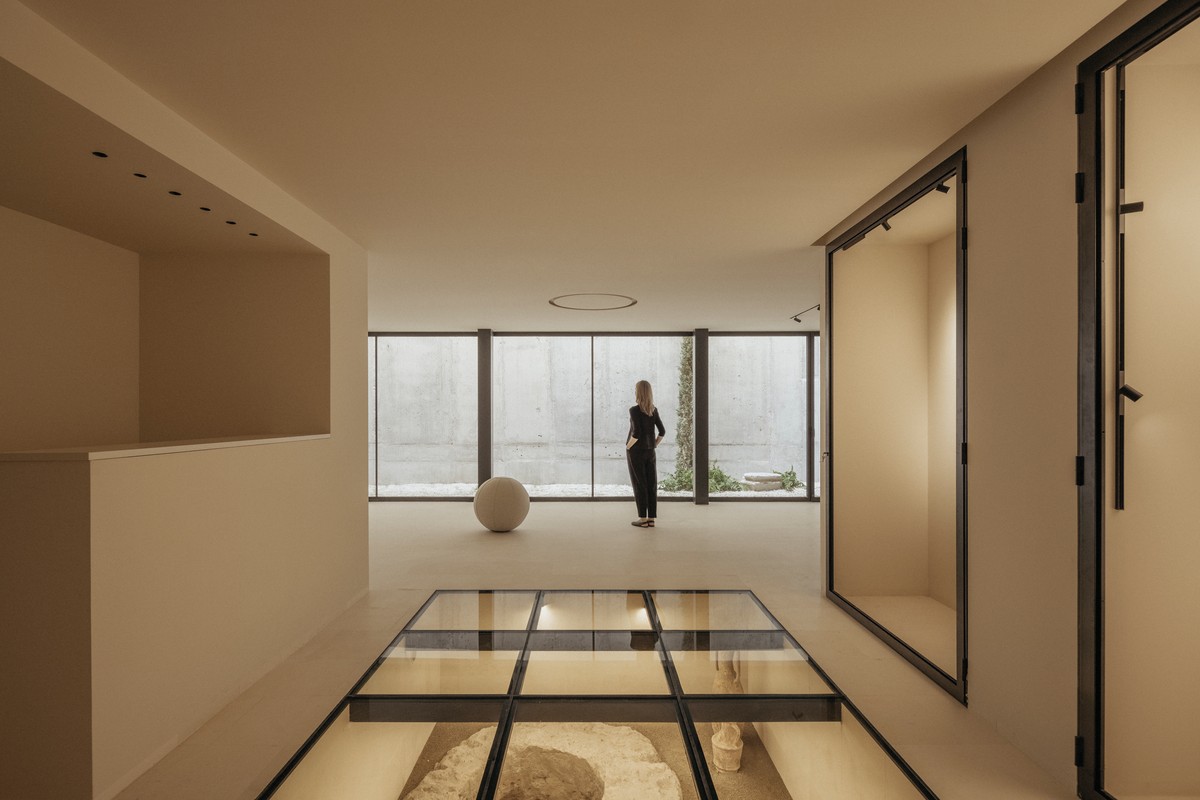
A Roman well, on display under glass, was discovered during excavation. Photo © Alejandro Gómez Vives
Beset by history on all sides, the architect nevertheless created thoroughly contemporary homes, with their master suites, multiple baths, and large living spaces suitable for both casual family life and entertaining. That said, the design also builds on the best of those traditions, taking on a noble scale and subtle elegance on its own terms.
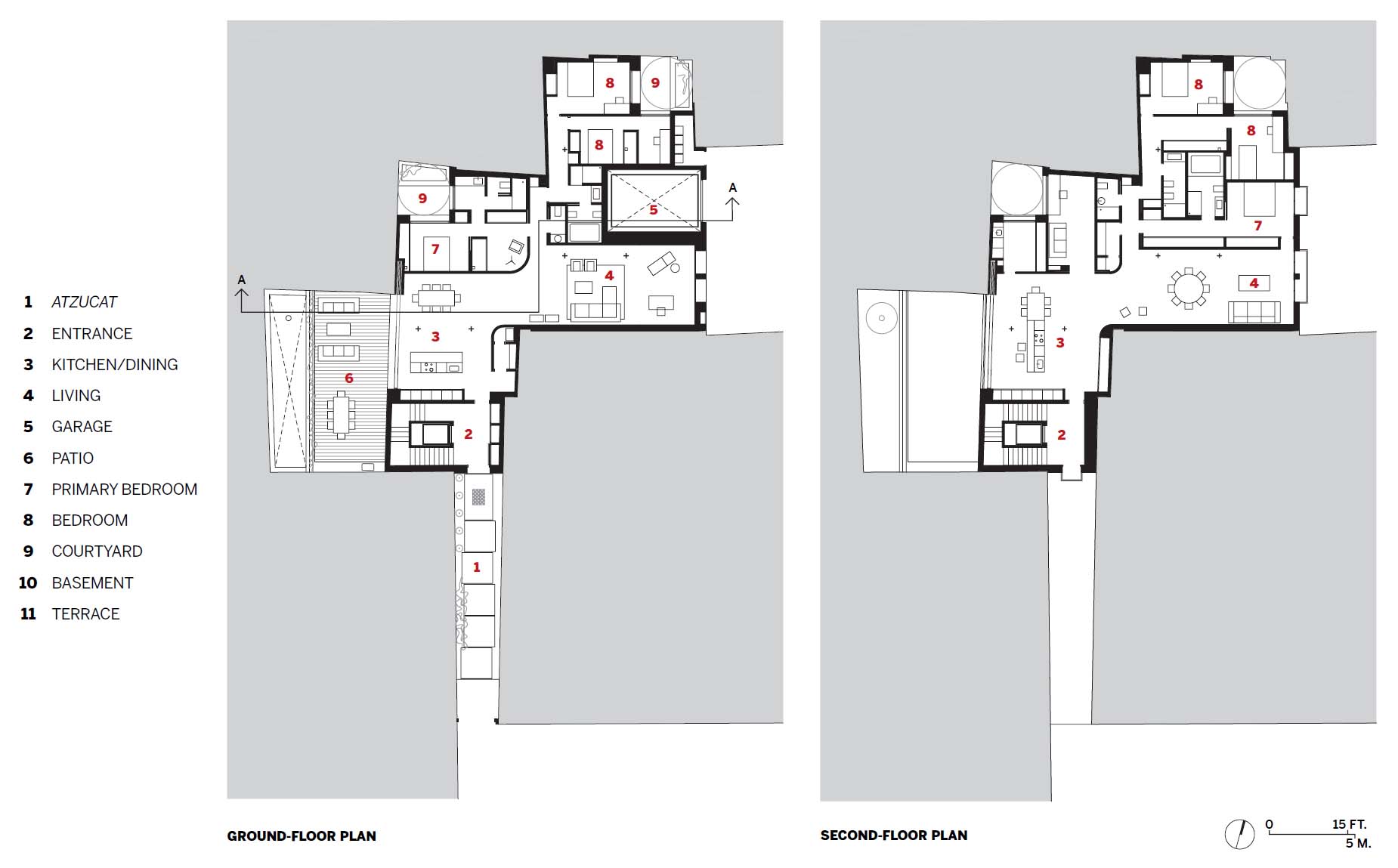
Image courtesy Fernández-Llebrez Arquitectura
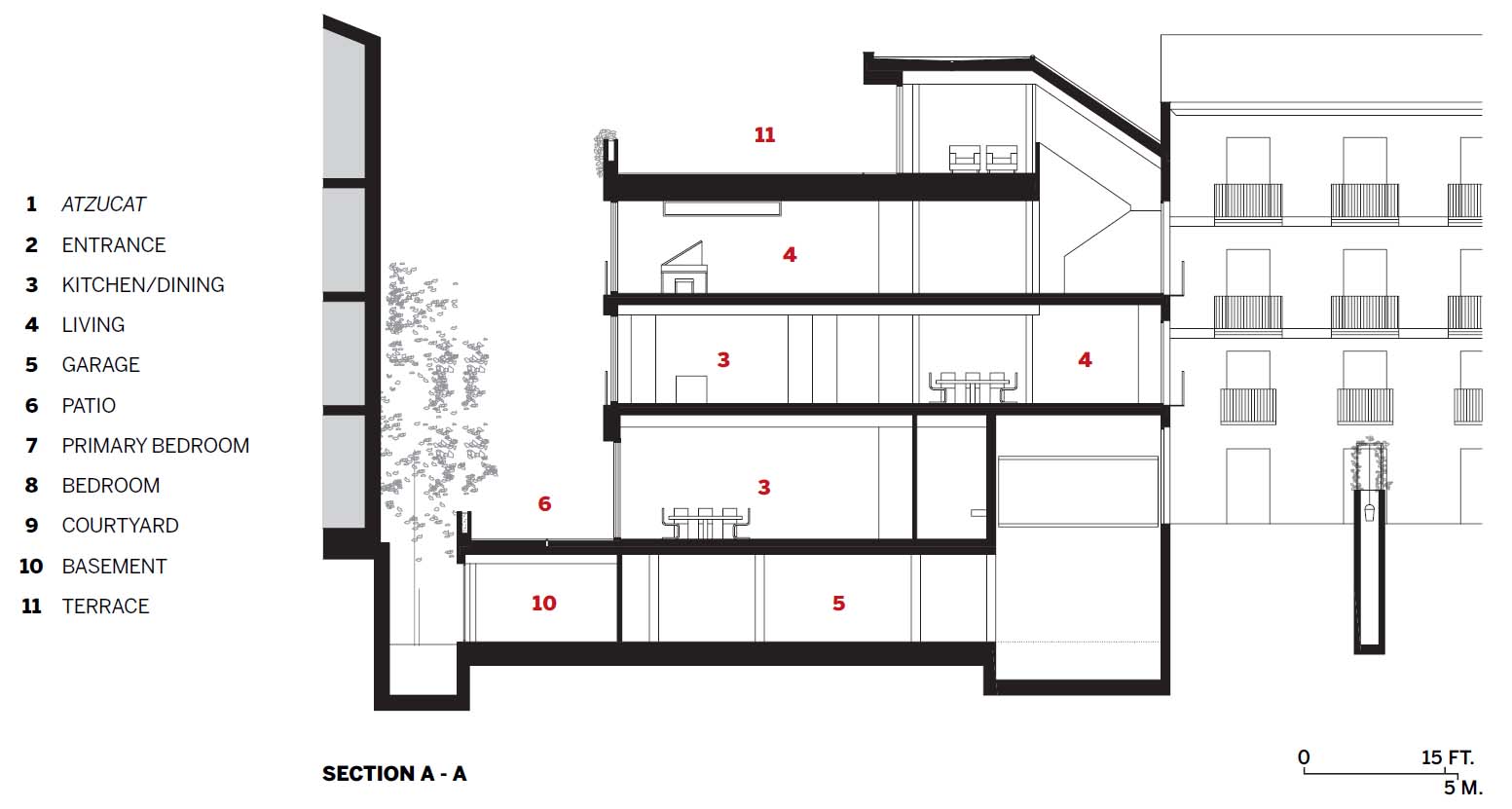
Image courtesy Fernández-Llebrez Arquitectura
Credits
Architect:
Fernández-Llebrez Arquitectura — Jose Fernández-Llebrez, design lead; Patricia García Martínez, Lucía González Suárez, Carmen Ferri Pardo, Alicia Adelantado Fernández, project team
Engineers:
Josep Ramon Solé Marzo (structural and geotechnical); Juan Manuel Sánchez Rodríguez (m/e/p); Miguel Cortés Ibáñez, Maite Pellicer López (construction supervision)
Consultants:
Remedios Martínez García (archaeological); The Lux (lighting); Estudio Agraph (graphics)
General Contractor:
AT4
Client:
Edificio Viciana
Size:
14,050 square feet
Cost:
Withheld
Completion Date:
May 2025
Sources
Doors:
Cechi Tapiceros (entrances); Madentia (wood and sliding)
Interior Finishes:
Mobalco (millwork); Nerinea (stone flooring); Isaval (paint)
Elevators:
Otis (car and passenger)
PLumbing:
Oli, Ritmonio, Fontealta, Inbani
Looking for quick answers on architecture and design topics?
Try Ask RECORD, our new smart AI search tool.
Ask RECORD →
Looking for a reprint of this article?
From high-res PDFs to custom plaques, order your copy today!