Witherford Watson Mann’s Appleby Blue Almshouse in South London Wins 2025 Stirling Prize
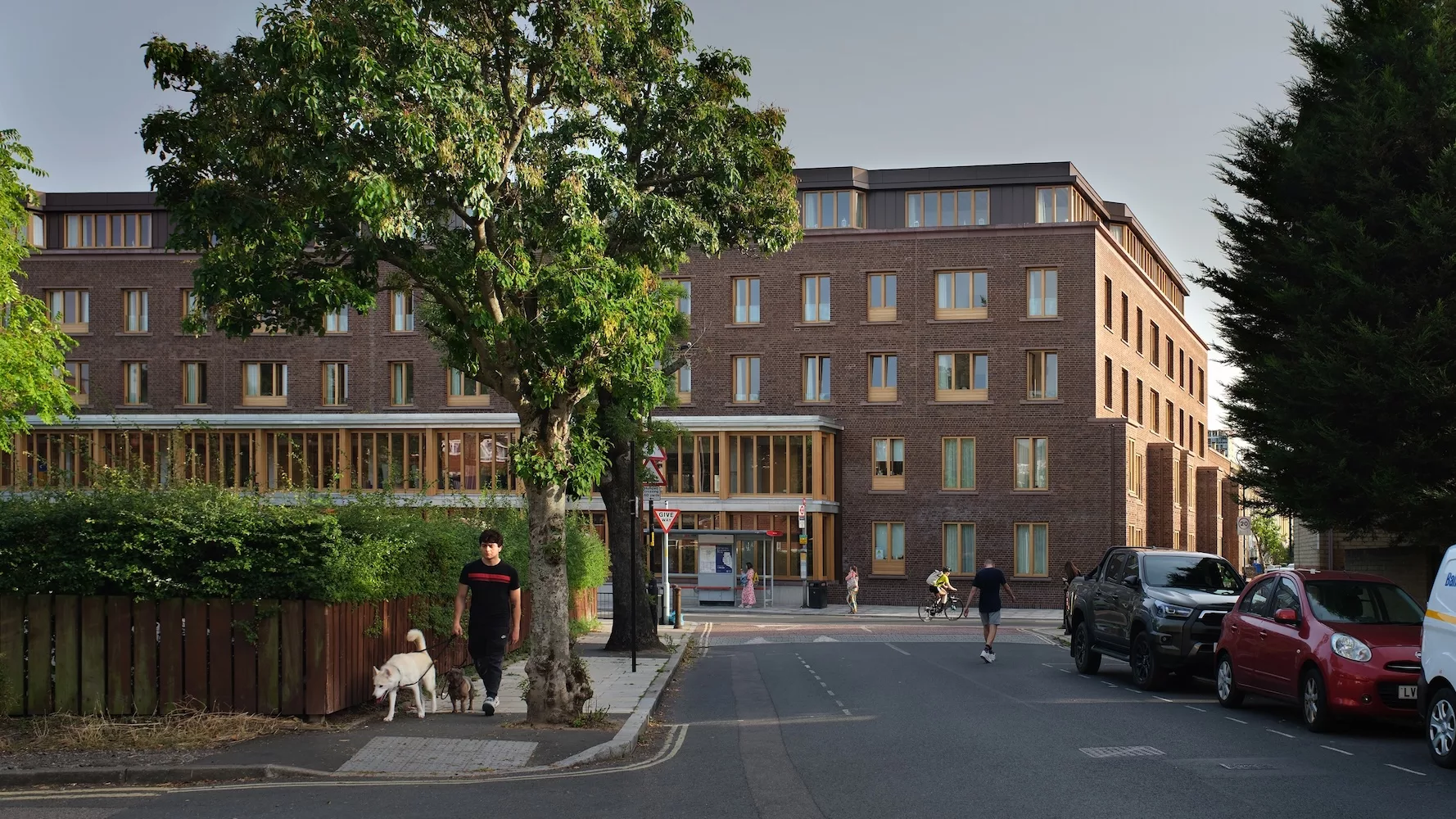
2025 Stirling Prize winner Appleby Blue Almshouse, an affordable senior housing complex in southeast London designed by Witherford Watson Mann for United St Saviour's Charity.
A residential complex for seniors in London described as a “clarion call for a new form of housing at a pivotal moment” has been awarded the United Kingdom’s top project-based architecture honor, the 2025 Stirling Prize, by the Royal Institute of British Architects (RIBA). Designed by Witherford Watson Mann (WWM), Appleby Blue Almshouse, which was featured by RECORD in October 2023, was recognized by RIBA at a ceremony held in London last evening, where the project also won this year’s Naeve Brown Award for Housing. That prize celebrates the best affordable housing projects in the UK.
“Designing social housing for later life is too often reduced to a simple provision of service. Appleby Blue, however, is a provision of pure delight,” said Ingrid Schroder, director of The Architectural Association (AA) School of Architecture and chair of the 2025 Stirling Prize jury. “Its architects have crafted high-quality spaces that are generous and thoughtful, blending function and community to create environments that truly care for their residents.”

Photos © Philip Vile
This is the second Stirling Prize win for London-based WWM. In 2013, the firm received the award for its restoration of Astley Castle, a moated, once-crumbling manor house built in the 16th century in rural North Warwickshire, England. The firm has also been shortlisted for the prestigious prize on two other occasions. In 2019, its theater for Nevill Holt Opera in Leicestershire was among the finalists; the transformation of London’s Courtauld Institute of Art followed in 2023 with more RIBA acclaim. Goldsmith Street, an affordable, Passivhaus-qualifying housing project in Norwich designed by Mikhail Riches with Cathy Hawley, and John Morden Centre, a day health facility for older Londoners by Mae Architects, won the prize those respective years.

Photo © Philip Vile
As a low-cost social housing complex providing dignified, daylight-drenched accommodations to adults over 65, Appleby Blue Almshouse is a hybrid of sorts of these past two Stirling Prize winners that WWM ultimately lost to. This year, the firm, working for client United St Saviour’s Charity, triumphed as part of a diverse shortlist that included five other shortlisted projects, most located—as the prize has been trending—in London: the Purcell-led refurbishment of London’s historic, Big Ben–housing Elizabeth Tower; Hastings House, a private home on the Sussex Coast designed by Hugh Strange Architects; Takero Shimazaki Architects’s Niwa House, another private residence, in London’s Southwark district; Allies and Morrison’s new home for the London College of Fashion; and Herzog & de Meuron and BDP’s Discovery Centre, a Cambridge research facility for pharmaceutical giant AstraZeneca. Appleby Blue Almshouse’s win didn’t come out of left field. The tasteful, convention-tipping project, along with the restoration of Elizabeth Tower, were considered early favorites by bookies.
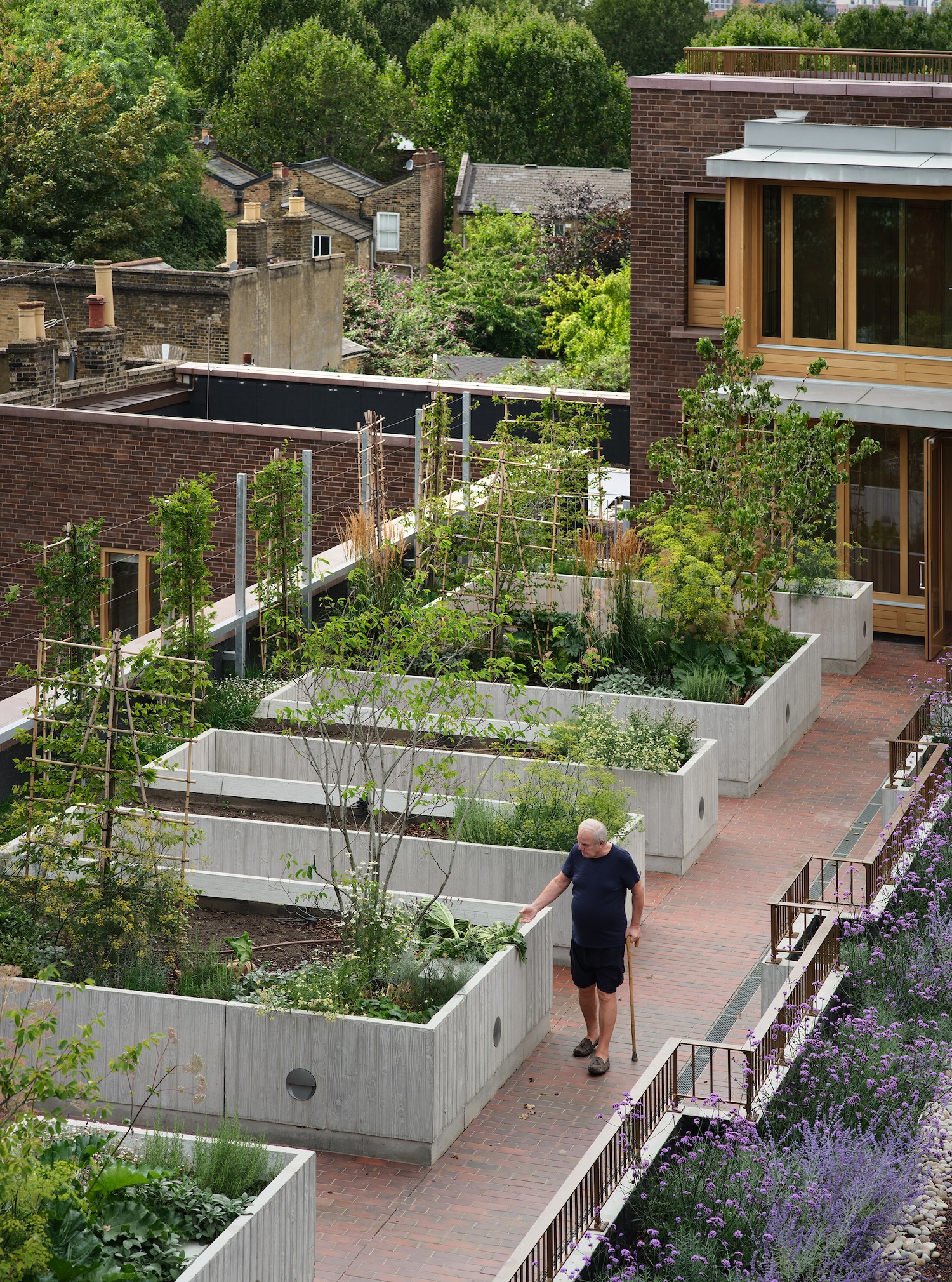
Located in the dense—and brick-heavy— southeast London district of Bermondsey at a site where an assisted living home once stood, Appleby Blue Almshouse includes 59 spacious apartments wrapped in a U-shape around a bright central courtyard. Spaces meant to ward off loneliness and foster social interaction, including a shared roof garden and a community kitchen, play prominently into the design. Conceptually, the project offers a dignified refresh of the UK’s centuries-old almshouse typology: modest, low-slung attached houses operated by charities for poor or disabled residents where it is easy to isolate. Beyond traditional almshouses, RIBA notes that WWM’s design offers an alternative to the uninspired, dreary nature of contemporary group housing for residents over the age of 65. “Inside, generous homes with discreet accessibility features offer an aspirational living environment, standing in stark contrast to the institutional atmosphere often associated with older people’s housing,” a prize announcement reads.
Schroder adds: “By creating a radical and significant model that embraces co-living at a time where our demographics are shifting, Appleby Blue sets an ambitious standard for social housing among older people. Not only does it perform the rare act of freeing up accommodation while keeping residents embedded in their community, it shows that design, when infused with deep care, can meaningfully address the pressing issues of today.”
The crown jewel of RIBA’s extensive awards program, the Stirling Prize was first established in 1996. Despite being just 30 years old, the demolition of the prize’s inaugural winner, the Stephen Hodder–designed Centenary Building at the University of Salford, was approved in January in the face of widespread opposition. Last year, in a marked break from precedent, the prize went not to a single building or single-site scheme but to the Elizabeth Line, an urban-suburban transit line comprising 62 miles of track, 10 new transit stations, and 31 revamped stations. Grimshaw, whose founder Nicholas Grimshaw died last month, led that ambitious, much-lauded infrastructure project.
Looking for quick answers on architecture and design topics?
Try Ask RECORD, our new smart AI search tool.
Ask RECORD →
Looking for a reprint of this article?
From high-res PDFs to custom plaques, order your copy today!