At Indiana’s DePauw University, a 1938 Academic Hall is Reborn as a New Business School
Architects & Firms
“Colleges Face a Reckoning.” “Is College Worth the Cost?” “Perceived Importance of College Hits New Low.” For decades, Americans have almost unquestionably equated college education as a pathway to a better life. But in news headlines and around kitchen tables, that truism recently has come under intense scrutiny. A survey conducted by Gallup this past summer reveals that people who rank college as “very important” or “important” represent a minority of the nation—a first in the organization’s 15 years of polling on the subject.

Photo © Mike Kelley
At the start of her tenure in 2020, DePauw University president Lori White launched a strategic planning process that would counter sinking public confidence in higher education. Contemplating the many reasons for the reputation decline, White and her colleagues at the Greencastle, Indiana–based private college decided to reframe its academic training for career readiness. And three years later, DePauw launched a new School of Business and Leadership (SBL) that offers, as White told a local reporter, “fields of study that…students are looking for and that employers tell us they want in graduates.” Today, DePauw is one of only several liberal arts colleges operating a business school.

Photo © Mike Kelley
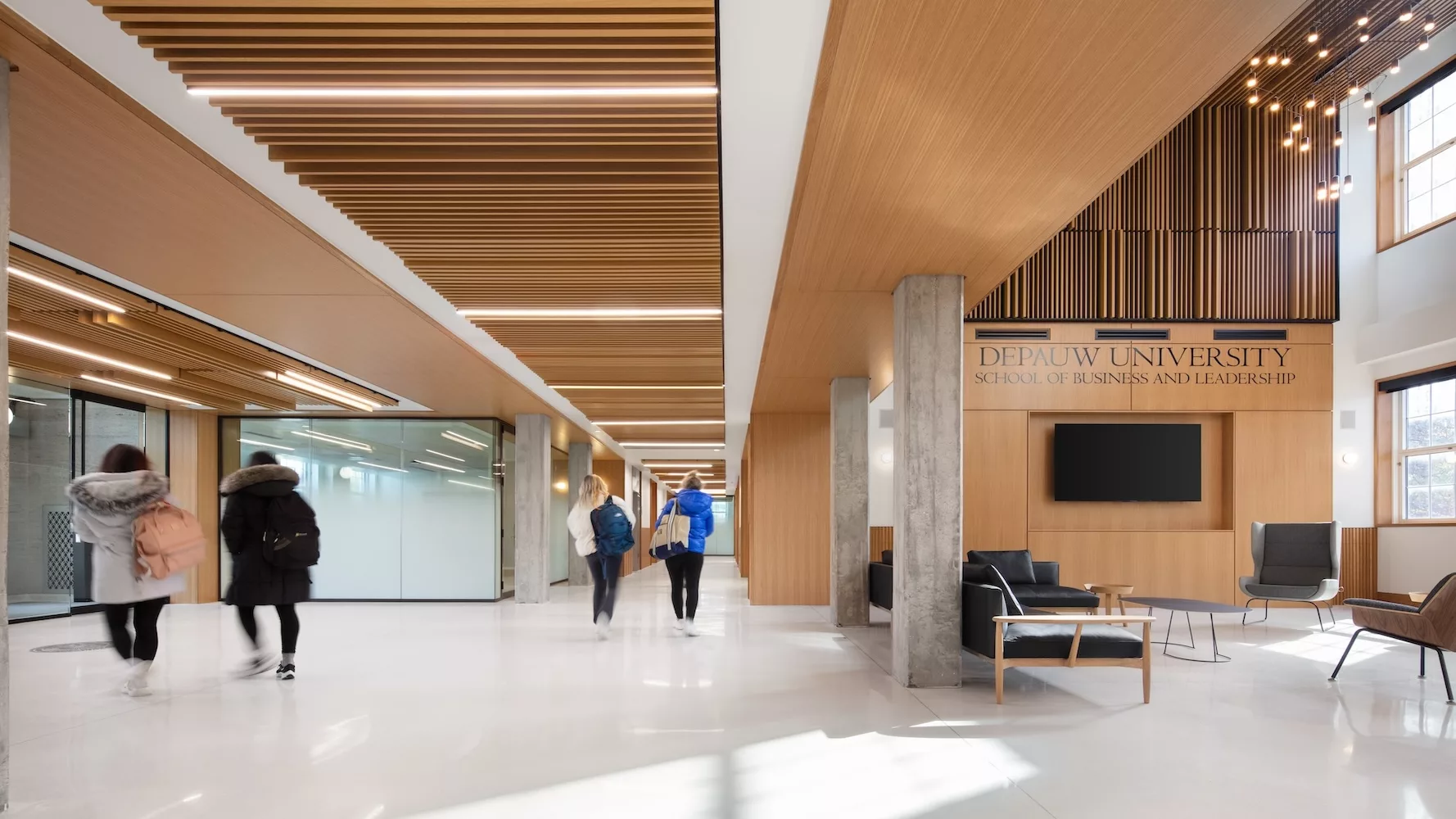
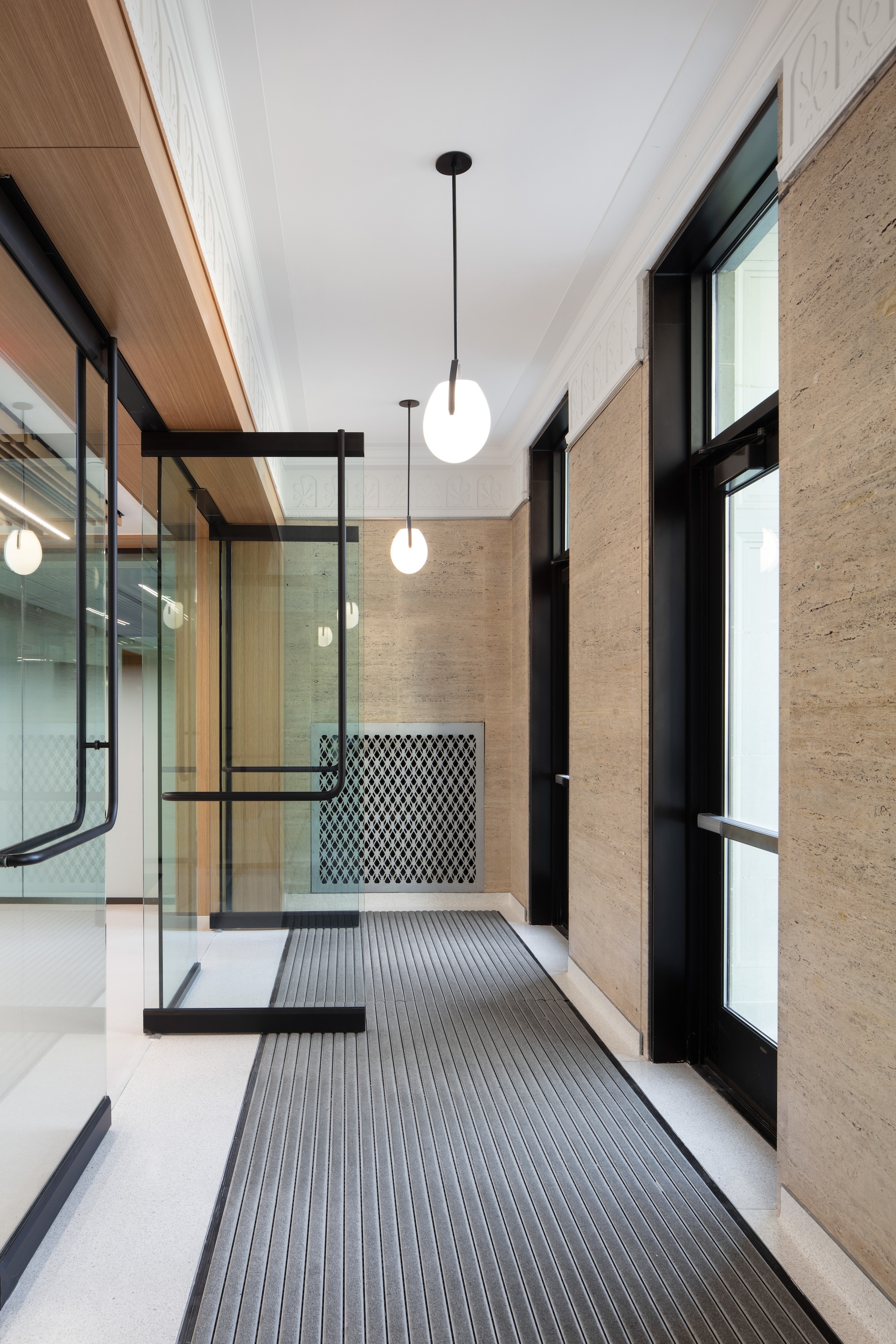
DePauw allotted the first floor of its Colonial Revival–style John H. Harrison Hall to house SBL, and it selected Phoenix-based Studio Ma in 2021 to redesign it for the new school. “It was a fun challenge to a take a fairly mundane, cellular academic building and create all the light-filled space you need to make a business school,” firm principal Christiana Moss says of modernizing 16,000 square feet within the three-story 1938 building.

Photos © Mike Kelley
SBL itself was still being defined as Studio Ma delved into its conceptual development. In turn, the design team braided the two processes, by coordinating conversations with faculty, board members, and students to determine program. The effort also identified concerns—about modern architecture’s ability to convey a sense of place, for instance—as well as insights about SBL culture and curriculum, that would drive Studio Ma’s decision making overall.
Take the Hub Space, a multipurpose zone that now faces the main entrance of Harrison Hall. Studio Ma conceived this destination as a double-height volume in direct response to community brainstorming, which envisioned presentations made to students by area business leaders. “There was a need for elevation and celebration, not only to attract students but also encourage visiting professionals to interact with students,” Moss explains. “The intervention was transformative and essential.”

Photo © Mike Kelley
Removing a portion of Harrison Hall’s second floor simultaneously contributed to placemaking, Moss says of the Hub Space: “We were able to express the utility of this very pragmatic Midwestern building, by letting people see the deck and the structural spans that had been hiding under layers and layers of ceilings.” Inspired by the historic bridges that surround Greencastle, Studio Ma also created a white oak feature wall for the blind atrium that wraps onto its ceiling. Flanking either side of the Hub Space, the double-loaded corridor’s ceiling baffles and its oak-wrapped doorways echo the portal gesture.
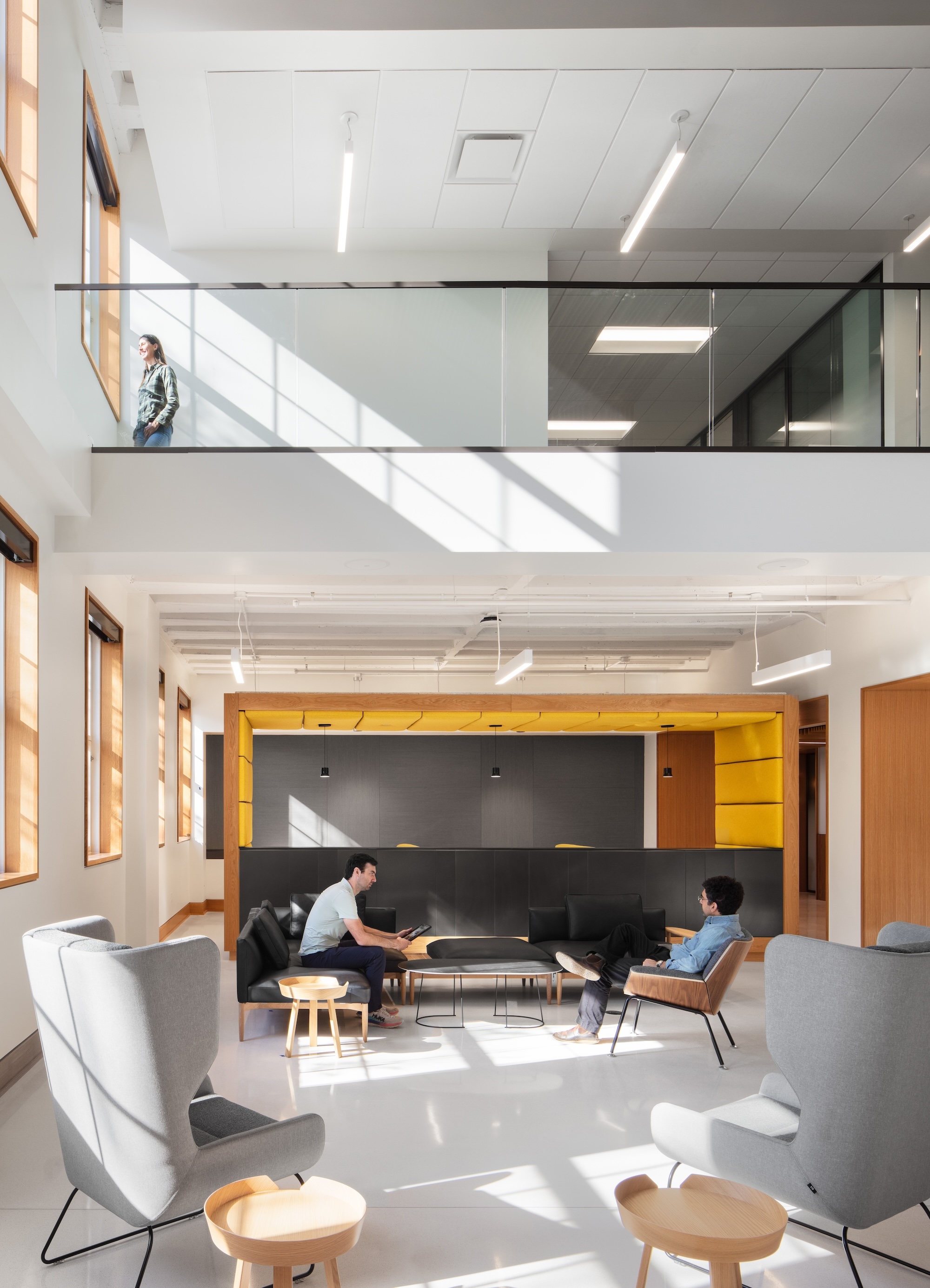
Photo © Mike Kelley
Indeed, stakeholder dialogue manifests through the finished project. In addition to supporting interior daylight penetration, glazed classroom and office walls reveal learning activities and Bloomberg Terminals, which convey the revamped interior’s purpose. Reflecting interest in collaboration and transparency, Studio Ma reconfigured a pod of offices at the western terminus of the corridor to accommodate faculty and administrators as well as students. Locally fabricated custom furniture and millwork was specified for the entire project to honor Indiana’s deep craft traditions.
As a scholarly program, SBL is “reinvigorating the liberal arts and making the liberal arts more tenable,” Moss says. One might argue Studio Ma has done something analogous for DePauw University, by reusing Harrison Hall so comprehensively that SBL has the functionality and verve of new construction. However academia continues to evolve, Moss calls SBL “a great representation of the future” of higher-education facilities—and of buildings more widely. “There are really no limitations when it comes to adapting existing structures; harvesting and transforming our built environment is an inspiring design problem of the 21st century,” she adds.

Photo © Mike Kelley
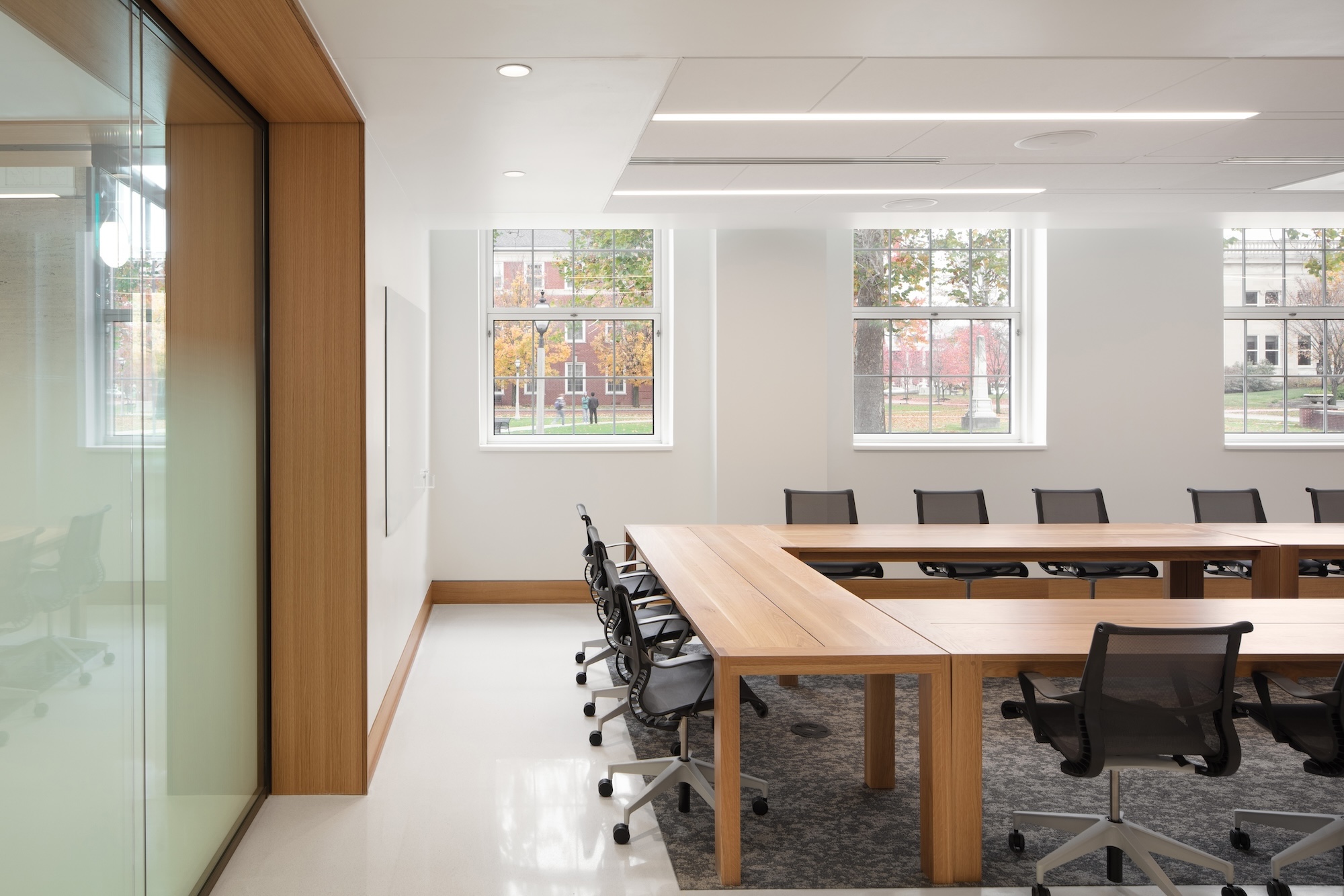
Photo © Mike Kelley
Looking for quick answers on architecture and design topics?
Try Ask RECORD, our new smart AI search tool.
Ask RECORD →
Looking for a reprint of this article?
From high-res PDFs to custom plaques, order your copy today!