Spiritual Projects 2025
Mark Cavagnero Associates Expands a Century-Old Synagogue in San Francisco from Within
San Francisco

Architects & Firms
With its statuesque entry arch and the solemnly majestic dome that rises 150 feet, Temple Emanu-El is a memorable San Francisco landmark set against the forested backdrop of the Presidio, a former army post that is now a popular National Park.
But, however timeless it might seem from afar, the century-old complex designed by architect Arthur Brown Jr. has entered a new era. Not only is the original entrance functioning again after decades of disuse, but an ingenious update by Mark Cavagnero Associates (MCA) that opened in September has added 18,800 square feet of educational and congregational space while restoring several of the most distinctive architectural features.
“This is a new building, essentially, behind a historic facade,” says Mark Cavagnero, MCA founder. “We wanted absolute clarity between old and new, but also for the overall design to feel integrated and cohesive.” His reference wasn’t to the domed main sanctuary, with its vaguely Byzantine grandeur and clay-tiled cupola, but the insertion of a large structural addition into the courtyard wing that Brown—who was also the architect for San Francisco’s City Hall and Coit Tower on Telegraph Hill—designed with open colonnades framing a plaza leading to the vast house of worship.

The project added 18,800 square feet below and surrounding the courtyard (top of page) of the historic synagogue (above). Photo © Tim Griffith, click to enlarge.
Though Brown’s columned courtyard was visually striking, the frequent fog and winds that define northwest San Francisco often kept the congregation from lingering after their gatherings, which include conferences and talks. The steep processional stairway ascending through the arch was closed to regular use after passage of the Americans with Disabilities Act in 1990. There were seismic concerns about the colonnaded structure, and security worries as well.
“For the courtyard, there were no easy long-term fixes,” says David Goldman, the synagogue’s executive director. As for security, “it was designed to be open, so that people could walk in from all sides, but that’s not the world we live in anymore.”
To bring the courtyard wing up to date, pairing structural work with an overhaul of the cramped spaces in an adjacent meeting house, the congregation approached Cavagnero. Though his 60-employee firm is best known for such strong original buildings as SF Jazz Center, it also has excelled at such blends of old and new as MCA’s remake of Kevin Roche John Dinkeloo Associates’ Oakland Museum of California.
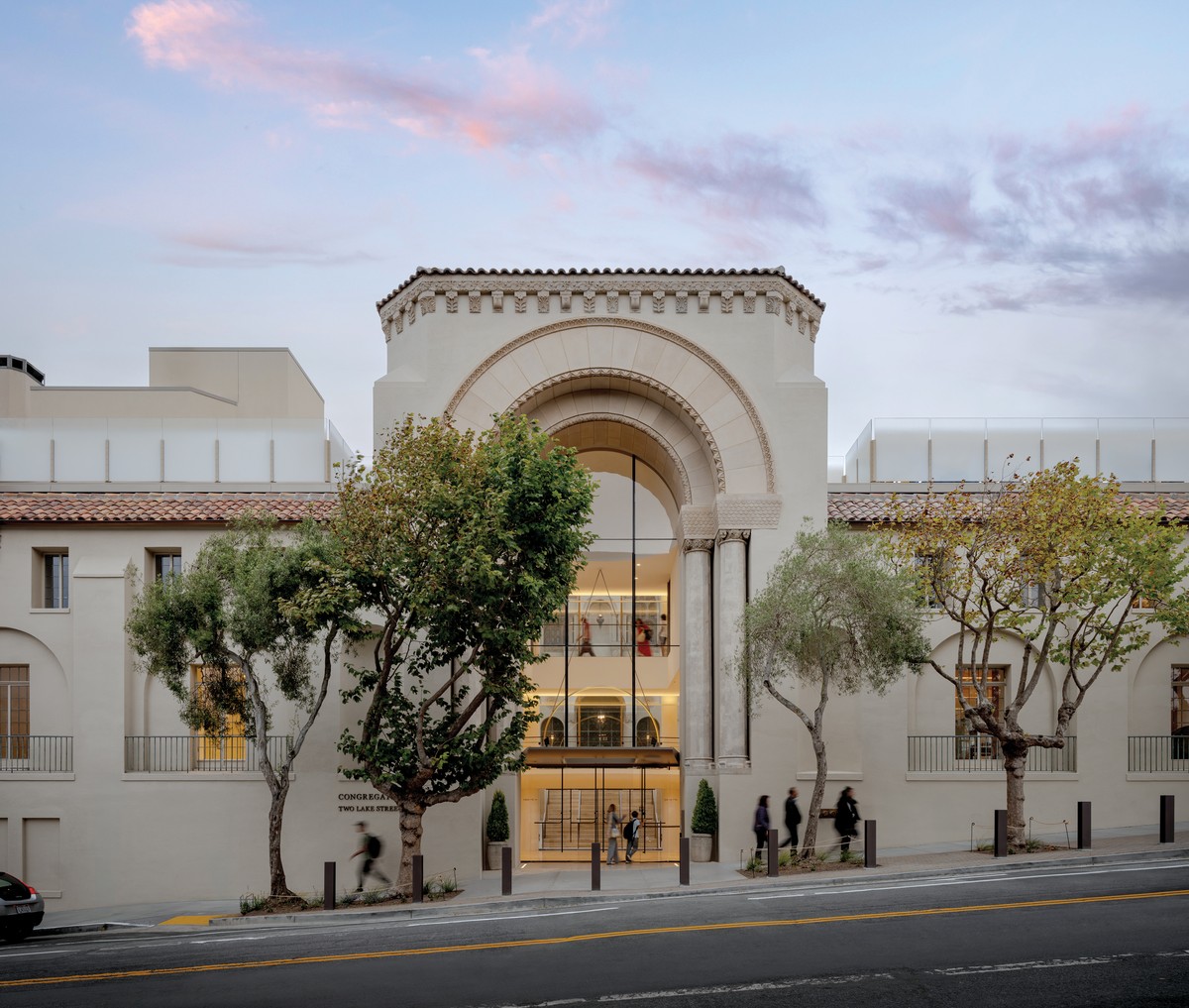
Cavagnero made the case that restoring the main entry procession was the key to merging a 20th-century landmark and 21st-century realities. The old travertine staircase was removed, so that congregants and visitors now enter at sidewalk level through a glass wall that fits snugly within the arch—creating a reception area and orientation space for the activities within and providing a new layer of security.
Looking for quick answers on architecture and design topics?
Try Ask RECORD, our new smart AI search tool.
Ask RECORD →

1
Congregants enter a reception area (1) at sidewalk level (2) and ascend to reach the courtyard (3). Photo © Tim Griffith
2
3
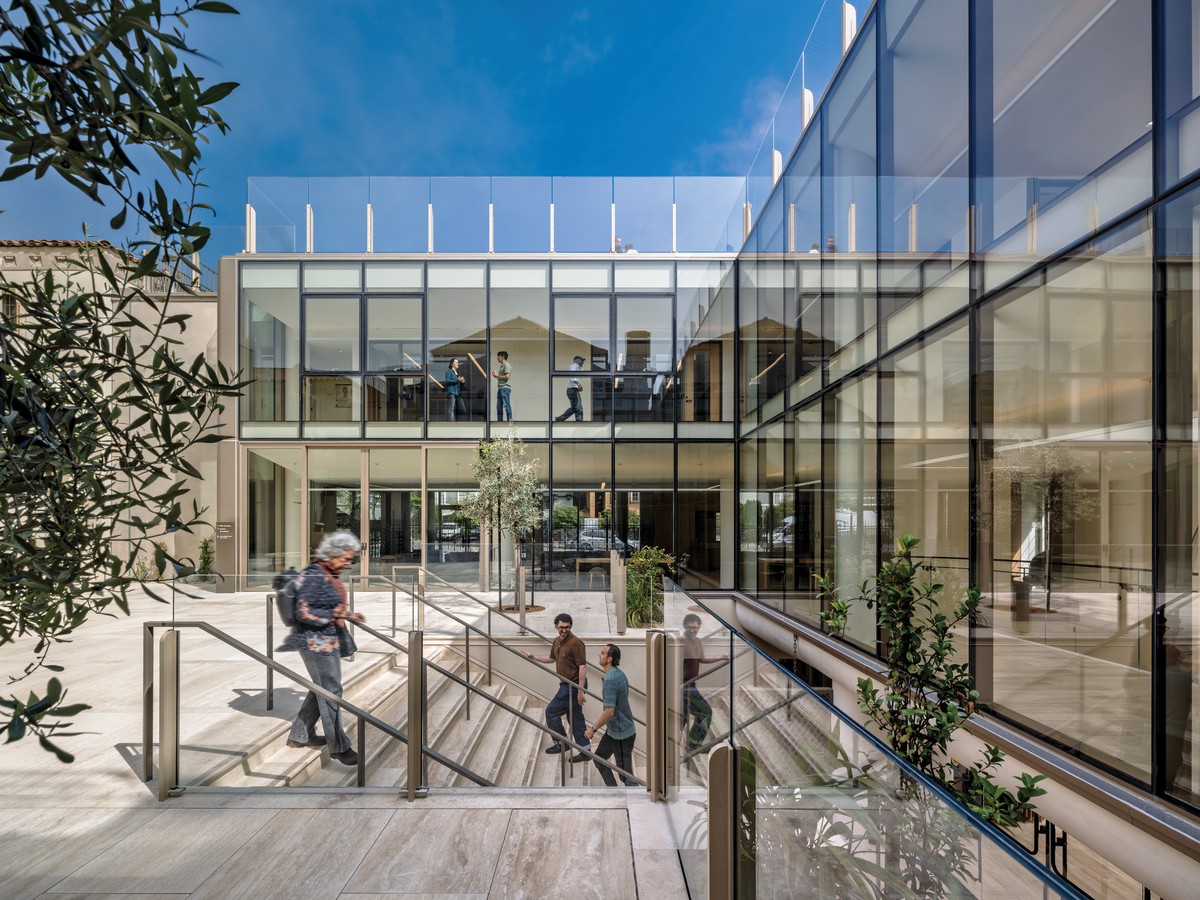
Once inside, people can take a new elevator to the courtyard level or climb 18 new travertine steps, an ascent made more alluring by the framed view of the domed sanctuary beyond. The courtyard was raised 14 inches to allow a suite of subterranean offices for rabbis and staff, and at the same time making the plaza-like space level with the forecourt to the main sanctuary. Then Cavagnero removed the columns along the original courtyard and inserted a U-shaped glass-clad addition that links the three sides and creates space for classrooms and meeting areas.

The domed sanctuary is visible from almost every vantage point in the U-shaped courtyard addition. Photo © Tim Griffith
The moves narrow the courtyard by 6 feet on the east and west and raise the height of the walls directly along it on those two sides. To offset this reduction, Cavagnero and his team took steps to enlarge the sense of overall space. The addition’s hallways surround the courtyard with large sliding doors at plaza level to blend indoors and out. Several of the second-floor windows, meanwhile, open outward a few inches—not only allowing natural ventilation but making it possible (at the congregation’s request) for someone inside to call out to a friend or coworker below.
Though obviously new, the addition’s presence is softened wherever possible, even with details as small as using curved bronze-tinted mullions instead of a right-angled black grid. New shear walls that provide seismic bracing between the courtyard wing and Brown’s main sanctuary wear creamy plaster, with creeping Boston fig planted at the base to add a touch of nature as the vines spread.
“We wanted people to be able to hang out, stick around after services and feel like this is their home,” says Felicia Dunham, an associate principal at MCA who served as project manager.
None of this hides the extent of the changes, to be sure. But “any nostalgia for what was there has been overwhelmed by the total effect” of the remake, Goldman has found. “It’s so much more pleasant and warm and connected throughout.”
As with any architectural transformation, aspects of the Temple Emanu-El renovation can feel awkward; it’s never easy to make substantial alterations to a beloved home. Overall, though, the fusion adds a welcome spark. It respects the past while allowing people to gather in new ways, amid changes that respond to the needs of an ever-evolving world.
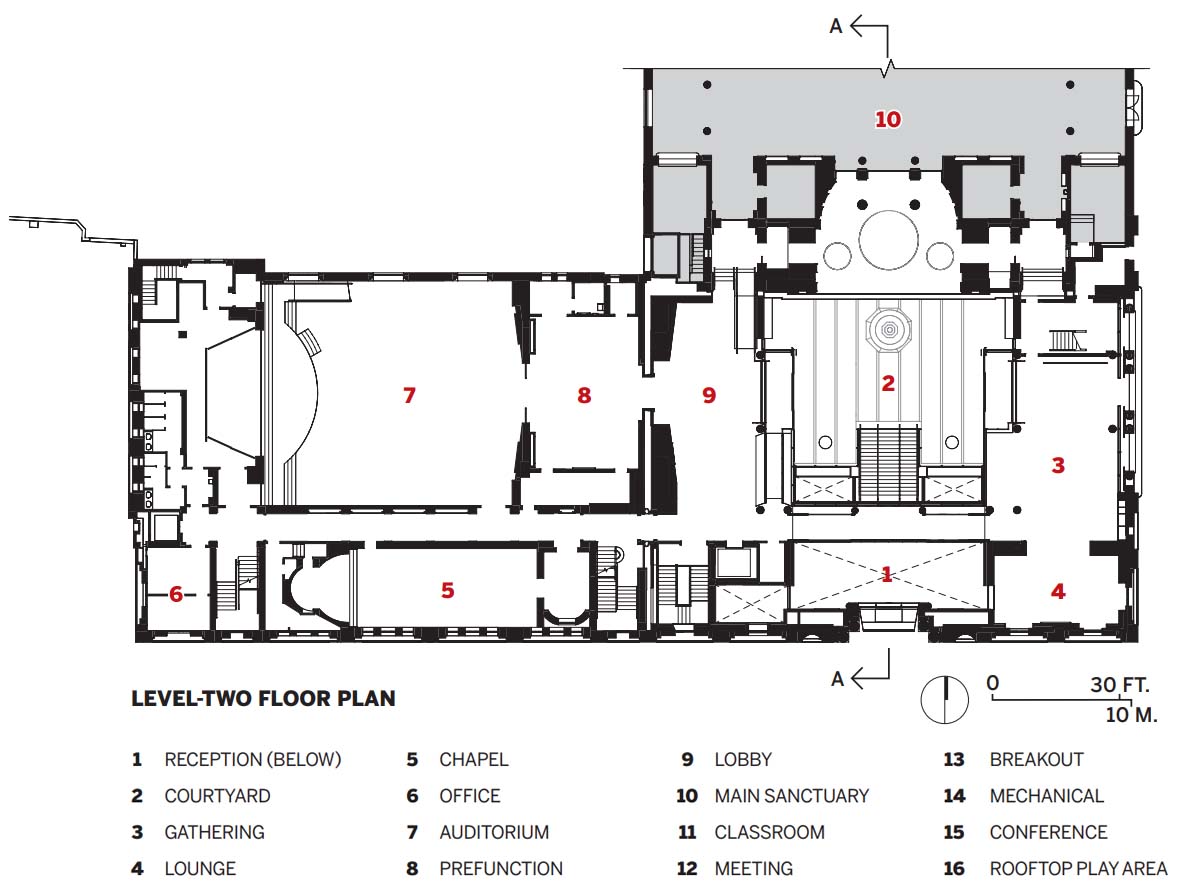
Image courtesy Mark Cavagnero Associates
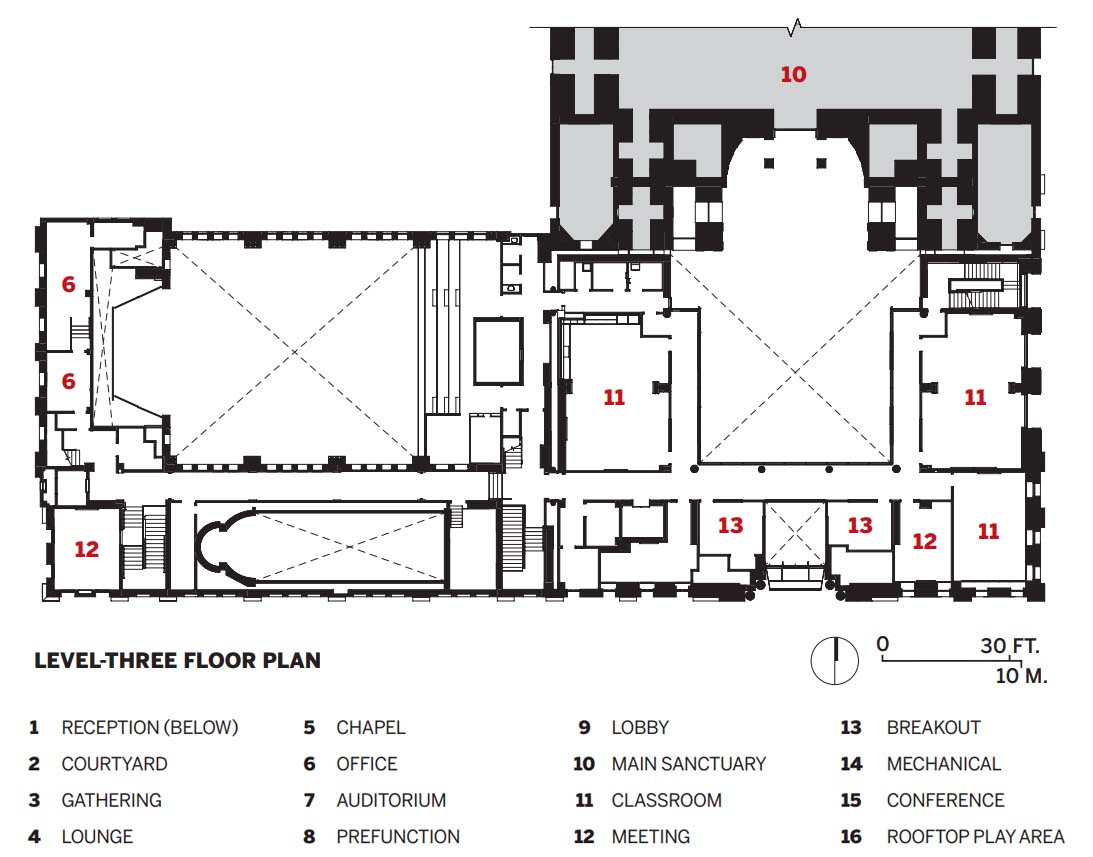
Image courtesy Mark Cavagnero Associates
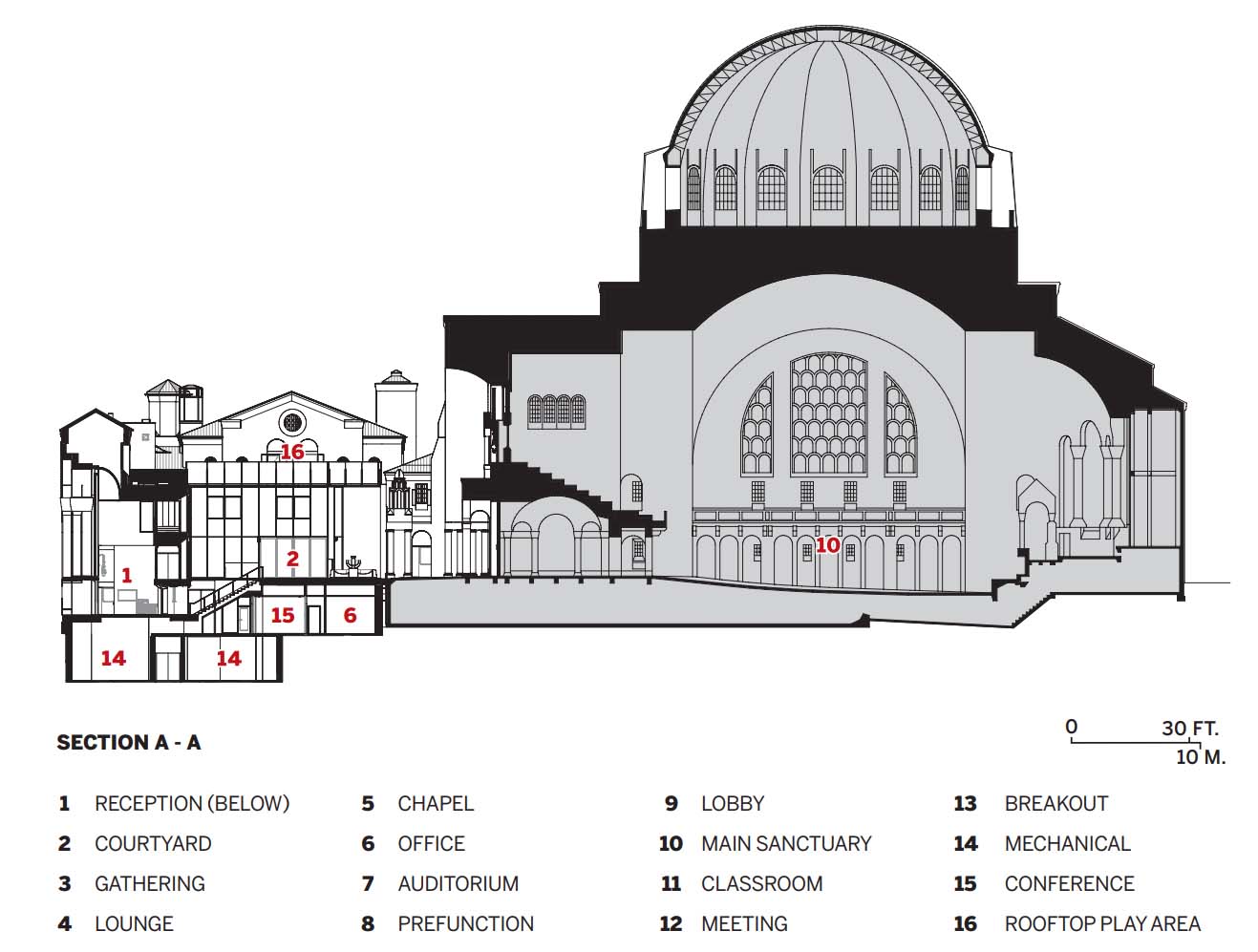
Image courtesy Mark Cavagnero Associates
Credits
Architect:
Mark Cavagnero Associates — Mark Cavagnero, design principal; Kang Kiang, principal in charge; Felicia Dunham, project manager; Amy Chang, project architect; Emma Spilsbury, Philbert Wiradjaja,Charlotte Fleishel, Nicola McElroy, project team
Consultants:
Forell Elsesser (structural); Arup (m/e/p, AV, acoustics, lighting, sustainability); KPFF (civil); Rollo & Ridley (geotechnical); Page & Turnbull (preservation); Eckersley O’Callaghan (facades); TEECOM (IT, security); Miller Company Landscape Architects, GLS Landscape | Architecture (landscape); Wendy Kohn Design (Judaic architecture and art); One Workplace (furniture); Archie Held (fountain reconstruction)
General Contractor:
Plant Construction
Client:
Congregation Emanu-El
Size:
102,500 square feet (total); 18,800 (added)
Cost:
$97 million
Completion Date:
September 2025
Sources
Glazing:
Viracon
Entrances:
CRL/Blumcraft
Sliding Doors:
Panda, Fleetwood, NanaWall, Arcadia
Windows:
Kawneer
Lime Plaster:
Eccostucco
Acoustical Ceilings:
Armstrong, 9Wood
Plastic Laminate:
Formica, Wilsonart
Solid Surfacing:
Corian, MSI
Tile:
Daltile, Marazzi
Resilient Flooring:
Mannington Commercial, Tarkett
Entry Desks, Suspended Arc Light:
Yves Béhar
Judaic Murals:
Amir Magal
Looking for a reprint of this article?
From high-res PDFs to custom plaques, order your copy today!